Category Archives: London

➤ How Nile Rodgers “rearranged” Bowie’s Let’s Dance into a stonking hit single

David Bowie, Nile Rodgers, Let’s Dance, Meltdown, South Bank Centre, soul music,

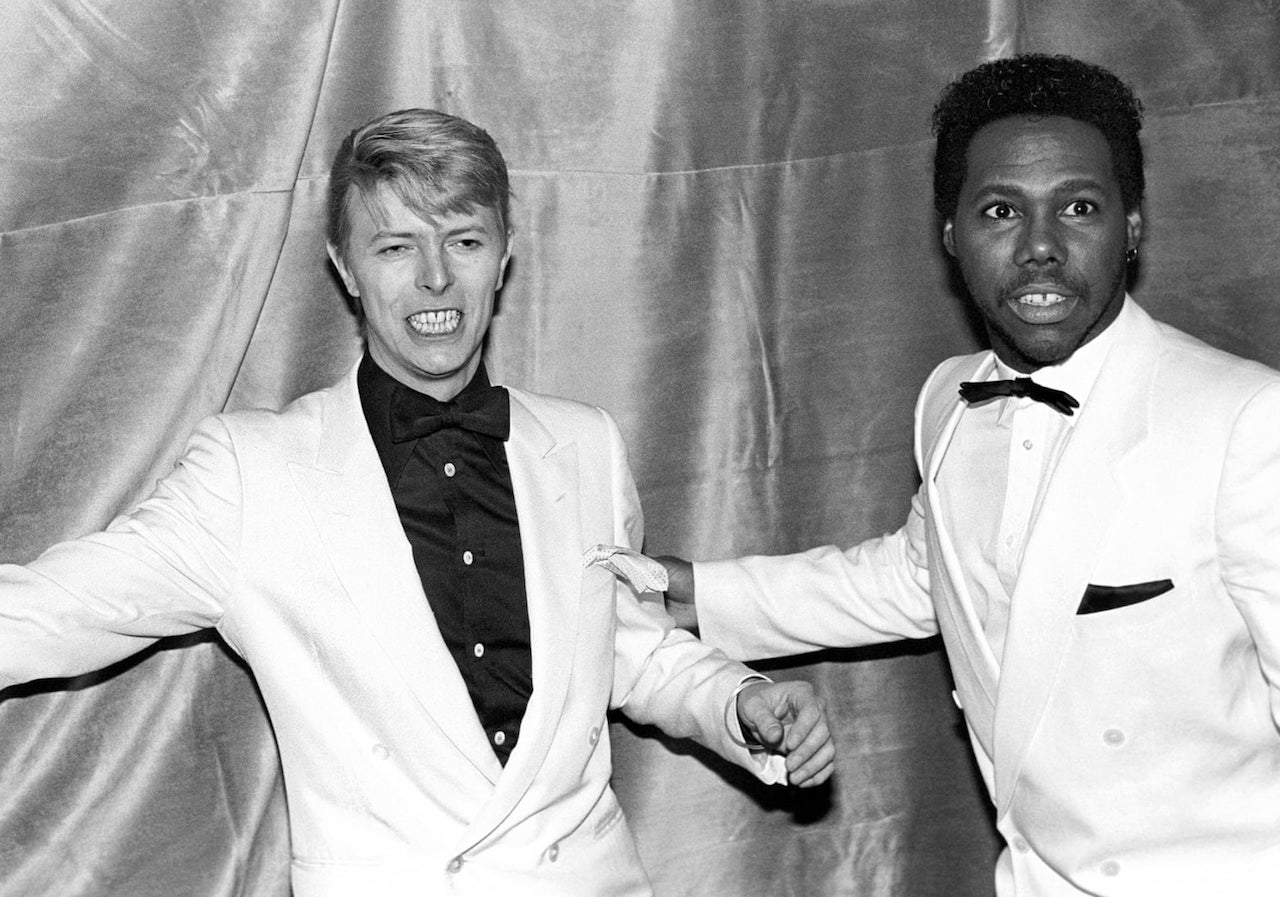
Twin geniuses: Bowie and Rodgers photographed by Ebet Roberts

AMONG MANY SENSATIONS during three foot-tapping hours in the company of Nile Rodgers on Saturday night was a rare audio track possibly being played out in public for the first time. Rodgers is not only curating this year’s prestigious South Bank Meltdown festival in London but his own band Chic headlined the opening night with a mighty seamless stream of dance-floor hits. Rodgers preceded the concert with a lengthy talk about his unrivalled career as one of the most influential record producers ever, an icon of black excellence along with Quincy Jones and Stevie Wonder.

He described how he had met David Bowie in the early 80s and as they bonded over their love of jazz, Rodgers says he “realised that David Bowie was the Picasso of rock’n’roll”, meaning his gift for thinking in the abstract. They were soon collaborating over Bowie’s album Let’s Dance, released in April 1983, almost three years after his previous album, Scary Monsters.

More specifically, once Bowie had joked “Is there such a thing as too funky?” Rodgers set about doing what any jazzman does – he was “rearranging” Bowie’s music in their studio sessions. And on Saturday Rodgers told this electrifying yarn by playing us Take One of the slightly protracted Let’s Dance session that started with Bowie in dirge-like mode. Eighties singer Andy Polaris tells it like this in his review of the Meltdown show:

In one extraordinary sequence Rodgers revealed the genesis of his collaboration with David Bowie on Let’s Dance. It was thrilling to listen to a rare recording few people have ever heard as the track was transformed from an almost twee throwaway song into the rhythmic funky stomper that it became. During the first take in the studio, we heard Nile introducing David to his arrangement and Bowie experimenting with melodies and phrasing while Nile carefully coaxed him by explaining the number’s metamorphosis. We listened as David gradually grew more excited, climaxing in obvious satisfaction when he finally “got it” – this, the single that would become his biggest hit! The whole episode provided a revealing insight into how Nile works as both a guitarist and a producer and was a rare treat for Bowie fans in the audience…

David Bowie, Nile Rodgers, Let’s Dance, albums, 1983, soul music,

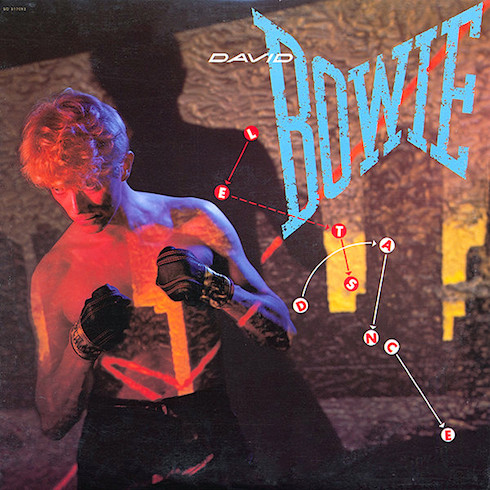
Let’s Dance: Bowie’s biggest selling album

MORE ON THE BOWIE-RODGERS PARTNERSHIP

➢ “I thought I was going to get fired over my riff to China Girl because it’s so corny. But he heard it and went, That’s amazing!” – Pitchfork 2016:
As a black man in America, there’s not a day that goes by that I’m not reminded of being black. It has nothing to do with me. Some people are just uncomfortable with my presence. It’s never gone away. With Bowie, though, I never felt that at all. He made Let’s Dance with me and guys that he never even met, but he had enough faith to allow me to completely take over. He was like, ‘Nile, take my vision and make it real. You be the impresario.’

The whole album was completed and mixed in 17 days. There’s no four different versions of Let’s Dance, no five versions of Modern Love. That’s just it. Done. End of story. A huge amount of the time he spent sitting in the lounge watching TV and then he would just come in and check and go ‘Wow!’ and then he would leave. And I’m thinking to myself, ‘This is the highest form of respect that anyone has ever given to me’. . .

David Bowie, Nile Rodgers, Let’s Dance, Meltdown, South Bank Centre, soul music,

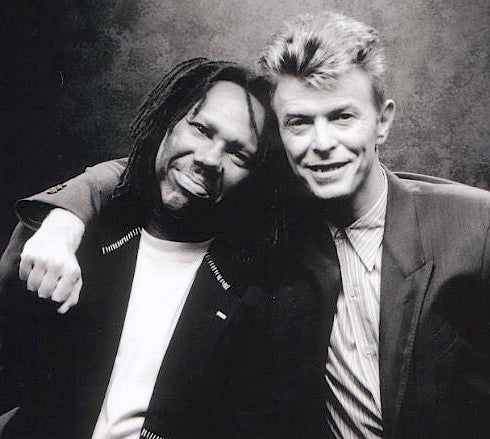
Evergreen: Bowie and Rodgers photographed by Peter Gabriel

➢ The producer of Let’s Dance, Bowie’s biggest-selling album, asked the singer if he’d made it too funky. ‘Is there such a thing?’ he replied – from the Guardian 2016:
Before we wrote a single piece of music for [Let’s Dance], we did a research project where we played lots of records and talked about what the album wanted to say, how it should sound as a whole. Then one day David said: ‘Nile, this is what I want my album to sound like’ and he showed me a picture of Little Richard in a red suit getting into a red Cadillac convertible. How do you translate that?! But in actual fact I knew exactly what he meant, and that was the point I realised that David Bowie was the Picasso of rock’n’roll. He got uncomfortable with me calling him that but I did it anyway. Because I realised he saw the world in an abstract way, as well as in the way we all see it. And what that picture meant was not that he wanted a retro record, or something based on Little Richard’s music, but that he wanted something that would always look modern. He showed me the future and the past and it was evergreen. The highly designed Cadillac and the red monochromatic suit – that picture was taken in the 1960s but it would still look modern to someone in the year 3000! . . .”

➢ Meltdown 2019, curated by Nile Rodgers, runs at London’s South Bank Centre 3–11 August

FRONT PAGE

2019 ➤ Lawrie’s Eleven talk candidly of being young black and gay in ways many of us never knew

Black issues, film, Vogue Fabrics Dalston, Beyond There’s always a black issue Dear,Claire Lawrie,

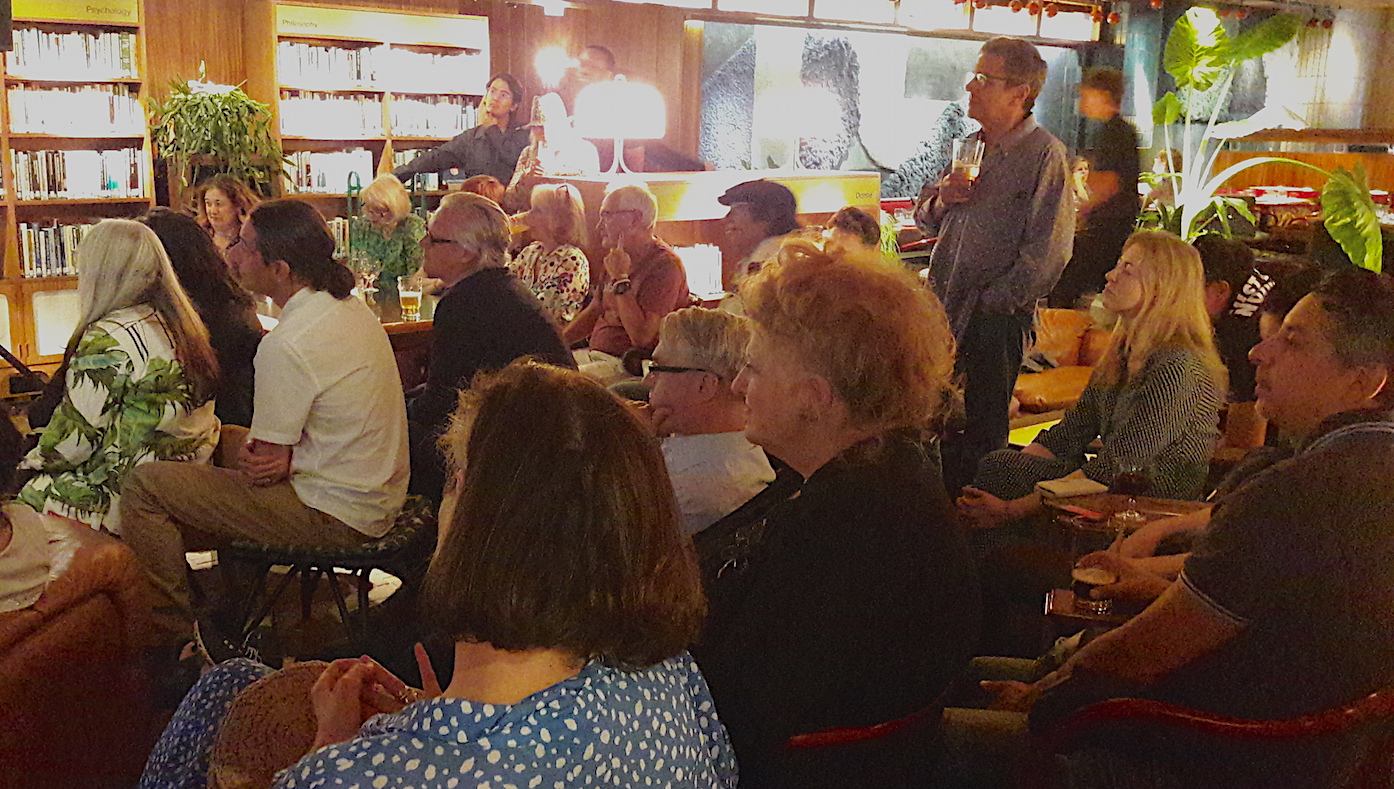
Discussion following Beyond at Vogue Fabrics Dalston: around Claire Lawrie wearing white), Andy Polaris, Roy Brown, David Holah, Iain R Webb, Greg Davis. (Photo Shapersofthe80s)


WELL THAT WAS A HILARIOUS BOUT OF GAY BANTER following the first community screening of director Claire Lawrie’s Iris prize-winning short documentary featuring eleven highly individual creatives telling their stories about growing up black and queer in 1970s and 80s Britain. Thursday’s screening at Vogue Fabrics Dalston of Beyond “There’s always a black issue, Dear” was as moving and thoughtful as it was entertaining. Joining Claire in Thursday’s follow-on discussion were some of its stars, Frank Akinsete, Andy Polaris, Roy Brown and Winn Austin, plus David Holah, Iain R Webb, Greg Davis, Shaun Cole and other individualists who made their mark before and during Margaret Thatcher’s regime.

Navigating their gender-fluid youth in this period of cultural and political turbulence saw the protagonists tackling things their own way. London’s alternative nightclub scene provided sanctuary for disco to meet soul and punks  to become Blitz Kids. As fierce LGBTQ trailblazers, the cast recount vivid memories which tell of singular determination and of resisting definition, through dance, art, fashion and music and seeing their ideas appropriated by the mainstream. The film acknowledges the importance of family, whether as parents or a group of like-minded friends. “You needed somewhere to go where you felt good about yourself,” and in the post-punk moment that meant Soho nightclubs such as Crackers and Billy’s.

Black issues, film, Vogue Fabrics Dalston, Beyond There’s always a black issue Dear,Claire Lawrie,

Claire Lawrie with guests outside Vogue Fabrics Dalston: Frank Akinsete, Pippa Brooks, Winn Austin. (Photo Andy Polaris)

In Thursday’s discussion Frank said that race itself wasn’t the issue, simply feeling “weird”. Within black circles the choice was also between reggae or soul, Andy said on today’s Robert Elms show on BBC Radio London: “The power of the film is not just about gay or straight, black or white – we were all rejects from some type of conservatism and we came together in a safe space where we could explore ourselves.”

Also on the Elms show, Claire said the film started with Les Childs being in Lindsay Kemp’s company in the mid-70s (he later worked with Michael Clark and choreographed for the Pet Shop Boys) and goes through to 1991 and the Michael and Gerlinde Costiff club Kinky Gerlinky. Claire added: “London is another star of this film – we all moved to London to be individual.”

There’s another screening tonight (6 July) at the Conduit club in Mayfair as part of BlackOut’s starry Pride programme (tickets via Eventbrite) and again on 23 July at Manchester Pride, with another hopefully in Liverpool.

➢ Tickets may still be available for tonight’s 6pm screening of Beyond plus a discussion to launch BlackOut UK’s fund-raising appeal at the Conduit Club, W1S 2YQ

radio, Andy Polaris, interview , Claire Lawrie

Andy, Bob and Claire at BBC Radio London

➢ Andy Polaris and Claire Lawrie talk about Beyond on today’s Robert Elms show at BBC Radio London

➢ A new documentary finally gives credit to the black queer people who built British nightlife – Andy Polaris writes about Beyond: There’s always a black issue Dear at GQ online

TRAILER for BEYOND

➢ More about the film Beyond

FRONT PAGE

2019 ➤ The nerve of Neil Matthews! Offering bunny ears to those oh-so cool Eighties pop stars

Photography, book launch, exhibition, pop music, Neil Mackenzie Matthews, Jealous Gallery, Take That,

Take That in 1993: cheering to camera for a Smash Hits shoot by Neil Matthews

ANOTHER FAB BOOK OF PHOTOS capturing mainly the 80s pop scene came out this week and it’s a bit of curio. We who were there know how British music and fashion utterly transformed youth culture during the decade from 1980 onwards and among the 219+ new acts who dominated the sales charts in the first four years probably the majority achieved international fame and fortune. But Neil Mackenzie Matthews, in his beautifully printed 192-page book, titled Snap: Music Photography, also reminds us of the names of many acts we have forgotten and who had limited success.

It has become a truism that soon after the Beat Route’s Friday club-night opened in Soho and Spandau Ballet entered the singles chart, both in November 1980, virtually every young guy you met in the club was “putting a band together”, usually managed by another young guy of his own age. For every 110 new-wave acts across the UK who won the standard one-album-and-two-singles deal from a grateful record industry which had lost its way, there were probably 1,000 more who didn’t – yet they too were a vital part of the great collaborative force that was helping to reshape entertainment and media in the Eighties.

At Thursday’s book launch in Shoreditch’s Jealous gallery, Neil described how his own good luck was in attending the same Islington school as the Spandau Ballet posse, Dame Alice Owen’s, and at the very moment he missed getting a first job at the BBC, Spandau invited him to St Tropez on their first foreign booking so he took a camera along and taught himself how to shoot.

Photography, Nick Heyward ,book launch, exhibition, pop music, Neil Mackenzie Matthews, Jealous Gallery,

Neil Matthews and Nick Heyward photo-bombed by Neal Whitmore of Sigue Sigue Sputnik. Just in shot at left, Heyward pictured in his woolly leggings period with Haircut One Hundred. (Photo by Shapersofthe80s)

Click any pic below to enlarge all in a slideshow

As luck had it, within months Tim Lott and Barry Cain’s chirpy new music magazine Flexipop decided its irreverent role was to prick the egos of their mates, the newly jumped-up pop stars, and Neil as its photographer was expected to rewrite the rules of the game. This appealed to his own wild ways and because he was invariably working against the clock, he injected a note of spontaneity into popstar shoots by inventing a box of larky props with which to confront his celebrity models and expect them to respond on camera. Result: pix of Toyah Willcox all smiles in floppy bunny ears, and Ian McCulloch contemptuously prodding the matching bunch of carrots after he declined to wear the bunny ears. There’s also Edwin Collins canoodling a rubber chicken and Jaz Coleman delivering a blunt message in a book to his rivals.

Impromptu set-ups catch Suggs at a fruit and veg stall on the street, Tim Burgess atop a packing case in Tesco’s, and Malcolm McLaren doing business on the phone. The book features several candid snaps following the rise of Spandau Ballet and the New Romantics including an exclusive of Steve Norman sporting speedos at home in the lounge between his fishtanks and Harry Dog. Neil offers very few live performance pix but the two best capture Little Richard bantering atop his piano and a fleeting glimpse of Nick Heyward closing his eyes in an Albert Hall performance.

Some of Neil’s best straight portraits take a traditional approach and yet clearly capture a shared moment of trust between subject and lensman: we see sexy candid shots of Madonna relaxed, of Betty Boo sultry in leopardskin and of Beyoncé Knowles as a very come-hither 17-year-old before she dropped the surname. For me the two cracking shots in this book show Take That snarling something worse than “Cheese!” at the camera (top), and Jay Aston of Bucks Fizz seated on the loo in her hotel (below). If that doesn’t testify to trust what does?

PS: Sorry, Neil, I have to reveal that I scooped you with the “first” kiss between Jon Moss and Boy George wearing Westwood a full year before Culture Club and your own shot where they both wear Sue Clowes.

Photography, book launch, exhibition, pop music, Neil Mackenzie Matthews, Jealous Gallery, Jay Aston

Jay Aston 1984: caught at her hotel by Neil Matthews

➢ Neil MacKenzie Matthews’ career went on to embrace fashion, international celebrity and advertising, but his book Snap: Music Photography (Red Planet, £30 in hardback) focusses essentially on the music scene

➢ Neil Mackenzie Matthews’ prints are visible online and for sale at the Jealous Gallery, 37 Curtain Road, EC2A 3PT

➢ View Neil’s wider portfolio at his own website

HEYWARD THE LEGEND BACK ON THE ROAD

Nick Heyward, live, Gibson Sunburst

Nick with his Gibson Sunburst 330, 1967

❏ One incidental pleasure at the gallery was to catch up with Nick Heyward for the first time since I snapped him with his sidekick Les as Wag club regulars a lifetime ago. Today he features in a daffy trio of Neil’s pix of Haircut One Hundred from 1982 and he’s as friendly and talkative as his ever-present smile suggests. He has been on the road this year with his UK Acoustic Tour, a series of intimate dates where audiences were treated to hits from his breezy and escapist seventh solo album, Woodland Echoes, plus others from his entire career. The album is a distinctly musical treat which Pop Matters reviewed as “a timeless, infectious gem”, adding: “He looks like that cool college professor all the students want to hang out with – and he seems to be at peace with his status as a 50-something indie pop legend”. More news at Nick’s own website .

FRONT PAGE

2019 ➤ This would have been Steve Strange’s 60th birthday

1978, when Steve Strange teamed up with Rusty Egan (Photo © Fin Costello/Redferns)

➢ Remember Steve through the tributes paid
after his death in 2015 by 30 original Blitz Kids
here at Shapers of the 80s

Evening Standard, On The Line, Steve Strange, Evening Standard

First published in the Evening Standard, Jan 24, 1980

➢ Our first report on Steve Strange, 1980. . . He was eager to announce a Thursday cabaret night at the Blitz, showcasing a new band with the weird name of “Spandau Ballet”

Steve Strange, New Romantics, Blitz Kids, nightclubbing, London

First published in the Evening Standard, Oct 16, 1980

➢ By the autumn of 1980 there was a whole new underground scene to report. . . In one week, a dozen prodigies were setting the town ablaze, none of them over 22

FRONT PAGE

➤ Sullivan’s manifesto for the Rebel Rebel life

Club-host and artist Chris Sullivan: as he renders himself sporting Dennis-the-Menace T-shirt in NYC 1981 and as he is today in Portobello Road

NOT MANY PEOPLE KNOW that Chris Sullivan – mischievous Welsh frontman of Soho’s Wag Club which he founded in 1982 – switched from the fashion course at St Martin’s to pursue painting instead. Despite his instinctive sense of style, he says today: “I was great at the design and fashion drawings, but not very good at actually making things, stuff like sewing and pattern cutting. So I moved over to fine art. At the time I kept on being in the newspapers, and the college didn’t care what I did, just happy another St Martin’s student was getting press. It was good for their PR.”

It also positioned him as a pivotal influence on the whole British youthquake that transformed London nightlife, music and fashion in the Eighties, while his own mantra of “One look lasts a day” has propelled him through such guises as flaneur, deejay, journalist, nightclub host, pop star, northern soul dancer, style commentator, entrepreneur and fashion designer. A terrific route-map to the Sullivan cosmos occupies 12 pages of the April issue of GQ magazine, blessed with a photo-portrait by David Bailey.

Click any pic below to enlarge all in a slideshow

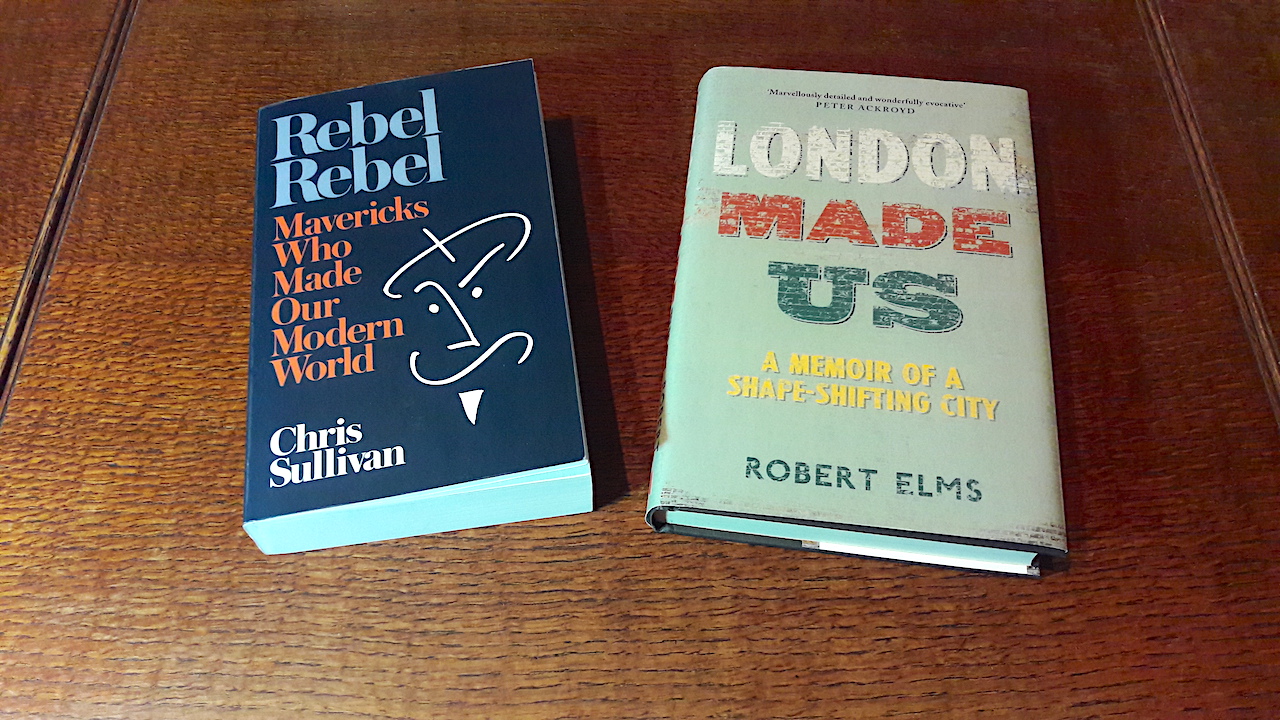
This month Sullivan publishes his third book, an anthology of “people and things that broke the mould” titled Rebel Rebel: How Mavericks Made the Modern World. What he dubs a “paperback manifesto” is an excuse to celebrate his own outsider approach to life: never having a proper job and always staying one step ahead of the pack. The book was launched in 2015 as a crowd-funded project through Unbound Books and for reasons unknown it seemed to take four years either to raise the cash or finish the writing, at which point Sullivan says there was still no money set aside for photographs of the 34 subjects he was profiling (some new essays, some vintage). “So I said I’ll paint or draw them, all these people like Rod Steiger, Fela Kuti, Louise Brooks, Orson Welles, Anita Pallenberg, David Bowie. . .”

In the mix are criminals (Brilliant Chang), musicians (Lemmy), actors (Robert Mitchum), artists (Egon Schiele, Jackson Pollock), directors (Martin Scorsese), photographers (Robert Capa), as well as iconic topics such as film noir, Berlin in the Twenties, Levis, the pork pie hat, the Zoot Suit and the white T-Shirt.

“Because I was so worried as the deadline loomed,” Sullivan says, “I did 35 illustrations for the book, really quickly b-b-boom! Then a friend Barnsley saw one of a zoot suit I wasn’t using for a chapter on outsider clothing, and he snapped it up. Before I knew it someone else was asking could they have one, then I did another one as a commission and stuck that up online and since then I’ve had more than 10 commissions to do these paintings.” Some of the results are here for all to see, inspired by time spent in New York back in the day.

As for the book’s other 400-odd pages, they read like Sullivan in his element. Vigorous prose and serious research substantiate his invitation to “an exceptional party” of cultural giants. Take Capa for instance, who “captured a world and it was Capa’s world”, according to John Steinbeck. Sullivan empathises: “He seems like a chap with whom you’d want to hang out, chew that fat and then go on a humongous bender – a man who was charismatic, brave, egalitarian and funny.” It’s intense stuff that exonerates malcontents and free-thinkers. Ultimately, wag as a tag is not the last word.

David Bowie, books, Unbound, Chris Sullivan, illustration

David Bowie: Sullivan’s illustration of the Thin White Duke for his Rebel book

➢ Read the odd taster from Sullivan’s book Rebel Rebel at Unbound

FRONT PAGE