Category Archives: Tributes

2025 ➤ I fan-mailed Tom Stoppard from his first play onward!

Tom Stoppard, Jumpers, Arcadia, Travesties, Robert May, National Theatre, Rosencrantz And Guildenstern, David Johnson

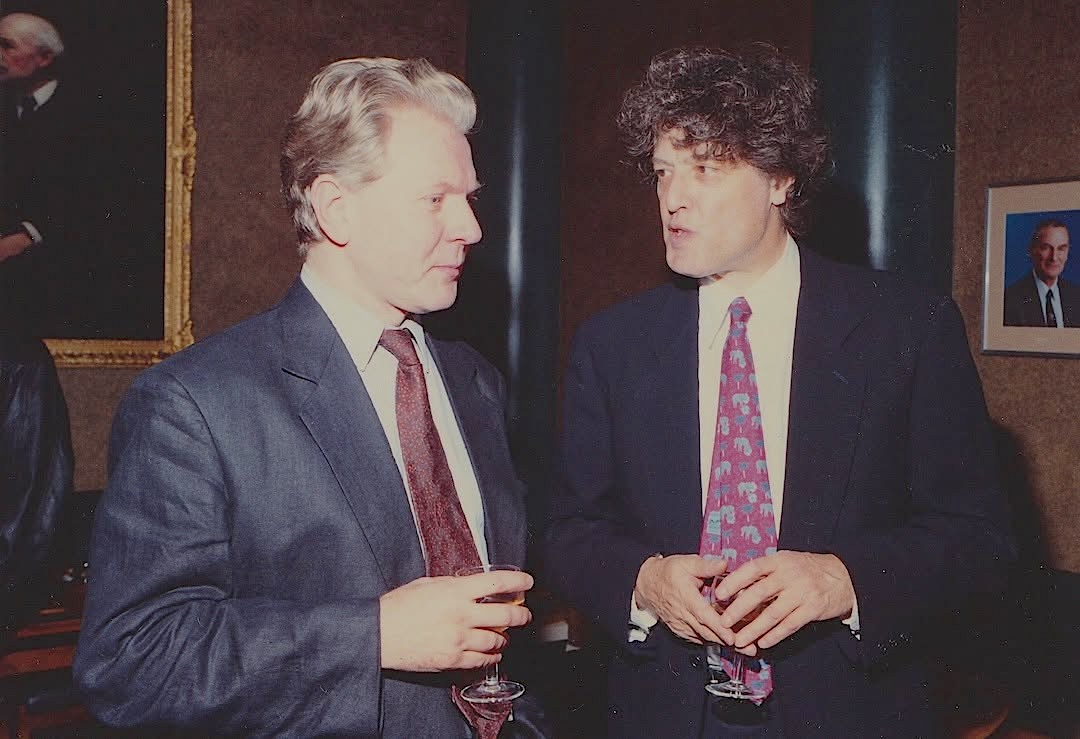
Johnson meets Stoppard: Telegraph’s annual Scientists Meet the Media Party 1992

❚ TRIBUTES HAVE POURED IN following the death of our greatest contemporary playwright Tom Stoppard, aged 88. I have been lucky enough to cross his path several times, notably when I invited him to the Telegraph’s annual Scientists Meet the Media Party in 1992 (pictured), where he was the only one of a dozen authors to accept the invitation. His reason was to ask how he could meet Britain’s leading expert in chaos theory, who luckily was in the room, and proved to be Prof Robert May (later Govt Chief Scientist). The result one year on was easily Stoppard’s finest play, Arcadia, wittily set in two time periods, and awarded Best New Play of 1993.

I saw Stoppard’s first play in 1967 at the Old Vic under the National Theatre’s regime there. This was the absurdist comedy Rosencrantz and Guildenstern Are Dead, a debut that “changed the course of postwar theatre”, according to critic Harold Hobson. Stoppard took its title from lines in Shakespeare’s Hamlet and followed the two bit-part actors R&G off-stage while a full blown production of Hamlet swept on and off around them. Dazzling, brilliant, inventive. I immediately wrote the unknown playwright a breathless fan-mail and received an autographed card in reply. Sigh.

His other masterpieces have included Jumpers, Every Good Boy Deserves Favour (featuring the entire London Symphony Orchestra under André Previn) and Travesties, all collecting umpteen major awards.

➢ Elsewhere at Shapers of the 80s: Stoppard’s superlative new play, Leopoldstadt, is a tearjerker echoing his own roots

➢ “Famed for the ‘hypnotised brilliance’ of his prose and dialogue” – Michael Coveney in The Guardian

FRONT PAGE

2015 ➤ Steve Strange’s anniversary: deciphering the pen portraits of the man of masks

Steve Strange, Stephen Harrington, Blitz Kids, New Romantics, nightclubbing, Swinging 80s, London, fashion, pop music, Visage, tributes, youth culture, obituaries

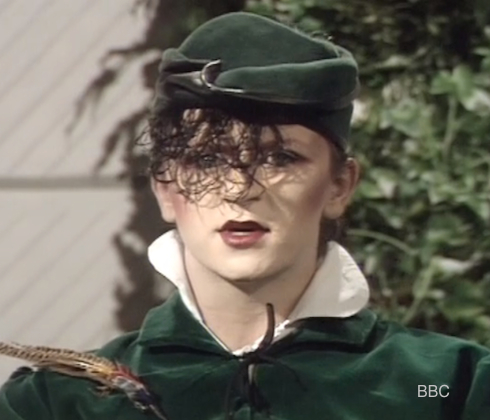
Steve Strange in 1981: here in Robin Hood guise (BBC)

FIRST PUBLISHED 13 FEBRUARY 2015

◼ ONE OF STEVE STRANGE’S TALENTS was persuading the press to believe in his latest wheeze, however fantastic. He had a way of convincing himself that a story was already written and a mission achieved before he had pressed the accelerator and set off. This irritated as many journalists as it amused and many were consequently very sceptical of his next big announcement – like saying he’d booked a big American star to do her first live promotional performance in Britain at his crowning glory, the Camden Palace, capacity 1,410. But in fact he had and she did, and in June 1983 the unknown Madonna was launched in the UK singing to backing tapes for half an hour.

The myths surrounding Steve were always the stuff of self-promotion. Dressing up was part of the same story-telling ritual. Today, he would say, I am Robin Hood, tomorrow Ruritanian Space Cadet, the next day Marionette with the mind of a toy. A compulsive man of masks presents a tricky subject for the scribblers obliged to capture that life once it is spent, so we must tiptoe through the obituaries like a minefield, and beware of tripping over Steve’s much-spun versions of history that were pure fantasy. Even national newspapers seemed to fall for many of the dreams he spouted, as well as the exceedingly vague memories committed to his 2002 book, Blitzed. As the mainstream obituary writers lead you through those New Romantic years, see if you can spot the porkies. . .

➢ The Times obituary:
As the head boy of the “new romantics”, Steve Strange was the flamboyant scene-maker of a colourful subculture that dominated early 1980s British pop music as a showily garish counter-reaction to the stylistic austerity of punk. If punks were the roundheads in pop’s civil war, the “new romantics” were the cavaliers, ushering in a restoration of glitz and glamour, with a delectably decadent flourish… / Continued online

➢ Adam Sweeting, Guardian:
In 1978, Strange and Rusty Egan (then drummer with the Rich Kids) began holding David Bowie nights on Tuesdays at Billy’s club in Soho, a squalid bunker situated beneath a brothel. “We played Bowie, Roxy Music and electro,” said Strange. “It was where our friends could be themselves.” Billy’s could hold only 250 people [not quite!] but swiftly developed an outsize reputation, numbering among its garishly clad clientele such stars-to-be as George O’Dowd (the future Boy George), Siobhan Fahey, later of Bananarama, and Marilyn. . . / Continued online

Billy’s club,Helen Robinson, nightlife, London ,Steve Strange, PX

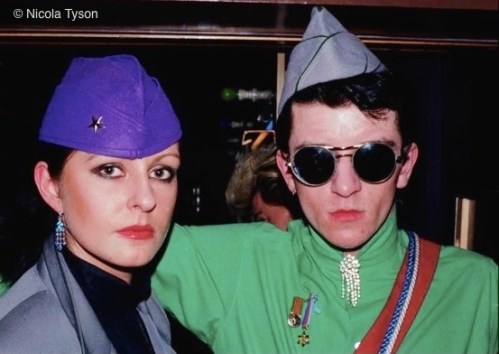
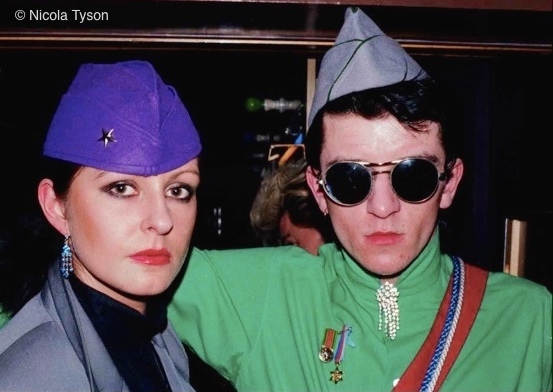
Billy’s club 1978: Strange as Ruritanian Space Cadet alongside PX designer Helen Robinson. (Photograph by © Nicola Tyson)

➢ Daily Telegraph obituary:
Strange fronted sleek operations, such as Club For Heroes in Baker Street and the Camden Palace in north London, where Madonna performed her first British live concert. But Visage split amid acrimony over the division of royalty payments, and his nightspots fell out of vogue in the mid-1980s with the rise of rap, hip-hop and dance music. By this time Strange had a reputation for high-handedness. Years later, Boy George lampooned Strange as the preposterous club host character “Nobby Normal” in his biographical musical Taboo. Strange was not amused. “I don’t think I have that strong a Welsh accent,” he complained. . . / Continued online

➢ The Scotsman obituary:
Although his career as a pop star afforded him only one real hit as frontman of the band Visage, 1980’s austere synthesiser anthem Fade to Grey, Steve Strange’s distinctive image and party-loving persona saw him help invent London’s New Romantic scene. . . Visage’s time in the sun flared all too briefly; with Strange being courted to repeat the clubbing success of places like the Blitz in various US cities, he dived wholeheartedly into the life of the international rock star, with all the pitfalls that entailed. Put off by Strange’s drug use, spending sprees and debauched behaviour, Midge Ure left to concentrate on Ultravox and Visage’s 1984 third album Beat Boy was a critical and commercial failure. The band split the following year, the same year that Strange first took heroin. . . / Continued online

➢ Pierre Perrone in The Independent:
A flamboyant figure with a self-destructive streak . . . By the late 90s he was back in Wales and, by his own admission, acting “very bizarrely”. He spent six weeks in a psychiatric hospital, was arrested for shoplifting and given a suspended sentence. “I don’t know whether it was cry for help,” he told The Independent in 2000, blaming an over-reliance on Prozac, though he seemed comfortable with his avowed bisexuality. . . / Continued online

FRONT PAGE

2024 ➤ Farewell to Linard, the craziest man I’ve known

Stephen Linard, Blitz Kids, fashion, New Romantics, Canvey Island,

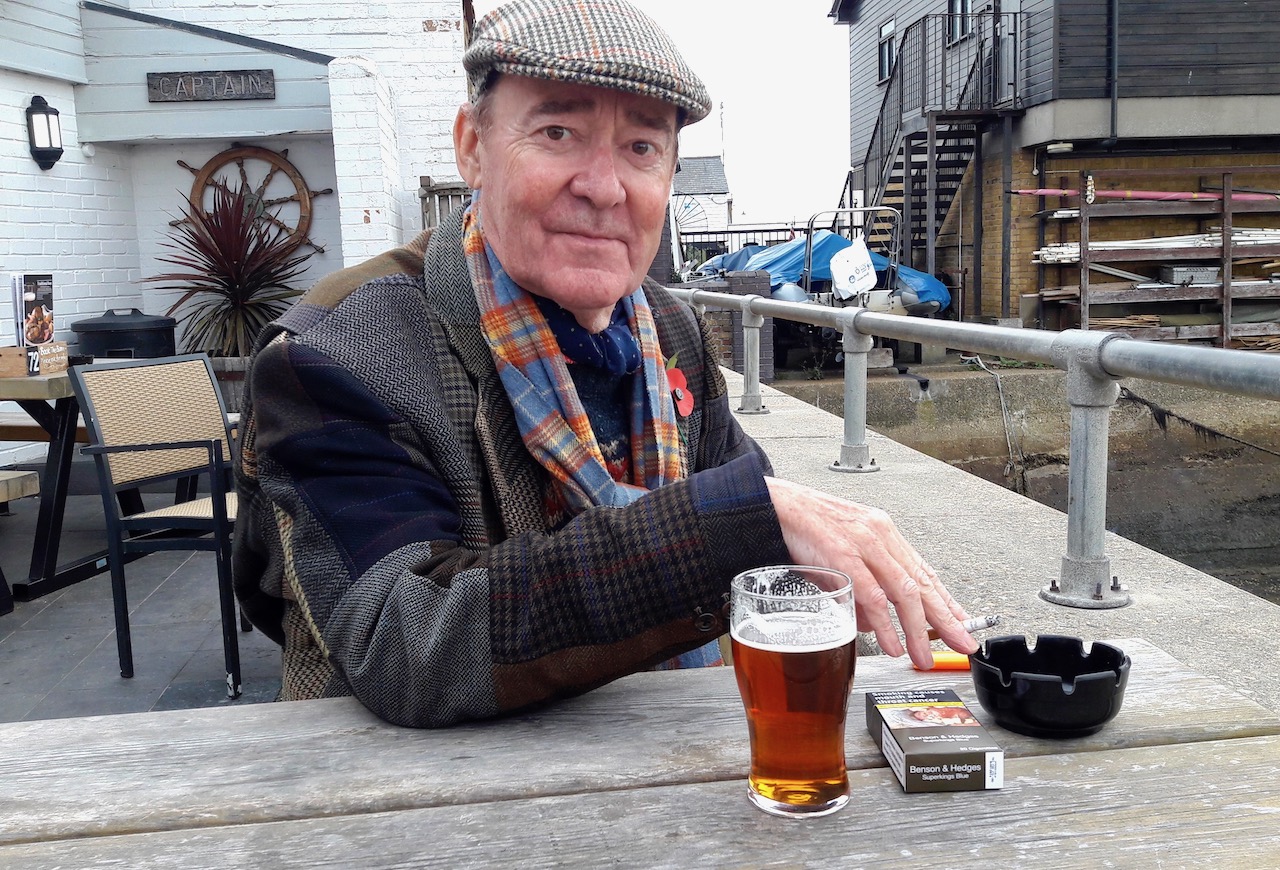
Stephen Linard in 2018: A last pint at his local pub before moving away from Canvey Island. (Photo @ Shapersofthe80s)

INCREDIBLE!!!! Update – Shapersofthe80s has received 8,100 hits during the three days since Stephen’s death. Thank you to his fans

❚ HARD TO ACCEPT THAT STEPHEN LINARD has now died from the extensive throat cancer that had caused him so much pain recently. He was one of the craziest of eccentrics who frequently made me laugh out loud. We met at a party at Steve Strange’s flat in 1980 when he was among the sharpest half-dozen Blitz Kids who changed their looks daily and put the Blitz Club on the map. We hit it off immediately and I soon latched onto the star trio of Stephen, Kim Bowen and Lee Sheldrick who went everywhere together.

I photographed his degree show and over the years helped him through various projects in that era when St Martin’s School of Art failed to equip its graduates with any guidance for running their own businesses. Luckily, pop stars from Pet Shop Boys to U2 and even Bowie readily adopted his strong styles and in 1983 the American fashion press included him among the eight most influential London designers [see link below], noted for his strong eye for colour.

From 1983 to ’86 Stephen lived in Tokyo designing for Jun Co, the fashion giant, on a salary which, he liked to boast, exceeded the prime minister Margaret Thatcher’s. From 1989 until recently Stephen was a key player on the design team at Drake’s, the respected men’s haberdasher off Savile Row (pictured below). The main photo (above) marked a last pint at his local pub on Canvey Island where he lived in his late mother’s house until 2020 before joining the Old Romantic Folks who go on retiring to St Leonard’s-on-Sea.

Only six months ago, as if in anticipation of the worst, Stephen staged a striking exhibition of his early illustrations, titled Total Fashion Victim after the club-night he had hosted at Soho’s coolest hang-out, the Wag. I was lucky enough to write the outline catalogue with him.

drakes-london, Stephen Linard, British tailoring, haberdashery,fashion

Former Blitz Kid and St Martin’s fashion graduate Stephen Linard in 2011: a designer with Drake’s, the gentlemen’s haberdasher, seen here at a staff preview for the opening of its first shop just off Savile Row. (Photograph © Shapersofthe80s)

MORE ON STEPHEN INSIDE

➢ Previously at Shapersofthe80s: 2023, Total Fashion Victim – Linard’s exhibition of his early work

➢ Previously at Shapersofthe80s:
The Blitz Kids WATN? No 28, Stephen Linard

➢ Previously at Shapersofthe80s:
1980, Linard’s Alternative student show gives
Goths their archaic name

➢ Previously at Shapersofthe80s:
1982, Six British designers take London fashion
to the French

➢ Previously at Shapersofthe80s: Overseas influencers
declare eight hot fashion Brits for 1984

THE PROFESSIONAL TRIBUTES

➢ Stephen Linard, London designer, image maker and Blitz Kid, dead at 64 – Detailed analysis of his talents at Women’s Wear Daily, March 2024

➢ Goodbye, Stephen Linard: It was a privilege to know you – by novelist Maggie Alderson

➢ Linard’s entry at the Encyclopedia of Fashion – by Alan
J. Flux; updated by Daryl F. Mallett

➢ Blitz Kid Stephen Linard’s 1980 Neon-Gothic collection anticipated “Heavenly Bodies” by 38 years – from Vogue, 2018

FRONT PAGE

1992 ➤ Who’s the keenest fan of Marcel Proust?

David Hockney, A S Byatt, Lewis Wolpert, Marcel Proust, In Search of Lost Time,

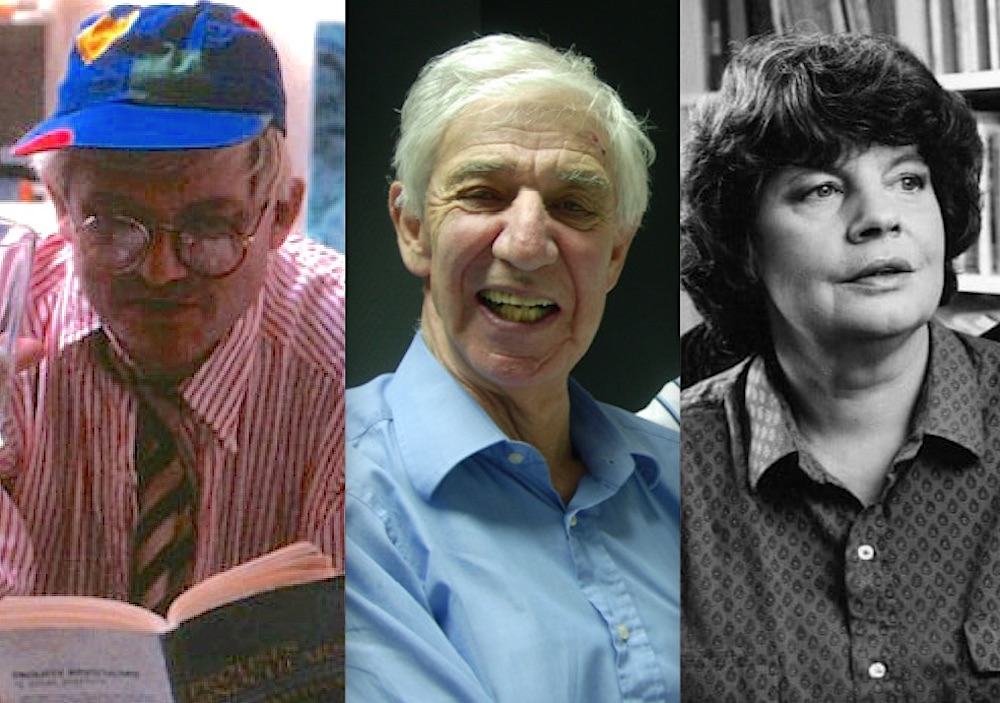
Hockney, Wolpert and Byatt: leading the pack?

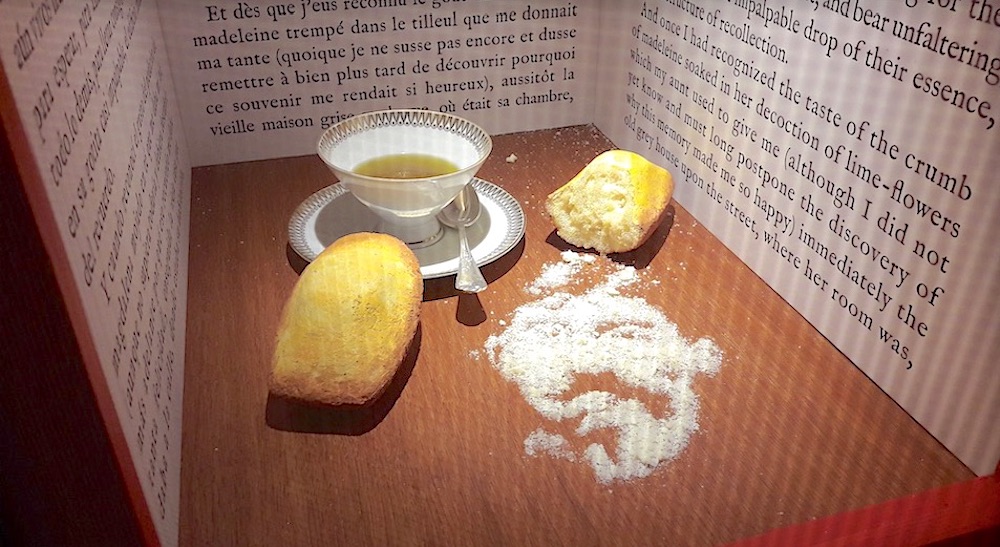
❚ HOW MANY OF US CAN CLAIM to have read the whole of Marcel Proust’s literary masterwork, originally titled for its English edition Remembrance of Things Past, in seven volumes, containing 1.2million words? Not many of us. What about reading it twice? As a journalist I interviewed painter David Hockney on his 46th birthday when he revealed that he had enthusiastically read the epic twice, drawing parallels between the act of looking around Proust’s world by reading his lengthy descriptions and the time it takes for our eyes to dart around a cubist painting. They are both about duration. And the great device Proust donated to literature was his episode of the madeleine, when a simple cake triggers a moment of involuntary memory.

In 1992, when a new English edition titled In Search of Lost Time was published, novelist A S Byatt admitted, without being boastful, that she too had read Proust twice. This happened at a party thrown by the highly sociable biologist Lewis Wolpert who raised the topic as a Proustian two-timer himself, though a viral buzz through this party could find no others. More impressive still, when our paths crossed a couple of years later, Antonia remarked: “Make that three readings now. But this time in French.”

David Hockney, A S Byatt, Lewis Wolpert, Marcel Proust, In Search of Lost Time, madeleine,

Proust’s episode of the madeleine: involuntary memory evoked in a French exhibition of 2015

➢ A S Byatt died last month and received this splendid
obituary in The Guardian

➢ Lewis Wolpert’s obituary in The Guardian, 2021
➢ Previously at Shapersofthe80s:
1983, Hockney’s new vision of the world

FRONT PAGE

2023 ➤ Witnessing the performance of Gambon’s life as his tribute to Pinter

Tributes, theatre No Man’s Land, Michael Gambon, Harold Pinter, David Bradley,

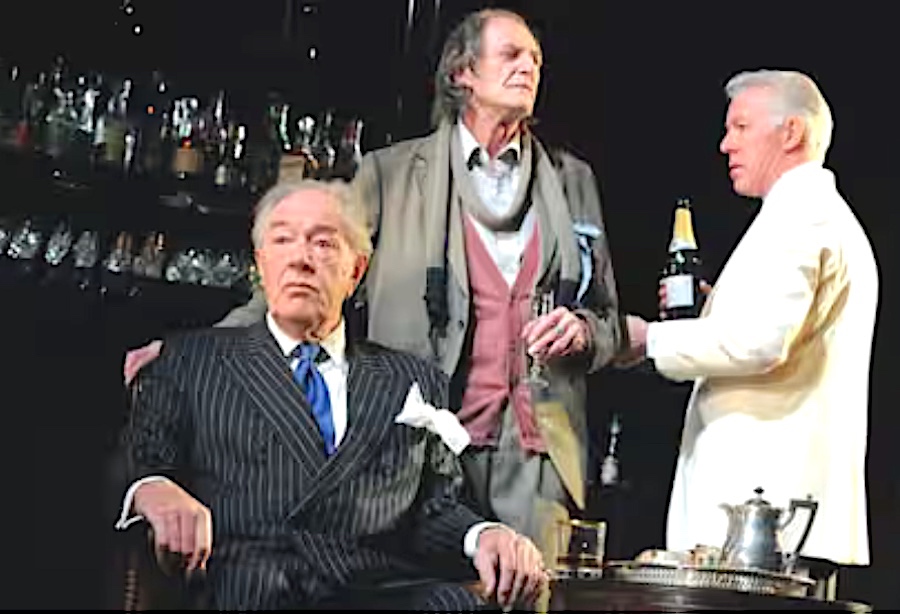
Duke of York’s, 2008: Michael Gambon, David Bradley and Nick Dunning in No Man’s Land. (Photograph: Tristram Kenton)

❚ MICHAEL GAMBON WAS UNDOUBTEDLY Britain’s greatest living actor for much of his career and remained so until his death this week. So, indeed, Harold Pinter had also become our greatest playwright by the end of his life. In the week of Pinter’s death at Christmas 2008, Gambon was playing in the West End in this, one of the master’s most enduring plays, No Man’s Land, and on Boxing Day he marked the theatre’s loss in ways I shall never forget.

That day, on Radio 4’s World at One, Michael Gambon promised to give the performance of his life, so I determined to go and see again the performance I’d already enjoyed the previous month in one of the Pinter’s most haunting masterpieces about two men in their maturity reflecting on their tenuous – or had it been non-existent? – friendship. As Michael Billington had written in his Guardian review: “Every new production of Pinter’s tantalising, poetic play yields new meanings.”

I’d seen it premiered in 1975 with those grandees John Gielgud and Ralph Richardson at the Old Vic and again when transferred to the Lyttelton in 1977 – several times. The great air/earth partnership of Gielgud/Richardson undoubtedly brought compassion to the roles of Spooner and Hirst, yet when Pinter himself played “the Richardson role” at the Almeida in 1993, opposite the sprightly Paul Eddington, the author turned his second act opening almost into a two-handed farce that had us aching in our seats with continuous laughter and subsequently wondering whether he’d always longed for our two greatest actors to loosen up a bit in the original production.

By the time this day’s greatest living actor Gambon put on the mantle of Hirst, a litterateur haunted by dreams and memories, in this new production at the Duke of York’s, we had learnt to laugh heartily at the humour in Pinter, yet now both Gambon and David Bradley as Spooner were also suffusing the prose with more poetry which the renowned “Pinter pauses” punctuate than I could recall from the past.

Tributes, theatre 
No Man’s Land, Paul Eddington, Harold Pinter,

Almeida theatre, 1993: Paul Eddington and Harold Pinter in his own play No Man’s Land. (Photograph: Tristram Kenton)

A month earlier, I’d been caught short by the intensity of Gambon’s stage presence as he made his demons all but tangible before us. Then on Boxing Day, after the hilarious Act 2 recollections of the men’s seemingly shared past, Gambon suddenly changed gear and dropped timbre to whisper the crucial “Good Ghost” speech about the passing faces in his photograph album with an ethereal beauty and clarity of Shakespearean proportions. It was an unparalleled moment to witness.

Following the curtain calls, the cast paused to pay brief onstage tributes to Pinter. Gambon told us that, after rehearsals, the playwright had asked him if he would read the Good Ghost speech at his funeral (which indeed he did only days later). Suddenly for the second time this night, Gambon delivered the speech again there and then. Alas the words lost something of the ineffable truth they had touched when, minutes earlier, Gambon had been in character and had delivered them “trippingly on the tongue”.

Without doubt, the actor brought greatness to the role of Hirst this night – in fairness, all the cast were on the balls of their feet too. More satisfying, in the fleeting moments of live performance, fresh glimpses had been revealed of Pinter’s bleak insights into memory and ageing. All in all, the essence of theatre.

➢ Billington’s review of No Man’s Land in The Guardian, 2008
➢ Michael Gambon’s obituary in The Guardian, 2023

FRONT PAGE