Category Archives: 20th century

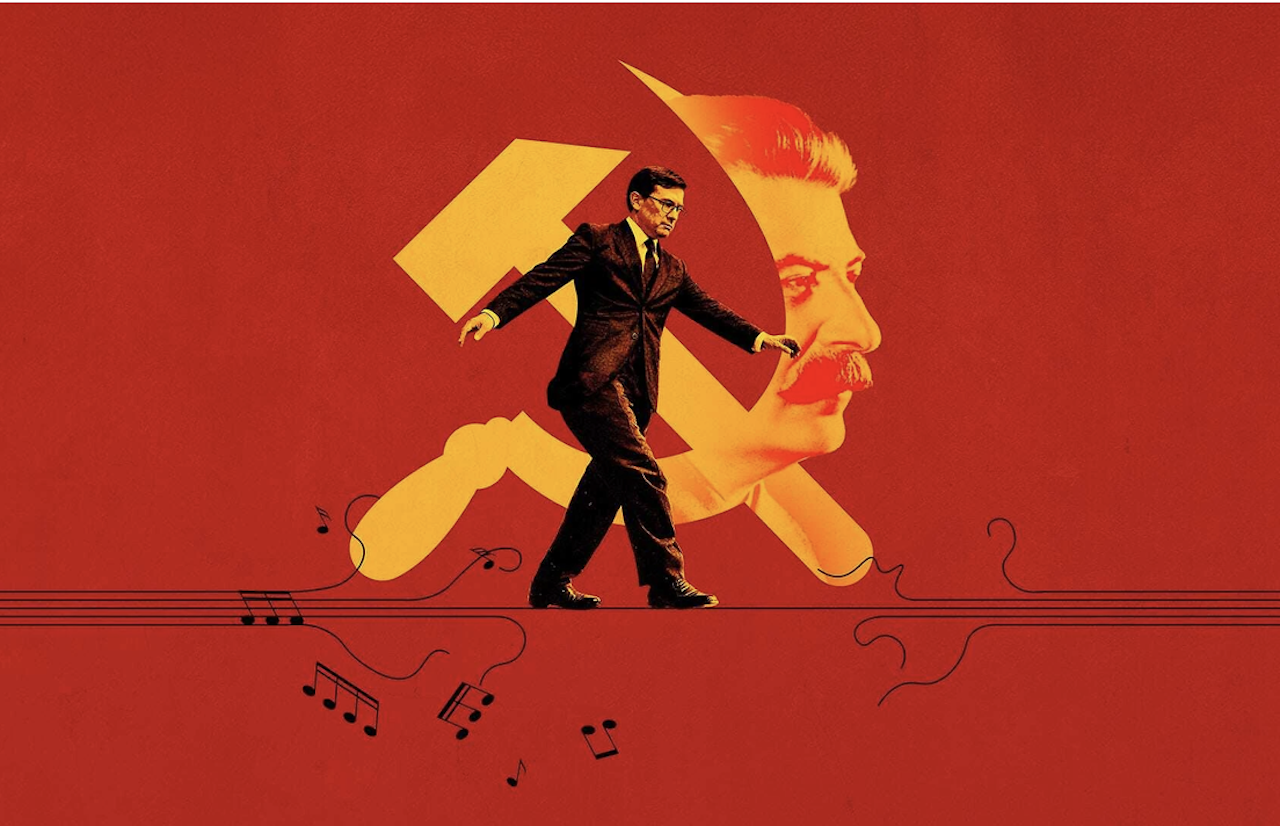
2026 ➤ Fancy being hooked by the music of Shostakovich?

HOLY FOOL, Dmitri Shostakovich, Park200 theatre, Kate Fahy, Gamlet1964, Hamlet, Rosalind Adler, Lea Sellers,

Holy Fool running 3 Sep – 10 Oct 2026

❚ A POWERFUL BLACK-AND-WHITE widescreen film version of Hamlet captured my interest in 1965 on Oxford Street at the Academy cinema’s annual Shakespeare summer season because it was made in Russia, and shot mainly outdoors in the wild. Yes as Gamlet, directed by Grigoriy Kozintsev, the minimal dialogue was in Russian, scripted partly by Shakespeare, partly by Boris Pasternak, and savagely truncated compared with many Hamlets that can run to four hours. What thrilled my imagination throughout its mere 2h20mins was a gripping musical soundtrack written in mid-life by Dmitri Shostakovich, a composer unknown to me as a schoolboy. The music never seemed to pause, responding to the magnificent power of the cinematography.

I was smitten by the music’s unique flavour, both wild and dignified, so dived into the nearby HMV store to buy the only two Shostakovich albums selling there on the Russian vinyl label, Melodiya… One was his sixth symphony conducted by Yevgeni Mravinsky for the Leningrad Philharmonic orchestra. The other was his monumental and deeply emotional eighth symphony conducted by Kiril Kondrashin for the Moscow Philharmonic, which reflects the tragedy and bitterness of World War Two. It filled both sides of the vinyl disc, and today is regarded by many as his finest.

Hooked on his music I was; and hooked I remain. So this week am able to enthuse about a new drama at London’s Park200 theatre titled HOLY FOOL, which dramatises Shostakovich’s survival until his death in 1975 under Russia’s oppressive Soviet regime, notably Stalin’s… The chronological script delivers pain but there’s precious little character development for the thoughtful Shostakovich (Benjamin O’Mahony) as “our very own Soviet Mozart”, a warm wife Nina (Jenna Augen) and the fictitious Katya (Phoebe Pryce). It’s all far too bitsy and would benefit from being considerably tightened before coming into the West End, which it nevertheless should do.

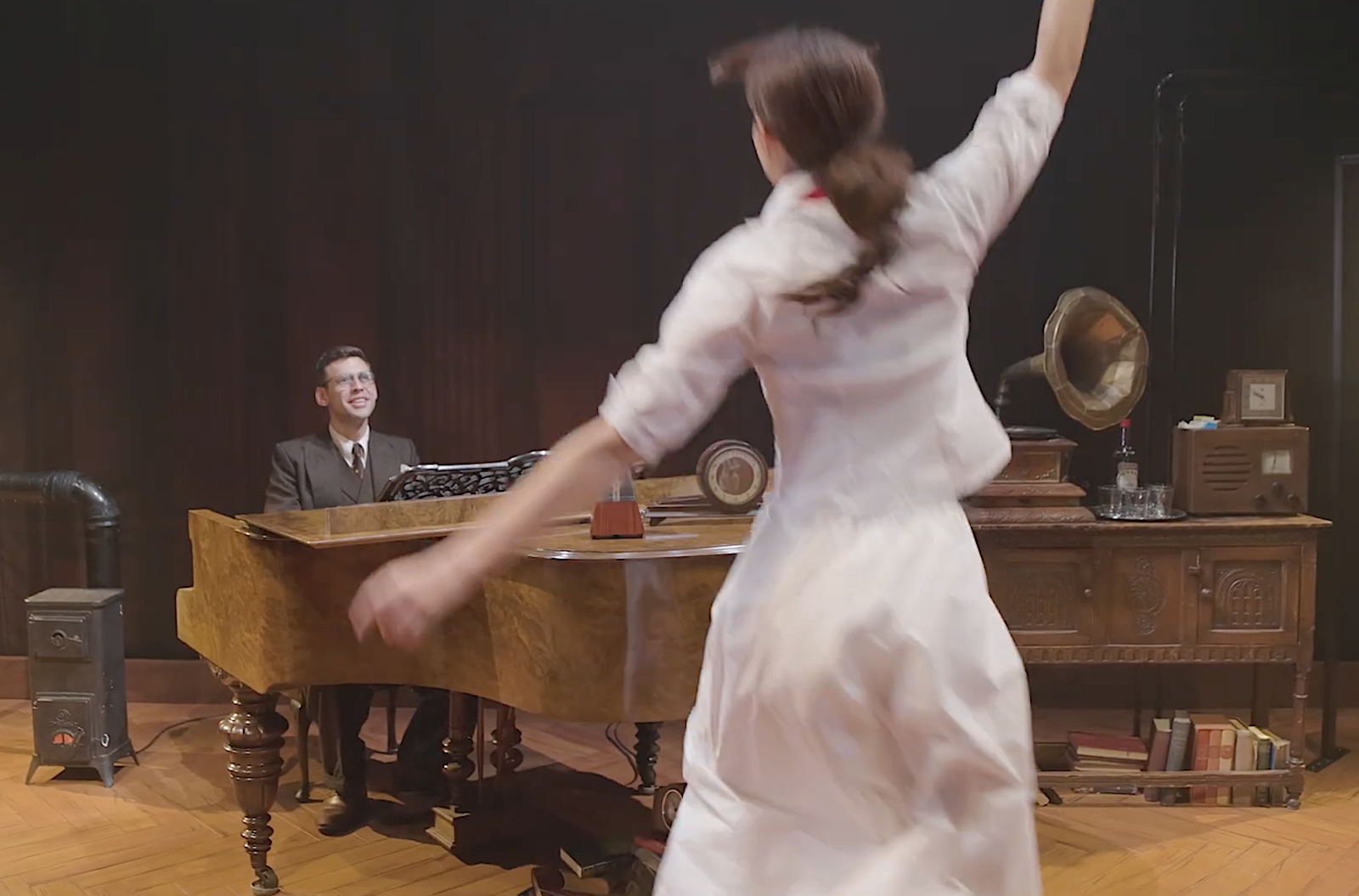
A major delight is to hear those oh-so-distinctive key passages of music on a piano that surely needs to be played much more loudly and be repositioned to allow us to see it being played. (Written by Rosalind Adler and Lea Sellers. Directed by Kate Fahy.)
Holy Fool, Benjamin O’Mahony, Phoebe Pryce, Piers Foley, Shostakovich,

Holy Fool: Benjamin O’Mahony plays while Phoebe Pryce dances. (Photo by Piers Foley)

➢ Holy Fool at Park200 theatre

FRONT PAGE

2026 ➤ Hottest summer since 1884 !!! According to the Met Office

KenCt, LondonUK, skyline, august2026, heatwave, MetOffice

31 August 2026: View from my window. . . The average mean temperature in the UK during June, July and August was 16.5C (62F)

FRONT PAGE

2025 ➤ The New Romantics history book currently turning heads

Photography, fashion, clubbing, exhibitions, Social trends, Swinging 80s, Youth culture, newbook, New Romantics, Blitz Club, Blitz Kids,

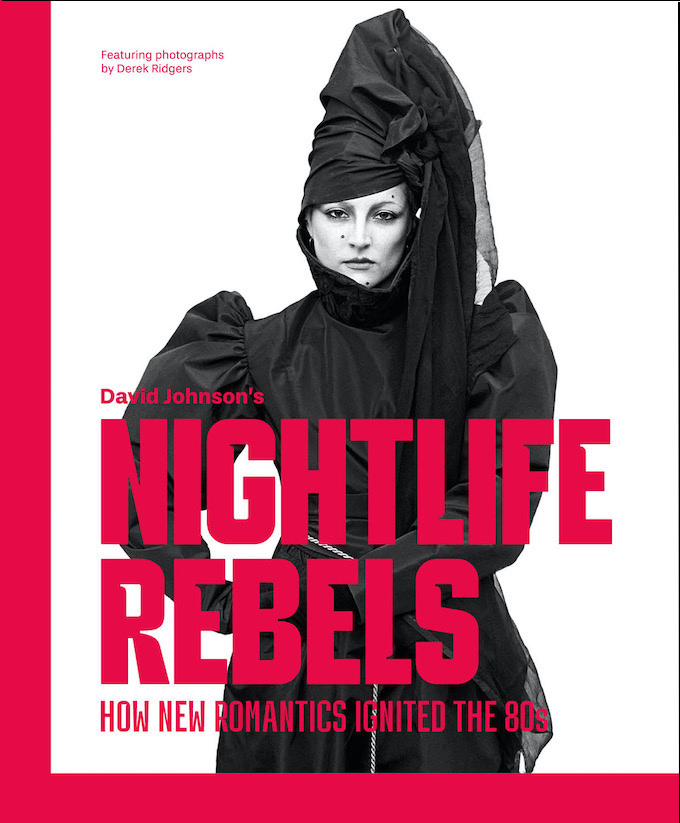
Nightlife Rebels: my new book published September 2025

❚ DURING THE SWINGING 80S two seasoned eye-witnesses watched Britain’s young ignite a glittering New Romantics revolution… As a Fleet Street journalist I explored their intriguing carnival of style-setting cults across Britain, Paris and New York, while straight-up photographer Derek Ridgers captured the libertines in their dark dens.

Our new illustrated hardback NIGHTLIFE REBELS reveals the candid history of the Blitz Club’s hedonists who insisted “One look lasts a day”. It has gone on sale at London’s Design Museum which is hosting the Blitz Club exhibition. To buy your copy online directly from the author simply email your address to:
Nightlife.Rebels@shapersofthe80s.com

FRONT PAGE

➤ Possibly the first post here at Shapersofthe80s in 2009

1 = GEORGE MICHAEL £90m ($138m)
2 = MICK HUCKNALL £35m ($54m)
3 = KYLIE MINOGUE £35m ($54m)
The richest UK popstar of all is ex-Beatle
Sir Paul McCartney £475m ($731m).
Source: Sunday Times Rich List 2010

De Finibus Bonorum
et Malorum, Cicero:

[Alas this sound recording no longer works]

FRONT PAGE

➤ Six magazines that changed the course of postwar British journalism

journalism, Picture Post, influencers, magazines pre-war

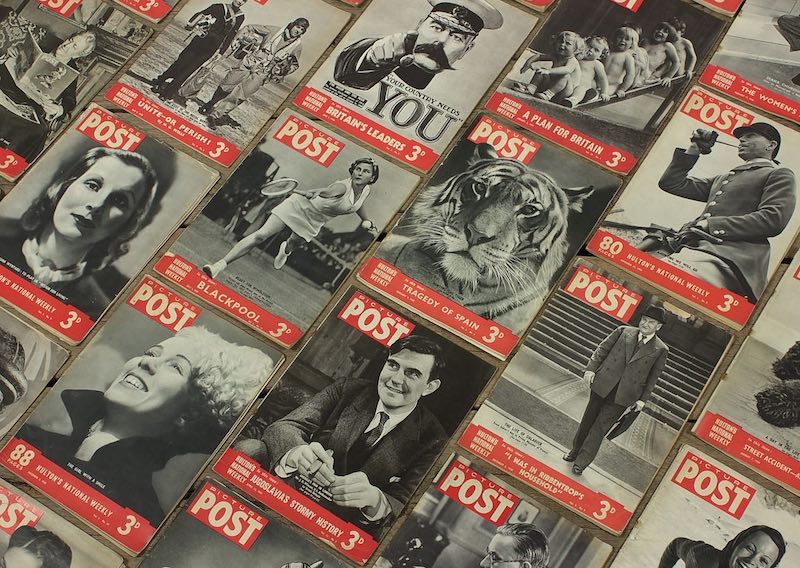
Picture Post covers from 1938 onwards

[This post was among the first to be published at
Shapersofthe80s in March 2009]

PICTURE POST 1938-57

The pioneer of photo-reportage. At the height of its powers during the Second World War this was the most widely read periodical in the country, selling 1,950,000 copies a week. Its inspirational editor from 1940 Tom Hopkinson recruited the photographers Bill Brandt, Bert Hardy, Kurt Hutton, Felix Man, Francis Reiss, Thurston Hopkins, John Chillingworth, Grace Robertson, Leonard McCombe. Staff writers included MacDonald Hastings, Lorna Hay, Sydney Jacobson, J. B. Priestley, Lionel Birch, James Cameron, Fyfe Robertson, Anne Scott-James, Robert Kee and Bert Lloyd; freelance contributors included George Bernard Shaw, Dorothy Parker and William Saroyan.

SUNDAY TIMES MAGAZINE 1962-today

The first colour supplement to be published as a weekly addition to a UK newspaper. The first editor was Mark Boxer. From the outset, “photographer first” was the benchmark and required serious investment in photo-reportage from the world’s trouble spots. Michael Rand, its art director for 30 years from 1962, said the credo was “grit plus glamour – fashion juxtaposed with war photography and pop art”. He went on to champion the work of such photographers as Terry O’Neill, Brian Duffy, Richard Avedon, Eugene Richards, Diane Arbus, Mary Ellen Mark. The magazine featured images from the Vietnam war by the photographer Don McCullin, a photo-essay on the Vatican by Eve Arnold, many portraits and photo-essays by Lord Snowdon, and Bert Stern’s final photoshoot with Marilyn Monroe, among many other photographic collections.

NEW SOCIETY 1962-1988

A weekly magazine of social inquiry and cultural comment, it drew on the disciplines of sociology, anthropology, psychology, human geography, social history and social policy, and it published wide-ranging social reportage. The cultural commentator Robert Hewison wrote that New Society became “a forum for the new intelligentsia” created by the expansion of higher education in Britain from the early 1960s. The editor Paul Barker (1968–86) was described by the labour historian Eric Hobsbawm as the “most original of editors”.

NOVA 1965-75

Launched under the slogan A new kind of magazine for the new kind of woman, Nova created its own unique niche in the British consumer magazine market under gifted editor Dennis Hackett, together with visionary art director Harri Peccinotti. They swiftly established their magazine as an influential must-read for the movers and shakers of Swinging London, among men as well as the original target audience of women becoming devotees of its heady mixture of social issues and cutting-edge fashion and modern lifestyle features. Nova’s agenda of journalistically taboo subjects included contraception, abortion, cancer, race, homosexuality, divorce and royal affairs, invariably boosted by stylish and provocative cover images, making it a rarity among magazines. Ultimately Nova had more male readers than female.
[Nova incidentally is where my own career began – DJ, creator of Shapersofthe80s]

RADIO TIMES 1968-88

Programme listings magazine transformed with provocative feature articles under editor Geoffrey Cannon and art director David Driver to create Britain’s biggest weekly magazine sale which rocketed as TV itself became the mass medium, from 8 million to 11.2 million for the Christmas edition of 1988.

THE FACE 1980-2004

In 1980, Nick Logan, a respected ex-editor of NME, staked his house on launching a new magazine that was to make style the focus of youth culture, as much as music. The Face was quickly dubbed Britain’s “style bible”. Even with a top monthly sale of only 120,000, it had an impact not only on the pop press, but the mainstream media too which spawned style pages in newspapers and magazines and “yoof” TV shows across the enlarged landscape of broadcasting. His influential art director Neville Brody single-handedly revolutionised the way magazines were conceived while contributing many new fonts to the canon.

FRONT PAGE