Category Archives: journalism

2026 ➤ Sunday at 6pm: Share your grief over Finbar Sullivan

Primrose Hill, Leah Seresin, Chris Sullivan, Finbar Sullivan, murder, fighting

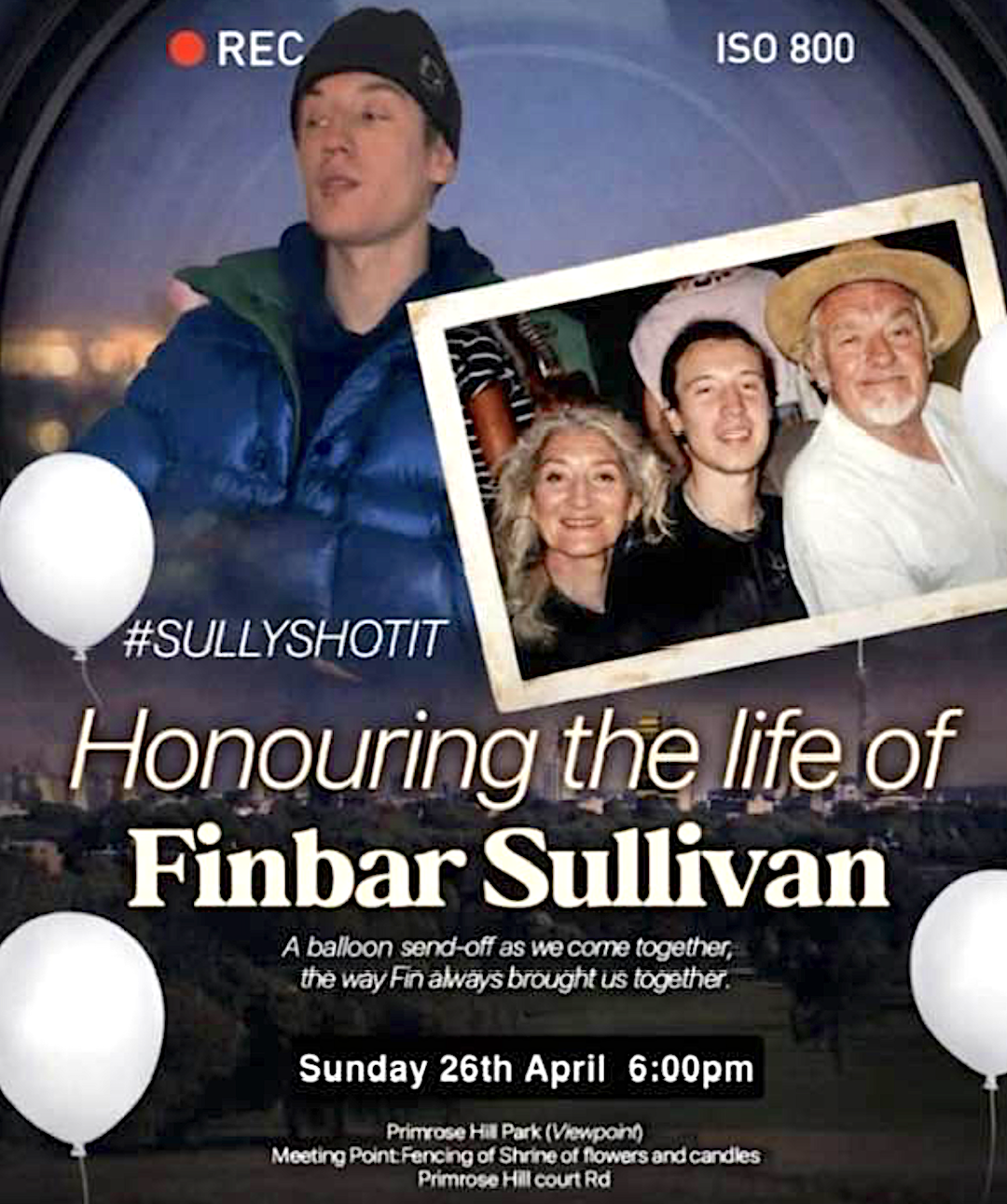
❚ IMPOSSIBLE to imagine how many tears have been shed in the past three weeks since the violent murderous death of Finbar Sullivan on his 21st birthday while testing his new camera in broad daylight on grassy Primrose Hill. The park was packed with families enjoying the warm weather and affords one of the most inspiring vistas of the London skyline.

Our hearts go out to Fin’s parents Leah Seresin and Chris Sullivan, two of the stars of the Eighties New Romantic subcultural movement, both of whom I met in 1980 while reporting their innovative activities which recharged Britain’s ailing youth culture.

Leah is the daughter of famed cinematographer Michael Seresin and was a backing singer in Andy Polaris’s band Animal Nightlife. The dynamic and witty Chris has lit so many fuses as leader of the latin band Blue Rondo a la Turk, while hosting several new Soho club-nights, notably the Wag for 19 years, that he remains one of the few original Shapers of the 80s, who inspired my website carrying that name.

JOIN THE FUND-RAISERS

Lifelong Sullivan friend Christos Tolers writes: Fin was the anchor in his world and to see it taken away so suddenly, without warning, has been one of the most heart-breaking things I’ve been witness to in my life. It’s with love and an overwhelming sense of powerlessness that I write this. But we do what we can… There is a Gofundme page set up to help with costs for an appropriate send-off for Finbar. Here is the link –
gofund.me/5defbb114

Seven men have now been arrested for initiating the gruesome savagery on 7 April that caused Fin’s death on Primrose Hill, and some await charging at the Old Bailey. Sky News reports how “he was surrounded and subjected to a relentless barrage of kicks and stamps. Another male produced a knife and stabbed Finbar at least twice, with one wound to his thigh proving fatal. Paramedics rushed to the scene but could not save him”. Police investigations continue thanks to the number of mobile phone videos and CCTV clips that captured the chaos, one of which silenced an entire court. The Metropolitan Police forensics lab also managed to recover dozens of images from Fin’s badly damaged camera.

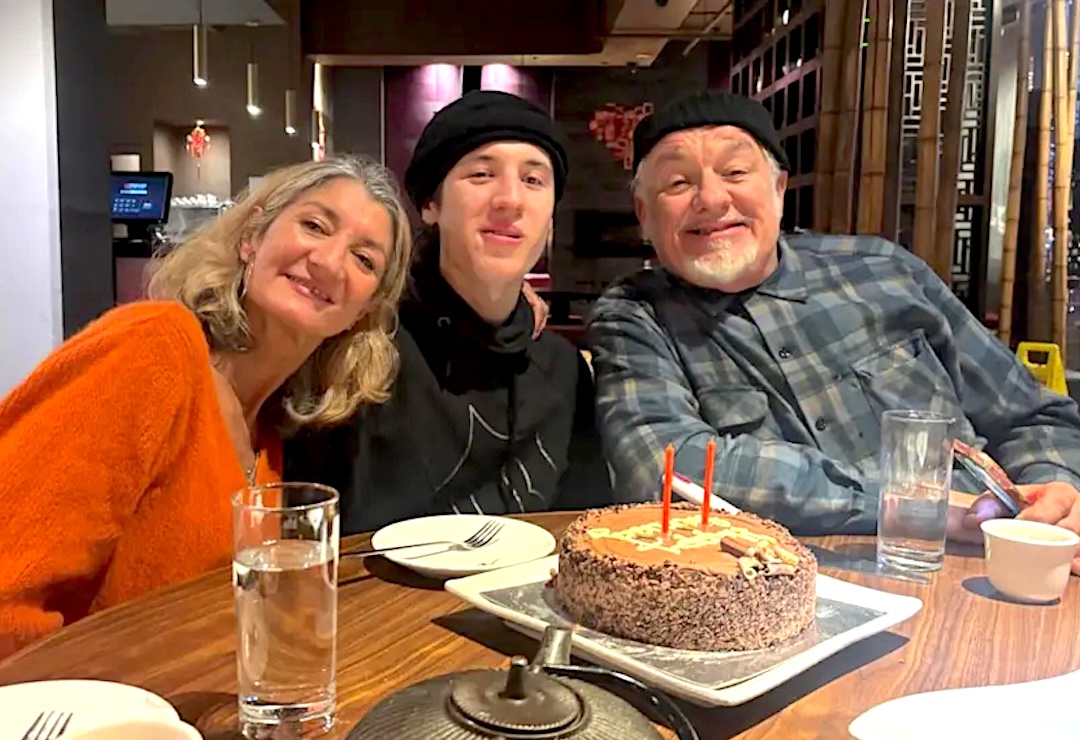
Fin’s parents Leah and Chris celebrating his birthday… On 7 April he was stabbed to death on Primrose Hill. [Family handout]

Chris has endured indescribable grief and anger while insisting on defending his son’s reputation as a video-maker – I was shocked to see one photograph of Dad sobbing so deeply as to reduce me too to tears. Amid the trauma he immediately initiated a charity fund-raiser to promote a violence-free society. The incident has raised questions about safety in public parks after dark, even in seemingly affluent or well-patrolled areas of north London. This new fund has raised an amazing £30,000+.

This Sunday Chris has announced a 6pm balloon send-off for Fin on Primrose Hill to honour his life. All friends and sympathisers are welcome to this vigil (see poster above).

HELP THE INVESTIGATORS

The police continue to ask anyone with relevant information to contact the force on 101, quoting reference 6448/07 April.

FRONT PAGE

2026 ➤ What made Molly the inimitable

Molly Parkin, Darren Coffield, painters, BP Portrait Award, NPG

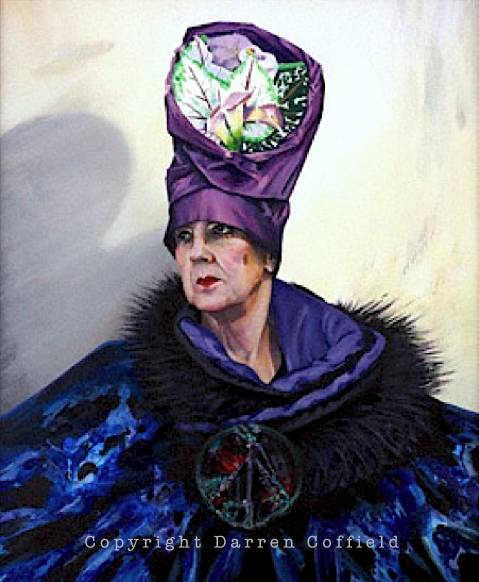
Molly Parkin, Welsh painter, journalist, novelist and turban-clad muse to generations of style-worshippers. Painted by Darren Coffield, she was besporting herself at the National Portrait Gallery during 2010

MOLLY PARKIN 3 FEB 1932 – 5 JAN 2026

❚ SO SAD TO HEAR OF MOLLY’S PASSING AGED 93. She was my first great mentor when I joined the avant-garde magazine Nova in my first professional job… and in 1973 was able to give her an uninhibited weekly interview spot in the trend-setting Saturday edition of the Evening Standard which rattled the window panes!

In the 1950s Molly Parkin passed through Goldsmiths and Brighton art colleges painting and teaching. As a painter she enjoyed sell-out exhibitions up to the day she threw out her husband Michael and gave up art for the next four decades. From 1965, she became an arbiter of Swinging 60s style as fashion editor of Nova – one of the six postwar magazines that changed the face of British publishing. She liberated fashion journalism from the tyranny of high society, moving on through Harpers & Queen and The Sunday Times to create visionary images with a rising generation of photographers such as Peccinotti, Duffy, Sieff and Feurer. Simultaneously she was running her own Chelsea boutique and Belgravia restaurant while unwittingly inspiring the cub who set out as a trainee on Nova and would one day create Shapers of the 80s.

In the 1970s, as well as being a chat-show celebrity and libidinous novelist, she wrote for Men Only and Spare Rib, plus an interview in the Saturday Evening Standard, indulgently edited by Yours Truly, selecting candidates from her eccentric circle of hedonist friends, among whom Rose Lewis the Knightsbridge corsetiere was but typical.

In the 80s she became an honorary Blitz Kid, compered the Alternative Miss World contest, threw decadent parties every Saturday night in Chelsea and toured a solo stage show. In the 90s she had a facelift and wrote a sensational autobiography called Moll. In the Noughties she returned to extremely vibrant painting and hosted a clubnight at the Green Carnation as a Granny deejay.

In 2010, she was cover-girl on the launch issue of Eulogy, a short-lived(!) magazine dedicated to dispelling the taboos surrounding death. Her memoirs Welcome To Mollywood were published that October. Meanwhile she was exhibiting herself at the National Portrait Gallery, London, in the annual BP Portrait Award show on the noble canvas, above, by Darren Coffield, a painter and gallerist closely associated with the emergence of the Young British Artists (YBA) movement.

OBITUARIES

➢ Guardian: Artist, writer, fashion editor and raconteur whose bohemian lifestyle inspired her bonkbuster novels
➢ HeritageArtHouse: Paintings were her first
and last love – super-aware of emotion in a landscape

➢ BBC News: Parkin was fashion editor of Nova
and Harpers and Queen

➢ Independent: Fashion editor and Swinging Sixties icon

FRONT PAGE

2025 ➤ The New Romantics history book currently turning heads

Photography, fashion, clubbing, exhibitions, Social trends, Swinging 80s, Youth culture, newbook, New Romantics, Blitz Club, Blitz Kids,

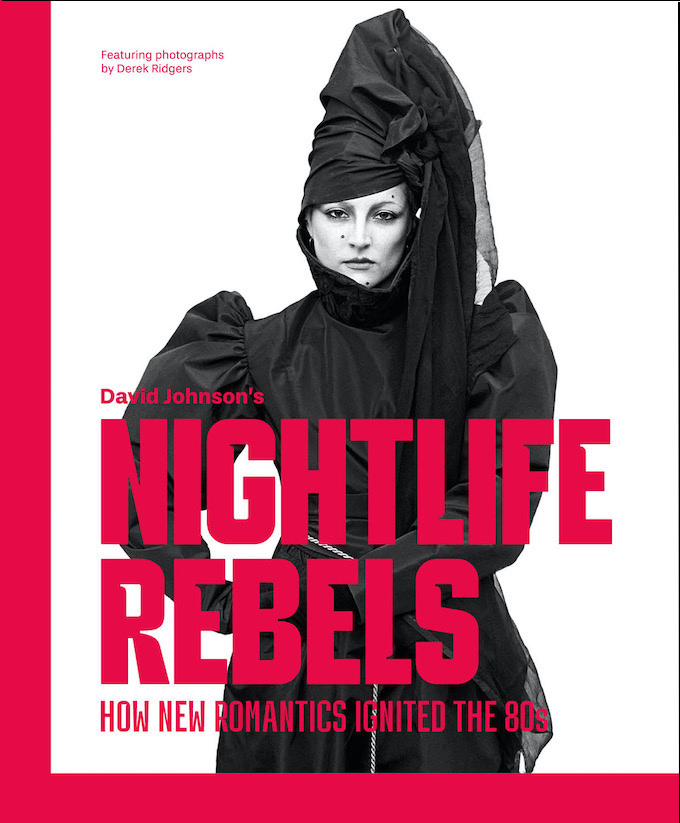
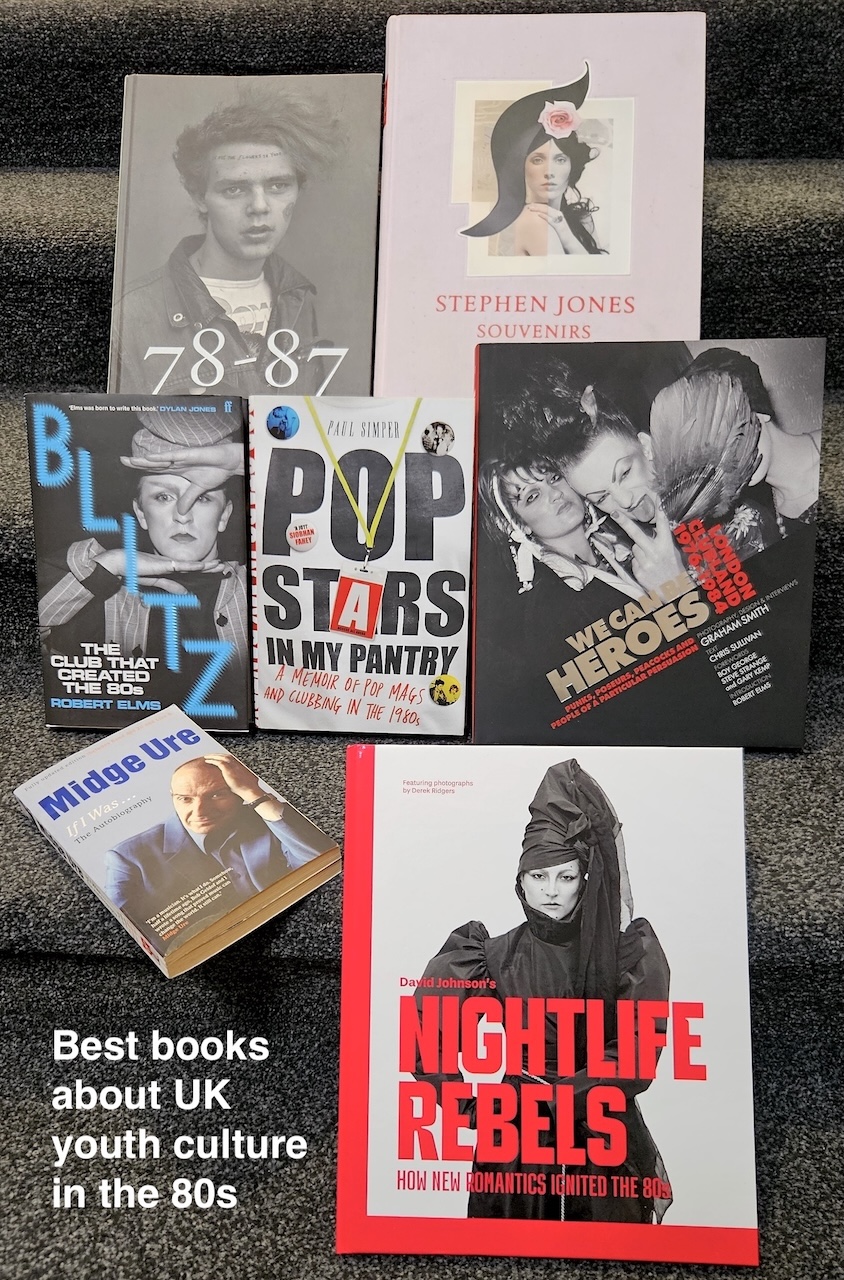
Nightlife Rebels: my new book published September 2025

❚ DURING THE SWINGING 80S two seasoned eye-witnesses watched Britain’s young ignite a glittering New Romantics revolution… As a Fleet Street journalist I explored their intriguing carnival of style-setting cults across Britain, Paris and New York, while straight-up photographer Derek Ridgers captured the libertines in their dark dens.

Our new illustrated hardback NIGHTLIFE REBELS reveals the candid history of the Blitz Club’s hedonists who insisted “One look lasts a day”. It has gone on sale at London’s Design Museum which is hosting the Blitz Club exhibition. To buy your copy online directly from the author simply email your address to:
Nightlife.Rebels@shapersofthe80s.com

FRONT PAGE

➤ Six magazines that changed the course of postwar British journalism

journalism, Picture Post, influencers, magazines pre-war

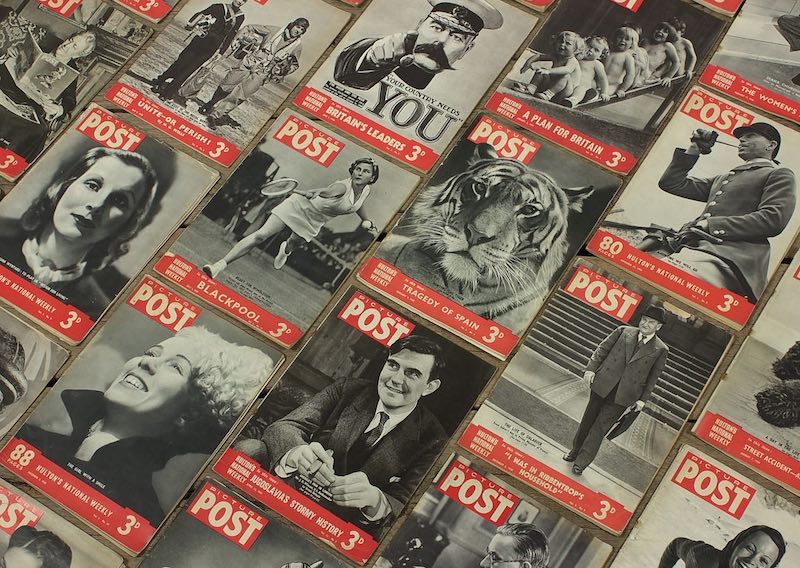
Picture Post covers from 1938 onwards

[This post was among the first to be published at
Shapersofthe80s in March 2009]

PICTURE POST 1938-57

The pioneer of photo-reportage. At the height of its powers during the Second World War this was the most widely read periodical in the country, selling 1,950,000 copies a week. Its inspirational editor from 1940 Tom Hopkinson recruited the photographers Bill Brandt, Bert Hardy, Kurt Hutton, Felix Man, Francis Reiss, Thurston Hopkins, John Chillingworth, Grace Robertson, Leonard McCombe. Staff writers included MacDonald Hastings, Lorna Hay, Sydney Jacobson, J. B. Priestley, Lionel Birch, James Cameron, Fyfe Robertson, Anne Scott-James, Robert Kee and Bert Lloyd; freelance contributors included George Bernard Shaw, Dorothy Parker and William Saroyan.

SUNDAY TIMES MAGAZINE 1962-today

The first colour supplement to be published as a weekly addition to a UK newspaper. The first editor was Mark Boxer. From the outset, “photographer first” was the benchmark and required serious investment in photo-reportage from the world’s trouble spots. Michael Rand, its art director for 30 years from 1962, said the credo was “grit plus glamour – fashion juxtaposed with war photography and pop art”. He went on to champion the work of such photographers as Terry O’Neill, Brian Duffy, Richard Avedon, Eugene Richards, Diane Arbus, Mary Ellen Mark. The magazine featured images from the Vietnam war by the photographer Don McCullin, a photo-essay on the Vatican by Eve Arnold, many portraits and photo-essays by Lord Snowdon, and Bert Stern’s final photoshoot with Marilyn Monroe, among many other photographic collections.

NEW SOCIETY 1962-1988

A weekly magazine of social inquiry and cultural comment, it drew on the disciplines of sociology, anthropology, psychology, human geography, social history and social policy, and it published wide-ranging social reportage. The cultural commentator Robert Hewison wrote that New Society became “a forum for the new intelligentsia” created by the expansion of higher education in Britain from the early 1960s. The editor Paul Barker (1968–86) was described by the labour historian Eric Hobsbawm as the “most original of editors”.

NOVA 1965-75

Launched under the slogan A new kind of magazine for the new kind of woman, Nova created its own unique niche in the British consumer magazine market under gifted editor Dennis Hackett, together with visionary art director Harri Peccinotti. They swiftly established their magazine as an influential must-read for the movers and shakers of Swinging London, among men as well as the original target audience of women becoming devotees of its heady mixture of social issues and cutting-edge fashion and modern lifestyle features. Nova’s agenda of journalistically taboo subjects included contraception, abortion, cancer, race, homosexuality, divorce and royal affairs, invariably boosted by stylish and provocative cover images, making it a rarity among magazines. Ultimately Nova had more male readers than female.
[Nova incidentally is where my own career began – DJ, creator of Shapersofthe80s]

RADIO TIMES 1968-88

Programme listings magazine transformed with provocative feature articles under editor Geoffrey Cannon and art director David Driver to create Britain’s biggest weekly magazine sale which rocketed as TV itself became the mass medium, from 8 million to 11.2 million for the Christmas edition of 1988.

THE FACE 1980-2004

In 1980, Nick Logan, a respected ex-editor of NME, staked his house on launching a new magazine that was to make style the focus of youth culture, as much as music. The Face was quickly dubbed Britain’s “style bible”. Even with a top monthly sale of only 120,000, it had an impact not only on the pop press, but the mainstream media too which spawned style pages in newspapers and magazines and “yoof” TV shows across the enlarged landscape of broadcasting. His influential art director Neville Brody single-handedly revolutionised the way magazines were conceived while contributing many new fonts to the canon.

FRONT PAGE

2025 ➤ Finally a candid insight into the glittering New Romantics revolution

Photography, fashion, clubbing, exhibitions, Social trends, Swinging 80s, Youth culture, newbook, New Romantics, Blitz Club, Nightlife Rebels, Blitz Kids, Derek Ridgers, Kim Bowen, David Johnson, John Maybury,

Contributors to Nightlife Rebels: Derek Ridgers, Kim Bowen, David Johnson and John Maybury. (Photo by David Jenkins)

❚ DURING THE SWINGING 80s two seasoned eye-witnesses watched Britain’s young ignite a glittering New Romantics revolution… Myself David Johnson as a Fleet Street journalist explored their intriguing carnival of style-setting cults across Britain, Paris and New York, while straight-up photographer Derek Ridgers captured the libertines in their dark dens.

Our new illustrated hardback NIGHTLIFE REBELS reveals the candid history of the celebrated Blitz Club’s hedonists who insisted “One look lasts a day”. Featuring unseen photos, stats, a unique timeline and Who Really Was Who.

Last week the book’s four chief contributors gathered for a team picture at London’s Design Museum where an exhibition about Blitz culture runs for six months and our book is on sale in its shop – The Design Museum. To buy your copy online directly from the author simply email your address to:
Nightlife.Rebels [a t] shapersofthe80s.com

WHAT EACH OF US SAYS ABOUT THE 80s

“Some nights it was like walking into Hieronymus Bosch’s Garden of Earthly Delights” – Photographer Derek Ridgers, top left

Photography, fashion, clubbing, exhibitions, Social trends, Swinging 80s, Youth culture, newbook, New Romantics, Blitz Club, Blitz Kids,“A full night-time economy flourished around these clubs where graphic designers, artists, deejays, writers, producers and musicians of every kind refined and developed their skills by working with club-owners” – Stylist and costume designer Kim Bowen, former Queen of the Blitz, second left

“In the shabby Blitz wine bar on Tuesdays precocious 19-year-olds presented an eye-stopping collage, posing away in wondrous ensembles, emphatic make-up and in-flight haircuts. This spectacle shouted newness” – Journalist David Johnson, third along

“Being photographed served as a kind of affirmation that your particular ‘look’ set you apart as a somebody” – Video artist John Maybury, and former Blitz star, pictured right

Photography, fashion, clubbing, Social trends, Swinging 80s, Youth culture, newbook, New Romantics, Blitz Club, Blitz Kids, David Johnson, Design Museum, Blitz Club exhibition,

There’s our book on the second shelf at the Design Museum: Dare we assume the two lads thumbing through the options might have been Blitz Kids back in the day? (Photo by Shapersofthe80s)

➢ Previously at Shapersofthe80s: Here’s an extravaganza of a show to confirm the Blitz Kids’ place in history

FRONT PAGE