Category Archives: obituaries

2026 ➤ What made Molly the inimitable

Molly Parkin, Darren Coffield, painters, BP Portrait Award, NPG

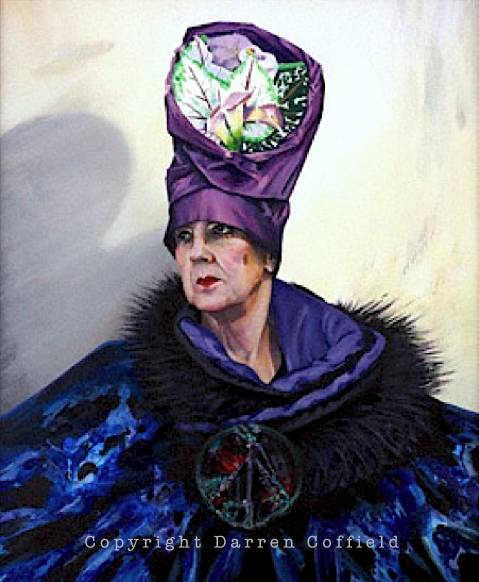
Molly Parkin, Welsh painter, journalist, novelist and turban-clad muse to generations of style-worshippers. Painted by Darren Coffield, she was besporting herself at the National Portrait Gallery during 2010

MOLLY PARKIN 3 FEB 1932 – 5 JAN 2026

❚ SO SAD TO HEAR OF MOLLY’S PASSING AGED 93. She was my first great mentor when I joined the avant-garde magazine Nova in my first professional job… and in 1973 was able to give her an uninhibited weekly interview spot in the trend-setting Saturday edition of the Evening Standard which rattled the window panes!

In the 1950s Molly Parkin passed through Goldsmiths and Brighton art colleges painting and teaching. As a painter she enjoyed sell-out exhibitions up to the day she threw out her husband Michael and gave up art for the next four decades. From 1965, she became an arbiter of Swinging 60s style as fashion editor of Nova – one of the six postwar magazines that changed the face of British publishing. She liberated fashion journalism from the tyranny of high society, moving on through Harpers & Queen and The Sunday Times to create visionary images with a rising generation of photographers such as Peccinotti, Duffy, Sieff and Feurer. Simultaneously she was running her own Chelsea boutique and Belgravia restaurant while unwittingly inspiring the cub who set out as a trainee on Nova and would one day create Shapers of the 80s.

In the 1970s, as well as being a chat-show celebrity and libidinous novelist, she wrote for Men Only and Spare Rib, plus an interview in the Saturday Evening Standard, indulgently edited by Yours Truly, selecting candidates from her eccentric circle of hedonist friends, among whom Rose Lewis the Knightsbridge corsetiere was but typical.

In the 80s she became an honorary Blitz Kid, compered the Alternative Miss World contest, threw decadent parties every Saturday night in Chelsea and toured a solo stage show. In the 90s she had a facelift and wrote a sensational autobiography called Moll. In the Noughties she returned to extremely vibrant painting and hosted a clubnight at the Green Carnation as a Granny deejay.

In 2010, she was cover-girl on the launch issue of Eulogy, a short-lived(!) magazine dedicated to dispelling the taboos surrounding death. Her memoirs Welcome To Mollywood were published that October. Meanwhile she was exhibiting herself at the National Portrait Gallery, London, in the annual BP Portrait Award show on the noble canvas, above, by Darren Coffield, a painter and gallerist closely associated with the emergence of the Young British Artists (YBA) movement.

OBITUARIES

➢ Guardian: Artist, writer, fashion editor and raconteur whose bohemian lifestyle inspired her bonkbuster novels
➢ HeritageArtHouse: Paintings were her first
and last love – super-aware of emotion in a landscape

➢ BBC News: Parkin was fashion editor of Nova
and Harpers and Queen

➢ Independent: Fashion editor and Swinging Sixties icon
FRONT PAGE

2025 ➤ I fan-mailed Tom Stoppard from his first play onward!

Tom Stoppard, Jumpers, Arcadia, Travesties, Robert May, National Theatre, Rosencrantz And Guildenstern, David Johnson

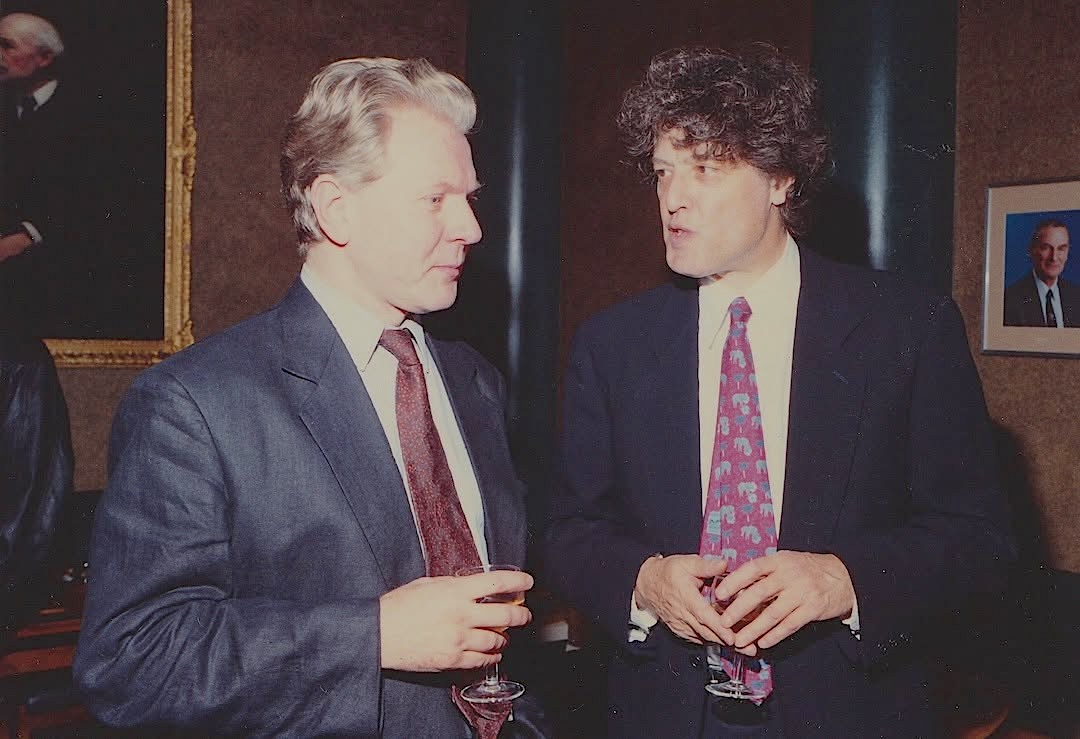
Johnson meets Stoppard: Telegraph’s annual Scientists Meet the Media Party 1992

❚ TRIBUTES HAVE POURED IN following the death of our greatest contemporary playwright Tom Stoppard, aged 88. I have been lucky enough to cross his path several times, notably when I invited him to the Telegraph’s annual Scientists Meet the Media Party in 1992 (pictured), where he was the only one of a dozen authors to accept the invitation. His reason was to ask how he could meet Britain’s leading expert in chaos theory, who luckily was in the room, and proved to be Prof Robert May (later Govt Chief Scientist). The result one year on was easily Stoppard’s finest play, Arcadia, wittily set in two time periods, and awarded Best New Play of 1993.

I saw Stoppard’s first play in 1967 at the Old Vic under the National Theatre’s regime there. This was the absurdist comedy Rosencrantz and Guildenstern Are Dead, a debut that “changed the course of postwar theatre”, according to critic Harold Hobson. Stoppard took its title from lines in Shakespeare’s Hamlet and followed the two bit-part actors R&G off-stage while a full blown production of Hamlet swept on and off around them. Dazzling, brilliant, inventive. I immediately wrote the unknown playwright a breathless fan-mail and received an autographed card in reply. Sigh.

His other masterpieces have included Jumpers, Every Good Boy Deserves Favour (featuring the entire London Symphony Orchestra under André Previn) and Travesties, all collecting umpteen major awards.

➢ Elsewhere at Shapers of the 80s: Stoppard’s superlative new play, Leopoldstadt, is a tearjerker echoing his own roots

➢ “Famed for the ‘hypnotised brilliance’ of his prose and dialogue” – Michael Coveney in The Guardian

FRONT PAGE

2015 ➤ Steve Strange’s anniversary: deciphering the pen portraits of the man of masks

Steve Strange, Stephen Harrington, Blitz Kids, New Romantics, nightclubbing, Swinging 80s, London, fashion, pop music, Visage, tributes, youth culture, obituaries

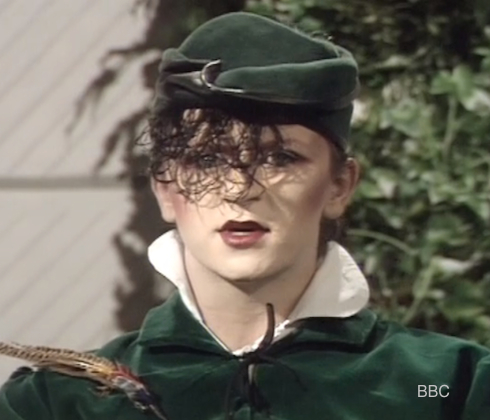
Steve Strange in 1981: here in Robin Hood guise (BBC)

FIRST PUBLISHED 13 FEBRUARY 2015

◼ ONE OF STEVE STRANGE’S TALENTS was persuading the press to believe in his latest wheeze, however fantastic. He had a way of convincing himself that a story was already written and a mission achieved before he had pressed the accelerator and set off. This irritated as many journalists as it amused and many were consequently very sceptical of his next big announcement – like saying he’d booked a big American star to do her first live promotional performance in Britain at his crowning glory, the Camden Palace, capacity 1,410. But in fact he had and she did, and in June 1983 the unknown Madonna was launched in the UK singing to backing tapes for half an hour.

The myths surrounding Steve were always the stuff of self-promotion. Dressing up was part of the same story-telling ritual. Today, he would say, I am Robin Hood, tomorrow Ruritanian Space Cadet, the next day Marionette with the mind of a toy. A compulsive man of masks presents a tricky subject for the scribblers obliged to capture that life once it is spent, so we must tiptoe through the obituaries like a minefield, and beware of tripping over Steve’s much-spun versions of history that were pure fantasy. Even national newspapers seemed to fall for many of the dreams he spouted, as well as the exceedingly vague memories committed to his 2002 book, Blitzed. As the mainstream obituary writers lead you through those New Romantic years, see if you can spot the porkies. . .

➢ The Times obituary:
As the head boy of the “new romantics”, Steve Strange was the flamboyant scene-maker of a colourful subculture that dominated early 1980s British pop music as a showily garish counter-reaction to the stylistic austerity of punk. If punks were the roundheads in pop’s civil war, the “new romantics” were the cavaliers, ushering in a restoration of glitz and glamour, with a delectably decadent flourish… / Continued online

➢ Adam Sweeting, Guardian:
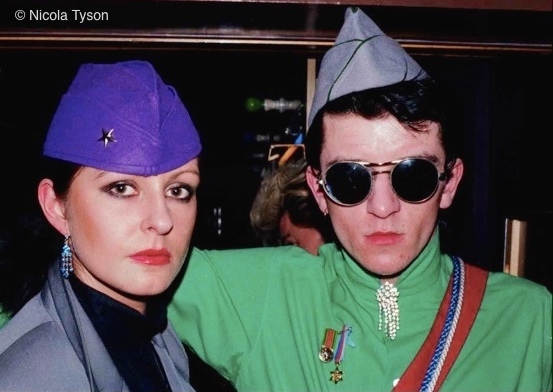
In 1978, Strange and Rusty Egan (then drummer with the Rich Kids) began holding David Bowie nights on Tuesdays at Billy’s club in Soho, a squalid bunker situated beneath a brothel. “We played Bowie, Roxy Music and electro,” said Strange. “It was where our friends could be themselves.” Billy’s could hold only 250 people [not quite!] but swiftly developed an outsize reputation, numbering among its garishly clad clientele such stars-to-be as George O’Dowd (the future Boy George), Siobhan Fahey, later of Bananarama, and Marilyn. . . / Continued online

Billy’s club,Helen Robinson, nightlife, London ,Steve Strange, PX

Billy’s club 1978: Strange as Ruritanian Space Cadet alongside PX designer Helen Robinson. (Photograph by © Nicola Tyson)

➢ Daily Telegraph obituary:
Strange fronted sleek operations, such as Club For Heroes in Baker Street and the Camden Palace in north London, where Madonna performed her first British live concert. But Visage split amid acrimony over the division of royalty payments, and his nightspots fell out of vogue in the mid-1980s with the rise of rap, hip-hop and dance music. By this time Strange had a reputation for high-handedness. Years later, Boy George lampooned Strange as the preposterous club host character “Nobby Normal” in his biographical musical Taboo. Strange was not amused. “I don’t think I have that strong a Welsh accent,” he complained. . . / Continued online

➢ The Scotsman obituary:
Although his career as a pop star afforded him only one real hit as frontman of the band Visage, 1980’s austere synthesiser anthem Fade to Grey, Steve Strange’s distinctive image and party-loving persona saw him help invent London’s New Romantic scene. . . Visage’s time in the sun flared all too briefly; with Strange being courted to repeat the clubbing success of places like the Blitz in various US cities, he dived wholeheartedly into the life of the international rock star, with all the pitfalls that entailed. Put off by Strange’s drug use, spending sprees and debauched behaviour, Midge Ure left to concentrate on Ultravox and Visage’s 1984 third album Beat Boy was a critical and commercial failure. The band split the following year, the same year that Strange first took heroin. . . / Continued online

➢ Pierre Perrone in The Independent:
A flamboyant figure with a self-destructive streak . . . By the late 90s he was back in Wales and, by his own admission, acting “very bizarrely”. He spent six weeks in a psychiatric hospital, was arrested for shoplifting and given a suspended sentence. “I don’t know whether it was cry for help,” he told The Independent in 2000, blaming an over-reliance on Prozac, though he seemed comfortable with his avowed bisexuality. . . / Continued online

FRONT PAGE

2024 ➤ Andy Polaris reminds us of Quincy Jones’s legacy as a titan of 20th-century showbiz

Tribute, concert review, Quincy Jones, Michael Jackson, Grammy awards,

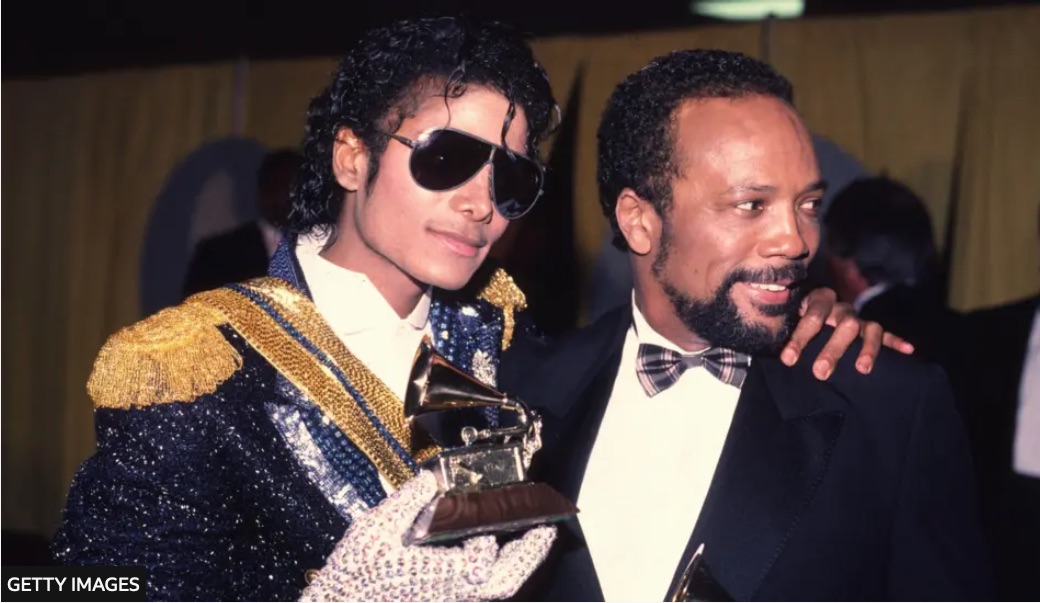
1984: Quincy Jones with Michael Jackson at the 1984 Grammy Awards, where they won eight

❚ The cross-cultural pioneer Quincy Jones died this week
aged 91 in Los Angeles. In tribute, we republish Andy Polaris’s appreciation of his genius when he brought a huge
orchestra to London’s O2 arena on 25 Jun 2019…

Excerpt from the review at the Polaris music blog: Quincy Jones Jr is a titan of 20th-century entertainment whose creative talent has spanned decades as composer, multi-instrumentalist, singer-songwriter, arranger, producer and publisher. He has received the most Grammy nominations, a staggering 80, and won 28, plus seven Oscar nominations, and a Jean Hersholt Humanitarian award in 1996 amongst other industry accolades. He has worked with superstars from Aretha Franklin, Frank Sinatra, Count Basie, Miles Davis, Dizzy Gillespie to Michael Jackson. In 2018 a Netflix film Quincy won the Critics Choice Documentary award.

As a teenage prodigy Quincy Jones had been tutored by Ray Charles and mentored by Count Basie, by 19 was touring Europe with Lionel Hampton for three years, at 24 studied at the feet of the godlike Nadia Boulanger in the American School at Fontainebleau, and soon after became a troubleshooting vice-president for Philips Records of Holland.

This week [in 2019] sees the 10th anniversary of Michael Jackson’s death and despite the controversy and those clamouring on social media to cancel his music, the audience at this O2 concert showed that, whatever your feelings, it’s nigh on impossible to crush the joyous memories and mood of his repertoire. In addition, we were treated to the formidable playlist of our youth unfolding before our ears thanks to the savvy musicianship of the band and huge orchestra, which even included a harp, all conducted and hosted by Jules Buckley… / Review continued at Apolarisview

➢ Guardian obituary: Quincy Jones was the first black composer to find acceptance in Hollywood and won 28 Grammys

FRONT PAGE

2024 ➤ Pilger’s fearlessness is what journalism still needs today

John Pilger, Daily Mirror, Rupert, Murdoch, Robert Maxwell, Mirrorscope, Journalism, tributes
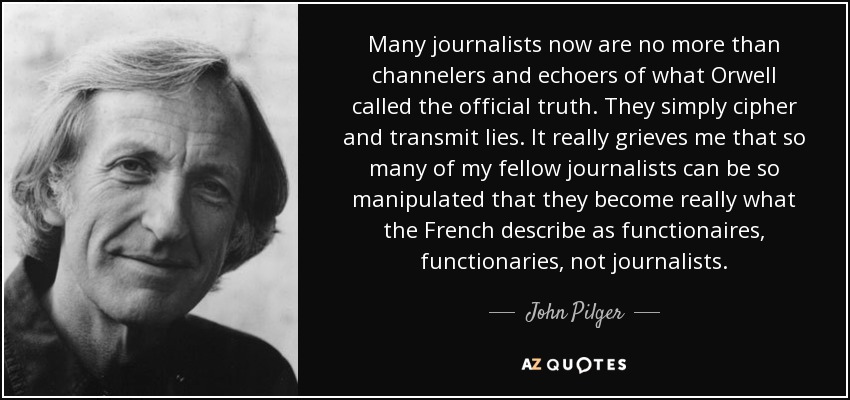
❚ ONE OF THE GREATEST post-war crusading journalists has died after a lifetime of championing frank journalism and regularly criticising the mainstream media. In 2002, John Pilger said that “many journalists now are no more than channellers and echoers of what Orwell called the official truth”.

Though aged only 28 when named in the British Press Awards as Journalist of the Year 1967, Pilger became the backbone of the Daily Mirror’s revolutionary investigative Mirrorscope sections – four-pagers twice a week – when the tabloid respected for its humanity was selling 5million copies a day (long before The Sun posed any kind of threat), the world’s highest English-language circulation.

Pilger was already a mentor for me in 1969 when the paper created its glossy mid-week Mirror Magazine and I joined in my first Fleet Street job, surrounded by the giants of the day.

Pilger spent 23 years with the Mirror, through what proved a golden age for British journalism. It was not to last. In a landmark New Statesman column in December 1991 he reflected on how popular journalism had been hijacked by both “the monster” Robert Maxwell, who lucked into buying the Mirror after a management cock-up and reduced its sales to an all-time low, and by Rupert Murdoch whose Sun had overtaken its rival’s sales by creating an agenda of sexism, racism and voyeurism. Pilger savaged the journalists in both camps for their cynicism.

His later career included more than 60 hard-hitting ITV documentaries which won Bafta and Emmy awards. The activist Noam Chomsky said of him: “John Pilger’s work has been a beacon of light in often dark times.” Playwright Harold Pinter described him as “fearless”. Pilger’s is a voice we still need to hear.

John Pilger, 9 October 1939 – 30 December 2023

➢ The Guardian’s robust obituary of the fervent critic of US and British foreign policy – “Why do many journalists beat the drums of war regardless of the lies of governments?” Pilger asked in 2010”

➢ The Times: Critical obituary of the “left-wing anti-American journalist” … “denounced as a dupe of the eastern bloc”

➢ Pilger’s own informative website

➢ Heroes Paperback – 1 Feb 2001 – John Pilger’s autobiography

FRONT PAGE