Category Archives: Social trends

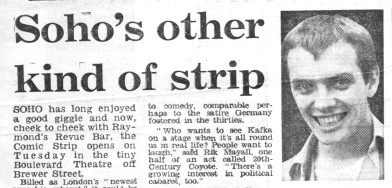
1980 ➤ Rik and pals detonate a timebomb beneath another kind of strip for Soho

On this autumn day 30 years ago, a handful of comics in their twenties broke free from the bear-pit formula of the Comedy Store, which had opened in London in 1979, modelled on its Hollywood precursor. These soon-to-be-famous clowns were angry with Britain’s complacency in the face of recession and decided to define a new kind of comedy. First news of the breakaway faction that would eventually make household names of French & Saunders, Rik Mayall, Adrian Edmondson, Nigel Planer, Peter Richardson and Alexei Sayle appeared in the Evening Standard’s On The Line page …

Comic Strip, Rik Mayall, Alexei Sayle,Michael White

First published in the Evening Standard, October 2, 1980

❚ SOHO HAS LONG ENJOYED A GOOD GIGGLE and now, cheek to cheek with the king of strip Raymond’s Revue Bar, the Comic Strip opens on Tuesday in the tiny Boulevard Theatre off Brewer Street. Billed as London’s “newest anarchic cabaret”, it could be called Son of the Comedy Store, a nightspot already well established as a Gong Show for would-be comedians.

“The Comic Strip’s going to feature the best of the Comedy Store and more,” explained Peter Richardson, one of a comedy duo called The Outer Limits, who are launching the enterprise with West End impresario Michael White (the man behind the musical Annie). “There was too much experimentation in the Comedy Store. We want to establish a certain standard at the Comic Strip.”

alternative cabaret,comedy, Soho, Comic Strip,1980,Rik Mayall

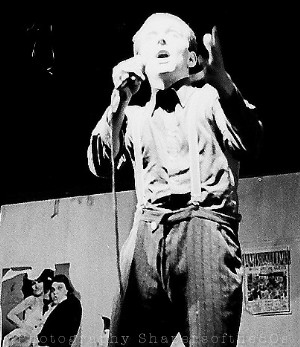
Angry Feminist Poet: Rik Mayall at the Comic Strip, Nov 1980. Photographed by © Shapersofthe80s

He and the comedians he has brought with him — including the Comedy Store’s acerbic compere, Alexei Sayle —believe the traumas of the 1980s have brought a sharper cutting edge to comedy comparable perhaps to the satire Germany fostered in the 30s. “Who wants to see Kafka on a stage when it’s all round us in real life? People want to laugh,” said Rik Mayall, one half of an act called 20th-Century Coyote. “There’s a growing interest in political cabaret too.”

This self-styled “alternative” comedy isn’t all heavy social comment by any means, its roots going back more to clowning. What these comics are attempting is deliberately to shake off the influence of the Footlights clan who have shaped British humour for the past 20 years. Mayall himself has a talent for the merciless lampoon. One of his sketches, a punk commuter lamenting his daily lot, is the funniest invention since John Cleese’s Ministry of Silly Walks.

Last weekend he and The Outer Limits were playing to packed houses at the Three Horseshoes, a pub theatre in Hampstead, as if to prove that alternative humour is booming. The Comic Strip promises a varied line-up which this month includes Pamela Stephenson from BBC-tv’s Not The Nine O’Clock News. Entrance will cost a flat £3.

➢ 1980, A new decade demands new comedy
— Birth of the Comic Strip

FRONT PAGE

➤ Britain’s top hatter, Stephen Jones OBE, celebrates 30 years of Jonesmanship

On Facebook today Stephen Jones writes:

“7pm, 1st Oct 1980, 30 years ago today, I opened my first
hat salon in Covent Garden, with the fabulous Kim Bowen and the super talented Lee Sheldrick (R.I.P). Thank you all, it’s been an amazing adventure! Xs”
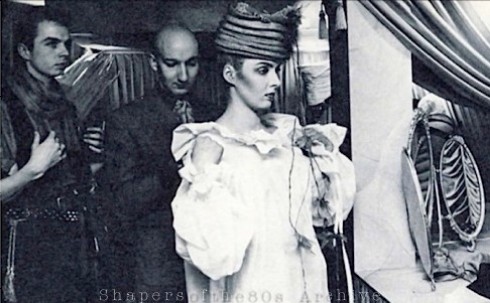
Lee Sheldrick, Kim Bowen, Stephen Jones, PX shop

The first Jones salon: star rebels from St Martin’s Lee Sheldrick assisting and Kim Bowen modelling at Stephen Jones’s boutique in PX, October 1980

❚ FROM 1978 HELEN ROBINSON HAD MADE HER SHOP PX the flagship for New Romantic ready-to-wear in James Street, Covent Garden, all velvet suits, Robin Hood jackets and hippy frills. In February, 1980, it moved a few yards round the corner to bigger premises in Endell Street. Since his graduation from St Martin’s in 1979, Stephen Jones’s uncompromising hats had made the perfect accessories for the excesses of PX so Robinson and partner Stephane Raynor made space in the basement for Jones’s own hat salon. He says: “To get the finance I sold my car, an ex-GPO mini-van, for £150, and that’s how I started the business.” Blitz club-host Steve Strange was a regular customer. Inevitably, the whole place became a social centre for fellow Blitz Kids, the clubbing fashionistas who were by then regular faces in fashion pages and gossip columns. Stephen’s wittily titled “First Collection” was previewed on October 1 and commissions came in from the New Romantic pop groups Visage and Spandau Ballet who were releasing debut records that autumn, from Grace Jones and, later, Boy George.
Stephen Jones ,millinery, Kim Bowen, Peter Ashworth

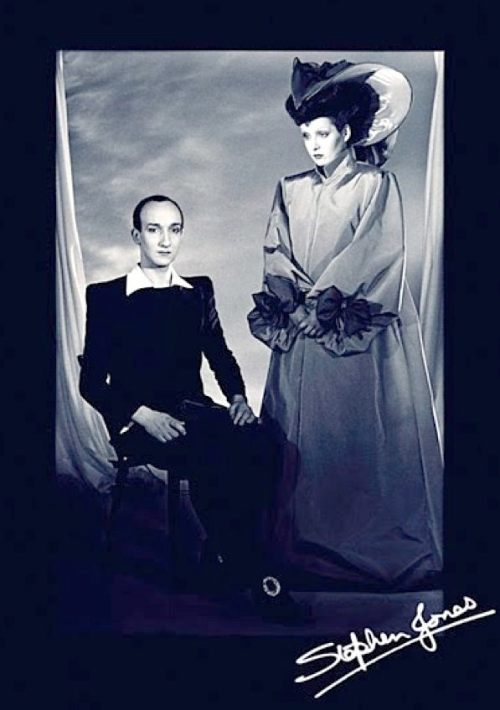
Stephen Jones and Kim Bowen, dressed by PX, topped out by Jones, 1979: business card for the milliner and his mannequin de vie. Photographed © by Peter Ashworth

Stephen Jones, Culture Club, music video, J-P Gaultier

“Very Tangiers in Paul Bowles’s 1950s”: In Culture Club’s first video, 1982, Jones wears the fez that caught J-P Gaultier’s eye. Also a pale blue zoot-suit from Flip, and correspondent shoes in black and pale blue

With the dawn of the 1980s, Britain’s outlandish street styles drew the attention of the world’s leading fashion tastemakers who had to start taking London Fashion Week seriously, to the benefit of a new generation of designers and established names alike. The sheer wit and chutzpah of Stephen Jones millinery played brilliantly to both marketplaces and with Diana Spencer’s marriage to the Prince of Wales the Princess became an international icon for classic British elegance, and a huge fan of the quixotic Jones look. Though he says now that he never drew up a career plan, he did enjoy one lucky break after another: “I had a phone call one day from Vogue who were coordinating a wardrobe for the Princess of Wales and I made quite a few hats for her early on.”

Culture Club’s phenomenal global appeal also established Boy George as Britain’s alternative fashion icon. In another stroke of fate, Jones says that it was his red fez worn while sitting in the audience during Culture Club’s first video, Do You Really Want To Hurt Me (filmed in Soho’s Gargoyle club in 1982), that caught the attention of the French designer Jean-Paul Gaultier. Two years later Jones went to design hats in Paris for Gaultier who was building his own reputation as an enfant terrible. He says now: “Working in Paris then was slightly akin to sleeping with the enemy, and I got gyp from the British Fashion Council who didn’t approve.”
Julia Fodor, Princess Diana, Stephen Jones, hats

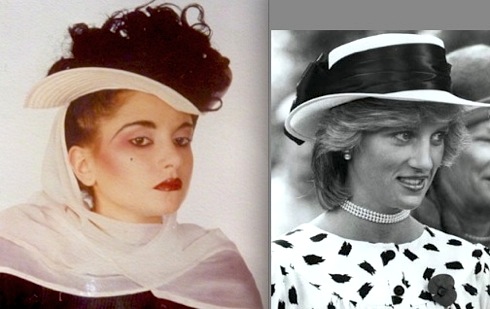
Early Jones creations: modelled by Julia Fodor, by appointment to Princess Di

Jones’s familiar bald dome came about after he shaved his head as a crazy gesture, only to discover that it was the same size as the average milliner’s model, which is normally a wooden block, and ever since he has played the role of his own hat mould. Jones’s favourite show was his first for another designer, Zandra Rhodes in 1981. “It was huge — extravagant production, hundreds of models, over the top make-up, vertiginous shoes, tantrums, tears. I loved it.”

His reputation soared in the early days on the coat-tails of such provocateurs as Vivienne Westwood, Claude Montana and Thierry Mugler. When in 1996, the younger St Martin’s superstar, John Galliano, crossed the Channel to design for Christian Dior, the fashion world was amazed. Within minutes, he had invited Jones to join his team and be the milliner at Dior. As Galliano’s dreams became the stuff of legend, his runway shows became ever more spectacular, while the Jones confections reached new heights of extravagance.

Stephen Jones, hats, Peter Ashworth

Jones creations from 2002, photographed © by Peter Ashworth

Jones declares: “Just as accents in language lead to the correct reading and rhythm of a text, my hats add the appropriate punctuation to a designer’s fashion statement.”

Today style-icons crave to wear Jones — think of Gwen Stefani, Beyonce Knowles, Kylie Minogue, Alison Goldfrapp — while yet more of the world’s cutting-edge designers commission his creations to enhance their collections. Today they include Rei Kawakubo, Comme des Garcons, Azzedine Alaïa, Loewe, Giles Deacon, Kinder, Issa, Donna Karan, Jason Wu, L’Wren Scott and Marc Jacobs. Back at his Georgian London boutique a few doors along from the former Blitz club, Jones also designs the Miss Jones and JonesBoy diffusion ranges in addition to his Model Millinery collection. “My British milliners are the best in the world,” he maintains. “The hat is a certain British thing that people do love wearing.”
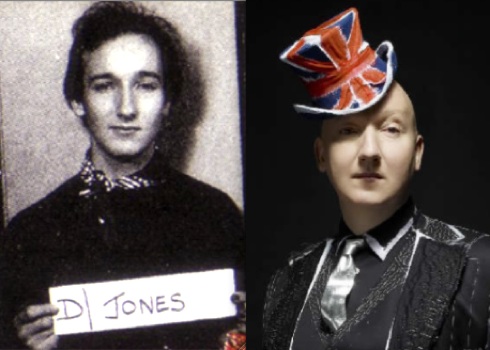
Stephen Jones, hatmaker,Madonna, Madonna, millinery, MoMu, V&A

Then and now: Stephen Jones enlists as a student at St Martin’s 1976, and curates a show of landmark designs at the V&A museum 2009. Union Jack top-hat photographed © by Justine

Last year London’s Victoria & Albert Museum staged a huge exhibition entitled Hats, An Anthology by Stephen Jones, which attracted 100,000 visitors and has since set off on a world tour. This summer he has been working on Sex and the City 2, and told Vogue.com that he had been recruited by Madonna for her latest film, W.E., based on the life of King Edward VIII (played by James D’Arcy) who in 1936 gave up his throne for the American Wallis Simpson (played by Andrea Riseborough). “Madonna is directing it and she asked me to do the hats. Somehow I’ve ended up starring in it, too.”

This autumn Antwerp’s Mode Museum (MoMu) is hosting a solo exhibition of 120 hats, Stephen Jones & The Accent of Fashion (Sept 8-Feb 13, 2011), plus his work in film, music and photography. He explains the magic of the titfer: “A hat makes clothing identifiable, dramatic – and most important, Fashion … It’s the dot on the i, the exclamation mark, the fashion focus. Everyone from showgirls to dictators knows that by wearing a hat they will be the centre of attention.”

The crowning glory for 30 years of dotting the i’s came this spring when Her Maj the Queen recognised the mad hatter’s achievements by appointing him to the Order of the British Empire. Hats off to the Age of Jonesmanship!
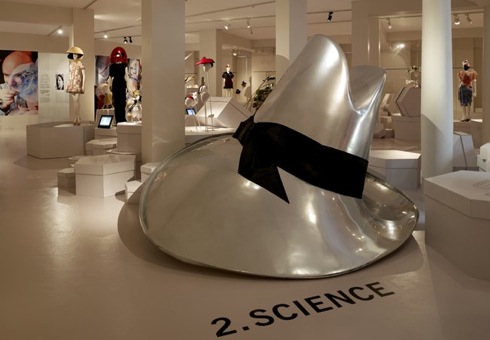
MoMu, Fashion Museum, Antwerp, Stephen Jones, The Accent of Fashion

MoMu Fashion Museum Antwerp: Stephen Jones & The Accent of Fashion photographed © by Frederik Vercruysse

VIEW an i-D video at the Antwerp show in which Jones declares:

“At school science was my best subject. Millinery combines physics and art together in a weird mix — you can’t have one without the other.”

Detailed interview with Stephen Jones in Antwerp for the Independent
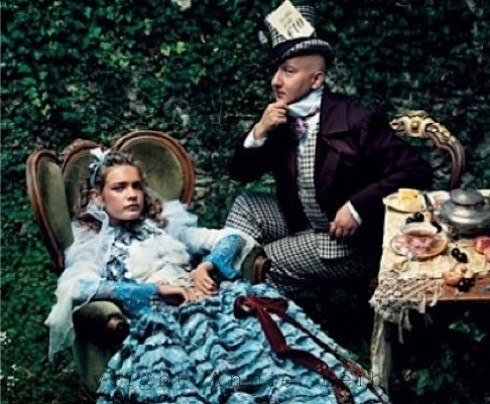
 Stephen Jones

His sobriquet fulfilled by photographer Annie Leibovitz: Stephen Jones as the Mad Hatter in The Mad Tea Party (detail), one of a series of Alice in Wonderland tableaux shot for American Vogue, December 2004

Showstudio has intelligent backgrounders from Jones’s V&A anthology
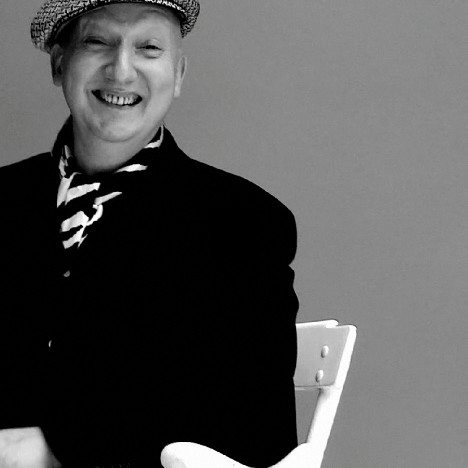
Stephen Jones, interview, Showstudio, Alex Fury
❚ UPDATE — STEPHEN JONES DISCREETLY MENTIONS A CHARMING, frank, gossipy and self-effacing interview with him which has just popped up on Showstudio (despite being dated May) and, as if by telepathy, addresses many questions begged by the brief Shapers outline above! “Steve Strange was, apart from my Mum, my first paying customer” … “I appear to have reinvented the world of millinery but I didn’t have a grand purpose like that at the beginning. I just wanted to go to a great party.” Who is this perceptive young interviewer Alex Fury? With a name like that he will go far.
➢ Video: Stephen Jones interviewed for Showstudio
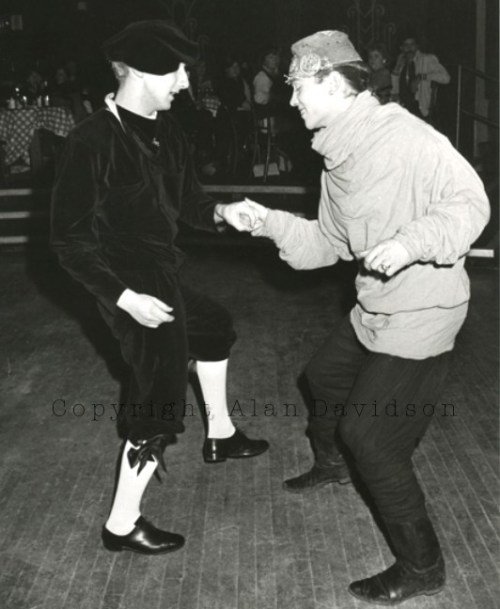
Stephen Jones, David Holah, Blitz Kids, New Romantics,

New Romantics cutting loose, 1981: Stephen Jones in PX’s definitive Little Lord Fauntleroy outfit jives with designer David Holah who went on to co-found the BodyMap empire. Photograph © by Alan Davidson

FRONT PAGE

2010 ➤ Index of posts for Sept

Orgreave, Yorkshire , miners' strike, riot police

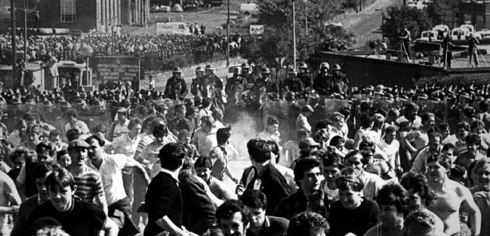
Revisiting June 1984: Striking miners start to run as the police line opens to let mounted officers charge the mass picket at Orgreave Coking Plant, South Yorkshire. Photographed © by John Sturrock/Report Digital

➢ 1925-2010: Tony Curtis — for ever hot

➢ In the face of Cowell X-culture, Polhemus discovers the style supermarket afresh

Peter Frampton, David Bowie, schooldays

Peter Frampton today: Bowie’s best friend at school

➢ Six things some people might not know about Bowie

➢ As Station to Station is re-released, Egan discusses Bowie’s legacy: ‘It’s not rocket science and it is music’

➢ Slashed! Wallinger’s knife demonstrates a 25% cut on a Turner masterpiece

➢ Anna declares McQueen a pioneer of dreams and drama

➢ The 1980s: A new history of that most turbulent of decades which sounded a knell for the mining industry

➢ Robinson takes the Cowell shilling — so whose bum is on the throne at Popjustice?

➢ Egghead versus bimbo: Paglia demolishes Gaga

➢ The xx steal away with the Mercury Music Prize … a quiet storm for uncertain times

➤ In the face of Cowell X-culture, Polhemus discovers the style supermarket afresh

Street Style, Ted Polhemus, the Book Club, PYMCA,Viva Las Vegas Festival

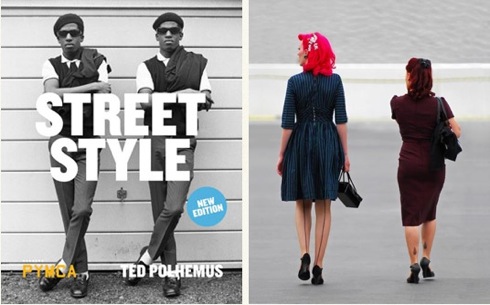
Street cred: Janette Beckman’s cover shot of the rude-boy twins, Chuka & Dubem Okonkwo, shot for The Face in London 1980. Right, two 50s fans at the Viva Las Vegas Festival, USA 2006. Photograph © Tim Scott/PYMCA

❚ IN ITS FIFTH ANNIVERSARY ISSUE, i-D MAGAZINE asked its photo-gallery of People of the 80s to sum up that year, 1985. Shapersofthe80s replied: “It is the year the style supermarket repackaged the previous four as an over-the-counter culture.” What was being signalled was the end of the Swinging 80s, the symbolic sub-cultural “decade” which had seen Soho become the crucible for new sounds and new styles as they broke free from the stadium-rock and post-punk past. 1985 saw a torrent of colour and attitude and tunes drive the mainstream of British youth culture that then came to characterise the “Thatcher decade”, at best personified by Stock Aitken Waterman, and at worst traduced by nightclub impresario Peter Stringfellow.

Ted Polhemus, Street Style, PYMCA

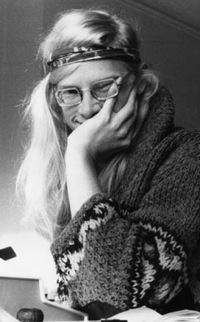
Polhemus as 70s hippie — wardrobe master for Starsky and Hutch, or his idea of irony?

Tonight in Shoreditch, the new London pool of cool, an eponymous exhibition opens to launch an updated edition of Street Style, the 1994 picture book by Ted Polhemus that celebrated the style-tribes which postwar Britain’s class-ridden society excelled at evolving, from mods and rockers, to goths and casuals, to ravers and what he called riot grrrls (which inevitably invoked the dread term bricolage, so much more cultural studies than saying DIY). Publication coincided then with a groovy exhibition around the V&A costume court.

Images and graphics from the new Street Style inevitably feature many of our original Shapers of the 80s, if current Facebook twitterings are any indication. These are being exhibited (Sep 30-Oct 31)  in the former Victorian warehouse in EC2 refurbished as The Book Club. Polhemus’s new publisher is PYMCA, the Photographic Youth Music Culture Archive which was established in 1997 by Jon Swinstead, brains behind Jockey Slut and Sleazenation. His aim was “to create a collection of images that capture the real essence of life as a young person”. PYMCA was launched this spring as a research resource, having teamed up with leading cultural commentators to offer detailed analyses of youth subcultures, music and movements around the world. Swinstead maintains: “PYMCA is both edgy and documentary and the newest material will visually reflect the hottest stuff happening among the youth of today.”

Next month Polhemus, the self-styled “anthropologist, author and photographer extraordinaire”, leads a discussion at The Book Club titled “Supermarket of Style in the 21st century” (Oct 27, tickets £8). This is the theme that introduces his new book and which he calls “his latest theory”. Well, better late than never! The supermarket has certainly entertained us for 25 years but a general consensus agrees that Britain’s youthful creative juices finally ran dry in the noughties as Cowell X-culture came to dominate our televised lives. Presumably Ted has fresh observations to offer…

Rockabilly, Paul Sturridge, Ted Polhemus,Dale Cammack, Susan Cammack

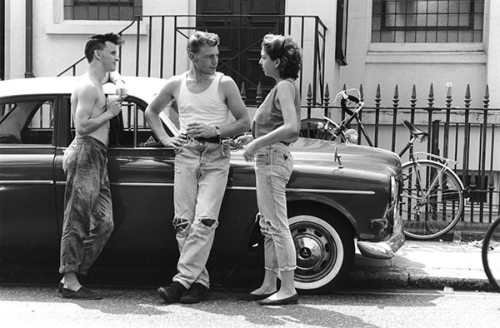
The no-socks “hard times” style promulgated by the itinerant Dirtbox club-nights: The ever-photogenic Paul Sturridge caught in 1984 with Dale and Susan Cammack, plus his Volvo Amazon outside the Chelsea Potter. From the Street Style exhibition at the V&A, photographed © by Ted Polhemus

AT THE EVENT, STURRIDGE CATCHES THE MOMENT . . .

Chuka Okonkwo, Dubem Okonkwo , Theola Sturridge, Street Style

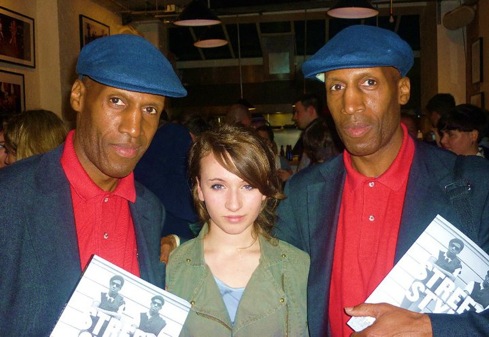
At the book launch: cover stars the Okonkwo twins with Theola Sturridge. Photograph © by Paul Sturridge

Theola Sturridge, Paul Sturridge, Street Style

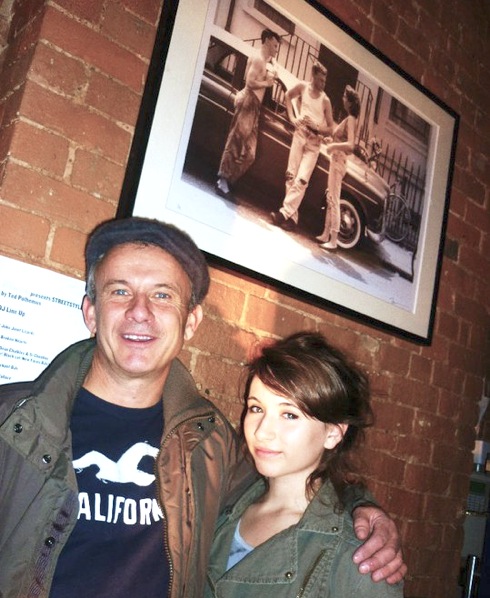
A lifetime later: Paul Sturridge with daughter Theola beneath the photo of him in his “hard times” guise. Photograph © by Paul Sturridge

FRONT PAGE

The 1980s ➤ A new history of that most turbulent of decades

Orgreave, Yorkshire , miners' strike, riot police, ReportDigital

Mounted police attack striking miners picketing the Orgreave Coking Plant, South Yorkshire. Photographed © by John Harris/ReportDigital. The 1984-85 miners’ strike became a bitter industrial dispute and symbolic class struggle that saw picketing miners pitched against police officers, and colleagues — so-called scabs — who chose to return to work. The National Union of Mineworkers was protesting at the government’s plans for pit closures but the year-long strike proved a terrible defeat for the miners and for the coal industry. In 1984 there had been 170 coal mines open in the UK. By 2004 fewer than a dozen mines remained. The British trade union movement has never recovered.

❚ “MORE CHANGE AND MORE CONFLICT were crammed into the 1980s than any other decade in the second half of the twentieth century. Out of political chaos, Britain arrived at a settlement that lasted, for better or worse. The way we live now follows directly from the tumultuous events of the 1980s.”

In his new book, No Such Thing As Society, Andy McSmith, chief reporter and former political correspondent of the Independent newspaper, argues this was the conflict decade, defined by strikes, war and riots. He examines Britain in the decade of Thatcher and the City’s ‘big bang’, from the Falklands war and the miners’ strike to Bobby Sands and the Guildford Four, from Diana and the New Romantics to the Brixton riots and Band Aid, from the Rubik’s cube to the ZX Spectrum. He talks about the legacy of the 1980s and how this decade of extremes shaped contemporary Britain.

Margaret Thatcher, Spitting Image

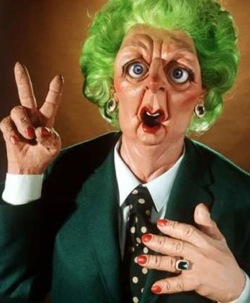
Spitting Image's suited version of prime minister Margaret Thatcher gives a Churchillian V for Victory

“You know, there is no such thing as society. There are individual men and women, and there are families. And no government can do anything except through people, and people must look to themselves first.” — Margaret Thatcher, talking to Woman’s Own magazine, October 31, 1987


McSmith maintains that “the 1980s was the revolutionary decade of the twentieth century. To look back in 1990 at the Britain of ten years earlier was to look into another country. The changes were not superficial, like the revolution in fashion and music that enlivened the 1960s; nor were they quite as unsettling and joyless as the troubles of the 1970s. And yet they were irreversible. By the end of the decade, society as a whole was wealthier, money was easier to borrow, there was less social upheaval, less uncertainty about the future.

“Perhaps the greatest transformation of the decade was that by 1990, the British lived in a new ideological universe where the defining conflict of the twentieth century, between capitalism and socialism, was over. Thatcherism took the politics out of politics and created vast differences between rich and poor, but no expectation that the existence of such gross inequalities was a problem that society or government could solve – because as Mrs Thatcher said, ‘There is no such thing as society … people must look to themselves first’.”

➢ Andy McSmith discusses the 80s with Andrew Marr on Start the Week (R4, Sep 20)
➢ No Such Thing As Society: Andy McSmith’s history of Britain in the 1980s is published by Constable
➢ VIEW: BBC audio slideshow on the year-long miners’ strike
➢ VIEW: frontline slideshow of the miners’ strike by photographers from the independent picture library ReportDigital

FRONT PAGE