Category Archives: Social trends

The 1980s ➤ A new history of that most turbulent of decades

Orgreave, Yorkshire , miners' strike, riot police, ReportDigital

Mounted police attack striking miners picketing the Orgreave Coking Plant, South Yorkshire. Photographed © by John Harris/ReportDigital. The 1984-85 miners’ strike became a bitter industrial dispute and symbolic class struggle that saw picketing miners pitched against police officers, and colleagues — so-called scabs — who chose to return to work. The National Union of Mineworkers was protesting at the government’s plans for pit closures but the year-long strike proved a terrible defeat for the miners and for the coal industry. In 1984 there had been 170 coal mines open in the UK. By 2004 fewer than a dozen mines remained. The British trade union movement has never recovered.

❚ “MORE CHANGE AND MORE CONFLICT were crammed into the 1980s than any other decade in the second half of the twentieth century. Out of political chaos, Britain arrived at a settlement that lasted, for better or worse. The way we live now follows directly from the tumultuous events of the 1980s.”

In his new book, No Such Thing As Society, Andy McSmith, chief reporter and former political correspondent of the Independent newspaper, argues this was the conflict decade, defined by strikes, war and riots. He examines Britain in the decade of Thatcher and the City’s ‘big bang’, from the Falklands war and the miners’ strike to Bobby Sands and the Guildford Four, from Diana and the New Romantics to the Brixton riots and Band Aid, from the Rubik’s cube to the ZX Spectrum. He talks about the legacy of the 1980s and how this decade of extremes shaped contemporary Britain.
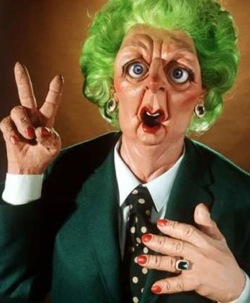
Margaret Thatcher, Spitting Image

Spitting Image's suited version of prime minister Margaret Thatcher gives a Churchillian V for Victory

“You know, there is no such thing as society. There are individual men and women, and there are families. And no government can do anything except through people, and people must look to themselves first.” — Margaret Thatcher, talking to Woman’s Own magazine, October 31, 1987


McSmith maintains that “the 1980s was the revolutionary decade of the twentieth century. To look back in 1990 at the Britain of ten years earlier was to look into another country. The changes were not superficial, like the revolution in fashion and music that enlivened the 1960s; nor were they quite as unsettling and joyless as the troubles of the 1970s. And yet they were irreversible. By the end of the decade, society as a whole was wealthier, money was easier to borrow, there was less social upheaval, less uncertainty about the future.

“Perhaps the greatest transformation of the decade was that by 1990, the British lived in a new ideological universe where the defining conflict of the twentieth century, between capitalism and socialism, was over. Thatcherism took the politics out of politics and created vast differences between rich and poor, but no expectation that the existence of such gross inequalities was a problem that society or government could solve – because as Mrs Thatcher said, ‘There is no such thing as society … people must look to themselves first’.”

➢ Andy McSmith discusses the 80s with Andrew Marr on Start the Week (R4, Sep 20)
➢ No Such Thing As Society: Andy McSmith’s history of Britain in the 1980s is published by Constable
➢ VIEW: BBC audio slideshow on the year-long miners’ strike
➢ VIEW: frontline slideshow of the miners’ strike by photographers from the independent picture library ReportDigital

FRONT PAGE

2010 ➤ Egghead versus bimbo: Paglia demolishes Gaga

Lady Gaga,sexual revolution,demolition job

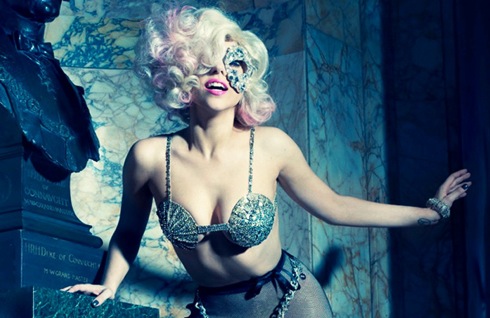
Lady Gaga in performance: does she mark the end of the sexual revolution?

Camille Paglia,Hurricane Camille,Lady Gaga,death of sex

Paglia the hurricane

❚ CAMILLE PAGLIA describes herself as a “dissident feminist”. Others have dubbed her “Hurricane Camille”. With a PhD from Yale, she is one of America’s brightest women, variously expressing iconoclastic opinions as a social philosopher, cultural critic, author and educator who believes that most women are bisexual. Her powers of reasoning mean that she is not easily dismissed. So when in today’s Sunday Times Magazine she detonates a dynamite demolition job on the popstar Lady Gaga, we should perhaps take notice. She argues that Gaga is “sexually dysfunctional”, and marks the end of the sexual revolution. Then she savages Gaga’s “little monster” fans. Here are Paglia’s juiciest soundbites:

❏ “Despite showing acres of pallid flesh in the fetish-bondage garb of urban prostitution, Gaga isn’t sexy at all — she’s like a gangly marionette or plasticised android.”

❏ “How could a figure so calculated and artificial, so clinical and strangely antiseptic, so stripped of genuine eroticism have become the icon of her generation? Can it be that Gaga represents the exhausted end of the sexual revolution?”

❏ “For Gaga, sex is mainly decor and surface; she’s like a laminated piece of ersatz rococo furniture. Alarmingly, Generation Gaga can’t tell the difference. Is it the death of sex?”

❏ “Drag queens, whom Gaga professes to admire, are usually far sexier in many of her over-the-top outfits than she is.”

Stefani Germanotta,Lady Gaga,MTV

Stefani Joanne Angelina Germanotta: as brunette herself on MTV's Boiling Points in 2005, and as Lady Gaga last year, blonde but without make-up

❏ “Marlene and Madonna gave the impression, true or false, of being pansexual. Gaga, for all her writhing and posturing, is asexual.”

❏ “Most of her worshippers seem to have had little or no contact with such powerful performers as Tina Turner or Janis Joplin, with their huge personalities and deep wells of passion.”

❏ “Generation Gaga doesn’t identify with powerful vocal styles because their own voices have atrophied: they communicate mutely via a constant stream of atomised, telegraphic text messages. Gaga’s fans are marooned in a global technocracy of fancy gadgets but emotional poverty.”

➢ To read the rest of Paglia’s appraisal of Gaga visit The Sunday Times Magazine

‘Now, come on, people, do you really believe that Lady Gaga is 23 years old?’

➢ In her Salon column last November 10, Camille Paglia threw out this invective:

❏ “Do you really believe that Lady Gaga is 23 years old? I’ve been in advanced doubt about it for a while, particularly after seeing this ‘Rare pictures!’ video of early photos of her hanging with some mighty tough critters. (A friend of mine said of Gaga in this vid: ‘Too many miles of bad road there.’) I think Gaga was a hell of a lot sexier as a fun Italian-American brunette. This artificial, masklike, over-the-top Club Kids thing that she’s now into seems compulsive and wearily passé. Give it a rest, and focus on the music!”

➢ Tuesday top-up from the throne-room at Popjustice:

Camille Paglia wrote a big thing about Lady Gaga for the Sunday Times. Some of her points were good but a lot of it felt like she was writing the article for the benefit of one reader — Madonna — and most of the good bits were buried by an avalanche of General Missingthepointness. We particularly love an outraged Paglia railing against Lady Gaga for “rudely” wearing sunglasses in interviews, and the idea that Lady Gaga has gone on tour to escape scrutiny (?!). Give it a rest Paggo.

FRONT PAGE

➤ A big wink to i-D on its 30th birthday

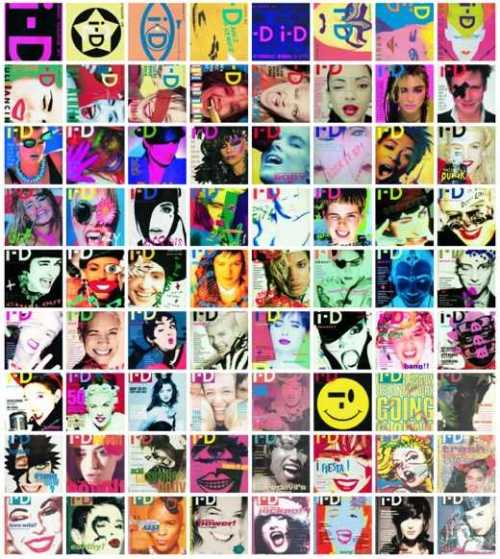
i-d magazine,covers,30th anniversary, Then Now Next

Launched August 1980: who’d have guessed that 72 covers and almost as many winkers later the magazine would have arrived at the end of its first decade?

❚ A MONTH AFTER i-D MAG’S LAUNCH in August 1980, cub-editor Perry Haines was bright-eyed and bushy-tailed, fresh from the St Martin’s fashion journalism course. Armed with such axioms as “Pitch and stitch dance hand in hand”, he was launching his club night at Gossip’s in Soho, calling it the i-D Sink or Swim night, admission £2.50. “We play 100mph dance music,” he said, meaning sounds like James White and the Blacks. “People are waiting for something to run with. They’re at the starting blocks.” Shapersofthe80s was there like a shot.

Launched as a quarterly in A4 fanzine format, economically printed in black-and-white and stapled, i-D was soon dubbed the UK “manual of style” for inventing the so-called straight-up more or less on the hoof: kids were photographed full-length, as and where they were found on the streets of Britain, then captioned down to the last thrift-shop nappy pin. Today editor-in-chief Terry Jones celebrates identity as the theme that has sustained his unique mag for three decades by turning the 30th birthday pre-fall issue of i-D over to the talented photographer Nick Knight, who was appointed an OBE in the most recent Queen’s birthday honours. It is one stunning run of superb black-and-white portraits of 200 people the mag believes are brainy, beautiful and downright gorgeous — from The xx, Phoebe Philo, Sir Paul Smith, Florence Welch to a rude Cerith Wyn Evans and a raunchy Vivienne Westwood, both enjoying their age disgracefully, plus three alternative cover stars epitomising this issue’s title of Then, Now and Next, Kate Moss, Naomi Campbell and Lady Gaga.

The key question is: How many of i-D’s 100 People of the 80s from Knight’s fifth anniversary shoot have made it into the 20-tens?! Uh-oh, only 12 found so far. Still counting.

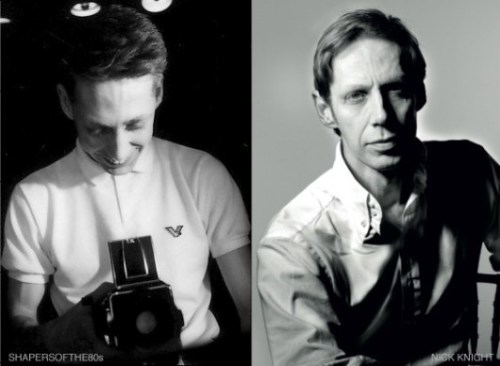
Nick Knight, i-D 30th anniversary, Then Now Next

Nick Knight, then and now, separated by 25 years: captured by yours truly during his first shoot for i-D, titled People of the 80s, on the magazine’s fifth anniversary ... right, this year’s self-portrait as one of the world’s most innovative fashion photographers, taken for i-D’s 30th anniversary issue which he also art directs. Photographs © Shapersofthe80s and Nick Knight

FRONT PAGE

2010 ➤ Cheers to Peter and Chris – two nice unassuming radio listeners (among the many*) who clinched the rescue of 6Music

* Added to the heading to reflect protests by Peter and Chris

What do we want? – We’d quite like our rather good 6Music station not to be axed by the BBC, please.
When do we want it? – After our jolly nice picnic and a couple of flutes of champagne, if that’s OK with you.

Save 6Music, 6Music, BBC, picnic, Claire Cant, Gillian Reynolds, Daily Telegraph,Tim Davie,Sir Michael Lyons ,Steve Hewlett,,

Militant picnickers: Save 6Music campaigners plot their strategy – somewhere amid the champagne drinkers Peter Crocker is lurking. Picture © Claire Cant

VICTORY FOLLOWS A VERY BRITISH KIND OF PROTEST

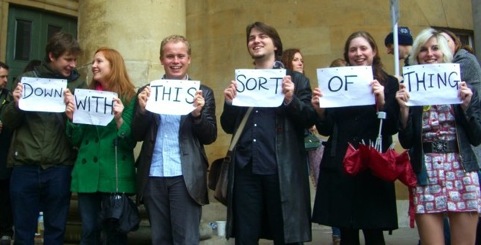
❚ TODAY IT WAS REVEALED TO RADIO 4’s AUDIENCE that the BBC decided not to axe its digital music station 6Music as the result of a thoroughly British campaign strategy hatched over a couple of drinks and the odd outdoor picnic. 6Music campaigners like to boast that a bunch of marketeers called the CoolBrands Council (yes, seriously!) have dubbed it the coolest radio station in the land – easier perhaps to think of it as “rhythms for thinking persons”. Since March some “quite lively” street protests have surrounded Broadcasting House in London where the more strident slogans included “More 6 please, we’re British” … “Lord Reith would be vexed” … “Down With This Sort of Thing” and “6 into 2 doesn’t go” (a reference to merging with mainstream Radio 2). But afterwards, heads were put together to come up with a seriously cunning plan.

Peter Crocker told the tale on today’s Feedback, the Radio 4 listener soapbox. He describes himself as a “video restorer and member of the Doctor Who Restoration Team”. Also a Belle and Sebastian fan, he is passionate about 6Music and became incandescent in March when he heard of the BBC management’s threat to shut it down in a strategic review of BBC services.

He wrote to Feedback and was invited onto the weekly programme in March when he declared: “As with Radio 3, 6Music is unique. We need a serious modern non-orchestral music station.” This kick-started a process which ended up with him having a breakfast meeting with the chairman of the BBC Trust Sir Michael Lyons, who was tasked with considering the management proposals.

Crocker modestly insists his role was minor and points out that many, many others were involved in the campaign to save 6Music. The Facebook protest group, for example, is the “modern equivalent of a village hall”, he says, and it attracted 180,000 supporters.

Save 6Music, 6Music, BBC, demonstration

Too, too British: Save 6Music demonstrators outside Broadcasting House

What he did do after turning up to a demo was to meet up for occasional drinks with some of the other committed protesters “in hostelries around west London”. Here he met Chris Wiper, a Pixies fan (according to his Facebook profile), who proposed conducting a survey of 6Music listeners and 655 responses from adults yielded one eye-opening claim. As Crocker reported today: “For every £1 the BBC spent on 6Music, the station generated £13 for the UK economy”!

From Wiper’s survey the purchasing activity of the station’s listeners was analysed by Matt Forman and Colin Hammond who showed that 58% of their music purchasing in the previous year had been influenced by 6Music, resulting in an average spend of £134 that year on albums and singles. In other words, when extrapolated against the one-million weekly audience reached by the station, this amounted to a significant contribution towards the music industry’s coffers. (Further modest mutterings have ensued from Wiper, too: “My contribution was a very small part.”)

6Music, age distribution, listeners, ILF, survey, BBC

6Music listener ages: Mean 32.2, median 31, according to online petition data commissioned by ILF

Hence the bending of the Trust chairman’s ear and a reversal this week of the decision to axe the station.

Hammond has since offered further insights: “Sir Michael Lyons said that the cultural value argument had to be made. Alan Yentob made a speech that stated that the BBC yardstick was £2 of economic activity for £1 of BBC spend. We had had already several conversations about how many CDs etc we had bought solely from 6, Chris Wiper had set up a Facebook group and then his website. At my hunch that there was something in this, Matt Foreman did the maths for the initial ILF submission which the Trust were most interested in and so we encouraged more people to come forward, which gave the great final survey number.”

Result – even BBC director-general Mark Thompson declared on April 20: “It’s become clear to me that the station is completely unique and has significant cultural worth.”

As a successful campaigner, cheer-leading substantially through the web, Crocker today offered four golden rules: (1) don’t shout into a vacuum; (2) research your subject; (3) stick to facts not personal opinion; (4) enlist teamwork by meeting up in real life.

Let’s be on guard for the next round, however. Announcing 6Music’s reprieve on the BBC News Channel last Monday, Sir Michael Lyons also said: “It [6 Music] has opened up a much bigger debate about the need, first, to sort out the greater distinctiveness about the very popular Radios 1 and 2 and to make sure they are more different from each other and different from what’s available in the commercial sector. And even more important, to actually develop a coherent strategy for digital radio, which the BBC can’t do in isolation. It needs to do (that) with government and the commercial sector.”

A can of worms is about to be opened in the radio marketplace. In her weekly column in the Daily Telegraph, Gillian Reynolds was later to conclude: “ ‘Stick to facts.’ Please remember that when the dreaded BBC Director of Audio and Music Tim Davie returns, fully strategised.” The Facebook group cannily reminds us of future trends. Listen to 6Music online, it urges, so the powers-that-be can measure how many are listening. “BBC6 was not designed to be linear.”

➢➢ Listen to today’s Feedback and read presenter Roger Bolton at the Radio 4 blog

➢➢ Independent Listeners Forum – Final Submission to the BBC Trust, May 22 – Search sidebar for ILF Evidence, then click Economic Value Update

➢➢ Gillian Reynolds in the Daily Telegraph, July 12 – “The present digital delay, I think, is more a failure of markets than management”

Save 6Music, campaign,6Music, BBC, demonstration,Steve Ransome

Thinking music persons: Save 6Music protestors show their strength outside Broadcasting House. Picture © Steve Ransome

FRONT PAGE

JULY ➤ 30 or so years ago today

ON THIS DAY IN 1977…

July 9 — Donna Summer No 1 with I Feel Love

ON THIS DAY IN 1979

July 4 — Blitz Kid Dencil Williams does Donna Summer at the Embassy Ball

ON THIS DAY IN 1980…

Gaz Mayall, Gaz's Rockin Blues, clubbing,LondonJune30-July 12 — Spandau Ballet play the Papagayo club in St Tropez: one booking but 12 gigs by playing nightly except Sundays.
July – Jane Kahn & Patti Bell open their shop in Great Gear Market, London
July 3 — Gaz Mayall starts his Rockin’ Blues on Thursday nights at Gossip’s club, Soho – London’s longest running club-night is still going strong at the St Moritz in Wardour Street
July 13 — Spandau Ballet’s Scala concert airs on London Weekend Television

ON THIS DAY IN 1981…

July 2 — Video for Spandau’s Chant No1 is shot at Le Beat Route
July 3 — New York Times carries first report of a mystery cancer killing gay men, much later identified as HIV/Aids
July 5-6 — Police attacked in riots at Toxteth, Liverpool
July 9 — Depeche Mode play Regency Suite, Chadwell Heath

ON THIS DAY IN 1983…

July — Mud Club moves to Fouberts, off Carnaby Street
July 7 — Jimmy the Hoover debut on Top of the Pops … Sade plays the Wag club

ON THIS DAY IN 1984…

July 3 — Spandau Ballet’s album Parade goes straight in at No 2 in the charts