Category Archives: Politics

2010 ➤ Index of posts for Sept

Orgreave, Yorkshire , miners' strike, riot police

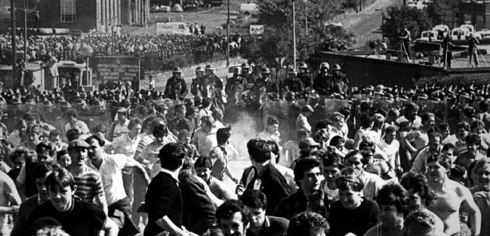
Revisiting June 1984: Striking miners start to run as the police line opens to let mounted officers charge the mass picket at Orgreave Coking Plant, South Yorkshire. Photographed © by John Sturrock/Report Digital

➢ 1925-2010: Tony Curtis — for ever hot

➢ In the face of Cowell X-culture, Polhemus discovers the style supermarket afresh

Peter Frampton, David Bowie, schooldays

Peter Frampton today: Bowie’s best friend at school

➢ Six things some people might not know about Bowie

➢ As Station to Station is re-released, Egan discusses Bowie’s legacy: ‘It’s not rocket science and it is music’

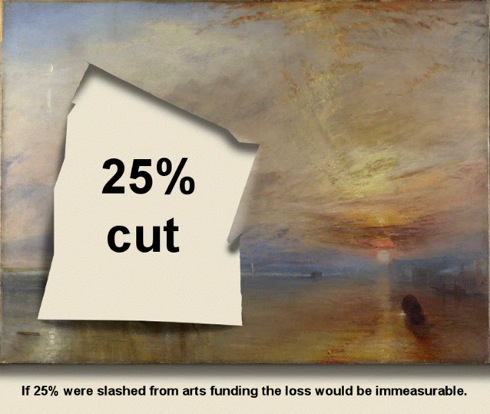
➢ Slashed! Wallinger’s knife demonstrates a 25% cut on a Turner masterpiece

➢ Anna declares McQueen a pioneer of dreams and drama

➢ The 1980s: A new history of that most turbulent of decades which sounded a knell for the mining industry

➢ Robinson takes the Cowell shilling — so whose bum is on the throne at Popjustice?

➢ Egghead versus bimbo: Paglia demolishes Gaga

➢ The xx steal away with the Mercury Music Prize … a quiet storm for uncertain times

➤ Slashed! Wallinger’s knife demonstrates a 25% cut on a Turner masterpiece

Reckless ,Mark Wallinger, The Fighting Temeraire, Turner ,National Gallery, arts cuts, petition, protest

Reckless by Mark Wallinger. Thanks to Jed Butterfield and Bob Pain at Omni Colour http://www.omnicolour.com and Nicholas Penny at the National Gallery

❚ A NEW WORK BY TURNER PRIZE-WINNING ARTIST Mark Wallinger is released today as part of a campaign supported by more than 100 leading British artists against the government’s proposed funding cuts of the arts.

Mark Wallinger’s work shows a copy of the masterpiece, The Fighting Temeraire, 1839 by Joseph Mallord William Turner, in the collection of the National Gallery in London. A slash in the painting carries a notice “25% cut” and beneath it a caption reads: “If 25% were slashed from arts funding the loss would be immeasurable.”

Turner refused ever to sell The Fighting Temeraire — depicting the final journey of the 98-gun ship which played a distinguished role in Nelson’s victory at the Battle of Trafalgar in 1805 — until he finally donated it to the National Gallery. When the BBC asked the nation to nominate the greatest painting on show in UK museums and galleries, this came first with 25% of the votes.
Turner’s concern was to evoke a sense of loss as the great battleship was towed to the breaker’s yard.

The title of Mark Wallinger’s new work is Reckless. He explains: “I describe the cuts as a reckless adventure. In fact temeraire means reckless in French and by removing the obsolete ship from the scene I am rendering the painting wreckless.”

➢ Click for full petition details at 

savethearts-uk.blogspot.com

FRONT PAGE

The 1980s ➤ A new history of that most turbulent of decades

Orgreave, Yorkshire , miners' strike, riot police, ReportDigital

Mounted police attack striking miners picketing the Orgreave Coking Plant, South Yorkshire. Photographed © by John Harris/ReportDigital. The 1984-85 miners’ strike became a bitter industrial dispute and symbolic class struggle that saw picketing miners pitched against police officers, and colleagues — so-called scabs — who chose to return to work. The National Union of Mineworkers was protesting at the government’s plans for pit closures but the year-long strike proved a terrible defeat for the miners and for the coal industry. In 1984 there had been 170 coal mines open in the UK. By 2004 fewer than a dozen mines remained. The British trade union movement has never recovered.

❚ “MORE CHANGE AND MORE CONFLICT were crammed into the 1980s than any other decade in the second half of the twentieth century. Out of political chaos, Britain arrived at a settlement that lasted, for better or worse. The way we live now follows directly from the tumultuous events of the 1980s.”

In his new book, No Such Thing As Society, Andy McSmith, chief reporter and former political correspondent of the Independent newspaper, argues this was the conflict decade, defined by strikes, war and riots. He examines Britain in the decade of Thatcher and the City’s ‘big bang’, from the Falklands war and the miners’ strike to Bobby Sands and the Guildford Four, from Diana and the New Romantics to the Brixton riots and Band Aid, from the Rubik’s cube to the ZX Spectrum. He talks about the legacy of the 1980s and how this decade of extremes shaped contemporary Britain.
Margaret Thatcher, Spitting Image

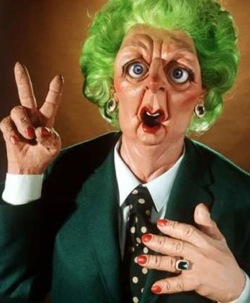
Spitting Image's suited version of prime minister Margaret Thatcher gives a Churchillian V for Victory

“You know, there is no such thing as society. There are individual men and women, and there are families. And no government can do anything except through people, and people must look to themselves first.” — Margaret Thatcher, talking to Woman’s Own magazine, October 31, 1987


McSmith maintains that “the 1980s was the revolutionary decade of the twentieth century. To look back in 1990 at the Britain of ten years earlier was to look into another country. The changes were not superficial, like the revolution in fashion and music that enlivened the 1960s; nor were they quite as unsettling and joyless as the troubles of the 1970s. And yet they were irreversible. By the end of the decade, society as a whole was wealthier, money was easier to borrow, there was less social upheaval, less uncertainty about the future.

“Perhaps the greatest transformation of the decade was that by 1990, the British lived in a new ideological universe where the defining conflict of the twentieth century, between capitalism and socialism, was over. Thatcherism took the politics out of politics and created vast differences between rich and poor, but no expectation that the existence of such gross inequalities was a problem that society or government could solve – because as Mrs Thatcher said, ‘There is no such thing as society … people must look to themselves first’.”

➢ Andy McSmith discusses the 80s with Andrew Marr on Start the Week (R4, Sep 20)
➢ No Such Thing As Society: Andy McSmith’s history of Britain in the 1980s is published by Constable
➢ VIEW: BBC audio slideshow on the year-long miners’ strike
➢ VIEW: frontline slideshow of the miners’ strike by photographers from the independent picture library ReportDigital

FRONT PAGE

JUNE ➤ 30 or so years ago today

ON THIS DAY IN 1978…

Human League, Being BoiledJune 17 — Fast Product releases the darkly mystical Being Boiled by Sheffield’s original Human League, and Bowie declares it “the future of music”. John Peel also champions the single on radio and it becomes a cult among the Billy’s and Blitz clubbing circle in London, though it does not chart until January 1982 on its second release. In the present day this is considered to be the first massively influential British electronic pop track.
VIEW ♫ Being Boiled live in 1978 on Granada TV, though the audio is dire!

+++

June 21 — Tim Rice and Andrew Lloyd Webber’s musical Evita opens at London’s Prince Edward Theatre to run for 2,900 performances. A novel ploy has been to release a double album two years earlier — some songs are already chart hits
June 29The Swinging 80s start here as David Bowie plays Earl’s Court, London. Sundry misfits recognise kindred spirits in the audience and gather afterwards at Billy’s club in Soho, long before the phrase New Romantics has been invented.

ON THIS DAY IN 1979…

June 9 — Music weekly Sounds publishes Mods Without Parkas by Garry Bushell
June 14 — The 70s “dressing up” imperative sees Flick’s in Dartford throw a VE Night deejayed by Radio London’s Robbie Vincent

ON THIS DAY IN 1980…

June 14 — George O’Dowd parades past Buckingham Palace as a helmeted and toga’d Britannia at the annual royal ceremony of trooping the colour

ON THIS DAY IN 1981…

June — The mainstream deejay’s bible Disco International publishes a plain man’s guide by yours truly, titled Who are the New Romantics and how do they dance?
June — John Boorman’s epic Arthurian movie Excalibur opens in London starring Nigel Terry and Helen Mirren
June 4 — Steve Strange and Rusty Egan open Club for Heroes in Baker Street
June 21 — Arty Latin popsters Blue Rondo à la Turk are unveiled in Chelmsford after weeks of secret tease dates. Yours truly is there to introduce the band to readers of New Sounds New Styles under the headline He thinks he is Geronimo but Chris Sullivan is turning fantasy into fact

ON THIS DAY IN 1982…

Blitz Kids, Kate Garner, Jeremy Healy ,Haysi Fantayzee ,Paul Caplin, John Wayne Big Leggy

Haysi Fantayzee 1982: ex-Blitz Kids Kate Garner, Jeremy Healy and manager Paul Caplin

June 9 — Kasper de Graaf, editor of New Romantic magazine New Sounds New Styles, tells the Rebel Writers the title is to close and they are out of jobs. We retire to the Red Lion to seek consolation!
June 14 — The Falklands War ends with the Argentine surrender. Its occupation of the Falkland Islands in the South Atlantic had provoked a war that lasted 74 days and results in the deaths of 260 Britons and 649 Argentinians
June 21 — At the V&A the Middlesex fashion degree show is stolen by Stevie Stewart and David Holah. Their Matelots and Milkmaids collection establishes Bodymap as the label for the young and daring
June 25 — As Haysi Fantayzee, Blitz Kids Kate Garner and Jeremy Healy release their debut single John Wayne is Big-leggy

ON THIS DAY IN 1983…

June 14 — Capital Radio’s Gary Crowley starts deejaying at Bogart’s club, Harrow

FRONT PAGE

2010 ➤ Index of posts for May

Steve New, Rich Kids, Revolver,Index May 2010, Shapersofthe80s➢ Spider-woman Bourgeois created her art as meditations on sexuality

➢ Foxx celebrates his life as the Duchamp of electropop

➢ Rich Kid Steve New (left, aka Stella Nova) dies at 50

➢ Just the birthday present Steve Strange really wanted this week of all weeks

➢ ‘A triumph’ – George’s verdict before transmission of his biopic

The Face, magazines, July 1983, New Order, Art on the Run➢ Ex-Blitz Kids give their verdicts on Worried About the Boy

➢ Three key men in Boy George’s life

➢ Can Generation Y be bovvered to vote?

➢ Lest we forget, on this day Britain sank the Belgrano

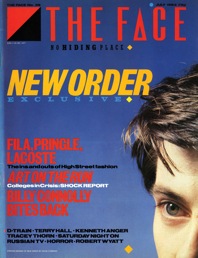
➢ Birth of The Face: magazine that launched a generation of stylists and style sections

FRONT PAGE