Tag Archives: Steve Strange

➤ Nowt so Strange as Stephen John Harrington

Steve Strange, Steven Harrington, Blitz Kids, New Romantics, nightclubbing, Swinging 80s, London, fashion, pop music, Visage, tributes

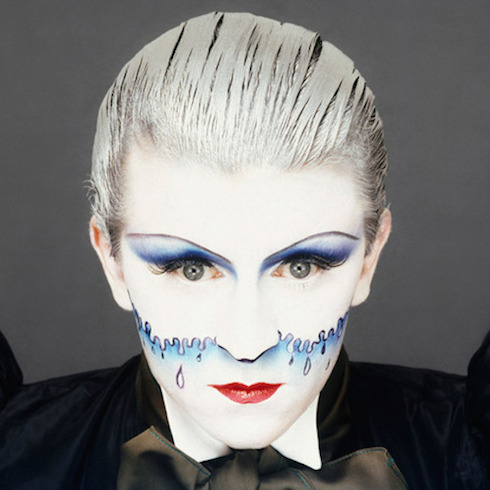
Steve Strange: Precocious club host and the face of synth band Visage, he changed British nightlife for ever

RIP Steve Strange
28 May 1959–12 Feb 2015

King of the Posers, Leader of the Blitz Kids,
co-founder of the Blitz Club,
PIED PIPER FOR THE NEW ROMANTICS,
catalyst for London’s fashion and pop
explosion in the 1980s

“ I chose to become famous and I work very hard at promoting myself. For me going out at night is work ”
– Steve Strange,
speaking to the Evening Standard in 1983

Iain R Webb, original Blitz Kid, later fashion editor of The Times and other publications, pays tribute to Steve Strange, who died in Egypt earlier today:

Steve gave us somewhere to go and beyond the crazy costumes and caked on make-up (maybe because of the…) made us each believe we had someone to be. He burned bright and we followed that light like moths to a flame – Billy’s to Blitz to Hell to Club For Heroes to Camden Palace… Oh, how we danced. His maverick spirit will never fade

Kim Bowen, stylist and former Queen of the Blitz Club, says:

“ You did create the stage on which
we all appeared ”

Andy Polaris, original Blitz Kid, and vocalist in Animal Nightlife, says:

It’s always a shock when you hear news that snatches away part of your youth. Steve Strange was not only a colourful character who had always left an impression on my teenage years. He was also a pivotal player in transforming London nightlife, along with deejay Rusty Egan. Their Tuesday nights at Billy’s club gave birth to the Blitz Club that influenced a generation of designers, musicians and artists. It’s remarkable the amount of creative talent that emerged from these clubs. It’s important to acknowledge that without Steve’s input a lot of these creative synergies might have never happened

Midge Ure, synth pioneer with Ultravox and Visage and driving force behind Band Aid, said:

Steve and Rusty created a movement in London. The Blitz and the subsequent Blitz Kids grew into a massive movement in the UK associated with fashion and image and photography. You could stand in the Blitz Club and look around you and there’d be future journalists and film-makers and writers and musicians, and a young Boy George taking coats at the coat check. There was something really vibrant about that, and they were responsible

Above: Steve Strange and three other Blitz Kids handpicked by David Bowie star in his 1980 video for Ashes to Ashes

➢ Read my history of Steve Strange, the Blitz Kids and the birth of the New Romantics at The Observer

➢ Previously at Shapersofthe80s:
1980, Strange days, strange nights, strange people – my invitation to the party that would last five years

➢ Previously at Shapersofthe80s:
1982, Strange takes six cutting-edge British fashion designers to show their wares to the French

Steve Strange, Steven Harrington, Blitz Kids, New Romantics, nightclubbing, Swinging 80s, London, fashion, pop music, Visage, tributes

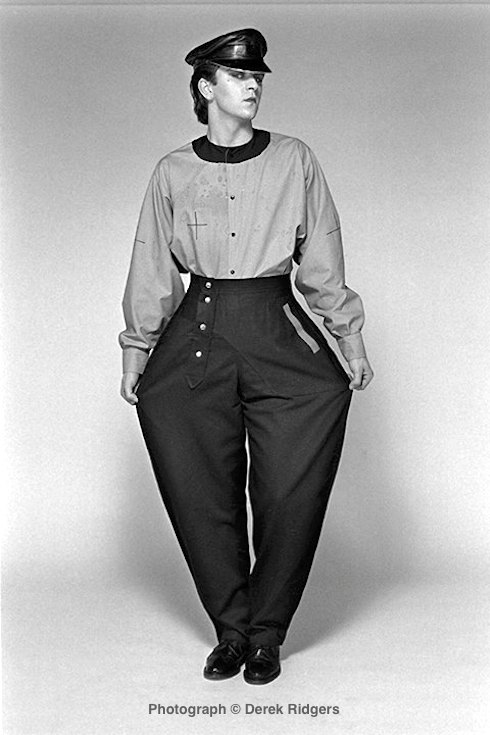
Steve Strange in 1980: wearing Willy Brown’s Modern Classics, photographed by Derek Ridgers

➢ Previously at Shapersofthe80s:
1983, Posing with a purpose at the Camden Palace – the ultimate expression of Strange & Egan’s clubbing prowess

FRONT PAGE

➤ Catch up on New Romantic landmarks reported here at Shapers of the 80s

Andrew Ridgeley,George Michael, Wham Rap, video, Face magazine, Club Culture,

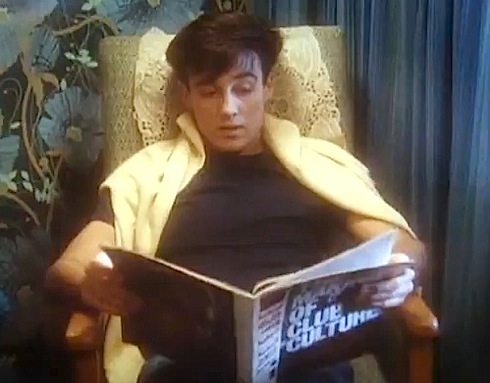
Click pic to open the Wham Rap! video in another window … “Man or mouse” Andrew Ridgeley establishes his clubbing credentials – along with sidekick George Michael – in the opening shots of the Wham! video by reading this very Face cover story on Club Culture that you’re about to read!

THE MOST READ FEATURE ARTICLE AMONG 890,000 VIEWS SINCE THE LAUNCH OF SHAPERS OF THE 80s

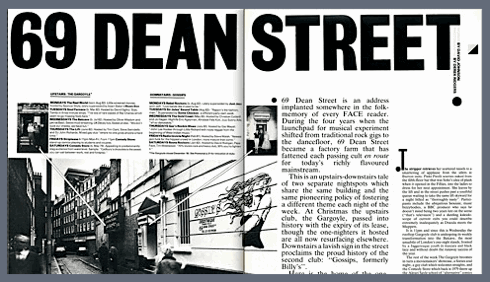
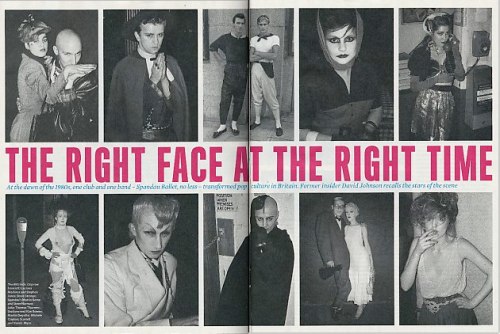
➢ 1983, The Making of UK Club Culture — Definitive Face cover story by yours truly being read here in the Wham Rap! video. This account of how London nightlife had become an international magnet was first published as “an upstairs‑downstairs tale of two key nightspots” in The Face No 34 in February 1983. Photography © by Derek Ridgers. Reprinted in The Faber Book of Pop, 1995; and in Night Fever, Boxtree, 1997

69 Dean Street, Soho, club culture, The Face magazine, London, 1980s, clubbing, nightlife,Billys, Gargoyle,Red Studio,Blitz Kids

From The Face, February 1983

THE ORIGINAL HISTORY OF THE BLITZ KIDS

The Observer Music Magazine. Pictures © by Derek Ridgers

The Observer Music Monthly, Oct 4, 2009. Pictures © by Derek Ridgers

➢ Spandau Ballet, the Blitz Kids and the birth of the New Romantics — This much-recycled account originally penned by Shapers of the 80s tells who did what to make stars out of a club houseband, change the rhythm of the UK charts — and ultimately rejuvenate the British media. The obsessive fashionistas behind one small club in London in 1980 went on to dominate the international landscape of pop and fashion, while putting more British acts into the US Billboard charts than the 1960s ever achieved. Spandau Ballet songwriter Gary Kemp responded: “A superb piece. It will be referred to historically.”

EARLY 80s REPORTS REVISITED

➢ How three wizards met at the same crossroad in time — an inside scene-setter on the forces shaping the Swinging Eighties

➢ 1980, Strange days, strange nights, strange people: at The Blitz a decade dawns

➢ 1980, One week in the private worlds of the new young: London blazes with creativity

➢ 1980, Shapersofthe80s tells how Duran Duran’s road to stardom began in the Studio 54 of Birmingham, UK

➢ 1981, Birth of Duran’s Planet Earth … when other people’s faith put the Brummies into the charts

rel="nofollow"

Romance blossoms: Drummer Jon Moss gives George a peck at Planets club in July 1981 way before Culture Club existed. Photographed © by Shapersofthe80s

➢ Three key men in Boy George’s life – In 2010 the BBC turned the pop star’s teens ’n’ twenties into a 90-minute drama of foot-stamping, chair-throwing, cry-baby tantrums over his self-confessed “dysfunctional romances”, all of which he had documented in his eye-wateringly frank 1995 autobiography, Take It Like a Man. Shapers of the 80s summarises George O’Dowd’s stormy lovelife.

➢ Ex-Blitz Kids give their verdicts on the TV drama Worried About the Boy – During and after this heavily fictionalised life story was broadcast in 2010, Shapers of the 80s canvassed this authoritative mixture of opinions on the Boy George myth and in doing so reshaped the accepted clichés about the Blitz Kids.

Chris Sullivan, club-host, deejay, Wag club, Blue Rondo, pop music,We Can Be Heroes, youth culture,

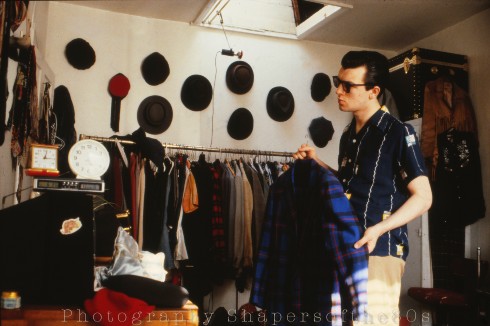
At home in Kentish Town Chris Sullivan chooses the right zootsuit for today’s mood: his wardrobe is legendary, his taste impeccable, and his influence immeasurable. Shapersofthe80s shot this for his first Evening Standard interview in June 1981

➢ 1976–1984, How creative clubbing started and ended with the 80s – “We were all kids,” says Chris Sullivan who would eventually run the Wag, the coolest club in town, for 19 years. “We went out and had a go. Empowerment is what’s important about this story.”

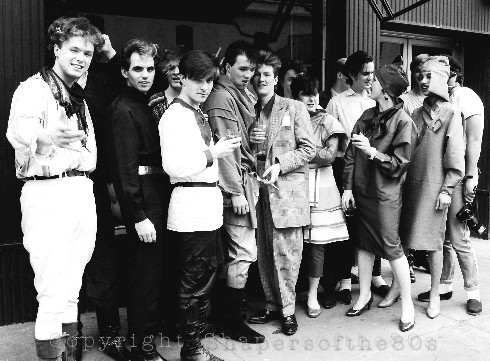
Photocall: Spandau Ballet, Richard Burgess and assorted Blitz Kid designers gather for the press conference before their fashion-and-music shows in New York. Yes that is Sade towards the far right. Photograph © by Shapersofthe80s

➢ 1981, First Blitz invasion of the US – 21 Blitz Kids take Manhattan by storm with a fresh fashion show and the live new sound of London. Eye-witness words and pix by Shapers of the 80s

ROMANTIC REVIVAL OF THE NOUGHTIES

Sade 1983

Wow! Then and now: Sade backstage in August 1983 while still seeking a recording contract and, right, as shot to launch her 2010 album. Vintage picture © by Shapersofthe80s

➢ 2010, Shapers of the 80s finds comeback Shard comfy as ‘Auntie Sade’ – Having wowed the 80s clubbing scene, in 2011 Sade’s band won a Grammy award for Best R&B Performance By A Group.

➢ 2009, Onstage, Spandau Ballet’s Hadley and Kemp finally get huggy in a mighty musical Reformation – Shapers of the 80s follows the reunion of the band who wrote the new rules for pop in the Swinging 80s.

WE ARE ALL BOWIE’S CHILDREN NOW

David Bowie, Starman, 1972, Top of the Pops, tipping point, BBC

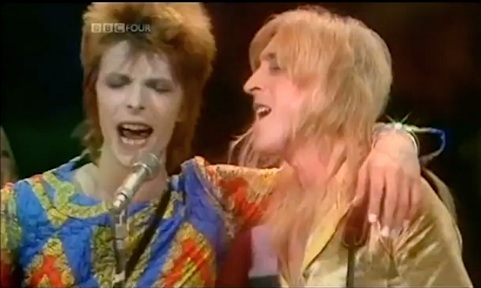
The moment the earth tilted July 6, 1972: During Starman on Top of the Pops, David Bowie drapes his arm around the shoulder of Mick Ronson. Video © BBC

➢ 40 years since “I picked on you-oo-oo”! July 6, 1972 saw the seminal pop moment — David Bowie’s first appearance on Top of the Pops as Ziggy Stardust, the day he created the next generation of popstar wannabes

➢ Where to draw a line between glitter and glam – defining what separates Slade from Bowie, the naff blokes in Bacofoil from starmen with pretensions

FRONT PAGE

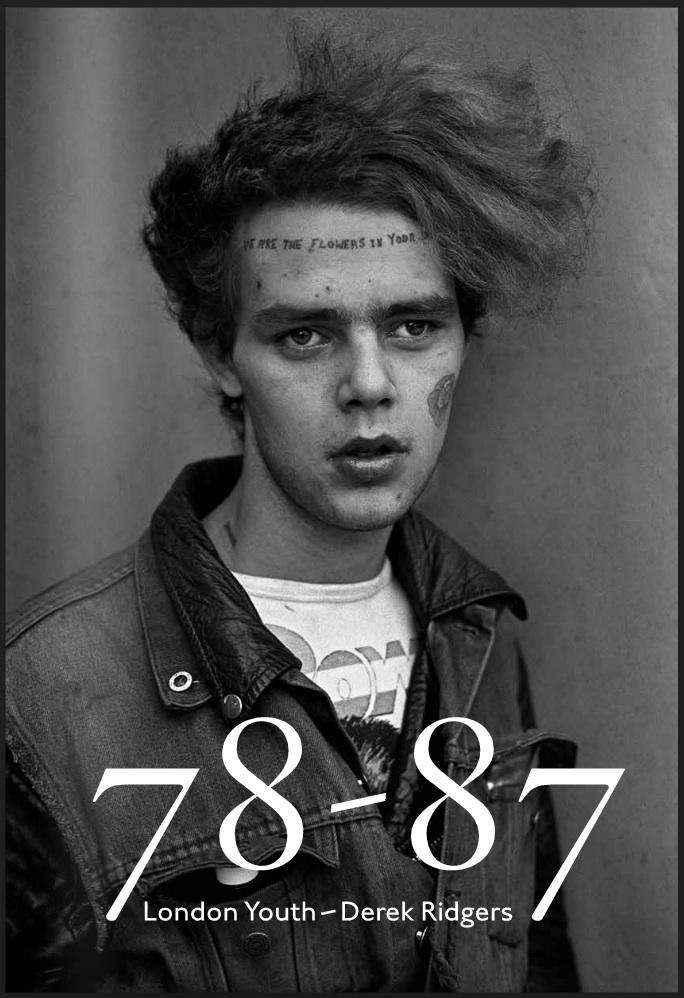
1978–87 ➤ British nightlife snapped by Ridgers as it came out of the closet

London, New Romantics, Blitz Kids, Derek Ridgers, publishing, photography, V&A, talks, youth culture, nightlife, fashion style,

Underground publicity: Derek Ridgers with lavish poster treatment for his photo-book published jointly by Damiani and Transport for London. (Pic by Shapersofthe80s)

❚ THIS FRIDAY AT THE V&A MUSEUM, London photographer Derek Ridgers will try to explain the power of his touching yet confrontational images of London youth taken in the transformational decade of the 1980s. His newly published book 78–87 London Youth can be viewed online. He is best known for these documentary portraits taken on the streets and in the clubs by night, though he has also snapped celebs from James Brown to The Spice Girls, Clint Eastwood to Johnny Depp, as well as Tony Blair, gangster ‘Mad’ Frankie Fraser, artist Julian Schnabel, writer Martin Amis, fashion designer Vivienne Westwood and more.

The recessionary 70s had precipitated a drone age of rocketing unemployment in the UK, threatening no jobs for school-leavers, ever. Yet from this black hole burst a passionately tribal youth culture that was to create the Swinging 80s, an era of optimism, marked by hedonistic good times and a flair for exhibitionism that played up to Derek’s camera. Ambition and self-improvement were the ultimate goals of the young then, in sharp contrast to the cynical narcissism of today’s lost children.

➢ Derek Ridgers talks on photographing the 80s at the V&A’s late evening, 6.30pm Friday July 18, with yours truly in the chair. Derek will be signing his book afterwards
London,Sacrosanct, Billie Madley , Twinkle Bunty, Derek Ridgers, publishing, photography, V&A, talks, youth culture, nightlife, fashion style,

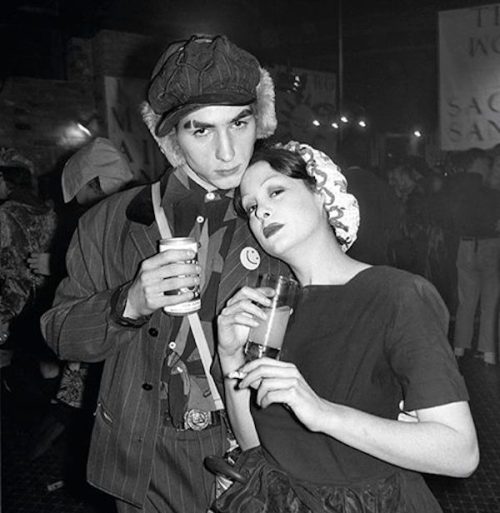
Twinkle Bunty comments on this Sacrosanct club pic by Ridgers posted at Facebook: “Just trotted over to Foyles and bought Derek Ridgers’ fab new book. Thrilled to find this pic from 1985 of me and Billie Madley proving that the 80s were ALL about the eyebrows. Mine were jet black Rimmel and Billie’s were red BIRO.” Another from ‪Laura Whitcomb: “When you shaved that eyebrow it was epic… That Westwood shirt and suit and of course those ear muffs your obsession – and the inimitable final touch of a Fosters with a baby blue straw.” Plastic bath cap: Billie’s own.

❚ IN OCTOBER 1982, I INTERVIEWED DEREK RIDGERS while writing the massive survey of London’s newly exploding nightlife phenomenon which became The Face’s cover story, The making of UK club culture in February 1983. Direct from my original notes, here is Derek’s perceptive analysis which helped inform my thinking about the turmoil that was transforming British youth culture…

Derek talking: “The depression of the late 70s made the future oh so inevitable. But from the Blitz club period onward [1979], the feeling has been different. A reaction of ambisexual kitsch. It’s an honesty with the way you look and what you want to do. There’s an enthusiasm to investigate the possibilities. There’s no sense of inevitability.

“As a photographer, I go as the casual observer and stand in the shadows. When I first went to those Tuesday nights at Billy’s [1978] it was like walking into a Hieronymous Bosch painting – furtive but lively, very decadent reflecting what they were into, and yet with a sense of oneness, a dedication that’s never been equalled since.”

In 1980 the Blitz leaders had moved on to another Covent Garden club called Hell which Derek said “was similar but more decadent because they tried to keep it to themselves. In its final weeks, only out-of-towners were going to the Blitz, because by then the media had blown away the furtiveness”.

Click any pic to launch slideshow

In 1982 Steve Strange and Rusty Egan began fronting the 1,600-capacity Camden Palace and the Pose Age went public. Ridgers said then: “At the Palace poses are adopted, yet it’s probably more interesting than the Blitz or Billy’s because it’s more honest… 90% are regulars, 9% out-of-towners, and 1% could be any type of person who’ll choose to go clubbing there, but go nowhere else except their own pub. Sometimes they’re out of their depth and try to dress as they think is expected – they bring with them an unconsidered primitiveness.

“Men are wearing dresses now but not pretending to be women. They are proud to be men – that’s fairly modern.” In autumn 1982 Boy George was in the charts with Culture Club’s first single. “George wants to look pretty, rather than handsome. He asks me whether I find him attractive and I have to pretend he’s a girl and give him an appraisal – which I don’t mind. I don’t feel threatened.”

“What’s important at the Palace is feeling special, being noticed – in a sea of other people. A good club has become a place to go for the right social reasons, rather than just to hang out.”

➢ View more Ridgers portfolio at his website

ESSENTIAL READS

➢ Blitz kids and the birth of the New Romantics – my overview for the Observer Music Monthly

➢ 69 Dean Street and the making of UK club culture
– for The Face magazine, here at Shapersofthe80s
Derek Ridgers, publishing, photography, V&A, talks, youth culture, nightlife, fashion style,

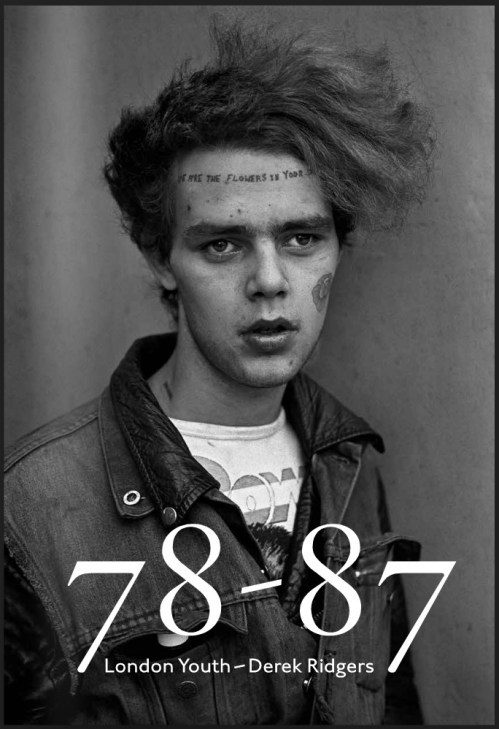
Cover star Tuinol Barry photographed by Derek Ridgers in 1983. Sadly, Barry was to die young.

FRONT PAGE

➤ Toasting the Blitz Kid dynamos who have driven the success of Shapers of the 80s

rel="nofollow"

Blitz Kids as stars of David Bowie’s Ashes to Ashes video in 1980: from the left, Steve Strange, Darla Jane Gilroy, Elise and Judi Frankland. When they got back to London after filming, they all went clubbing. Video © 1983 Jones Music / EMI Records Ltd

◼ SHAPERS OF THE 80S TELLS THE DEFINITIVE STORY of a subcultural revolution in British music and style 30 years ago. Its detonator was a youthful blast of impossible trendiness and its stars didn’t call themselves New Romantics, or the Blitz Kids – but other people did. This site gathers together the eye-witness journalism and photography of one observer who knew a good time when he saw one and was published in the coolest titles of the day.

Now in its fifth year, this site has attracted a total of 722,500 views since its launch, according to year-ending WordPress stats. The figures also identify the 20 most widely read items out of more than 600 posted here. Most of these pieces were first published back in the day, but seven of the Top 20 items reflect the continuing interest expressed through the recent 80s revival. In many ways, London is again displaying all the symptoms of being the world’s most swinging city, as it was in the 60s and the 80s, when there were a galaxy of reasons to hit the town every single night of the week.

THE 20 MOST VIEWED POSTS AT SHAPERS OF THE 80S

1  ➢ The Blitz Kids — 50 crucial nightclubbers who
set the style for a decade

2  ➢ The key men in Boy George’s life, but why has TV changed some of the names? (2010)

3  ➢ Golden rules for keeping Studio 54
ahead of the pack (1981)

4  ➢ 69 Dean Street and the making of UK club culture – birth of the once-weekly party night (1983)

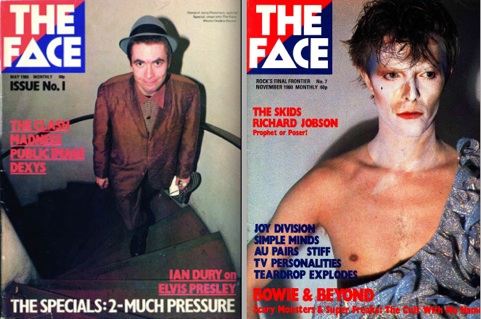
The Face, magazine, May 1980, launch, Jerry Dammers, David Bowie, The Cult With No Name, New Romantics

The difference seven months made: In May 1980 The Face launched with Jerry Dammers of the Specials on its cover. By November the new direction was Bowie plus a feature on The Cult With No Name, as the New Romantics were first known

5  ➢ The Face and other power brokers of the fourth estate — a new media language for a new decade (1980)

6  ➢ First Blitz invasion of the US — Spandau Ballet and the Axiom fashion collective take Manhattan by storm (1981)

Blitz club, London 1979, Wilf, Stephen Linard, 2010, Worried About the Boy, Boy George, Daniel Wallace,Douglas Booth

Left, real Blitz Kids – right, the TV version… George’s boyfriend Wilf and fashion student Stephen Linard in 1979 (picture, Andy Rosen)… Daniel Wallace as a Linard lookalike and Douglas Booth as Boy George in Worried About the Boy, 2010 (BBC)

7  ➢ How real did 1980 feel? Ex-Blitz Kids give verdicts on the 2010 TV drama about Boy George’s teen years, Worried About the Boy

8  ➢ Hockney’s new vision of the world — Britain’s favourite artist reveals his insights into cubism (1983)

9  ➢ Paradise Point: live leaders of a new Brit pop blitz (2010)

i-D 1980

Seminal spread in i-D issue one: the straight-up style of photography is established with, at left, one then unknown New Romantic and, right, one punkette. Photographed on the King’s Road by Steve Johnston

10  ➢ ‘i-D counts more than fashion’ — launch of the
street-style bible in 1980

11  ➢ 19 gay kisses in pop videos that made it past the censor

12  ➢ Who’s who in the New London Weekend — key clubs that set the capital swinging (1983)

13  ➢ Aside from the freaks, George, who else came to your 50th birthday party? (2011)

© Shapersofthe80s

Londres est arrivée au Palace, 1982: classic set, nouveaux styles. Pictures © by Shapersofthe80s

14  ➢ Steve Strange takes fashion to the French — six British designers rock Le Palace in Paris (1982)

15  ➢ Posing with a purpose at the Camden Palace — power play among the new non-working class (1983)

16  ➢ Who are the New Romantics? — A mainstream deejay’s guide published by Disco International (1981)

Spandau Ballet, 1980

Houseband of the Blitz club: at the London megaclub Heaven Spandau Ballet play their tenth live date on 29 Dec 1980. From left, Steve Norman, Tony Hadley, Martin Kemp, Gary Kemp, plus John Keeble on drums. © Shapersofthe80s

17  ➢ They said it — landmark quotes about the decade of change by the people who made it happen

18  ➢ Rich List puts George Michael top of the popstars from the un-lucrative 80s (2010)

19  ➢ Comeback Shard comfy as ‘Auntie Sade’ — an enduring star who made 2010 her own

20 ➢ Robbie Vincent: 35 years as master of hot cuts and getting our “rhythm buds” going (2011)

FRONT PAGE
➤ Essential pop-cultural landmarks reported here at Shapers of the 80s

Andrew Ridgeley,George Michael, Wham Rap, video, Face magazine, Club Culture,

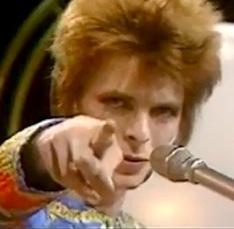
Click pic to open the Wham Rap! video in another window … “Man or mouse” Andrew Ridgeley establishes his clubbing credentials – along with sidekick George Michael – in the opening shots of the Wham! video by reading this very Face cover story on Club Culture that you’re about to read!

THE MOST READ FEATURE ARTICLE AMONG 720,000 VIEWS SINCE THE LAUNCH OF SHAPERS OF THE 80s

➢ 1983, The Making of UK Club Culture — Definitive Face cover story by yours truly seen here in the Wham Rap! video. This account of how London nightlife had become an international magnet was first published as “an upstairs‑downstairs tale of two key nightspots” in The Face No 34 in February 1983. Photography © by Derek Ridgers. Reprinted in The Faber Book of Pop, 1995; and in Night Fever, Boxtree, 1997

69 Dean Street, Soho, club culture, The Face magazine, London, 1980s, clubbing, nightlife,Billys, Gargoyle,Red Studio,Blitz Kids

From The Face, February 1983

THE ORIGINAL HISTORY OF THE BLITZ KIDS

The Observer Music Magazine. Pictures © by Derek Ridgers

The Observer Music Monthly, Oct 4, 2009. Pictures © by Derek Ridgers

➢ Spandau Ballet, the Blitz Kids and the birth of the New Romantics — The much-plundered story originally researched by Shapers of the 80s tells who did what to make stars out of a club houseband, change the rhythm of the UK charts — and ultimately rejuvenate the British media. The obsessive fashionistas behind one small club in London in 1980 went on to dominate the international landscape of pop and fashion, while putting more British acts into the US Billboard charts than the 1960s ever achieved.

EARLY 80s REPORTS REVISITED

➢ How three wizards met at the same crossroad in time — an inside scene-setter on the forces shaping the Swinging Eighties

➢ 1980, Strange days, strange nights, strange people: at The Blitz a decade dawns

➢ 1980, One week in the private worlds of the new young: London blazes with creativity

➢ 1980, Shapersofthe80s tells how Duran Duran’s road to stardom began in the Studio 54 of Birmingham, UK

➢ 1981, Birth of Duran’s Planet Earth … when other people’s faith put the Brummies into the charts

Romance blossoms: Drummer Jon Moss gives George O’Dowd a peck at Planets club in July 1981 way before their band Culture Club existed. Photographed © by Shapersofthe80s

➢ Three key men in Boy George’s life – In 2010 the BBC turned the pop star’s teens ’n’ twenties into a 90-minute drama of foot-stamping, chair-throwing, cry-baby tantrums over his self-confessed “dysfunctional romances”, all of which he had documented in his eye-wateringly frank 1995 autobiography, Take It Like a Man. Shapers of the 80s summarises George O’Dowd’s stormy lovelife.

➢ Ex-Blitz Kids give their verdicts on the TV drama Worried About the Boy – During and after its broadcast in 2010, this authoritative mixture of opinions on the Boy George story reshaped the accepted clichés about the Blitz Kids.

Chris Sullivan, club-host, deejay, Wag club, Blue Rondo, pop music,We Can Be Heroes, youth culture,

At home in Kentish Town Chris Sullivan chooses the right zootsuit for today’s mood: his wardrobe is legendary, his taste impeccable, and his influence immeasurable. Shapersofthe80s shot this for his first Evening Standard interview in June 1981

➢ 1976–1984, How creative clubbing started and ended with the 80s – “We were all kids,” says Chris Sullivan who would eventually host the Wag, the coolest club in town, for 19 years. “We went out and had a go. Empowerment is what’s important about this story.”

Photocall: Spandau Ballet, Richard Burgess and assorted Blitz Kid designers gather for the press conference before their fashion-and-music shows in New York. Yes that is Sade towards the far right. Photograph © by Shapersofthe80s

➢ 1981, First Blitz invasion of the US – 21 Blitz Kids take Manhattan by storm with a fresh fashion show and the live new sound of London. Eye-witness words and pix by Shapers of the 80s

ROMANTIC REVIVAL OF THE NOUGHTIES

Sade 1983

Wow! Then and now: Sade backstage in August 1983 while still seeking a recording contract and, right, as shot to launch her 2010 album. Vintage picture © by Shapersofthe80s

➢ 2010, Shapers of the 80s finds comeback Shard comfy as ‘Auntie Sade’ – Having wowed the 80s clubbing scene, in 2011 Sade’s band won a Grammy award for Best R&B Performance By A Group.

➢ 2009, Onstage, Spandau Ballet’s Hadley and Kemp finally get huggy in a mighty Reformation – Shapers of the 80s follows the reunion of the band who wrote the new rules for pop in the Swinging 80s.

WE ARE ALL BOWIE’S CHILDREN NOW

David Bowie, Starman, 1972, Top of the Pops, tipping point, BBC

The moment the earth tilted July 6, 1972: During Starman on Top of the Pops, David Bowie drapes his arm around the shoulder of Mick Ronson. Video © BBC

➢ 40 years since “I picked on you-oo-oo”! July 6, 1972 saw the seminal pop moment — David Bowie’s first appearance on Top of the Pops as Ziggy Stardust, the day he created the next generation of popstar wannabes

➢ Where to draw a line between glitter and glam – defining what separates the naff blokes in Bacofoil from starmen with pretensions

FRONT PAGE