Ribald and passionate: Sullivan and Elms capping each other’s stories with gusto
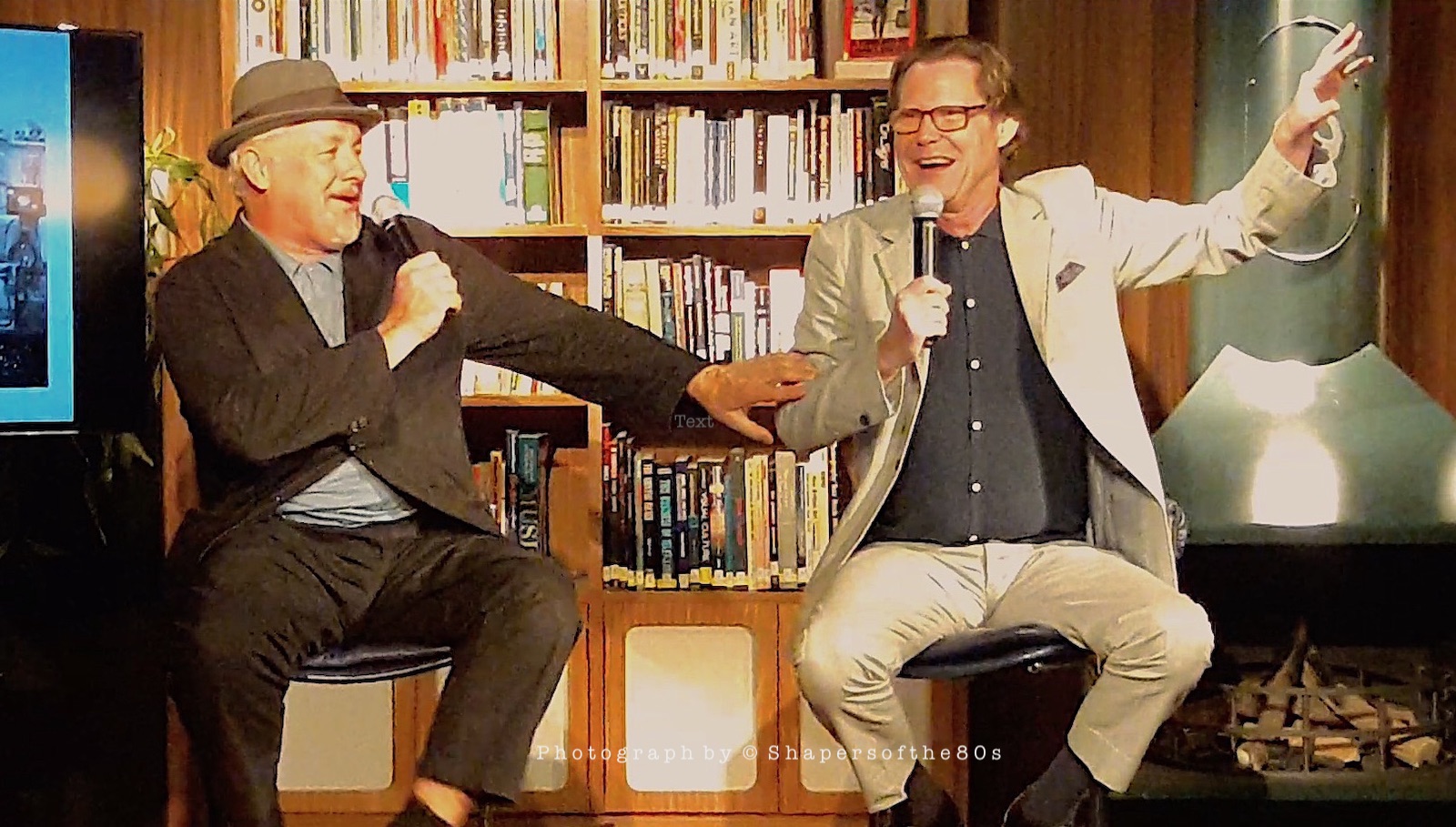
◼ CATCH UP ON TWO CLUBLAND WAGS Chris Sullivan and Robert Elms, who sat on a pair of wonky stools in public last summer and entertained an invited crowd as each capped the other’s stories. Both are renowned for having shaped the style revolution of the Swinging Eighties and their subject was the ever-changing face of London.
Writer/artist Chris Sullivan is nominally a Welshman who revealed roots that led to a grandfather who’d been a bouncer at the capital’s Windmill Theatre, while BBC London broadcaster Robert Elms is a paid-up Cockney in all but the Bow Bells bit, with a mum who was a clippie on the buses at age 15.
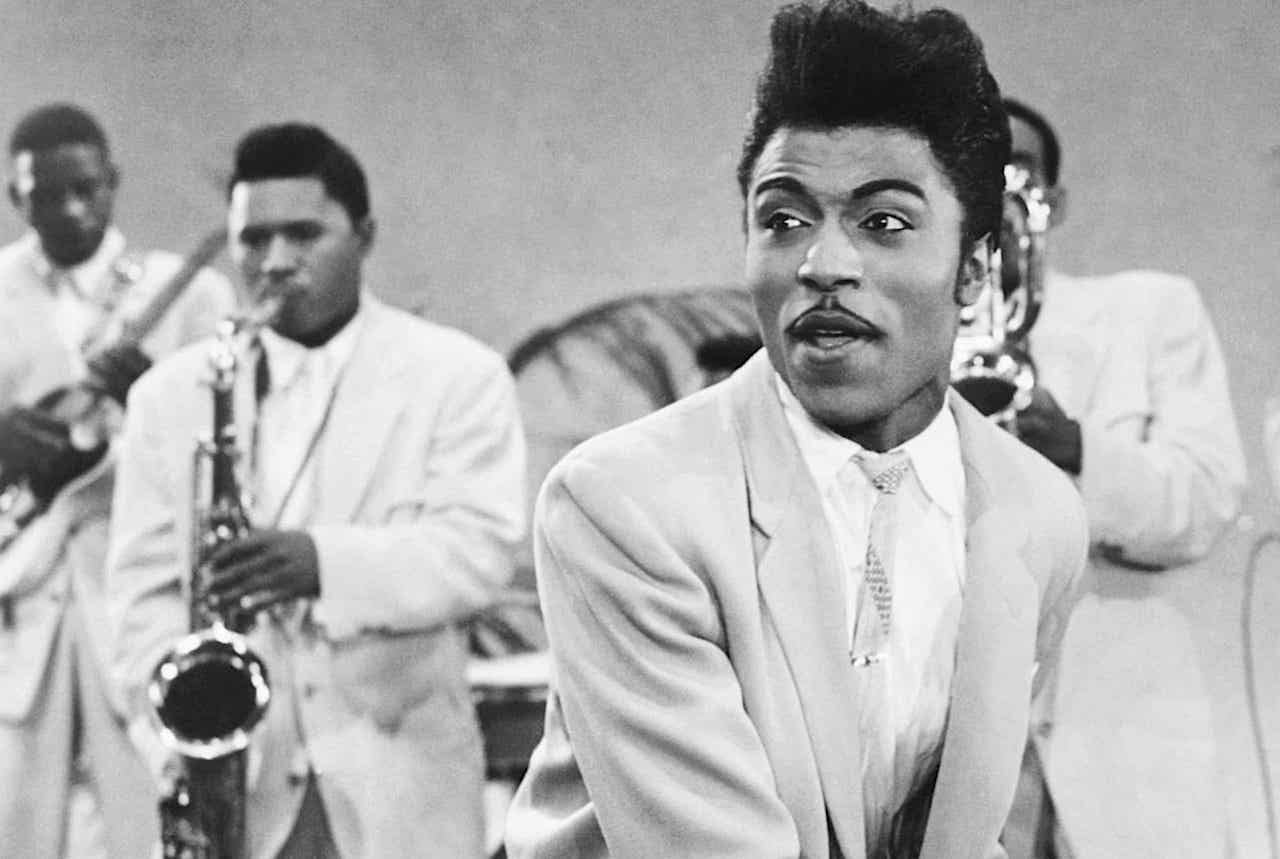
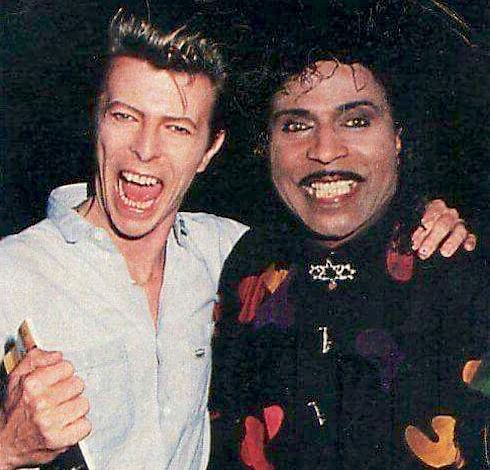
“Some cat was layin’ down some rock n roll…” The young David Jones soaked up influences like a dry sponge and he found the music and attitude of Little Richard, among others, inspirational to say the least. As a 15-year-old in 1962, Jones saw Little Richard live for the first time and then again the following year with The Rolling Stones as one of the support acts. He listed the 1959 album, The Fabulous Little Richard, among his favourite 25 for a Vanity Fair feature in 2003.
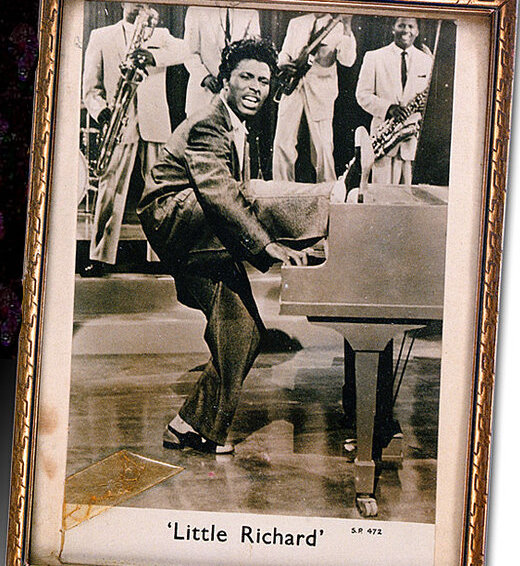
Here’s Bowie talking in 1991: “I sent away for a photograph of Little Richard when I was seven years old, it was called Star Pic and it took eight weeks to arrive and when it arrived it was torn… and I was absolutely broken-hearted. The first record I think I bought was called I Got It, which he later re-wrote as She’s Got It. And ever since I saw that photograph, I realised he had so many saxophones in his band. So I went out and bought a saxophone intending that when I grew up I’d work in the Little Richard band as one of his saxophonists. Anyway it didn’t work out like that, but without him I think myself and half of my contemporaries wouldn’t be playing music.”
We’ll leave you with a Tweet posted by David’s son, Duncan Jones: “From what my dad told me about his love of this legend growing up, it’s very likely he would not have taken the path he did without the huge influence of Little Richard. One of the highest of the high. Enjoy whatever’s next, Superstar.”
CLICK PIC TO VIEW 1991 VIDEO OF BOWIE
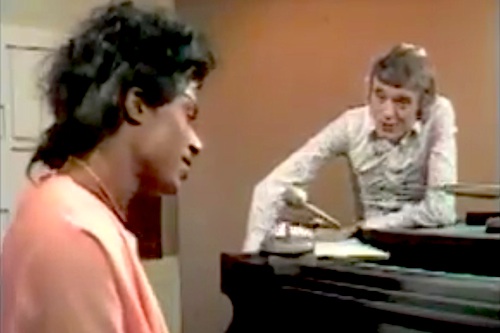
PRAISING RICHARD & RICHARD IN FULL FLOW
Bowie and Richard 1991: click pic to view video interviews in a new tab
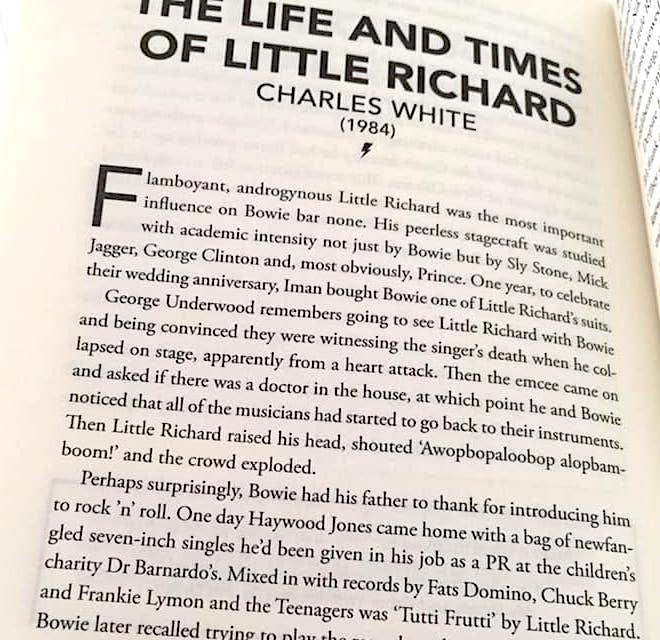
Excerpt from Charles White’s authorised biography, The Life and Times of Little Richard: The Quasar of Rock (Harmony Books, Sept 1984)
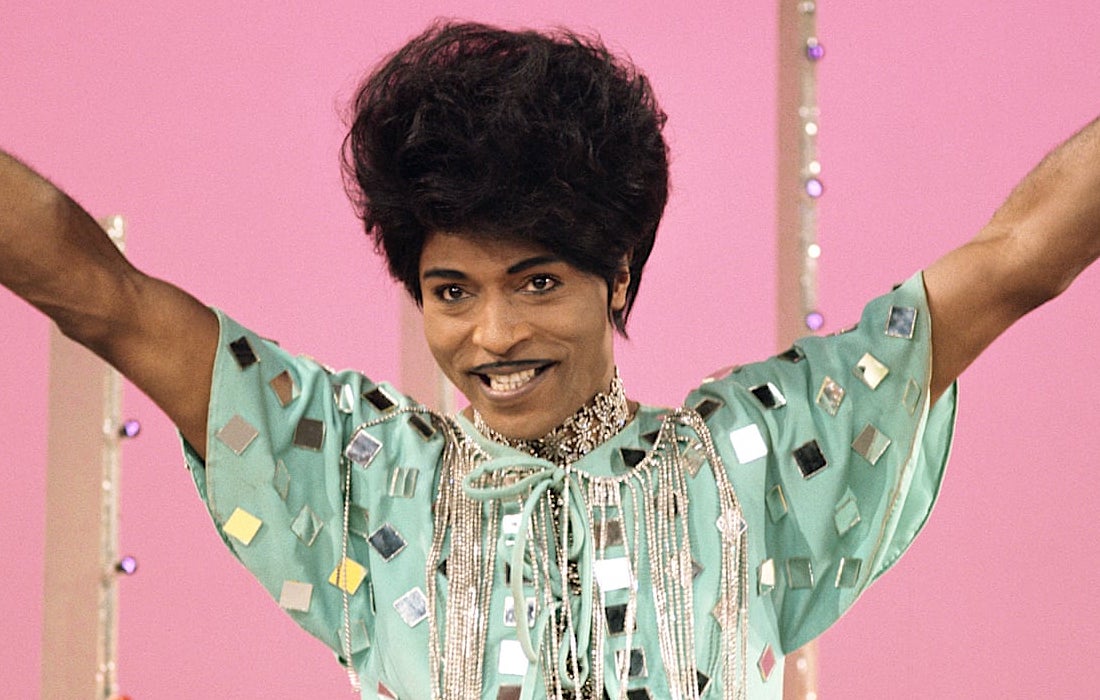
Little Richard in 1971: “his queerness made him dynamic”
➢ Little Richard’s queer triumph – The legend himself sometimes sought to distance himself from the LGBTQ community but his queerness is what made him a dynamic performer – by Myles E. Johnson in The New York Times, 10 May 2020
➢ Prime force of rock-n-roll who made an explosive impact with songs such as Tutti Frutti, Good Golly, Miss Molly, Lucille and Long Tall Sally – by Michael Gray in The Guardian, 10 May 2020
➢ How Little Richard changed the world: The legacy of the singer, who died last week, goes beyond music and helped change our attitudes to race, sex and class – by Daniel Finkelstein in The Times, 12 May 2020
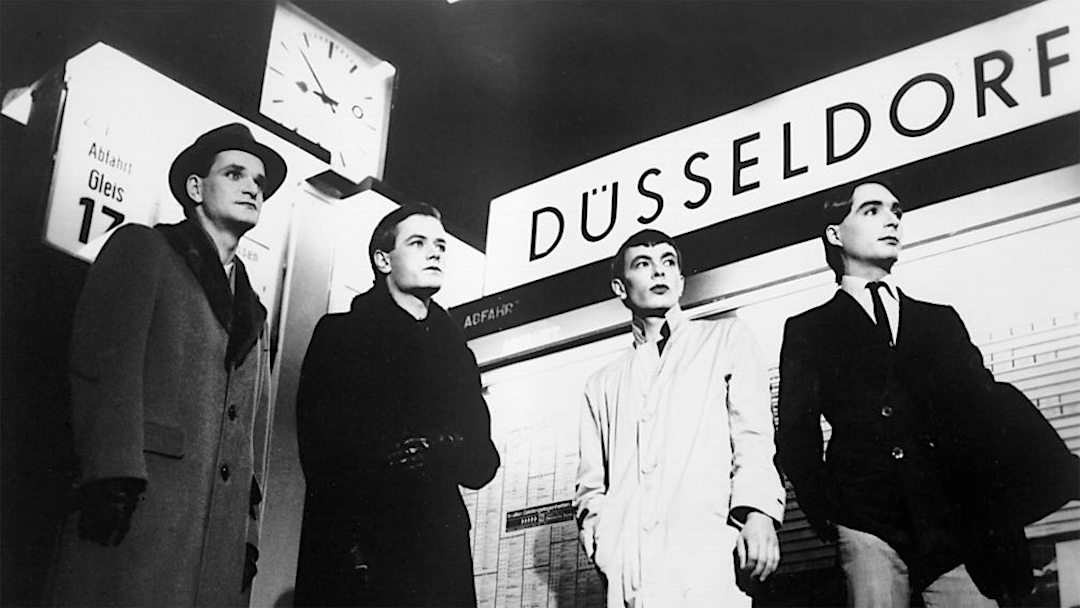
❏ You’ve no doubt heard the sad news regarding the passing of Kraftwerk founder, Florian Schneider, aged 73. A spokesperson said he “passed away from a short cancer disease just a few days after his 73rd birthday”, his birthday being April 7. Schneider formed Kraftwerk with Ralf Hütter in 1970 and remained a member until his departure in 2008. He is pictured bottom left in our photo at Düsseldorf Hbf station with the rest of the band.
In a Kraftwerk feature for MOJO magazine Ralf Hütter responded to the question “How important was David Bowie’s infatuation with you?” thus:
“That was very important for us, because it linked what we were doing with the rock mainstream. Bowie used to tell everyone that we were his favourite group, and in the mid-Seventies the rock press used to hang on every word from his mouth. We met him when he played Düsseldorf (April 8, 1976) on one of his first European tours. He was travelling by Mercedes, listening to nothing but Autobahn all the time.”
In 1978 Bowie recalled the meeting in an interview: “I like them as people very much, Florian in particular. Very dry. When I go to Düsseldorf they take me to cake shops, and we have huge pastries. They wear their suits. A bit like Gilbert and George… When I came over to Europe – because it was the first tour I ever did of Europe (1976), the last time – I got myself a Mercedes to drive myself around in, because I still wasn’t flying at that time, and Florian saw it. He said, “What a wonderful car” and I said, “Yes, it used to belong to some Iranian prince, and he was assassinated and the car went on the market, and I got it for the tour.” And Florian said, “Ja, car always lasts longer.” With him it all has that edge. His whole cold emotion/warm emotion, I responded to that. Folk music of the factories.”
Kraftwerk immortalised the Düsseldorf meeting on the title track of the band’s 1977 album, Trans-Europe Express, in its lyric:
“From station to station, back to Düsseldorf City, Meet Iggy Pop and David Bowie…”
David returned the compliment later the same year on the “Heroes” album, when he paid Florian the ultimate tribute by using his name for the title of V-2 Schneider.
❏ Bowie also spoke in some depth about Kraftwerk in an UNCUT interview several years back…
UNCUT: Many reasons have been suggested for moving to Berlin. Can you remember why the city appealed?
DB: Life in LA had left me with an overwhelming sense of foreboding. For many years Berlin had appealed to me as a sort of sanctuary. It was one of the few cities where I could move around in virtual anonymity… Since my teenage years I had obsessed on the angst-ridden, emotional work of the expressionists, both artists and film makers, and Berlin had been their spiritual home. This was the nub of Die Brücke movement, Max Rheinhardt, Brecht and where Metropolis and Caligari had originated. It was an art form that mirrored life not by event but by mood. This was where I felt my work was going. My attention had been swung back to Europe with the release of Kraftwerk’s Autobahn in 1974. The preponderance of electronic instruments convinced me that this was an area that I had to investigate a little further.
Much has been made of Kraftwerk’s influence on our Berlin albums. Most of it lazy analysis, I believe. Kraftwerk’s approach to music had in itself little place in my scheme. Theirs was a controlled, robotic, extremely measured series of compositions, almost a parody of minimalism. One had the feeling that Florian and Ralf were completely in charge of their environment, and that their compositions were well prepared and honed before entering the studio.
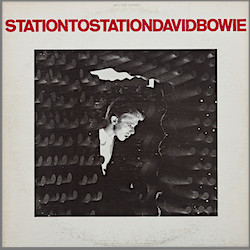
Bowie’s album Station to Station: it preceded Trans-Europe Express by a year
My work tended to expressionist mood pieces, the protagonist (myself) abandoning himself to the zeitgeist (a popular word at the time), with little or no control over his life. The music was spontaneous for the most part and created in the studio.
In substance too, we were poles apart. Kraftwerk’s percussion sound was produced electronically, rigid in tempo, unmoving. Ours was the mangled treatment of a powerfully emotive drummer, Dennis Davis. The tempo not only “moved” but also was expressed in more than “human” fashion. Kraftwerk supported that unyielding machine-like beat with all synthetic sound-generating sources. We used an R&B band. Since Station to Station the hybridization of R&B and electronics had been a goal of mine. Indeed, according to a Seventies interview with Brian Eno, this is what had drawn him to working with me.
One other lazy observation I would like to point up is the assumption that Station to Station was homage to Kraftwerk’s Trans-Europe Express. In reality Station to Station preceded Trans-Europe Express by quite some time, ’76 and ’77 respectively. Btw, the title drives from the Stations of the Cross and not the railway system.
What I WAS passionate about in relation to Kraftwerk was their singular determination to stand apart from stereotypical American chord sequences and their wholehearted embrace of a European sensibility displayed through their music. This was their very important influence on me.
UNCUT: V-2 Schneider – a tribute to Florian?
DB: Of course.
So long Florian.
❏ ABOVE: Kraftwerk playing Autobahn in 1975 on the BBC science strand Tomorrow’s World to demonstrate their “Machinemusik”. This was their first UK appearance on British television.
❏ ABOVE: View the long-haired radicals in Kraftwerk reinventing German music from “Stunde null” in the BBC Four documentary Krautrock: The Rebirth of Germany.
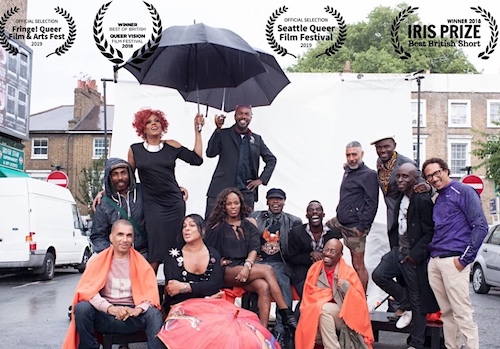
Beyond director Claire Lawrie, centre: with some of her garrulous cast answering questions after a screening at Central Saint Martins college last year. Andy Polaris in red. (Photo by Shapersofthe80s)
❚ AFTER A STREAM OF EXCLUSIVE SCREENINGS for a poignant and edgy short documentary about growing up black and queer in Seventies Britain, everyone can now view it online. Titled Beyond “There is always a black issue Dear”, the 34-minute film explores black LGBT identities and the ways in which they have influenced the collective history of London’s alternative club, fashion, fine art, dance and music scenes. The cast of ten are long-standing friends of director/photographer Claire Lawrie who helps tell their personal stories when these fans of soul and disco, punks and Blitz Kids found each other’s company in underground clubs.
Over the past year Claire has won a fistful of film-festival awards and, prompted by the coronavirus lockdown, she has posted the full version online, and repeat viewings reward with deeper appreciation.
Photo that inspired the movie Beyond – Click pic to view the film in another window
“To me it’s important now that people
realise that black people were there,
because a lot of the time they
tried to paint us out” – Andy Polaris
Onetime Blitz Kid Andy Polaris is part of the project and he recalls its origins in this extract from his own website Apolarisview. . .
“ A 2013 exhibition at the V&A museum in London titled Club to Catwalk was instrumental in bringing the collective creative talent of Eighties fashion stalwarts and club luminaries together for a preview party that summer. It was a splendid event, one of the last memorable social events with such a vibrant successful crowd. Among the assembled were Judy Blame, Princess Julia, Andrew Logan, Zandra Rhodes, Body Map, Antony Price, Chris Sullivan and it was the last time I saw Steve Strange (who along with Rusty Egan) had brought us all together at the Blitz Club in 1979.
The visual artist Claire Lawrie was at the V&A and pondered on the omission from the exhibition of gay black talent whose influence had permeated Eighties club culture. Although Jeffrey Hinton’s brilliant cave of projected nightlife photography did feature some of us, Lawrie echoed some of her friends’ frustration that their experience was not reflected in the exhibition. She set about organising an open-call photograph to celebrate a contingent of black talent and arranged for the gathering to be filmed by her friends, Emile Kelly and Kim Mnguni. This was the genesis of something deeper and her award-winning documentary, Beyond “There is always a black issue Dear”, emerged from that event with her as director.
Click any pic of the Beyond interviewees to enlarge all in a slideshow:
Lanah Pellay: “Everybody needs to know how to come to their own physical defence when required. I’ve always had an iron fist behind the limp wrist. I wasn’t just a Black Belt in mouth.”
Frank Akinsete: “There wasn’t representation in media as there is nowadays in TV adverts or in papers of people of colour. It didn’t exist.”
Kenny Campbell in i-D magazine. Beside him, Andy Polaris: “It was a really racist time in the Seventies. You had to be very careful if you were wearing freaky clothes in the street. You were risking your life.”
Winn Austin: “When you find people who are like you, easy to be around and cool, it’s like a gang. Kinky Gerlinky became like a once-a-month movie premiere.”
Les Child: “We all went to Crackers. The dancing was phenomenal – hot and steamy, kicking ass in the afternoon. Beyond.”
Robb Scott: “I was the only black kid in my school year and that in the Seventies was a horrendous thing to be. When Roots came out I was called Kunta Kinte for a year.”
Continued: “ Over the next year Claire arranged interviews with ten of the candidates who were filmed on a shoestring. Contributions of archive footage were given by a long list of talented artists, people who, over the years had collaborated with and who wanted to show their respect and love for the cast. These included Pam Hogg, Dick Jewell, Dave Swindells and Nicola Tyson as well as John Maybury, Derek Ridgers, BodyMap, Devon Buchanon and Rankin.
The film adjusts the colour settings of the standard view of black creative lives when telling the story about club culture and its impact in the UK. Featuring ten black queer voices from the diaspora, born in the late Fifties and Sixties in the UK, Guyana and New York, the documentary delves into personal stories of discovery and eventual self-acceptance, looking back at struggles with identity and family and the wider world. The cast features stylist Frank Akinsete, transgender model Winn Austin, international model Roy Brown, make-up artist Kenny Campbell, choreographer Les Child, clubland pioneer Kenrick Davis and his mother Velma “Vee” Davis, nightclub host Nicky Green, gender-fluid performer Lanah Pellay, composer Robb Scott and myself as an original Blitz Kid turned pop singer.
Roy Brown in 1985: poster boy for the Barbican’s recent exhibition on Masculinities. (Photo: Rotimi Fani-Kayode)
In the mid-Seventies and Eighties the UK’s attitudes to both race and gay issues were particularly brutal, endorsed by the anti-gay policies of Thatcher’s government and tabloid sensationalism regarding anything queer, especially later with the arrival of the Aids epidemic. The Seventies were marred by stereotypes of both marginalised groups, joining the sexist and misogynistic tropes in light entertainment and films which set the tone for how the world viewed us and how we viewed ourselves.
This lack of representation and role models forced us to create our own image during our teens, which in some cases was defiantly camp. Instead of allowing bullies to mock us, we accentuated certain behaviour, not just as a direct challenge to the heteronormative majority but against the conservative oppression in society.
Music and fashion were an escape from small-mindedness and even as early teens we were exploring alternatives and the fashionable disco and punk clubs were our laboratories of choice. . . ” / Continued at Apolarisview
Is it a mockumentary? Spandau brothers reveal all to a Times Magazine journalist. (Photo: Mark Harrison)
◼ WE’VE SEEN A COUPLE OF GOSSIP ITEMS about the Kemp Brothers from Eighties supergroup Spandau Ballet making an oddball TV documentary, but now comes a cover story on a colour supplement no less, to spill more beans about it. Polly Vernon makes a neat job of interviewing the Angel bros, now aged 58 and 60, in Saturday’s Times Magazine, teasing out their lifelong sibling rivalries, keeping them on their toes as much as they return the challenge, songwriter Gary “less inclined toward affability”, she reports, and bass-player Martin “as gentle and affable as he is handsome”. Oh, by the way, did Polly mention he was handsome…? Here are some vital facts about the film satirically titled The Kemps: All True in an extract from her article…
“POLLY VERNON WRITES: We have met so that Gary and Martin might promote the 60-minute film made for the BBC in which they play themselves – except, not really – going about their everyday lives (except, not at all). It’s a confusing proposition; part scripted, part improv, part biopic, part nonsense fabrication. Half-truths about the Kemps’ actual characters, histories, relationships and physical attributes meld with overblown fantasies about multiple kidneys and long-lost half-brothers called Ross Kemp.
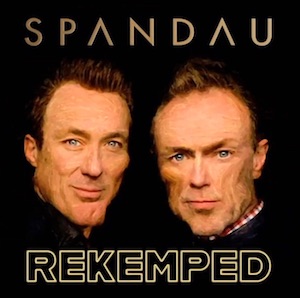
UPDATE: Exclusive preview of new album cover (BBC)
By definition, All True has none of the honesty of 2018’s Bros documentary, that heart-breaking, cringe-inducing, nostalgia-triggering film that documented Matt and Luke Goss’s real attempts to navigate their fraught sibling relationship, on which I’d assumed All True was based. (Gary is keen I know it definitely isn’t – All True was written before Bros: After the Screaming Stops was released – and he, Gary, hasn’t even seen that film. Martin has, mind. “It’s brilliant. That’s who they are, you know? I know them really well, and that’s who they are.”)
Furthermore, I can’t even really tell to which genre All True belongs. What are we calling it, I ask. A mockumentary?
“Hmmmm,” says Gary.
“Yes. That’s what it is,” says Martin, who is rapidly proving as gentle and affable as he is handsome.
“Oh, I’m not sure… Is it?” asks Gary, more interested in being perfectly, completely understood. “I don’t know. What else could you call a mockumentary?”
Uh, a comedy?
“Yeah, a comedy,” says Gary.
(“A comedy. Yeah!” says Martin.)
To be fair, despite it defying reason and categorisation, All True is very funny. Not all of it lands, nor is it precisely as Gary Kemp says he intended: “Like Larry David’s Curb Your Enthusiasm. Like the Steve Coogan-Rob Brydon thing [The Trip], you know.”
Some of it even ventures into comic genius territory… All True was conceived by director, writer and comedian Rhys Thomas (of Star Stories, The Fast Show and Nathan Barley). Thomas had worked with Martin Kemp, so when he approached Martin and Gary with a script for a show depicting a preposterous version of the brothers that, at the same time, wasn’t entirely removed from the truth, they said they’d do it. It seemed fun, they tell me – an opportunity to play with the world’s perceptions of them.
“French and Saunders do Gary and Martin Kemp,” says Martin.
“Our traits, but highlighted,” says Gary.
“Us, but on steroids!” says Martin… ” / Continued at Times Online
➢ Choose “View full site” – then in the blue bar atop your mobile page, click the three horizontal lines linking to many blue themed pages with background article
MORE INTERESTING THAN MOST PEOPLE’S FANTASIES — THE SWINGING EIGHTIES 1978-1984
They didn’t call themselves New Romantics, or the Blitz Kids – but other people did.
“I’d find people at the Blitz who were possible only in my imagination. But they were real” — Stephen Jones, hatmaker, 1983. (Illustration courtesy Iain R Webb, 1983)
“The truth about those Blitz club people was more interesting than most people’s fantasies” — Steve Dagger, pop group manager, 1983
PRAISE INDEED!
“See David Johnson’s fabulously detailed website Shapers of the 80s to which I am hugely indebted” – Political historian Dominic Sandbrook, in his book Who Dares Wins, 2019
“The (velvet) goldmine that is Shapers of the 80s” – Verdict of Chris O’Leary, respected author and blogger who analyses Bowie song by song at Pushing Ahead of the Dame
“The rather brilliant Shapers of the 80s website” – Dylan Jones in his Sweet Dreams paperback, 2021
A UNIQUE HISTORY
➢ WELCOME to the Swinging 80s ➢ THE BLOG POSTS on this front page report topical updates ➢ ROLL OVER THE MENU at page top to go deeper into the past ➢ FOR NEWS & MONTH BY MONTH SEARCH scroll down this sidebar
❏ Header artwork by Kat Starchild shows Blitz Kids Darla Jane Gilroy, Elise Brazier, Judi Frankland and Steve Strange, with David Bowie at centre in his 1980 video for Ashes to Ashes
VINCENT ON AIR 2026
✱ Deejay legend Robbie Vincent has returned to JazzFM on Sundays 1-3pm… Catch up on Robbie’s JazzFM August Bank Holiday 2020 session thanks to AhhhhhSoul with four hours of “nothing but essential rhythms of soul, jazz and funk”.
TOLD FOR THE FIRST TIME
◆ Who was who in Spandau’s break-out year of 1980? The Invisible Hand of Shapersofthe80s draws a selective timeline for The unprecedented rise and rise of Spandau Ballet –– Turn to our inside page
SEARCH our 925 posts or ZOOM DOWN TO THE ARCHIVE INDEX
UNTOLD BLITZ STORIES
✱ If you thought there was no more to know about the birth of Blitz culture in 1980 then get your hands on a sensational book by an obsessive music fan called David Barrat. It is gripping, original and epic – a spooky tale of coincidence and parallel lives as mind-tingling as a Sherlock Holmes yarn. Titled both New Romantics Who Never Were and The Untold Story of Spandau Ballet! Sample this initial taster here at Shapers of the 80s
CHEWING THE FAT
✱ Jawing at Soho Radio on the 80s clubland revolution (from 32 mins) and on art (@55 mins) is probably the most influential shaper of the 80s, former Wag-club director Chris Sullivan (pictured) with editor of this website David Johnson
LANDMARK FAREWELLS. . . HIT THE INDEX TAB UP TOP FOR EVERYTHING ELSE








 ➢➢ Shapers of the 80s ➣➣