Category Archives: Clubbing

1961 ➤ No wonder The Beatles changed the shape of music after 456 sessions practising in public

Beatles, Cavern club, Liverpool,Pete Best, John Lennon, George Harrison, Paul McCartney, Ringo Starr

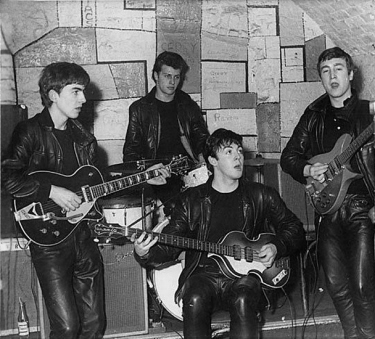
Their regular gig: The early Beatles at the Cavern club in 1961 with Pete Best on drums

❚ ON THIS THIS DAY 50 YEARS AGO four Scousers played the first of 292 gigs at the Cavern club in Liverpool — 292! They were paid £5 and Pete Best was playing drums that day, although when they played their last Cavern lunch date two years later, in Feb 1963, Ringo Starr sat behind the kit and Please Please Me was heading towards No 2 in the charts to be followed by four No 1 hits in a row.
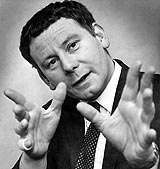
Bob Wooler,DJ, Cavern club, Liverpool

Bob Wooler, Cavern deejay: urged the owner Ray McFall to give The Beatles a try. Picture from Liverpool Post

Two hundred and ninety two gigs is the equivalent of playing every night for 48 weeks without break. In fact, many of those dates were, like the first on Thursday Feb 9, 1961, played to few dozen office workers at lunchtime. Practice may well make perfect but, even so — 292 at one venue! The Cavern’s deejay Bob Wooler booked the bands and gave The Beatles their residency, “playing lunchtime and evening sessions for about 25 shillings a session”, according to Ray Coleman in a definitive biography of John Lennon. “The Cavern, with little ventilation, appalling acoustics, walls dripping with dampness… would tax even the most enthusiastic of young musicians.”

Coleman explains why playing in this club was a decisive tipping point: “It was a hotbed of traditional jazz… The audiences were, in John Lennon’s opinion, snobs against rock’n’roll. He hated them for their superior attitude. The Cavern was to represent, to John, something more than success for The Beatles. He saw it as a crusade against jazz and all it stood for.

“John told jazz singer [author, journalist and cultural guru], George Melly, who had played the club with the Mick Mulligan Band: ‘You lot kept us from getting into the Cavern and other places much earlier. All that jazz crap held us back.’

George Melly, jazz singer, The Beatles, Revolt Into Style

“The game was up”: Jazz singer George Melly in 1960. Photographed © by Ray Moreton

“Melly conceded this point to Lennon… With rock’n’roll groups, led by The Beatles, pulling in students, previously jazz’s natural audience, ‘the game was up’, as Melly succinctly puts it. Lennon relished the kill.” On that cramped stage in that desperate year of 1961, Coleman maintains: “Lennon’s demeanour could be likened to that of a caged tiger. Here, he honed his short-sighted, head-tilted, legs-astride stance into a statement of defiance, much more than mere music.”

The Cavern residency was a testament to the determination of the man who had been a founder-member of The Quarrymen in 1956. Let’s not forget that the world-beating band who evolved from them also played four seasons in the German city of Hamburg between their bass player Stuart Sutcliffe eventually naming them The Beetles in August 1960 [a spelling Lennon later changed to reflect the beat], and securing their first recording contract in June 1962 with EMI, which was to turn them into the most famous pop group in history.
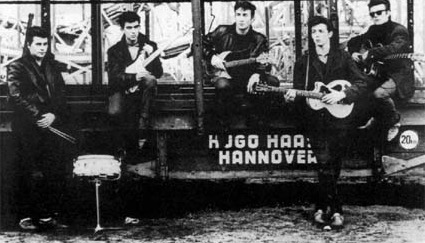
Beatles, Hamburg, Astrid Kirchherr, Stuart Sutcliffe

The Beatles’ beat look, 1960: honed in Hamburg by photographer Astrid Kirchherr who took this picture when guitarist Stuart Sutcliffe was in the lineup

So how many gigs did these musicians from Liverpool have to play in order to clinch a deal with a major London label in an era when the metropolis viewed the provinces as a foreign land? These were the dark ages before the internet, when television was only starting to replace newspapers as the mass medium, and when many singers upped their vocal register as far as falsetto to be heard clearly through the latest piece of technology, the handheld transistor radio.

A chance phone call in 1960 won The Beatles their first stint in Hamburg where they played seven nights a week at £15-a-week, Aug-Oct (46 gigs at the Indra club) straight on through Oct-Nov (57 gigs at the Kaiserkeller). They returned to Liverpool with moptop hairstyles and bespoke cuban-heeled Chelsea boots from London’s theatrical shoemakers Anello & Davide. After their Cavern debut the next year, 1961, The Beatles returned to Hamburg, Mar-July (98 gigs). They were viewed at the Cavern that November by Brian Epstein who agreed to manage them a month later, and played their first southern gig in Aldershot to 18 people. It was back to Hamburg in spring 1962, April-May (49 gigs), to find that Epstein had a deal ready to sign† the week after they returned. So let’s say that those four tours of duty in Germany amounted to almost exactly 250 gigs. Two hundred and fifty!

rel=nofollow

Beatles relaxing, probably 1961: Rare photo including Stuart Sutcliffe at left and Pete Best at right. (Photo courtesy Yoko Ono Lennon)

The Beatles themselves described their far from meteoric progress in their own words in the monumental Anthology published for their company Apple Corps in 2000. It makes you want to weep.

John Lennon says: “In Hamburg every song lasted 20 minutes and had 20 solos in it. We’d be playing eight or ten hours a night. [This is rather more practice than young musicians achieve at a western conservatoire, and rather less than Chinese music students.] That’s what improved the playing. And the Germans like heavy rock… Paul would be doing What’d I say? for an hour and a half.”

Paul McCartney says: “What’d I say? became like trying to get into the Guinness Book of Records — who could make it last the longest… It has the greatest opening riff ever… then the chorus… then it had the killer ‘Oh yeah!’ — audience participation.”

George Harrison says: “We had to learn millions of songs. We had to play so long we just played everything — Gene Vincent, Chuck Berry, Little Richard, Everly Brothers, Buddy Holly, Fats Domino — everything. Hamburg was really our apprenticeship, learning how to play in front of people.”

Ringo Starr, who met the others in Hamburg while playing drums in Rory Storm and the Hurricanes, says: “This was the point in our lives when we found pills, uppers. That’s the only way we could continue playing for so long. We’d get really wired and go on for days. So with beer and Preludin, that’s how we survived.”

Brian Epstein, Beatles

Brian Epstein: local businessman who became The Beatles’ manager

When they signed with EMI their average age was 20. The band calling itself The Beatles had played 250 gigs in Hamburg, and averaging their Cavern appearances over the year and a half before signing suggests they played 206 gigs there.

So in addition to many other local dates, it took The Beatles at least 456 live gigs to clinch their future as the most commercially successful group in pop. In the UK The Beatles have had more number one albums than any other musical act, and in the US they top Billboard magazine’s list of the all-time top-selling Hot 100 artists.

Four hundred and fifty-six live gigs! And in 1980, when Spandau Ballet signed to Chrysalis just less than a year after assuming their New Romantic identity, they had given — as part of a cunningly formulated plan — exactly 18 live performances (six in the UK plus 12 in St Tropez on-stage nightly). Whatever this says, it’s a measure of how effective mass communications had become during the intervening two decades. And what an exhilarating hurricane they swept before them as the 80s turned into the second great era of British pop.

† LITTLE-KNOWN FOOTNOTE TO HISTORY

❚ THE 1999 PHOTO-BOOK HAMBURG DAYS — a limited edition box-set by Astrid Kirchherr and Klaus Voormann — reveals that the early Beatles lineup (with Pete Best as drummer but without Stuart Sutcliffe who had left the band) had signed their first recording contract in 1961 with Bert Kaempfert, the German Polydor agent who also ran a celebrated light orchestra.
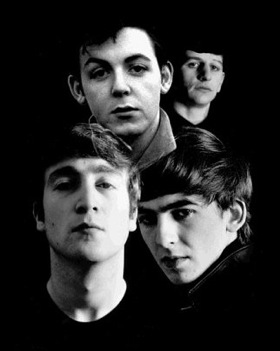
Hamburg Days,Astrid Kirchherr, Klaus Voormann

Hamburg Days: the cover shot

He had hired The Beatles to play under the pseudonym The Beat Brothers to back singer Tony Sheridan, with whom they’d often jammed at The Indra club. On June 22 1961 at the Friedrich Ebert Halle — seen in the slideshow (above) of wonderful early Silver Beatles photos — they all recorded the Sheridan single My Bonnie, which effectively became the band’s first commercial recording when it was released in October 1961 and reached No 5 in the hit parade.

It has become part of Beatles folklore that it was a Sheridan fan called Raymond Jones who brought the band to Brian Epstein’s attention that November by asking for My Bonnie in the record-shop Epstein ran in Liverpool. What Kirchherr and Voorman reveal, contrary to most accounts, is that it was not until May 25 1962 while the band was engaged at the Star Club in Hamburg that Epstein finally persuaded Kaempfert to release The Beatles from his contract with them, effective from June 1. (Only after The Beatles auditioned for George Martin at Abbey Road on June 6 was an EMI deal confirmed.) The Kaempfert contract actually had a further year to run until July 1963. Imagine how mad he must have been when 1963 came round and The Beatles notched those four No 1 hits in a row.

VERDICT OF HISTORY

The late Charlie Gillett, in his consummate history of rock, The Sound of the City (1970), passes this judgement on the Fab Four: “Musically, The Beatles were exciting, inventive and competent; lyrically, they were brilliant, able to work in precisely the right kind of simple images and memorable phrases that distinguished rhythm and blues from other kinds of popular music… But there was something else about them, and it was this that transformed the nature of the world’s popular music as decisively as rock’n’roll had done nine years before — their character as people.”

FRONT PAGE

1981 ➤ Birth of Duran’s Planet Earth — when other people’s faith put the Brummies into the charts

Duran Duran, New Romantics

Duran Duran in 1980: Birmingham’s fluffiest New Romantics

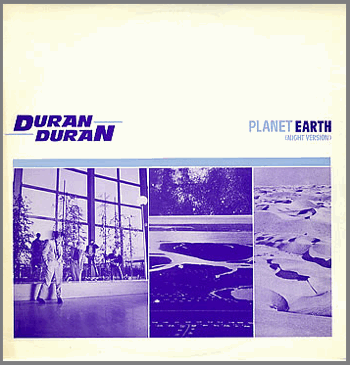
Planet Earth, Night Version, Duran Duran◼ 30 YEARS AGO TODAY the Birmingham club-band Duran Duran released their debut single Planet Earth, less than two months after signing to EMI. It charted in mid-March, peaked at No 12, and bagged the band a spot on Top of the Pops, Britain’s premier music TV show. They were the first New Romantic band from outside London to make good, and this week the writer Steve Jansen claims that “inside of three short years, Duran were officially the biggest band on the planet”.

He celebrated Duran’s birthpangs with a monumental survey of their origins titled Switch It On! – Planet Earth & The Launch of Duran Duran, on the blog gimmeawristband.com. As a shorter alternative, Shapersofthe80s has documented a few key excerpts from his epic account, where Jansen talked to all the key players involved during the run-up to the band’s chart debut. They are published here with his permission…

➢ Previously at Shapers of the 80s:
Read Steve Jansen on how other people’s faith put
the Brummies into the charts

➢ Previously at Shapers of the 80s:
1980, How Duran Duran’s road to stardom began
in the Studio 54 of Birmingham

Duran Duran, video, Planet Earth

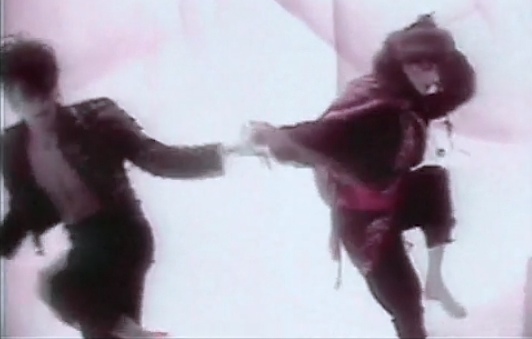
The New Romantic Jive: Rum Runner regulars Gay John Lupton and Lavinya Jatjm, dressed to the hilt and dancing in the official 1981 video for Planet Earth, co-directed by Blitz Kid Perry Haines and Russell Mulcahy

FRONT PAGE

➤ Index of posts for January

Boy George, John Themis, Bishop Porfyrios , icon,

Two-way exchange: Bishop Porfyrios reclaims his church’s 300-year-old icon of Christ in London, while as a thankyou, Boy George receives a modern version of Christ Pantokrator (right) from composer John Themis. Photo © AP

➢ George Michael celebrates his golden years of Faith

➢ Reliving the Blitz: two pocket fanzines and a request from Rusty Egan

➢ “Too posh for pop” — Grandpa Waterman condemns two decades of musicmakers

➢ 1981, Why naked heroes from antiquity stood in for Spandau on their first record sleeves

➢ Ferry backed by three bass players, Roxy back on the road — how cool is that?

Japan pop group, Mick Karn, Hammersmith Odeon , 1982, Sounds ,Chris Dorley-Brown

Karn onstage at Hammersmith Odeon, November 17, 1982: Japan’s final UK tour. Photographed for Sounds © by Chris Dorley-Brown

➢ 1981, The day they sold The Times, both Timeses

➢ George makes saintly gesture over stolen icon

➢ 1981, How Adam stomped his way across the charts to thwart the nascent New Romantics

➢ Life? Tough? At the Blitz reunion, Rusty delivers a message to today’s 20-year-olds (TV news video)

➢ The unknown Mr Big behind London’s landmark nightspot makes his return to the Blitz

➢ Va-va-vooom! goes the world’s smallest portable record player

➢ F-A-B! Thunderbirds stamps are go!

➢ Julia and Gaz share their secrets for ageing disgracefully

Return To The Blitz , Steve Strange, Rusty Egan, Red Rooms, Blitz Kids, New Romantics

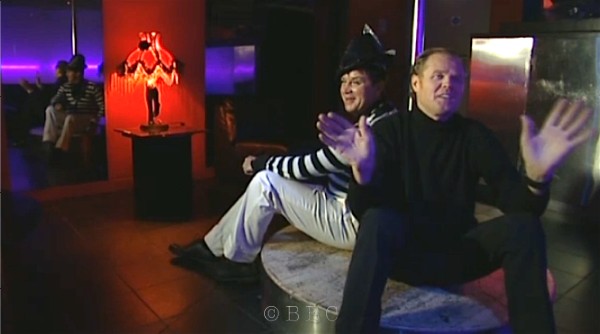
Motormouths back in action: Strange and Egan interviewed on BBC London news in the club where they once reigned. Such were members’ powers of self-promotion at the Blitz, Egan said, that it was the 80s equivalent of Facebook Live!

➢ 2011, Strange and Egan return to the Blitz to kick off the 20-tweens

➢ 200 new acts tipped for the new year in music

➢ Most popular bits of Shapersofthe80s during 2010

➢ Farewell Mick Karn, master of the bass and harbinger for the New Romantics

➢ Prescott says Postlethwaite’s Brassed Off speech inspired New Labour in 1997

➢ Discover Ubu while Christopher Walken takes flight to Fatboy Slim

➢ Happy New Year from Frosty The Snowman and The Ronettes — and hear the smash that changed the sound of 60s pop

➢ List of posts for December 2010

The Ronettes, Phil Spector, Frosty the Snowman, Be My Baby, Wall of Sound, 1963

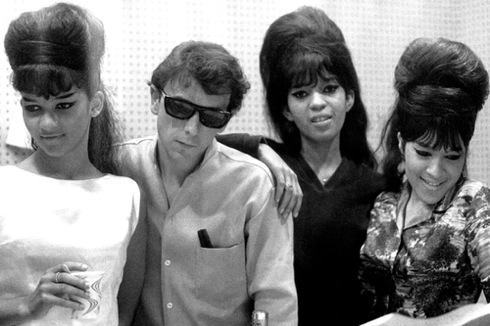
The Ronettes in 1963: beehive hair-dos and producer Phil Spector

FRONT PAGE

2011 ➤ Reliving the Blitz: two pocket fanzines and a request from Rusty Egan

Shock dance troupe, Angel Face, RBRB,rare vinyl ,

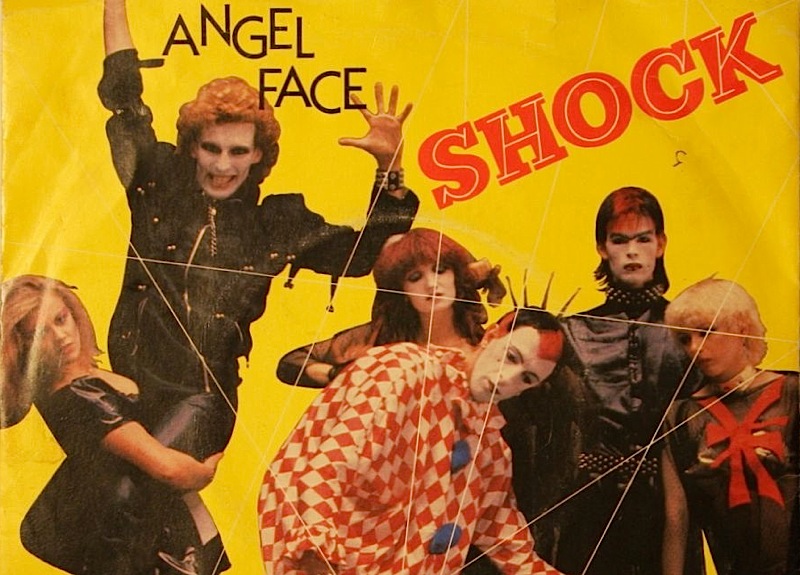
Shock’s 1980 12-incher, Angel Face b/w R.E.R.B. — rare vinyl costing £58.21 from Black Rhythm Records in the Netherlands

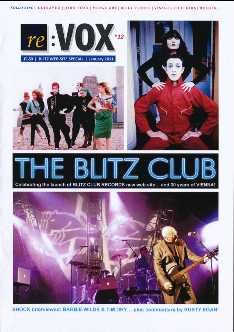
reVox, magazine, theblitzclub, Blitz Club Records, Rusty Egan, Ultravox, Shock, Tik & Tok❚ re:VOX #12 IS A FAT special issue of Rob Kirby’s pocket magazine dedicated to 80s electronica, which celebrates the 30th anniversary earlier in January of the release of Ultravox’s hit single Vienna. This 40-page issue tracks the origins of Vienna as a monster hit that set a benchmark for pop’s new wave, both musically and with its innovative, cinematic video.

There is a lengthy interview with Barbie Wilde of Shock, the mime/dance troupe whose single Angel Face was produced by Rusty Egan of Visage and Richard Burgess of Landscape who also produced Spandau Ballet’s first records (today a director for Smithsonian Folkways, the nonprofit record label of the Smithsonian Institution in Washington). The Shock B-side R.E.R.B. is the first re-release by the new label Blitz Club Records — here’s a 30-second clip of the 2011 extended version:

In re:VOX Barbie describes the emergent mime scene inspired by visiting Paris in the late 1970s, and being involved at the age of 19 with Tim Dry in the formation of Shock in 1979, along with Robert Pereno, Lowri-Ann Richards, Karen Sparks and Sean Crawford (later Tok of Tik & Tok) and how all paths crossed at the Blitz, resulting in Shock becoming dance figureheads for the New Romantics. In October 1980 Barbie didn’t have much fun dodging explosions as she ran around Beckton Gas Works with Tok when they added romance to Ultravox’s video for Passing Strangers, one of the first pop promos directed by Russell Mulcahy, in which moustachioed Midge Ure thinks he’s Clark Gable.

Midge Ure, Sean Crawford, Barbie Wilde, Ultravox, video, Passing Strangers

Midge, Sean and Barbie: Ultravox’s video for Passing Strangers, 1980, which would later be runner-up for the Best Video award in the British Rock and Pop Awards

Tik & Tok,Tim Dry, Sean Crawford

Robo-mimes Tik & Tok: Sean Crawford and Tim Dry

Tim Dry, another ex-Shock performer, continues the saga of how in 1980 he span off to form the white-faced robo-mime duo Tik & Tok with Sean Crawford who was already familiar on London’s fashionable streets as a robot character called Plastic Joe. Dry had been completely unaware of the Blitz as a “secret underworld the rest of London was oblivious to” (along with the indolent record industry to whom the scene came as a monumental surprise once it exploded).

He gives full credit to Robert Pereno as the social networker who was key to both acts getting bookings on the clubbing circuit, and persuaded Tik & Tok to ditch disco in favour of cutting edge Euro-synth music. The duo made £30 from their first street performance outside San Lorenzo, the smart Beauchamp Place restaurant. From that pavement debut, television, fame and fortune beckoned…

Steve Strange, Rusty Egan, Return to the Blitz, clubbing, theblitzclub

Steve Strange: reliving his former glory on the door for the Return to the Blitz party, Jan 15. Captured from video by Shapersofthe80s

Kirby has also produced a separate 16-page issue, re:VOX #13, to report the Blitz Club Reunion party itself, held at the site of the original 1980 club on Jan 15 jointly to launch the book Remembering Eden by Jus Forrest and Helen Waterman, as well as Egan & Strange’s website for their label Blitz Club Records. Rob gives his first-person account of the party, confessing that he was too young to be one of the original Blitz Kids and reminds us that he’d fallen in with Rusty quite recently as an obsessive archivist who can trace every track Rusty had ever played as the Blitz club’s deejay. They have already shared their playlists with Graham Smith, the designer of Spandau Ballet’s graphics whose anthology of 80s photographs, We Can be Heroes, is published in September by DJhistory.com

Each issue of re:VOX costs £1.50 from Rob Kirby, 2 Bramshott Close, London Road, Hitchin, Herts SG4 9EP

WHICH TRACKS WOULD YOU LIKE ON
A BLITZ CLUB COMPILATION?

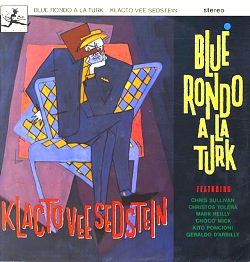
Klactoveesedstein , Blue Rondo a la Turk , latin, funkEgan plans to produce a Blitz Club album, not of the usual suspects who are wheeled out on 80s compilations, but artists as cutting-edge as those Rusty was so eagle-eared at finding on his travels through Europe in the late 70s. “Not 12-inch disco remixes,” he says. “Our clubs played great weird music like Can, Neu and Magazine.”

He is inviting lovers of Billy’s, Blitz and Club for Heroes music from 1978 to 1981 to propose the key tracks they think made London’s clubbing scene so inspirational. He names as examples the German version of Bowie’s “Helden” (1977) that he played relentlessly at Billy’s, RAF by Snatch featuring Brian Eno (1983) and Eno’s own King’s Lead Hat (1978), Television’s Little Johnny Jewel (1975) which he says has “great drums” from Billy Ficca, Klactoveesedstein by Blue Rondo a la Turk (1982), and the French model Ronny’s If You Want Me To Stay (1981).

Send your track suggestions to Rusty Egan through the contact page at
theblitzclub,Blitz Club Records, Rusty Egan

FRONT PAGE

➤ Index of posts for December 2010

Duran Duran, 80s, pop

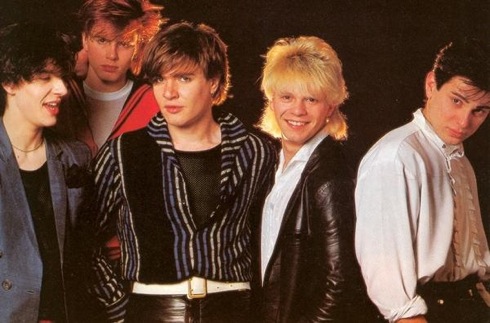
The early Duran Duran: discovered by invitation in 1980

➢ 80s shapers win 2010 New Year Honours for fashion, music and walking in space

➢ 1980 secrets revealed about the SAS, arming Afghanistan and death of the tanner

➢ 1980, As Spandau play in Heaven, all around we can hear the new sounds of 1981

➢ 1980s, So many shapers shaped the decade that people think was all down to Margaret Thatcher — key books of the year

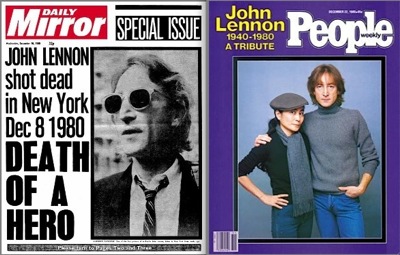
John Lennon death, Daily Mirror, people magazine, 30th anniversary
➢ What larks! Festive fun and games and British ways to make merry

➢ A jolly festive tree by Andrew Logan

➢ 2010, Duran no turkey: here’s the Bacofoil video and two new tracks premiered at East Village Radio

➢ 1980, How Duran Duran’s road to stardom began in the Studio 54 of Birmingham

➢ A feast of Bowie-ana served in waffeur-thin slices

➢ Whatta they like? Essex reality stars shake their vajazzles in the face of Hollywood

➢ 1980, The Lennon we knew: unfulfilled talent with a genius for making friends the world over

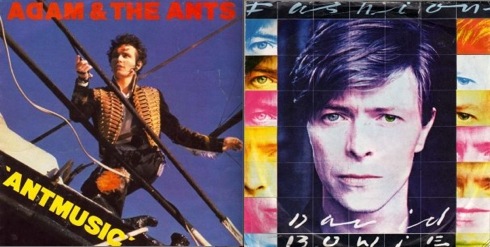
Adam & The Ants, David Bowie, Swinging 80s,Top Of The Pops
➢ 1980, The week the Swinging 80s clicked into gear

➢ Live online now, mad hatter Stephen Jones

➢ This £5m iPhone has to be a spoof! Yes, that’s $7.8m or €6m or 52m Chinese Yuan or 245m Russian Rubles

FRONT PAGE