❚ ON THIS DAY IN 1980 Spandau Ballet, the houseband of the Blitz club, saw their first single To Cut a Long Story Short reach its highest chart position, No 5 in the UK. Crucially, its nine-week stay in the top 40 guaranteed weekly exposure on Top Of The Pops, the UK’s leading TV show for music, which pulled 15m viewers in those days (among the week’s highest audiences) when the No 1 single typically sold 150,000 vinyl records per week.
Ahead of Spandau this week were Madness, The Boomtown Rats, Blondie and, at No 1, Abba with Super Trouper. Below them making waves for the new British pop were Eddy Grant, David Bowie, Roxy Music, OMD, Adam & the Ants, Kate Bush and The Clash. In the next four years, 54 new image bands and acts from UK clubland would flood the charts with a new British sound, plus 34 others from the clubbing slipstream. The Swinging 80s were about to crank themselves into gear.
Representing yesterday’s men in that week’s top 40 were Rod Stewart, Queen, Status Quo and Robert Palmer. From the 80s onward, rock was no longer to be the dominant form of music and the rhythm of the charts changed for ever to the bass and the drum. The giant tragedy that loomed over this week, however, was the shooting dead of ex-Beatle John Lennon. He was in the charts singing Starting Over.
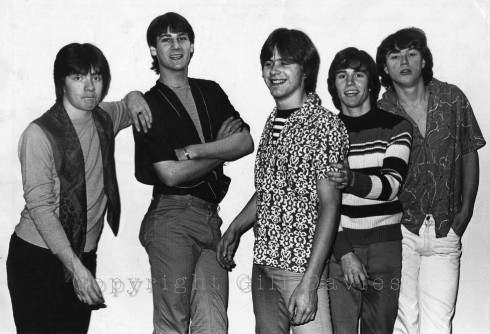
Paradise Point in rehearsal, above: Roman, Johnnie, Cameron, Adam
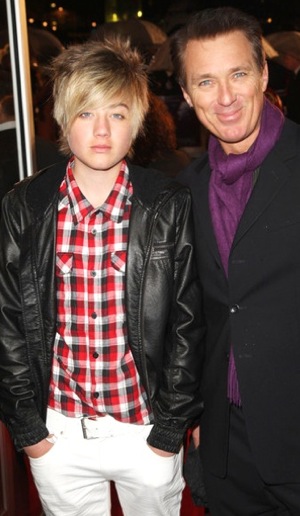
❚ “I’M THRILLED FOR ROMAN’S BAND. It’s one of the most exciting bands I’ve heard for a while. They’ve been rehearsing downstairs in my games room for the past year and they’ve turned out really well. Their sound reminds me a lot of Duran Duran, but the singer Cameron looks like Tony Hadley when he was younger and he’s got the vibe of Tony. He’s got a great voice, very expressive — he’s got a long way to go this boy.”
OK, if that sounds like a doting father, yes it is. Martin Kemp is best known as one of British TV’s most popular actors after his stint as a villain in the leading soap, EastEnders, but the past year of course was spent touring as bass player with Spandau Ballet, his reformed 80s supergroup.
This Friday, the fourpiece called Paradise Point is unveiled at London’s coolest club-night, The Face, and Martin’s 17-year-old son Roman Kemp follows his father by opting to play bass. This group’s claim to novelty is that they all play their instruments live and their music is pop. They are the vanguard for a return to real Brit pop.
Martin says: “I’m just pleased for Roman that he’s in a proper band, rather than a boyband where five people stand up singing while working out when they’re going to sit on the stools. His band is very polished. If I think of the level Spandau had reached at their age, they’re well ahead of us, much more polished than Spandau were then.
“They look fantastic as well. It’s a band that’s made for girls to pin on their walls, which we haven’t had for a long time. That’s what needs to come around again.
“The whole thing of saying ‘Let’s be famous’ before you have a reason to be famous has meant being in a boyband is much easier than putting in the time and effort, learning to play your instrument, then finding mates who can play bass and the drums, bringing round the gear. That whole thing is a slog. But what you get out of that setup is a bonding experience with your band, which you’ve all been through. And that has disappeared at the moment. For me, it’s nice to see Roman inside a band where he’s got some real mates.”
Paradise Point are determined to return credibility to teen pop music by playing their own instruments live onstage. They offer a determined farewell to the X-culture inflicted on the singles charts by Simon Cowell and his cloned songbirds. PP have had enough of manufactured pop idols and prancing boybands
Spandau Ballet had already broken up by the time Roman was born but with a pop-star mother too — Shirlie Holliman from Wham! — there was always music in the house. Martin says: “I taught him to play guitar when he was about six, then he got into rap for a while. Like all kids, this killed learning any kind of instrument, because they’re into the gangsta rap words.
“Then he picked up his guitar again and now he’s playing bass. He’s doing all right. He’s got a much better ear than I have, it’s brilliant. To tell you truth, when I was going back on tour with Spandau, after 19 years out, I couldn’t work out how I used to do some of the riffs. So I got Roman down to listen to the Spandau track to work out the fingering.
“He’s turning into a good bass player, a lot like John Taylor. Yes, from Duran! I don’t mind who he wants to turn into. If your kids go into the entertainment business, success isn’t about how much money you make — it’s about turning your hobby into your job. For me, that is success. If he can do that fantastic.”
So, Martin, are you coming down to The Face to see Paradise Point? “Absolutely. I’ll be roadying. Back to my original job with Spandau.”
Nov 13, 1980: chart entry qualifies Spandau for their first Top of the Pops
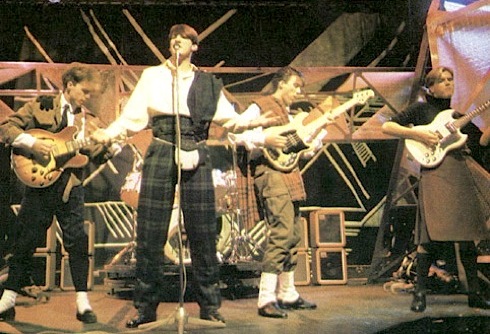
◼ TODAY’S THE DAY THE HOTTEST NEW BAND OF 1980 released their debut single 30 years ago. Inside a year, Spandau Ballet had clicked with clubland’s coolest fan base, played only eight bookings, refused to make any demo tapes but instead spent that year winding up the media and the music industry with word-of-mouth rumours of a youth movement right behind them.
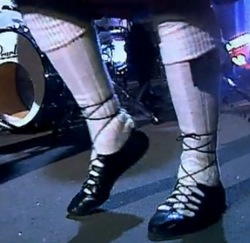
Kilt-wearing Steve Norman’s lace-ups
On October 10 Spandau signed an unprecedented deal with Chrysalis, on October 27 they released To Cut a Long Story Short driven by a monophonic synthesiser: Daa-didi dada dada di-di dada didi daaa! On November 15 the single entered the chart. Bingo – Top of the Pops.
In 1980, for every new band firing up their ambition in the wings, Spandau acted as a fuel injection system. For electro bands who had been nibbling at success — OMD, Simple Minds, Japan, Ultravox — here was the bandwagon. And they jumped on board.
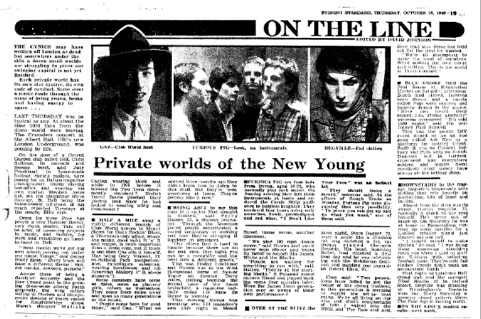
❚ THE BLITZ CLUB SCENE EVOLVED RAPIDLY during the summer of 1980 as media coverage caught up, and it became clear that the New Romantics were not the only social group making waves. In the London Evening Standard’s On The Line column I had been following the Blitz Kids all year and, unsurprisingly, my nocturnal antics raised eyebrows at the Standard by day. “Do they talk sort of funny?” colleagues would ask about my bizarre playmates, meaning did they say “Leave it aht” instead of “OK yah”? Over time the generation gap I was reporting caught the attention of the Standard’s perceptive film critic Alexander Walker, who couldn’t read enough about Britain’s self-possessed youth movement. “Not so much a generation gap,” he observed sagely. “More a genus gap!” In this respect, the parallels with the digital natives of today’s Generation Y are spooky.
A key difference was the naked ambition of the media-savvy Blitz Kids who shunned rock music as a stone-age relic. They were spreading inspiration through Britain’s clubland, even as Steve Strange’s Tuesday nights at the Blitz ended suddenly on October 14, as also did Hell, their Thursday offshoot. Key players were changing trains. That very week Spandau Ballet had signed their first record deal, while I had been darting daily from concert to club to Kensington Market surveying the many competing expressions of youthful endeavour, then trying to persuade the editor Charles Wintour that A Significant Youthquake Was About To Break.
A month earlier during London fashion week I’d only just scraped into print with my first Pose Age report showing Melissa Caplan’s unisex tabards which were being worn to shock. “You’re making this up,” raged one senior editor whose veto against publishing was over-ruled by Wintour. Now I was proposing that this sweeping survey for On The Line should make a spectacular centre spread in the paper. Yet the eye-searing kids in our pictures were a bridge too far even for the enlightened Wintour, who sent me a memo saying it was all “Rather too esoteric for us”. Under protest, he finally conceded splitting the survey between two separate pages a week apart.
By Christmas Spandau’s single became a chart hit, along with Fade to Grey by Visage, fronted by Steve Strange. We could not know then how quickly Britain’s clubbing grapevine was to hurtle yet more clubland bands into the charts, many unveiled by sharp young managers the same age as the talent. Or that 1981 would soon be spinning like a New Romantic dynamo.
First published in the Evening Standard, Oct 16, 1980
THE CYNICS may have written off London as dead in 1980 but somewhere under the skin a dozen small worlds are struggling to prove our swinging capital is not yet finished. Each private world has its own star system and its own code of conduct. Some steer a scenic route through the maze of being young, broke and having energy to spare. . .
➢ Choose “View full site” – then in the blue bar atop your mobile page, click the three horizontal lines linking to many blue themed pages with background article
MORE INTERESTING THAN MOST PEOPLE’S FANTASIES — THE SWINGING EIGHTIES 1978-1984
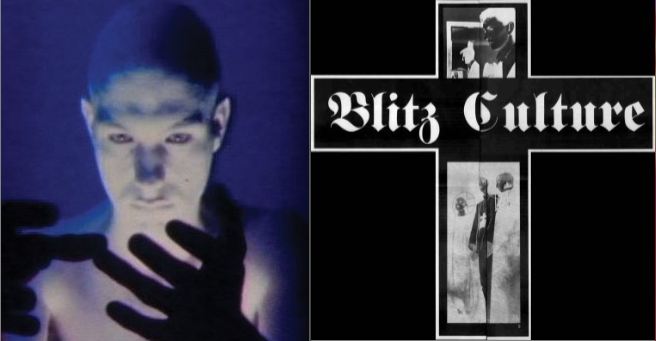
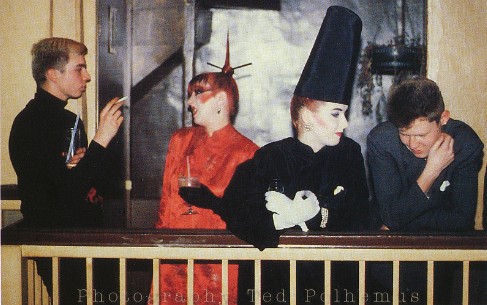
They didn’t call themselves New Romantics, or the Blitz Kids – but other people did.
“I’d find people at the Blitz who were possible only in my imagination. But they were real” — Stephen Jones, hatmaker, 1983. (Illustration courtesy Iain R Webb, 1983)
“The truth about those Blitz club people was more interesting than most people’s fantasies” — Steve Dagger, pop group manager, 1983
PRAISE INDEED!
“See David Johnson’s fabulously detailed website Shapers of the 80s to which I am hugely indebted” – Political historian Dominic Sandbrook, in his book Who Dares Wins, 2019
“The (velvet) goldmine that is Shapers of the 80s” – Verdict of Chris O’Leary, respected author and blogger who analyses Bowie song by song at Pushing Ahead of the Dame
“The rather brilliant Shapers of the 80s website” – Dylan Jones in his Sweet Dreams paperback, 2021
A UNIQUE HISTORY
➢ WELCOME to the Swinging 80s ➢ THE BLOG POSTS on this front page report topical updates ➢ ROLL OVER THE MENU at page top to go deeper into the past ➢ FOR NEWS & MONTH BY MONTH SEARCH scroll down this sidebar
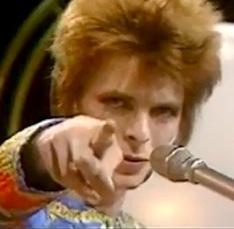
❏ Header artwork by Kat Starchild shows Blitz Kids Darla Jane Gilroy, Elise Brazier, Judi Frankland and Steve Strange, with David Bowie at centre in his 1980 video for Ashes to Ashes
VINCENT ON AIR 2026
✱ Deejay legend Robbie Vincent has returned to JazzFM on Sundays 1-3pm… Catch up on Robbie’s JazzFM August Bank Holiday 2020 session thanks to AhhhhhSoul with four hours of “nothing but essential rhythms of soul, jazz and funk”.
TOLD FOR THE FIRST TIME
◆ Who was who in Spandau’s break-out year of 1980? The Invisible Hand of Shapersofthe80s draws a selective timeline for The unprecedented rise and rise of Spandau Ballet –– Turn to our inside page
SEARCH our 925 posts or ZOOM DOWN TO THE ARCHIVE INDEX
UNTOLD BLITZ STORIES
✱ If you thought there was no more to know about the birth of Blitz culture in 1980 then get your hands on a sensational book by an obsessive music fan called David Barrat. It is gripping, original and epic – a spooky tale of coincidence and parallel lives as mind-tingling as a Sherlock Holmes yarn. Titled both New Romantics Who Never Were and The Untold Story of Spandau Ballet! Sample this initial taster here at Shapers of the 80s
CHEWING THE FAT
✱ Jawing at Soho Radio on the 80s clubland revolution (from 32 mins) and on art (@55 mins) is probably the most influential shaper of the 80s, former Wag-club director Chris Sullivan (pictured) with editor of this website David Johnson
LANDMARK FAREWELLS. . . HIT THE INDEX TAB UP TOP FOR EVERYTHING ELSE








 ➢➢ Shapers of the 80s ➣➣