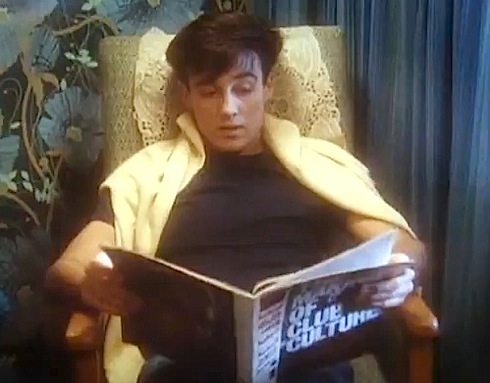
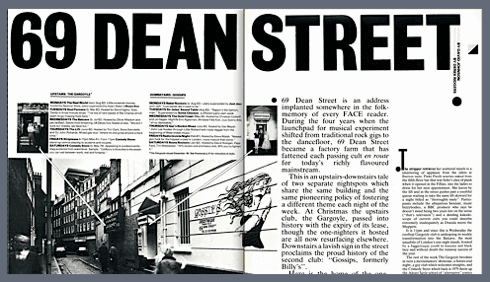
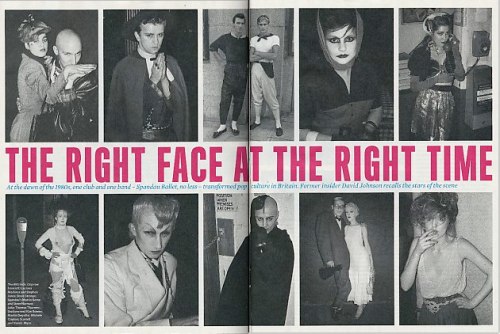
Click pic to open the Wham Rap! video in another window … “Man or mouse” Andrew Ridgeley establishes his clubbing credentials – along with sidekick George Michael – in the opening shots of the Wham! video by reading this very Face cover story on Club Culture that you’re about to read!
THE MOST READ FEATURE ARTICLE AMONG 720,000 VIEWS SINCE THE LAUNCH OF SHAPERS OF THE 80s
➢ Spandau Ballet, the Blitz Kids and the birth of the New Romantics — The much-plundered story originally researched by Shapers of the 80s tells who did what to make stars out of a club houseband, change the rhythm of the UK charts — and ultimately rejuvenate the British media. The obsessive fashionistas behind one small club in London in 1980 went on to dominate the international landscape of pop and fashion, while putting more British acts into the US Billboard charts than the 1960s ever achieved.
➢ Three key men in Boy George’s life – In 2010 the BBC turned the pop star’s teens ’n’ twenties into a 90-minute drama of foot-stamping, chair-throwing, cry-baby tantrums over his self-confessed “dysfunctional romances”, all of which he had documented in his eye-wateringly frank 1995 autobiography, Take It Like a Man. Shapers of the 80s summarises George O’Dowd’s stormy lovelife.
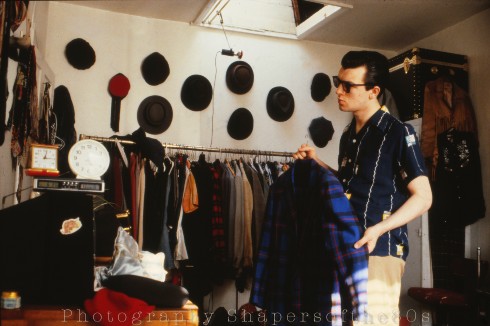
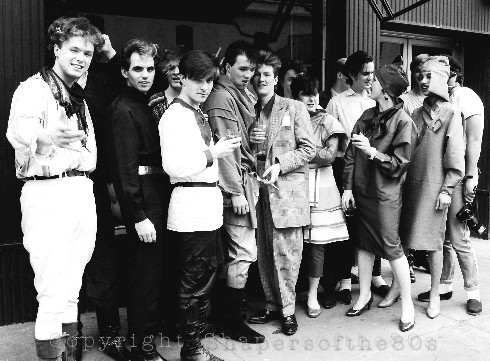
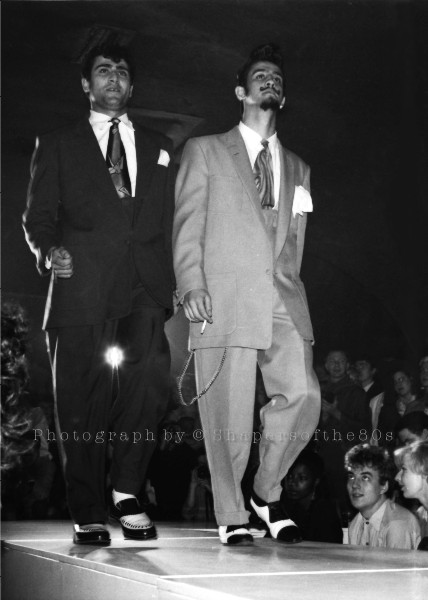
At home in Kentish Town Chris Sullivan chooses the right zootsuit for today’s mood: his wardrobe is legendary, his taste impeccable, and his influence immeasurable. Shapersofthe80s shot this for his first Evening Standard interview in June 1981
➢ 1976–1984, How creative clubbing started and ended with the 80s – “We were all kids,” says Chris Sullivan who would eventually host the Wag, the coolest club in town, for 19 years. “We went out and had a go. Empowerment is what’s important about this story.”
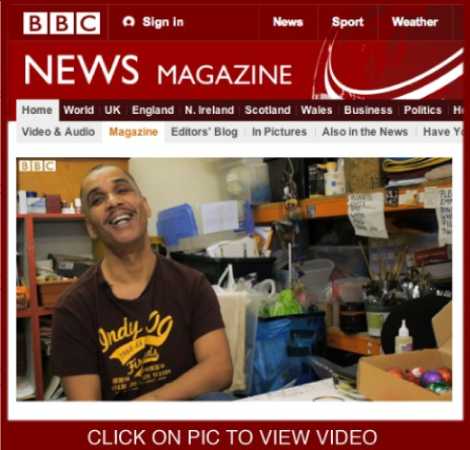
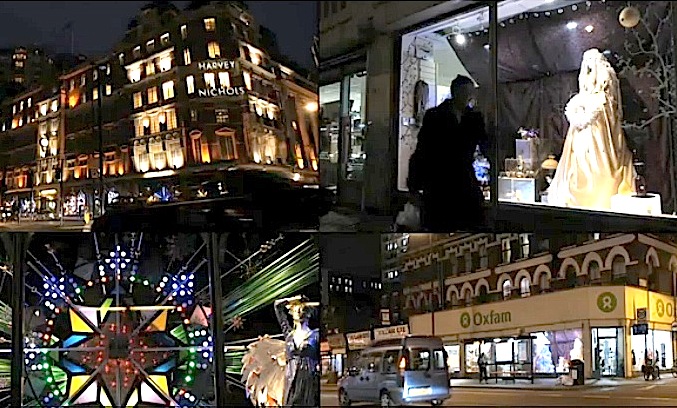
❚ WHERE’S THE COOLEST CHARITY SHOP IN THE LAND? Dalston obviously, where the Oxfam shop on Kingsland Road in east London has become a destination thanks to its regular one-day sales of designer garments. Come Christmas, its volunteer Visual Display Manager finds himself in a BBC video head-to-head with the most famous shop windows in the land over at Harvey Nichols in Knightsbridge. It’s a case of East End boy versus West End twirls and the EastEnder in question is none other than Andy Polaris, former singer with 80s soulsters Animal Nightlife.
The BBC Magazine video shows how the award-winning team at Harvey Nix studies the seasonal fashion trends to arrive at a mood-board of imagery that then inspires their window displays for the all-important festive marketing push. In Dalston, by contrast, Andy turns to what’s currently in stock for inspiration and leads off on a theme of gold for his Christmas windows relying, he says, on “colour, light and perspective” – and a surprise last-minute donation.
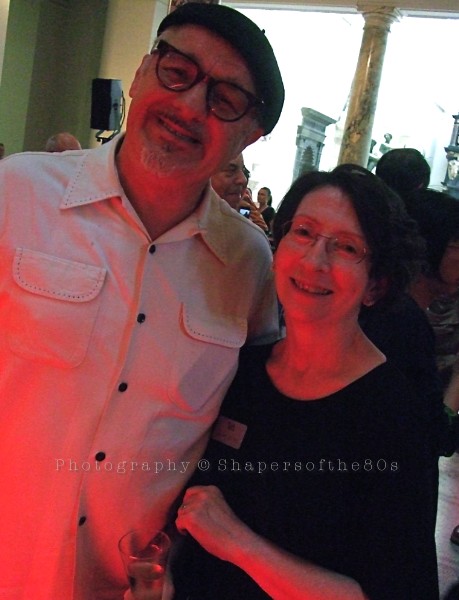
❚ EX-ST MARTIN’S AND WAG CLUB HOST Chris Sullivan says: “I’ll be deejay at the V&A again for next Friday’s free event. I’ll be doing a typical 80s club set from Kraftwerk to house with hip hop, rockabilly and mutant disco, to seminal electro and rare groove. It’s an evening of all sorts of shenanigans to do with the Club to Catwalk exhibition.”
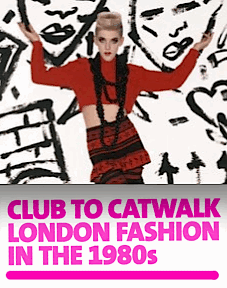
The monthly Friday Late on October 25 at London’s Victoria & Albert Museum is inspired by the current exhibition Club to Catwalk: London Fashion in the 1980s, which celebrates the creativity and theatricality of the capital’s dynamic fashion and club scenes. Assistant curator Kate Bethune is running a busy programme of free events, including art and design workshops, art installations, expert talks, performances and deejay sets throughout the gallery.
DIY fashionistas will discover how to make their own Scarlett Dress (named after Scarlett Cannon, 80s Cha-Cha club hostess and now “key identity” for the exhibition, seen at left) by downloading the dress pattern from the V&A’s website. An example of the toile is being displayed in the Sackler Centre on Friday evening.
Kate reports: “Our free Friday Lates tend to attract upwards of 4,000 visitors and our Club to Catwalk exhibition, London Fashion in the 1980s, continues to prove extremely popular and is averaging 5,000 visitors a week.”
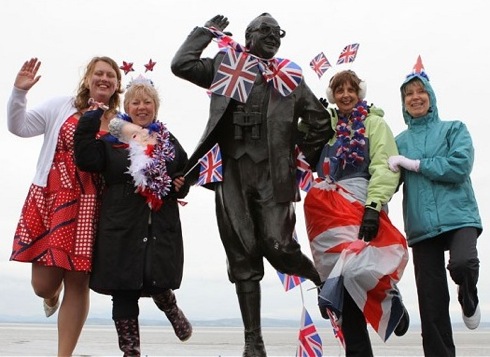
Morecambe, the Lancashire seaside resort: By the Eric Morecambe statue, rain doesn’t stop people celebrating the Diamond Jubilee. (Photo: Rachel Adams)
“ Yesterday, more than 10,000 street parties were held across the UK. Special credit must go to the two villages that celebrated the Jubilee together, thus creating the country’s longest street party, stretching from Goring in Oxfordshire across the bridge to Streatley in Berkshire. Yes, the weather turned rotten, but there’s nothing we British like better than an opportunity to display our “mustn’t grumble” hardiness. As John Bishop, the comedian, put it on Twitter: Anyone can enjoy a carnival in the sun. Only the British can enjoy a carnival in the rain ” … / Continued online
On the Thames: the Spirit of Chartwell as royal barge for a day (Photo: Getty)
❏ The major event celebratingQueen Elizabeth II’s 60 years on the throne was the seven-mile long flotilla of boats making up the Thames River Pageant through London, where 1.2 million people had gathered to watch. Apart from the heavens opening late in the day to drown a distinguished chorus of floating opera singers, the big wince of the day came early in the BBC’s dumbed-down coverage, when a commentator called the Queen “Her Royal Highness” — a crime for which her predecessor Her Majesty Queen Elizabeth I would have dispatched him to the Tower with the command “Off with his head.”
Much is made of how well the British mount large-scale ceremonials, which always rest heavily on our love of dressing up. This tradition starts and ends with the monarch and centuries of practice, which means that in the modern era the relevance of a monarchy is always subject to review. At such times the nation turns to our oldest daily paper, The Times (est’d 1785) and of all the national newspapers this morning The Thunderer rose best to the occasion. Dedicating a whole page to its editorial, the paper invoked Shakespeare’s “this scepter’d isle” speech to offer an appreciation of our 1,200-year history during which rebel barons forced King John to grant us basic liberties through Magna Carta in the year 1215. Sadly, since the paper began charging for online access, most Brits will not have read this stirring and unsentimental analysis. Here’s an extract…
“ Elizabeth II owes her unarguably special hold on British life not simply to heredity but also to the fact that she, like the little ships, is a living connection to modern Britain’s founding wartime myth. That connection cannot endure indefinitely. The past may be another country. But so is the future.
And then there is London and its river. What message do they send today, especially to the rest of Britain? Much was made, in the build-up and the coverage, to the sense of continuity which Sunday’s pageant was intended to evoke. It was the biggest flotilla since the time of Charles II. But the complacent continuity of unified Britishness is more myth than fact. A monarch in a barge like a burnished throne, sailing down London’s river from Chelsea, home of oligarchs and plutocrats, to the City, home of the unpunished financial sector for whose misdeeds the rest of us are paying, cannot be a value-free act. Contemporary London offends as well as dazzles. So can the monarchy.
London is a pragmatic city in a nation short of certainties. The Thames tells many stories, not always glorious ones. And this also, says the narrator of Heart of Darkness from aboard a Thames yawl, has been one of the dark places of the earth. It’s a pity about the rain, because the event — and the Queen — deserved better. It was a colourful occasion on a grey day. It was full of spirit. But whether the nation which it affected to embody actually exists is another matter ” … / Full text online
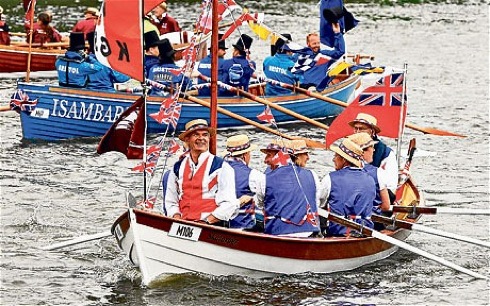
In the Thames flotilla: A Shetland yoal manned by Kingston Grammar School veterans upstages a boat full of Brunels (Photo: Anthony Devlin)
“ The Thames Pageant, the centrepiece of the Diamond Jubilee festivities, was the most spectacular such event since the Aqua Triumphalis, the arrival along the Thames in 1662 of Charles II’s bride, Catherine of Braganza, accompanied by a flotilla of 10,000 vessels. Samuel Pepys wrote in his diary about “the most magnificent triumph that ever floated on the Thames, considering the innumerable boates and vessells dress’d and adorn’d with all imaginable pomp”, with “musiq and peals of ordnance from both ye vessels and the shore”.
The pageant was an imaginative masterstroke. It celebrated our maritime past on our most famous waterway, what the historian David Starkey has called the “liquid history” that runs through our national story. But it embraced much, much more. For this was also about the warp and weft of life as it is lived in this country by ordinary people. It was about the clubs, the societies, the associations, the guilds who cherish these wonderful vessels and keep them afloat – and yesterday had the chance to show them off. And didn’t they look magnificent? It is this spirit, writ large, that is such an important part of what we are. At our best we pull together to get things done.
Yesterday also showed how we like a party. For there was nothing po-faced about this marvellous spectacle: it was a truly joyous occasion. If anything, the gloomy weather seems to have made people even more determined to go out and enjoy the show ” … / Continued online
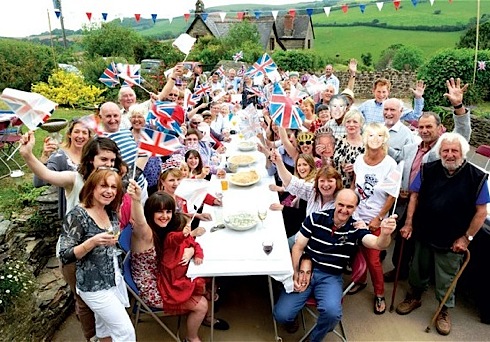
Deepest Somerset: Jubilee party goers get into full swing (Photo: Guy Harrop)
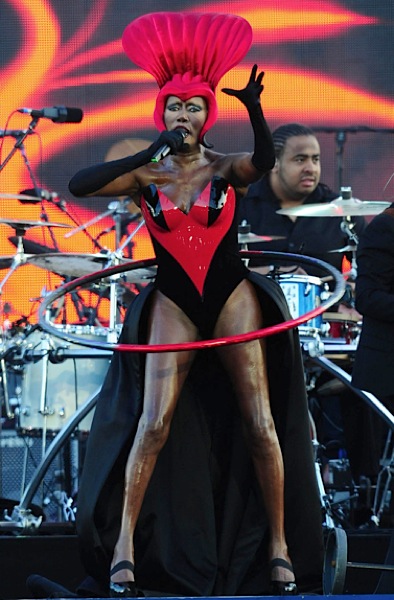
PS: GRACE IN HULA HOOP — DON’T ASK WHY!
Slave to the Rhythm: Grace Jones at the Diamond Jubilee Concert. (Photo: Ian West)
➢ Update: Monday night’s Diamond Jubilee Concert with Buckingham Palace as the backdrop featured schmaltzy music from all six decades of the Queen’s reign and much limp humour which backfired on almost every comedian linking the acts except Peter Kay whose fooling proved him to be the compleat court jester. Musical standouts included opener Robbie Williams, JLS, Sir Tom Jones, Kylie, Madness performing Our House from the palace roof and Sir Paul McCartney’s closing set. Wackiest performance was Grace Jones, glazed from top to toe as if ready for basting and singing Slave to Rhythm while hula hooping. Priceless. She’s 64, you know. The most lavish son et lumière firework display for years capped the lot.
❏ Former BBC Radio 4 controller Mark Damazer told Radio 4’s Today programme: “All that went wrong was the very conscious attempt to make the whole event informal and to use the modern idiom.”
❏ Gillian Reynolds, the Daily Telegraph’s radio critic, responded by saying viewers would have preferred more informative commentary rather than “fun” coverage: “I could not reconcile the marvellous framing of the shots — beautiful photographs — with the words that were coming out. Nobody explained what Dunkirk was. I know what Dunkirk was — I remember it — but nobody explained it. Nobody explained what the Little Boats did was perfectly extraordinary. I felt a bit let down.”
➢ Choose “View full site” – then in the blue bar atop your mobile page, click the three horizontal lines linking to many blue themed pages with background article
MORE INTERESTING THAN MOST PEOPLE’S FANTASIES — THE SWINGING EIGHTIES 1978-1984
They didn’t call themselves New Romantics, or the Blitz Kids – but other people did.
“I’d find people at the Blitz who were possible only in my imagination. But they were real” — Stephen Jones, hatmaker, 1983. (Illustration courtesy Iain R Webb, 1983)
“The truth about those Blitz club people was more interesting than most people’s fantasies” — Steve Dagger, pop group manager, 1983
PRAISE INDEED!
“See David Johnson’s fabulously detailed website Shapers of the 80s to which I am hugely indebted” – Political historian Dominic Sandbrook, in his book Who Dares Wins, 2019
“The (velvet) goldmine that is Shapers of the 80s” – Verdict of Chris O’Leary, respected author and blogger who analyses Bowie song by song at Pushing Ahead of the Dame
“The rather brilliant Shapers of the 80s website” – Dylan Jones in his Sweet Dreams paperback, 2021
A UNIQUE HISTORY
➢ WELCOME to the Swinging 80s ➢ THE BLOG POSTS on this front page report topical updates ➢ ROLL OVER THE MENU at page top to go deeper into the past ➢ FOR NEWS & MONTH BY MONTH SEARCH scroll down this sidebar
❏ Header artwork by Kat Starchild shows Blitz Kids Darla Jane Gilroy, Elise Brazier, Judi Frankland and Steve Strange, with David Bowie at centre in his 1980 video for Ashes to Ashes
VINCENT ON AIR 2026
✱ Deejay legend Robbie Vincent has returned to JazzFM on Sundays 1-3pm… Catch up on Robbie’s JazzFM August Bank Holiday 2020 session thanks to AhhhhhSoul with four hours of “nothing but essential rhythms of soul, jazz and funk”.
TOLD FOR THE FIRST TIME
◆ Who was who in Spandau’s break-out year of 1980? The Invisible Hand of Shapersofthe80s draws a selective timeline for The unprecedented rise and rise of Spandau Ballet –– Turn to our inside page
SEARCH our 925 posts or ZOOM DOWN TO THE ARCHIVE INDEX
UNTOLD BLITZ STORIES
✱ If you thought there was no more to know about the birth of Blitz culture in 1980 then get your hands on a sensational book by an obsessive music fan called David Barrat. It is gripping, original and epic – a spooky tale of coincidence and parallel lives as mind-tingling as a Sherlock Holmes yarn. Titled both New Romantics Who Never Were and The Untold Story of Spandau Ballet! Sample this initial taster here at Shapers of the 80s
CHEWING THE FAT
✱ Jawing at Soho Radio on the 80s clubland revolution (from 32 mins) and on art (@55 mins) is probably the most influential shaper of the 80s, former Wag-club director Chris Sullivan (pictured) with editor of this website David Johnson
LANDMARK FAREWELLS. . . HIT THE INDEX TAB UP TOP FOR EVERYTHING ELSE













 ➢➢ Shapers of the 80s ➣➣