Category Archives: interviews

1980 ➤ Why Bowie came recruiting Blitz Kids for his Ashes to Ashes video

40
YEARS
ON

❚ TODAY WAS THE DAY in 1980 when London’s now fabled Blitz Club was blessed by a visit from David Bowie. He came with a purpose – to whisk away four of the most outlandish Blitz Kids to strut with his pierrot through the video for his new number, Ashes to Ashes, from an imminent new album. It earned each of them £50, helped Bowie to No 1 in the singles chart the following month and boosted demand for black ankle-length robes among trendsetters.
Ashes To Ashes, David Bowie, video, pop music,Ashes To Ashes

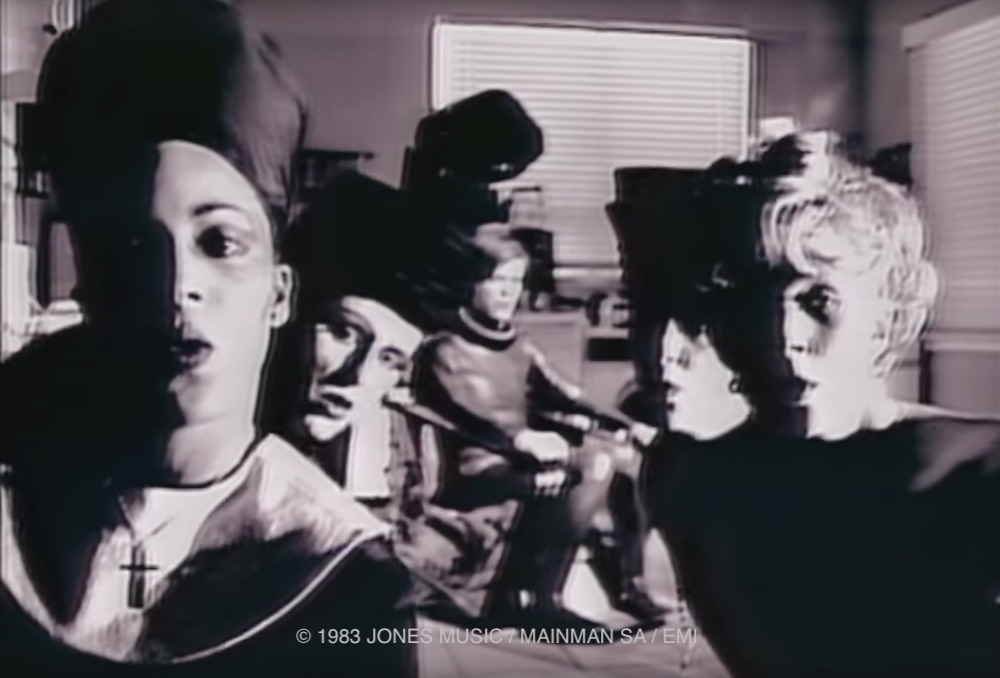
Ashes To Ashes video 1980: Blitz Kids as chorus to Major Tom

Every Tuesday for 16 months, king of the posers Steve Strange had been declaring a “private party” in the cheap-and-cheerful Blitz wine bar near Covent Garden, along with his co-host Rusty Egan who was pioneering Elektro-Diskow dance music as deejay. Your Look was everything and outrage ensured entry. Inside, precocious 19-year-olds presented an eye-stopping collage, preening away in wondrous ensembles, in-flight haircuts and emphatic make-up that made you feel normality was a sin. Hammer Horror met Rank starlet. These were Bowie’s offspring, individualists who had taken him at his word to be “heroes just for one day”, living amusing lives, creating disposable identities, and wearing looks not uniforms. Now, on this day, their god came among them with the very serious mission of paying homage to some of his bizarre principal characters and moving himself on into the next phase of his life… Unwittingly the Blitz Kids would become his little helpers.
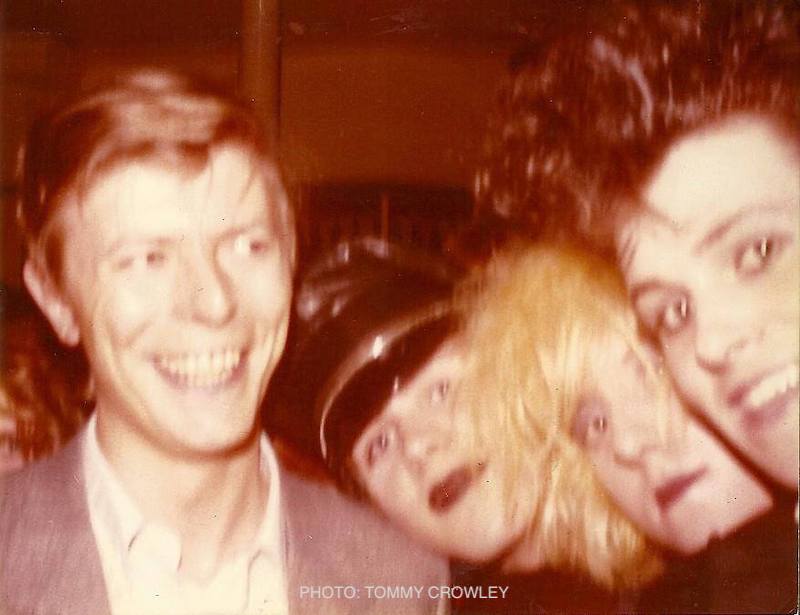
Russ Williams, John Lockwood, Andy Bulled, Tommy Crowley, David Bowie, Blitz Kids, Swinging 80s,nightlife

Bowie at the Blitz Club 1980: Russ Williams, John Lockwood and Andy Bulled papped by Tommy Crowley

Memories of Tuesday 1 July vary. The 21-year-old Steve Strange found himself requesting extra security to stem what the soon-to-become pop singer Andy Polaris also records in his diary as a “minor riot”. In contrast, the coolest heroes in the club refused to pander to the great star and merely contemplated their drinks.

Strange writes in his autobiography, Blitzed: “We had no prior warning, and [Bowie] arrived with two other people and his PA [Corinne] ‘Coco’ [Schwab], whom I didn’t think was very nice.” The guests whose names Strange forgot were, according to the Polaris diary, singer Karen O’Connor (daughter of comedian Des) and painter-photographer Edward Bell, who designed the cover artwork for the imminent Scary Monsters album and singles.

Strange’s book claims: “We managed to sneak them into the club the back way to avoid a fuss and usher him upstairs to a private area. David himself was charming and asked if I would join him upstairs for a drink when I had finished on the door. I wanted to go straight away, but, annoyingly, I had to do my job first and stay at the door.”

The book continues: “Word soon spread like wildfire that David Bowie was there. He was probably the reason most people at the club had got into pop music in the first place. He had changed his look and his sound so many times, there were more than enough images to go round. The alien from Low and The Man Who Fell To Earth, Aladdin Sane, Diamond Dogs, Ziggy Stardust. He was the one person that everyone there would cite as an influence, even more important than punk.
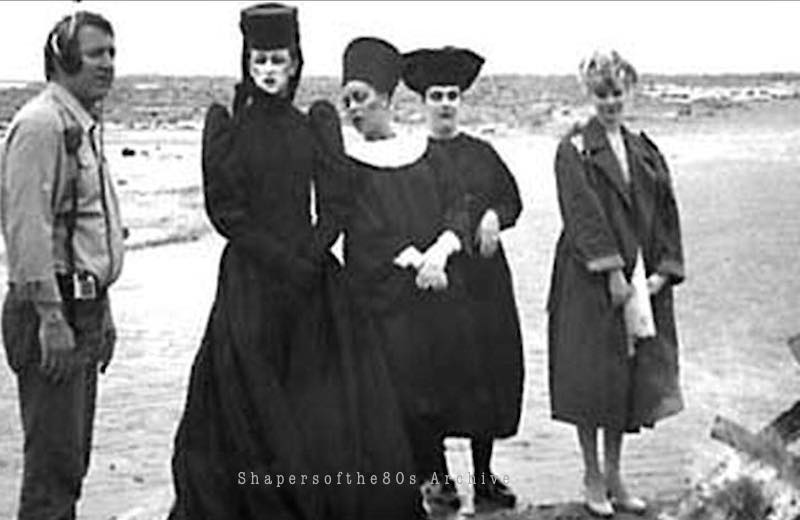
Bowie,Ashes to Ashes , video,Blitz Kids

Bowie’s chorus near Hastings, July 1980: Polaroid snapped by a crew member on the beach during filming of Ashes to Ashes with Blitz Kids Steve Strange, Darla-Jane Gilroy, Judi Frankland and Elise Brazier keeping warm in a mackintosh between takes. When they got back to London, they all went clubbing at Hell

“He said it was a great scene and asked me if I would like to appear in the video for his next single, Ashes To Ashes. He also asked me if I could suggest a make-up artist for him, and I recommended Richard Sharah, the man who did my make-up. He said: ‘I’d like it left to you to pick the clothes you are going to wear, and to choose three other extras for the video.’ This was the most important moment of my life. I rushed around and found Judith Frankland, Darla-Jane Gilroy and another girl [Elise Brazier] for the video.” Here, as with so much of his flaky book, Strange’s memory leaves the rails. Other witnesses suggest subtle variations to his account…

Enter the next witness, Ravensbourne graduate Judith Frankland, designer of Steve Strange’s Fade to Grey outfit and of two gowns worn in the Ashes video which were inspired, she says, by the nuns in The Sound of Music and coincidentally had been unveiled in her sensational degree collection “Romantic Monasticism” at the Café Royal during June. She says: “In a wonderful twist of fate, Steve was resplendent in my black wedding outfit that night and was chosen straight away. He was asked to select people he felt could be right. Bowie did see George O’Dowd but as I remember he was wearing his big leather jacket look that night, so he was out. I was invited as was Darla up to the table where David and Coco were sitting and offered a glass of champagne. Darla and I were both dressed in a similar ecclesiastic style, Darla in her own black outfit with white collar, and we were also asked to take part for what at that time was a decent sum of money for penniless, decadent students.

“We were told Coco would call us the following day with the details. I woke the next day thinking I’d dreamt it and you know I guarded that communal pay phone on the landing like a rottweiler until she did: be outside the Hilton the next morning, Thursday, she said, at some ungodly hour, fully dressed and made up the same way I had been at the Blitz, and to get the coach to a secret location.

Ashes To Ashes, David Bowie, video, pop music, Blitz Kids,

Ashes To Ashes video 1980: Blitz Kids as Greek chorus (© Jones Music / EMI Records Ltd)

“When we arrived at the beach near Hastings [not Southend, as Strange reports], the crew was set up and David Bowie greeted us dressed in the pierrot outfit he would be wearing. He coached us for a few minutes on the words we were to mime and then the day was spent in what we Lancastrians call sinking sand, sloppy sand, and the further out we got on the beach the messier and sloppier and muddier it was. I wore flats which was a wise choice. Then we were up and down that field with the bulldozer and every time we had to do a take it had to back up and the field got muddier. The bulldozer wasn’t that close but if he’d stepped on the gas we would all have been gonners.

“We were finally told we had all ‘done well’ and set off in the coach straight from the shoot to Hell [Strange’s Thursday club-night with a sacrilegious flavour] – well, home first to get freshened up. Steve dropped off his very muddy wedding dress and Hell was a rowdier night than usual. Steve brought one of the labourers from the bulldozer site with him and dressed him up in a Modern Classics suit. The poor guy was disturbed by it all, to say the least.

“We’d also been asked to go to the Ewart Studios in Wandsworth that weekend to shoot another scene – the kitchen with Major Tom in the chair and us providing the chorus. This involved an explosion behind us four as we faced the camera. We were told to duck out and run after we had mimed our lines or we could be hurt. This was difficult in a hobble dress, so I hoisted it up as high as I could and got ready to run. Quite a sight for the superstar sat behind me! Health and Safety would be all over that now.

“May I add that at the studios David Bowie joined us mere mortals in the canteen. Yummy. What a nice man he was, well he was to me, very kind and patient with us all.”

rel="nofollow"

London’s Cafe Royal, 1980: Judith Frankland’s graduation show climaxed with a wedding dress in black and white taffeta, brocade, velvet and satin. All crowned by Stephen Jones’s veiled head-dress. As worn by Blitz Club host Steve Strange in the Ashes to Ashes video. (Niall McInerney’s slides scanned by Shapersofthe80s)

CRUCIAL MOTIFS DECODED

rel="nofollow"

St Martin’s Alternative Fashion Show in May 1980: Stephen Linard’s “Neon Gothic” collection modelled by his most stylish friends, Myra, George O’Dowd and Michele Clapton, with Lee Sheldrick in white as a space-age pope

❏ Co-directed by Bowie and David Mallet, location scenes for Ashes to Ashes were filmed on 3 July 1980 at Pett Level, a stony beach on marshlands about six miles east of Hastings in East Sussex, known to Mallet since he was a boy. The drama of waves splashing against a towering cliff excited him. The video was the most expensive music video made to that date, costing £35,000 (about £151,000 in today’s money). The whole dreamscape was enhanced with effects from the then novel Quantel Paintbox to create a visual enigma, echoing a distant past, yet suggesting “nostalgia for the future” in Bowie’s own words.

At the time Bowie dropped in on the Blitz, the fashion mood had darkened for post-punk no-wavers. Black was back in gothic style without that word being applied, mostly. One exception was Stephen Linard who stole the annual Alternative Fashion Show in his second year at St Martin’s with his “Neon Gothic” collection in May 1980, when the event was coordinated by Perry Haines. Fellow Blitz Kids modelled a stylish collision of Space 1999 meets liturgical gothic, strutting to the Human League’s newest release, Empire State Human. Among them, Lee Sheldrick, the gifted eminence gris behind so many other students’ creations, had also shaved his head bald to become the embodiment of Nosferatu the Vampyre. The following week Steve Strange teamed up with fellow Welsh soul-boy and Camberwell student Chris Sullivan to open a no-holds-barred club-night at Hell with the invitation “to burn in Hell – demoniacal dress is desired”. Bowie knew what he was looking for.

One of Bowie’s long-standing collaborators, Natasha Korniloff, designed his pierrot costume for the video and Gretchen Fenston his hat, while he gave Richard Sharah a free hand to design the make-up. On the night of Bowie’s visit to the Blitz, Steve Strange and Judi Frankland were sporting her graduation garments, Strange in the black wedding dress crowned with a Stephen Jones head-dress and veil made of stiffened lace on a metal frame. Judi recalls: “The wedding dress was the reason Steve and I got close. He called me up wanting to buy pieces of the collection. He also bought a jacket he wore on the cover of Fade to Grey and gave me a credit on the sleeve. That dress, all sand, sea and mud, ended up in the bottom of Steve’s wardrobe. It had a stand-up collar that was caked in his makeup. Never wore it again though he got some money off the video people to get it cleaned. The veil also got squashed in his wardrobe.”

Darla-Jane Gilroy wore an ecclesiastical black velvet dress designed and made by herself, silk grosgrain coat and white collar with crucifix, plus a Stephen Jones hat. Elise Brazier personified a ballerina in a party frock plus tantaliser in her hair. This and another hat came from Fiona Dealey and Richard Ostell. All would soon be finding fame in the fashion business, with Elise becoming one of Premier’s leading models.
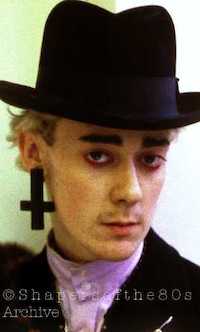
rel="nofollow"

Stephen Linard: sporting a wooden cross by Dinny Hall and the rabbinical outfit that caught Bowie’s eye in July 1980

Stephen Linard supplies his own footnote to that great Tuesday at the Blitz. “Bowie actually sat at the bar next to my sister Bev, with me on the other side of her and I told her “Don’t look. Be cool.” So of course she looked, she was only 17. So did I. I was only 21. I was in all my Jewish rabbinical gear and Bowie’s PA Coco asked if I would be in the Ashes to Ashes video, but they wanted us up at the crack of dawn and were only offering £50! Anyway, I was on a warning at St Martin’s over attendance, so I had to say No.”

Steve Strange has the last word: “It seemed like a very long day for a three-minute film. I was delighted when I was handed my wages of £50 by a member of the production team. I didn’t tell them, but I would have paid them to have appeared in a video with David Bowie.”

storyboard, Ashes To Ashes, David Bowie, video, pop music,

Storyboard for Ashes to Ashes, 1980: The opening scene of pierrot on the beach sketched by Bowie to guide his co-director David Mallet

BOWIE’S OWN VISION WITHIN THE ASHES

❏ Bowie’s brief to David Mallet for the video was simply: “A clown on a beach with a bonfire.” Yet you can be sure Freud would have a field-day turning over every mortal motif in Ashes to Ashes, which was originally titled People Are Turning to Gold… Bowie storyboarded the visuals himself (“actually drew it frame for frame,” he said) to include the pierrot of his Lindsay Kemp era, the number of “Madmen” in his own family symbolically in a padded cell, his first hit Major Tom the spaceman now in an exploding kitchen with his own Greek chorus, the images of mourners round a funeral pyre, the JCB bulldozer (that Bowie had spotted parked up near the beach and hired on impulse) to signify “oncoming violence” and seemingly pushing along the Blitz Kids in the pierrot’s wake like a funeral procession pulsating with a mother’s invocation “to get things done…” Not to mention the song’s title itself, derived from the burial service in the English Book of Common Prayer which commends: “earth to earth, ashes to ashes, dust to dust”.

All of which suggested a surreal sweeping away of the past, capped by the unleashing of the dove as an emblem of ritual cleansing, and so paving a way for the future. In September 1980, Bowie revealed his thinking to NME: “The sub-text of Ashes To Ashes is quite obviously the nursery rhyme appeal of it and for me it’s a story of corruption. When I originally wrote about Major Tom I thought I knew all about the great American dream and where it started and where it should stop. [Now] the whole process that got him up there had decayed and he wishes to return to the nice, round womb, the earth, from whence he started. It really is an ode to childhood, if you like, a popular nursery rhyme.”

Years later, Bowie told author Nicholas Pegg that with Ashes to Ashes he was “wrapping up the Seventies really” for himself, which “seemed a good enough epitaph”. On Bowie’s death his lifelong friend George Underwood called him an emotional, passionate person: “He had created this fierce storm, but he was the only one in it.” Take your pick.

➢ Previously at Shapers of the 80s: The year the Blitz Kids took their first steps into the headlines

Ashes To Ashes, David Bowie, video, pop music,Ashes To Ashes

Ashes To Ashes video 1980: Bowie’s pierrot getting out of his depth

FURTHER READING

➢ Previously at Shapers of the 80s: The Blitz Kids WATN? No 37, Judith Frankland

➢ Previously at Shapers of the 80s: The Blitz Kids WATN? No 28, Stephen Linard

➢ Blitzed! The Autobiography of Steve Strange (2002)

➢ Edward Bell’s Connection

➢ The future isn’t what it used to be, by Angus MacKinnon
in NME, 13 September 1980

➢ Chris O’Leary’s impassioned survey of the Bowie catalogue
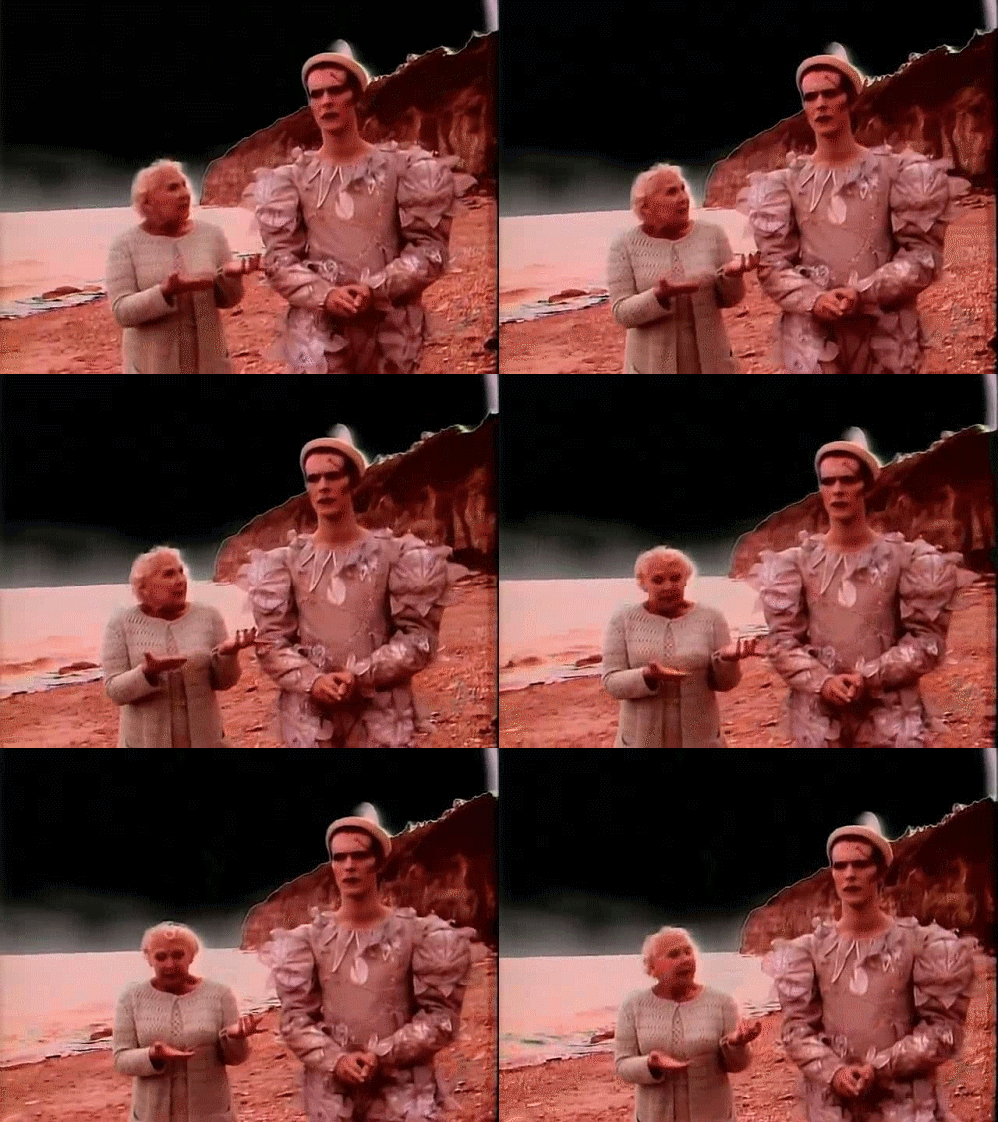
Ashes To Ashes, David Bowie, video, pop music

Ashes To Ashes video 1980: Bowie’s pierrot at Pett Level in Sussex with “mum” (© Jones Music / EMI Records Ltd)
FRONT PAGE

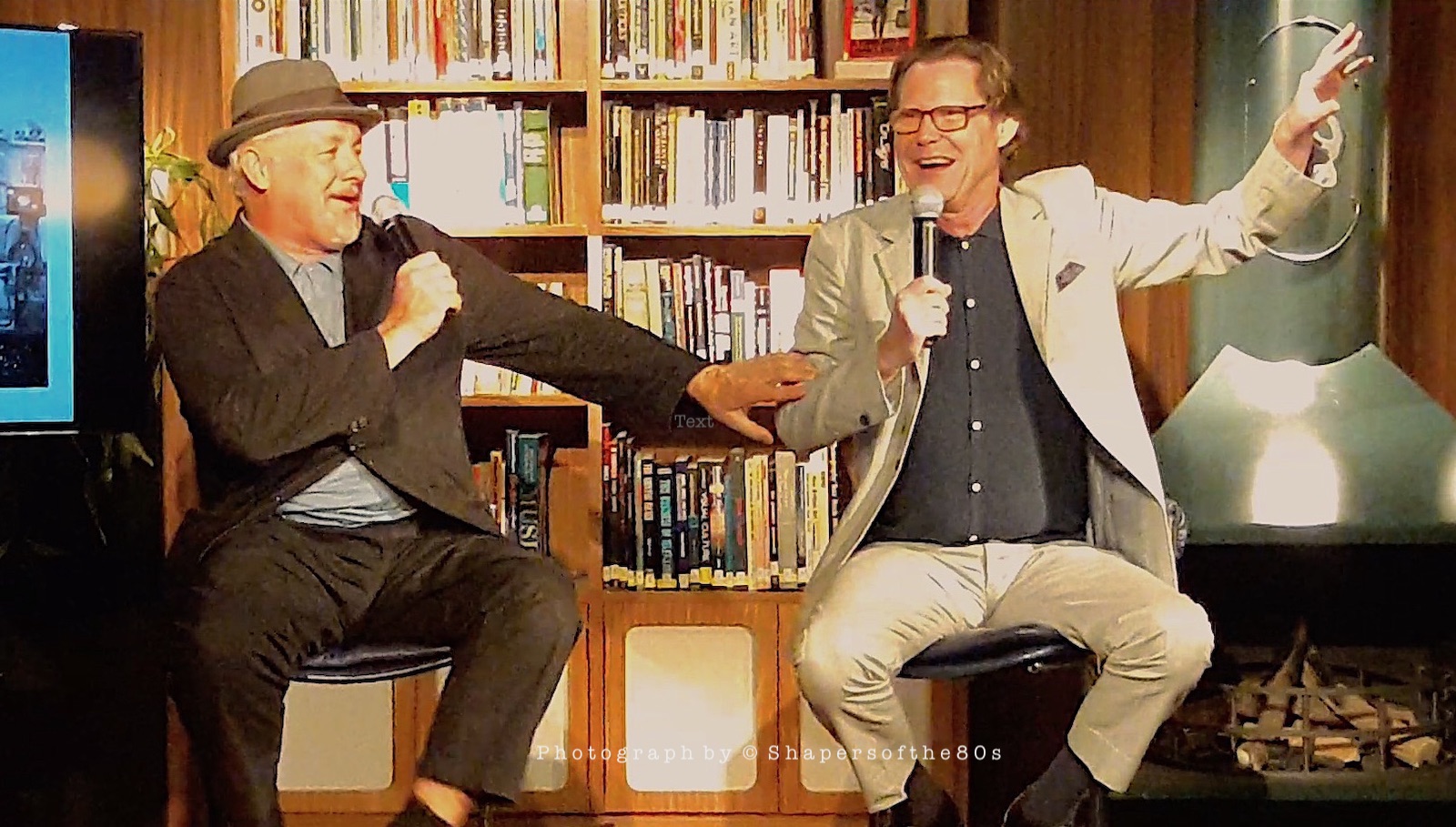
➤ Sullivan & Elms relive their clubland double act

Chris Sullivan, Robert Elms, talk, Standard Hotel, London, history, nightlife, memories

Ribald and passionate: Sullivan and Elms capping each other’s stories with gusto

◼ CATCH UP ON TWO CLUBLAND WAGS Chris Sullivan and Robert Elms, who sat on a pair of wonky stools in public last summer and entertained an invited crowd as each capped the other’s stories. Both are renowned for having shaped the style revolution of the Swinging Eighties and their subject was the ever-changing face of London.

Writer/artist Chris Sullivan is nominally a Welshman who revealed roots that led to a grandfather who’d been a bouncer at the capital’s Windmill Theatre, while BBC London broadcaster Robert Elms is a paid-up Cockney in all but the Bow Bells bit, with a mum who was a clippie on the buses at age 15.

➢ Tune into Portobello Radio for Sullivan & Elms
at 11am on Sunday 31 May, and again for a repeat
on Wednesday and Friday 3+5 June at 7pm

2020 ➤ And now Bowie pays the ultimate tribute to Little Richard

obituaries, rock-n-roll, gay issues, Little Richard,

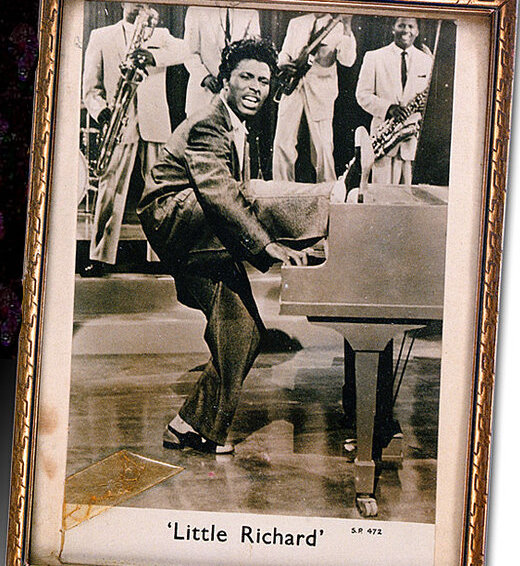
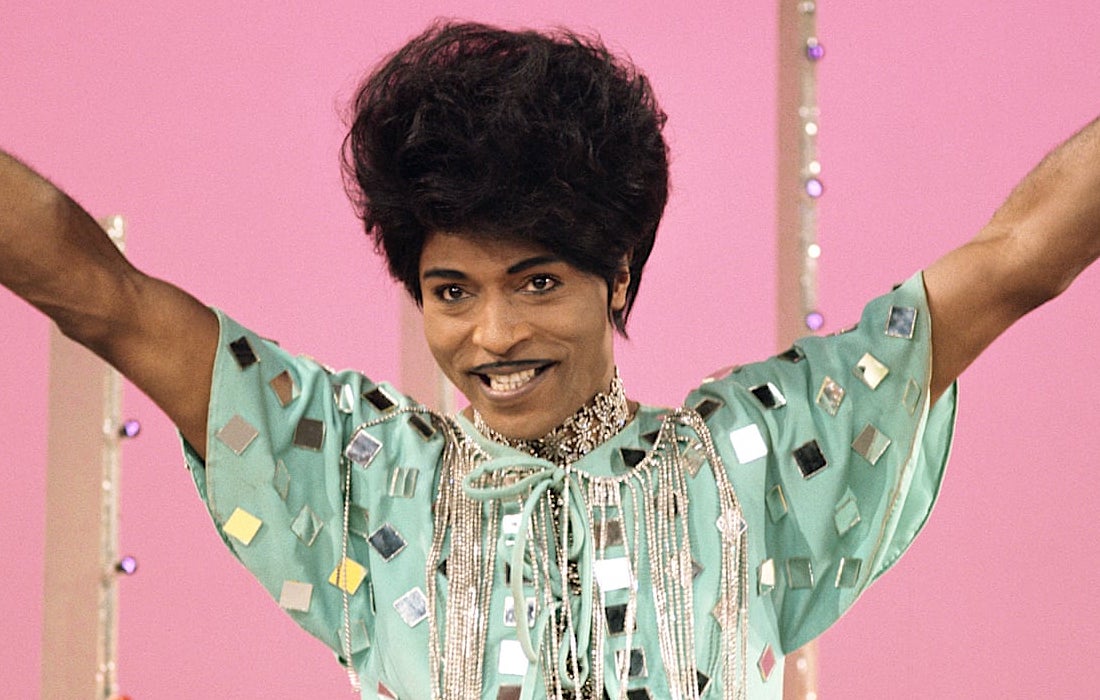
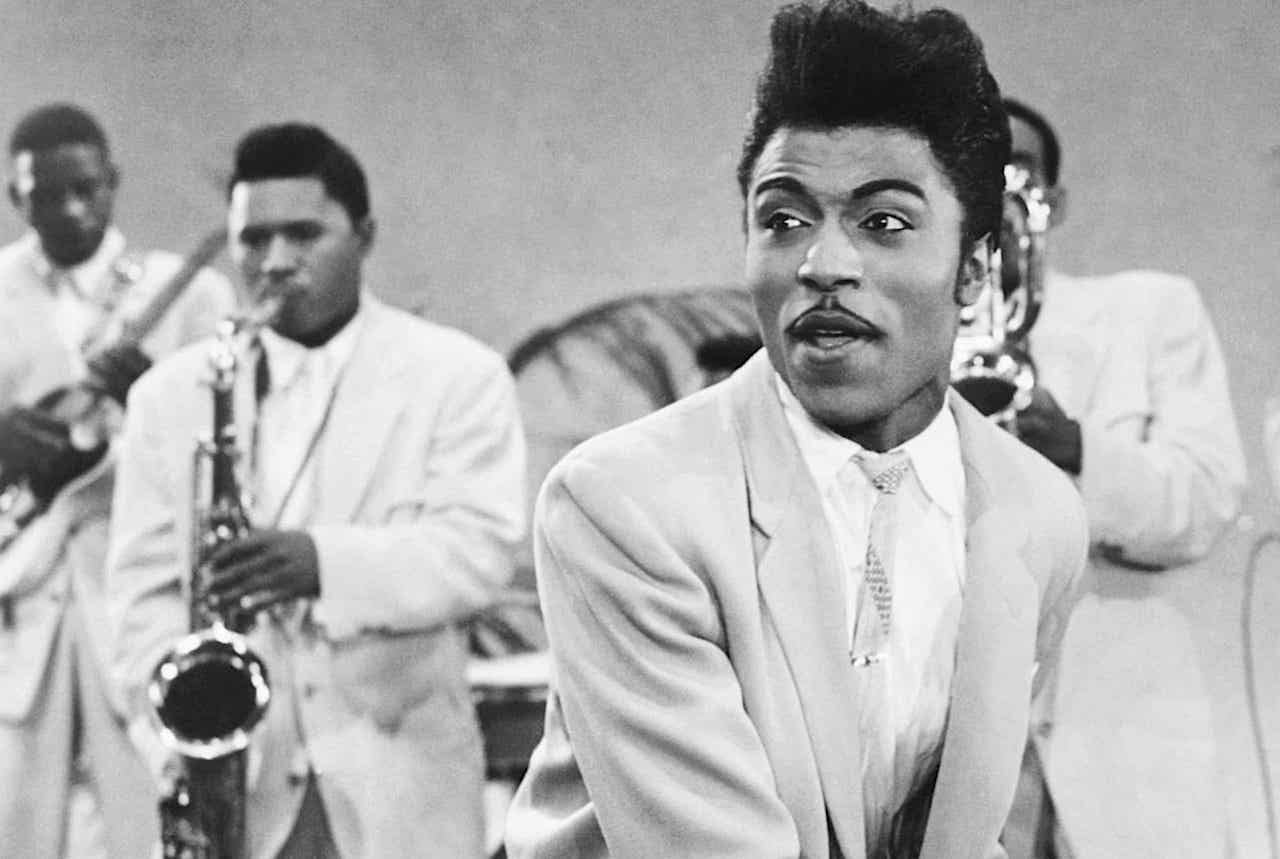
Little Richard in 1957: So many saxophones in the band that Bowie as a child went out and bought his own

➢ When rock-n-roll legend Little Richard died
this week at the age of 87, the official David Bowie
website published this tribute…

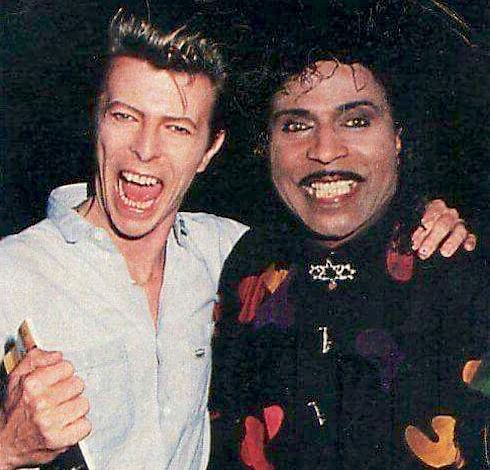
“Some cat was layin’ down some rock n roll…” The young David Jones soaked up influences like a dry sponge and he found the music and attitude of Little Richard, among others, inspirational to say the least. As a 15-year-old in 1962, Jones saw Little Richard live for the first time and then again the following year with The Rolling Stones as one of the support acts. He listed the 1959 album, The Fabulous Little Richard, among his favourite 25 for a Vanity Fair feature in 2003.

Little Richard, David Bowie

Bowie’s own Star Pic of Little Richard: described as his most treasured possession (© The David Bowie Archive)

Here’s Bowie talking in 1991: “I sent away for a photograph of Little Richard when I was seven years old, it was called Star Pic and it took eight weeks to arrive and when it arrived it was torn… and I was absolutely broken-hearted. The first record I think I bought was called I Got It, which he later re-wrote as She’s Got It. And ever since I saw that photograph, I realised he had so many saxophones in his band. So I went out and bought a saxophone intending that when I grew up I’d work in the Little Richard band as one of his saxophonists. Anyway it didn’t work out like that, but without him I think myself and half of my contemporaries wouldn’t be playing music.”

We’ll leave you with a Tweet posted by David’s son, Duncan Jones: “From what my dad told me about his love of this legend growing up, it’s very likely he would not have taken the path he did without the huge influence of Little Richard. One of the highest of the high. Enjoy whatever’s next, Superstar.”

CLICK PIC TO VIEW 1991 VIDEO OF BOWIE
PRAISING RICHARD & RICHARD IN FULL FLOW

Little Richard, David Bowie,obituaries, rock-n-roll,video,interview

Bowie and Richard 1991: click pic to view video interviews in a new tab

Little Richard , biography , rock-n-roll,

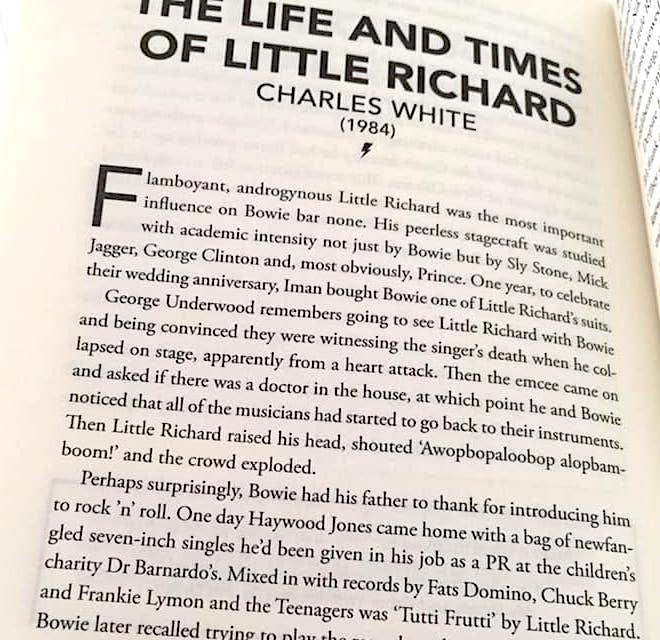
Excerpt from Charles White’s authorised biography, The Life and Times of Little Richard: The Quasar of Rock (Harmony Books, Sept 1984)

➢ Elsewhere at Shapers of the 80s:
Nailing the maverick talents of Little Richard, king of rock-n-roll – the Maureen Cleave interview 1985

Little Richard ,obituaries, rock-n-roll, gay issues, bbc, interview, video,Ray Connolly,

Richard meets Connolly: Click on pic to run BBC video in a new tab

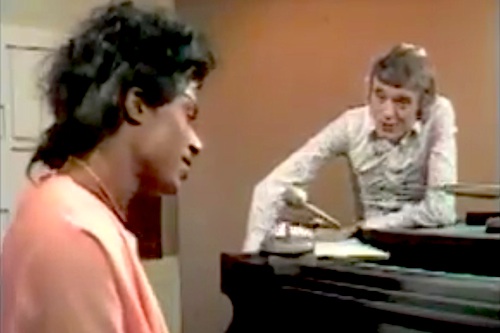
❏ ABOVE: In one of his first TV appearances, the Evening Standard’s Ray Connolly interviews rock-n-roll’s irrepressible icon Little Richard for Late Night Line-up in 1972. “I used to be an opera singer, Oh-ooohhhhhh!” (© Posted by BBC Archive)

SELECTED TRIBUTES

Little Richard , obituaries, rock-n-roll, gay issues,

Little Richard in 1971: “his queerness made him dynamic”

➢ Little Richard’s queer triumph – The legend himself sometimes sought to distance himself from the LGBTQ community but his queerness is what made him a dynamic performer – by Myles E. Johnson in The New York Times, 10 May 2020

➢ Prime force of rock-n-roll who made an explosive impact with songs such as Tutti Frutti, Good Golly, Miss Molly, Lucille and Long Tall Sally – by Michael Gray in The Guardian, 10 May 2020

➢ Too black, too queer, too holy: why Little Richard never truly got his dues – How did a turbaned drag queen from the sexual underground of America’s deep south ignite rock-n-roll? We unravel the mystery behind Little Richard’s subversive genius – by Tavia Nyong’o in The Guardian, 12 May 2020

➢ How Little Richard changed the world: The legacy of the singer, who died last week, goes beyond music and helped change our attitudes to race, sex and class – by Daniel Finkelstein in The Times, 12 May 2020

FRONT PAGE

2020 ➤ Bowie on Kraftwerk and his tribute to Florian Schneider

Kraftwerk, Florian Schneider, Ralf Hütter, pop music, 1970s

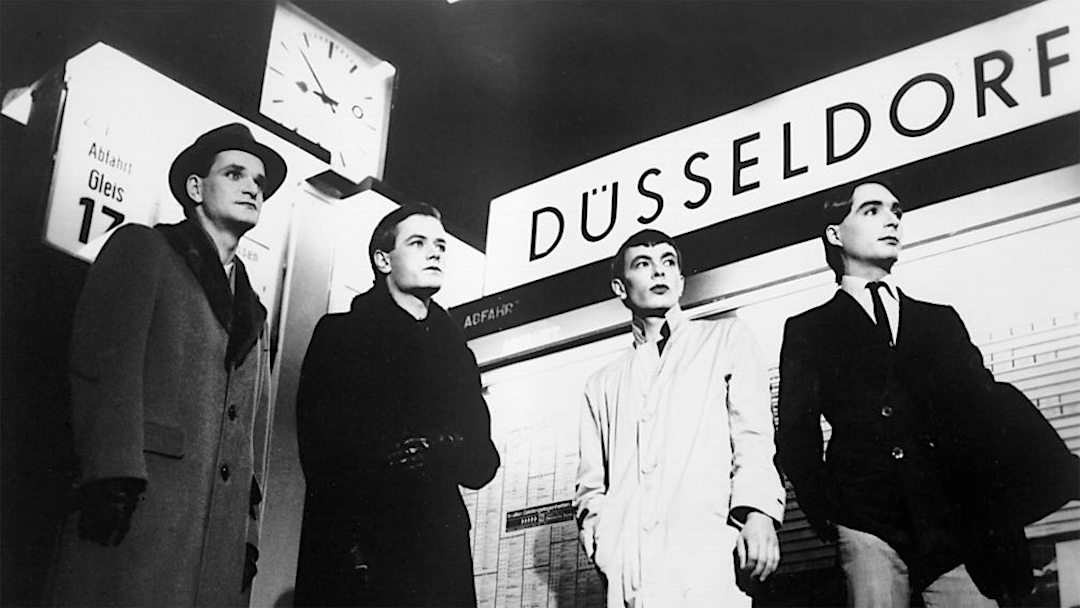
Kraftwerk at Düsseldorf station, 1977: Florian Schneider at left. (Photo, Frähling)

➢ Extracts from some vintage interviews republished
yesterday at David Bowie’s website…

❏ You’ve no doubt heard the sad news regarding the passing of Kraftwerk founder, Florian Schneider, aged 73. A spokesperson said he “passed away from a short cancer disease just a few days after his 73rd birthday”, his birthday being April 7. Schneider formed Kraftwerk with Ralf Hütter in 1970 and remained a member until his departure in 2008. He is pictured bottom left in our photo at Düsseldorf Hbf station with the rest of the band.

In a Kraftwerk feature for MOJO magazine Ralf Hütter responded to the question “How important was David Bowie’s infatuation with you?” thus:

“That was very important for us, because it linked what we were doing with the rock mainstream. Bowie used to tell everyone that we were his favourite group, and in the mid-Seventies the rock press used to hang on every word from his mouth. We met him when he played Düsseldorf (April 8, 1976) on one of his first European tours. He was travelling by Mercedes, listening to nothing but Autobahn all the time.”

In 1978 Bowie recalled the meeting in an interview: “I like them as people very much, Florian in particular. Very dry. When I go to Düsseldorf they take me to cake shops, and we have huge pastries. They wear their suits. A bit like Gilbert and George… When I came over to Europe – because it was the first tour I ever did of Europe (1976), the last time – I got myself a Mercedes to drive myself around in, because I still wasn’t flying at that time, and Florian saw it. He said, “What a wonderful car” and I said, “Yes, it used to belong to some Iranian prince, and he was assassinated and the car went on the market, and I got it for the tour.” And Florian said, “Ja, car always lasts longer.” With him it all has that edge. His whole cold emotion/warm emotion, I responded to that. Folk music of the factories.”

Kraftwerk immortalised the Düsseldorf meeting on the title track of the band’s 1977 album, Trans-Europe Express, in its lyric:

“From station to station, back to Düsseldorf City,
Meet Iggy Pop and David Bowie…”

David returned the compliment later the same year on the “Heroes” album, when he paid Florian the ultimate tribute by using his name for the title of V-2 Schneider.

❏ Bowie also spoke in some depth about Kraftwerk in an UNCUT interview several years back…

UNCUT: Many reasons have been suggested for moving to Berlin. Can you remember why the city appealed?

DB: Life in LA had left me with an overwhelming sense of foreboding. For many years Berlin had appealed to me as a sort of sanctuary. It was one of the few cities where I could move around in virtual anonymity… Since my teenage years I had obsessed on the angst-ridden, emotional work of the expressionists, both artists and film makers, and Berlin had been their spiritual home. This was the nub of Die Brücke movement, Max Rheinhardt, Brecht and where Metropolis and Caligari had originated. It was an art form that mirrored life not by event but by mood. This was where I felt my work was going. My attention had been swung back to Europe with the release of Kraftwerk’s Autobahn in 1974. The preponderance of electronic instruments convinced me that this was an area that I had to investigate a little further.

Much has been made of Kraftwerk’s influence on our Berlin albums. Most of it lazy analysis, I believe. Kraftwerk’s approach to music had in itself little place in my scheme. Theirs was a controlled, robotic, extremely measured series of compositions, almost a parody of minimalism. One had the feeling that Florian and Ralf were completely in charge of their environment, and that their compositions were well prepared and honed before entering the studio.

David Bowie, Station to Station, album sleeve , pop music

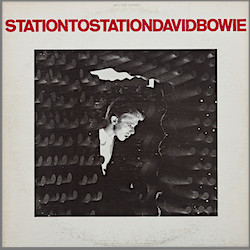
Bowie’s album Station to Station: it preceded Trans-Europe Express by a year

My work tended to expressionist mood pieces, the protagonist (myself) abandoning himself to the zeitgeist (a popular word at the time), with little or no control over his life. The music was spontaneous for the most part and created in the studio.

In substance too, we were poles apart. Kraftwerk’s percussion sound was produced electronically, rigid in tempo, unmoving. Ours was the mangled treatment of a powerfully emotive drummer, Dennis Davis. The tempo not only “moved” but also was expressed in more than “human” fashion. Kraftwerk supported that unyielding machine-like beat with all synthetic sound-generating sources. We used an R&B band. Since Station to Station the hybridization of R&B and electronics had been a goal of mine. Indeed, according to a Seventies interview with Brian Eno, this is what had drawn him to working with me.

One other lazy observation I would like to point up is the assumption that Station to Station was homage to Kraftwerk’s Trans-Europe Express. In reality Station to Station preceded Trans-Europe Express by quite some time, ’76 and ’77 respectively. Btw, the title drives from the Stations of the Cross and not the railway system.

What I WAS passionate about in relation to Kraftwerk was their singular determination to stand apart from stereotypical American chord sequences and their wholehearted embrace of a European sensibility displayed through their music. This was their very important influence on me.

UNCUT: V-2 Schneider – a tribute to Florian?
DB: Of course.

So long Florian.


❏ ABOVE: Kraftwerk playing Autobahn in 1975 on the BBC science strand Tomorrow’s World to demonstrate their “Machinemusik”. This was their first UK appearance on British television.


❏ ABOVE: View the long-haired radicals in Kraftwerk reinventing German music from “Stunde null” in the BBC Four documentary Krautrock: The Rebirth of Germany.

➢ Florian Schneider: the enigma whose codes broke open pop music – Alexis Petridis in The Guardian – “Schneider had kept such a low profile after leaving Kraftwerk that rumours of his death had circulated before, only to be revealed as erroneous.”

➢ How Florian Schneider and Kraftwerk influenced five decades of music – Mark Savage at BBC News

➢ How Kraftwerk’s synth wizard Florian Schneider rewired the world – Rob Sheffield at Rolling Stone – “It’s all electric energy, anyway,” Schneider said, summing up a sonic philosophy that upended the Seventies rock ideal, and influenced everyone from Depeche Mode to Derrick May.

FRONT PAGE

2020 ➤ Beyond: Learning how to be black and gay and blaze a trail to the future

Shapersofthe80s, black issues, gay issues, film, Beyond, Claire Lawrie,

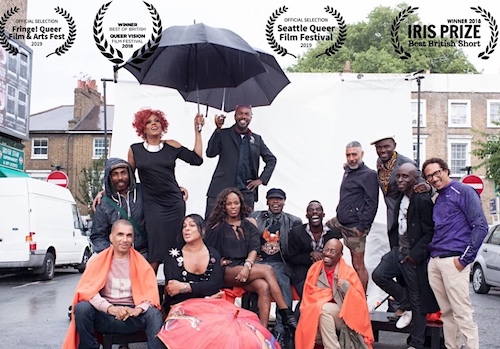
Beyond director Claire Lawrie, centre: with some of her garrulous cast answering questions after a screening at Central Saint Martins college last year. Andy Polaris in red. (Photo by Shapersofthe80s)

❚ AFTER A STREAM OF EXCLUSIVE SCREENINGS for a poignant and edgy short documentary about growing up black and queer in Seventies Britain, everyone can now view it online. Titled Beyond “There is always a black issue Dear”, the 34-minute film explores black LGBT identities and the ways in which they have influenced the collective history of London’s alternative club, fashion, fine art, dance and music scenes. The cast of ten are long-standing friends of director/photographer Claire Lawrie who helps tell their personal stories when these fans of soul and disco, punks and Blitz Kids found each other’s company in underground clubs.

Over the past year Claire has won a fistful of film-festival awards and, prompted by the coronavirus lockdown, she has posted the full version online, and repeat viewings reward with deeper appreciation.

Black issues, gay issues, film, Beyond, Claire Lawrie,

Photo that inspired the movie Beyond – Click pic to view the film in another window

“To me it’s important now that people
realise that black people were there,
because a lot of the time they
tried to paint us out”
– Andy Polaris

Onetime Blitz Kid Andy Polaris is part of the project and he recalls its origins in this extract from his own website Apolarisview. . .

“ A 2013 exhibition at the V&A museum in London titled Club to Catwalk was instrumental in bringing the collective creative talent of Eighties fashion stalwarts and club luminaries together for a preview party that summer. It was a splendid event, one of the last memorable social events with such a vibrant successful crowd. Among the assembled were Judy Blame, Princess Julia, Andrew Logan, Zandra Rhodes, Body Map, Antony Price, Chris Sullivan and it was the last time I saw Steve Strange (who along with Rusty Egan) had brought us all together at the Blitz Club in 1979.

The visual artist Claire Lawrie was at the V&A and pondered on the omission from the exhibition of gay black talent whose influence had permeated Eighties club culture. Although Jeffrey Hinton’s brilliant cave of projected nightlife photography did feature some of us, Lawrie echoed some of her friends’ frustration that their experience was not reflected in the exhibition. She set about organising an open-call photograph to celebrate a contingent of black talent and arranged for the gathering to be filmed by her friends, Emile Kelly and Kim Mnguni. This was the genesis of something deeper and her award-winning documentary, Beyond “There is always a black issue Dear”, emerged from that event with her as director.

Click any pic of the Beyond interviewees to enlarge all in a slideshow:

Continued: “ Over the next year Claire arranged interviews with ten of the candidates who were filmed on a shoestring. Contributions of archive footage were given by a long list of talented artists, people who, over the years had collaborated with and who wanted to show their respect and love for the cast. These included Pam Hogg, Dick Jewell, Dave Swindells and Nicola Tyson as well as John Maybury, Derek Ridgers, BodyMap, Devon Buchanon and Rankin.

The film adjusts the colour settings of the standard view of black creative lives when telling the story about club culture and its impact in the UK. Featuring ten black queer voices from the diaspora, born in the late Fifties and Sixties in the UK, Guyana and New York, the documentary delves into personal stories of discovery and eventual self-acceptance, looking back at struggles with identity and family and the wider world. The cast features stylist Frank Akinsete, transgender model Winn Austin, international model Roy Brown, make-up artist Kenny Campbell, choreographer Les Child, clubland pioneer Kenrick Davis and his mother Velma “Vee” Davis, nightclub host Nicky Green, gender-fluid performer Lanah Pellay, composer Robb Scott and myself as an original Blitz Kid turned pop singer.

Roy Brown, Black issues, gay issues, film, Beyond, Claire Lawrie

Roy Brown in 1985: poster boy for the Barbican’s recent exhibition on Masculinities. (Photo: Rotimi Fani-Kayode)

In the mid-Seventies and Eighties the UK’s attitudes to both race and gay issues were particularly brutal, endorsed by the anti-gay policies of Thatcher’s government and tabloid sensationalism regarding anything queer, especially later with the arrival of the Aids epidemic. The Seventies were marred by stereotypes of both marginalised groups, joining the sexist and misogynistic tropes in light entertainment and films which set the tone for how the world viewed us and how we viewed ourselves.

This lack of representation and role models forced us to create our own image during our teens, which in some cases was defiantly camp. Instead of allowing bullies to mock us, we accentuated certain behaviour, not just as a direct challenge to the heteronormative majority but against the conservative oppression in society.

Music and fashion were an escape from small-mindedness and even as early teens we were exploring alternatives and the fashionable disco and punk clubs were our laboratories of choice. . . ” / Continued at Apolarisview

➢ All about the making of Beyond “There is always
a black issue Dear”

➢ Interview with director Claire Lawrie: “These were
people that I looked up to and admired”

➢ On video – Beyond Q&A by RankinFilm after
the July 2019 screening at his studio

FRONT PAGE