Immature? Alternative unused shot of 21-year-old Christine Keeler from the famous 1963 photo session in Lewis Morley’s Greek Street studio. . . Right, in 1990, a fully-clad Keeler returned to the pose she made famous for a photograph taken by Terry O’Neill
◼ “THEY NEVER STOPPED CALLING ME A PROSTITUTE.” So said the notorious “showgirl” who helped bring down a Tory government, quoted in today’s impressively well rounded Times obituary of Christine Keeler who has died aged 75. Despite posing naked for a now definitive photograph on a plywood chair in 1963, she fell victim to the mores of those times in the whole sex-and-spying soap opera enacted by a cast of deeply sleazy characters. Found guilty of perjury, she was sentenced to nine months in prison.
“Her only real crime was immaturity,” according to The Times obituarist. The war minister John Profumo lied “again and again” throughout the scandal, also according to The Times, whose own editor back in the day thundered that adultery “is a moral issue”. Well worth reading as a comprehensive slice of social history just as the Sixties began to swing.
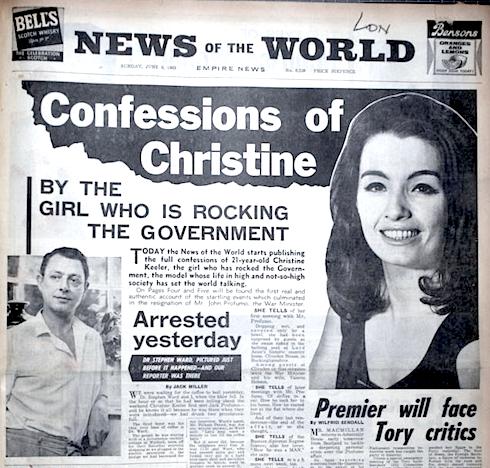
Telling her own story – News of the World from June 1963
❏ One sympathetic reappraisal of Keeler’s reputation came with the powerful 1989 feature film Scandal directed by Michael Caton-Jones who created an even-handed and realistic evocation of the saga, with an immaculate cast. Best of all for pop-culture fans was its title track by the Pet Shop Boys who had the brilliant notion of bringing Sixties icon Dusty Springfield out of retirement and she rendered the vocals beautifully. Among a classic collection of tunes for the soundtrack, Chubby Checker even re-recorded The Twist because his original had been embargoed for rights reasons.
This video compilation intercuts clips from the film Scandal with authentic news footage of the rum cast implicated in the Profumo affair of 1963, all overdubbed with Dusty who sings the film’s soundtrack, Nothing Has Been Proved. And yet, nothing about the story was fake by today’s standards.
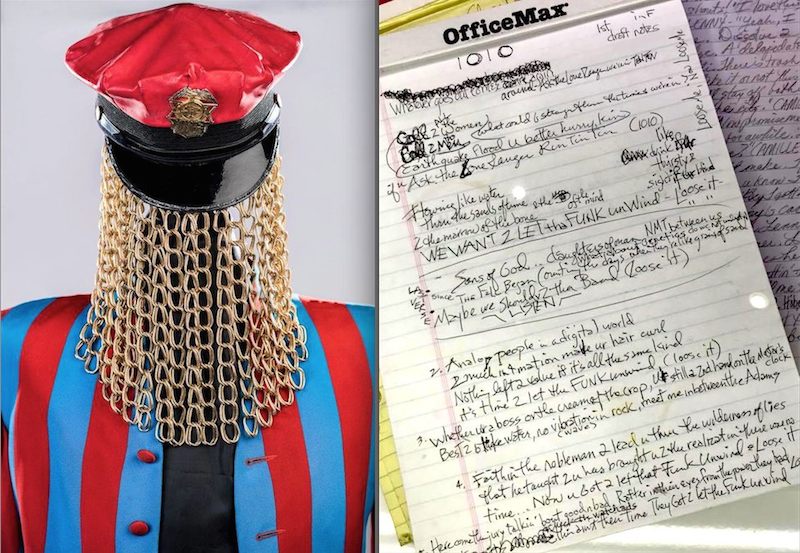
Prince exhibition: chain-hat to conceal his identity in The New Power Generation and lyrics for We Want 2 Let the Funk Unwind (Getty)
◼ Hold your breath! An exhibition that could so easily have been a lightweight commercial ripoff about the myth of Prince Rogers Nelson proves to be a surprisingly affecting tribute. Scores of artefacts have been loaned out for the first time direct from Paisley Park, Prince’s lush Minnesota estate, in a dazzling rush of bling and sentiment for My Name is Prince, his official exhibition which runs in London for the next ten weeks.
It seems a strange idea to visit seven galleries packed with video screens and to stand clad in earphones watching them play out the most vibrant highlights from the American pop icon’s uniquely anarchic imagination. Yet the very impact of so many screens disseminating so much talent only magnifies the intensity of the moment.
This one-man band’s genius is all too evident in every direction you look. In turns, you’re gasping at the audacity of Dirty Mind, smiling at the ingenuity of Sign ‘o’ the Times and shedding tears of envy for his sheer virtuosity in While My Guitar Gently Weeps.
Above all, the entire immersive experience is very, very lovesexy. The attention Prince lavished on his many lubricious costumes is revealing: so many apparently plush brocade garments are woven on light see-through black mesh that reveal the sinewy muscles of his tiny but taut 5ft frame within.
Prince the dandy also took any opportunity to shed his garments and flash his intimate zones, including his bare buttocks in orgiastic videos such as Gett Off, shot amid scantily clad girls and boys (“23 positions in a one-night stand”) at the 1991 MTV awards. Indeed one of the exhibition’s biggest draws is the video for Thieves in the Temple, from the 1990 Graffiti Bridge album, in which cutaway jeans reveal his bum and thighs and bouncing crotch capped with a glittering gold lamé jockstrap, in some of the most frenetic team dancing ever in high heels. The choreography is shamelessly horny.
The sheer range of Prince’s musical gifts during a 40-year career is well recognised – 70 albums, 2,000? songs, an Oscar, a Golden Globe, eight Grammies, 100 million records sold, and a ranking at No 28 among Rolling Stone’s 100 Greatest Artists of All Time. But to assemble in a three-dimensional venue 200 tangible examples of his workaholic creativity as an all-round showman results in an affectionate multi-media tribute. For us to devour the close-up detail in his guitars, his hand-written notes and drawings, and his jewelled accessories becomes a truly moving privilege. And for a fan, the power of his achievements is reaffirmed as you bask in his subversive glow.
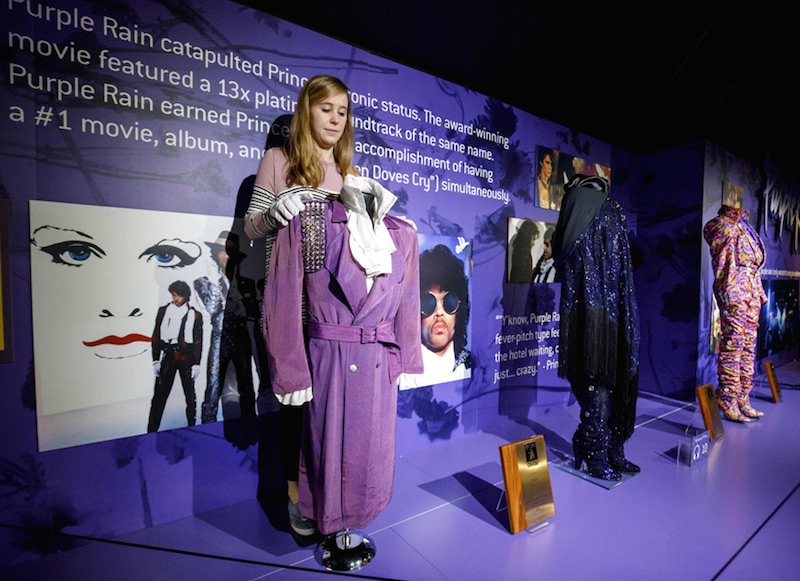
Prince exhibition: stage costumes from his Purple Rain tour (Getty)
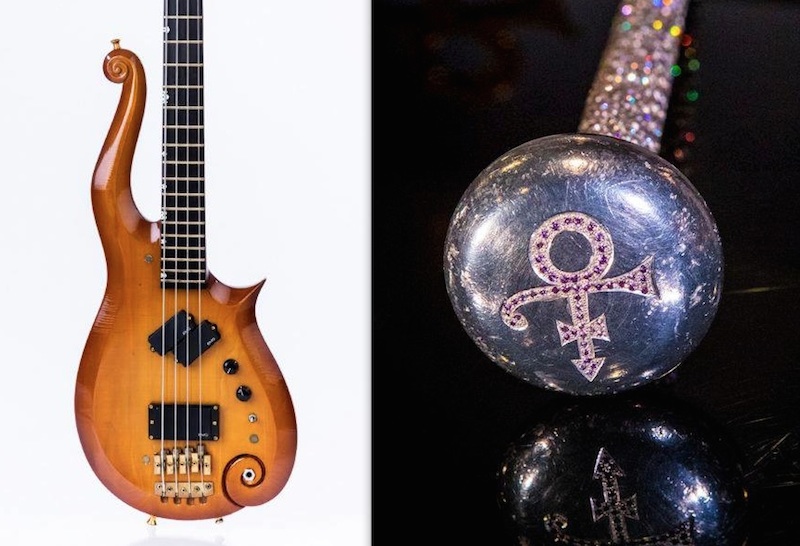
Prince exhibition: bass guitar that inspired his trademark Cloud and diamond-studded cane from 2015
PRINCE’S PURPLE REIGN STILL EXERTS ITS PULLING POWER
London’s Eighties pop star Andy Polaris visits the Prince exhibition to assess the enduring impact of the black performer who in his day challenged the norms of sexuality and race. . .
“ The first time Prince triggered my radar was a review in the music press of his concert at the Lyceum in London 1981, part of his Dirty Mind tour. He was featured in the accompanying review wearing a trench coat covering a lithe brown body and wearing black briefs and leggings, topped by his mop of black hair and pretty face. I was miffed to have missed his only show but before the internet niche events could slip by easily without social media to flag them up.
It was obvious from the start that this was a black artist who, despite the flamboyance of disco/funk stage-wear and album covers, was taking it a little bit extra with some sexual ambiguity. The lyrics of the funky album track Controversy (a bass-driven early dance-floor favourite) set the tone:
I just can’t believe all the things people say
Controversy
Am I black or white? Am I straight or gay?
Controversy
I was fascinated to see the parade of Prince’s petite outfits complete with matching coloured heeled boots that covered Purple Rain, his purple metallic frock coat through to a crystal-encrusted cane and Balmain waistcoat he wore for W magazine. The materials are colourful, sheer and shimmering and in some cases boldly designed. He wasn’t interested in the toxic masculinity that permeates so many black artistes, one of the reasons he flew the freak flag for those who were not interested in paying £50 to see artists dressed in denim and T-shirts. . . ” / Continued at Andy’s own website
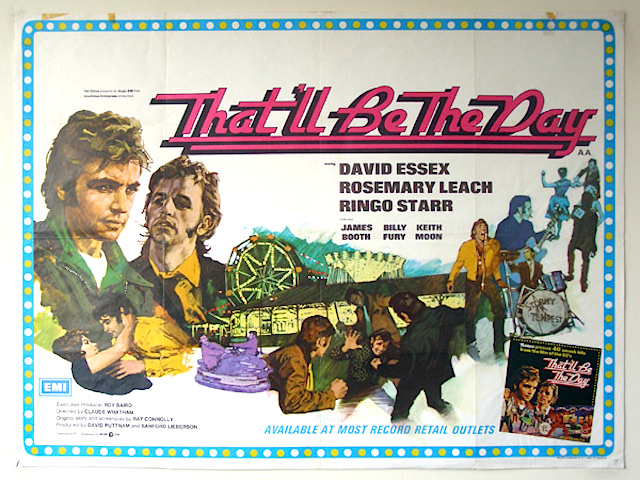
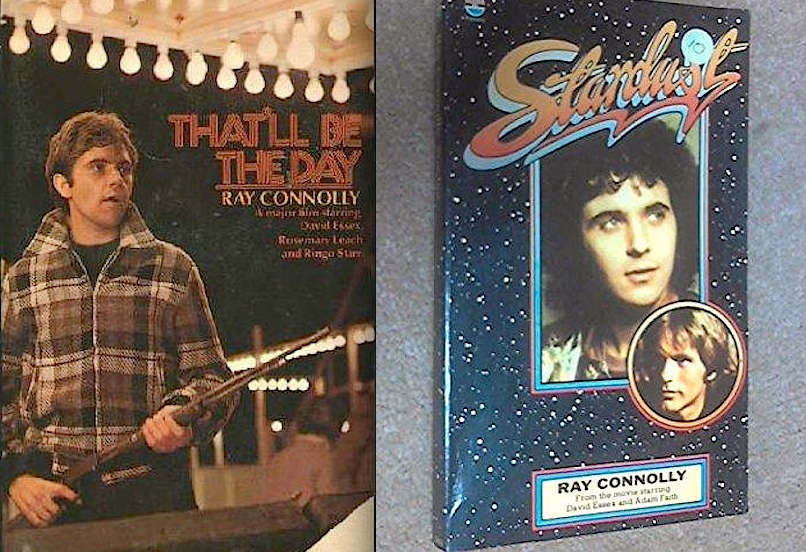
◼ HERE ARE TWO RADIO 4 DRAMA TREATS this Saturday 23 Sept and next at 2.30pm – first an adaptation by former Evening Standard pop columnist Ray Connolly of his 1973 film, That’ll Be the Day (which starred David Essex and Ringo Starr with cameos from Billy Fury and Keith Moon). It’s a very British coming-of-age story that keenly captures the vicissitudes of postwar austerity prevailing in the provinces as the Swinging Sixties dawned.
BBC sell: “It’s 1959 and young Jim Maclaine seems to have it all. He’s good looking and destined to go to a good university. But he’s haunted by the father who abandoned him and his mother when he was small. Is he ready for the normal life mapped out for him? Or is he restless like his old man?”
Jim’s story is followed through on Saturday 30th with Stardust. Sell: “Show me a boy who never wanted to be a rock star and I’ll show you a liar. In this sequel to That’ll Be the Day, it’s the early 1960s and Jim Maclaine is now an aspiring pop musician. He seeks out his old mate Mike, because every pop star needs a road manager. Performing to bored audiences in seedy clubs, the Stray Cats live on dreams of becoming as famous as the Beatles…” Based on the film of the same name which featured David Essex, Adam Faith, Larry Hagman and Keith Moon.
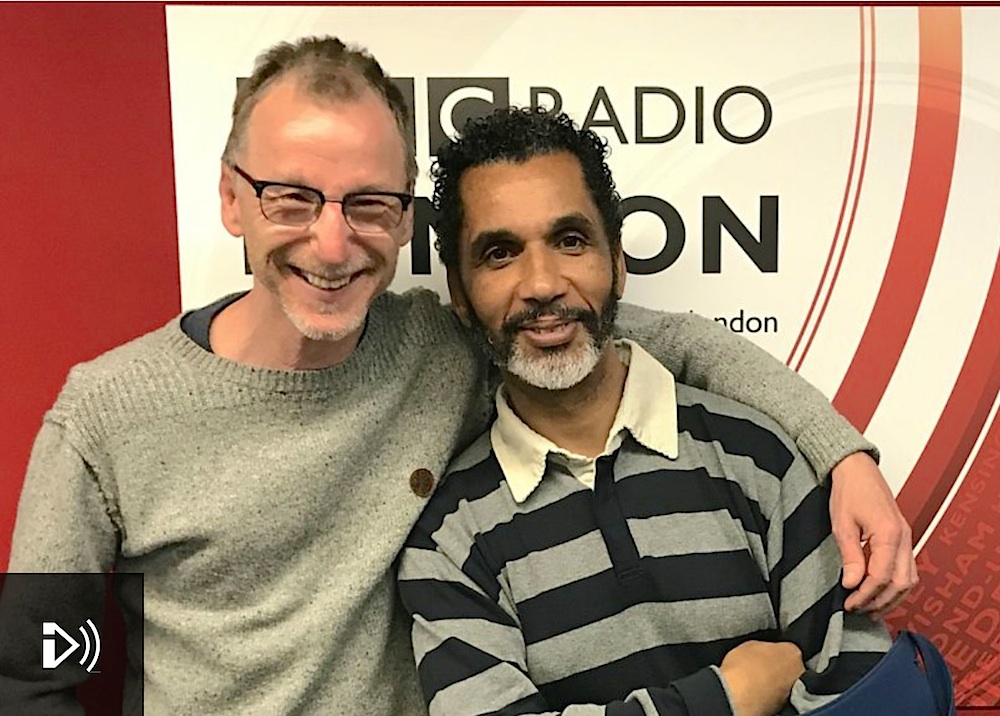
Buddies who found fame in the Swinging 80s: deejay Gary Crowley with singer Andy Polaris at BBC Radio London today
◼ WOOOH! JUST COMING DOWN from a breathless hour of lunchtime radio today as Andy Polaris very nearly talked the hind leg off deejay Gary Crowley – which is quite a feat! The BBC Radio London host was inviting former Animal Nightlife singer Andy to reminisce about his life in the metropolis and to pick six landmark tunes that still matter to him. Of course his teen years were dominated by pop, but apart from the obvious gods such as Bowie, Andy surprised us by bigging up those feisty strong female bands of the late 70s who were muscling in after punk imploded. Andy spent weeks following Siouxsie and the Banshees round the country to catch her gigs.
He says: “The women singers like Poly Styrene, the Slits and Siouxsie were way ahead of the guys. The guys were doing more clichéd macho stuff. The women were doing more arty things.
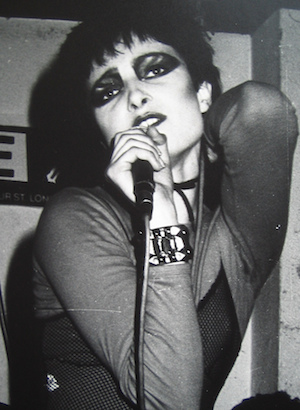
Siouxsie Sioux at the Vortex in October 1977. (Photo: Romany WG)
“Siouxsie you would see at a Bowie concert, and at a Roxy concert. The Slits you’d see at reggae concerts. Their music was fantastic: those albums Cut and The Scream and the X-Ray Spex first album – they’ve stood the test of time.
“Imagewise as well they were way ahead of everybody else – I loved that stuff to do with cinema, Poly Styrene with The Day the World Turned Day-Glo, and talking about recycling. She was well ahead of her time.”
ANDY’S SIX KEY TRACKS
Dr Buzzard’s Original Savannah Band – I’ll Play The Fool, 1976
David Bowie – Golden Years, 1975
Siouxsie and the Banshees – Hong Kong Garden, 1978
Sylvester – You Make Me Feel (Mighty Real), 1978
Grace Jones – I’ve Seen That Face Before (Libertango), 1981
Michael Kiwanuka – Black Man In A White World, 2016
The boy wonder: “Scoop” Simper plugging No1 on Switch, the TV pop show
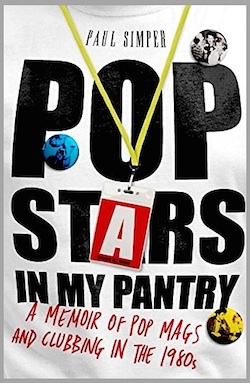
A rare book is published this month giving a vivid eye-witness account of one of the most creative eras for British pop music, the Swinging 80s. Paul Simper himself says: “It’s the pop life story pop-pickers have been gagging for.”
He should know, having emerged from London clubland to become the leading commentator on the New Pop led by image-conscious young bands when the rock press at large was giving them short shrift. Not only was he genuinely The Friend of The Stars but was one of the few writers who could also give it pure laldy dancing his socks off down Le Beat Route. Pop Stars in My Pantry is his confessional memoir and today Shapers of the 80s reprints an exclusive extract. . . But first, who is the man called Simper?
Wakey-wakey! Spandau Ballet sax player Steve Norman discovers our hero Simper relaxing during a characteristic night out on the town during London’s Swinging 80s
◼ THERE’S NO EXPLAINING PAUL SIMPER except as a life force which is Always On – sometimes as a mouse, sometimes a bunny, often in a skirt or a sequinned tuxedo. Not usually at same time, obvs. He’s obsessive, definitely bonkers, extremely good “in the room” and, oh yes, quite an entertaining showbiz writer.
Now he’s had the nerve to bring out his life story as a book called Pop Stars in My Pantry (PSIMP for short) when you’d think people in the music biz would have learned a lesson from Morrissey’s Pooterish own goal. Luckily Simper seems to have had massively more fun than Moz, actually likes the people he writes about and, oh yes, brings a wicked sense of humour to an industry not noted for knowing how to laugh.
As a singer in Slippry Feet – a marriage of supper-club in a circus ring meets David Lynch in a disco – Simper only ever got as far as being the best group of December 1993. Bar none. Fortunately for this book he has the day job to fall back on and he is SUCH a namedropper. Look at the puffery adorning his book’s back jacket: “Always a joy to hang with” – Siobhan Fahey; “The most trusted person in 80s pop” – Patsy Kensit; “Truly the epitome of the embedded journalist” – Gary Kemp.
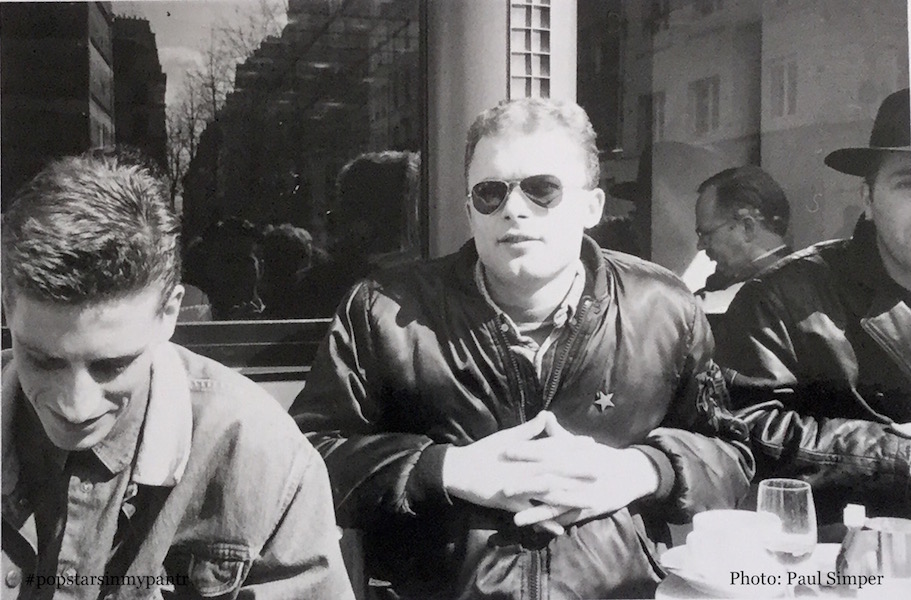
Goes with territory when you have become Friend of The Stars, having leapfrogged from Melody Maker within minutes of coming up from the sticks in 1981, onto smart new fan mags like New Sounds New Styles and No 1 which counted clubbing on-the-town as research. There from the off, he was friends with the burgeoning new generation of self-invented nightlife stars who were storming off fashionable dancefloors across the UK and into the singles charts to knock the rock dinosaurs for six. Fellow clubbing names being dropped go from George Michael to Frankie Goes to Hollywood, Bananarama to Boy George. Not to mention Madonna, Prince, Whitney, Elton and Weller. Woohoo!
Early on I nicknamed him “Scoop” Simper because even though I worked for a Deeply Influential Mainstream Newspaper, whenever any big sexy pop star, like, y’know Debbie Harry, flew in from abroad *he* got the exclusive interview even though he “only” worked for one of those pure-pop weeklies full of pinups and lyrics and breathless reviews.
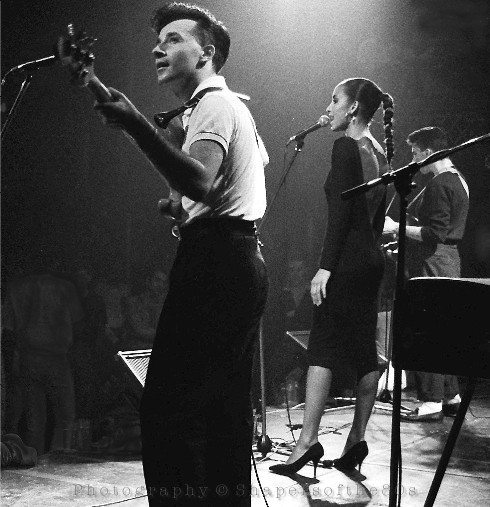
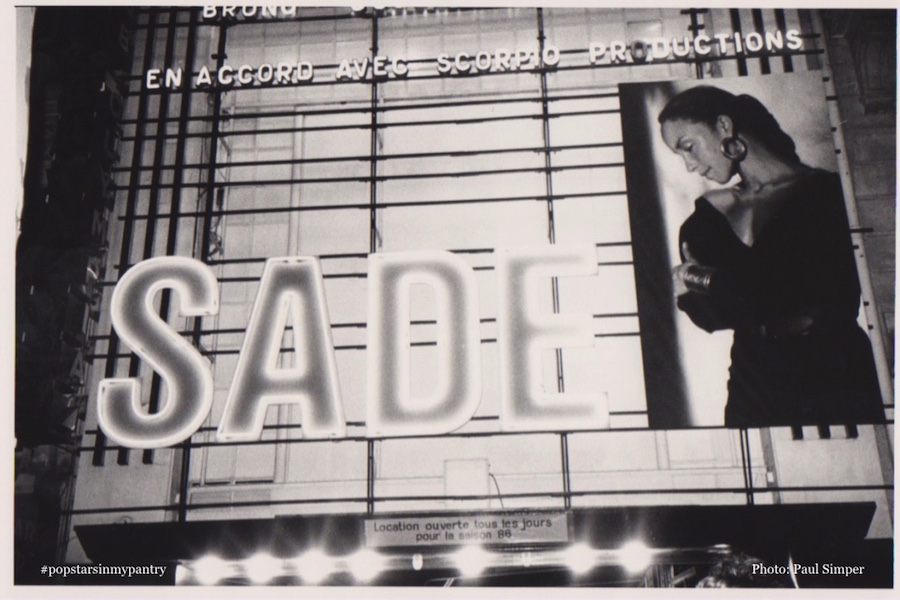
So who’s having the last laugh now?! Well probably Scoop, as usual, since PSIMP proves to be “a right frollicking read for the adults in your family”, while my own book has blurted itself out and into this website for several years, clocking up barely a handful of Wikipedia footnotes to credit. And now His Majesty is entrusting Shapers of the 80s with running an excerpt from one of the best chapters in his book, the story of Sade Adu, the Essex girl who rose via St Martin’s School of Art to become one of the UK’s biggest Grammy-award winning pop exports, described by Robert Sandall in The Sunday Times in 2010 as “the most successful solo British female artist in history”.
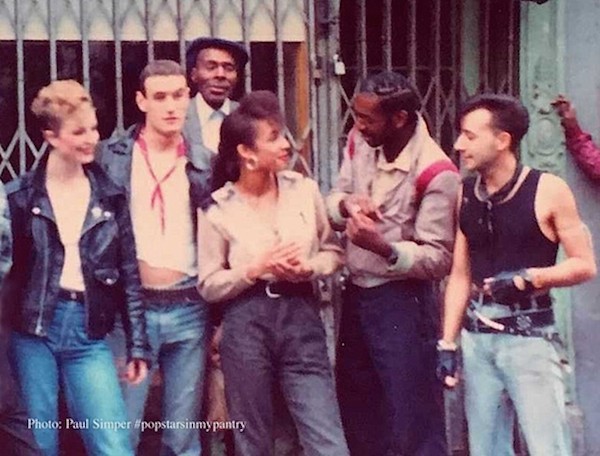
Scoop spills the beans: “Sade was very much a part of my early years as a young pop writer living in London. She even used to kindly let me sleep on her sofa.” So here’s a short teaser-taster from PSIMP, but do click through to our inside page for the full extract when Sade’s first band Pride goes in search of Manhattan’s edgy Village scene. . .
“ I owed Sade and Bob Elms plenty. When I first moved to London I couldn’t have been more grateful for the existence of their north London home tucked away in multi-cultural Wood Green on the Noel Park Estate.
Their old sofa didn’t exclusively have my name on it – fresh-down-from-Hull saxophonist Stuart Matthewman was pretty much clothed, housed and fed by them over the same period – but on the occasions I was invited back, I took some shifting. Sade reckoned that a pair of my old socks stuck around even longer than me until she ceremonially buried them, like high-grade plutonium, in the back garden.
I was never so bold as to turn up unannounced, but if Bob suggested a home viewing of an under-the-counter video of Texas Chainsaw Massacre or The Hills Have Eyes that he’d got his mitts on in Soho (I’d discovered in my early days in London there was a black market for everything), then I was more than up for it.
My telly viewing habits were not of primary importance to the residents at No 64 Hewitt Avenue by the spring of 1982, though, when Bob and Lee Barrett started talking up this new band called Pride that “Shard” was in. Stuart Matthewman was also involved, as were fellow Hull lads drummer Paul Cooke and bass player Paul Denman.
Back in Hull, Stuart had been in The Odds, a pop/mod band similar to The Piranhas that had started out doing speeded-up punk versions of 60s hits like The Dave Clark Five’s Glad All Over. He then played sax in a ten-piece Elvis impersonator show called Ravin’ Rupert, which covered the whole spectrum of The King’s career from rockabilly to Vegas delivered by a front man sporting a quiff and wearing Rupert-the-Bear checked trousers. A tad cooler was Paul Cooke and Paul Denman’s prog-rock band, The Posers, which Stuart credits as being the only band in Hull trying to do something new.
As for Sade, her singing career had only begun a few months previous when she sang onstage for the first time as part of another London band, Ariva. Considering Ariva were viewed as a bit of a Blue Rondo rip-off, ironically it was on the way to a Rondo gig on Barry Island that Lee first clocked Sade singing along to the radio and asked her if she could sing. She thought she probably could so said Yes. . . ”
➢ Choose “View full site” – then in the blue bar atop your mobile page, click the three horizontal lines linking to many blue themed pages with background article
MORE INTERESTING THAN MOST PEOPLE’S FANTASIES — THE SWINGING EIGHTIES 1978-1984
They didn’t call themselves New Romantics, or the Blitz Kids – but other people did.
“I’d find people at the Blitz who were possible only in my imagination. But they were real” — Stephen Jones, hatmaker, 1983. (Illustration courtesy Iain R Webb, 1983)
“The truth about those Blitz club people was more interesting than most people’s fantasies” — Steve Dagger, pop group manager, 1983
PRAISE INDEED!
“See David Johnson’s fabulously detailed website Shapers of the 80s to which I am hugely indebted” – Political historian Dominic Sandbrook, in his book Who Dares Wins, 2019
“The (velvet) goldmine that is Shapers of the 80s” – Verdict of Chris O’Leary, respected author and blogger who analyses Bowie song by song at Pushing Ahead of the Dame
“The rather brilliant Shapers of the 80s website” – Dylan Jones in his Sweet Dreams paperback, 2021
A UNIQUE HISTORY
➢ WELCOME to the Swinging 80s ➢ THE BLOG POSTS on this front page report topical updates ➢ ROLL OVER THE MENU at page top to go deeper into the past ➢ FOR NEWS & MONTH BY MONTH SEARCH scroll down this sidebar
❏ Header artwork by Kat Starchild shows Blitz Kids Darla Jane Gilroy, Elise Brazier, Judi Frankland and Steve Strange, with David Bowie at centre in his 1980 video for Ashes to Ashes
VINCENT ON AIR 2026
✱ Deejay legend Robbie Vincent has returned to JazzFM on Sundays 1-3pm… Catch up on Robbie’s JazzFM August Bank Holiday 2020 session thanks to AhhhhhSoul with four hours of “nothing but essential rhythms of soul, jazz and funk”.
TOLD FOR THE FIRST TIME
◆ Who was who in Spandau’s break-out year of 1980? The Invisible Hand of Shapersofthe80s draws a selective timeline for The unprecedented rise and rise of Spandau Ballet –– Turn to our inside page
SEARCH our 925 posts or ZOOM DOWN TO THE ARCHIVE INDEX
UNTOLD BLITZ STORIES
✱ If you thought there was no more to know about the birth of Blitz culture in 1980 then get your hands on a sensational book by an obsessive music fan called David Barrat. It is gripping, original and epic – a spooky tale of coincidence and parallel lives as mind-tingling as a Sherlock Holmes yarn. Titled both New Romantics Who Never Were and The Untold Story of Spandau Ballet! Sample this initial taster here at Shapers of the 80s
CHEWING THE FAT
✱ Jawing at Soho Radio on the 80s clubland revolution (from 32 mins) and on art (@55 mins) is probably the most influential shaper of the 80s, former Wag-club director Chris Sullivan (pictured) with editor of this website David Johnson
LANDMARK FAREWELLS. . . HIT THE INDEX TAB UP TOP FOR EVERYTHING ELSE






 ➢➢ Shapers of the 80s ➣➣