Tag Archives: Visage

2015 ➤ Steve Strange’s anniversary: deciphering the pen portraits of the man of masks

Steve Strange, Stephen Harrington, Blitz Kids, New Romantics, nightclubbing, Swinging 80s, London, fashion, pop music, Visage, tributes, youth culture, obituaries

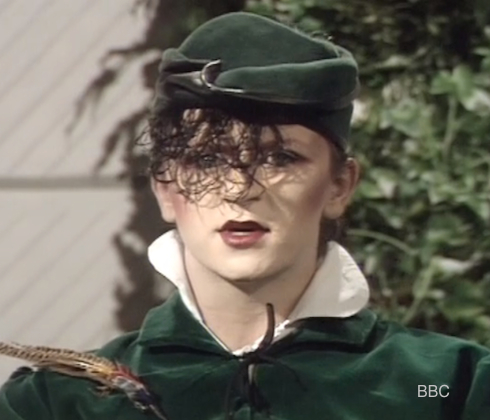
Steve Strange in 1981: here in Robin Hood guise (BBC)

FIRST PUBLISHED 13 FEBRUARY 2015

◼ ONE OF STEVE STRANGE’S TALENTS was persuading the press to believe in his latest wheeze, however fantastic. He had a way of convincing himself that a story was already written and a mission achieved before he had pressed the accelerator and set off. This irritated as many journalists as it amused and many were consequently very sceptical of his next big announcement – like saying he’d booked a big American star to do her first live promotional performance in Britain at his crowning glory, the Camden Palace, capacity 1,410. But in fact he had and she did, and in June 1983 the unknown Madonna was launched in the UK singing to backing tapes for half an hour.

The myths surrounding Steve were always the stuff of self-promotion. Dressing up was part of the same story-telling ritual. Today, he would say, I am Robin Hood, tomorrow Ruritanian Space Cadet, the next day Marionette with the mind of a toy. A compulsive man of masks presents a tricky subject for the scribblers obliged to capture that life once it is spent, so we must tiptoe through the obituaries like a minefield, and beware of tripping over Steve’s much-spun versions of history that were pure fantasy. Even national newspapers seemed to fall for many of the dreams he spouted, as well as the exceedingly vague memories committed to his 2002 book, Blitzed. As the mainstream obituary writers lead you through those New Romantic years, see if you can spot the porkies. . .

➢ The Times obituary:
As the head boy of the “new romantics”, Steve Strange was the flamboyant scene-maker of a colourful subculture that dominated early 1980s British pop music as a showily garish counter-reaction to the stylistic austerity of punk. If punks were the roundheads in pop’s civil war, the “new romantics” were the cavaliers, ushering in a restoration of glitz and glamour, with a delectably decadent flourish… / Continued online

➢ Adam Sweeting, Guardian:
In 1978, Strange and Rusty Egan (then drummer with the Rich Kids) began holding David Bowie nights on Tuesdays at Billy’s club in Soho, a squalid bunker situated beneath a brothel. “We played Bowie, Roxy Music and electro,” said Strange. “It was where our friends could be themselves.” Billy’s could hold only 250 people [not quite!] but swiftly developed an outsize reputation, numbering among its garishly clad clientele such stars-to-be as George O’Dowd (the future Boy George), Siobhan Fahey, later of Bananarama, and Marilyn. . . / Continued online

Billy’s club,Helen Robinson, nightlife, London ,Steve Strange, PX

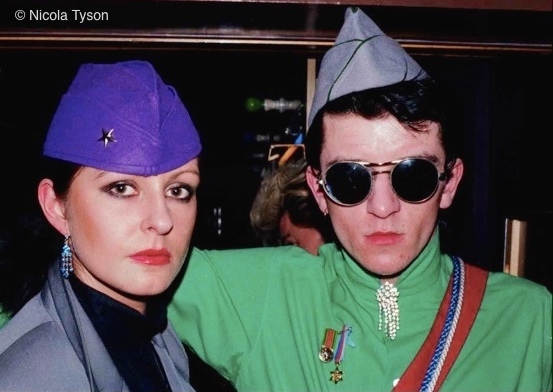
Billy’s club 1978: Strange as Ruritanian Space Cadet alongside PX designer Helen Robinson. (Photograph by © Nicola Tyson)

➢ Daily Telegraph obituary:
Strange fronted sleek operations, such as Club For Heroes in Baker Street and the Camden Palace in north London, where Madonna performed her first British live concert. But Visage split amid acrimony over the division of royalty payments, and his nightspots fell out of vogue in the mid-1980s with the rise of rap, hip-hop and dance music. By this time Strange had a reputation for high-handedness. Years later, Boy George lampooned Strange as the preposterous club host character “Nobby Normal” in his biographical musical Taboo. Strange was not amused. “I don’t think I have that strong a Welsh accent,” he complained. . . / Continued online

➢ The Scotsman obituary:
Although his career as a pop star afforded him only one real hit as frontman of the band Visage, 1980’s austere synthesiser anthem Fade to Grey, Steve Strange’s distinctive image and party-loving persona saw him help invent London’s New Romantic scene. . . Visage’s time in the sun flared all too briefly; with Strange being courted to repeat the clubbing success of places like the Blitz in various US cities, he dived wholeheartedly into the life of the international rock star, with all the pitfalls that entailed. Put off by Strange’s drug use, spending sprees and debauched behaviour, Midge Ure left to concentrate on Ultravox and Visage’s 1984 third album Beat Boy was a critical and commercial failure. The band split the following year, the same year that Strange first took heroin. . . / Continued online

➢ Pierre Perrone in The Independent:
A flamboyant figure with a self-destructive streak . . . By the late 90s he was back in Wales and, by his own admission, acting “very bizarrely”. He spent six weeks in a psychiatric hospital, was arrested for shoplifting and given a suspended sentence. “I don’t know whether it was cry for help,” he told The Independent in 2000, blaming an over-reliance on Prozac, though he seemed comfortable with his avowed bisexuality. . . / Continued online

FRONT PAGE

2019 ➤ Ever wondered how Rusty Egan does what he does?

Blitz Club, New Romantics,Blitz Kids, Kraftwerk, Steve Strange, Rusty Egan, Visage, London Palladium

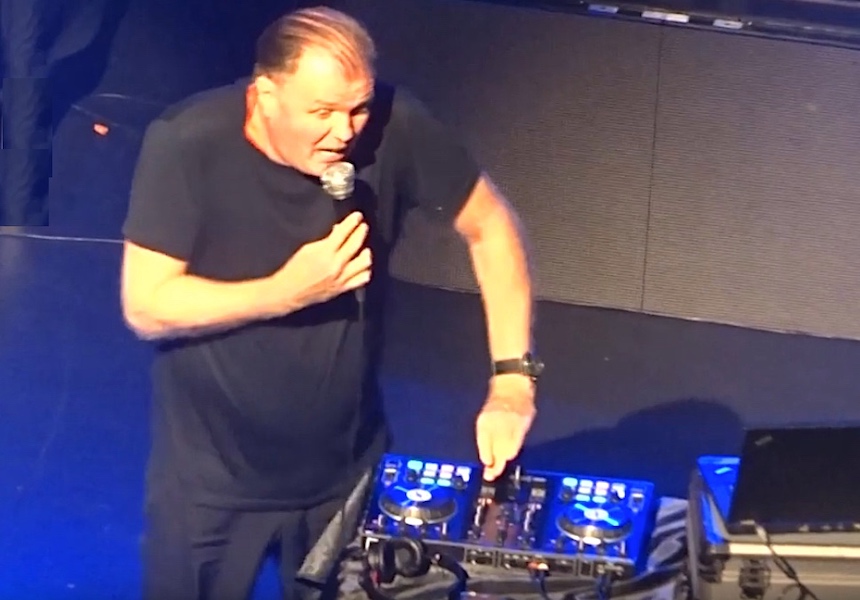
Egan onstage at the Palladium: video grab by Willy Billiams

◼ ONSTAGE AT THE LONDON PALLADIUM supporting Midge Ure’s tour last week, Blitz Club co-founder Rusty Egan gave a highly first-person history lesson about his early days while demonstrating his mixing talents at a deejay console.

Of 1979, he says: “I wasn’t really a deejay, I was a drummer, and I thought you can put one record on and you can put another record on at the same time and I thought I can do that, you don’t have to stop, I’d keep it going and I mixed the records together and started to enjoy it. Us suburban 19 to 25-year-olds with ‘no future’ in 1979 suddenly had some music that spoke to us. I was basically a fan and I am 40 years later still a fan of music.”

Here is half an hour of Egan’s stream of consciousness, doing what he does best, choosing good music and showing off. All spiced with his usual frankness, natch.

➢ Rusty Egan at Bandcamp

➢ History of the Blitz Kids and the birth of the New Romantics – a brisk history of who did what in 1979-80

FRONT PAGE

2019 ➤ This would have been Steve Strange’s 60th birthday

1978, when Steve Strange teamed up with Rusty Egan (Photo © Fin Costello/Redferns)

➢ Remember Steve through the tributes paid
after his death in 2015 by 30 original Blitz Kids
here at Shapers of the 80s

Evening Standard, On The Line, Steve Strange, Evening Standard

First published in the Evening Standard, Jan 24, 1980

➢ Our first report on Steve Strange, 1980. . . He was eager to announce a Thursday cabaret night at the Blitz, showcasing a new band with the weird name of “Spandau Ballet”

Steve Strange, New Romantics, Blitz Kids, nightclubbing, London

First published in the Evening Standard, Oct 16, 1980

➢ By the autumn of 1980 there was a whole new underground scene to report. . . In one week, a dozen prodigies were setting the town ablaze, none of them over 22

FRONT PAGE

➤ Four years on: How the Blitz Kids paid magnificent tribute to Steve Strange

On the fourth anniversary of Steve Strange’s passing
(not to mention the 40th anniversary of his Tuesday club-night
opening at the Blitz), how better to remember the man who revolutionised London nightclubbing than with the massive collection of tributes assembled here at Shapers of the 80s
from every significant Blitz Kid the day after Steve died…

1978, when Steve Strange teamed up with Rusty Egan (Photo © Fin Costello/Redferns)

1978, when Steve Strange met Rusty Egan. (Photo © Fin Costello/Redferns)

➢ Previously at Shapers of the 80s:
Read the fulsome tributes to Steve paid by the Blitz Kids here after his sudden death in 2015

Brief tasters. . .
Original Blitz Club deejay Rusty Egan said: “I’m very, very sad and down tonight because I’ve lost an old friend. We had our disagreements but we did have a decade of the best times that anybody could ever have wished for. We made some amazing music, some amazing parties, clubs and fun and friends. Underneath it all he was a good soul. Steve, I’m so sorry I didn’t get a chance to say I still love you.”

Chris Sullivan, who ran Soho’s Wag Club: “We were both flamboyant club-running Welsh dandies but were never rivals. Steve had too much dignity for that. We were friends and remained so for the rest of his life. And I can say that Steve, despite quite a few hard years, never lost that that spark, humour or joie de vivre, was forever stylish and was always a pleasure to see.”

Princess Julia, writer and deejay: “Getting dressed up, going out and getting noticed… Steve was head of a subculture the likes of which perhaps we will never see again.”

Kim Bowen, stylist, onetime Queen of The Blitz: “Rushing enthusiasm, involving everyone, creating insane parties going round and round on the Circle Line. Some truly bad outfits (his not mine.) Shockingly, ‘Kim, will you be my official girlfriend?’ ”

And many, many more delicious anecdotes…

FRONT PAGE

1980 ➤ Day Four of Terry Smith’s unseen photos inside the Blitz Club – exclusive

Nik & Trick Photo Services, Folkestone

A New Romantics keynote was your invented image: startling make-up and a towering hat complete Blitz superstar Peter Probert’s wicked witch of the west

➢ DAY FOUR:
CLICK HERE TO VISIT OUR
GALLERY OF TEN MORE FAB IMAGES
OF THE BLITZ CLUB IN 1980

+++
EVEN AMONG THE UK ROCK PRESS, few of its music historians have conceded that the New Romantics amounted to an ambitious subculture that changed the rules of the game – largely because the rockists completely missed the boat by idolising guitar idols, never went to nightclubs, and what’s more, couldn’t dance.

The most audible consequence of the clubbing underground was to fundamentally change the rhythm of the pop singles charts within a year – from the rock guitar to the bass-and-drum, namely, to dance music. After 1981 scarcely any significant new rock groups made the singles charts, only the old dinosaurs, if at all. Rock was relegated to the album chart and new dance-music stars such as Madonna and Prince transformed the pop music of the new decade.

The other New Romantics keynote was the central role of image with the dawn of MTV as a platform for music videos. A band became the leaders of fashion, while their style-conscious nightlife followers collaborated in promoting them through the clubbing grapevine. As synth-pop pioneers during 1980 Spandau Ballet pushed a button for the fashion-conscious young. They were signalling that the language of pop called for new styles as much as new sounds.

During the first five years of the decade, more than 100 “image bands” and acts entered the UK charts – most of them new, led in the South-East by Ultravox, Linx, Spandau Ballet, Visage, Landscape, Depeche Mode, Kid Creole, Blue Rondo a la Turk. Many more emerged from clubland across the UK: Duran Duran, Soft Cell, Heaven 17, Altered Images, Imagination, Eurythmics, Thomas Dolby, ABC.

During Spandau’s North American tour in November 1983, alongside their hit True among the Billboard Top 40 singles in the USA, there were 17 other British bands – more than the Swinging 60s ever knew. Insolence and narcissism lit a torch that led a generation of school-leavers through what threatened to be Britain’s dark age of unemployment. As clubs became workplaces and nightlife the essential engine of cultural evolution, they liberated music, design and, especially, ambition for the young.

➢ Previously at Shapers of the 80s:
Spandau Ballet create a new template for pop success

FRONT PAGE