Tag Archives: New Romantics

➤ Britain’s top hatter, Stephen Jones OBE, celebrates 30 years of Jonesmanship

On Facebook today Stephen Jones writes:

“7pm, 1st Oct 1980, 30 years ago today, I opened my first
hat salon in Covent Garden, with the fabulous Kim Bowen and the super talented Lee Sheldrick (R.I.P). Thank you all, it’s been an amazing adventure! Xs”
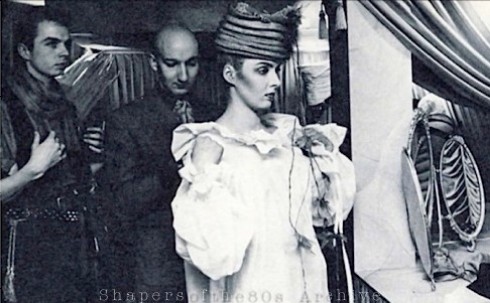
Lee Sheldrick, Kim Bowen, Stephen Jones, PX shop

The first Jones salon: star rebels from St Martin’s Lee Sheldrick assisting and Kim Bowen modelling at Stephen Jones’s boutique in PX, October 1980

❚ FROM 1978 HELEN ROBINSON HAD MADE HER SHOP PX the flagship for New Romantic ready-to-wear in James Street, Covent Garden, all velvet suits, Robin Hood jackets and hippy frills. In February, 1980, it moved a few yards round the corner to bigger premises in Endell Street. Since his graduation from St Martin’s in 1979, Stephen Jones’s uncompromising hats had made the perfect accessories for the excesses of PX so Robinson and partner Stephane Raynor made space in the basement for Jones’s own hat salon. He says: “To get the finance I sold my car, an ex-GPO mini-van, for £150, and that’s how I started the business.” Blitz club-host Steve Strange was a regular customer. Inevitably, the whole place became a social centre for fellow Blitz Kids, the clubbing fashionistas who were by then regular faces in fashion pages and gossip columns. Stephen’s wittily titled “First Collection” was previewed on October 1 and commissions came in from the New Romantic pop groups Visage and Spandau Ballet who were releasing debut records that autumn, from Grace Jones and, later, Boy George.
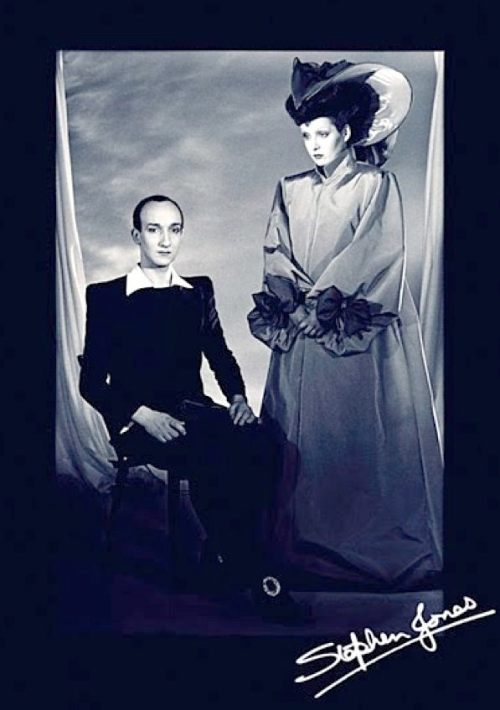
Stephen Jones ,millinery, Kim Bowen, Peter Ashworth

Stephen Jones and Kim Bowen, dressed by PX, topped out by Jones, 1979: business card for the milliner and his mannequin de vie. Photographed © by Peter Ashworth
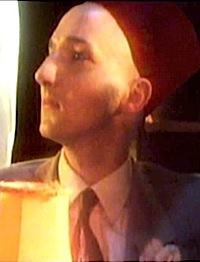
Stephen Jones, Culture Club, music video, J-P Gaultier

“Very Tangiers in Paul Bowles’s 1950s”: In Culture Club’s first video, 1982, Jones wears the fez that caught J-P Gaultier’s eye. Also a pale blue zoot-suit from Flip, and correspondent shoes in black and pale blue

With the dawn of the 1980s, Britain’s outlandish street styles drew the attention of the world’s leading fashion tastemakers who had to start taking London Fashion Week seriously, to the benefit of a new generation of designers and established names alike. The sheer wit and chutzpah of Stephen Jones millinery played brilliantly to both marketplaces and with Diana Spencer’s marriage to the Prince of Wales the Princess became an international icon for classic British elegance, and a huge fan of the quixotic Jones look. Though he says now that he never drew up a career plan, he did enjoy one lucky break after another: “I had a phone call one day from Vogue who were coordinating a wardrobe for the Princess of Wales and I made quite a few hats for her early on.”

Culture Club’s phenomenal global appeal also established Boy George as Britain’s alternative fashion icon. In another stroke of fate, Jones says that it was his red fez worn while sitting in the audience during Culture Club’s first video, Do You Really Want To Hurt Me (filmed in Soho’s Gargoyle club in 1982), that caught the attention of the French designer Jean-Paul Gaultier. Two years later Jones went to design hats in Paris for Gaultier who was building his own reputation as an enfant terrible. He says now: “Working in Paris then was slightly akin to sleeping with the enemy, and I got gyp from the British Fashion Council who didn’t approve.”
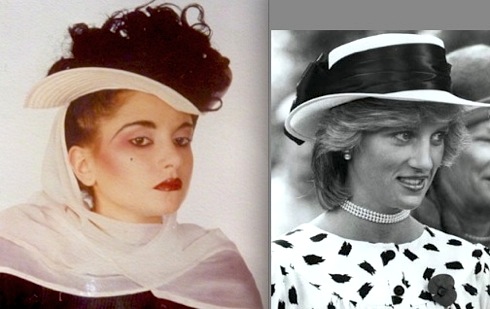
Julia Fodor, Princess Diana, Stephen Jones, hats

Early Jones creations: modelled by Julia Fodor, by appointment to Princess Di

Jones’s familiar bald dome came about after he shaved his head as a crazy gesture, only to discover that it was the same size as the average milliner’s model, which is normally a wooden block, and ever since he has played the role of his own hat mould. Jones’s favourite show was his first for another designer, Zandra Rhodes in 1981. “It was huge — extravagant production, hundreds of models, over the top make-up, vertiginous shoes, tantrums, tears. I loved it.”

His reputation soared in the early days on the coat-tails of such provocateurs as Vivienne Westwood, Claude Montana and Thierry Mugler. When in 1996, the younger St Martin’s superstar, John Galliano, crossed the Channel to design for Christian Dior, the fashion world was amazed. Within minutes, he had invited Jones to join his team and be the milliner at Dior. As Galliano’s dreams became the stuff of legend, his runway shows became ever more spectacular, while the Jones confections reached new heights of extravagance.
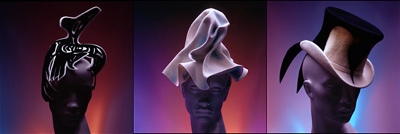
Stephen Jones, hats, Peter Ashworth

Jones creations from 2002, photographed © by Peter Ashworth

Jones declares: “Just as accents in language lead to the correct reading and rhythm of a text, my hats add the appropriate punctuation to a designer’s fashion statement.”

Today style-icons crave to wear Jones — think of Gwen Stefani, Beyonce Knowles, Kylie Minogue, Alison Goldfrapp — while yet more of the world’s cutting-edge designers commission his creations to enhance their collections. Today they include Rei Kawakubo, Comme des Garcons, Azzedine Alaïa, Loewe, Giles Deacon, Kinder, Issa, Donna Karan, Jason Wu, L’Wren Scott and Marc Jacobs. Back at his Georgian London boutique a few doors along from the former Blitz club, Jones also designs the Miss Jones and JonesBoy diffusion ranges in addition to his Model Millinery collection. “My British milliners are the best in the world,” he maintains. “The hat is a certain British thing that people do love wearing.”
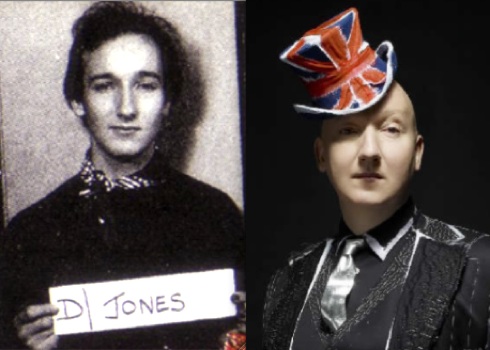
Stephen Jones, hatmaker,Madonna, Madonna, millinery, MoMu, V&A

Then and now: Stephen Jones enlists as a student at St Martin’s 1976, and curates a show of landmark designs at the V&A museum 2009. Union Jack top-hat photographed © by Justine

Last year London’s Victoria & Albert Museum staged a huge exhibition entitled Hats, An Anthology by Stephen Jones, which attracted 100,000 visitors and has since set off on a world tour. This summer he has been working on Sex and the City 2, and told Vogue.com that he had been recruited by Madonna for her latest film, W.E., based on the life of King Edward VIII (played by James D’Arcy) who in 1936 gave up his throne for the American Wallis Simpson (played by Andrea Riseborough). “Madonna is directing it and she asked me to do the hats. Somehow I’ve ended up starring in it, too.”

This autumn Antwerp’s Mode Museum (MoMu) is hosting a solo exhibition of 120 hats, Stephen Jones & The Accent of Fashion (Sept 8-Feb 13, 2011), plus his work in film, music and photography. He explains the magic of the titfer: “A hat makes clothing identifiable, dramatic – and most important, Fashion … It’s the dot on the i, the exclamation mark, the fashion focus. Everyone from showgirls to dictators knows that by wearing a hat they will be the centre of attention.”

The crowning glory for 30 years of dotting the i’s came this spring when Her Maj the Queen recognised the mad hatter’s achievements by appointing him to the Order of the British Empire. Hats off to the Age of Jonesmanship!
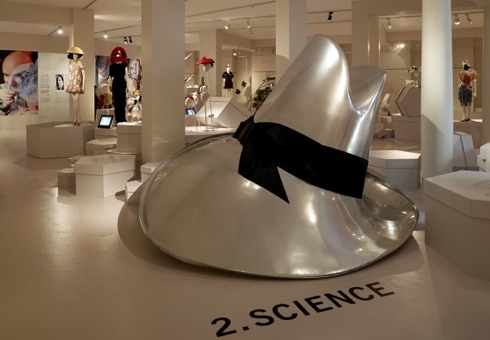
MoMu, Fashion Museum, Antwerp, Stephen Jones, The Accent of Fashion

MoMu Fashion Museum Antwerp: Stephen Jones & The Accent of Fashion photographed © by Frederik Vercruysse

VIEW an i-D video at the Antwerp show in which Jones declares:

“At school science was my best subject. Millinery combines physics and art together in a weird mix — you can’t have one without the other.”

Detailed interview with Stephen Jones in Antwerp for the Independent

 Stephen Jones

His sobriquet fulfilled by photographer Annie Leibovitz: Stephen Jones as the Mad Hatter in The Mad Tea Party (detail), one of a series of Alice in Wonderland tableaux shot for American Vogue, December 2004

Showstudio has intelligent backgrounders from Jones’s V&A anthology
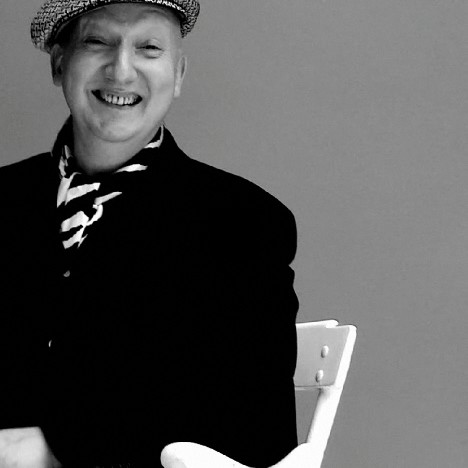
Stephen Jones, interview, Showstudio, Alex Fury
❚ UPDATE — STEPHEN JONES DISCREETLY MENTIONS A CHARMING, frank, gossipy and self-effacing interview with him which has just popped up on Showstudio (despite being dated May) and, as if by telepathy, addresses many questions begged by the brief Shapers outline above! “Steve Strange was, apart from my Mum, my first paying customer” … “I appear to have reinvented the world of millinery but I didn’t have a grand purpose like that at the beginning. I just wanted to go to a great party.” Who is this perceptive young interviewer Alex Fury? With a name like that he will go far.
➢ Video: Stephen Jones interviewed for Showstudio
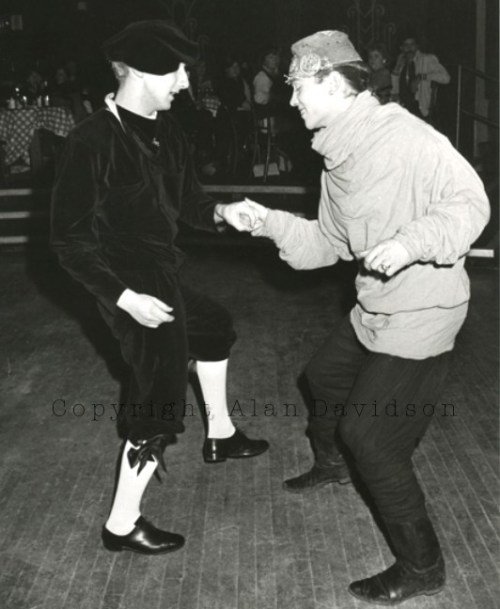
Stephen Jones, David Holah, Blitz Kids, New Romantics,

New Romantics cutting loose, 1981: Stephen Jones in PX’s definitive Little Lord Fauntleroy outfit jives with designer David Holah who went on to co-found the BodyMap empire. Photograph © by Alan Davidson

FRONT PAGE

The 1980s ➤ A new history of that most turbulent of decades

Orgreave, Yorkshire , miners' strike, riot police, ReportDigital

Mounted police attack striking miners picketing the Orgreave Coking Plant, South Yorkshire. Photographed © by John Harris/ReportDigital. The 1984-85 miners’ strike became a bitter industrial dispute and symbolic class struggle that saw picketing miners pitched against police officers, and colleagues — so-called scabs — who chose to return to work. The National Union of Mineworkers was protesting at the government’s plans for pit closures but the year-long strike proved a terrible defeat for the miners and for the coal industry. In 1984 there had been 170 coal mines open in the UK. By 2004 fewer than a dozen mines remained. The British trade union movement has never recovered.

❚ “MORE CHANGE AND MORE CONFLICT were crammed into the 1980s than any other decade in the second half of the twentieth century. Out of political chaos, Britain arrived at a settlement that lasted, for better or worse. The way we live now follows directly from the tumultuous events of the 1980s.”

In his new book, No Such Thing As Society, Andy McSmith, chief reporter and former political correspondent of the Independent newspaper, argues this was the conflict decade, defined by strikes, war and riots. He examines Britain in the decade of Thatcher and the City’s ‘big bang’, from the Falklands war and the miners’ strike to Bobby Sands and the Guildford Four, from Diana and the New Romantics to the Brixton riots and Band Aid, from the Rubik’s cube to the ZX Spectrum. He talks about the legacy of the 1980s and how this decade of extremes shaped contemporary Britain.

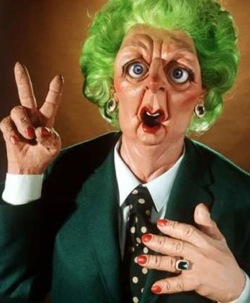
Margaret Thatcher, Spitting Image

Spitting Image's suited version of prime minister Margaret Thatcher gives a Churchillian V for Victory

“You know, there is no such thing as society. There are individual men and women, and there are families. And no government can do anything except through people, and people must look to themselves first.” — Margaret Thatcher, talking to Woman’s Own magazine, October 31, 1987


McSmith maintains that “the 1980s was the revolutionary decade of the twentieth century. To look back in 1990 at the Britain of ten years earlier was to look into another country. The changes were not superficial, like the revolution in fashion and music that enlivened the 1960s; nor were they quite as unsettling and joyless as the troubles of the 1970s. And yet they were irreversible. By the end of the decade, society as a whole was wealthier, money was easier to borrow, there was less social upheaval, less uncertainty about the future.

“Perhaps the greatest transformation of the decade was that by 1990, the British lived in a new ideological universe where the defining conflict of the twentieth century, between capitalism and socialism, was over. Thatcherism took the politics out of politics and created vast differences between rich and poor, but no expectation that the existence of such gross inequalities was a problem that society or government could solve – because as Mrs Thatcher said, ‘There is no such thing as society … people must look to themselves first’.”

➢ Andy McSmith discusses the 80s with Andrew Marr on Start the Week (R4, Sep 20)
➢ No Such Thing As Society: Andy McSmith’s history of Britain in the 1980s is published by Constable
➢ VIEW: BBC audio slideshow on the year-long miners’ strike
➢ VIEW: frontline slideshow of the miners’ strike by photographers from the independent picture library ReportDigital

FRONT PAGE

2010 ➤ Index of posts for June

David Bowie, Starman,  Top of the Pops, tipping point, BBC

➢ 1970 — Where to draw a line between glitter and glam: naff blokes in Bacofoil versus starmen with pretensions

➢ Unbelievable! The voice of sweet reason in George’s TV debut

➢ Spandau Ballet turn east for their final furlong

➢ Is it goodbye or merely au revoir? Spandau’s questions, questions give us no answers

➢ Step up Martin Kemp – movie mogul

➢ 1966 — When John Lennon became US public enemy number one

➢ RIP Big Frank and Little Frank. You’ll be missed. You know you will, you really will

Midge Ure, Mick Karn, After a Fashion

Ure and Kahn: Fashion single in 1983

➢ Ure rallies support for Japan’s bassist Karn

➢ Can George tell his Boudica from his Britannia?

➢ Duffy, the man who shot Aladdin Sane

➢ Manc agog at Gaga’s Monster Ball tour

➢ Taylor-made magic that can inspire Romantics ancient and Neo

➢ After Queen quits, who can save EMI — private equity boss or creative maverick?

➢ UK web stats that show why you find shopping online such a chore in your lunch-hour

FRONT PAGE

1970 ➤ Where to draw a line between glitter and glam – naff blokes in Bacofoil versus starmen with pretensions

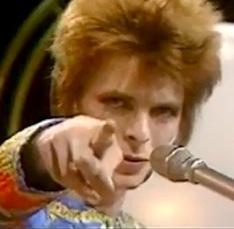
David Bowie, Starman, 1972, Top of the Pops, tipping point, BBC

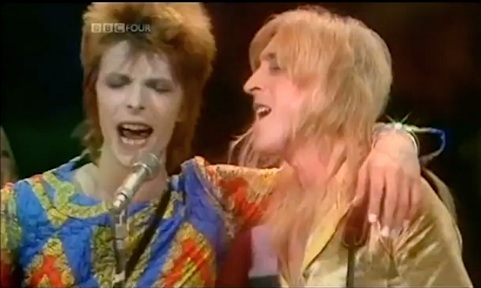
The moment the earth tilted July 6, 1972: During Starman on Top of the Pops, David Bowie drapes his arm around the shoulder of Mick Ronson. Video © BBC

❚ WHO DARES DEFINE GLAM ROCK? Almost nobody agrees what it means, even as we celebrate the 40th anniversary of glam’s birth, but that isn’t going to stop many of its prime movers lighting a few squibs in a thrilling and meticulous Ten Alps documentary titled The Glory of Glam†† across two hours on BBC Radio 2 tonight and tomorrow (iPlayer for a further week). This thorough analysis has been badly needed since the term glam became a rubbish-bin into which gets thrown anything brash, theatrical and shiny – such as shock-rock, metal and goth. The problem glam suffers is that the tat needs to be accounted for, then set aside, especially after you’ve waded through yards of tosh at Wikipedia penned by American sociologists out of their depth in this entirely British phenomenon.

Glam rock came cloaked in sequins, satin and unmasculine flamboyance. Its touchstones – alienation, decadence, self-invention and sexual transgression – most certainly went on to shape the UK’s fashion pop of the 80s, and glam’s pioneers were pillars of inspiration to the New Romantics. Even though glam banished the guitar solo and the drum break, it fuelled as much a fashion revolution as a musical one, if not more so, which many of its own practitioners didn’t get a handle on by merely pulling on their platform boots and zany top hats. Glam had deeper resonances than a sprinkling of glitter, and reached back into the traditions of theatre and Hollywood.

Noddy Holder, Slade

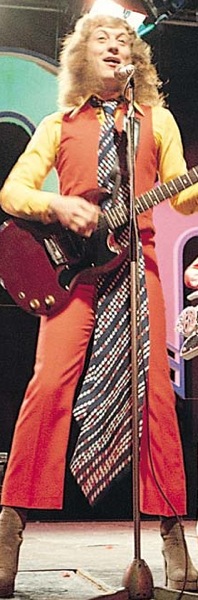
The pantomime version: mutton-chopped Noddy Holder of Slade

The Blitz Kids see no confusion. They draw a firm line between the distinctly fashion-driven imperatives of their own New Romantic style and the grotesque pantomime of the worst 70s glam-rockers. Certainly the Blitz Kids of 1980 admitted no connection with the chart-storming excess confected that year by Queen, whose origins lay in 60s psychedelia and heavy metal, still less make mention of Noddy Holder of Slade in the same breath as Ultravox, Visage, Depeche Mode or Spandau Ballet.

The 80s musician Gary Kemp, who narrates tonight’s documentary, writes in today’s Guardian: “I could spot the uncomfortable look on the face of a hefty northern bass player bursting from a turkey-foil jumpsuit worn simply to sell records. With Bowie, it was different: he had integrity. An effeminate, pale young man in eye shadow had somehow connected with working-class flash.”

Blitz fashion god Stephen Linard dismisses Slade’s avalanche of chart hits: “Even at 12, you knew Bolan and Bowie were special. Slade were just for fun, like Sweet and Gary Glitter – theirs was party music. The only reason I’d bought the first Gary Glitter album was because it was covered in glitter. Come on! Slade were hairy oiks from Birmingham, hideous sideburns, going bald on top. I plastered Roxy Music all over my bedroom because they were glamour. They had real transsexuals on the cover of their album. Everybody assumed Bryan Ferry’s girlfriend Amanda Lear was one!”

The indispensable Allmusic hits the mark when discussing Hunky Dory: “a kaleidoscopic array of pop styles, tied together only by Bowie’s sense of vision: a sweeping, cinematic mélange of high and low art, ambiguous sexuality, kitsch, and class . . . A touchstone for reinterpreting pop’s traditions.” There’s the nub of it: artsy pretension is out there a length ahead of beer-swilling mayhem. Any innovator at the Blitz club never loses sight of the origins of glam, whether in Bowie’s training with performance artist Lindsay Kemp, Eno’s experiments with electronica, Ferry as a walking ad for Antony Price’s luminous suits, and even Bolan’s obsessive eye for style instilled as a mod. To cap it all, in photographer Mick Rock’s opinion: “Bowie was good at being provocative, but the beauty was his lightness of touch.”

We are of course bang in the middle of the hoary old music-industry debate about art versus profits, innovation versus pomp.

Fortunately clarity is at hand. The next week boasts two landmarks on the timeline of pop that signal the dawn of glam and celebrate its immortals. July 1 is the 40th anniversary – the day in 1970 when Marc Bolan recorded the first glam-rock single, Ride a White Swan, though it took till year’s end and Top of the Pops to boost it to No 2 on the chart in January. A youthquake then erupted.

rel="nofollow"

Ziggy sings: “So I picked on you-oo-oo”

By popular vote, however, the more resonant date is July 6, 1972. This Thursday is burnt into the souls of the specific generation who were to make good as popstars in the 1980s.

Songwriter and Spandau Ballet guitarist Gary Kemp speaks for many when he writes of the creation of Ziggy Stardust: “David Bowie’s seminal performance of Starman on Top of the Pops in 1972 became the benchmark by which we would for ever judge pop and youth culture. It was a cocksure swagger of pouting androgyny that appealed to pubescent working-class youth across Britain – a Britain still dominated by postwar austerity and weed-filled bomb sites. For us, the Swinging 60s had never happened; we were too busy watching telly.”

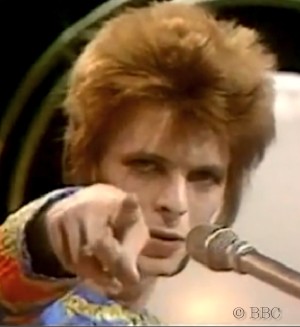
Kemp goes on: “The object of my passion had dyed orange hair and white nail varnish. Looking out from a tiny TV screen was a Mephistophelean messenger from the space age, a tinselled troubadour to give voice to my burgeoning sexuality. Pointing a manicured finger down the barrel of a BBC lens, he spoke to me: ‘I had to phone someone, so I picked on you.’ I had been chosen. Next to him, in superhero boots, his flaxen-haired buddy rode shotgun with a golden guitar. As my singing Starman draped his arm around him, I felt a frisson of desire and wanted to go to their planet. I had witnessed a visitation from a world of glitter. That night, I planned my future. After all, ‘If we can sparkle,’ he’d told me, ‘he may land tonight’.”

Bear in mind that at the time of White Swan, in 1970, our two pop idols had both been aged 23, and our pubescent audience of future Blitz Kids, typically born around 1959, were then 11. So they were rising to 13 by 1972 — detonation year for the glam explosion. That was when the careers of Roxy Music, Iggy Pop, Elton John and Alice Cooper all went critical in the UK, when Andrew Logan threw his first Alternative Miss World Contest, paving the way for the stage musical The Rocky Horror Show the following year [currently touring the UK till Dec 2010].

The Starman’s earth landing is the most influential song of Bowie’s many influential songs because it is seared on the memory of that generation of TV viewers. From Morrissey and Marr to Ian McCulloch, Neil Tennant and Siouxsie Sioux — all say this day changed their lives. For Michael Clark, who went on to lead an all-male dance company, it was a revelation because he’d only seen men touch each other when they were fighting, and suddenly he realised that there might be “kindred spirits” out there . . .

Bowie, Man Who Sold the World, Hunky Dory, Glam rock

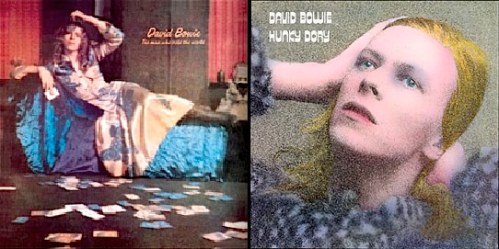
Bowie confronts camp: album sleeves for The Man Who Sold the World, and Hunky Dory

❚ MARC BOLAN AND DAVID BOWIE ARE INDISPUTABLY the progenitors of this flamboyant art-rock musical style at the dawn of the 70s, along with the Svengali who can claim much credit, Tony Visconti, the Brooklyn-born musician and producer who worked with the young Bolan and Bowie in London, with honourable mentions for Bryan Ferry and Brian Eno for the early Roxy Music. These voices are heard in the Radio 2 doc.

Angie Bowie says: “David and Marc liked each other very much and at certain times were great friends, but they were also bitter rivals.” As teenagers in the mid-60s they were both image-conscious suburban mods, then hippies, who experimented with styles from blues to psychedelia in search of their own pop moment. They first met while painting their shared manager’s office, and their paths constantly crossed at Bowie’s Beckenham Arts Lab and especially at Visconti’s flat in Earl’s Court, west London.

Bowie himself rather revelled in the rivalry, in May 1970 spoofing Bolan’s vocal style on Black Country Rock, a track on his album The Man Who Sold the World, recorded a couple of months before Bolan’s pivotal Swan. On the sleeve notes to Sound+Vision, Bowie recalls the day Bolan provided musical support while recording his Prettiest Star single at Trident Studios that January: “We had a sparring relationship… I don’t think we were talking to each other that day. I remember a very strange attitude in the studio. We were never in the same room at the same time. You could have cut the atmosphere with a knife.”

Both singers toyed with sexual ambiguity. While Bolan prettified himself into T.Rex, Bowie’s new wife Angie encouraged experiments in androgyny that led to the UK album cover where he wears what he called a “man dress” (though this image was replaced for the earlier US release in 1970).

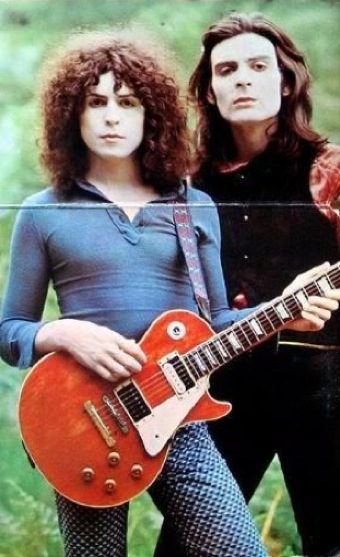
T.Rex, Marc Bolan, Mickey Finn, David Sanders,

Transformed into T.Rex for the 1970 album: Bolan sports his new electric guitar, square-jawed and white-faced with Mickey Finn, in the Sussex garden of the photographer David Sanders’ mum

In their day, these were shock tactics – which still trigger fireworks in the art-versus-profits argument. So-called glam-rockers such as Slade and Sweet and Glitter weren’t into sexual role-play so much as pantomime and clowning, despite their figure-hugging satin.

What puts the music of Roxy Music, David Bowie and T.Rex in a different league? The elephant in the room is sex or, rather, sexual subversion. What is rock and roll if not almost entirely about that vertical expression of the famous horizontal desire? What is adolescence if it’s not at least partly about curiosity, confusion and the testing of boundaries? There’s no point in discussing glam rock without mentioning its implicit androgyny and the dangerous allure of unthreatening, feminine young men to adolescent audiences.

Kemp declares boldly in today’s Guardian of his Starman moment: “The first time I fell in love it was with a man.” And he notes: “Gender-bending was suddenly far more rebellious than drugs and violence.”

Brave words from any popstar in any era. Suzi Quatro observes in the radio doc: “All those men in eye shadow – you have to be very comfortable with your sexuality to play with it.” Even so, when a grown-up family man admits to an adolescent pash for a fey young man, it doesn’t necessarily make him gay, but it does take courage to admit.

❚ DESPITE THE CLIMATE OF PERMISSIVENESS the 60s had beqeathed, the word gay was taboo in public in 1970, even though the iconography was pretty blatant. As T.Rex, Bolan shed his folksy heritage for white-faced androgyny when twinned with Mickey Finn on their first album cover. Bowie adopted a Greta Garboesque pose for his portrait on Hunky Dory, and wore the “man-dress” by the Mayfair tailor Michael Fish on The Man Who Sold the World.

Bowie’s later admissions of “bisexuality” are well documented. In 2002 he told the American music magazine Blender: “I had no problem with people knowing I was bisexual.” In David Buckley’s 1999 book Strange Fascination, Bowie said that when he met his first wife, Angela Bowie, in 1969 they were “fucking the same bloke” and Buckley claimed the marriage had been cited as one of convenience for both.

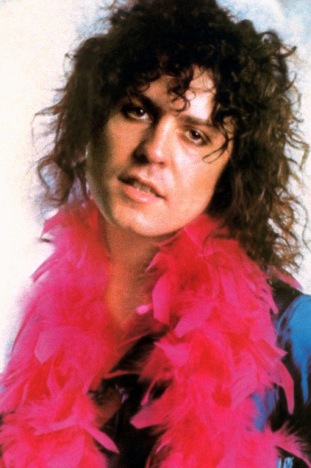
Marc Bolan, T.Rex, boa

Sexual ambiguity: Bolan adopts the boa for T.Rex

There’s little or no contemporary evidence of Bolan’s now known bisexuality, except the eye witnesses. His manager during the late 60s, Simon Napier-Bell lays it out in the biog, The Rise and Fall of a 20th Century Superstar by Mark Paytress (1992, revised 2006).

“Marc was more gay than straight. He had no hangups about sex,” says Napier-Bell, who lived in Lexham Gardens in west London at the time. “[Bolan] used to come round on the early-morning bus from his parents’ prefab in Wimbledon and get in bed with me in the morning. How can you manage anybody and not have a relationship with them? The sexual borders had completely collapsed by that time. Straight people thought they shouldn’t be straight. In fact, in the 60s, it was pretty difficult to have any sort of relationship with someone without it being sexual.”

An extreme perspective, perhaps, but “anything goes” was the motto for the coterie who subscribed to the Swinging London melting pot of hallucinatory drugs and louche morals.

In addition, bisexuality was growing in fashionability in the wake of the historic changes brought about by the Sexual Offences Act of 1967. Before then in the UK, gay activity was a jailable offence and hence highly blackmailable. It’s no coincidence that in 1971, a couple of years after New York’s Stonewall riots, the Campaign for Homosexual Equality emerged as the leading English gay rights organisation by staging its first march ending in a Trafalgar Square rally. By 1972 the explosion of glam-rock coincided with very visible expressions of gay liberation in the UK.

None of which implies that massed ranks of gay popstars leapt into the charts, though the totally closeted record business did ease the door open by a chink, whereas previously any hint of gay would spell death to a band’s career. The English star Dusty Springfield was extraordinarily brave at the age of 31 to entrust her coming out in 1970 to Ray Connolly in the Evening Standard, in an intense interview that remains a compelling read. (Ray told Shapersofthe80s: “I was a big fan and I actually didn’t want to ask her. She pushed me into it, saying, ‘There’s something else you should ask now… about the rumours’.”) It took Elton John till he was 41 to come out, first getting married in 1984 and divorcing four years later.

In the Radio 2 doc, Gene Simmons from Kiss sums up the social change that characterised the early 70s: “The great thing about glam was whether people thought you were gay or not didn’t matter. More was done to further different sexual preferences onstage in a rock band than all the commentaries from serious people, because there onstage, the way the old court jesters used to do in silly outfits, they were actually doing something serious, which in essence was saying, Be tolerant. The cool thing was that it was all cool.”

As for our immortals . . . Sadly we lost Bolan to a car crash when he was only 29. Had he been alive today he’d be the same age as Bowie, 63, give or take a few months. It’s challenging to speculate which of them might be shining the more brightly today as our totem of pop culture.

†† FOOTNOTE – This website has no connection with the makers of The Glory of Glam, and has since discovered the credit goes to producer Des Shaw and editor Chris O’Shaughnessy. If this documentary doesn’t win a Sony radio award, there’s no justice.

➢ 2013 update: Glam! The Performance of Style runs at Tate Liverpool Feb 8–May 12, 2013 – Well worth a day trip to Liverpool, this superbly curated exhibition explores 70s glam style and sensibility across the whole spectrum of painting, sculpture, installation art, film, photography and performance. The in-depth survey comes in two halves, drawing a clear distinction between the playful subversion of pop culture that characterised the British glam wave, and the American, which was driven much more profoundly by gender politics.

FRONT PAGE

2010 ➤ Is it goodbye or merely au revoir? Spandau’s questions, questions give us no answers

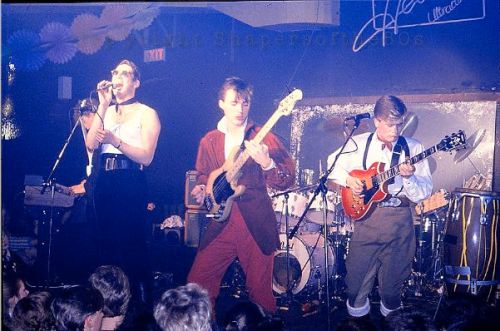
Spandau Ballet, Heaven club, London, New Romantics

London’s Heaven club, Dec 29, 1980: the tenth of Spandau Ballet’s selected dates, as they were known in those days to avoid the rockist words “gig” and “tour”. Note Gary Kemp, far left, on synth. Photograph © by Shapersofthe80s

❚ TONIGHT AT A SWANK EVENING BASH Spandau Ballet bow out from the Reformation Tour which reunited the five former schoolmates from the Angel, Islington, for one year, one album, one single, one tour, one DVD and umpteen vintage remixes. They headline the second of this year’s Newmarket Nights at the summer racecourse near the Suffolk market town renowned as the birthplace of thoroughbred horse racing.

Tomorrow the mobile knives climb back in the drawer and who knows whether they will ever be sharpened again as a team? Tony Hadley in particular hits the road on July 3 with his own band alongside ABC and Rick Astley. It’s the first of a series of Heart Radio picnic concerts, starting at Borde Hill Garden in Sussex.

Reasons reasons were there from the start, so each member of Spandau returns to his own art. Shapersofthe80s, too, was there from the start, corralling the 22 Blitz Kids who put the show on the road in 1980 for a now-nostalgic team photo at the Waldorf Hotel. Robert Elms even smuggled a copy of my Evening Standard column into the picture in his right hand, sentimentalists as we were at the outset of the big adventure. Blue sing la lune, sing lagoon.

Instead of a traditional retirement clock, here’s a bespoke souvenir of their heyday for the Angel Boys, courtesy of the E4 TV series Skins. It’s a slideshow of Spandau’s biggest No 1 hit True, rendered very poignantly with ukulele backing . . .

FRONT PAGE