Tag Archives: New Romantics

2011 ➤ Strange and Egan return to the Blitz to kick off the 20-tweens

Return To The Blitz , Steve Strange, Rusty Egan, Red Rooms, Blitz Kids, New Romantics

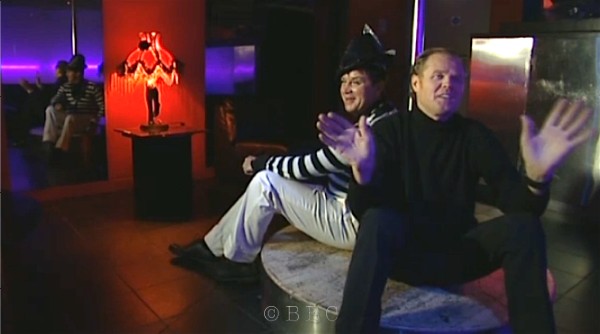
Motormouths back in action: Strange and Egan interviewed on BBC London news last night in the club where they once reigned. Such were members’ powers of self-promotion at the Blitz, Egan said, that it was the 80s equivalent of Facebook Live!

❚ FED UP WITH BEING IMPERSONATED by the many lookalike websites online, Steve Strange and Rusty Egan have resolved their differences to collaborate on a brand-new official Blitz club website at:

theblitzclub, Return To The Blitz, New Romantics,website,logo
The partnership of Strange as greeter and Egan as deejay famously hosted the Blitz club-nights which launched the New Romantic fashion and electro-pop movement in 1980, and opened the door for much more sparkling new music during that decade. Last night the legendary motormouths blagged themselves a couple of valuable minutes on London’s TV news to announce a reunion party actually at the site of the original Blitz, then a Covent Garden wine bar which these days is an after-hours saucy gentlemen’s club called The Red Rooms (pictured above). And though the BBC presenters banged on about a 30th anniversary, any original Blitz Kid knows the club actually opened in 1979.
Rusty Egan, Steve Strange, theblitzclub, Blitz club,Derek Ridgers

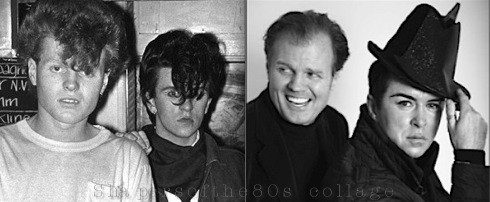
Then and now: Egan and Strange photographed in 1979 at the Blitz by Derek Ridgers, and yesterday, Jan 7, 2011

Not one to let that stand in the way of a party, Strange says: “The furniture may have changed but there is no doubt we are heading back to our spiritual home.” Next Saturday night the Blitz partners wrap up three celebrations in one shebang, with live entertainment thrown in.

The Return To The Blitz party both celebrates their reunion and launches their website. It is an evening-only event from 8pm to midnight, with Rusty and Princess Julia on the decks while Steve and Rosemary Turner are hosting. In addition, from 7.30pm (doors open 7pm), Jus Forest will be reading from her book Remembering Eden, which is a celebration of Ultravox’s 30th anniversary tour.  Jan 15 itself was chosen to mark the day in 1981 when the single Vienna was released — the hit single that established Ultravox as the driving force for the new wave of electronic music. During the previous couple of years their vocalist Midge Ure and keyboard player Billy Currie had also played crucial roles in creating new music tailored to the Blitz club through the studio group Visage, which was fronted by Strange as vocalist.

Quilla Constance

Quilla Constance photographed by Simon Richardson

Performances on Saturday include a set by the new livepop band Paradise Point, whose bassist is Roman Kemp, son of Martin whose own band Spandau Ballet were launched from the Blitz in 1979. We’re also promised Quilla Constance, an electro-punk singer and lap dancer who will no doubt be taking advantage of The Red Rooms’ dance-poles.

True to the New Romantic ethos that insisted “the band holds a mirror up to the audience”, Rusty says: “The real stars are the people who come, dress up, dance and enjoy electronic 80s music at its best.” He is shrewdly inviting guests to “hit me with your own Top 10 — tunes I would hear in the Blitz club if it were open now … Current acts I like are LCD Soundsystem, Gossip, Muse, La Roux, The xx, Amy Winehouse, Lady Gaga.”

➢ Tickets are now sold out for Return To The Blitz (with Paradise Point & Special Guests) on Jan 15, 2011. Contact Rusty with playlist suggestions through the new website

➢ Remembering Eden – 30th Anniversary Tour Book celebrates the return of Ultravox, the synth-pop pioneers, to the live stage in 2009-10. Compiled by Jus Forrest and Helen Waterman, it tells the band’s story from the 80s right through the Return to Eden 2 tour, with interviews by Rob Kirby, fan reviews and many previously unpublished photos.

➢ Listen to Robert Elms interview Rusty Egan on BBC London about the Blitz club and how the new sounds he played were the springboard for a musical sea-change… “Steve Strange and me, we’re like chalk and cheese. I’m music, Steve’s fashion. But it’s obvious: music and fashion, you’ve got to have them together.”
Blitz Kids, George O'Dowd, Kim Bowen, Julia Fodor, Lee Sheldrick

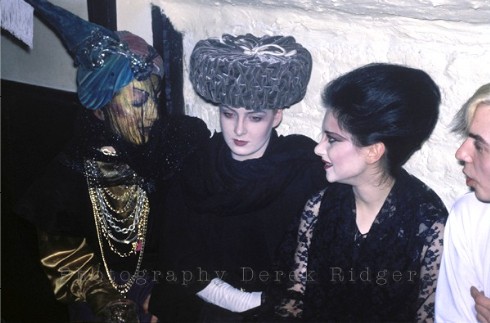
Stars of the Blitz in 1980: George O’Dowd, Kim Bowen, Julia Fodor, Lee Sheldrick. Photographed © by Derek Ridgers

OTHER TAKES ON THE BLITZ BY SHAPERSOFTHE80s

➢ The story of Spandau Ballet, the Blitz Kids and the birth of the New Romantics — at The Observer

➢ On this day in 1980 Spandau fired the starting gun for British clubland’s pop hopefuls: dada didi daaa!

➢ Who are the New Romantics, what are their sounds, and how do they dance?

➢ How real did 1980 feel? Ex-Blitz Kids give verdicts on the TV play, Worried About the Boy

FRONT PAGE

2010 ➤ Most popular bits of Shapersofthe80s during the past year

Worried About the Boy, Blitz club, George O’Dowd, New Romantics, 1980, London

London’s Blitz nightclub recreated for Worried About the Boy, 2010: George with his fictionalised circle of friends, Marilyn, Christopher, Sarah, Mo and Dawn © BBC

❏ During its busiest month, May 2010, Shapersofthe80s was viewed more than 18,000 times. Among the top stories that month was How real did 1980 feel? an extended post in which we hear verdicts from many of the original Blitz Kids depicted in the BBC’s TV play about George O’Dowd, Worried About the Boy, screened on May 16.

❏ The most popular page of all with 5,661 views last year was the who’s who among the Blitz Kids which, like so many parts of this website, keeps on growing.

❏ After Google and Facebook, one of the most popular specific sources of visitors to Shapersofthe80s was DJhistory.com which says it is “where clued-up DJs, record collectors and unshaven misanthropes gather to chat”. Right on, or should that be Kewl? Whateva.

FRONT PAGE

1980 ➤ As Spandau play in Heaven, all around we can hear the new sounds of 1981

Spreading the New Romantic message, including clothes by PX: Spandau Ballet play Heaven, Dec 29, 1980. Photographed © by Shapersofthe80s

❚ SIX WEEKS IN THE CHARTS with their debut single, To Cut a Long Story Short, on this day in 1980 Spandau Ballet play at Heaven, the biggest disco in London, and probably in Europe. Their average age is 20. A year after their unveiling at the Blitz club, this is still only the band’s tenth public date, and only their second concert since signing to Chrysalis in October. Their policy is to maintain an air of exclusivity, to thwart the backward rock press by playing admission-by-invitation dates in nightclubs rather than conventional rock venues, and to rely on stylish videos to stress the message that here was a new generation of new sounds and, equally important, new styles. Take it on trust that for the whole of 1980 Spandau Ballet had been the most achingly fashionable pop group on the planet, dressed by the designers of the moment. Significantly, as the first club band to win a record deal, they had been the only New Romantics to appear on Christmas Day’s year-ending edition of Top of The Pops, the BBC’s flagship music show. (Yes, Adam and the Ants also appeared, but he was “glam-punk”, important distinction, as Marco Pirroni confirms.)

On Dec 20, Visage, the Blitz club’s seven-piece studio line-up had entered the singles chart with Fade to Grey. The same week saw Le Kilt’s Christmas party, the new New Romantic club that had opened almost as soon as Steve Strange’s clubnights at the Blitz had ceased. Le Kilt’s co-host Chris Sullivan had murmured something about putting together a band he called Blue Rondo à La Turk. Not to be outdone, i-D’s cub editor Perry Haines had mentioned not only a band he was managing, Alix Sharkey’s Stimulin, but tonight in Heaven he now talks of his involvement with Duran Duran, the Rum Runner house band we’d all run into at Spandau’s November show in Birmingham.

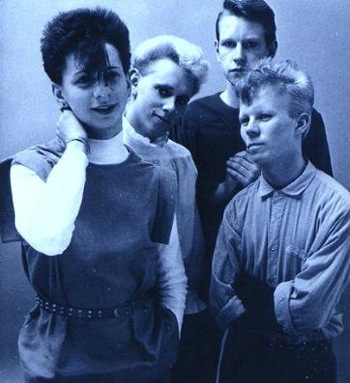
Depeche Mode, Daniel Miller, Dreaming of Me, synthpop

Basildon’s finest: Depeche Mode recorded their first single, Dreaming of Me, in December 1980, after a verbal contract with Daniel Miller’s synth-driven label Mute

Here too is Daniel Miller, an anarchic electronic musician with his own label called Mute and a recording studio in an old church where he had set up all his synthesisers. Only last night he’d been watching Depeche Mode, an unsigned teenage band from Essex, playing the Bridge House pub in east London where they were regulars — he’d heard them play their technopop tune Dreaming of Me, helped them record it and they’d all agreed it would make a great first single.

All round us in UK clubland platoons of amazingly young bands making dance music were lining up to storm the charts in the New Year. By the spring, Spandau Ballet was staging the first Blitz invasion of America with a live concert plus fashion show by a gang of Blitz Kids whose average age was 21. During 1981 the group decided against a tour as being “too rocky”, and played only 10 live dates in the whole year — OK, plus a fortnight at the Ku club in Ibiza that summer, which counted as one booking. While the movement took root, staying cool seemed to suit the style of the times.

FRONT PAGE

1980 ➤ How Duran Duran’s road to stardom began in the Studio 54 of Birmingham

Duran Duran, Berrow Brothers, Rum Runner, New Romantics,Nick Egan,video, All You Need Is Now

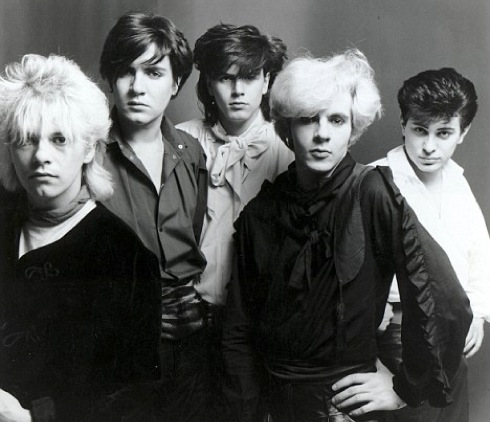
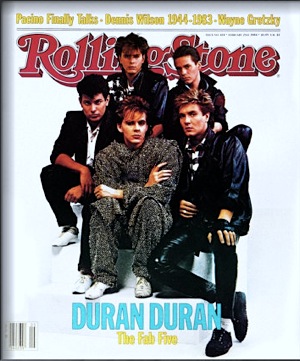
Duran Duran as full-on Romantics: Betty Page thought only co-founder Nick Rhodes (second right) passed the bouffant test convincingly

❚ ON OR ABOUT THIS DAY IN 1980 (MAYBE) some say Duran Duran signed their contract with EMI. The band seem mysteriously unable to remember when, so guesses might run from Dec 9 because Andy Taylor recalls the news of John Lennon’s death ruining his breakfast in London, and possibly Dec 22, date of a celebratory gig at Birmingham’s Cedar Club. However, the first official book, Their Story by Kasper de Graaf, places the signing firmly at 5 January 1981. According to co-manager Paul Berrow, the contract paid out a £28,000 advance (£90,000 in today’s money).

As the house band of the New Romantics in Britain’s second city, Birmingham, they were styled locally by Kahn & Bell, photographed by Paul Edmond, and managed by Paul and Michael Berrow, owners of the glitzy Rum Runner nightclub on Broad Street.

The Berrows had inherited the family business from their influential bookmaker father who had opened the club in the Swinging 60s and the sickly odours of Brut and Estee Lauder still lingered. Inspired directly by a visit to New York’s Studio 54, the brothers refurbished the Rum Runner in 1979 with state-of-the-art mirror-tiled walls and zigzags of neon. They then introduced a playlist heavily flavoured with Moroder-style imports and the American club-funk championed by the Nile Rodgers band Chic, whose string of chart hits was restoring credibility to disco music following the ridicule inflicted by the low-rent movie Saturday Night Fever. But how to become the Studio 54 of the Midlands?

Enter a band called Duran Duran in January 1980, armed with a four-song demo recorded at Bob Lamb’s studio which included Rio as a work in progress. The DD line-up were offered the club as daytime rehearsal space and jobs by night, including deejaying for Nick Rhodes. Roger Taylor recalls that the brothers “were looking for a band that was a cross between Gino Soccio, Genesis and Chic” — all the more curious that they made many attempts to contact Steve New to recruit the Rich Kids guitarist into the band, but they heard nothing from him.

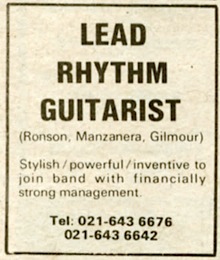
Duran Duran, Meolody Maker, Andy Taylor

The Melody Maker ad that landed Andy Taylor in April 1980: unearthed by Duran fan Figital

Inevitably the lineup was rationalised and by the summer Andy had been recruited (“They were quite blatant,” Andy told Rolling Stone much later. “They said, ‘We’re posers. We want a good-looking poser band”). Then came Simon Le Bon as singer. According to him: “They had this thing about being between Chic and the Sex Pistols, but I thought they were more like in between Roxy Music and the Sex Pistols.” The band were searching for a musical direction.

Meanwhile as the rival nightclub Barbarella’s fell from favour, the Birmingham poser scene was reinventing itself in local bars around the peacock clothes designers Jane Kahn, Patti Bell and a veteran of Billy’s club in Soho, Martin Degville, who was commuting to London weekly to run a branch of his shop in Kensington Market. That summer the Rum Runner gave over Tuesdays to a Bowie/Roxy night. Sounds familiar? Enter journalist Betty Page and the rest is history.

Within three years Duran Duran’s synth-pop had made The Fab Five one of the handful of British supergroups dominating the global stage. Duran can claim to have led the MTV-driven “Second British Invasion” of the United States from the autumn of 1981 with their raunchy and cinematic videos, and over 30 years enjoyed 21 singles in the Billboard Hot 100 and sales of 100m records.

BETTY PAGE OF SOUNDS RECALLS HOW SHE WAS
INVITED TO “DISCOVER” DURAN DURAN

Betty Page, Sounds, Beverley Glick

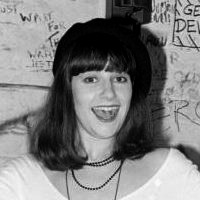
Betty Page in youthful bloom, more recently identified as Beverley Glick

In September 1980 in the pages of the music weekly, Sounds, Betty had slapped the label “New Romantics” on Spandau Ballet, house band of London’s Blitz club and then received a call from the hungry manager of this Brummie band called Duran Duran…

Paul Berrow was a smooth operator. ‘Come to the Rum Runner,’ he said of the club he co-owned with his brother Michael. ‘We’ve got a scene going on up here to put the Blitz to shame, and a band to go with it.’ Clever, I thought. He had singled me out to be the first journalist to write about his group. And they actually wanted to be called New Romantics! Nick was the most obviously New Romantic — a bouffant blond David Sylvian lookalike who sported extravagantly frilly shirts and shiny suits — but the style sat rather uncomfortably on the others.

The alarmingly pretty, floppy-fringed bassist John Taylor drew the line at satin shirts and a shoulder sash. ‘We were never meant to be bagged in with any elitist scene,’ said John, the pretty one. ‘The main chunk of our audience in Birmingham is those people,’ said Nick, the bouffant one, ‘but we’re not as tied to it as Spandau obviously are. When people come to see us we’d much sooner they dance and have a good time rather than dress up in the clothes and just stare… © Beverley Glick

➢ Read Betty Page’s retrospective survey of the New Romantics
– I Was There, originally published in Record Collector in 2004

ARCH-RIVAL MANAGER’S VERDICT ON DURAN

Years after both bands had achieved superstar status, Steve Dagger, the manager of Spandau Ballet, wrote this nugget summarising Duran Duran’s contribution to the 80s music scene. It was published in a partwork published by The Sunday Times in 1997 titled 1000 Makers of Music, which spanned all genres from classical to pop:

Rolling Stone, Duran Duran,Fab Five,Second British Invasion Duran were among a new group of artists who provided a glittering, sexy contrast to the prevailing dull corporate pop-punk of the 1970s. Taking their influence from the art-school underground of electronics/Ferry/Bowie, they came to prominence as the Birmingham ‘it’ band at the same time Spandau Ballet reigned over a similar scene in London. After an awkward but successful period as the Birmingham ‘answer to’, Duran metamorphosed in 1982 into a sleek, glamorous international entity with the seminal album Rio, having perfected a distinctive Duran sound fusing synths and guitar licks over post-disco rhythm. Inspired songs such as Hungry Like the Wolf were accompanied by cinematic videos, together creating an electric pop culture moment. After being derided for years, Britain had produced a group America could not ignore: Duran surfed in on the newly conceived MTV to conquer the States. They continue to make great British records and should recently have won a Novello for their lament to the 1980s, Ordinary World. [Key work: Is There Something I Should Know? (1983)]

❏ View this hilarious early video of white-faced New Romantics doing their wobbly dances to Duran Duran’s first single Planet Earth, performed at the Rum Runner in 1980 (now remastered in high quality). Note the hijacked Warren Street Jive in the official promo video sequences shot much later in a studio . . .

FRONT PAGE

30 years ago today ➤ First survey of their private worlds as the new young trigger a generation gap

John Maybury, Marek Kohn,Blitz culture,  ZG

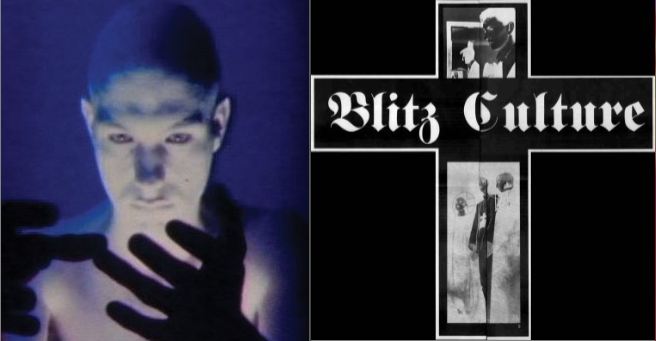
Left, film-maker John Maybury in Tortures That Laugh © John Maybury 1978, artist’s collection; right, graphic from ZG magazine, issue one, 1980

❚ THE BLITZ CLUB SCENE EVOLVED RAPIDLY during the summer of 1980 as media coverage caught up, and it became clear that the New Romantics were not the only social group making waves. In the London Evening Standard’s On The Line column I had been following the Blitz Kids all year and, unsurprisingly, my nocturnal antics raised eyebrows at the Standard by day. “Do they talk sort of funny?” colleagues would ask about my bizarre playmates, meaning did they say “Leave it aht” instead of “OK yah”? Over time the generation gap I was reporting caught the attention of the Standard’s perceptive film critic Alexander Walker, who couldn’t read enough about Britain’s self-possessed youth movement. “Not so much a generation gap,” he observed sagely. “More a genus gap!” In this respect, the parallels with the digital natives of today’s Generation Y are spooky.

A key difference was the naked ambition of the media-savvy Blitz Kids who shunned rock music as a stone-age relic. They were spreading inspiration through Britain’s clubland, even as Steve Strange’s Tuesday nights at the Blitz ended suddenly on October 14, as also did Hell, their Thursday offshoot. Key players were changing trains. That very week Spandau Ballet had signed their first record deal, while I had been darting daily from concert to club to Kensington Market surveying the many competing expressions of youthful endeavour, then trying to persuade the editor Charles Wintour that A Significant Youthquake Was About To Break.

A month earlier during London fashion week I’d only just scraped into print with my first Pose Age report showing Melissa Caplan’s unisex tabards which were being worn to shock. “You’re making this up,” raged one senior editor whose veto against publishing was over-ruled by Wintour. Now I was proposing that this sweeping survey for On The Line should make a spectacular centre spread in the paper. Yet the eye-searing kids in our pictures were a bridge too far even for the enlightened Wintour, who sent me a memo saying it was all “Rather too esoteric for us”. Under protest, he finally conceded splitting the survey between two separate pages a week apart.

By Christmas Spandau’s single became a chart hit, along with Fade to Grey by Visage, fronted by Steve Strange. We could not know then how quickly Britain’s clubbing grapevine was to hurtle yet more clubland bands into the charts, many unveiled by sharp young managers the same age as the talent. Or that 1981 would soon be spinning like a New Romantic dynamo.

Evening Standard, Oct 16, 1980

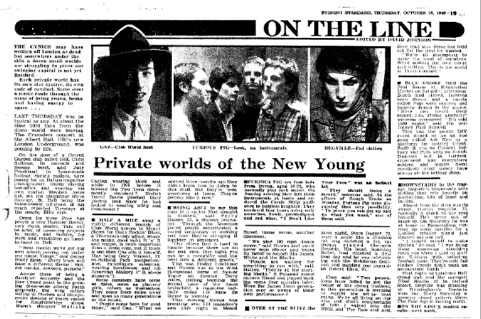
First published in the Evening Standard, Oct 16, 1980

THE CYNICS may have written off London as dead in 1980 but somewhere under the skin a dozen small worlds are struggling to prove our swinging capital is not yet finished. Each private world has its own star system and its own code of conduct. Some steer a scenic route through the maze of being young, broke and having energy to spare. . .

➢ Click to continue reading
One week in the private worlds of the new young

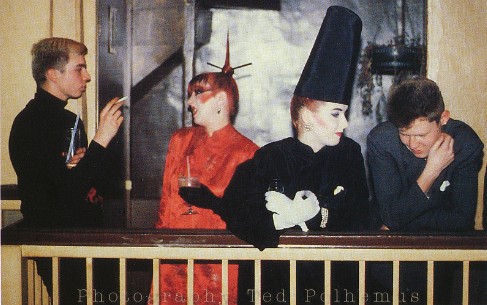
Shaping ambitions at the Blitz in 1980: Lee Sheldrick, Melissa Caplan, Kim Bowen and Bob Elms

FRONT PAGE