Click picture to view an immaculate video of Bowie singing The Man Who
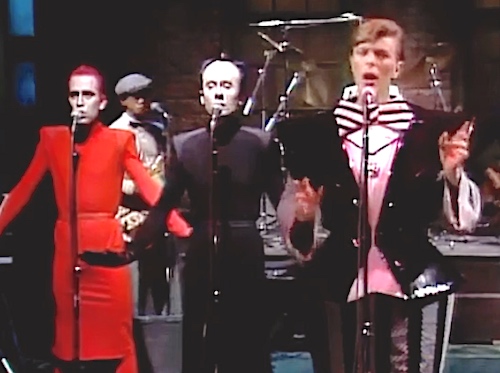
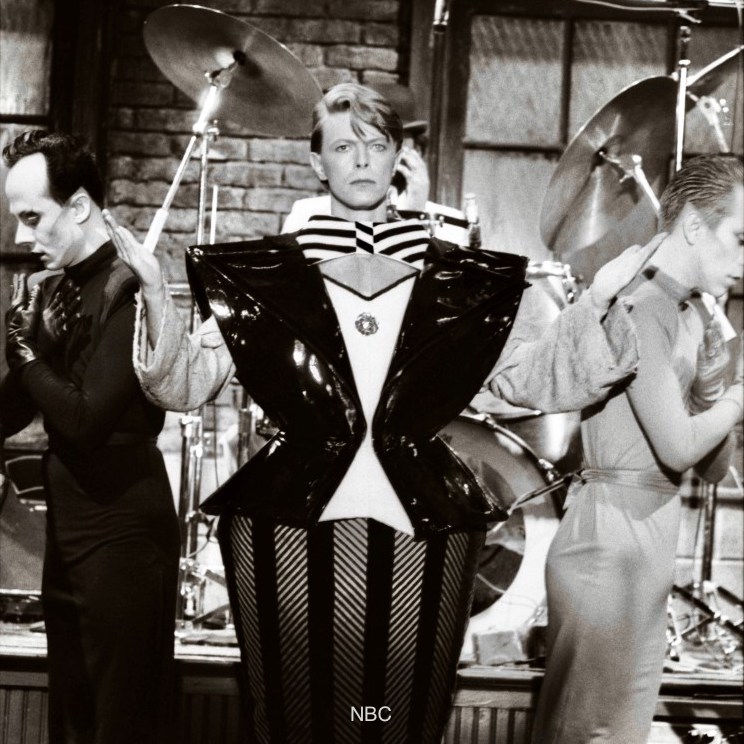
❚ HERE’S A RARE CHANCE TO VIEW one of the most inspired renderings of The Man Who Sold the World: David Bowie during a performance on Saturday Night Live on 15 December 1979. As backing singers we see the bizarre German punk Klaus Nomi at centre and wearing red at left is American performance artist, Joey Arias, who became a regular act at Club 57 in New York’s East Village. Anyone who visited the 2013–2015 touring exhibition, Bowie Is, from London’s V&A museum, will have seen Bowie’s huge tubular costume at first hand…
Luckily, this 8-minute clip also includes brilliant versions of TVC 15 with Bowie in a skirt and heels, plus Boys Keep Swinging where he sports a nude puppet costume with bizarre extremities. Nomi introduces us to his poodle who appears to have swallowed a TV set in this gifted trio of performances.
The Man Who Sold the World – title track of Bowie’s third studio album – was written in 1970 but released on the B-side of a single hence missed the charts in its own right. It did reach No 3 after Lulu covered the track in 1974 and other covers followed, including one by Midge Ure. Critically the song is widely regarded as one of Bowie’s essential best and only in his last couple of decades did he start rendering it in live performances in utterly different and often haunting ways. Nevertheless, the SNL video from 1979 is powered by a cascade of supremely confident operatic flourishes, “Ohhhh-oh-ohhhh, ohhhhhhh-oh!”
SNL December 1979: In his outsized costume, Bowie sings The Man Who Sold The World, flanked by Klaus Nomi and Joey Arias
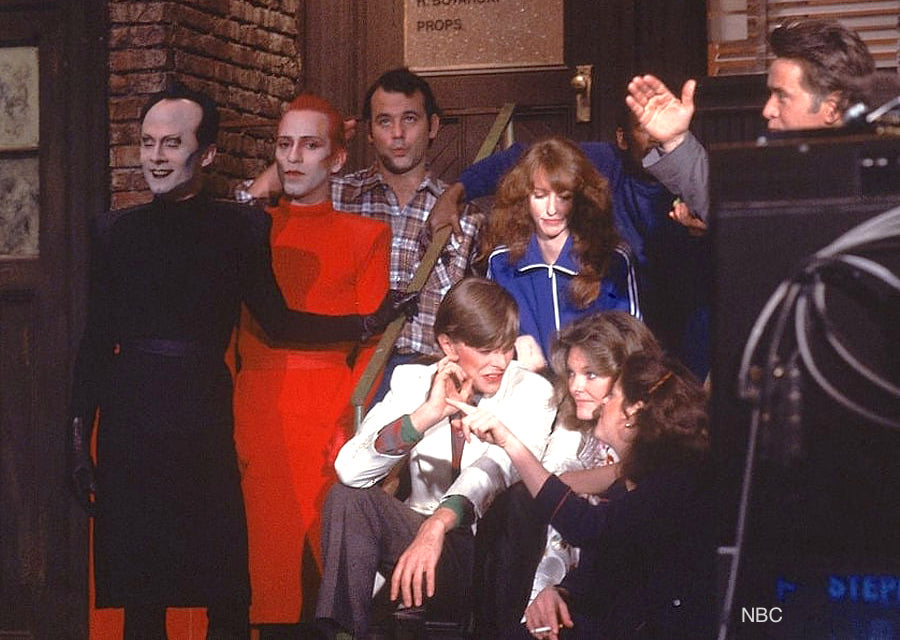
Backstage at that SNL, December 1979, from left: Klaus Nomi, Joey Arias, Bill Murray, Bowie, Laraine Newman, Jane Curtain, Gilda Radner, Martin Sheen (hosting that night)
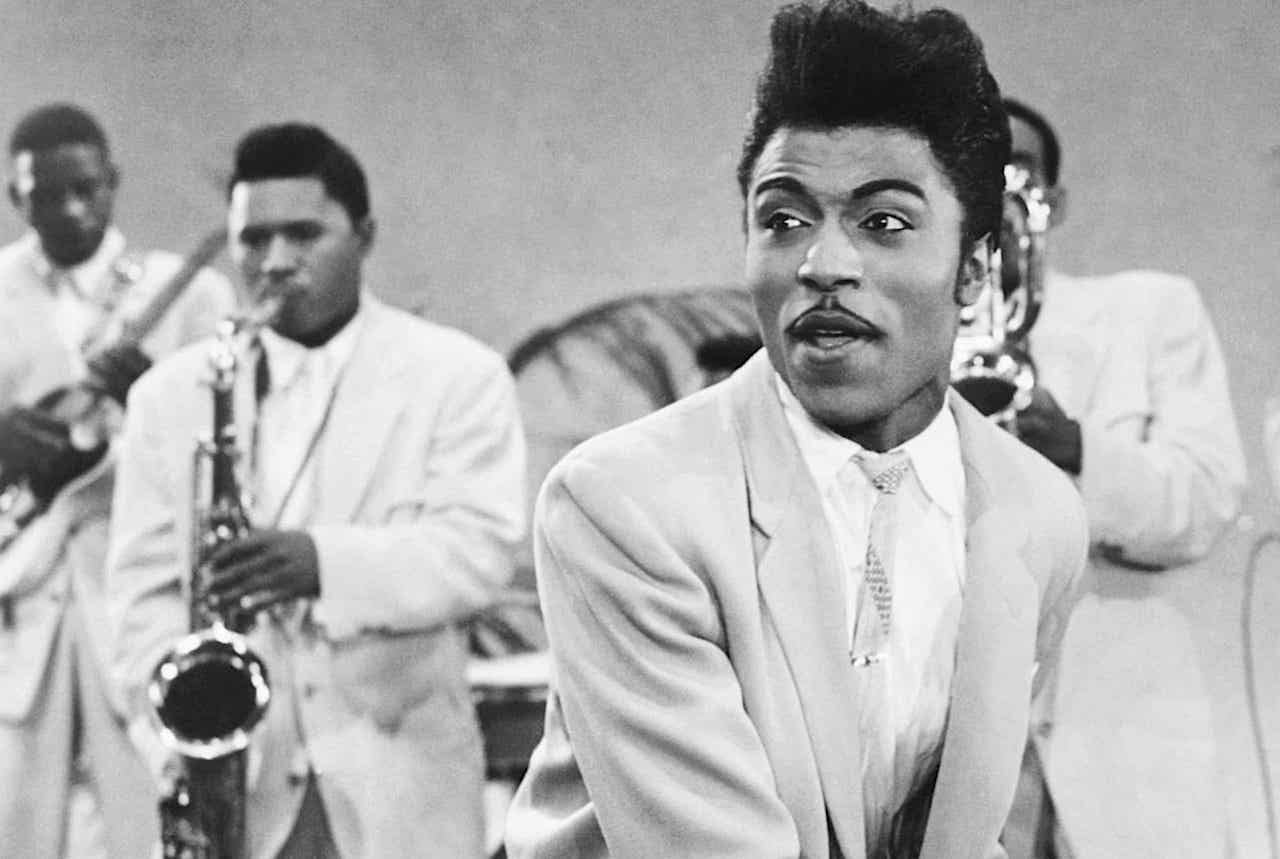
“Some cat was layin’ down some rock n roll…” The young David Jones soaked up influences like a dry sponge and he found the music and attitude of Little Richard, among others, inspirational to say the least. As a 15-year-old in 1962, Jones saw Little Richard live for the first time and then again the following year with The Rolling Stones as one of the support acts. He listed the 1959 album, The Fabulous Little Richard, among his favourite 25 for a Vanity Fair feature in 2003.
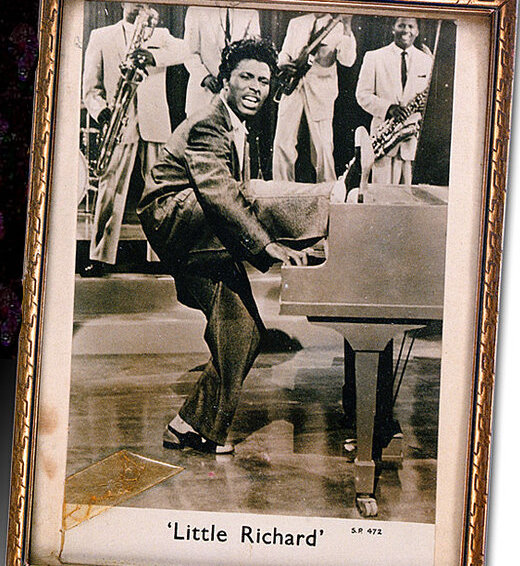
Here’s Bowie talking in 1991: “I sent away for a photograph of Little Richard when I was seven years old, it was called Star Pic and it took eight weeks to arrive and when it arrived it was torn… and I was absolutely broken-hearted. The first record I think I bought was called I Got It, which he later re-wrote as She’s Got It. And ever since I saw that photograph, I realised he had so many saxophones in his band. So I went out and bought a saxophone intending that when I grew up I’d work in the Little Richard band as one of his saxophonists. Anyway it didn’t work out like that, but without him I think myself and half of my contemporaries wouldn’t be playing music.”
We’ll leave you with a Tweet posted by David’s son, Duncan Jones: “From what my dad told me about his love of this legend growing up, it’s very likely he would not have taken the path he did without the huge influence of Little Richard. One of the highest of the high. Enjoy whatever’s next, Superstar.”
CLICK PIC TO VIEW 1991 VIDEO OF BOWIE
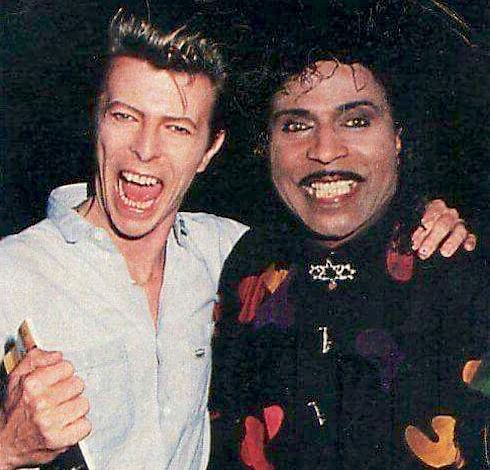
PRAISING RICHARD & RICHARD IN FULL FLOW
Bowie and Richard 1991: click pic to view video interviews in a new tab
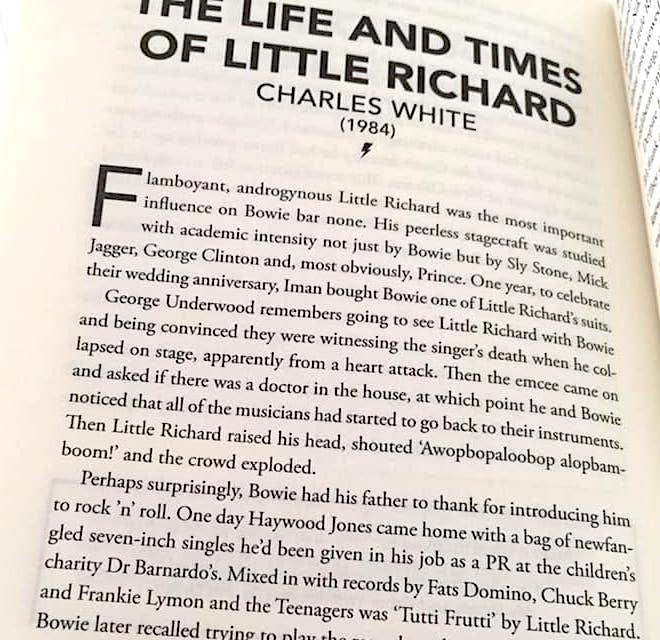
Excerpt from Charles White’s authorised biography, The Life and Times of Little Richard: The Quasar of Rock (Harmony Books, Sept 1984)
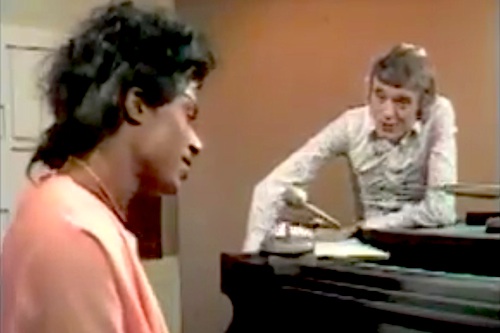
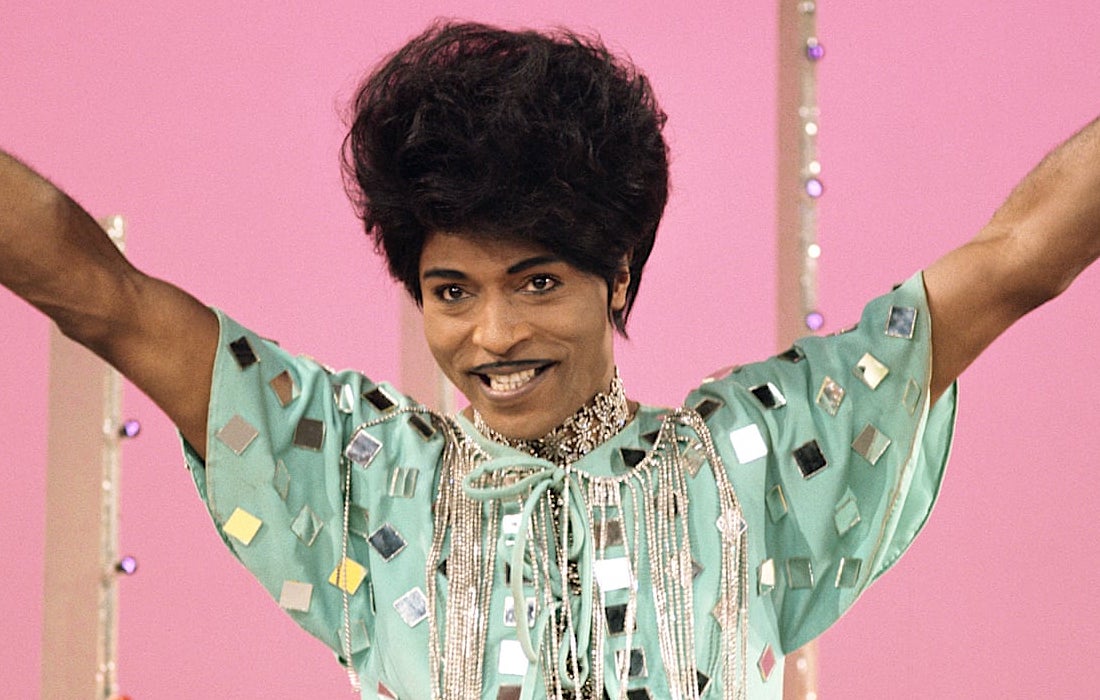
Little Richard in 1971: “his queerness made him dynamic”
➢ Little Richard’s queer triumph – The legend himself sometimes sought to distance himself from the LGBTQ community but his queerness is what made him a dynamic performer – by Myles E. Johnson in The New York Times, 10 May 2020
➢ Prime force of rock-n-roll who made an explosive impact with songs such as Tutti Frutti, Good Golly, Miss Molly, Lucille and Long Tall Sally – by Michael Gray in The Guardian, 10 May 2020
➢ How Little Richard changed the world: The legacy of the singer, who died last week, goes beyond music and helped change our attitudes to race, sex and class – by Daniel Finkelstein in The Times, 12 May 2020
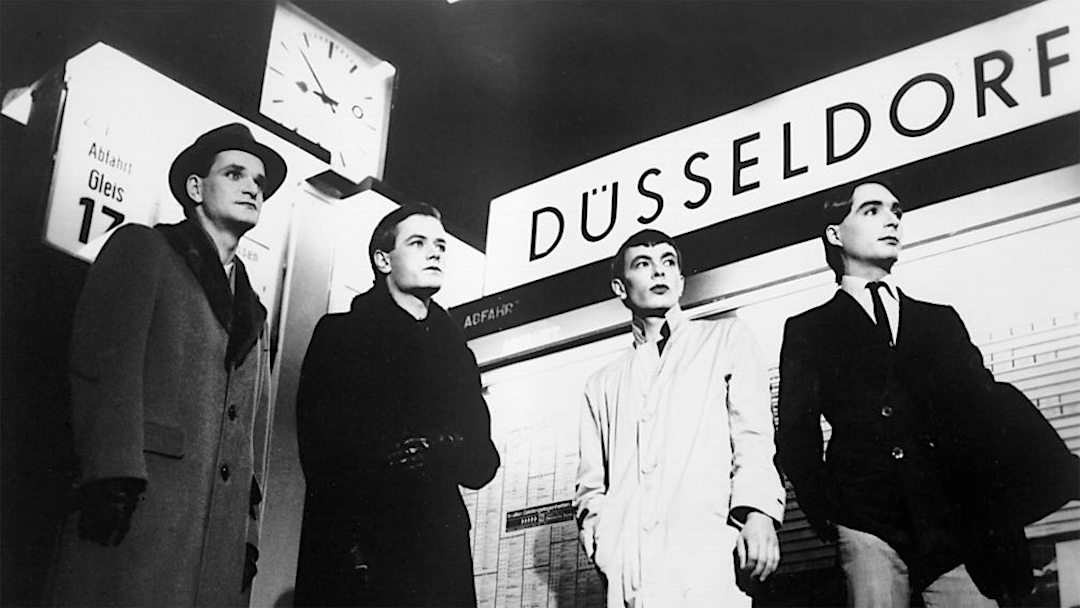
❏ You’ve no doubt heard the sad news regarding the passing of Kraftwerk founder, Florian Schneider, aged 73. A spokesperson said he “passed away from a short cancer disease just a few days after his 73rd birthday”, his birthday being April 7. Schneider formed Kraftwerk with Ralf Hütter in 1970 and remained a member until his departure in 2008. He is pictured bottom left in our photo at Düsseldorf Hbf station with the rest of the band.
In a Kraftwerk feature for MOJO magazine Ralf Hütter responded to the question “How important was David Bowie’s infatuation with you?” thus:
“That was very important for us, because it linked what we were doing with the rock mainstream. Bowie used to tell everyone that we were his favourite group, and in the mid-Seventies the rock press used to hang on every word from his mouth. We met him when he played Düsseldorf (April 8, 1976) on one of his first European tours. He was travelling by Mercedes, listening to nothing but Autobahn all the time.”
In 1978 Bowie recalled the meeting in an interview: “I like them as people very much, Florian in particular. Very dry. When I go to Düsseldorf they take me to cake shops, and we have huge pastries. They wear their suits. A bit like Gilbert and George… When I came over to Europe – because it was the first tour I ever did of Europe (1976), the last time – I got myself a Mercedes to drive myself around in, because I still wasn’t flying at that time, and Florian saw it. He said, “What a wonderful car” and I said, “Yes, it used to belong to some Iranian prince, and he was assassinated and the car went on the market, and I got it for the tour.” And Florian said, “Ja, car always lasts longer.” With him it all has that edge. His whole cold emotion/warm emotion, I responded to that. Folk music of the factories.”
Kraftwerk immortalised the Düsseldorf meeting on the title track of the band’s 1977 album, Trans-Europe Express, in its lyric:
“From station to station, back to Düsseldorf City, Meet Iggy Pop and David Bowie…”
David returned the compliment later the same year on the “Heroes” album, when he paid Florian the ultimate tribute by using his name for the title of V-2 Schneider.
❏ Bowie also spoke in some depth about Kraftwerk in an UNCUT interview several years back…
UNCUT: Many reasons have been suggested for moving to Berlin. Can you remember why the city appealed?
DB: Life in LA had left me with an overwhelming sense of foreboding. For many years Berlin had appealed to me as a sort of sanctuary. It was one of the few cities where I could move around in virtual anonymity… Since my teenage years I had obsessed on the angst-ridden, emotional work of the expressionists, both artists and film makers, and Berlin had been their spiritual home. This was the nub of Die Brücke movement, Max Rheinhardt, Brecht and where Metropolis and Caligari had originated. It was an art form that mirrored life not by event but by mood. This was where I felt my work was going. My attention had been swung back to Europe with the release of Kraftwerk’s Autobahn in 1974. The preponderance of electronic instruments convinced me that this was an area that I had to investigate a little further.
Much has been made of Kraftwerk’s influence on our Berlin albums. Most of it lazy analysis, I believe. Kraftwerk’s approach to music had in itself little place in my scheme. Theirs was a controlled, robotic, extremely measured series of compositions, almost a parody of minimalism. One had the feeling that Florian and Ralf were completely in charge of their environment, and that their compositions were well prepared and honed before entering the studio.
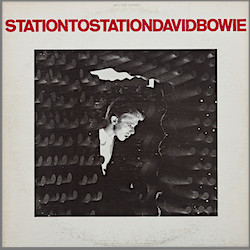
Bowie’s album Station to Station: it preceded Trans-Europe Express by a year
My work tended to expressionist mood pieces, the protagonist (myself) abandoning himself to the zeitgeist (a popular word at the time), with little or no control over his life. The music was spontaneous for the most part and created in the studio.
In substance too, we were poles apart. Kraftwerk’s percussion sound was produced electronically, rigid in tempo, unmoving. Ours was the mangled treatment of a powerfully emotive drummer, Dennis Davis. The tempo not only “moved” but also was expressed in more than “human” fashion. Kraftwerk supported that unyielding machine-like beat with all synthetic sound-generating sources. We used an R&B band. Since Station to Station the hybridization of R&B and electronics had been a goal of mine. Indeed, according to a Seventies interview with Brian Eno, this is what had drawn him to working with me.
One other lazy observation I would like to point up is the assumption that Station to Station was homage to Kraftwerk’s Trans-Europe Express. In reality Station to Station preceded Trans-Europe Express by quite some time, ’76 and ’77 respectively. Btw, the title drives from the Stations of the Cross and not the railway system.
What I WAS passionate about in relation to Kraftwerk was their singular determination to stand apart from stereotypical American chord sequences and their wholehearted embrace of a European sensibility displayed through their music. This was their very important influence on me.
UNCUT: V-2 Schneider – a tribute to Florian?
DB: Of course.
So long Florian.
❏ ABOVE: Kraftwerk playing Autobahn in 1975 on the BBC science strand Tomorrow’s World to demonstrate their “Machinemusik”. This was their first UK appearance on British television.
❏ ABOVE: View the long-haired radicals in Kraftwerk reinventing German music from “Stunde null” in the BBC Four documentary Krautrock: The Rebirth of Germany.
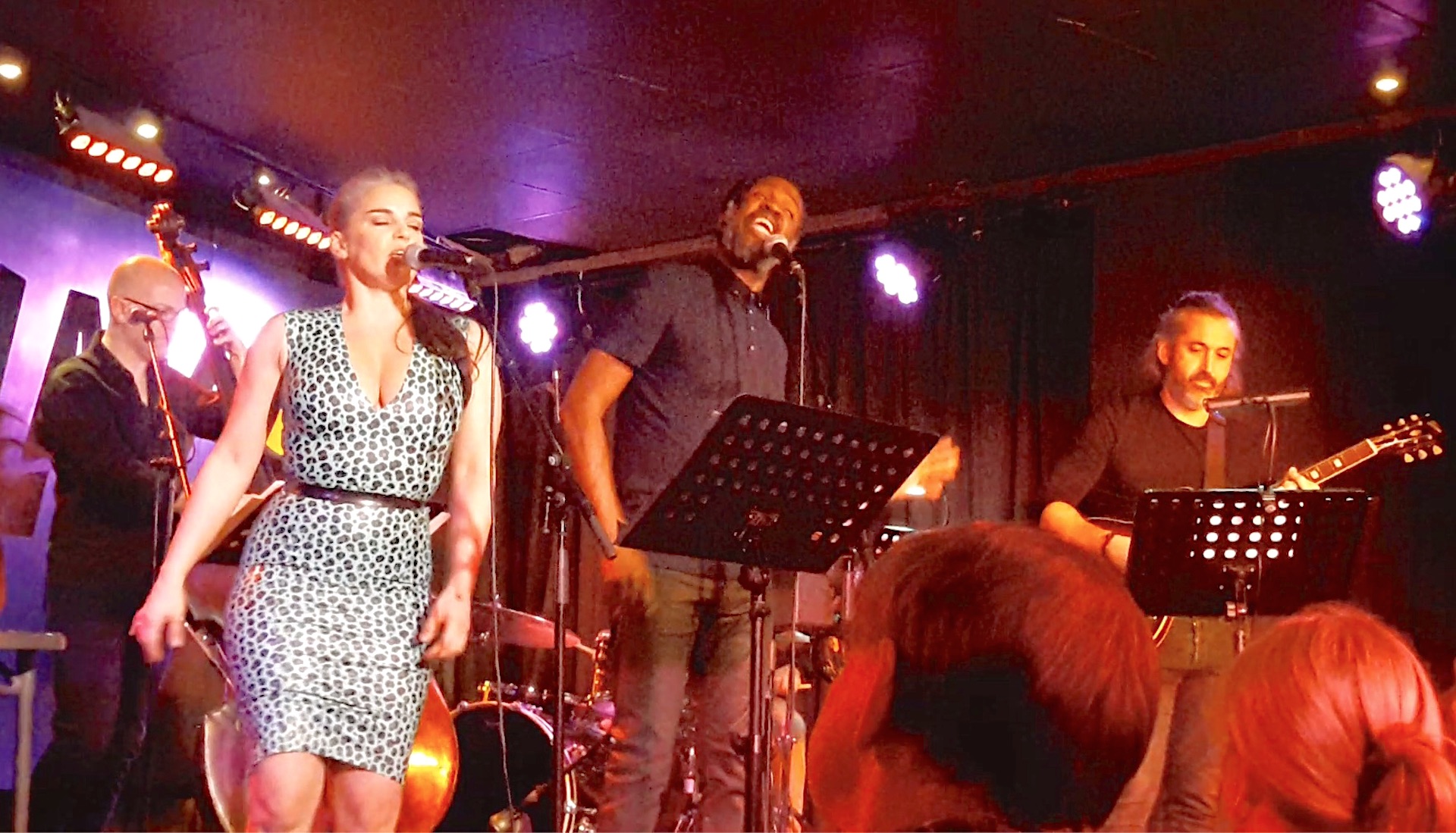
David McAlmont (centre) live at Hideaway: pictured with Simon Little on bass, vocalist Sam Obernik and Emlyn Francis on guitar
❏ Former singer Andy Polaris joins an annual celebration of David Bowie’s music at Streatham’s Hideaway wine-and-dine venue in south London. Here’s an excerpt from his review at his website apolarisview . . .
“ We were told Wall to Wall Bowie was a celebration, not a wake, as vocalist and songwriter David McAlmont unleashed a varied selection from Bowie’s back catalogue with an accomplished backing band. Dressed almost low-key in dark shirt and trousers, he opened with Watch That Man and immediately we realised these would be interpretations, not pure Xerox copies, and all the better for it.
Suffragette City followed, then Sweet Thing, one of the first stand-outs of the night from Diamond Dogs, elegantly capturing this favourite moody gem, stripped back to reveal the solemn beauty of the lyrics. Starman dazzled despite McAlmont’s irritation at suffering from a cold. Partner in crime Sam Obernik poured herself into a leopard print rubber dress and joined him for vocal duties on theatrical renditions of Changes and Life on Mars. The jaunty duet of Let’s Dance and an almost louche Turkish-infused lilt to The Man Who Sold The World made me imagine them as the house band for David Lynch’s Twin Peaks…”/ Continued at apolarisview
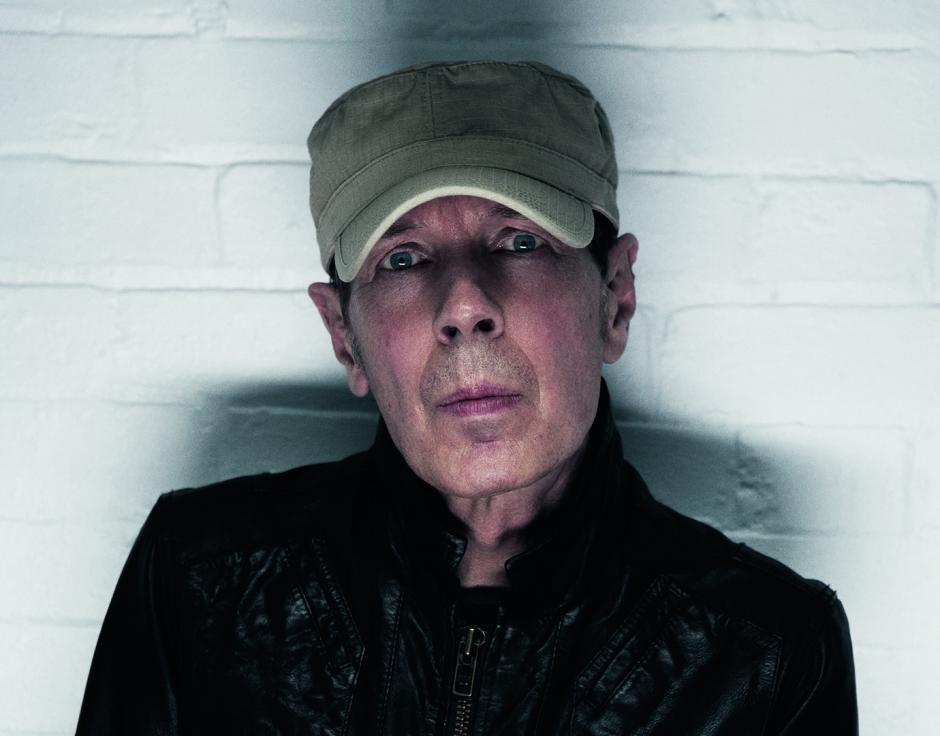
Scott Walker photographed in October 2012 by Jake Walters
◼ A REVEALING APPRECIATION of Scott Walker appears in today’s Observer obituaries of the decade … Co-director of Artangel Michael Morris recalls the great experimental musician as a witty and charming man who freed himself from the trappings of fame:
“ He’s a completely singular figure in late 20th-century, early 21st-century art and ideas. Scott’s work doesn’t fit into a cultural compartment: he was interested in all forms of human expression. . . Scott was held in such high regard by so many other artists. David Bowie often acknowledged his influence, as does Brian Eno. I think they also revered his ability to cast off the mantle of celebrity and focus simply on the work.
“ He was not in any way caught up in the myth of Scott Walker. You just felt that you were working with a very precise, open mind, someone who was completely uninterested in the trappings of image or fame. Bike or the bus were his preferred modes of travel. I think he’d found a way to live and work outside of the public gaze that was much more liberating and creative. . . ” / Continued online
➢ Choose “View full site” – then in the blue bar atop your mobile page, click the three horizontal lines linking to many blue themed pages with background article
MORE INTERESTING THAN MOST PEOPLE’S FANTASIES — THE SWINGING EIGHTIES 1978-1984
They didn’t call themselves New Romantics, or the Blitz Kids – but other people did.
“I’d find people at the Blitz who were possible only in my imagination. But they were real” — Stephen Jones, hatmaker, 1983. (Illustration courtesy Iain R Webb, 1983)
“The truth about those Blitz club people was more interesting than most people’s fantasies” — Steve Dagger, pop group manager, 1983
PRAISE INDEED!
“See David Johnson’s fabulously detailed website Shapers of the 80s to which I am hugely indebted” – Political historian Dominic Sandbrook, in his book Who Dares Wins, 2019
“The (velvet) goldmine that is Shapers of the 80s” – Verdict of Chris O’Leary, respected author and blogger who analyses Bowie song by song at Pushing Ahead of the Dame
“The rather brilliant Shapers of the 80s website” – Dylan Jones in his Sweet Dreams paperback, 2021
A UNIQUE HISTORY
➢ WELCOME to the Swinging 80s ➢ THE BLOG POSTS on this front page report topical updates ➢ ROLL OVER THE MENU at page top to go deeper into the past ➢ FOR NEWS & MONTH BY MONTH SEARCH scroll down this sidebar
❏ Header artwork by Kat Starchild shows Blitz Kids Darla Jane Gilroy, Elise Brazier, Judi Frankland and Steve Strange, with David Bowie at centre in his 1980 video for Ashes to Ashes
VINCENT ON AIR 2026
✱ Deejay legend Robbie Vincent has returned to JazzFM on Sundays 1-3pm… Catch up on Robbie’s JazzFM August Bank Holiday 2020 session thanks to AhhhhhSoul with four hours of “nothing but essential rhythms of soul, jazz and funk”.
TOLD FOR THE FIRST TIME
◆ Who was who in Spandau’s break-out year of 1980? The Invisible Hand of Shapersofthe80s draws a selective timeline for The unprecedented rise and rise of Spandau Ballet –– Turn to our inside page
SEARCH our 925 posts or ZOOM DOWN TO THE ARCHIVE INDEX
UNTOLD BLITZ STORIES
✱ If you thought there was no more to know about the birth of Blitz culture in 1980 then get your hands on a sensational book by an obsessive music fan called David Barrat. It is gripping, original and epic – a spooky tale of coincidence and parallel lives as mind-tingling as a Sherlock Holmes yarn. Titled both New Romantics Who Never Were and The Untold Story of Spandau Ballet! Sample this initial taster here at Shapers of the 80s
CHEWING THE FAT
✱ Jawing at Soho Radio on the 80s clubland revolution (from 32 mins) and on art (@55 mins) is probably the most influential shaper of the 80s, former Wag-club director Chris Sullivan (pictured) with editor of this website David Johnson
LANDMARK FAREWELLS. . . HIT THE INDEX TAB UP TOP FOR EVERYTHING ELSE





 ➢➢ Shapers of the 80s ➣➣