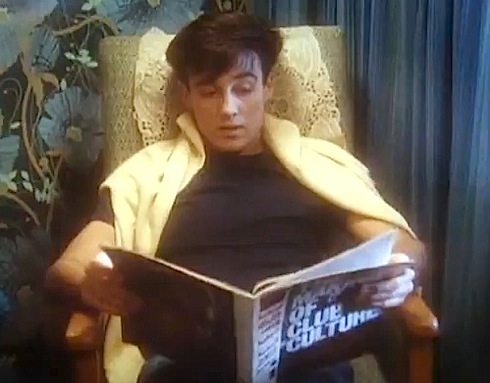
Click pic to open the Wham Rap! video in another window … “Man or mouse” Andrew Ridgeley establishes his group’s clubbing credentials in the opening shots of the Wham video by reading my cover story on Club Culture first published in The Face in 1983 and in recent years the No 1 read at Shapers of the 80s!
❚ OVER THE PAST 14 YEARS Shapers of the 80s has received 2.2 million views, according to year-ending stats measured by our host, WordPress. Our 850+ published items total half-a-million words, which is several times more than most books, so it pays to explore the various navigation buttons. Here are the half dozen posts which remained among the most popular with readers during 2022…
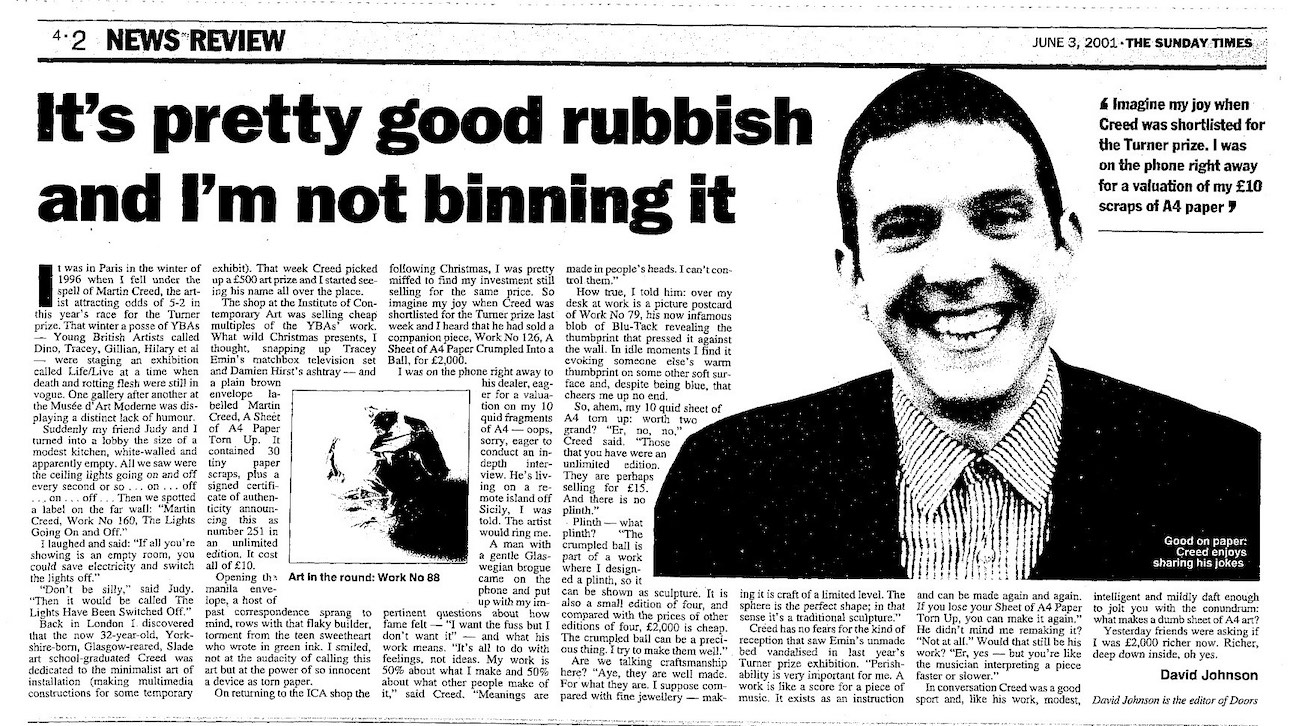
❚ THIS YEAR I ENJOYED a madcap chance meeting at the London Art Fair with Martin Creed, artist, musician and multimedia performer noted for his wayward dress sense as a living sculpture. Our paths first crossed in 2001 just before he won the annual Turner Prize for what some described as Creed’s “most notorious work” – Work No. 227: The lights going on and off – in an empty gallery. I had stumbled across his gentle but subversive wit in Paris in 1996 at an identical light display, and then back in London found his Work No. 140: A sheet of A4 paper torn up in the shop at the Institute of Contemporary Art. It cost me a tenner. A surefire investment.
Coincidentally, when Creed was nominated for the Turner Prize in June 2001, a similar piece titled A sheet of A4 paper crumpled into a ball was reported being sold for £2,000. My boss at The Sunday Times, who knew I was a collector, insisted I interview him for News Review and ask him whether my piece was also worth £2,000. Here below you can read the feature that resulted…
Creed subsequently won that Turner Prize, and the years since then have been fertile for the audacious artist. Creed’s website lists his latest work during lockdown as No. 3725 Live at home, though he has also been actively touring the world this year. Heaven knows how the current economic dramas must be corroding the value of my torn-up £10 masterpiece.
Click on the image below to read in a new window
Martin Creed featured in The Sunday Times, 3 June 2001
Over two weeks I watched fashion gurus Westwood
and McLaren go their separate ways. Daggers-drawn,
they both talked exclusively to the Evening Standard…
Mine were the final pix of them together
❚ IN POST-PUNK 1979 The Specials and their 2 Tone Records label were just about the only credible sounds in the blandly irrelevant pop charts of the time. This ska-revival band from Coventry defined the anger characterising the concrete jungle in recessionary Britain from their debut single Gangsters to Ghost Town in 1981. They notched seven chart hits while the fashion-conscious stylists who turned London’s Blitz Club into a poser’s paradise set about creating employment among their own ranks by reinventing the UK music scene itself.
The frontman of The Specials, Terry Hall, who from the outset felt uncomfortable becoming a pop celebrity, died on Sunday aged only 63 after a tough and often traumatic life. Yet his singing voice and charisma as a political militant, also expressed with the ironically named Fun Boy Three, ensured a substantial following in later life so that a comeback album titled Encore topped the UK chart in 2019.
Here’s how today’s Guardian obituary of Terry Hall starts, written by Adam Sweeting: “Singer with the Specials whose chart-topping Ghost Town evoked the sense of social collapse gripping Britain at the turn of the Eighties”…
“ Famously deadpan, dour and slightly menacing, Terry Hall, who has died aged 63 after a short illness, shot to fame at the end of the 1970s with Coventry’s ground-breaking multi-racial band the Specials. They emerged in the aftermath of punk, with a fizzing, politically charged mix of ska and new wave, and enjoyed instant success with their debut album, The Specials, which reached No 4 on the UK chart. For a time, the Specials’ 2 Tone Records operation became the UK’s most successful record label, with releases from Madness, the Beat and the Selecter alongside the Specials’ own.
“ Hall commented that “I don’t believe music can change anything” because “all you can do is put your point across”, but the Specials caught the fraught and dangerous atmosphere of the turn of the 1980s with an eerie intensity. Ghost Town in particular chillingly evoked the sense of social collapse and economic decline gripping a riot-torn Britain.
“ The Specials found themselves in the eye of the storm, with neo-Nazis frequently targeting their gigs. Hall and the band’s keyboards player, Jerry Dammers, were both arrested when they waded in to try to break up fighting between fans and security guards at a gig in Cambridge. They were found guilty of “incitement to riot” and fined £400 each… ” / Continued at Guardian online
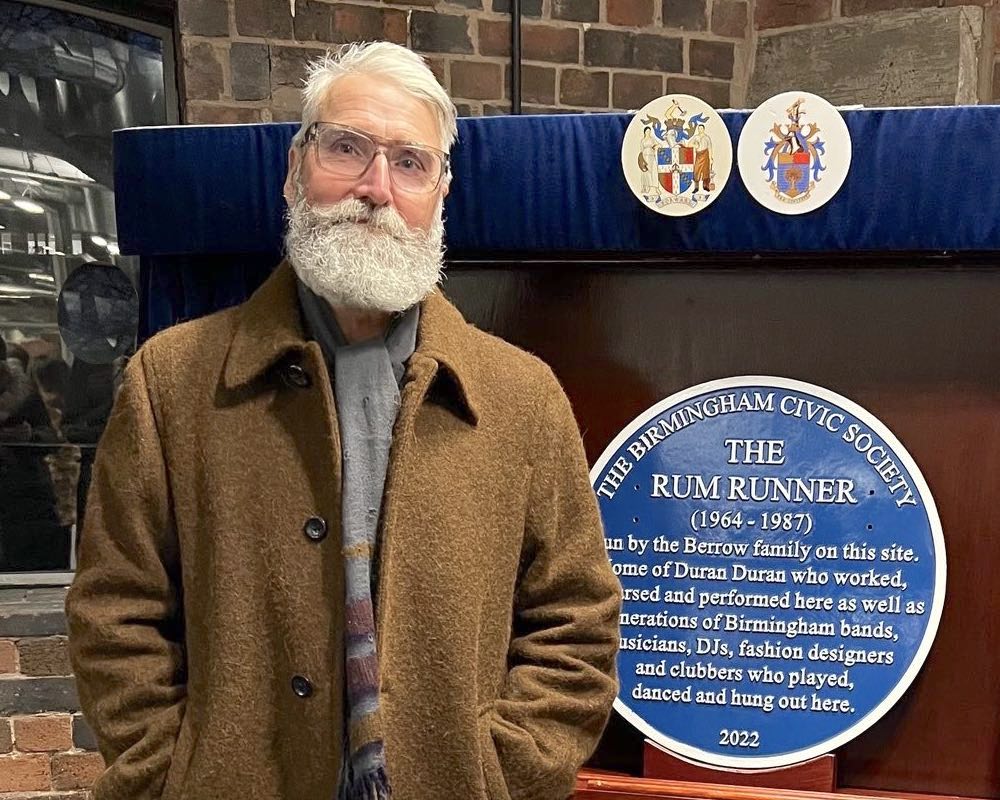
At the unveiling: Richard Whittingham beside the new plaque. (Photo by Adam Regan)
❚ NOT ONLY WAS A PLAQUE unveiled this month before the Lord Mayor of Birmingham to underline the importance of its key nightclub during the Swinging 80s, namely the Rum Runner. . . But the star of the occasion was clearly its deejay, judging from the immediate stream of affection from fans and friends that is appearing online alongside his bearded photo at the event, now aged 62. They said he’d flown in from Lapland especially.
At the age of 19 Richard Whittingham – aka, DJDick – was one of Britain’s most savvy club deejays, reading the tastes of Britain’s second largest city and trying to broaden them to embrace the new dance music like Duran Duran’s which was rapidly filling the post-punk vacuum. For my Nightlife column in the magazine New Sounds New Styles, Dick told me back then: “I’ve been trying to break the funk here for ages but nobody’s into it. The customers aren’t into it and the owners aren’t into anyone taking over their own night. I’m just buying the funk for the day when I have more freedom.”
At the unveiling: Maureen Cornish and (we assume) Paul Berrow with Rum Runner plaque. (Photo Neil Drakeford)
At the Rum Runner plaque unveiling: Lord Mayor Maureen Cornish with guests. (Photo by Debra Warren)
He found all the glamorous dressing up led by Birmingham’s Kahn & Bell boutique crazily entertaining, but he admitted what so many clubbers in the Eighties also did about not feeling safe on the streets. When the BBC’s One Show asked in 2011 what he would have worn at the Rum Runner, he replied: “Zoot suits, the odd frilly shirt, winklepickers of course – I had to hide them, to take them out of the house in a bag, and then put them on, because my mother thought they were trouble shoes.” [See interview in video clip below.] Today Dick describes himself as a carpenter and joiner, though he still deejays for occasional events.
Also at the plaque’s preview for the Lord Mayor of Birmingham, Councillor Maureen Cornish, and members of the sponsoring charity the Birmingham Civic Society, we see many local characters pictured at Facebook’s website The Rum Runner – Birmingham, which curiously fails to identify anybody by name! We’ve already guessed that the bearded one is DJDick. Another in the green coat caught wielding a mic and parting the curtains has to be Paul Berrow, one of the brothers who owned the Rum Runner, formerly of Wandering Star Pictures and Tritec Music in the Eighties.
The new plaque is attached to a modern building called Rum Runner Works, set back off Broad Street where the entrance once stood, today located between the Solomon Cutler pub and the Walkabout sports bar. In the Eighties the council planned to turn Birmingham into a major conference city with developments including the ICC and Symphony Hall. The Rum Runner was demolished in 1987 to make way for the Hyatt Regency Hotel, which opened in summer 1990.
Click any pic to enlarge:
Rum Runners: naughty party invitation from Glyn Rickards
Rum Running: today’s RR Works set back from Broad Street
Rum Runners: membership card from Paul Woodyatt
Rum Running: original entrance to Birmingham’s legendary nightspot
Photos displayed here were taken by Neil Drakeford, Debra Warren and Adam Regan who said: “Lovely to see this legendary Brummie club getting a much-deserved blue plaque. The club launched so many careers but none more relevant to me than this great man” [DJdick].
LISTEN TO DJDICK LIVE AT THE RUM RUNNER:
At Dick Whittingham’s website we can listen to two recordings of him deejaying at the Rum Runner in 1983. These were donated on his 40-something birthday by Mark “Mack” McDonald, an old friend from way back.
➢ Choose “View full site” – then in the blue bar atop your mobile page, click the three horizontal lines linking to many blue themed pages with background article
MORE INTERESTING THAN MOST PEOPLE’S FANTASIES — THE SWINGING EIGHTIES 1978-1984
They didn’t call themselves New Romantics, or the Blitz Kids – but other people did.
“I’d find people at the Blitz who were possible only in my imagination. But they were real” — Stephen Jones, hatmaker, 1983. (Illustration courtesy Iain R Webb, 1983)
“The truth about those Blitz club people was more interesting than most people’s fantasies” — Steve Dagger, pop group manager, 1983
PRAISE INDEED!
“See David Johnson’s fabulously detailed website Shapers of the 80s to which I am hugely indebted” – Political historian Dominic Sandbrook, in his book Who Dares Wins, 2019
“The (velvet) goldmine that is Shapers of the 80s” – Verdict of Chris O’Leary, respected author and blogger who analyses Bowie song by song at Pushing Ahead of the Dame
“The rather brilliant Shapers of the 80s website” – Dylan Jones in his Sweet Dreams paperback, 2021
A UNIQUE HISTORY
➢ WELCOME to the Swinging 80s ➢ THE BLOG POSTS on this front page report topical updates ➢ ROLL OVER THE MENU at page top to go deeper into the past ➢ FOR NEWS & MONTH BY MONTH SEARCH scroll down this sidebar
❏ Header artwork by Kat Starchild shows Blitz Kids Darla Jane Gilroy, Elise Brazier, Judi Frankland and Steve Strange, with David Bowie at centre in his 1980 video for Ashes to Ashes
VINCENT ON AIR 2026
✱ Deejay legend Robbie Vincent has returned to JazzFM on Sundays 1-3pm… Catch up on Robbie’s JazzFM August Bank Holiday 2020 session thanks to AhhhhhSoul with four hours of “nothing but essential rhythms of soul, jazz and funk”.
TOLD FOR THE FIRST TIME
◆ Who was who in Spandau’s break-out year of 1980? The Invisible Hand of Shapersofthe80s draws a selective timeline for The unprecedented rise and rise of Spandau Ballet –– Turn to our inside page
SEARCH our 925 posts or ZOOM DOWN TO THE ARCHIVE INDEX
UNTOLD BLITZ STORIES
✱ If you thought there was no more to know about the birth of Blitz culture in 1980 then get your hands on a sensational book by an obsessive music fan called David Barrat. It is gripping, original and epic – a spooky tale of coincidence and parallel lives as mind-tingling as a Sherlock Holmes yarn. Titled both New Romantics Who Never Were and The Untold Story of Spandau Ballet! Sample this initial taster here at Shapers of the 80s
CHEWING THE FAT
✱ Jawing at Soho Radio on the 80s clubland revolution (from 32 mins) and on art (@55 mins) is probably the most influential shaper of the 80s, former Wag-club director Chris Sullivan (pictured) with editor of this website David Johnson
LANDMARK FAREWELLS. . . HIT THE INDEX TAB UP TOP FOR EVERYTHING ELSE

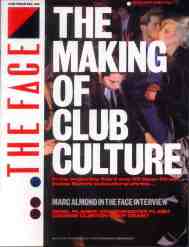 ➢ 69 Dean Street and the making of UK club culture – evolution of the once-weekly party night (1983)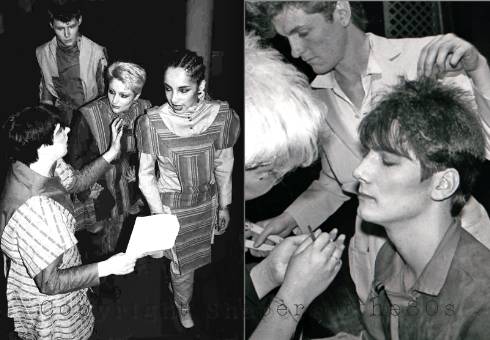









 ➢➢ Shapers of the 80s ➣➣