◼ HERE’S ONE OF THE MOST exhilarating interviews you’re ever likely to read with a godlike genius of the American music industry who has won 28 Grammy awards and co-produced Michael Jackson’s biggest-selling albums. The Beatles aren’t the only stars to receive blunt verdicts today from Quincy Jones. But then he did train under the celebrated Nadia Boulanger who during seven decades taught hundreds of leading composers and musicians of the 20th century at the elite Paris Conservatoire, so he does know his stuff. Jones also reckons Jacko “stole lots of songs” and claims to know who shot JFK in 1963. Jones is about to turn 85, so what does he have to lose? Read his eye-poppingly frank revelations in a Q&A interview with Vulture, the culture and entertainment site from New York magazine. He does also pay respec’ to six young stars “doing good work”.
❏ Zayn Malik tells Elle India that he has recorded a tune in Hindi for a forthcoming Bollywood movie. Bradford-born Zayn is the son of a British Pakistani father and English mother who converted to Islam when they married.
❏ The Libertines to headline Kendal Calling, 26-29 July.
❏ Kylie to play two intimate shows in March in London and Manchester.
❏ Spice Girls ‘to kick off world tour in UK this summer’.
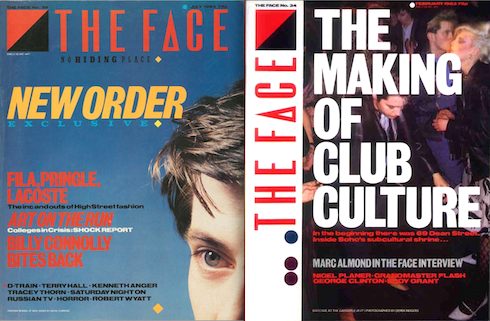
◼ 1983 PROVED TUMULTUOUS for British youth culture. By December, London’s leading club deejay Jay Strongman declared “This was the year of Go For It”, after 17 new British pop groups lorded it in the US top 40 chart that autumn, while our spirited fashionistas were making waves around the world, with Princess Diana playing ambassador for the classic designers, and Boy George pushing the wilder extremes of street style. Among major features I wrote for The Face was February’s cover story The Making of Club Culture, and in the Evening Standard Posing with a purpose at the Camden Palace, a centre spread on the runaway megaclub hosted by Strange and Egan.
Nightlife was a burgeoning story as black beats took over dancefloors everywhere and Manchester’s tearaway megaclub was the Hacienda, despite the oppressive clean-up being imposed by the city’s infamous Chief Constable. Clubbers from across the nation swarmed in to create a grand coalition of all the cults – “your complete i-D line-up, minus the Worlds End spendthrifts”. In my January report for The Face one inmate bemoaned Hacienda music as “too funk-based” though another, a flat-top lad called Johnny Maher, revealed his secret, despite having launched some new indie rock band minutes earlier. “I schtupp to funk,” he said.
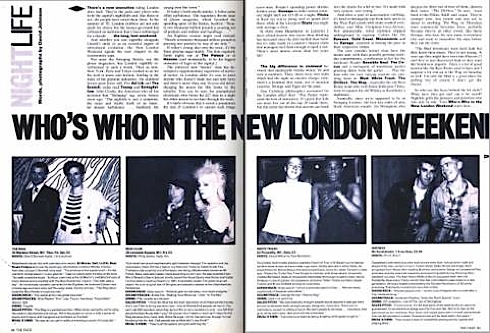
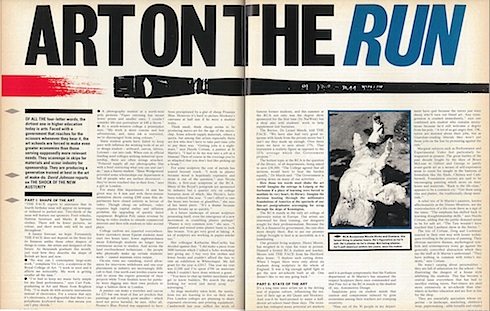
In July The Face published a major piece of reportage, Art on the Run, prompted by numerous friends in fine-art education, and billed it as a “shock report” on the Conservative government’s debilitating squeeze on the art schools. Ironically in the same issue my regular Nightlife column identified the four hottest clubland teams as a Who’s Who in the New London Weekend: “Not since the Swinging Sixties had London nightlife reverberated to such a boom.” These clubs were the unofficial job centres that kept a generation in freelance employment and introduced the verb to vop into the language (derivation: “What are you up to these days?” – “Oh, a Variety Of Projects”). Some of that effort was fuelling the rise of computer games which in the June issue Virgin assured me was “the new pop industry”!
Brighton hotspot 1983: Ian, Oliver Peyton and Kate hosting The Can (Photo Shapersofthe80s)
My Nightlife column in The Face’s October issue featured Brighton’s trendiest hotspot (seconds before the very word trendy passed its sell-by outside the Greater London stockade). The Can was presided over by a young Oliver Peyton with Andy Hale as the deejay breaking funk there. Years later Oliver thanked me for this exposure and said he would never have come up to London and started opening restaurants without The Face’s prompt! (One of the few people who have ever thanked me for writing about them! Cheers, Oliver.)
Jay Strongman in 1983: ruling London’s three hottest turntables
By this fertile year’s end I had FIVE indicative pieces of reportage published in the December issue of The Face including a detailed rundown on the new dance music by club deejay Jay Strongman, plus news of the imminent Westwood/ McLaren break-up which I’d scented from body language backstage at their Paris runway show.
The launch of the first London Fashion Week that same October confirmed that British street style was being feted in the international spotlight, yet it begged the question how on earth had this suddenly come about? Click through to our inside page to read the feature investigation that set out to answer such questions, by asking decision-makers in the industry to identify the best of Britain’s young designer talent under the headline Eight for ’84. . .
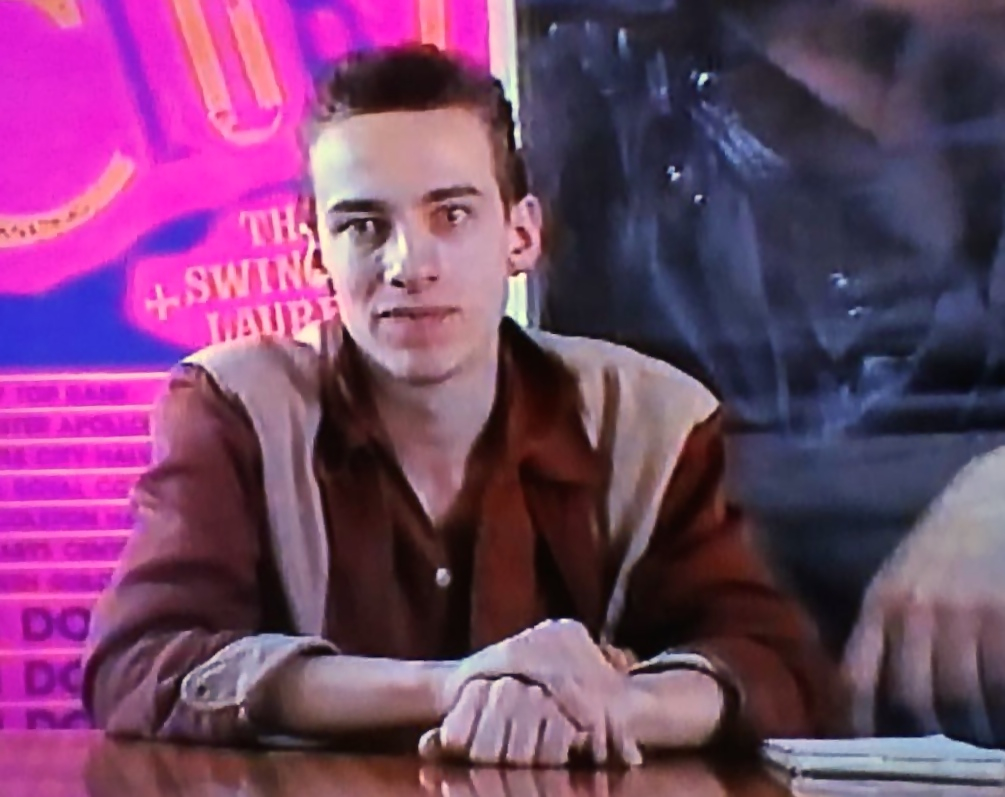
The boy wonder: “Scoop” Simper plugging No1 on Switch, the TV pop show
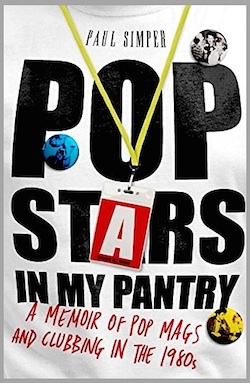
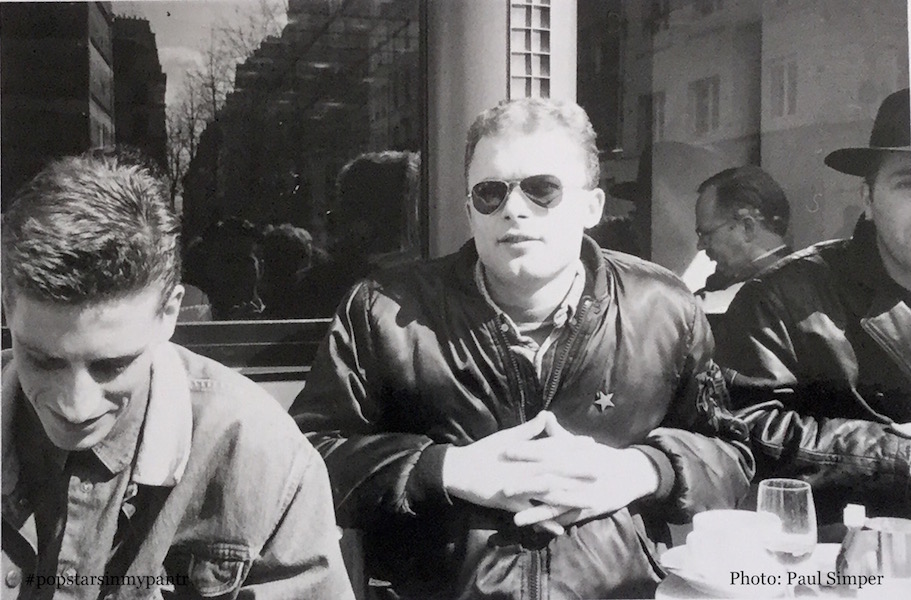
A rare book is published this month giving a vivid eye-witness account of one of the most creative eras for British pop music, the Swinging 80s. Paul Simper himself says: “It’s the pop life story pop-pickers have been gagging for.”
He should know, having emerged from London clubland to become the leading commentator on the New Pop led by image-conscious young bands when the rock press at large was giving them short shrift. Not only was he genuinely The Friend of The Stars but was one of the few writers who could also give it pure laldy dancing his socks off down Le Beat Route. Pop Stars in My Pantry is his confessional memoir and today Shapers of the 80s reprints an exclusive extract. . . But first, who is the man called Simper?
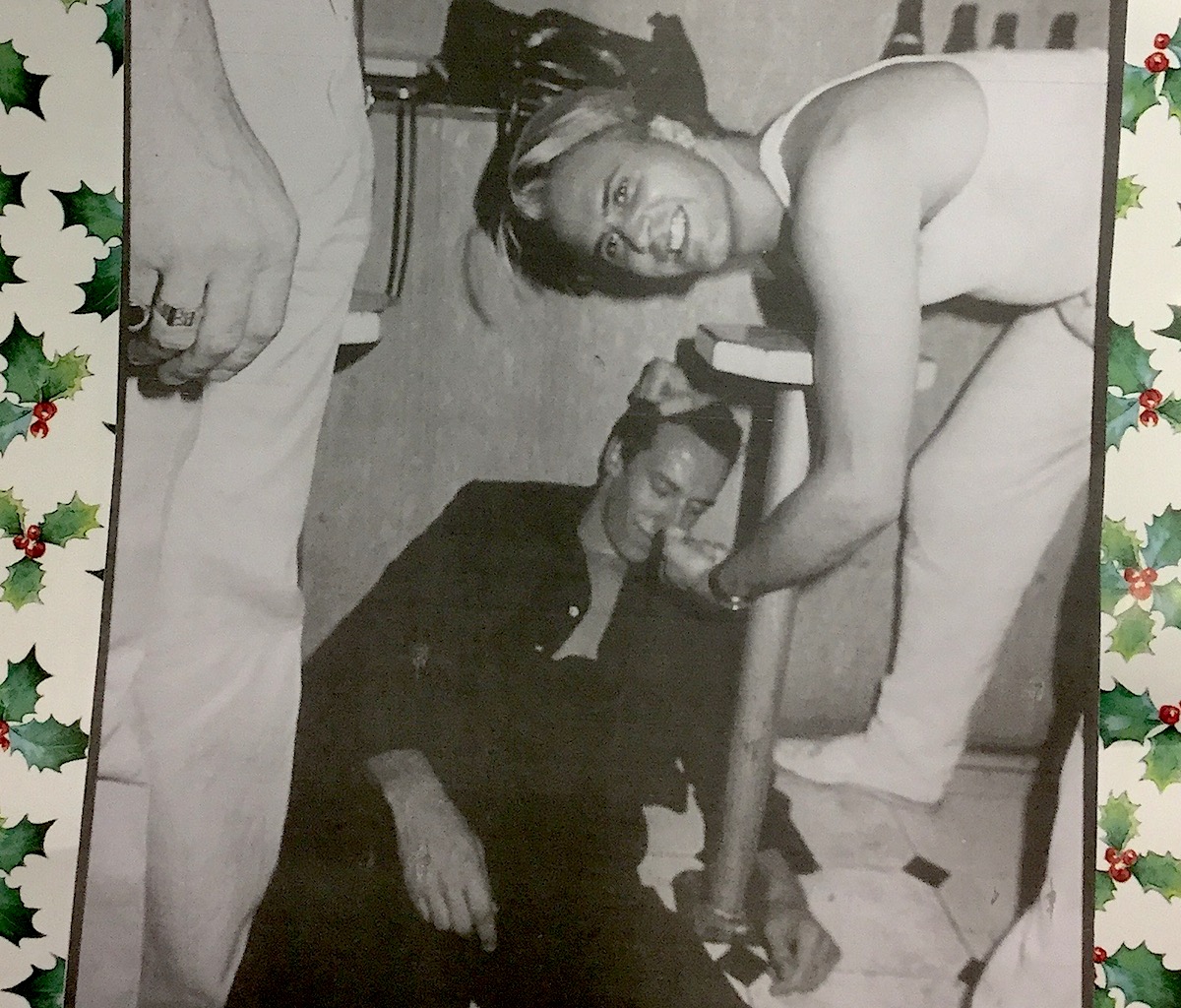
Wakey-wakey! Spandau Ballet sax player Steve Norman discovers our hero Simper relaxing during a characteristic night out on the town during London’s Swinging 80s
◼ THERE’S NO EXPLAINING PAUL SIMPER except as a life force which is Always On – sometimes as a mouse, sometimes a bunny, often in a skirt or a sequinned tuxedo. Not usually at same time, obvs. He’s obsessive, definitely bonkers, extremely good “in the room” and, oh yes, quite an entertaining showbiz writer.
Now he’s had the nerve to bring out his life story as a book called Pop Stars in My Pantry (PSIMP for short) when you’d think people in the music biz would have learned a lesson from Morrissey’s Pooterish own goal. Luckily Simper seems to have had massively more fun than Moz, actually likes the people he writes about and, oh yes, brings a wicked sense of humour to an industry not noted for knowing how to laugh.
As a singer in Slippry Feet – a marriage of supper-club in a circus ring meets David Lynch in a disco – Simper only ever got as far as being the best group of December 1993. Bar none. Fortunately for this book he has the day job to fall back on and he is SUCH a namedropper. Look at the puffery adorning his book’s back jacket: “Always a joy to hang with” – Siobhan Fahey; “The most trusted person in 80s pop” – Patsy Kensit; “Truly the epitome of the embedded journalist” – Gary Kemp.
Goes with territory when you have become Friend of The Stars, having leapfrogged from Melody Maker within minutes of coming up from the sticks in 1981, onto smart new fan mags like New Sounds New Styles and No 1 which counted clubbing on-the-town as research. There from the off, he was friends with the burgeoning new generation of self-invented nightlife stars who were storming off fashionable dancefloors across the UK and into the singles charts to knock the rock dinosaurs for six. Fellow clubbing names being dropped go from George Michael to Frankie Goes to Hollywood, Bananarama to Boy George. Not to mention Madonna, Prince, Whitney, Elton and Weller. Woohoo!
Early on I nicknamed him “Scoop” Simper because even though I worked for a Deeply Influential Mainstream Newspaper, whenever any big sexy pop star, like, y’know Debbie Harry, flew in from abroad *he* got the exclusive interview even though he “only” worked for one of those pure-pop weeklies full of pinups and lyrics and breathless reviews.
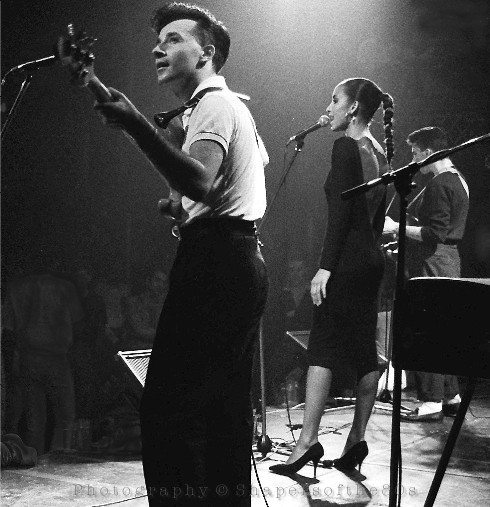
So who’s having the last laugh now?! Well probably Scoop, as usual, since PSIMP proves to be “a right frollicking read for the adults in your family”, while my own book has blurted itself out and into this website for several years, clocking up barely a handful of Wikipedia footnotes to credit. And now His Majesty is entrusting Shapers of the 80s with running an excerpt from one of the best chapters in his book, the story of Sade Adu, the Essex girl who rose via St Martin’s School of Art to become one of the UK’s biggest Grammy-award winning pop exports, described by Robert Sandall in The Sunday Times in 2010 as “the most successful solo British female artist in history”.
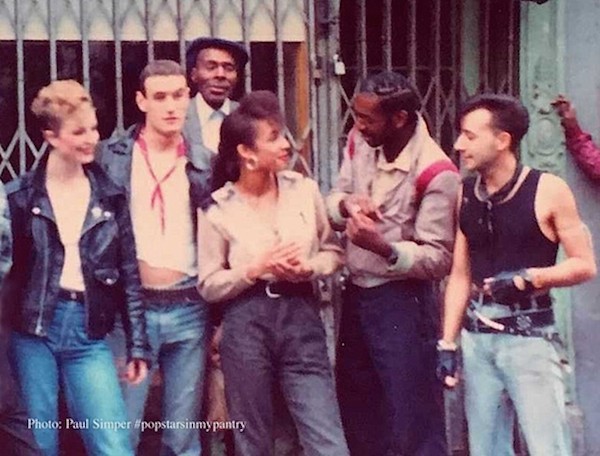
Scoop spills the beans: “Sade was very much a part of my early years as a young pop writer living in London. She even used to kindly let me sleep on her sofa.” So here’s a short teaser-taster from PSIMP, but do click through to our inside page for the full extract when Sade’s first band Pride goes in search of Manhattan’s edgy Village scene. . .
“ I owed Sade and Bob Elms plenty. When I first moved to London I couldn’t have been more grateful for the existence of their north London home tucked away in multi-cultural Wood Green on the Noel Park Estate.
Their old sofa didn’t exclusively have my name on it – fresh-down-from-Hull saxophonist Stuart Matthewman was pretty much clothed, housed and fed by them over the same period – but on the occasions I was invited back, I took some shifting. Sade reckoned that a pair of my old socks stuck around even longer than me until she ceremonially buried them, like high-grade plutonium, in the back garden.
I was never so bold as to turn up unannounced, but if Bob suggested a home viewing of an under-the-counter video of Texas Chainsaw Massacre or The Hills Have Eyes that he’d got his mitts on in Soho (I’d discovered in my early days in London there was a black market for everything), then I was more than up for it.
My telly viewing habits were not of primary importance to the residents at No 64 Hewitt Avenue by the spring of 1982, though, when Bob and Lee Barrett started talking up this new band called Pride that “Shard” was in. Stuart Matthewman was also involved, as were fellow Hull lads drummer Paul Cooke and bass player Paul Denman.
Back in Hull, Stuart had been in The Odds, a pop/mod band similar to The Piranhas that had started out doing speeded-up punk versions of 60s hits like The Dave Clark Five’s Glad All Over. He then played sax in a ten-piece Elvis impersonator show called Ravin’ Rupert, which covered the whole spectrum of The King’s career from rockabilly to Vegas delivered by a front man sporting a quiff and wearing Rupert-the-Bear checked trousers. A tad cooler was Paul Cooke and Paul Denman’s prog-rock band, The Posers, which Stuart credits as being the only band in Hull trying to do something new.
As for Sade, her singing career had only begun a few months previous when she sang onstage for the first time as part of another London band, Ariva. Considering Ariva were viewed as a bit of a Blue Rondo rip-off, ironically it was on the way to a Rondo gig on Barry Island that Lee first clocked Sade singing along to the radio and asked her if she could sing. She thought she probably could so said Yes. . . ”
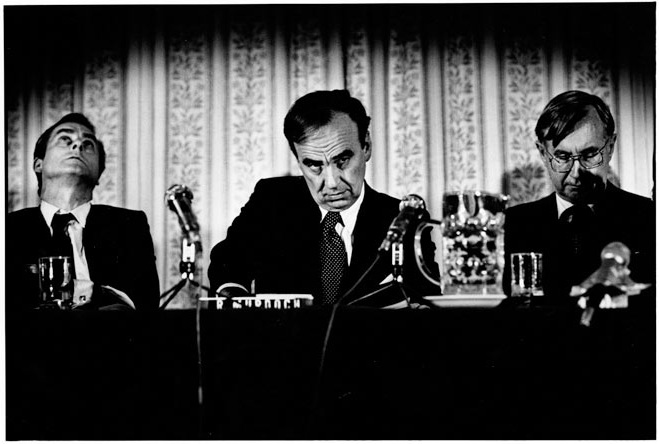
❚ ON THIS DAY 30 YEARS AGO… “Australian newspaper tycoon Rupert Murdoch has agreed to buy The Times and Sunday Times newspapers. But the deal will only go ahead if Mr Murdoch can reach a deal with the print unions within the next three weeks over the introduction of new technology. Mr Murdoch will be expected to meet a number of conditions aimed at preserving the editorial integrity of the papers.”
This picture of two doomed gazelles at the feet of the tiger is the one photographer Sally Soames last year nominated as her Best Shot ever. I had the pleasure of working with her shortly before her retirement and a print of this historic photo adorns my bathroom wall. Sally’s back catalogue has been a who’s who of political and artistic giants since her first assignment for The Observer in 1963. She works exclusively in black and white and her photographs are instantly recognisable for the richness and depth of her blacks. She told The Guardian last year:
“I WAS WORKING FOR THE SUNDAY TIMES IN 1981, and there was a rumour that Rupert Murdoch was buying the paper, along with The Times. I was sent to a packed press conference given by Murdoch and the two editors. When the purchase was announced, I knew it was the end of The Sunday Times. My newspaper was going down the tubes. I had tears pouring down my face as I worked.
“As always, I went down the front. I was the littlest, always “the girl”. The three of them sat down, and it was everybody’s first sight of Murdoch. I had brought three cameras, one of them with a wide-angle lens. Everyone started shooting Murdoch – except me. I photographed all three: Harold Evans, the Sunday Times editor, on the left; William Rees-Mogg, the Times editor, on the right. They all had name plates, and I knew I had to get Murdoch’s in there, to identify him. I had to tell the story: two papers were going to change completely…”
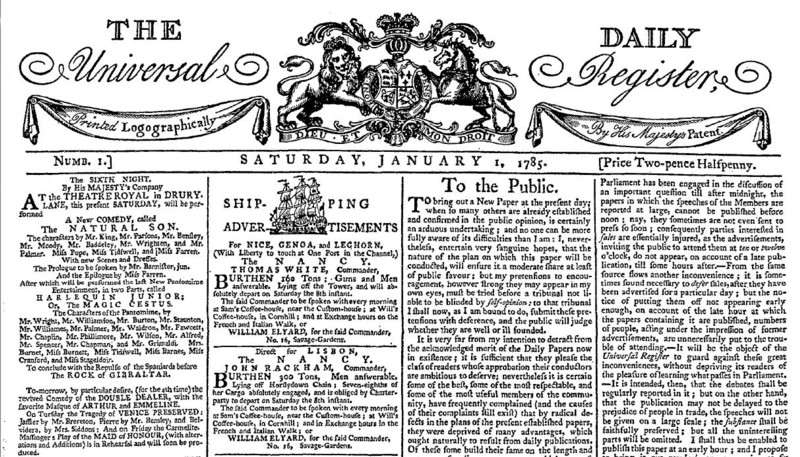
First issue of the Universal Daily Register in 1785, later to become The Times
❚ THE ROMANCE OF THE BRITISH PRESS has always derived from its being simultaneously glorious and wretched, from its earliest days when kings would jail upstart editors to the decade of continual strife throughout British industry, the 1970s. So powerful were the trade unions that, as former Times editor Simon Jenkins wrote in his 1979 book Newspapers, The Power and the Money: “Action taken… has brought one paper after another to the brink of financial ruin.” Mind you, rich proprietors also made pretty ineffectual managers. One of the more enlightened was the Canadian Roy Thomson, who flexed his muscle by shutting down for a whole year both of the world-renowned newspapers he owned and published in London — The Times (founded 1785, and 200 years later broadening its appeal from its historic role as the “Top People’s paper”) and The Sunday Times (founded 1821, which under Harry Evans had set benchmarks with its hugely influential investigative journalism). In 1980 the papers ran up a £15m loss (equivalent to £50m today) and by then Thomson had reached the end of his tether, so put them up for sale.
Those were the days when ten nationally distributed daily newspapers and nine Sundays averaged 13m paid-for sales every day of the week (serving a UK population of 56m). Seven millionaire contenders sprang into the marketplace to bid for the two Timeses, yet Harry Evans thought none was worthy to own the world’s most prestigious titles. His book Good Times Bad Times is the rippingmost yarn about real newspaper life — “Who were these seven dwarves, I asked a staff meeting, to seek the hand of Snow White?” It was the Australian wot won it. The deal led to 563 redundancies.
Posted on12 Oct 2009|Comments Off on WELCOME ➤ TO THE SWINGING EIGHTIES
In 1980 a youth movement began reshaping Britain.
Its stars didn’t call themselves New Romantics, or the Blitz Kids – but other people did. This writer was there and these words and pictures tell the tale.
◼︎ As a decade, the 1970s spelt doom. British youth culture had been discredited by punk. A monumental recession followed the Labour government’s “winter of discontent”, threatening the prospect of no jobs for years ahead.
Yet from this black hole burst an optimistic movement the press dubbed the New Romantics, based on a London club called the Blitz. Its deejay Rusty Egan promoted the deliberately un-rock sounds of synthesised electro-pop with a beat created for the dancefloor, while drumming in a studio seven-piece called Visage, fronted by the ultimate poser, Steve Strange. He and other fashionista Blitz Kids were picked by Bowie to represent their movement in his 1980 video for Ashes to Ashes (above). But the live band who broke all the industry rules were five dandies with a preposterous name: Spandau Ballet.
As the last of the Baby Boomers, the Blitz Kids were concerned with much more than music. In 1980 they shook off teenage doubt to express all those talents the later Generation X would have to live up to — leadership, adaptability, negotiating skills, focus. Children of the first era of mass TV, these can-doers excelled especially in visual awareness. They were the vanguard for a self-confident new class who were ready to enjoy the personal liberty and social mobility heralded by their parents in the 60s.
For Britain, the Swinging 80s were a tumultuous period of social change when the young wrested many levers of power away from the over-40s. London became a creative powerhouse and its pop music and street fashion the toast of world capitals. All because a vast dance underground had been gagging for a very sociable revolution.
★++++++★++++++★
“From now on, this will become the official history”
– Verdict of a former Blitz Kid
➢ THE DROPDOWN MENUS ALONG THE PAGE TOP lead you to main topics. Choose “View full site” on your mobile. ➢ THE BLOG POSTS on this front page report topical updates which also link to the background pages in the menu.
❏ Below: View Blitz Club host Steve Strange in all his poser glory in the promo video for Fade to Grey (1982), also starring the club’s cloakroom girl, Julia Fodor, aka Princess
❏ iPAD & TABLET & MOBILE USERS PLEASE NOTE — You are viewing only a very small selection of content, not chosen by the author. To access fuller background features and topical updates please request “PC version” and Choose “View full site” – then in the blue bar atop your mobile page, click the three horizontal lines which link to many blue themed pages of background articles.
Comments Off on WELCOME ➤ TO THE SWINGING EIGHTIES
➢ Choose “View full site” – then in the blue bar atop your mobile page, click the three horizontal lines linking to many blue themed pages with background article
MORE INTERESTING THAN MOST PEOPLE’S FANTASIES — THE SWINGING EIGHTIES 1978-1984
They didn’t call themselves New Romantics, or the Blitz Kids – but other people did.
“I’d find people at the Blitz who were possible only in my imagination. But they were real” — Stephen Jones, hatmaker, 1983. (Illustration courtesy Iain R Webb, 1983)
“The truth about those Blitz club people was more interesting than most people’s fantasies” — Steve Dagger, pop group manager, 1983
PRAISE INDEED!
“See David Johnson’s fabulously detailed website Shapers of the 80s to which I am hugely indebted” – Political historian Dominic Sandbrook, in his book Who Dares Wins, 2019
“The (velvet) goldmine that is Shapers of the 80s” – Verdict of Chris O’Leary, respected author and blogger who analyses Bowie song by song at Pushing Ahead of the Dame
“The rather brilliant Shapers of the 80s website” – Dylan Jones in his Sweet Dreams paperback, 2021
A UNIQUE HISTORY
➢ WELCOME to the Swinging 80s ➢ THE BLOG POSTS on this front page report topical updates ➢ ROLL OVER THE MENU at page top to go deeper into the past ➢ FOR NEWS & MONTH BY MONTH SEARCH scroll down this sidebar
❏ Header artwork by Kat Starchild shows Blitz Kids Darla Jane Gilroy, Elise Brazier, Judi Frankland and Steve Strange, with David Bowie at centre in his 1980 video for Ashes to Ashes
VINCENT ON AIR 2026
✱ Deejay legend Robbie Vincent has returned to JazzFM on Sundays 1-3pm… Catch up on Robbie’s JazzFM August Bank Holiday 2020 session thanks to AhhhhhSoul with four hours of “nothing but essential rhythms of soul, jazz and funk”.
TOLD FOR THE FIRST TIME
◆ Who was who in Spandau’s break-out year of 1980? The Invisible Hand of Shapersofthe80s draws a selective timeline for The unprecedented rise and rise of Spandau Ballet –– Turn to our inside page
SEARCH our 925 posts or ZOOM DOWN TO THE ARCHIVE INDEX
UNTOLD BLITZ STORIES
✱ If you thought there was no more to know about the birth of Blitz culture in 1980 then get your hands on a sensational book by an obsessive music fan called David Barrat. It is gripping, original and epic – a spooky tale of coincidence and parallel lives as mind-tingling as a Sherlock Holmes yarn. Titled both New Romantics Who Never Were and The Untold Story of Spandau Ballet! Sample this initial taster here at Shapers of the 80s
CHEWING THE FAT
✱ Jawing at Soho Radio on the 80s clubland revolution (from 32 mins) and on art (@55 mins) is probably the most influential shaper of the 80s, former Wag-club director Chris Sullivan (pictured) with editor of this website David Johnson
LANDMARK FAREWELLS. . . HIT THE INDEX TAB UP TOP FOR EVERYTHING ELSE














 ➢➢ Shapers of the 80s ➣➣