The decorated British milliner Stephen Jones has created headgear for everyone from Princess Diana to Rihanna, collaborated with some of fashion’s greatest houses and contributed to exhibitions around the world. This week he talks to Liam Freeman for Vogue about his glittering career. . .
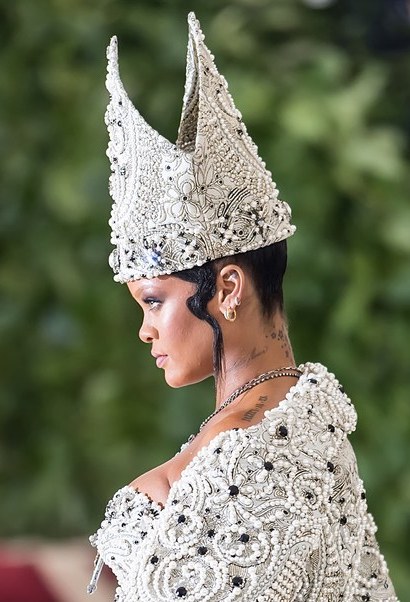
Rihanna sports Jones at the 2018 Met Ball (Getty)
“ It’s 40 years since Stephen Jones – one of the fashion industry’s most prolific and inventive milliners – entered the hat game. Does it feel like yesterday? “No it doesn’t,” the 62-year-old replies. “It definitely feels like I’ve had a career doing this. But the thrill and the terror of making a hat is just the same as when I started.” Why the terror? “You’re dealing with a piece of white paper, you’re working with a [insert: often world-famous] client, a high-profile designer, and you do learn how [to do it], but in a way you don’t because every hat is opening night… ” / Continued at Vogue online
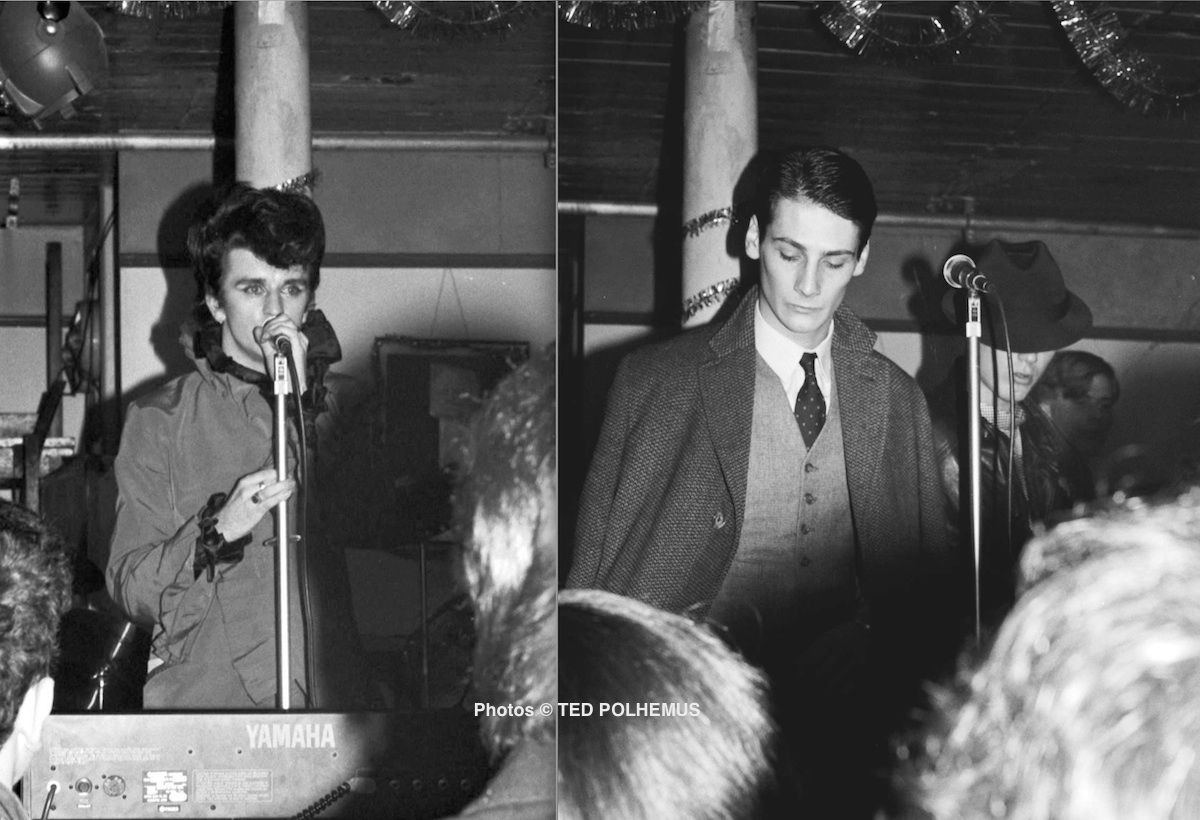
Spandau Ballet’s debut beneath festive bunting: left, Steve Strange in PX frills introduces the new band at the Blitz Christmas party in December 1979… Tony Hadley supercool in collar, tie, waistcoat and overcoat, Martin Kemp in jaunty trilby with Steve Norman beyond. Dagger’s blog seems unaware of these photos and after seeing them here at Shapersofthe80s, Gary Kemp recalls “being terrified while playing the little Yamaha CS-10, that we wouldn’t get away with it. Apart from many of the songs that made up our first album we also played Iggy Pop’s Fun Time and On Her Majesty’s Secret Service”
On the 40th anniversary of Spandau Ballet’s debut
performance at London’s Blitz club spearheading
the post-punk new wave, the band’s manager
Steve Dagger publishes his eye-witness account…
❏ On the 5th of December 1979, Spandau Ballet was born. After a year in metamorphosis and following a successful preview show two weeks before at Halligan’s rehearsal studios, when they were named by journalist and broadcaster to be, Robert Elms, Spandau Ballet emerged onto the stage and into the world at the Blitz on the occasion of Steve Strange and Rusty Egan’s Christmas party in 1980 [1979 surely – Ed].
Much has been written about the Blitz and its extraordinary position as a cultural funnel at the beginning of the 80s. But Spandau Ballet’s two performances there and subsequent meteoric rise to success did much to drive this tiny club and its spectacular cliental [clientele? – Ed] into the headlines and its ethos into popular culture and serve as the template to the 80s.
What happened that night?
No band had played before at a Steve Strange/Rusty Egan event, so the audience was not used to seeing live music in this context. Music was normally provided by Rusty Egan’s DJing, an extraordinary montage of epic electronica which seemed to give a tantalizing glimpse of a future we were all going to take part in.
How would “Spandau Ballet” be received? The preview show had gone incredibly well, so a handful of our friends and key faces on the scene had seen the band already, liked them and spread the word. But it was an impossibly cool crowd. Whether they were fashion students, artists, embryonic designers, wannabe writers, film directors or just London’s coolest of the cool night people, they all had an opinion of themselves and everything else.
The usual crowd was supplemented by a sprinkling of older cognoscenti, a Chelsea crowd who had become aware of the Blitz scene. The likes of Keith Wainwright, uber-cool hairdresser of Smile; artist Dougie Fields to name but a few, plus some musicians who had been drawn to the Blitz. Richard Burgess of Landscape (Spandau Ballet producer to be), Midge Ure of Ultravox and Billy Idol, Steve Severin of Siouxsie and the Banshees and Marco Pirroni of Adam & The Ants.
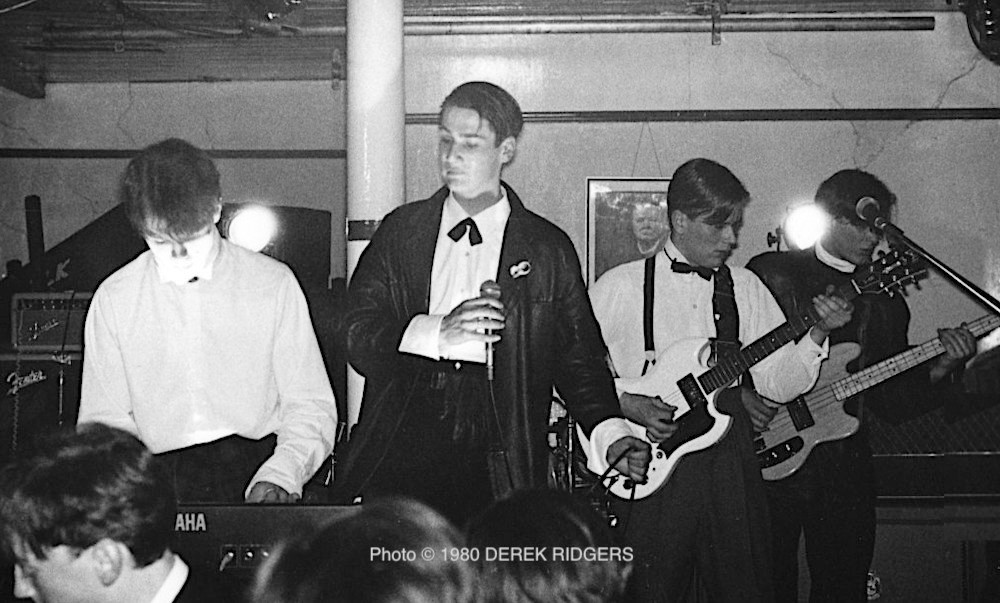
Spandau Ballet’s second Blitz date, January 1980, despite Dagger’s belief on his blog that this pic shows the band’s debut. Most are sporting bow ties – Gary Kemp on synth at left, Tony Hadley as vocalist, with Steve Norman and Martin Kemp on guitars held high in their anti-rock stance. Churchill gazes out from his photo on the rear wall
So the battle lines were drawn and into the valley [of] death… Actually, the band were much less nervous than they had been for the preview show and also excited about playing in “their” club. When Rusty’s music stopped and they got onto the tiny stage there was a degree of anticipation and curiosity. I think the band realised collectively it was now or never and they seized the moment and started to play confidently and with a bit of swagger. Some of the audience danced, some applauded but almost everyone watched.
Tony sang brilliantly. The set which included most of the songs on “Journeys to Glory” fitted the club. Spandau Ballet fitted the club. “To Cut a Long Story” sounded like a massive hit.
Halfway through the set I was feeling quietly confident and was standing by the mixing desk next to the sound engineer when I became aware of a man standing next to me. He spoke to me.
“Who is this band?”
“It’s Spandau Ballet,” I said.
The new name sounded f*cking great.
“Which record label are they signed to?”
“They aren’t signed.”
“Who is their manager.”
“I am,” I said proudly.
“Well I am Chris Blackwell and I own Island Records, and I would like to sign them.”
First gig as Spandau Ballet… 5-0 up. Another man approached me. He was Danny Goodwin from Peninsula Music Publishing. He wanted to sign them too.
The band finished their set. I could not wait to go backstage into the tiny dressing room to talk to them. We had all worked very hard for this moment. They were about to become a very important band. The only band that could play in the Blitz. The most important club in the world at that time. Everyone in the Blitz that night was hugely complimentary and positive about them.
We owned the space, we had claimed it. We were about to go through the looking glass and our lives were never going to be the same. The next day, I spoke to Chris Blackwell on the phone and arranged to meet him in a pub. He was softly spoken, charming and very cool. He owned the coolest record label in the world – Bob Marley, Roxy Music, Traffic, Free, Spencer Davis – and he wanted to sign Spandau Ballet. Now. He even gave me a list of lawyers he recommended to act for the band.
It all felt a little strange but somehow like it was all supposed to happen like this. I felt unbelievably relaxed and comfortable, empowered, and the band very confident, entitled energised. Uncrowned Princes of pop culture all of a sudden. We turned him down. But that is another story.
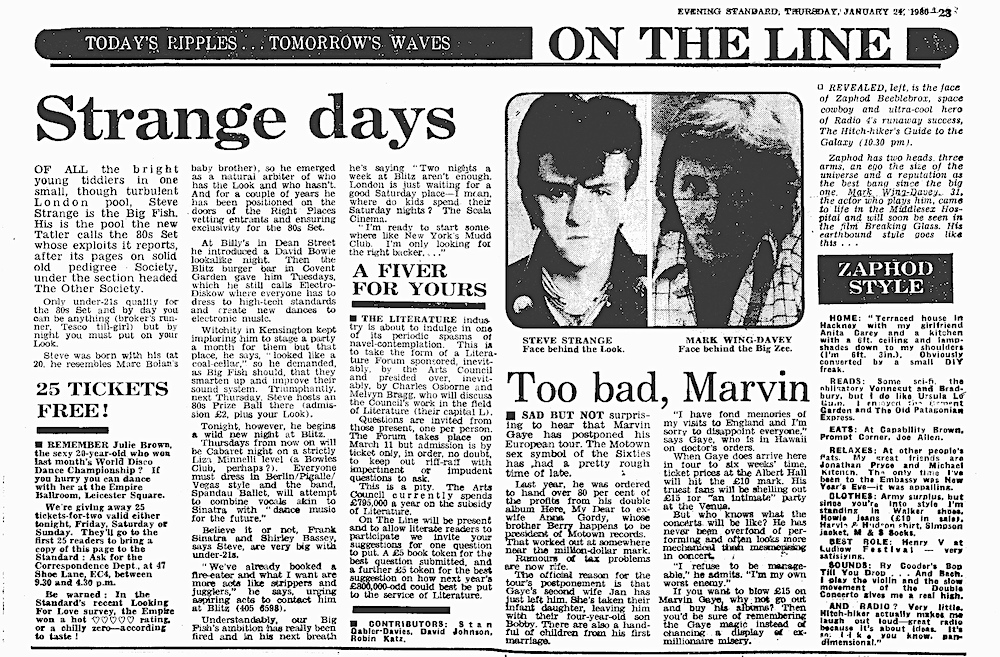
Steve Strange’s first interview with the Evening Standard, 24 Jan 1980, telling us of Spandau Ballet’s second performance that day
RARE VIDEO OF THE BLITZ A-BUZZ:
❏ You won’t find much authentic filmed footage inside the Blitz Club because so little exists and many posts claiming to show the Blitz at YouTube do not. The brief but glorious clip we see above captures the visual excess of its dancefloor in Spandau Ballet’s 2014 biopic Soul Boys of the Western World. The interiors come from Lyndall Hobbs’ short doc about London tribes called Steppin’ Out, shot in the summer of 1979. The first half-minute here comes from a TV report showing Blitz Kids gathering outside Sloane Square underground station to celebrate Steve Strange’s 21st birthday aboard a Circle Line train on 28 May 1980. We hear Martin Kemp voicing the sequence which zooms in on him at 23 seconds. The black-and-white stills collaged into the segment are Shapersofthe80s originals, and the closing seconds are from LWT’s 20th-Century Box.
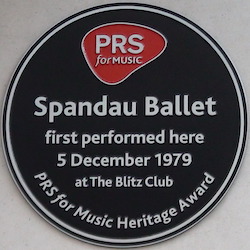
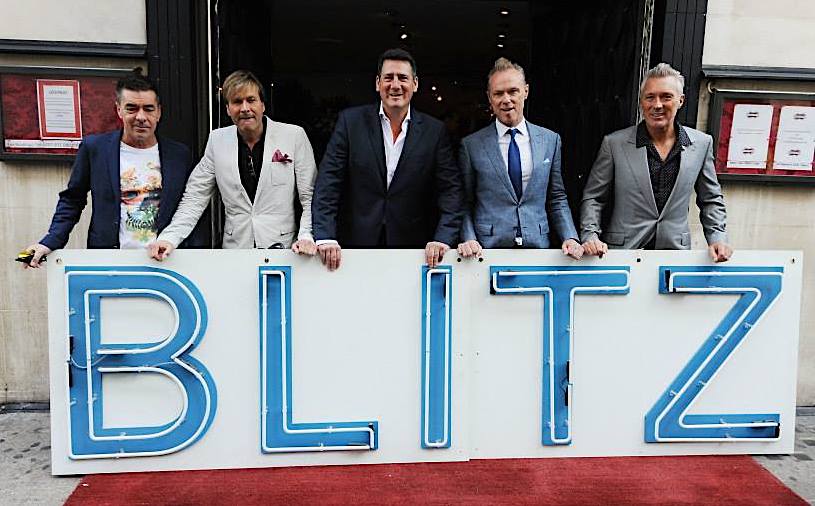
Heritage award from the Performing Rights Society: In September 2014 Spandau Ballet returned to the site of the Blitz Club to see a plaque installed remembering their debut. The club’s original neon sign was also present for the photoshoot
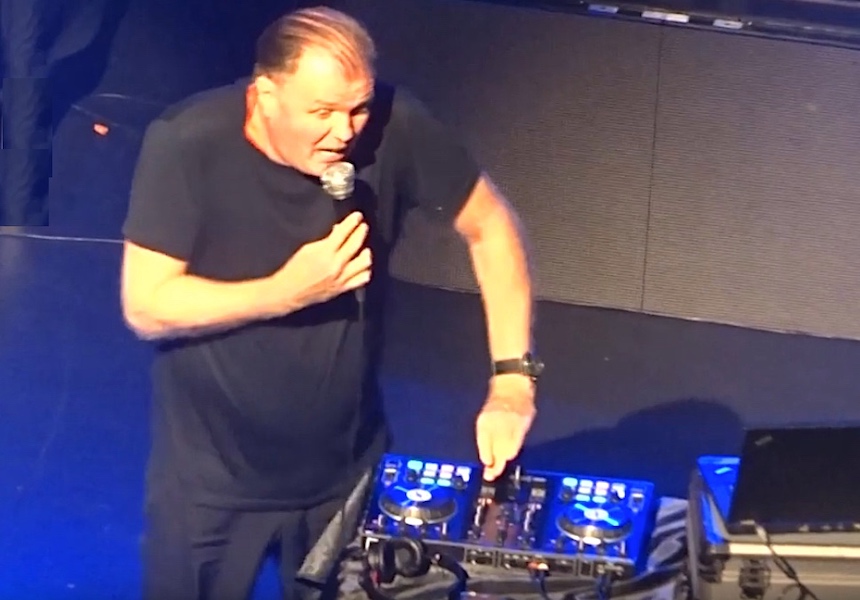
Egan onstage at the Palladium: video grab by Willy Billiams
◼ ONSTAGE AT THE LONDON PALLADIUM supporting Midge Ure’s tour last week, Blitz Club co-founder Rusty Egan gave a highly first-person history lesson about his early days while demonstrating his mixing talents at a deejay console.
Of 1979, he says: “I wasn’t really a deejay, I was a drummer, and I thought you can put one record on and you can put another record on at the same time and I thought I can do that, you don’t have to stop, I’d keep it going and I mixed the records together and started to enjoy it. Us suburban 19 to 25-year-olds with ‘no future’ in 1979 suddenly had some music that spoke to us. I was basically a fan and I am 40 years later still a fan of music.”
Here is half an hour of Egan’s stream of consciousness, doing what he does best, choosing good music and showing off. All spiced with his usual frankness, natch.
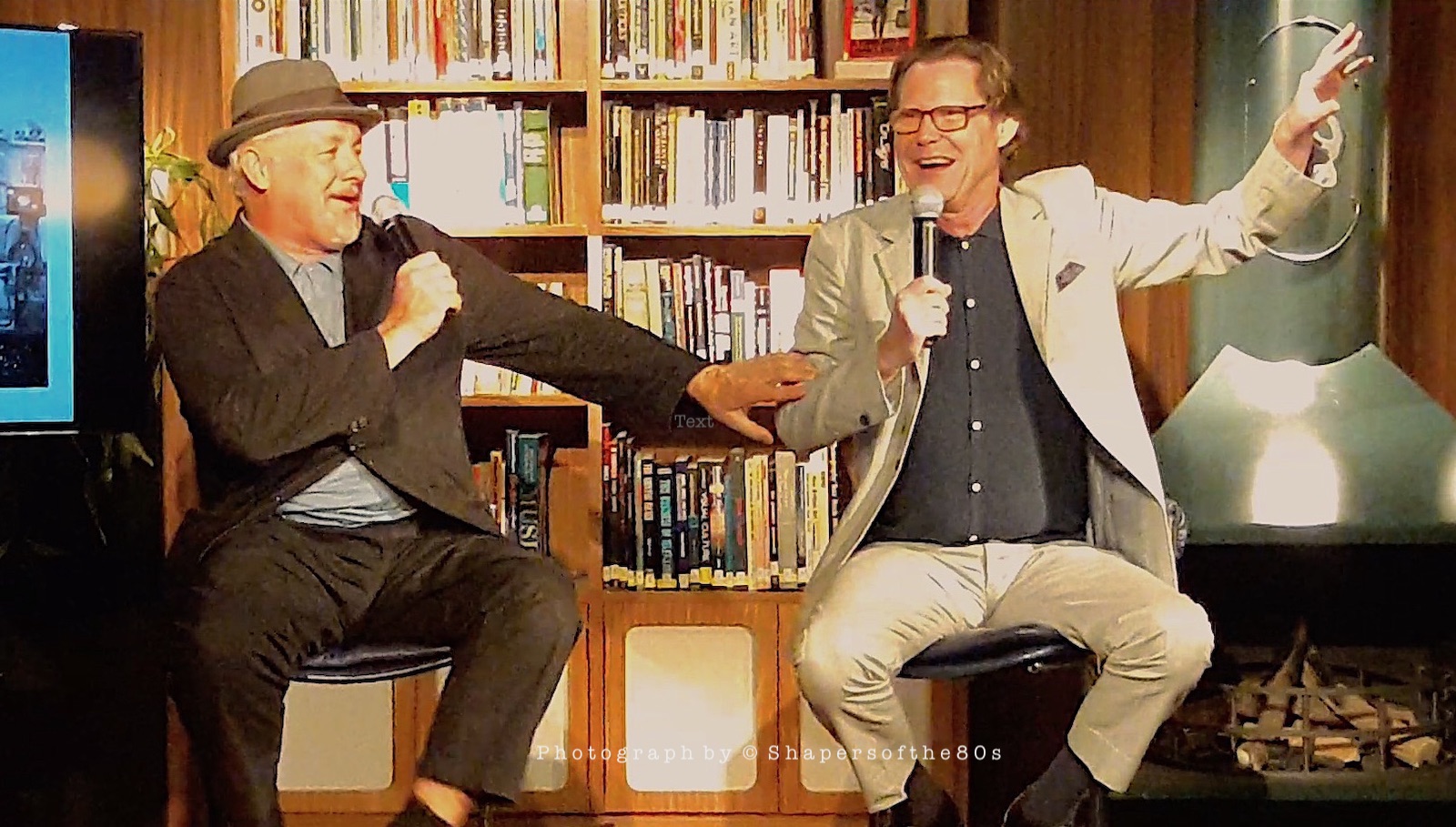
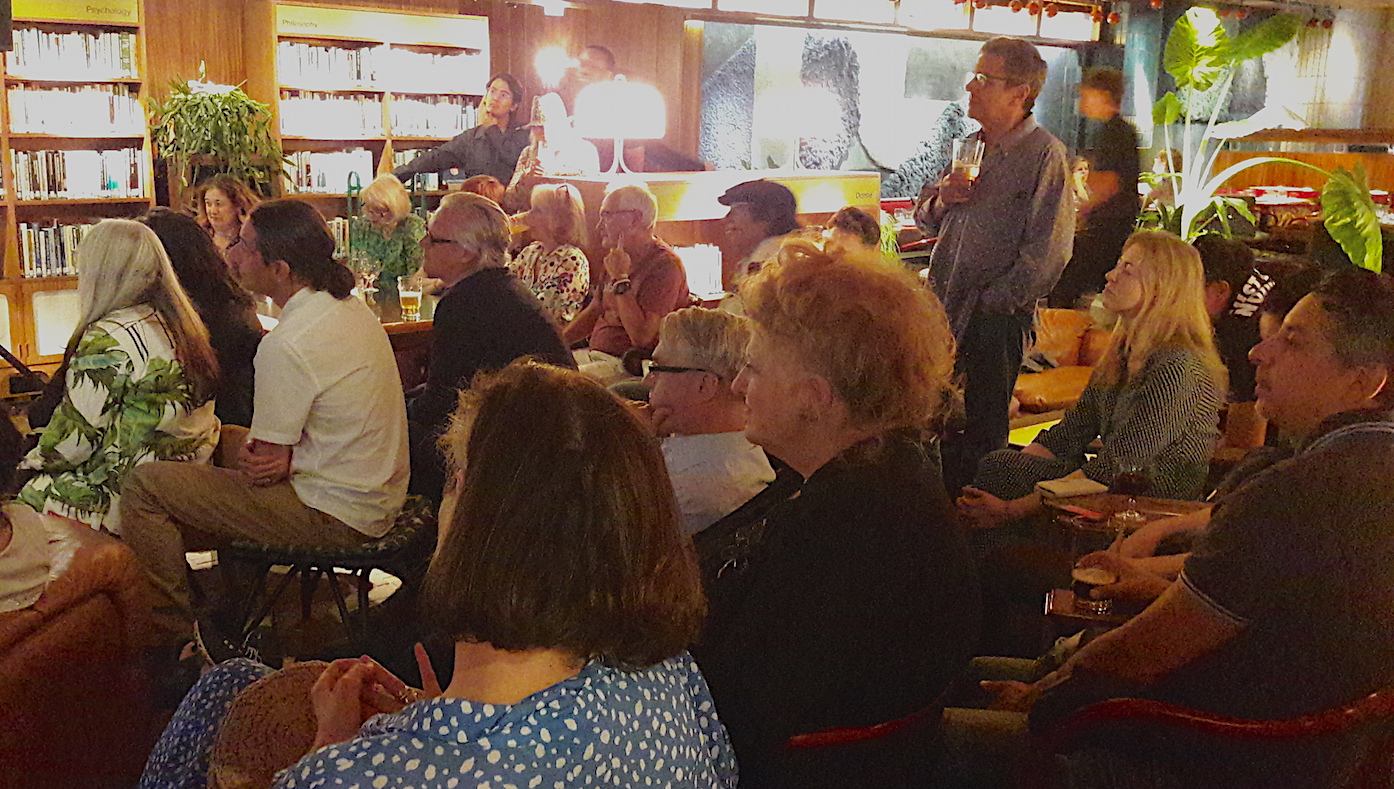
Ribald and passionate: Sullivan and Elms capping each other’s stories with gusto
◼ TWO LIFE-LONG PALS, both born raconteurs and clubland wags, sat on a pair of wonky stools this week in public and for an hour had an invited crowd roaring as helplessly as themselves as each capped the other’s stories. The subject was the ever-changing face of London and their faces were those of writer/artist Chris Sullivan (nominally a Welshman who revealed roots that led to a grandfather who’d been a bouncer at the capital’s Windmill Theatre), and BBC London broadcaster Robert Elms (a paid-up Cockney in all but the Bow Bells bit, whose mum was a clippie on the buses at age 15). Both are renowned for having shaped the style revolution of the Swinging Eighties. Now they had taken over a snug corner of the library lounge at the Standard Hotel in King’s Cross, a venue which prompted some ribald tales of their mis-spent teens.
Topics ranged from the East End to West End. There was much mention of food from the era before London became cuisine capital of the world: Elms remembered the early pizza parlours that served your American Hot with a whole baked potato and coleslaw all on one plate. “Which Italian ever had that?” he howled. From the audience, David Rosen recalled Blooms in Whitechapel as an essential kosher eaterie when its walls were blessed with photography by Bauhaus star Moholy-Nagy.
A wrapt audience for Sullivan and Elms: familiar faces from their colourful circle of London friends
For half a century Soho had been the red-light district and as a result, Elms said, by the mid-70s civilised people had given up on the centre of town. Only a public outcry in 1973 protected the 19th-century neo-classical buildings of Covent Garden as the market prepared to relocate to Nine Elms. He added: “London was going to be knocked down after the market moved out and this generation of Londoners [the audience] saved it by our creativity.” It was for instance the place where the seminal New Romantics Blitz club-night opened in 1979, a year before the desolate central market reopened as a shopping centre.
The lack of affordable nightclubs for teenagers in 1979 also drove Bob and Chris to initiate their own pioneering ad hoc parties at the Mayhem print warehouse featuring snake-charmers and blue movies projected onto the ceiling as their “crash course for ravers”. These parties were free, Bob confessed, because they never dreamed they could charge people admission. Chris became so animated at this point he was falling off his stool with laughter.
Of Soho’s Wag club, the pivotal black music nightspot he ran for almost two decades, Sullivan reminded us: “London was a dodgy place. Coming into Soho was taking your life in your hands. The only reason we were able to take over the Wag was because it was a no-go area. About three months after it started, a prostitute got her throat cut outside the Pizza Express by her pimp. People forget it was dangerous. Back then you could be attacked in Soho for wearing the wrong clothes.” Consequently, Elms added: “That Blitz/Wag generation were pretty tough.”
Today the sentimental pair remain firm fans of “the greatest city on earth” but then, they both revel in making things happen wherever they go.
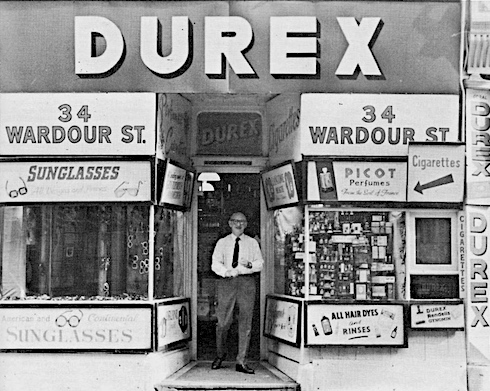
Condoms by the gross: legendary Soho shop-front
❏ Throwaway revelation: The landmark 18-foot wide DUREX sign that graced a Wardour Street shopfront almost opposite the Wag, and had serviced the needs of timid schoolboys for generations, today belongs to Valentine Morby!
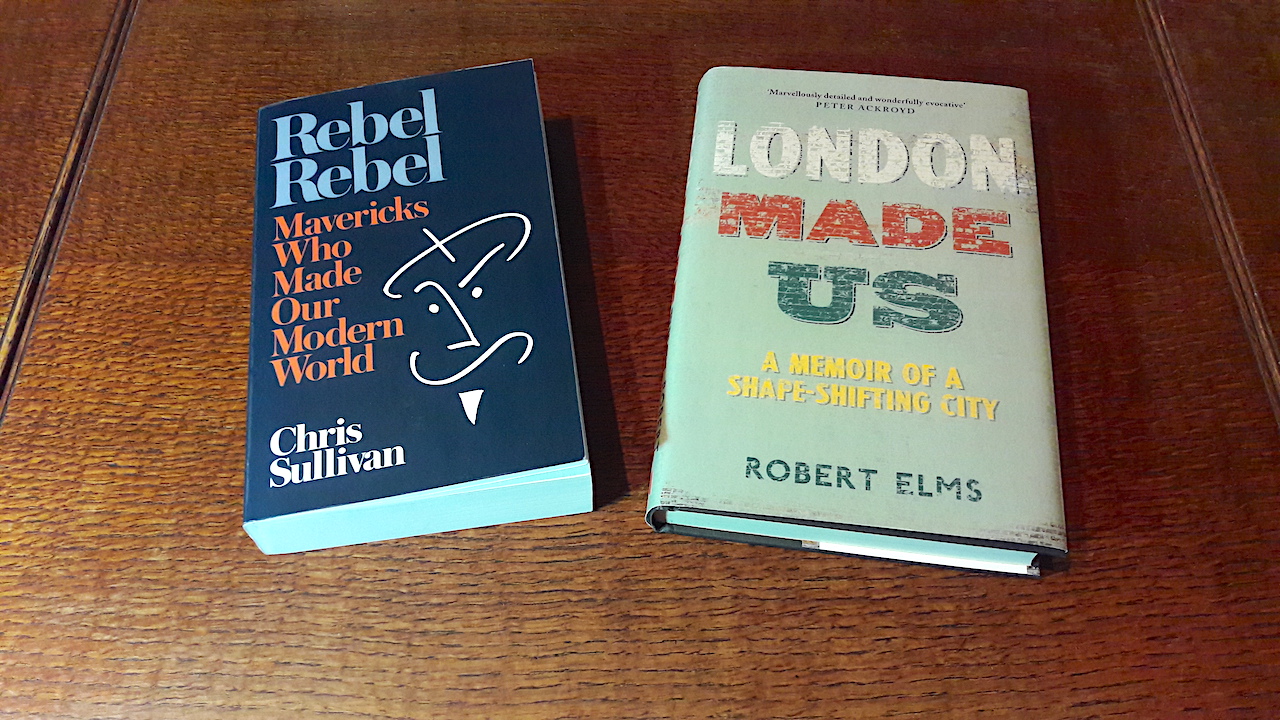
Their latest books 2019: Sullivan’s from Unbound, Elms’s from Canongate
Discussion following Beyond at Vogue Fabrics Dalston: around Claire Lawrie wearing white), Andy Polaris, Roy Brown, David Holah, Iain R Webb, Greg Davis. (Photo Shapersofthe80s)
◼ WELL THAT WAS A HILARIOUS BOUT OF GAY BANTER following the first community screening of director Claire Lawrie’s Iris prize-winning short documentary featuring eleven highly individual creatives telling their stories about growing up black and queer in 1970s and 80s Britain. Thursday’s screening at Vogue Fabrics Dalston of Beyond “There’s always a black issue, Dear” was as moving and thoughtful as it was entertaining. Joining Claire in Thursday’s follow-on discussion were some of its stars, Frank Akinsete, Andy Polaris, Roy Brown and Winn Austin, plus David Holah, Iain R Webb, Greg Davis, Shaun Cole and other individualists who made their mark before and during Margaret Thatcher’s regime.
Navigating their gender-fluid youth in this period of cultural and political turbulence saw the protagonists tackling things their own way. London’s alternative nightclub scene provided sanctuary for disco to meet soul and punks to become Blitz Kids. As fierce LGBTQ trailblazers, the cast recount vivid memories which tell of singular determination and of resisting definition, through dance, art, fashion and music and seeing their ideas appropriated by the mainstream. The film acknowledges the importance of family, whether as parents or a group of like-minded friends. “You needed somewhere to go where you felt good about yourself,” and in the post-punk moment that meant Soho nightclubs such as Crackers and Billy’s.
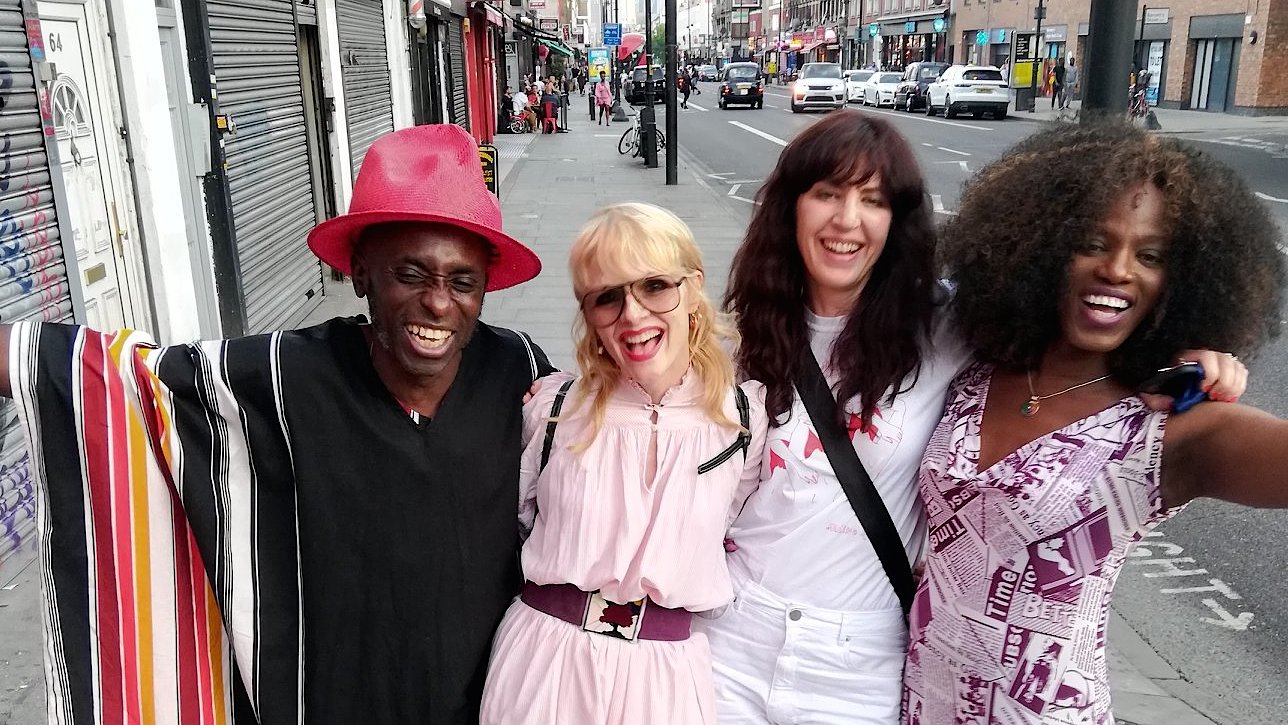
Claire Lawrie with guests outside Vogue Fabrics Dalston: Frank Akinsete, Pippa Brooks, Winn Austin. (Photo Andy Polaris)
In Thursday’s discussion Frank said that race itself wasn’t the issue, simply feeling “weird”. Within black circles the choice was also between reggae or soul, Andy said on today’s Robert Elms show on BBC Radio London: “The power of the film is not just about gay or straight, black or white – we were all rejects from some type of conservatism and we came together in a safe space where we could explore ourselves.”
Also on the Elms show, Claire said the film started with Les Childs being in Lindsay Kemp’s company in the mid-70s (he later worked with Michael Clark and choreographed for the Pet Shop Boys) and goes through to 1991 and the Michael and Gerlinde Costiff club Kinky Gerlinky. Claire added: “London is another star of this film – we all moved to London to be individual.”
There’s another screening tonight (6 July) at the Conduit club in Mayfair as part of BlackOut’s starry Pride programme (tickets via Eventbrite) and again on 23 July at Manchester Pride, with another hopefully in Liverpool.
➢ Choose “View full site” – then in the blue bar atop your mobile page, click the three horizontal lines linking to many blue themed pages with background article
MORE INTERESTING THAN MOST PEOPLE’S FANTASIES — THE SWINGING EIGHTIES 1978-1984
They didn’t call themselves New Romantics, or the Blitz Kids – but other people did.
“I’d find people at the Blitz who were possible only in my imagination. But they were real” — Stephen Jones, hatmaker, 1983. (Illustration courtesy Iain R Webb, 1983)
“The truth about those Blitz club people was more interesting than most people’s fantasies” — Steve Dagger, pop group manager, 1983
PRAISE INDEED!
“See David Johnson’s fabulously detailed website Shapers of the 80s to which I am hugely indebted” – Political historian Dominic Sandbrook, in his book Who Dares Wins, 2019
“The (velvet) goldmine that is Shapers of the 80s” – Verdict of Chris O’Leary, respected author and blogger who analyses Bowie song by song at Pushing Ahead of the Dame
“The rather brilliant Shapers of the 80s website” – Dylan Jones in his Sweet Dreams paperback, 2021
A UNIQUE HISTORY
➢ WELCOME to the Swinging 80s ➢ THE BLOG POSTS on this front page report topical updates ➢ ROLL OVER THE MENU at page top to go deeper into the past ➢ FOR NEWS & MONTH BY MONTH SEARCH scroll down this sidebar
❏ Header artwork by Kat Starchild shows Blitz Kids Darla Jane Gilroy, Elise Brazier, Judi Frankland and Steve Strange, with David Bowie at centre in his 1980 video for Ashes to Ashes
VINCENT ON AIR 2026
✱ Deejay legend Robbie Vincent has returned to JazzFM on Sundays 1-3pm… Catch up on Robbie’s JazzFM August Bank Holiday 2020 session thanks to AhhhhhSoul with four hours of “nothing but essential rhythms of soul, jazz and funk”.
TOLD FOR THE FIRST TIME
◆ Who was who in Spandau’s break-out year of 1980? The Invisible Hand of Shapersofthe80s draws a selective timeline for The unprecedented rise and rise of Spandau Ballet –– Turn to our inside page
SEARCH our 925 posts or ZOOM DOWN TO THE ARCHIVE INDEX
UNTOLD BLITZ STORIES
✱ If you thought there was no more to know about the birth of Blitz culture in 1980 then get your hands on a sensational book by an obsessive music fan called David Barrat. It is gripping, original and epic – a spooky tale of coincidence and parallel lives as mind-tingling as a Sherlock Holmes yarn. Titled both New Romantics Who Never Were and The Untold Story of Spandau Ballet! Sample this initial taster here at Shapers of the 80s
CHEWING THE FAT
✱ Jawing at Soho Radio on the 80s clubland revolution (from 32 mins) and on art (@55 mins) is probably the most influential shaper of the 80s, former Wag-club director Chris Sullivan (pictured) with editor of this website David Johnson
LANDMARK FAREWELLS. . . HIT THE INDEX TAB UP TOP FOR EVERYTHING ELSE









 ➢➢ Shapers of the 80s ➣➣