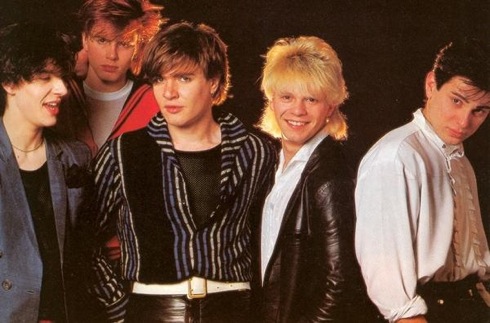
❚ ON THIS DAY IN 1980 Spandau Ballet, the houseband of the Blitz club, saw their first single To Cut a Long Story Short reach its highest chart position, No 5 in the UK. Crucially, its nine-week stay in the top 40 guaranteed weekly exposure on Top Of The Pops, the UK’s leading TV show for music, which pulled 15m viewers in those days (among the week’s highest audiences) when the No 1 single typically sold 150,000 vinyl records per week.
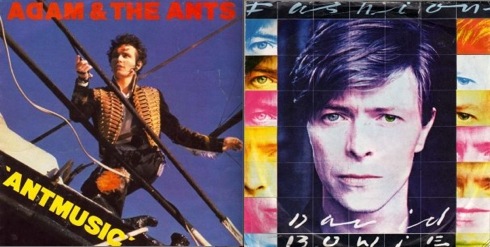
Ahead of Spandau this week were Madness, The Boomtown Rats, Blondie and, at No 1, Abba with Super Trouper. Below them making waves for the new British pop were Eddy Grant, David Bowie, Roxy Music, OMD, Adam & the Ants, Kate Bush and The Clash. In the next four years, 54 new image bands and acts from UK clubland would flood the charts with a new British sound, plus 34 others from the clubbing slipstream. The Swinging 80s were about to crank themselves into gear.
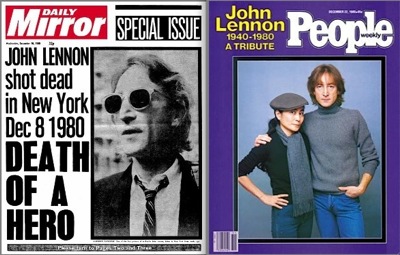
Representing yesterday’s men in that week’s top 40 were Rod Stewart, Queen, Status Quo and Robert Palmer. From the 80s onward, rock was no longer to be the dominant form of music and the rhythm of the charts changed for ever to the bass and the drum. The giant tragedy that loomed over this week, however, was the shooting dead of ex-Beatle John Lennon. He was in the charts singing Starting Over.
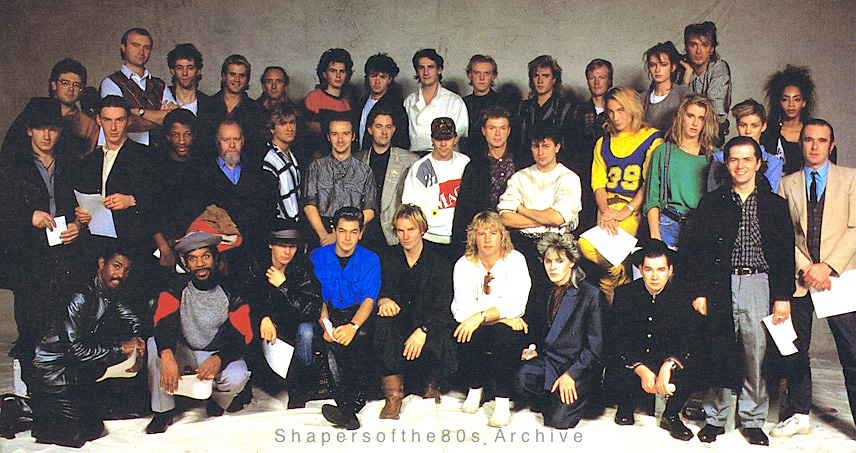
The Band Aid band, Nov 25, 1984: most of the pop stars who performed, plus artist Peter Blake who created the record sleeve for Do They Know It’s Christmas?
◼︎ TODAY WAS THE DAY IN 1984 THEY RECORDED the song that became, for 13 years, the biggest selling UK single of all time. Do They Know It’s Christmas was released four days later, stayed at No 1 for five weeks, sold over three million copies and raised significant funds for famine relief in Africa. The project lead naturally the next year to Live Aid, the biggest globally televised rock concerts ever, viewed by two billion people in 60 countries, who coughed up still more dollars. It is estimated that Live Aid raised £150m (about $283m). Last year a poll of 5,000 people, who were surveyed across Europe, named Live Aid as the most important music event of the past 30 years. The hit single sold for £1.35, of which 96 pence went to the fund. Rerecordings of the song charted again in 1985 and 1989.
The idea for Band Aid was proposed by one man, Bob Geldof, since granted an honorary knighthood but in 1984 a musician down on his luck, who enlisted the much more successful go-getter, Ultravox’s Midge Ure (who remains unknighted for no good reason), to bring the dream to fruition as its producer. They created a megagroup from 45 of the biggest hitters in British music, who included the supergroups dominating world charts at the time — Culture Club, Duran Duran, Spandau Ballet, Wham! — plus AOR giants Sting, Genesis and U2, plus Kool and the Gang from the States. In a sea of mullets and bleached highlights, rival musicians united under the name Band Aid in a daring act of charity that was unprecedented in the competitive commercial arena.
The enterprise marked the end of an era, as this website documents. The Band Aid collaboration signalled the final chapter of the innovation which Shapersofthe80s believes defined the Swinging 80s as six dynamic years of subcultural initiative between 1978 and 1984. Britain’s visual kaleidoscope of cults was exactly what fed MTV from its launch in 1982 and loosened the stranglehold that music radio had previously enjoyed in the USA. The unlikely Band Aid scrum of Britain’s rival image bands who had risen on the same new wave substantially defined a new show-business elite who had come to epitomise mainstream tastes.
Michael Buerk in his BBC report from Ethiopia
Nobody can doubt the uniqueness of the pop fraternity’s gasp of altruism through Band Aid. Geldof had been genuinely distressed by the now landmark teatime TV report broadcast on October 23, 1984, by Michael Buerk, a popular BBC journalist. It still makes for grim viewing. In Ethiopia 7m people were threatened by famine, and 40,000 refugees had converged on the town of Korem in the hope of finding food and medical aid.
The film footage shocked the world and Buerk’s opening words still resonate today: “Dawn, and as the sun breaks through the piercing chill of night on the plain outside Korem, it lights up a Biblical famine, now, in the 20th century. This place, say workers here, is the closest thing to hell on earth…”
CONTRARY VERDICTS ON BAND AID
Morrissey, 1985 — “I’m not afraid to say that I think Band Aid was diabolical. Or to say that I think Bob Geldof is a nauseating character. Many people find that very unsettling, but I’ll say it as loud as anyone wants me to. In the first instance the record itself was absolutely tuneless. One can have great concern for the people of Ethiopia, but it’s another thing to inflict daily torture on the people of England. It was an awful record considering the mass of talent involved. And it wasn’t done shyly, it was the most self-righteous platform ever in the history of popular music.”
The World Development Movement described the Band Aid lyrics in 2004 as “patronising, false and out of date” and regretted it did not “provide a more accurate reflection of Africa and its problems”.
❏ IN THEIR RESPECTIVE AUTOBIOGRAPHIES, Ultravox’s Midge Ure and Spandau Ballet’s Gary Kemp provide entertaining and detailed accounts of the Band Aid venture, spiced with the frankness that comes from hindsight . . .
◆ June 17 — Fast Product releases the darkly mystical Being Boiled by Sheffield’s original Human League, and Bowie declares it “the future of music”. John Peel also champions the single on radio and it becomes a cult among the Billy’s and Blitz clubbing circle in London, though it does not chart until January 1982 on its second release. In the present day this is considered to be the first massively influential British electronic pop track. VIEW ♫ Being Boiled live in 1978 on Granada TV, though the audio is dire! +++
◆ June 21 — Tim Rice and Andrew Lloyd Webber’s musical Evita opens at London’s Prince Edward Theatre to run for 2,900 performances. A novel ploy has been to release a double album two years earlier — some songs are already chart hits ◆ June 29 — The Swinging 80s start here as David Bowie plays Earl’s Court, London. Sundry misfits recognise kindred spirits in the audience and gather afterwards at Billy’s club in Soho, long before the phrase New Romantics has been invented.
ON THIS DAY IN 1979…
◆ June 9 — Music weekly Sounds publishes Mods Without Parkas by Garry Bushell ◆ June 14 — The 70s “dressing up” imperative sees Flick’s in Dartford throw a VE Night deejayed by Radio London’s Robbie Vincent
ON THIS DAY IN 1980…
◆ June 14 — George O’Dowd parades past Buckingham Palace as a helmeted and toga’d Britannia at the annual royal ceremony of trooping the colour
ON THIS DAY IN 1981…
◆ June — The mainstream deejay’s bible Disco International publishes a plain man’s guide by yours truly, titled Who are the New Romantics and how do they dance? ◆ June — John Boorman’s epic Arthurian movie Excalibur opens in London starring Nigel Terry and Helen Mirren ◆ June 4 — Steve Strange and Rusty Egan open Club for Heroes in Baker Street ◆ June 21 — Arty Latin popsters Blue Rondo à la Turk are unveiled in Chelmsford after weeks of secret tease dates. Yours truly is there to introduce the band to readers of New Sounds New Styles under the headline He thinks he is Geronimo but Chris Sullivan is turning fantasy into fact
ON THIS DAY IN 1982…
Haysi Fantayzee 1982: ex-Blitz Kids Kate Garner, Jeremy Healy and manager Paul Caplin
◆ June 9 — Kasper de Graaf, editor of New Romantic magazine New Sounds New Styles, tells the Rebel Writers the title is to close and they are out of jobs. We retire to the Red Lion to seek consolation! ◆ June 14 — The Falklands War ends with the Argentine surrender. Its occupation of the Falkland Islands in the South Atlantic had provoked a war that lasted 74 days and results in the deaths of 260 Britons and 649 Argentinians ◆ June 21 — At the V&A the Middlesex fashion degree show is stolen by Stevie Stewart and David Holah. Their Matelots and Milkmaids collection establishes Bodymap as the label for the young and daring ◆ June 25 — As Haysi Fantayzee, Blitz Kids Kate Garner and Jeremy Healy release their debut single John Wayne is Big-leggy
ON THIS DAY IN 1983…
◆ June 14 — Capital Radio’s Gary Crowley starts deejaying at Bogart’s club, Harrow
➢ Choose “View full site” – then in the blue bar atop your mobile page, click the three horizontal lines linking to many blue themed pages with background article
MORE INTERESTING THAN MOST PEOPLE’S FANTASIES — THE SWINGING EIGHTIES 1978-1984
They didn’t call themselves New Romantics, or the Blitz Kids – but other people did.
“I’d find people at the Blitz who were possible only in my imagination. But they were real” — Stephen Jones, hatmaker, 1983. (Illustration courtesy Iain R Webb, 1983)
“The truth about those Blitz club people was more interesting than most people’s fantasies” — Steve Dagger, pop group manager, 1983
PRAISE INDEED!
“See David Johnson’s fabulously detailed website Shapers of the 80s to which I am hugely indebted” – Political historian Dominic Sandbrook, in his book Who Dares Wins, 2019
“The (velvet) goldmine that is Shapers of the 80s” – Verdict of Chris O’Leary, respected author and blogger who analyses Bowie song by song at Pushing Ahead of the Dame
“The rather brilliant Shapers of the 80s website” – Dylan Jones in his Sweet Dreams paperback, 2021
A UNIQUE HISTORY
➢ WELCOME to the Swinging 80s ➢ THE BLOG POSTS on this front page report topical updates ➢ ROLL OVER THE MENU at page top to go deeper into the past ➢ FOR NEWS & MONTH BY MONTH SEARCH scroll down this sidebar
❏ Header artwork by Kat Starchild shows Blitz Kids Darla Jane Gilroy, Elise Brazier, Judi Frankland and Steve Strange, with David Bowie at centre in his 1980 video for Ashes to Ashes
VINCENT ON AIR 2026
✱ Deejay legend Robbie Vincent has returned to JazzFM on Sundays 1-3pm… Catch up on Robbie’s JazzFM August Bank Holiday 2020 session thanks to AhhhhhSoul with four hours of “nothing but essential rhythms of soul, jazz and funk”.
TOLD FOR THE FIRST TIME
◆ Who was who in Spandau’s break-out year of 1980? The Invisible Hand of Shapersofthe80s draws a selective timeline for The unprecedented rise and rise of Spandau Ballet –– Turn to our inside page
SEARCH our 925 posts or ZOOM DOWN TO THE ARCHIVE INDEX
UNTOLD BLITZ STORIES
✱ If you thought there was no more to know about the birth of Blitz culture in 1980 then get your hands on a sensational book by an obsessive music fan called David Barrat. It is gripping, original and epic – a spooky tale of coincidence and parallel lives as mind-tingling as a Sherlock Holmes yarn. Titled both New Romantics Who Never Were and The Untold Story of Spandau Ballet! Sample this initial taster here at Shapers of the 80s
CHEWING THE FAT
✱ Jawing at Soho Radio on the 80s clubland revolution (from 32 mins) and on art (@55 mins) is probably the most influential shaper of the 80s, former Wag-club director Chris Sullivan (pictured) with editor of this website David Johnson
LANDMARK FAREWELLS. . . HIT THE INDEX TAB UP TOP FOR EVERYTHING ELSE







 ➢➢ Shapers of the 80s ➣➣