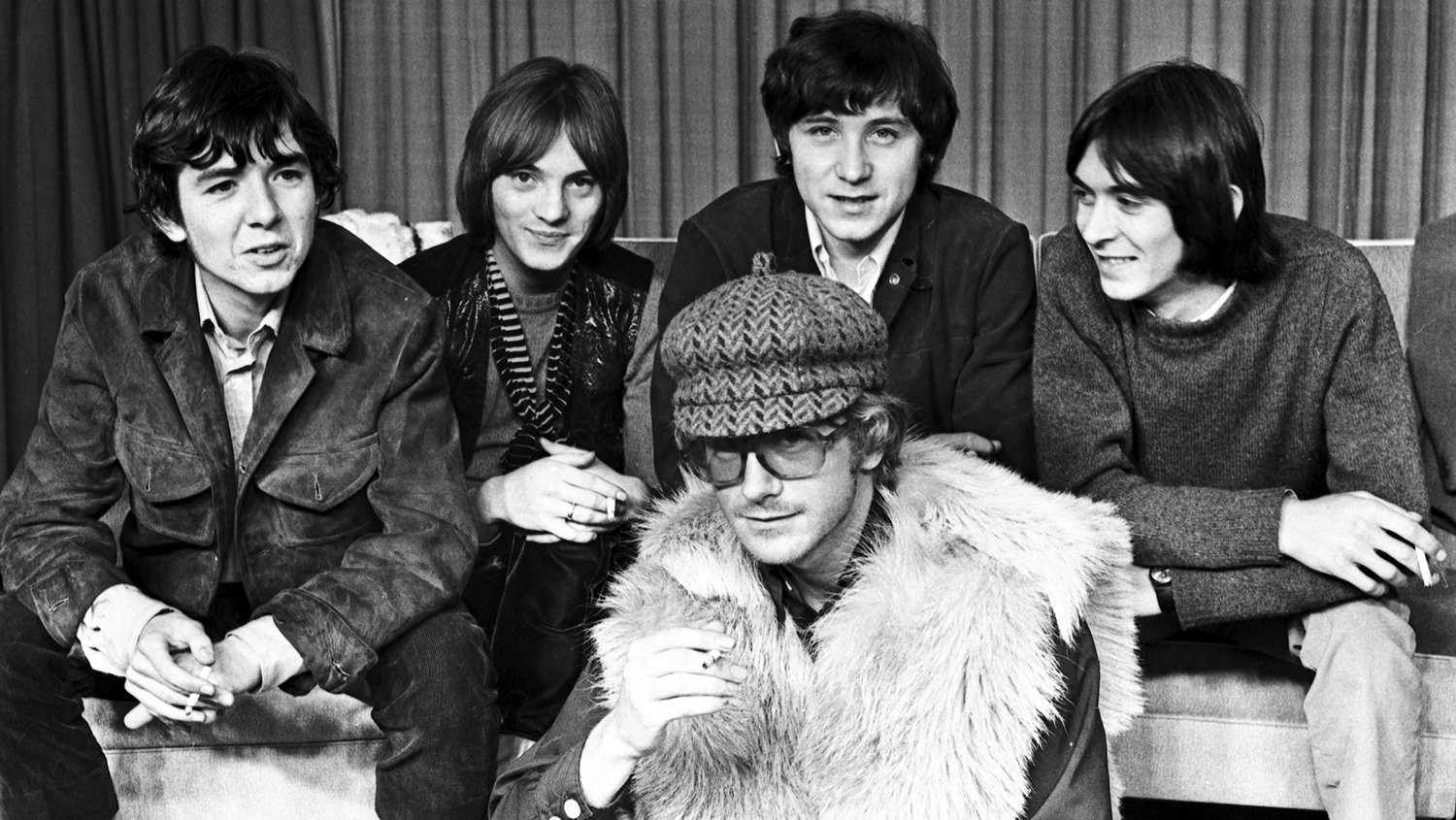
“ There was one album from 1968 that distilled all the bombast and buffoonery of the singularly themed song cycle in pop music, housed in a round LP jacket miming the vintage tobacco tin it was named after. Ogdens’ Nut Gone Flake was the fourth LP by East London’s Small Faces, a mod quartet who set themselves apart not only by their uniformly demure stature among its members — guitarist/vocalist Steve Marriott, bassist/vocalist Ronnie Lane, keyboardist Ian McLagan and drummer Kenney Jones — but their heavy influence on the grittier end of the R&B/soul spectrum that was propelling many of the British Invasion bands.
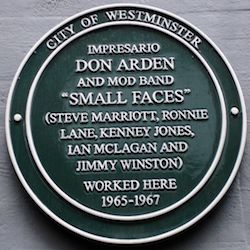
Green commemorative plaque to the Small Faces erected in 2007 by Westminster council in Carnaby Street
Under the recording guidance of the great Glyn Johns – who had also spent ’68 already working on a ton of other albums including Beggars Banquet by the Rolling Stones, the second Traffic LP and the debut from The Pentangle – the group pushed their art beyond the pop charts and toward a more adventurous strain of their signature sound. The sense of raggedness exhibited by the band upon their return from an Australian tour opening for The Who is quite palpable in the mix as well. . . ” / Continued at Billboard online
❏ Stevie went on to join Peter Frampton in Humble Pie – he writes in Billboard: “Ogdens’ was the best Small Faces album for me. It was just after its release that I first met Steve Marriott and Ronnie Lane, and there was talk of me joining the band as the fifth member as well. They were always one of my most favourite bands from Whatcha Gonna Do About It onwards. This album’s great material and concept are what made it their finest work. Its eye-catching round cover made it unique before you even heard the music. Love this record.”
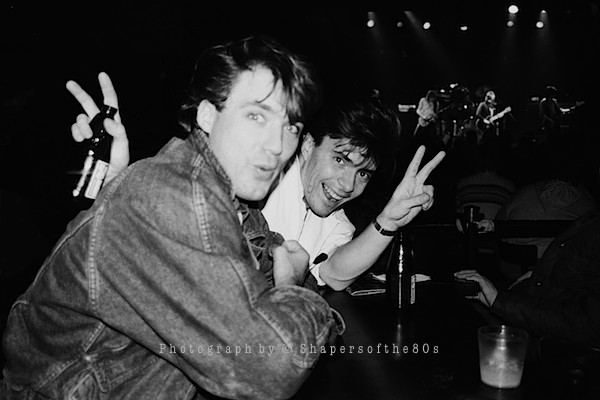
Backstage after his San Fernando gig 1983: Steve Marriott at centre of his admiring fans, clockwise, Spandau Ballet’s Martin Kemp, John Keeble, record-company dude David Levy, Steve Dagger, Sam Brown – plus Yours Truly holding the camera
◼ IT WAS MARTIN KEMP WHO’D HAD ENOUGH of the schmoozy dinner laid on by his record label while Spandau Ballet were touring the USA on the back of their chart-topping True in November 1983. They had a package of TV shows and other promos scheduled in Los Angeles which made a trip to join them on the West Coast more fun, but this dinner was yawning a bit. “You won’t guess who’s playing a gig tonight at a country club just up the Valley,” said Martin: “Steve Marriott!” Well you couldn’t have offered any better temptation to those of us with Mod sensibilities than our hero from the Small Faces, who back then had settled in the States and never stopped working the club circuit with his own dedicated band, however humble the venue. Since impresario Don Arden had defaulted on the Small Faces’ unpaid royalties, Stevie had moved to California to escape monstrous tax liabilities in the UK.
Within minutes Martin had inquired how far the venue was and had laid on a limo for all who were keen to zoom off to Stevie’s late-night show. These amounted to the ultimate Mod, Spandau manager Steve Dagger, drummer Johnny Keeble, Sam Brown (providing backing vocals on the tour), plus yours truly and the local record company hand-holder David Levy. The rest of the Spands had made other arrangements so our party of six squeezed into the limo and roared off up the Valley for a truly exceptional bonus to a long day.
The sad truth was that the big-name Reseda Country Club was a yawning cavern containing 1,000 seats, and the Marriott band’s audience numbered literally about 20 people including ourselves. Nevertheless, the minute his quartet hit the stage they made a sound so tight it could have thrilled a stadium, while Stevie the consummate pro delivered that oh-so-fabulous voice, albeit slightly rasping at the ripe age of 36, and brought full value to a good few piquant hits from the Small Faces and Humble Pie, including All Or Nothing.
Utterly chuffed: Martin Kemp and John Keeble stumbled by chance across this Steve Marriott gig in 1983 – that’s him live onstage here in the San Fernando Valley
I wasn’t going to pass up the chance of going down to the stage to shoot off a sentimental roll of film but the biggest surprise came at the end of easily one of the 10 best sets I’ve heard in my life. Sam Brown said since we were here we really ought to go backstage and say Hi to Stevie – whereupon the Spands all revealed the genuine humility of real fans and mumbled stuff about not dreaming of barging in on him. Whereupon Sam announced she knew Stevie very well through her dad, the 60s legend Joe Brown, who of course knew Marriott of old.
The result you see above: a fab souvenir photo of our chirpy hero who was tickled pink to hear some authentic British vowels while on the road. The pow-wow was a blast all round. Eight years later, little Stevie Marriott, one of the greatest talents in British pop, died in a blaze at his Essex cottage.
Above: Two bands who played in London as Spandau Ballet…
SBv1 originated the name and here play their final gig at the
Hope & Anchor in 1979 with singer Mark Robinson, drummer
Gordon Bowman, bass guitarist David Wardill, (guitarist Mick Austin
off-camera) . . . SBv2, here in their previous incarnation as Gentry,
playing Camden School for Girls in December 1978, with Tony Hadley
on vocals and the chart-topping single True five years in the future
❚ DID YOU KNOW LONDON HAD TWO POP GROUPS called Spandau Ballet in 1979? The one who became famous adopted their name from the one who didn’t. That’s the claim in a jaw-dropping new history of the New Romantics scene, unauthorised and meticulously researched by David Barrat, a long-time music fan. His book is published this week titled New Romantics Who Never Were: The Untold Story of Spandau Ballet.
Barrat has gathered a mind-boggling compilation of spooky coincidences and things we never knew before in his 117,000-word paperback, self-published today on his own imprint Orsam Books. Here is no mere fan, but an obsessive one who has made himself the Mastermind champion in the two themes identified in his tongue-twisting title: Who exactly were the New Romantics of the early 1980s, who many of us believe powered one of the most transformational youth cultures of Britain’s postwar years? Barrat discusses how “New Romantics” as a two-word description came to characterise the style-leaders of British clubland when those leaders unanimously rejected it themselves.
His second theme is the true story of Spandau Ballet, the five-piece from Islington who set out with a cunning plan to weave a tapestry of fictions around their launch as electro-synth popsters in 1979. At the outset the band were coolly vague about their origins, as if they’d sprung from nowhere – or rather, from the dancefloor of the trendiest London nightspot in years, Covent Garden’s Blitz Club. You’d also have to be a fan with Barrat’s persistence to piece together spasmodic revelations about the band’s genesis as these slipped out during the succeeding decades. Spandau subsequently became global superstars in that momentous decade when image-conscious new British bands invaded the American pop charts. Then they quarrelled, as pop groups do, and arrived in the High Court in 1996 rowing over royalty payments. Individual members remained belligerent for years.
Whether or not you care for Spandau and the 80s music scene, Barrat’s forensic approach to reassessing this creative landscape is utterly hypnotic and unlike anything you’ve read by the hacks of the creaking rock press. He has spent years in deep Holmesian research delving into official records, newspaper cuttings, TV interviews and conducting first-hand interviews. The result is gripping, original and epic. For instance: he reveals all about another band sharing exactly the same distinctive name a matter of months before Tony Hadley stepped onto the stage at the Blitz Club! Here is a well-informed juggernaut delivering into our laps mighty fact upon tiny fact, laid out for inspection and challenge. Barrat’s intent is resolute: to convince us he knows his stuff, and he has purged the popular version of events of their mutability.
David Barrat contacted me a few years back in order to check dates and events against my own detailed diaries and his aggregation of facts and assumptions is mostly hard to fault. His book now pays extraordinary and generous tribute to this website, Shapers of the 80s, and to myself as a former features editor of the Evening Standard who set out to celebrate the potency of the youthquake erupting in 1980.
SO WHO WERE THE OTHER BAND?
❑ The musicians originally called Spandau Ballet (hereafter called SBv1) were four lads who met in 1978 during their teens in Bedfordshire: guitarist Mick Austin, singer Mark Robinson, drummer Michael Harvey and punky bass guitarist David Wardill. They agonised for ages over a band name and Austin remembers a “eureka” moment while they were using the Dadaist method of juggling words on random scraps of paper. They arrived at the darkly Germanic first word (originally with an incorrect umlaut over the U, as in Spandaü) and then paired it with “the softer, romantic” word Ballet. The package was deemed “nicely decadent”, a debut gig was planned for 30 August 1978 and accordingly Robinson designed a poster for it, which we see below. Wardill declared his ambition: “We were going to go to London and become rock stars.”
So how on earth did their oddball band name transfer itself to a struggling five-piece from Islington? The reader’s mind boggles at the number of spooky coincidences that Barrat’s book uncovers. Wardill had fallen in love with journalism graduate Deanne Pearson who rented a flat at 32 Sibley Grove in East Ham, so in October 1978 he moved in and subsequently members of SBv1 often came to crash on the floor. Coincidentally . . . this flat was shared with the yet-to-become seminal Blitz Kids, Kim Bowen and Lee Sheldrick while freshers at St Martin’s School of Art, who soon joined up with a stylish posse mainly lodged in Battersea’s Ralph West halls of residence which served the population of all London’s art schools. These included graphics student Graham Smith and the social dynamo Chris Sullivan who would soon find himself running the seminal Wag club for nearly 20 years.
Click any pic below to view complete images
In her forthcoming autobiography Kim relates how, in mid-1979, she fled far-flung East Ham and, accompanied by “a trio of self-described Nelly Queens”, penetrated an empty Georgian house in Fitzrovia to establish a squat in Warren Street, a leisurely walk away from St Martin’s. It was to become notorious. “Within weeks the creme de la creme of young London was living there,” Kim writes, and her bold manuscript spares no detail about their very un-private lives. This stylish property became the hub of social life for the Blitz Kids who were meeting every Tuesday at the Covent Garden Blitz Club since Steve Strange’s Neon Nights had begun that February. As milliner Stephen Jones’s mannequin de vie, the wild and startlingly elegant Kim elevated herself to Queen of the Blitz. Many of the Kids’ high-style antics were documented by Graham Smith while he – coincidentally – became the official photographer of the second Spandau Ballet (SBv2) who announced their name for their first public concert on 5 December that year, with invitations designed by Smith. (His lavish photo-book We Can Be Heroes, with authoritative text by Chris Sullivan, was published in 2011 and remains an unbeatable record of both style and excess).
In October 1978, the Beds boys SBv1 had started working as busboys as well as rehearsing at The Venue, Virgin’s new nightclub in Victoria, where they immortalised their band’s name by spraying it in green paint on the toilet walls and on other public walls elsewhere in central London. Amid all the ancient myths about where SBv2 found their name, this band’s early propagandist and future broadcaster Bob Elms has said he first spotted the phrase “Spandau Ballet” as graffiti variously on prison walls or toilet walls in the Spandau district of Berlin during a soulboy group trip in summer 1979.
Coincidentally – however, during an interview way back in 1984 one prominent Blitz Kid told me the graffiti had been very visible on the toilet wall of The Hope, a favourite pub in Tottenham Street in London, not far from the Warren Street squat. “Some boys from north-east London were using that name in a school-type band.” Also coincidentally – along the same block as The Hope stood the trendy new Scala cinema, whose programmer then was 22-year-old Stephen Woolley (today a major player in the British film industry), who was a contemporary of SBv2 manager Steve Dagger and their stage designer Simon Withers, all of whom coincidentally attended Dame Alice Owen’s school in Islington and grew up there with the other members of SBv2 – Gary and Martin Kemp, Tony Hadley, John Keeble and Steve Norman.
Barrat’s fabulous cascade of coincidences throws up at least SIX PRIME SUSPECTS in The Ballet Great Mystery: Who really did feed the name Spandau Ballet through to the Islington band SBv2, who during 1978–79 were known as Gentry, a power-pop combo? Barrat’s new book draws its own conclusion.
PS: EVEN MORE SPOOKILY
ON MY DOORSTEP. . .
David Wardill: bass guitarist with SBv1, who joined The Passions in 1980
❑ Scroll forward a few years from the birth of SBv2. . . After my day-jobs in journalism, I taught an adult evening class in Creative Writing for 16 years in west London, after which it was traditional for the more entertaining students to continue the evening at a nearby pub. Among several who became long-standing friends was – coincidentally – the same David Wardill of SBv1 (also visible in the video below). His musical background meant we had lots to discuss when we met in 1989, including his earlier life in East Ham with Kim Bowen and Lee Sheldrick.
David and I drifted apart but had a sudden email reunion while I was building this website in 2009. He told me that soon after completing the writing class he sent a story to the BBC which turned up two years later as a film from BBC Birmingham. These days he was a father and teaching art in a secondary school.
As for SBv2, he admitted: “I never really cared much that they had borrowed our band’s name, as I didn’t see much chance of us wanting it back.” SBv1 ground to a standstill in May 1979 and David soon joined another band called The Passions who enjoyed airplay by Radio 1’s influential deejay John Peel and eventually made it to Top of The Pops in 1981 with their song on Polydor, I’m in Love with a German Film Star, which reached No 25. (Coincidentally – SBv2 arrived at No 17 with Musclebound in the same edition of TOTP and we hear them being announced at the end of the clip below. Oo, er.)
David added: “The Passions reunited recently for a day at a studio in Shepherd’s Bush. That laid a lot of ghosts to rest. Our main song has been covered by the Foo Fighters and Pet Shop Boys. Strange how the past hangs around, although I find the continued interest gratifying, as well as financially useful.” Spoken like a star.
❑ And here today we still have not given away the truly spookiest coincidence among those that Barrat reveals about SBv1 & v2 when their paths almost crossed in May 1979 – it’s a goose-pimples moment that stops you in your tracks, so we’re not going to spoil it. However, other reflections on this vital addition to our bookshelves will follow here at Shapers of the 80s as we read on…
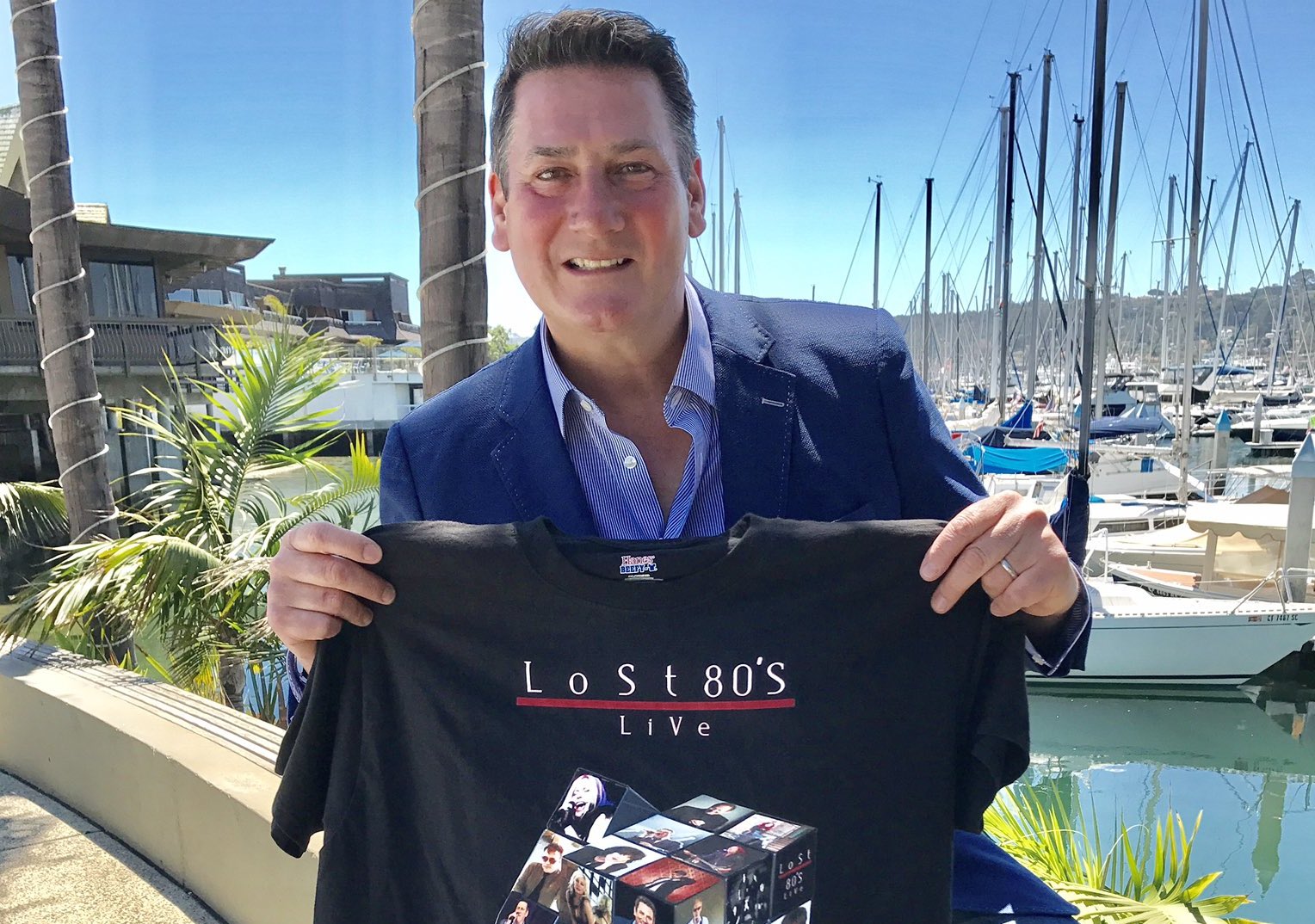
Hadders in California: flabbergasted while relaxing in the sunshine
◼ WHEN 105.7 SAN DIEGO RADIO ASKED this week for a scoop about his recent split from Spandau Ballet, singer Tony Hadley relaxing by the bay said: “It’s a bit tricky at the moment. I’m about as flabbergasted and shocked as everybody else. It wasn’t my intention to quit the band, but I was put in a position where I really had no option but to formally leave. We’ll be announcing something pretty soon which will clarify exactly why”. . . Meanwhile on his band’s US tour, “We never stop partying. Some bands are really boring and go to bed with a cup of cocoa after the show. Me and the rest of the boys and Lily our percussionist we’re quite happy to have a bit of a laugh.” No cocoa after the show? “No! A glass of vino collapso, I call it.”
Tony Hadley and his band are headlining the Lost 80s Live tour through Aug-Sept 2017. Returning to Portsmouth 12 Sept, Blackburn 29 Sept, Chile 4 Nov, later to top the bill at Wembley’s SSE Arena for the Let’s Rock Christmas Retro Show also starring Kim Wilde, Nik Kershaw, Go West, Nick Heyward, T’Pau and others tbc.
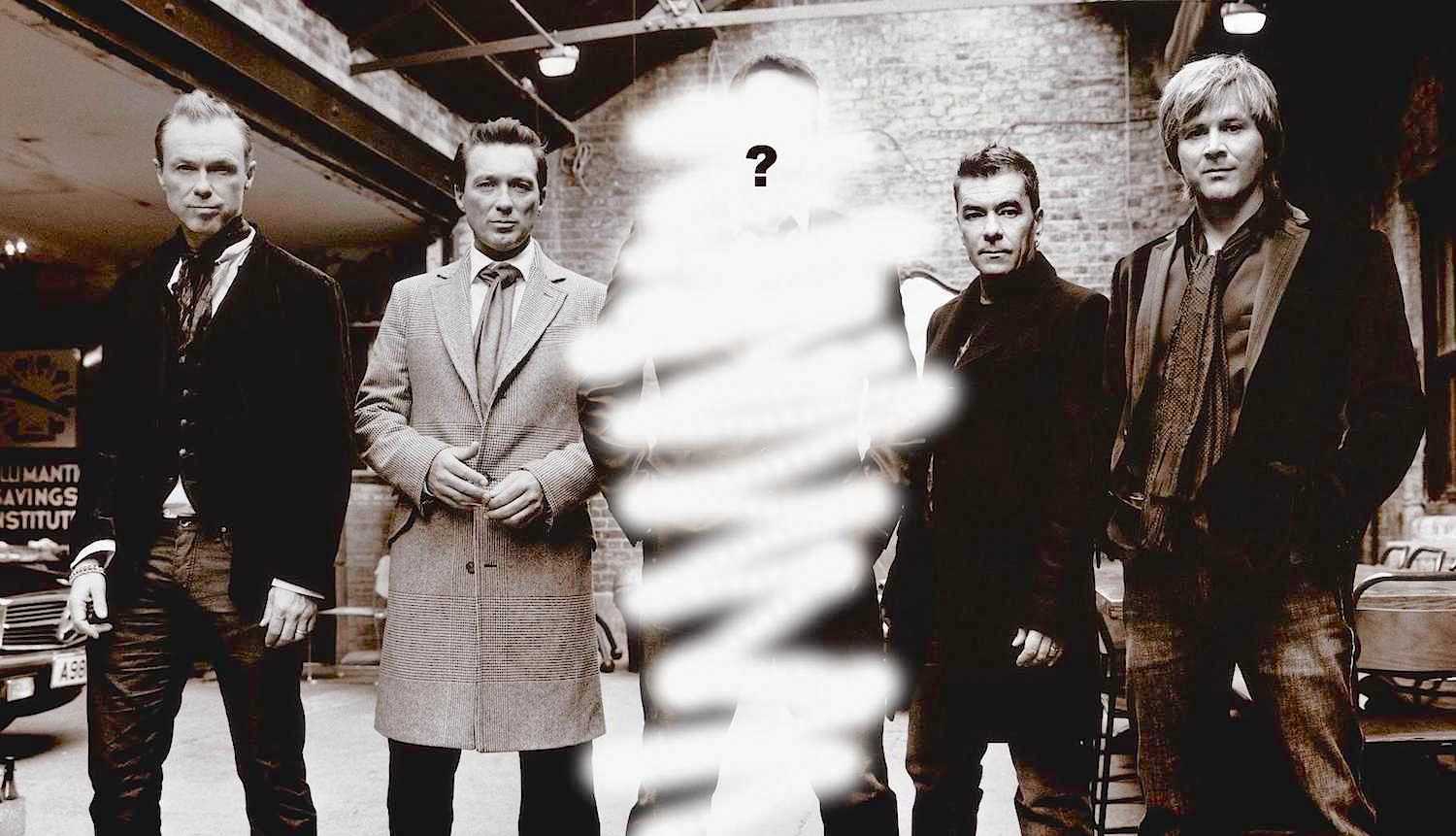
Face wanted in the Spandau Ballet lineup: from left, Gary Kemp, Martin Kemp, John Keeble, Steve Norman. Might the new singer even be female?
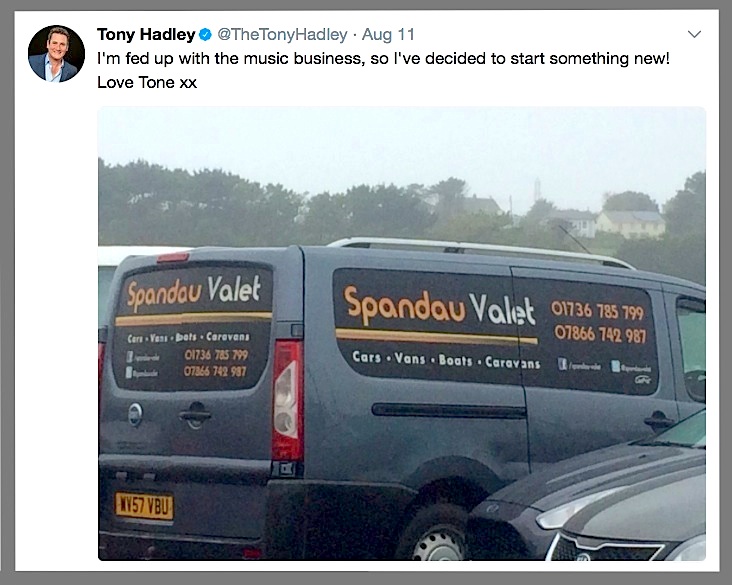
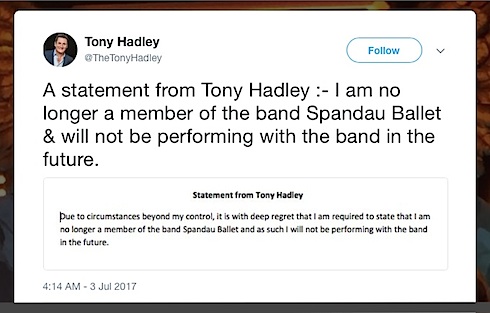
◼ AFTER YEARS OF HINTING that his career as Spandau Ballet’s frontman was over, both during and after two world tours – all of his bombshells reported here at Shapersofthe80s – today Tony Hadley finally quit with a single tweet. Immediately, the Spandau management declared that the other four resting band members will rise like Lazarus to “move on as a band”. Er, well, perhaps, but Big Tone’s suave 6 ft 4 in (1.93 m) frame leaves not only a physical hole in the five-piece line-up, none of them especially noted for their singing voices, but an inevitable audible gap too. The four Spandau remainers provide the complementary blue-eyed soul music to a big balladeering voice, albeit described as a “dramatic warble” by Dan LeRoy at AllMusic, or that of a “top crooner” by somebody at BBC Somerset.
So who’s in the frame for the key job without which Spandau’s legacy will remain all behind them? It has to be either a dead ringer who plays to fans’ expectations, or a radical candidate who will set a new direction. One obvious contender is Paul Young as a singer who built a strong reputation for vocal interpretation during the same renaissance of British pop music that made Spandau an international supergroup. His covers of Marvyn Gaye and Jimmy Ruffin well qualify him at 61 to become the big brother of the Spandau dad-band.
Click any pic below to launch slideshow
Less obvious but no less talented is Brandon Flowers, 36, former frontman of the Killers with whom he helped repopularise the sounds of the 80s in the noughties. His charismatic presence and fashion sense would sit comfortably with the Spandau heritage.
Amazingly, Will Young has reached the ripe old age of 38 in minutes seemingly, but as a respected vocalist and former Pop Idol winner he can claim four UK number-one albums and two Brit awards, while his recently acclaimed stage experience in Cabaret might bring a fresh note of theatre to Spandau performances.
Olly Alexander at Glastonbury (Getty)
But if Spandau really want to inject some millennial youth into their daddy line-up they could consider the chirpy presence of actor-vocalist Olly Alexander, 26, whose sheer energy would trigger a mighty refresh. Olly describes himself as a “real left-winger” which should sit well with the millionaire Spands whose working-class roots reach back to Islington.
Of course, they could just as easily invite on-board one of those Hadley impersonators who wowed viewers of the Saturday night talent show Stars in Their Eyes – such as Martin Lewis who sang Gold brilliantly in 1997 or Steven Houghton who sang the same number in 1998.
NOW NOMINATE SPANDAU’S NEW VOCALIST
❏ Who would you like to see as the next vocalist with Spandau Ballet? Many fans today have been wailing how irreplaceable Big Tone is, while others have condemned him harshly for robbing his former schoolmates of their pensions. Clearly the band believe they have one more album and tour ahead of them, but who will lead them on through the barricades? Please leave your comment below.
Spandau Ballet in happier days, their 2014 reunion: John Keeble, Steve Norman, Tony Hadley, Gary Kemp, Martin Kemp. (Photography Scarlet Page)
◼ BREAKING NEWS TODAY IN TWO WAVES: At midday 57-year-old singer Tony Hadley suddenly tweeted that he was “no longer a member of Spandau Ballet”, the London band who pioneered the New Romantic movement in the 1980s. Two hours after the star quit the band, its official website announced a Lazarus-style miracle: that the remaining four musicians “have now made the decision to move on as a band” without Big Tone. If they can indeed rise from the dead, who can possibly replace his signature bel canto baritone which has been central to the supergroup’s musical signature for almost 40 years?
When Spandau’s Soul Boys Atonement Tour ended in 2015, Hadley immediately returned to touring his solo act, is currently playing summer festivals as a solo artist with his own supporting band and touring the USA during August. Each member of the band has also looked to his own projects. Then in August 2016 Martin Kemp told ITV in a very relaxed way that another Spandau get-together was unlikely. When asked: “You’ve not fallen out again, have you?” Martin said: “We fall out when you come back off the tour and you pick up your case at Heathrow Airport and then we walk away, say ‘See you a bit later then’. We fall out, that’s how it works.”
Speculation about a successor is rife. Watch this space for further news.
“ The band were offered a string of lucrative opportunities that Tony didn’t want to be involved with. There was talk of a new album and tours including a huge US headline tour – the UK’s biggest festivals had offers on the table, too. But Tony opted to focus on his solo career, meaning everyone missed out.
Tony has been billed as being ‘formerly of’ Spandau Ballet on several tour posters. There had been tensions brewing between Tony and the rest of the group for almost two years, since he decided he did not want to perform with them. This was the final straw, and Tony had an ultimatum – take part in Spandau or quit entirely.
Things have festered over the past year or so and relations have been at an all-time low. By declining Spandau’s opportunities, Tony was pulling the strings for the entire group. But now he is no longer a member they can continue without him. ”
WE ALL SAW THIS COMING: REMEMBER THOSE EARLIER HADLEY BOMBSHELLS
Hadley: serenading newly weds Paul Brough and Sonya Keating in a live TV broadcast from the Shard for This Morning viewers last week. (Photo: Rex)
Gary Kemp: culture vulture and broadcaster fronting his April TV documentary for Sky Arts titled Passions: Mick Ronson, directed by Paul Bernays
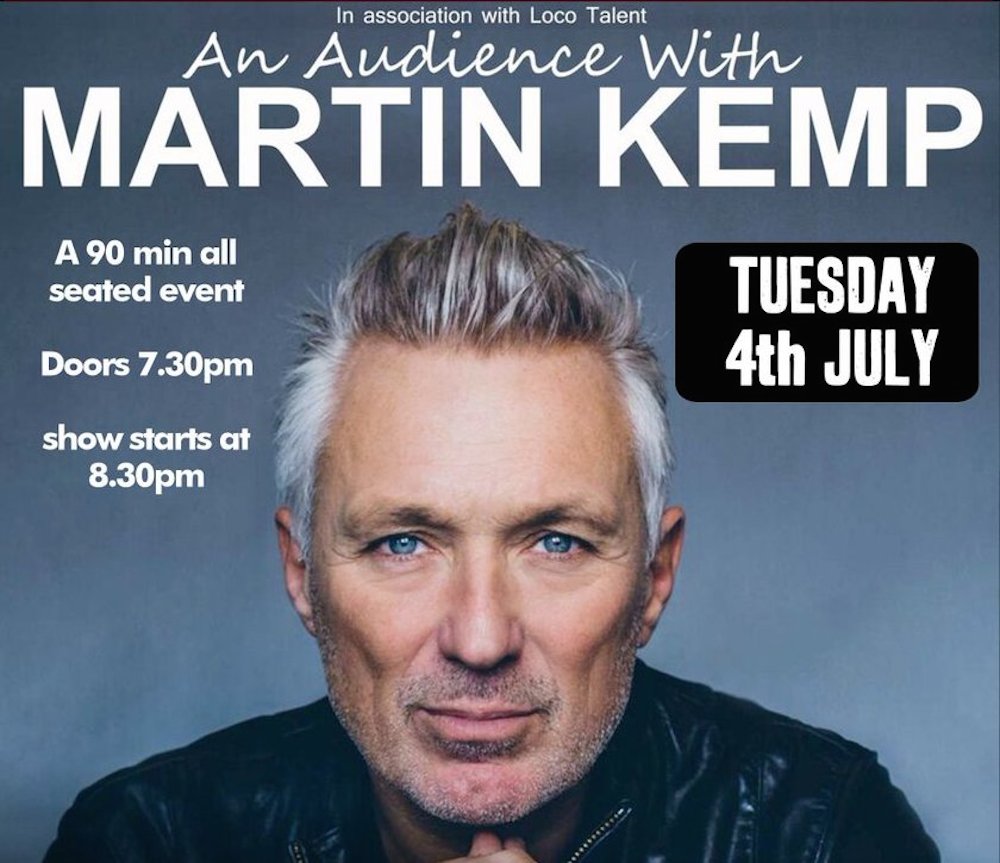
Martin Kemp: is touring the UK all year with his Q&A event, An Audience with himself
John Keeble: here bidding farewell to Perth in May 2015 as the last Spandau tour ended. He had missed a handful of dates because of fatigue. (Photo: Matt Glover)
Steve Norman: has curated the odd summer festival and pursues a vigorous programme of live appearances, here billed for Milan this week
➢ Choose “View full site” – then in the blue bar atop your mobile page, click the three horizontal lines linking to many blue themed pages with background article
MORE INTERESTING THAN MOST PEOPLE’S FANTASIES — THE SWINGING EIGHTIES 1978-1984
They didn’t call themselves New Romantics, or the Blitz Kids – but other people did.
“I’d find people at the Blitz who were possible only in my imagination. But they were real” — Stephen Jones, hatmaker, 1983. (Illustration courtesy Iain R Webb, 1983)
“The truth about those Blitz club people was more interesting than most people’s fantasies” — Steve Dagger, pop group manager, 1983
PRAISE INDEED!
“See David Johnson’s fabulously detailed website Shapers of the 80s to which I am hugely indebted” – Political historian Dominic Sandbrook, in his book Who Dares Wins, 2019
“The (velvet) goldmine that is Shapers of the 80s” – Verdict of Chris O’Leary, respected author and blogger who analyses Bowie song by song at Pushing Ahead of the Dame
“The rather brilliant Shapers of the 80s website” – Dylan Jones in his Sweet Dreams paperback, 2021
A UNIQUE HISTORY
➢ WELCOME to the Swinging 80s ➢ THE BLOG POSTS on this front page report topical updates ➢ ROLL OVER THE MENU at page top to go deeper into the past ➢ FOR NEWS & MONTH BY MONTH SEARCH scroll down this sidebar
❏ Header artwork by Kat Starchild shows Blitz Kids Darla Jane Gilroy, Elise Brazier, Judi Frankland and Steve Strange, with David Bowie at centre in his 1980 video for Ashes to Ashes
VINCENT ON AIR 2026
✱ Deejay legend Robbie Vincent has returned to JazzFM on Sundays 1-3pm… Catch up on Robbie’s JazzFM August Bank Holiday 2020 session thanks to AhhhhhSoul with four hours of “nothing but essential rhythms of soul, jazz and funk”.
TOLD FOR THE FIRST TIME
◆ Who was who in Spandau’s break-out year of 1980? The Invisible Hand of Shapersofthe80s draws a selective timeline for The unprecedented rise and rise of Spandau Ballet –– Turn to our inside page
SEARCH our 925 posts or ZOOM DOWN TO THE ARCHIVE INDEX
UNTOLD BLITZ STORIES
✱ If you thought there was no more to know about the birth of Blitz culture in 1980 then get your hands on a sensational book by an obsessive music fan called David Barrat. It is gripping, original and epic – a spooky tale of coincidence and parallel lives as mind-tingling as a Sherlock Holmes yarn. Titled both New Romantics Who Never Were and The Untold Story of Spandau Ballet! Sample this initial taster here at Shapers of the 80s
CHEWING THE FAT
✱ Jawing at Soho Radio on the 80s clubland revolution (from 32 mins) and on art (@55 mins) is probably the most influential shaper of the 80s, former Wag-club director Chris Sullivan (pictured) with editor of this website David Johnson
LANDMARK FAREWELLS. . . HIT THE INDEX TAB UP TOP FOR EVERYTHING ELSE















 ➢➢ Shapers of the 80s ➣➣