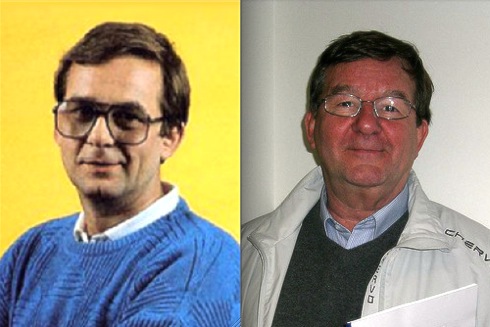
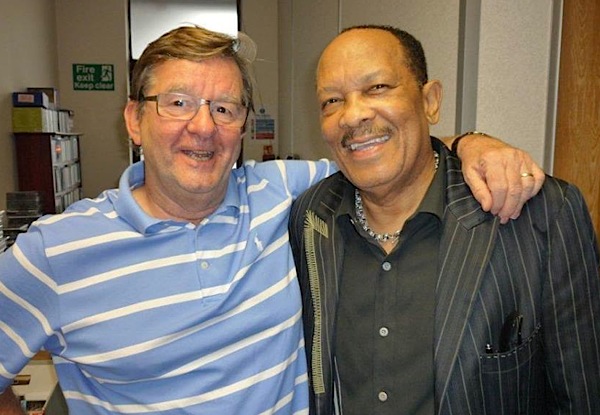
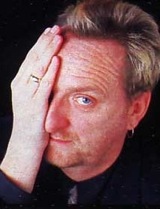
❚ SHOCK NEWS TODAY: Robbie Vincent, the pioneering jazz-funk radio deejay of the 70s and 80s, is to leave Jazz FM after five years. His prerecorded weekly show this Sunday lunchtime will be his last and his flagship three-hour slot will be taken over by Jeff Young. Vincent broke the news this morning with a brief post at Facebook which said: “Sad news, this Sunday will be my last show on Jazz FM. I had hoped to do a final special show to thank you all for your loyal support but the station has decided that is not possible.”
Three hours ago Vincent posted a link to a news story at the industry website Radio Today which reports:
“ Robbie Vincent has been told he can’t record a final show on Jazz FM after he told station bosses he has decided to leave the station. Robbie has told Radio Today he’s leaving because he fears a ‘radio armageddon’ is on its way. “There will be news next week of further downgrading at the station,” he said. “Jazz FM has been such a difficult place to work at recently with it being so cash strapped. I offered to record a final show but management have declined my offer.” A spokesperson for Jazz FM confirmed Robbie wasn’t given a ‘final’ show saying “this is generally accepted practice” … ” / Continued at Radio Today
Since then Vincent has added a further comment at Facebook: “Perhaps when you read that it is ‘normal practice’ not to allow final programmes you will understand what high standards of staff care operate at Jazz FM. Ralph Tee and Steve Quirk were not ejected into space. These excellent broadcasters left with grace and good natured final programmes. The way it should be. Just a thought.”
The veteran presenter with Radio 1, Radio London, Kiss and LBC has hosted more than 200 of his Essential Rhythms shows since the re-launch of Jazz FM in October 2008. Station Manager, Nick Pitts, said today: “When I first started working at Jazz FM Robbie was one of the people I was looking forward to working with most. We are sorry that he has decided to leave and wish him luck and success in his future projects.”
UPDATE SUNDAY DEC 1 AS HIS SHOW ENDS…
“ I did invite ideas for the last programme but as JazzFM chose not to allow me to say farewell to my dear loyal listeners you will have noticed all reference to next week had been taken out. Not to worry, it’s James Torment time on Jazz FM now. Lots of news in the next couple of days to share with you. Hope you enjoyed the show. ”
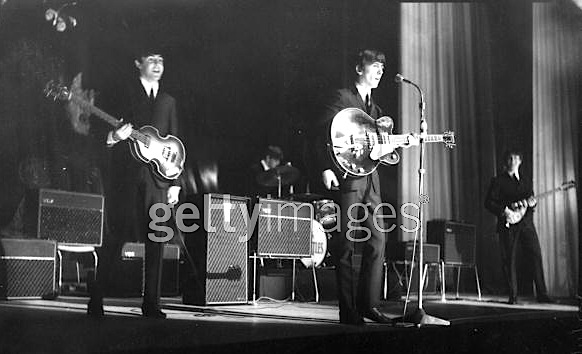
Beatles live onstage in Stockton, Nov 22, 1963: George Harrison at the microphone on the night Kennedy was shot
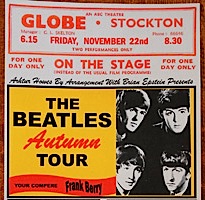
❚ WHERE? LIVE, ONSTAGE IN STOCKTON-ON-TEES.Count the simple Vox amps behind the band and note how one is perched on a chair! This picture was taken on Friday Nov 22 1963 at the 2,400-seat Globe theatre when the Beatles played the art-deco venue on their first nationwide tour. The band’s half-hour set during twice-nightly performances at 6.15 and 8.30 was supported by seven other acts with tickets priced from 6 shillings to 10s 6d, when a workman’s weekly wage might be £7.
During the first house in Stockton, England, the assassin’s bullets killed John Kennedy in Dallas, USA. At 43 he was the youngest man elected to the US Presidency and during the cold war era as the Soviet Union threatened world peace the hopes of the West rested on his shoulders. In Britain TV programmes were interrupted to break the dramatic news just after 7pm.
In those days we’d seen nothing as electrifying as the Beatles and while their audience at the 18th date on their first serious tour were discovering the power of The Scream, these fans remained respectfully seated throughout the show. Even so, personal accounts say the second house in Stockton was distinctly more subdued. Shocked by the news about JFK, Lynda Richardson, a fan travelling back to Redcar by coach, said: “No one spoke a word all the way home.”
Click any pic to launch carousel
The Globe, Stockton, Nov 22, 1963: Beatles fans learning to scream. (Picture, Evening Gazette)
The Globe, Stockton, Nov 22, 1963: Beatles fans firmly seated. (Picture, Evening Gazette)
Pre-Beatles hysteria: massive queues along Stockton High Street when Tommy Steele played the Globe in 1957
The Globe, Stockton, today: awaiting its £8m restoration
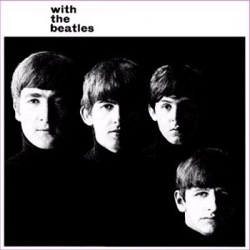
Also on this day the Fab Four’s second album With The Beatles was released on Parlophone eight months after their chart-topping debut LP and it immediately broke sales records. Lennon’s raw vocals barked fresh life and sexual danger into the Motown covers Please Mr Postman, Money and You Really Got a Hold on Me. With its eight original compositions, this was the album that moved William Mann, classical music critic of The Times, to write that Lennon and McCartney were “the outstanding English composers of 1963”.
Earlier in the year three Beatles singles had gone to No 2 and to No 1 twice in the UK chart and now another with advance sales of a million copies – I Want To Hold Your Hand – was racing up the chart to become the Christmas No 1.
This November, too, the Daily Mirror coined the word Beatlemania to describe the tour’s first gig, a phenomenon really triggered with the release of the single She Loves You in August. During the tour, The Beatles had also stopped the Royal Variety Performance – playing four numbers and watched by half the nation in a TV show of recorded highlights – when John Lennon famously quipped: “Will those in the cheaper seats clap your hands. The rest of you can just rattle your jewellery.” The group guest-starred on BBC TV’s flagship Morecambe & Wise Christmas Show, while their own Beatles’ Christmas Show was to run at London’s Astoria Finsbury Park for 30 performances (100,000 seats) featuring the Fab Four in comic “skits” with six pop acts in support including Cilla. By this stage the Fabs could go nowhere without a personal police escort. [See, How does a Beatle live? – at Shapersofthe80s]
The Globe, Stockton, 2009: a glorious interior in art deco style
Today the Globe in Stockton, a small market town in County Durham, is a disused shell which is Grade II-listed. Built in 1935, its facade is enlivened with fluted plaster and the interior retains riotously colourful art deco features typical of the period. As a “super-theatre” the Globe hosted opera, ballet and an annual pantomime, together with touring variety, musicals, and pop concerts by Tommy Steele, the Rolling Stones, Searchers, Seekers, Billy J Kramer, Herman’s Hermits, Animals and Swinging Blue Jeans. It closed as a theatre in 1975, eked out the role of bingo hall until 1996 and then closed its doors.
The Theatres Trust describes the Globe as “an excellent example of its kind” and it is one of 68 buildings on its At-risk register. In 2009, Stockton-based Jomast Developments Ltd announced plans to restore the Globe and recruited theatre expert David Wilmore to the task. He called the Globe “a real Sleeping Beauty”. Finally last month Jomast reported that the Heritage Lottery Fund has earmarked £4m towards an £8m project to transform the Globe into a live entertainment venue for music, comedy and other events, with a capacity of 2,500 and the potential to create 64 jobs. The new venue is likely to open in 2016. [Update 2024: still going strong according to Google Maps.]
THE DAY AMERICA’S CAMELOT FELL
❏ View The Beatles on CBS Morning News with Mike Wallace on November 22, 1963 (despite the erroneous date on the video), the day JFK was shot … In old-school TV style Alexander Kendrick reports grudgingly on Britain’s energetic threat to The American Way under the title, The Beatles, New Phenomena In Britain. Asked about the band’s future Paul McCartney says: “We could have quite a run.”
ANOTHER LEGEND IN THE MAKING
➢ At the Northern Echo in 1963 its young editor was Harold Evans, who went on to build the international reputation of The Sunday Times. On Nov 22, after putting the Echo to bed, he was being driven to Stockton for the annual press ball when news of JFK’s assassination came over the car radio. He immediately returned to his Darlington office and produced an entirely new paper. Evans decided The Beatles were worth a few downpage column inches squeezed into the Teesside edition only.
PHOTO UPDATES
➢ Ringo Starr’s lost Beatles photo album, Nov 2013 – “All anyone could talk about when we came to America was our hair. The boots were famous. The jackets were famous. The pop songs were famous, but they came in about third. The hair was first.”
❚ A CRACKLING EXCHANGE OF OPINIONS has given Facebook some edge this week. Legendary Wag club host, the deejay Chris Sullivan poured scorn on the term “jazz-funk” and its followers, igniting a barrage of responses from 70s fans of the Gold Mine, Caister and the Lacy Lady, sampled below.
➢ Chris Sullivan at Facebook, Nov 15:“ A friend of mine asked me what I played at Novikov every Sunday. I replied “jazz and funk” and he said “jazz-funk” and so horrified was I that anyone would think I play that rubbish, I recorded the start of my set for him and here it is… ”
Paul Carter: Nuthin wrong with jazz-funk at all – was the soundtrack to many young Londoners’ lives… The Gold Mine was one of the best clubs ever… When everyone was obsessed with punk and post punk, the really cool kids (black and white) were groovin to jazz-funk and soul. Just sayin.
Chris Sullivan: When I went to the Gold Mine it was funk but later came jazz-funk like Brazilian Love by George Duke and jazz-funkers started getting their hair permed and wearing dungarees and going to Purley All-Dayers… bloody horrible… Most true funk I love and jazz, especially Blue Note, is impeccable but jazz-funk is shite… and its emergence ruined a good little scene – remember the Cortinas with the car stickers “Wayne and Shirley” for example, and the furry dice.
Paul Carter: Bit of snobbery there I think… and it is an opinion Chris, no more… I remember some incredible nights down the Gold Mine with Chris Hill, Pete Tong, and the rest of them – a lot of wedges but not a perm in sight – just great music – I think it’s a real shame that it’s been written out of club culture in favour of Northern soul (dull dull dull) and the West End scene in which you played such a large part. I was in both scenes and I always loved that the suburban scene was just about the music, not about the width of your turn-ups (much as I loved Le Beat Route and the rest). Oh and it was far more racially mixed too… / Continued at Facebook
❚ SONGWRITER GARY KEMP recalls the 2009-10 Reformation Tour by his pioneering New Romantic band Spandau Ballet, to be screened as a 2 hours 30 mins broadcast on Sky Arts this weekend:
“ The Reformation Tour was a coming back together I never thought would happen. After years of fighting, this tour taught us that being Spandau Ballet is a thing to be proud of. It turned out to be the best and most successful tour we ever did. If there’s one piece of evidence I’d like to leave for posterity it would be this film. ”
❏ iPAD, TABLET & MOBILE USERS PLEASE NOTE — You may see only a tiny selection of items from this wide-ranging website about the 1980s, not chosen by the author. To access fuller background features and site index either click on “Standard view” or visit Shapersofthe80s.com on a desktop computer. ➢ Click here to visit a different random item every time you click
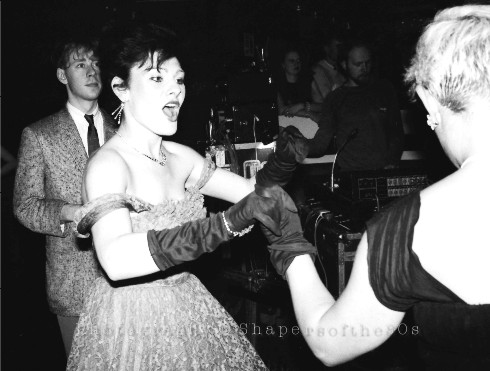
Dressing up on Canvey, 1982: Gold Mine girls maintain the high standards set by the club over the past decade. (Photographed by Shapersofthe80s)
Hill: ushered in Age of the Dance
❚ NOVEMBER 9 SEES maverick deejay Chris Hill front the fourth Official Gold Mine Reunion back this year on Canvey Island at The Monico, a stone’s throw away from the site of the nightspot renowned as the birthplace of British jazz-funk.
Other members enlisted from the South-East’s Funk Mafia who ruled at Caister weekenders and the big soul all-dayers will be Jeff Young and Snowboy and ace record-shopkeeper for the rare groove scene, Gary Dennis. The reunion will be echoing to sounds from Donnie Hathaway to Chick Corea, from BT Express to Mastermind. But first, a taste of the Gold Mine’s tenth year as I reported it 31 years ago…
Ten years of the Canvey Island Gold Mine
[First published in The Face, August 1982]
❏ SOME SAY THE whole of today’s style scene has its roots here… The Gold Mine, Canvey Island, has passed into countless legends for the trends it has set and on August 14 manager Stan Barrett pulls a champagne cork to celebrate his club’s tenth birthday.
Mind you, feet have pounded its original sprung maple dancefloor since 1949. Southend and the towns of the Essex style triangle have reared cults since the word was invented, so when in 1972 the Gold Mine began playing what rivals then called “silly music” – My Guy and all those soul sounds – the local hipsters took their cue. It was that wild man among deejays, Chris Hill, who, as the only one south of Lancashire playing soul, put Canvey Island on the map and ushered in the soulful new Age of the Dance.
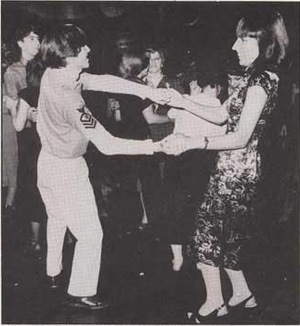
Then in 1975, for a reason no more obscure than a simple father to son legacy, came a Glenn Miller Swing revival, which triggered the then unique clubbing fad of nostalgic dressing-up.
Stan Barrett says: “Chris played Singin’ In The Rain one Saturday and of course even kids who couldn’t remember the original knew the words to it. Everyone started being Gene Kelly on the dancefloor, dressing as Gls and Betty Grable. So he played Moonlight Serenade then the Andrews Sisters’ Boogey Woogey – that’s when they all started to jive and to dress up.”
The Sun, the tabloid daily paper which has a remarkably consistent record for picking up trends first, featured the Gold Mine. “Coaches came from Newcastle, Wales, everywhere,” Barrett remembers. The rest is undisputed history for the influence of Essex stylists on emergent London nightlife scene has been visible from the 60s Mod scene to Chaguaramas and the Vortex to the Blitz and beyond.
Swing revival 1975: Glenn Miller tunes inspired jiving and GI uniforms at the Gold Mine (courtesy Brian Longman, CanveyIsland.org.uk)
The key to the Gold Mine’s success? Impossible selectivity at the door, which may sound over familiar today. Barrett says: “Nobody too old. And only people into style which means your own style, not Gary Numan’s. It costs you at first but look how it pays off in the end. People have never come to the Gold Mine for a good drink up, always the music and the scene.”
Right now in summer ’82, Essex is a musical ball of confusion with the electronic camp of Depeche Mode and Talk Talk holding sway. Drinking with Talk Talk drummer Lee Harris at the Gold Mine the other night was clubrunner about Southend, Steven Brown, who sports a £100 PW Forte Sixties suit and reckons that psychedelia is still big there, heaven help us. He has also done time with a non-psychedelic local band of jokers called Doodle Sax: “It’s had about 35 people in it at various times but we’re not very serious.” One of them, synthesiser doodler Andy Norton, says the vibes are already about for much heavier rhythms. “Music has to turn much more macho.”
And if there are any visual indicators at the Gold Mine today, they are less fancy, more free. A regular called Andy “from Stanford No Hope” says: “Make up is so out of date, it’s like watching old crows trying to pull. The Gold Mine is much better now that we don’t get all the arty students down.”
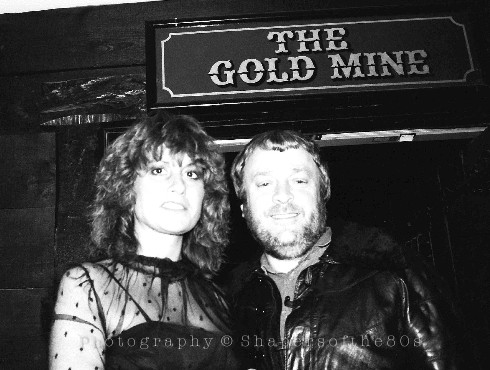
Guardian of the Gold Mine, 1982: manager Stan Barrett and his wife Jayne. (Photographed by Shapersofthe80s)
Nov 11 UPDATE: MOVIN’ AS EVER TO BRASS CONSTRUCTION
Saturday night on Canvey, 2013: shonky screengrab from Trizzles Green Trees’ video at Facebook. Click to view
❏ “Banging best night in ages,” reported Essex Funker Trizzles Green Trees the morning after when she posted this video of the Gold Mine Reunion’s dancefloor heaving to Brass Construction’s 1975 classic Movin’. [Click the pic to run the vid at Facebook.] She added: “We opened the door to the main room and you were just knocked away instantly by the vibe and the atmosphere… everyone was smiling and dancing whether you knew them or not.”
One of the hosts deejay Snowboy Mark called it “a road-block event” at The Monico, Canvey Island. “There were so many old faces there, going way back to the original pre-79 days… Andrea Wingrove-Dunn, Laurence Dunn, Steve Brown, Gary Turner, and pre-76 Gold Miner Molly Brown (she was under age of course!) who loved it more than anyone and stayed right to the end dancing, singing her head off and causing a stir in her immaculate 40s clothing.
“I loved playing Shifting Gears, Inside America, Mary Hartman et al – to me, out and out Gold Mine records for those that were there in the early years.”
❏ Chris Hill interviewed during a live TV visit to the Gold Mine, Canvey Island, broadcast in 1983 on Channel 4’s weekly pop show The Tube. The club closed in 1989.
❏ Northern Soul fans will recall that their legendary venue the Wigan Casino launched its first soul all-nighter in September 1973 (a year after the Gold Mine).
➢ Choose “View full site” – then in the blue bar atop your mobile page, click the three horizontal lines linking to many blue themed pages with background article
MORE INTERESTING THAN MOST PEOPLE’S FANTASIES — THE SWINGING EIGHTIES 1978-1984
They didn’t call themselves New Romantics, or the Blitz Kids – but other people did.
“I’d find people at the Blitz who were possible only in my imagination. But they were real” — Stephen Jones, hatmaker, 1983. (Illustration courtesy Iain R Webb, 1983)
“The truth about those Blitz club people was more interesting than most people’s fantasies” — Steve Dagger, pop group manager, 1983
PRAISE INDEED!
“See David Johnson’s fabulously detailed website Shapers of the 80s to which I am hugely indebted” – Political historian Dominic Sandbrook, in his book Who Dares Wins, 2019
“The (velvet) goldmine that is Shapers of the 80s” – Verdict of Chris O’Leary, respected author and blogger who analyses Bowie song by song at Pushing Ahead of the Dame
“The rather brilliant Shapers of the 80s website” – Dylan Jones in his Sweet Dreams paperback, 2021
A UNIQUE HISTORY
➢ WELCOME to the Swinging 80s ➢ THE BLOG POSTS on this front page report topical updates ➢ ROLL OVER THE MENU at page top to go deeper into the past ➢ FOR NEWS & MONTH BY MONTH SEARCH scroll down this sidebar
❏ Header artwork by Kat Starchild shows Blitz Kids Darla Jane Gilroy, Elise Brazier, Judi Frankland and Steve Strange, with David Bowie at centre in his 1980 video for Ashes to Ashes
VINCENT ON AIR 2026
✱ Deejay legend Robbie Vincent has returned to JazzFM on Sundays 1-3pm… Catch up on Robbie’s JazzFM August Bank Holiday 2020 session thanks to AhhhhhSoul with four hours of “nothing but essential rhythms of soul, jazz and funk”.
TOLD FOR THE FIRST TIME
◆ Who was who in Spandau’s break-out year of 1980? The Invisible Hand of Shapersofthe80s draws a selective timeline for The unprecedented rise and rise of Spandau Ballet –– Turn to our inside page
SEARCH our 925 posts or ZOOM DOWN TO THE ARCHIVE INDEX
UNTOLD BLITZ STORIES
✱ If you thought there was no more to know about the birth of Blitz culture in 1980 then get your hands on a sensational book by an obsessive music fan called David Barrat. It is gripping, original and epic – a spooky tale of coincidence and parallel lives as mind-tingling as a Sherlock Holmes yarn. Titled both New Romantics Who Never Were and The Untold Story of Spandau Ballet! Sample this initial taster here at Shapers of the 80s
CHEWING THE FAT
✱ Jawing at Soho Radio on the 80s clubland revolution (from 32 mins) and on art (@55 mins) is probably the most influential shaper of the 80s, former Wag-club director Chris Sullivan (pictured) with editor of this website David Johnson
LANDMARK FAREWELLS. . . HIT THE INDEX TAB UP TOP FOR EVERYTHING ELSE









 ➢➢ Shapers of the 80s ➣➣