2019 ➤ The nerve of Neil Matthews! Offering bunny ears to those oh-so cool Eighties pop stars

Photography, book launch, exhibition, pop music, Neil Mackenzie Matthews, Jealous Gallery, Take That,

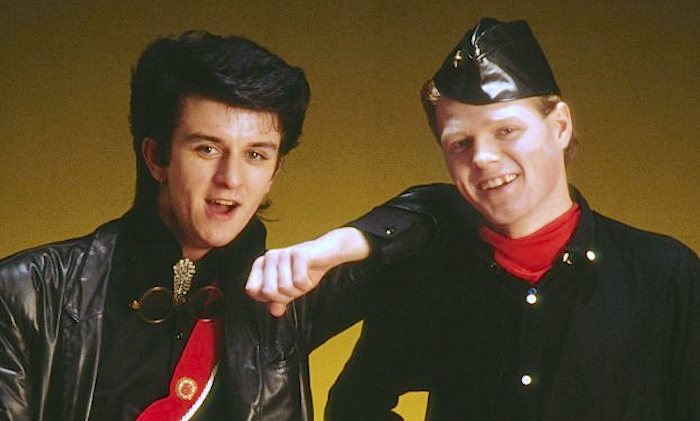
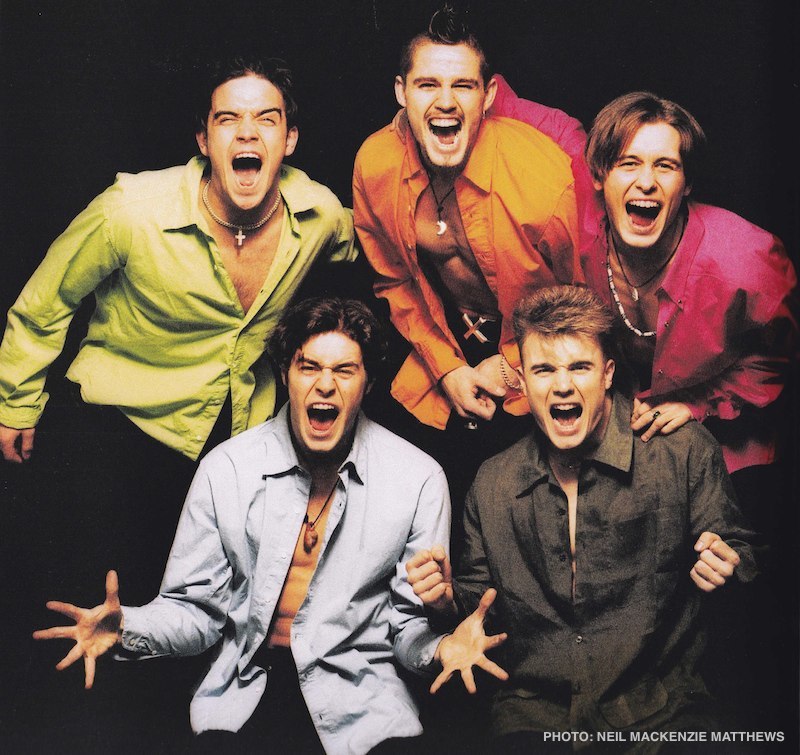
Take That in 1993: cheering to camera for a Smash Hits shoot by Neil Matthews

ANOTHER FAB BOOK OF PHOTOS capturing mainly the 80s pop scene came out this week and it’s a bit of curio. We who were there know how British music and fashion utterly transformed youth culture during the decade from 1980 onwards and among the 110+ new acts who dominated the sales charts in the first four years probably the majority achieved international fame and fortune. But Neil Mackenzie Matthews, in his beautifully printed 192-page book, titled Snap: Music Photography, also reminds us of the names of many acts we have forgotten and who had limited success.

It has become a truism that soon after the Beat Route’s Friday club-night opened in Soho and Spandau Ballet entered the singles chart, both in November 1980, virtually every young guy you met in the club was “putting a band together”, usually managed by another young guy of his own age. For every 110 new-wave acts across the UK who won the standard one-album-and-two-singles deal from a grateful record industry which had lost its way, there were probably 1,000 more who didn’t – yet they too were a vital part of the great collaborative force that was helping to reshape entertainment and media in the Eighties.

At Thursday’s book launch in Shoreditch’s Jealous gallery, Neil described how his own good luck was in attending the same Islington school as the Spandau Ballet posse, Dame Alice Owen’s, and at the very moment he missed getting a first job at the BBC, Spandau invited him to St Tropez on their first foreign booking so he took a camera along and taught himself how to shoot.
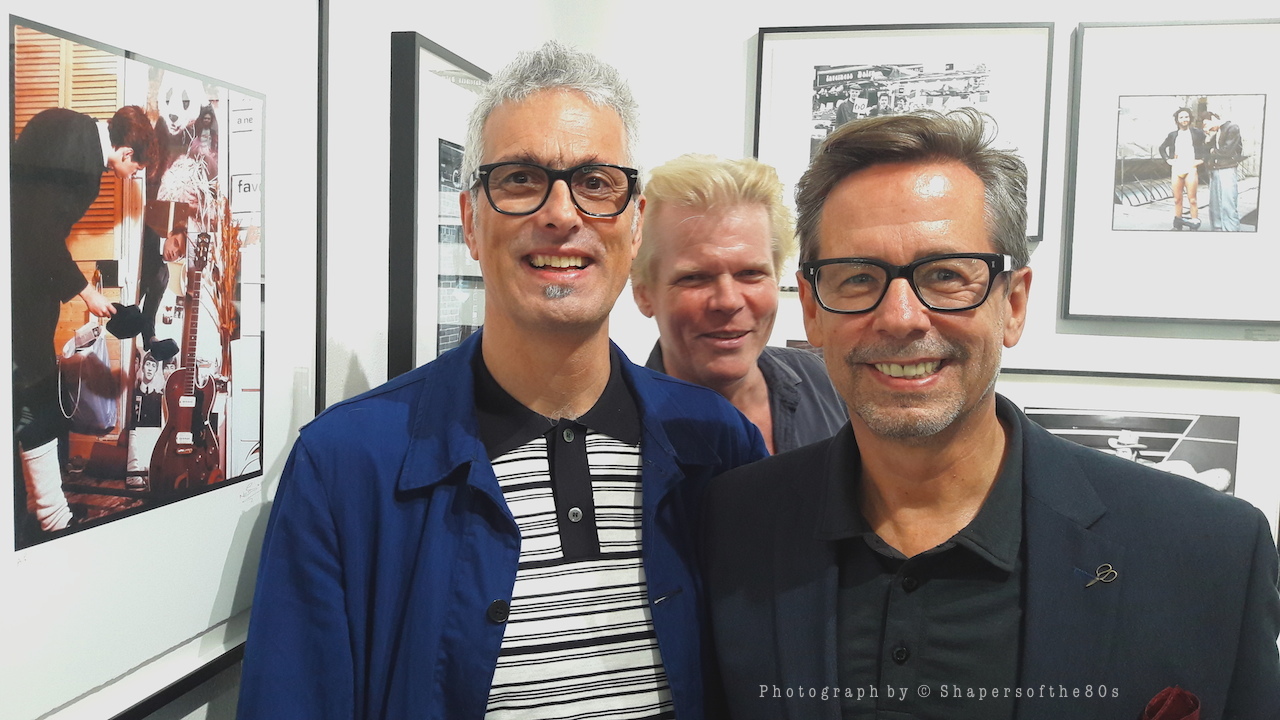
Photography, Nick Heyward ,book launch, exhibition, pop music, Neil Mackenzie Matthews, Jealous Gallery,

Neil Matthews and Nick Heyward photo-bombed by Neal Whitmore of Sigue Sigue Sputnik. Just in shot at left, Heyward pictured in his woolly leggings period with Haircut One Hundred. (Photo by Shapersofthe80s)

Click any pic below to enlarge all in a slideshow

As luck had it, within months Tim Lott and Barry Cain’s chirpy new music magazine Flexipop decided its irreverent role was to prick the egos of their mates, the newly jumped-up pop stars, and Neil as its photographer was expected to rewrite the rules of the game. This appealed to his own wild ways and because he was invariably working against the clock, he injected a note of spontaneity into popstar shoots by inventing a box of larky props with which to confront his celebrity models and expect them to respond on camera. Result: pix of Toyah Willcox all smiles in floppy bunny ears, and Ian McCulloch contemptuously prodding the matching bunch of carrots after he declined to wear the bunny ears. There’s also Edwin Collins canoodling a rubber chicken and Jaz Coleman delivering a blunt message in a book to his rivals.

Impromptu set-ups catch Suggs at a fruit and veg stall on the street, Tim Burgess atop a packing case in Tesco’s, and Malcolm McLaren doing business on the phone. The book features several candid snaps following the rise of Spandau Ballet and the New Romantics including an exclusive of Steve Norman sporting speedos at home in the lounge between his fishtanks and Harry Dog. Neil offers very few live performance pix but the two best capture Little Richard bantering atop his piano and a fleeting glimpse of Nick Heyward closing his eyes in an Albert Hall performance.

Some of Neil’s best straight portraits take a traditional approach and yet clearly capture a shared moment of trust between subject and lensman: we see sexy candid shots of Madonna relaxed, of Betty Boo sultry in leopardskin and of Beyoncé Knowles as a very come-hither 17-year-old before she dropped the surname. For me the two cracking shots in this book show Take That snarling something worse than “Cheese!” at the camera (top), and Jay Aston of Bucks Fizz seated on the loo in her hotel (below). If that doesn’t testify to trust what does?

PS: Sorry, Neil, I have to reveal that I scooped you with the “first” kiss between Jon Moss and Boy George wearing Westwood a full year before Culture Club and your own shot where they both wear Sue Clowes.

Photography, book launch, exhibition, pop music, Neil Mackenzie Matthews, Jealous Gallery, Jay Aston

Jay Aston 1984: caught at her hotel by Neil Matthews

➢ Neil MacKenzie Matthews’ career went on to embrace fashion, international celebrity and advertising, but his book Snap: Music Photography (Red Planet, £30 in hardback) focusses essentially on the music scene

➢ Neil Mackenzie Matthews’ prints are visible online and for sale at the Jealous Gallery, 37 Curtain Road, EC2A 3PT

➢ View Neil’s wider portfolio at his own website

HEYWARD THE LEGEND BACK ON THE ROAD

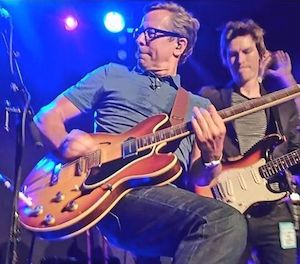
Nick Heyward, live, Gibson Sunburst

Nick with his Gibson Sunburst 330, 1967

❏ One incidental pleasure at the gallery was to catch up with Nick Heyward for the first time since I snapped him with his sidekick Les as Wag club regulars a lifetime ago. Today he features in a daffy trio of Neil’s pix of Haircut One Hundred from 1982 and he’s as friendly and talkative as his ever-present smile suggests. He has been on the road this year with his UK Acoustic Tour, a series of intimate dates where audiences were treated to hits from his breezy and escapist seventh solo album, Woodland Echoes, plus others from his entire career. The album is a distinctly musical treat which Pop Matters reviewed as “a timeless, infectious gem”, adding: “He looks like that cool college professor all the students want to hang out with – and he seems to be at peace with his status as a 50-something indie pop legend”. More news at Nick’s own website .

FRONT PAGE

2019 ➤ This would have been Steve Strange’s 60th birthday

1978, when Steve Strange teamed up with Rusty Egan (Photo © Fin Costello/Redferns)

➢ Remember Steve through the tributes paid
after his death in 2015 by 30 original Blitz Kids
here at Shapers of the 80s

Evening Standard, On The Line, Steve Strange, Evening Standard

First published in the Evening Standard, Jan 24, 1980

➢ Our first report on Steve Strange, 1980. . . He was eager to announce a Thursday cabaret night at the Blitz, showcasing a new band with the weird name of “Spandau Ballet”

Steve Strange, New Romantics, Blitz Kids, nightclubbing, London

First published in the Evening Standard, Oct 16, 1980

➢ By the autumn of 1980 there was a whole new underground scene to report. . . In one week, a dozen prodigies were setting the town ablaze, none of them over 22

FRONT PAGE

➤ Sullivan’s manifesto for the Rebel Rebel life

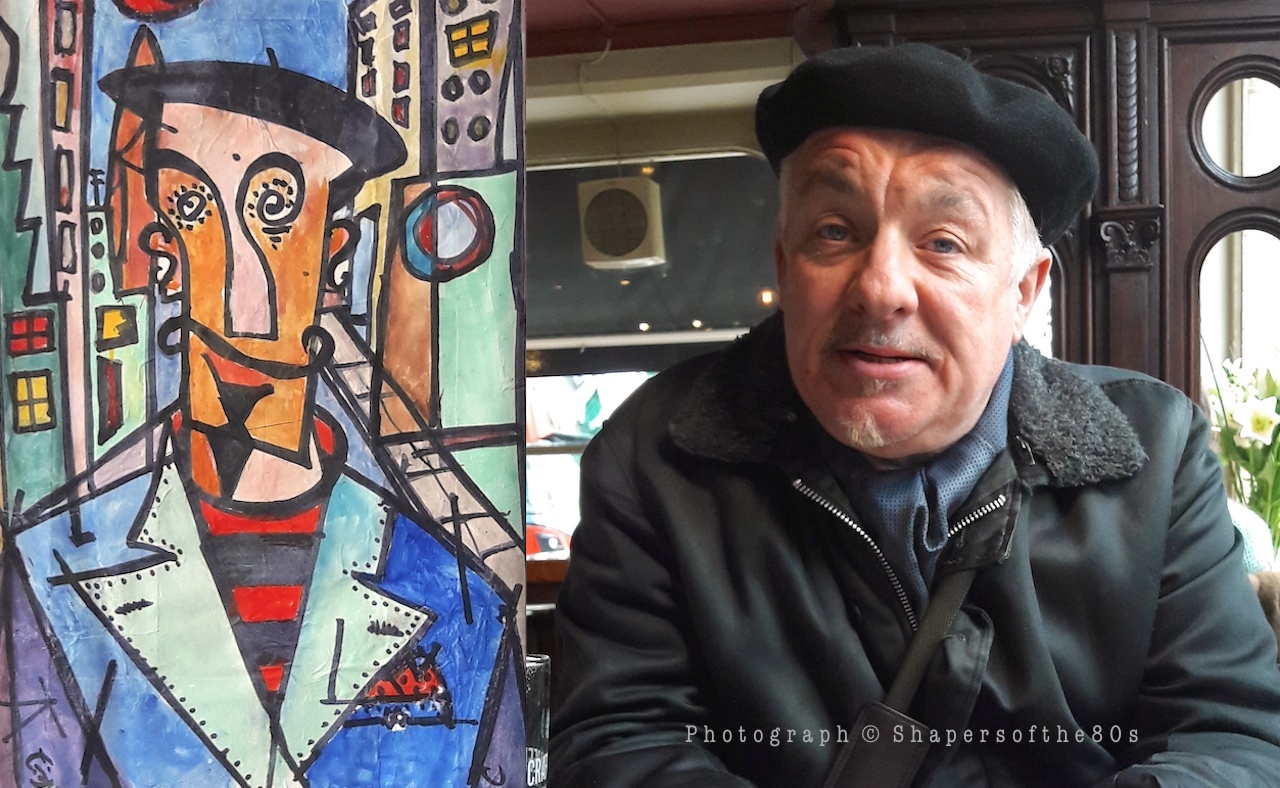
Club-host and artist Chris Sullivan: as he renders himself sporting Dennis-the-Menace T-shirt in NYC 1981 and as he is today in Portobello Road

NOT MANY PEOPLE KNOW that Chris Sullivan – mischievous Welsh frontman of Soho’s Wag Club which he founded in 1982 – switched from the fashion course at St Martin’s to pursue painting instead. Despite his instinctive sense of style, he says today: “I was great at the design and fashion drawings, but not very good at actually making things, stuff like sewing and pattern cutting. So I moved over to fine art. At the time I kept on being in the newspapers, and the college didn’t care what I did, just happy another St Martin’s student was getting press. It was good for their PR.”

It also positioned him as a pivotal influence on the whole British youthquake that transformed London nightlife, music and fashion in the Eighties, while his own mantra of “One look lasts a day” has propelled him through such guises as flaneur, deejay, journalist, nightclub host, pop star, northern soul dancer, style commentator, entrepreneur and fashion designer. A terrific route-map to the Sullivan cosmos occupies 12 pages of the April issue of GQ magazine, blessed with a photo-portrait by David Bailey.

Click any pic below to enlarge all in a slideshow

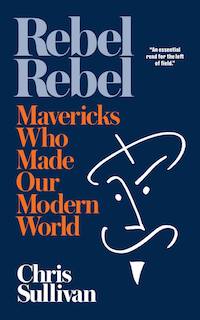
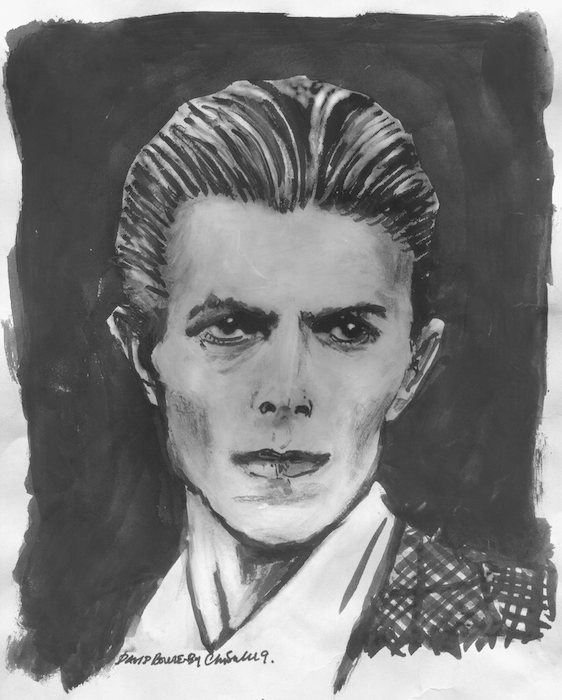
This month Sullivan publishes his third book, an anthology of “people and things that broke the mould” titled Rebel Rebel: How Mavericks Made the Modern World. What he dubs a “paperback manifesto” is an excuse to celebrate his own outsider approach to life: never having a proper job and always staying one step ahead of the pack. The book was launched in 2015 as a crowd-funded project through Unbound Books and for reasons unknown it seemed to take four years either to raise the cash or finish the writing, at which point Sullivan says there was still no money set aside for photographs of the 34 subjects he was profiling (some new essays, some vintage). “So I said I’ll paint or draw them, all these people like Rod Steiger, Fela Kuti, Louise Brooks, Orson Welles, Anita Pallenberg, David Bowie. . .”

In the mix are criminals (Brilliant Chang), musicians (Lemmy), actors (Robert Mitchum), artists (Egon Schiele, Jackson Pollock), directors (Martin Scorsese), photographers (Robert Capa), as well as iconic topics such as film noir, Berlin in the Twenties, Levis, the pork pie hat, the Zoot Suit and the white T-Shirt.

“Because I was so worried as the deadline loomed,” Sullivan says, “I did 35 illustrations for the book, really quickly b-b-boom! Then a friend Barnsley saw one of a zoot suit I wasn’t using for a chapter on outsider clothing, and he snapped it up. Before I knew it someone else was asking could they have one, then I did another one as a commission and stuck that up online and since then I’ve had more than 10 commissions to do these paintings.” Some of the results are here for all to see, inspired by time spent in New York back in the day.

As for the book’s other 400-odd pages, they read like Sullivan in his element. Vigorous prose and serious research substantiate his invitation to “an exceptional party” of cultural giants. Take Capa for instance, who “captured a world and it was Capa’s world”, according to John Steinbeck. Sullivan empathises: “He seems like a chap with whom you’d want to hang out, chew that fat and then go on a humongous bender – a man who was charismatic, brave, egalitarian and funny.” It’s intense stuff that exonerates malcontents and free-thinkers. Ultimately, wag as a tag is not the last word.

David Bowie, books, Unbound, Chris Sullivan, illustration

David Bowie: Sullivan’s illustration of the Thin White Duke for his Rebel book

➢ Read the odd taster from Sullivan’s book Rebel Rebel at Unbound

FRONT PAGE

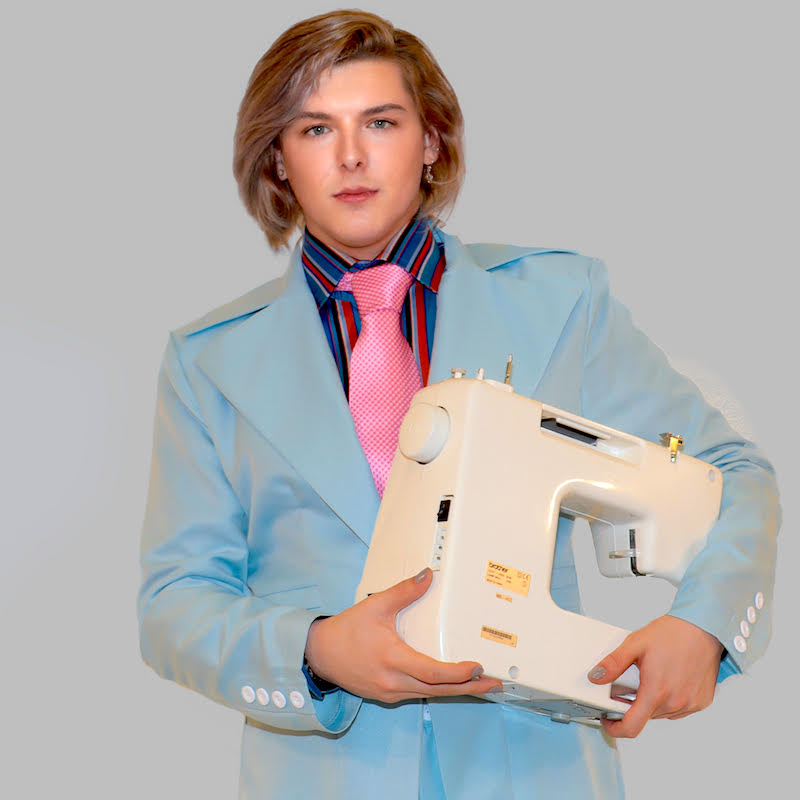
2019 ➤ For three nights only, Ziggy’s stylist Freddie stars in his own musical

David Bowie, pop music, Freddie Burretti, costume, designer, modelling,

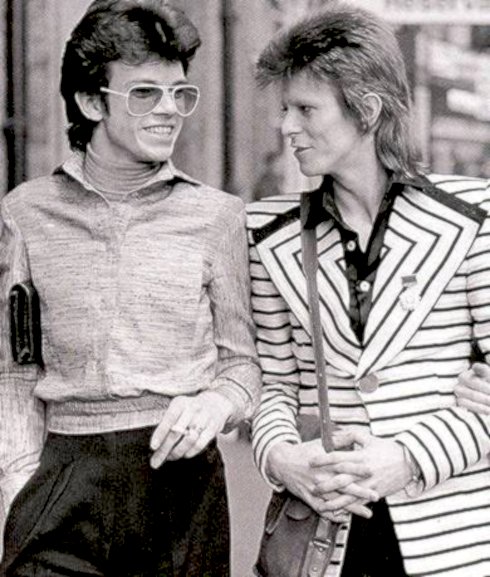
1973: Stylist Freddie Burretti with David Bowie sporting the boldly striped suit of the moment, designed by Freddie

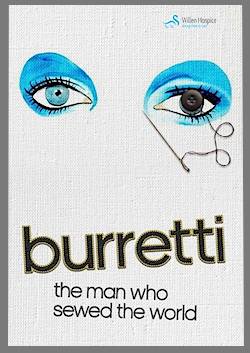
AND NOW THE MUSICAL. Brace yourselves for Burretti The Man Who Sewed The World, featuring a new band, The Spiders from Bletchley, and starring 40 unpaid local performers at their theatre in the Buckinghamshire town where Freddie Burretti spent his teens as a Mod. You remember: he’s the little-known whizz who designed, if not the red haircut, most of the on-and-off-stage clothes for Ziggy Stardust and is today compared to leaders of British fashion such as Westwood and McQueen. The stage musical is the dream of writer Lee Scriven who remains as infatuated with David Bowie’s early struggle for stardom as the 23-year-old Bowie himself was infatuated with the handsome 19-year-old tailor he met one Sunday in the Sombrero (aka Yours or Mine), London’s trendiest gay disco and celebrity haunt in Kensington.

Paul J Macdonald, Chrysalis Theatre, Bletchley, The Man Who Sewed The World, Freddie Burretti, Lee Scriven, David Bowie, pop music, musical, theatre,

Poster for Lee Scriven’s new musical

Remember too how Bowie had single-mindedly survived nine failed bands during ten years of struggle before Ziggy soared into orbit, and even that took three years to achieve following his first chart hit Space Oddity.

The instant chemistry between Bowie as performer and Freddie as his stylist amounted to what DB called telepathy: “because whatever I think of in my mind, he produces for real”. Freddie had all the flamboyance of a six-foot-tall out gay man in 1970, the first year of gay liberation in the UK. During their intimate four-year partnership, Freddie’s highly sexualised and bravura costumes were like no others in pop.

Much of this was the theme of a biographical movie directed by Scriven four years ago, titled Starman: Freddie Burretti – The Man Who Sewed The World, in which interviews with friends and colleagues pieced together the jigsaw that saw Freddie being invited by Angie Bowie to come to live with her and David at Haddon Hall. As Lee said today, despite various re-edits, potential backers “politely passed” on turning his “demo” version documentary into a feature movie and the result is this new stage musical as a community workshop production aimed at raising money for charity. “Not a West End musical, more a West Bletchley one, like another ‘demo’ version,” he said modestly.

Freddie Burretti, costume, designer, modelling, David Bowie,

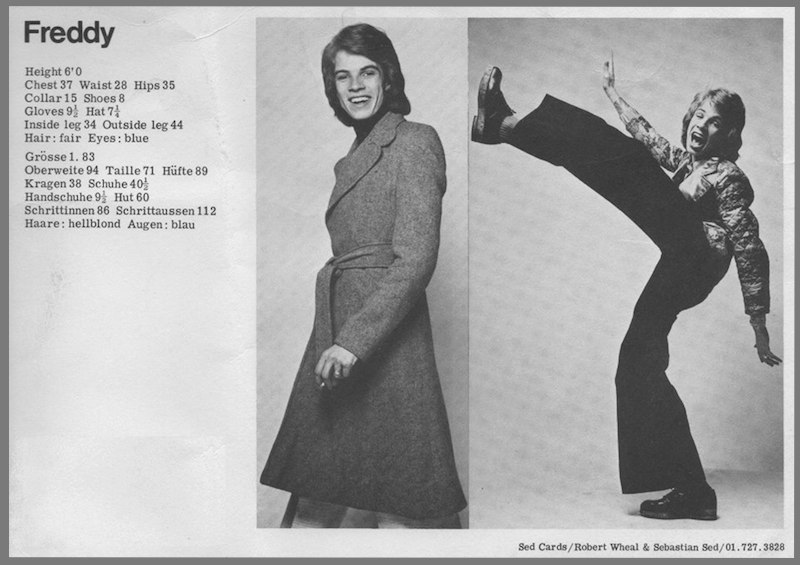
1972: Freddie Burretti’s card advertising his talents as a model

Lee has written a script that pays homage to Freddie, captures his teenage growing pains as a homosexual and his escape to London, where he meets the one-hit pop singer. Lee found himself reluctant to put words into the mouth of the future international icon he respectfully calls “Mr Bowie” so instead renamed him Bobby Jones, the only fictitious character in the show. His infatuation is such that he creates a new band in which to showcase Freddie as “the next Mick Jagger”, which proves to be a non-starter. Instead Freddie applies his genius to reinventing Bobby’s own image as a Starman who electrifies the world in 1972 when he reaches Top of the Pops clad in Freddie’s spangly one-piece jumpsuit and confirms his uniqueness as a superstar.

Having changed the show’s title to now emphasise its subject as Burretti himself, Lee said of its origins: “I had to get it out of my system and suddenly realised, Hang on, this is a Billy Elliot story of self-discovery. In fact, the narrative is so strong, it’s like Everybody’s Talking About Jamie [currently running in London] but frankly a lot stronger!”

➢ View Burretti’s designs in the image gallery
for the V&A’s exhibition David Bowie Is

The show is directed by musical polymath Caz Tricks, and embraces sounds of the era such as Desmond Dekker and the Trojan label, and of course some surprising Bowie numbers. Lee recruited “a great little band I’ve worked with” as The Spiders from Bletchley, led by the onetime Stray guitarist Del Bromham, plus choreography from Alex Kent, an Edinburgh Festival veteran, and Jack Sullivan, fresh out of uni. Lee added: “The mood is very Buzzcocks, very edgy.”

Hardly off-stage throughout is local lad Paul J Macdonald in his first gig starring as Burretti. He proves to be an ace dancer – as indeed was Freddie himself who caught many an eye in his white Spandex hotpants on London’s first uplit dancefloor at the Sombrero.

Burretti: The Man Who Sewed The World runs at the Chrysalis Theatre, Milton Keynes MK15 9JY on May 16–18, 2019. Tickets cost £15 by calling 0333 666 3366 or by booking online here

Paul J Macdonald, Chrysalis Theatre, Bletchley, The Man Who Sewed The World, Freddie Burretti, Lee Scriven, musical, theatre,

2019: Paul J Macdonald playing Freddie Burretti in The Man Who Sewed The World

➢ Previously at Shapers of the 80s: Burretti movie adds an epic and essential chapter to the Bowie story

➢ Previously at Shapers of the 80s: A feast of Bowie-ana
served in waffeur-thin slices – Any Day Now,
Kevin Cann’s new book about Bowie

FRONT PAGE

1967 ➤ Secret of how Scott Walker achieved a new adult voice as he went solo

Obituaries, tributes, interview, Scott Walker, pop music,

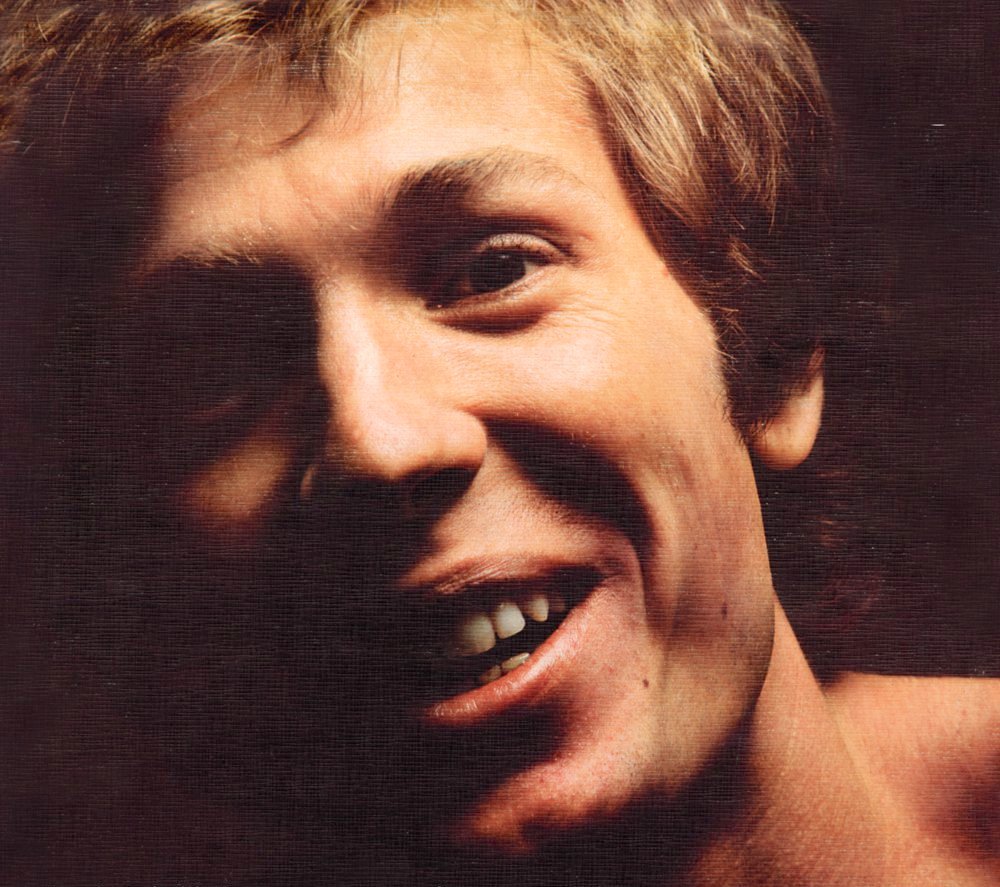
Scott Walker in 1970: still transitioning from pop idol to icon

ONE OF THE MOST RESPECTED singers of our age died on Friday in London aged 76: the US-born Noel Scott Engel, who became a British citizen in 1970.

I interviewed him as Scott Walker in 1967 for Britain’s “first teenage newspaper”, titled Cue and published by IPC. At that very moment he was transitioning from teen idol into a more serious solo icon with his first album Scott, released in September and featuring the brilliant rendering of Brel’s angsty songs My Death and Amsterdam. For him the last straw had been to appear that April in the Walker Brothers trio on the Sunday-night TV variety show hosted by Bob Monkhouse at the London Palladium, and on viewing it Scott decided to split. Among his solo moves that December he released as his first single the risqué Jackie, from the new album Scott 2 (another Brel co-composition with louche themes that caused the BBC to ban it from airplay). As it headed up the UK pop chart, we met during rehearsals for Scott’s appearance on a TV Christmas special at ABC’s Teddington studios.

He lived in Marylebone at the time, had split from the Brothers (who were not actually blood brothers), gone into a monastery to study Gregorian chants and then set about starting an idiosyncratic solo career. He hated both the idea of being a pinup and his all too evident “pop-star” good looks. His most startling admission to me was that he was drinking “a bottle of wine and a bottle of Scotch a day” – in order to coarsen his baritone voice, he said! Scott recorded four seminal albums, Scott 1 to 4 and then disappeared.

In 1984 came Climate Of Hunter, the first of an experimental and challenging series of albums over many years, with titles such as Tilt 1995, The Drift 2006 and Bish Bosch 2012. All of them broke the rules of regular music and back in the day I listened to each album twice and remain gobsmacked today. (There’s a great video clip, shown above in the 30th Century Man trailer, of a percussionist punching a side of raw pork to achieve the exact kind of thwack Scott sought for the song Clara on The Drift.)

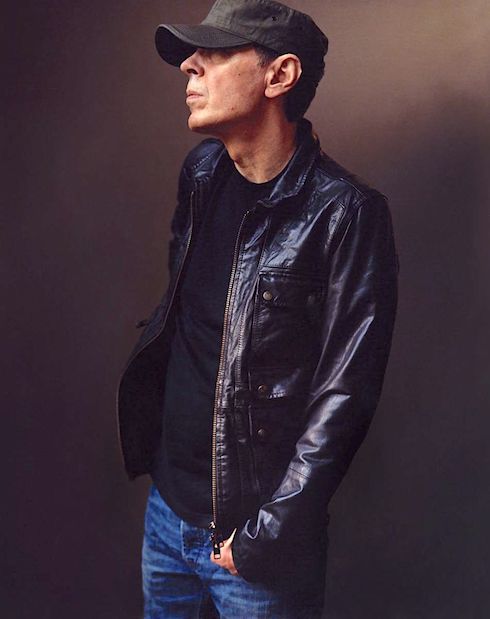
In recent years Scott could often be seen in my local supermarket in west London doing the shopping with his partner Beverly. Older and gaunter, he pulled his baseball cap down over his face but it was quite obvious to perhaps six other shoppers marking him that we knew who he was and as respectful fans we kept our distance. Scott is survived by his daughter, Lee, his granddaughter, Emmi-Lee, and Beverly.

BOWIE 1997: “MY IDOL SINCE I WAS A KID”

➢ Rock enigma Scott Walker dies aged 76 – BBC obituary

➢ Scott Walker obituary by Adam Sweeting – Pop singer who rose to fame in the 1960s and went on to become an enigmatic solo artist

Obituaries, tributes, interview, Scott Walker, pop music, Jarvis Cocker

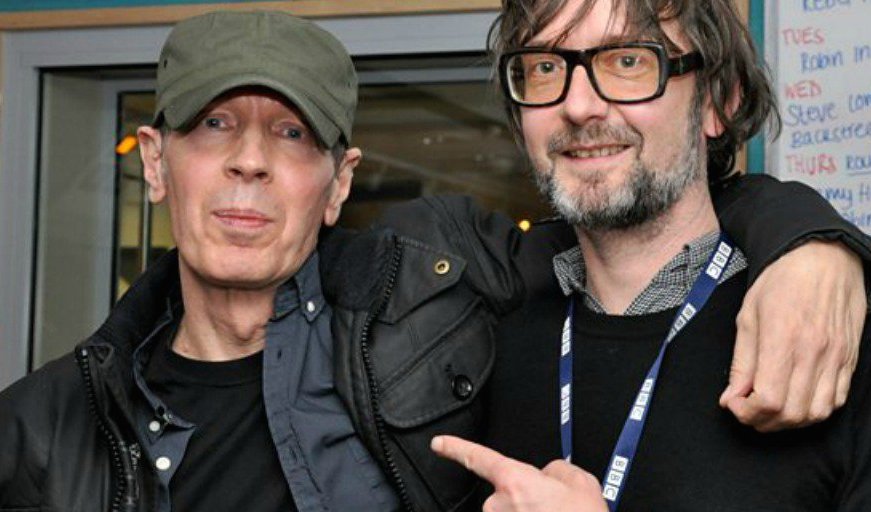
Scott Walker with Jarvis Cocker in 2017: a rich conversation about Scott’s life and times ensued (BBC)

➢ The Songs of Scott Walker – watch for this programme to become available at BBC iPlayer: Jarvis Cocker welcomes Scott Walker back to the Sunday Service ahead of the late-night BBC Prom celebrating his music, which took place at the Royal Albert Hall on Tuesday 25 July 2017. Includes the moment Walker made David Bowie cry on air.

➢ 30 Century Man (2007), directed by Stephen Kijack: Comprehensive survey of Scott’s life from his early days as a jobbing bass player on the Sunset Strip in which he describes his “lost years” in terms of creativity. Premiered at the 2006 London Film Festival followed by the 2007 Berlin International Film Festival. Available from Amazon on Blue-Ray and DVD.

Scott Walker, obituary, singer,

Among the last official photos of Scott by Jamie Hawkesworth. (Source 4AD)

➢ Previously at Shapers of the 80s: The on-off brotherly rivalry that drove John and Scott Walker apart

FRONT PAGE