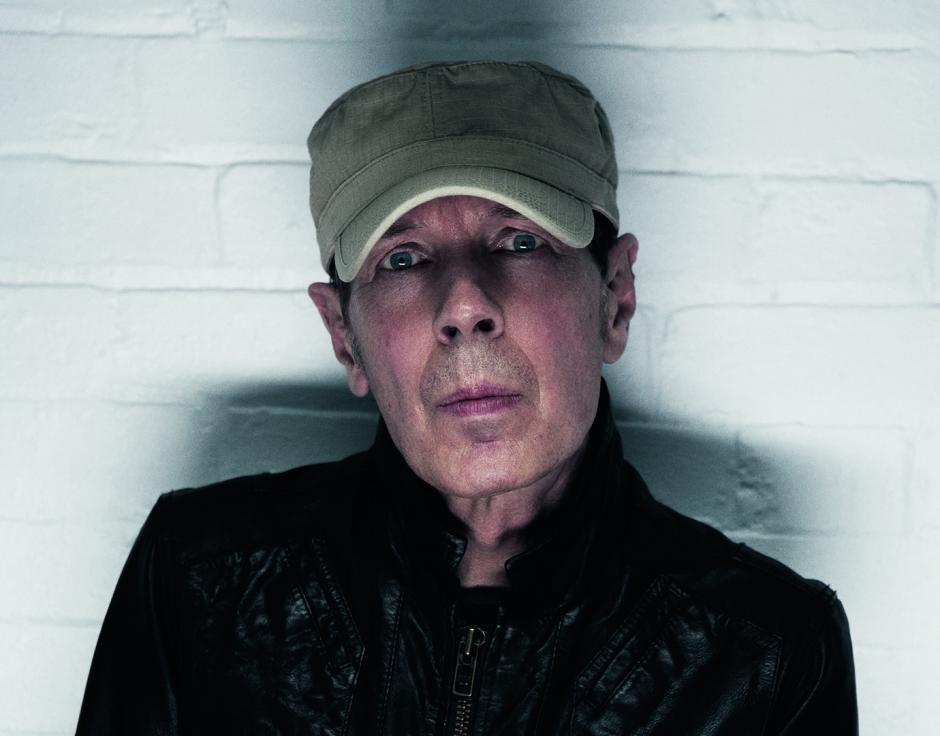
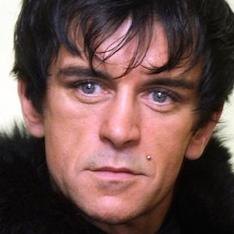
Scott Walker photographed in October 2012 by Jake Walters
◼ A REVEALING APPRECIATION of Scott Walker appears in today’s Observer obituaries of the decade … Co-director of Artangel Michael Morris recalls the great experimental musician as a witty and charming man who freed himself from the trappings of fame:
“ He’s a completely singular figure in late 20th-century, early 21st-century art and ideas. Scott’s work doesn’t fit into a cultural compartment: he was interested in all forms of human expression. . . Scott was held in such high regard by so many other artists. David Bowie often acknowledged his influence, as does Brian Eno. I think they also revered his ability to cast off the mantle of celebrity and focus simply on the work.
“ He was not in any way caught up in the myth of Scott Walker. You just felt that you were working with a very precise, open mind, someone who was completely uninterested in the trappings of image or fame. Bike or the bus were his preferred modes of travel. I think he’d found a way to live and work outside of the public gaze that was much more liberating and creative. . . ” / Continued online
◼ THE DUTCH ACTOR BEST KNOWN for his role in the 1982 film Blade Runner, has died aged 75, CBS News reports today. Rutger Hauer played the murderous replicant Roy Batty on a desperate quest to prolong his artificially shortened life in post-apocalyptic, 21st-century Los Angeles. Only two years ago director Ridley Scott revealed that Hauer himself wrote his anti-hero’s much-quoted “I’ve Seen Things” soliloquy for his dying moments. The rain-soaked Batty looked back over his extraordinary existence, saying: “All those moments will be lost in time. Like tears in rain. Time to die.” ➢ Rutger Hauer, Blade Runner star, dies at 75 – CBS News
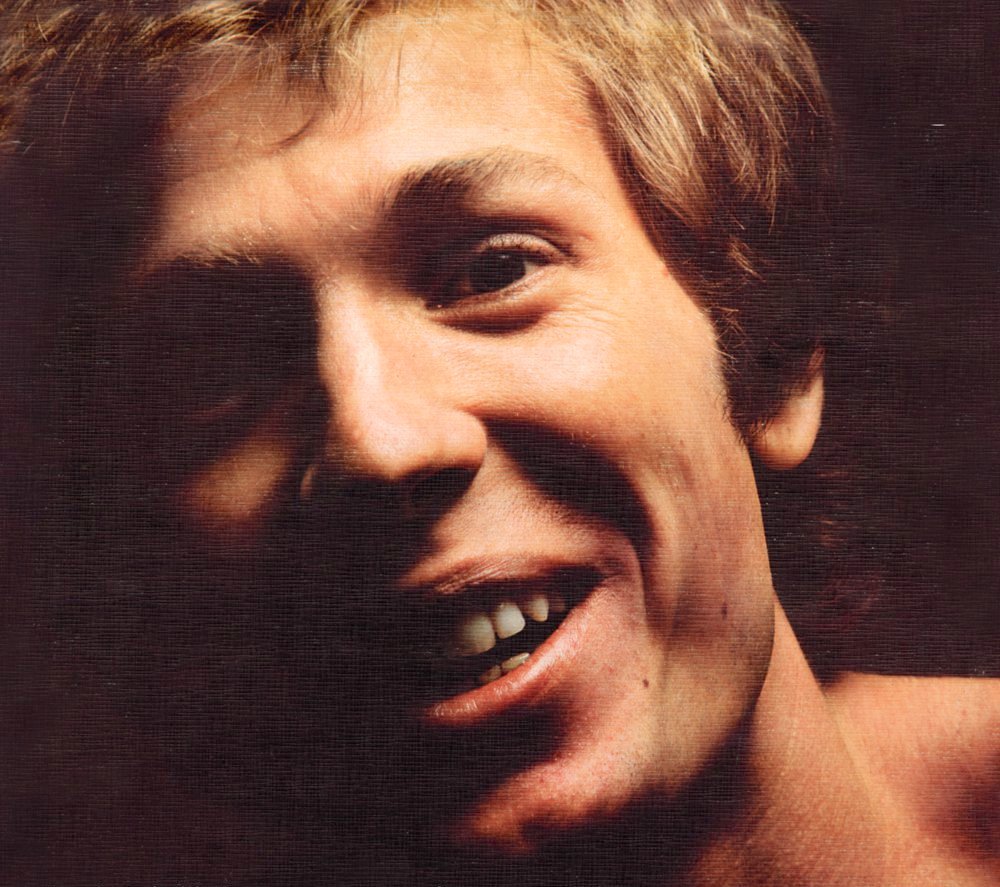
Scott Walker in 1970: still transitioning from pop idol to icon
◼ ONE OF THE MOST RESPECTED singers of our age died on Friday in London aged 76: the US-born Noel Scott Engel, who became a British citizen in 1970.
I interviewed him as Scott Walker in 1967 for Britain’s “first teenage newspaper”, titled Cue and published by IPC. At that very moment he was transitioning from teen idol into a more serious solo icon with his first album Scott, released in September and featuring the brilliant rendering of Brel’s angsty songs My Death and Amsterdam. For him the last straw had been to appear that April in the Walker Brothers trio on the Sunday-night TV variety show hosted by Bob Monkhouse at the London Palladium, and on viewing it Scott decided to split. Among his solo moves that December he released as his first single the risqué Jackie, from the new album Scott 2 (another Brel co-composition with louche themes that caused the BBC to ban it from airplay). As it headed up the UK pop chart, we met during rehearsals for Scott’s appearance on a TV Christmas special at ABC’s Teddington studios.
He lived in Marylebone at the time, had split from the Brothers (who were not actually blood brothers), gone into a monastery to study Gregorian chants and then set about starting an idiosyncratic solo career. He hated both the idea of being a pinup and his all too evident “pop-star” good looks. His most startling admission to me was that he was drinking “a bottle of wine and a bottle of Scotch a day” – in order to coarsen his baritone voice, he said! Scott recorded four seminal albums, Scott 1 to 4 and then disappeared.
In 1984 came Climate Of Hunter, the first of an experimental and challenging series of albums over many years, with titles such as Tilt 1995, The Drift 2006 and Bish Bosch 2012. All of them broke the rules of regular music and back in the day I listened to each album twice and remain gobsmacked today. (There’s a great video clip, shown above in the 30th Century Man trailer, of a percussionist punching a side of raw pork to achieve the exact kind of thwack Scott sought for the song Clara on The Drift.)
In recent years Scott could often be seen in my local supermarket in west London doing the shopping with his partner Beverly. Older and gaunter, he pulled his baseball cap down over his face but it was quite obvious to perhaps six other shoppers marking him that we knew who he was and as respectful fans we kept our distance. Scott is survived by his daughter, Lee, his granddaughter, Emmi-Lee, and Beverly.
➢ 30 Century Man (2007), directed by Stephen Kijack: Comprehensive survey of Scott’s life from his early days as a jobbing bass player on the Sunset Strip in which he describes his “lost years” in terms of creativity. Premiered at the 2006 London Film Festival followed by the 2007 Berlin International Film Festival. Available from Amazon on Blue-Ray and DVD.
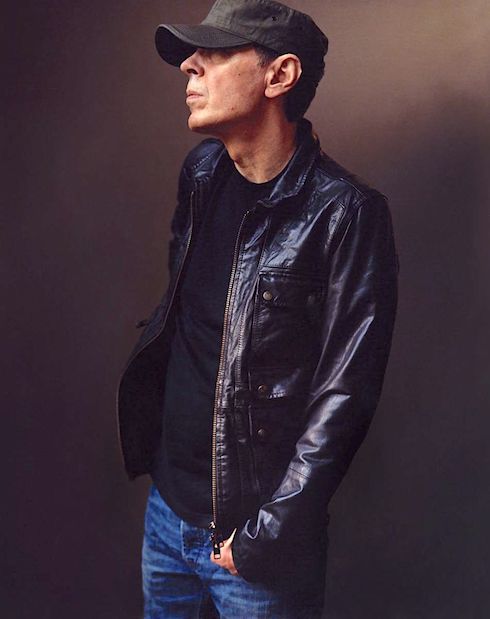
Among the last official photos of Scott by Jamie Hawkesworth. (Source 4AD)
On the fourth anniversary of Steve Strange’s passing
(not to mention the 40th anniversary of his Tuesday club-night
opening at the Blitz), how better to remember the man who revolutionised London nightclubbing than with the massive collection of tributes assembled here at Shapers of the 80s
from every significant Blitz Kid the day after Steve died…
Brief tasters. . . Original Blitz Club deejay Rusty Egan said: “I’m very, very sad and down tonight because I’ve lost an old friend. We had our disagreements but we did have a decade of the best times that anybody could ever have wished for. We made some amazing music, some amazing parties, clubs and fun and friends. Underneath it all he was a good soul. Steve, I’m so sorry I didn’t get a chance to say I still love you.”
Chris Sullivan, who ran Soho’s Wag Club: “We were both flamboyant club-running Welsh dandies but were never rivals. Steve had too much dignity for that. We were friends and remained so for the rest of his life. And I can say that Steve, despite quite a few hard years, never lost that that spark, humour or joie de vivre, was forever stylish and was always a pleasure to see.”
Princess Julia, writer and deejay: “Getting dressed up, going out and getting noticed… Steve was head of a subculture the likes of which perhaps we will never see again.”
Kim Bowen, stylist, onetime Queen of The Blitz: “Rushing enthusiasm, involving everyone, creating insane parties going round and round on the Circle Line. Some truly bad outfits (his not mine.) Shockingly, ‘Kim, will you be my official girlfriend?’ ”
◼ THE VERY DAY THIS WEEK WHEN HM THE QUEEN put a smile on the face of the British fashion industry, by attending London Fashion Week for the first time, also brought the sad news of Judy Blame’s death, aged 58. He (yes, he) was one of those self-taught iconoclasts who was acquiring a luminescent reputation in the electric 1980s when Fashion Week came into being, driven in part by the streetwise youth culture that Shapers of the 80s celebrates.
Blame shared friends with the charismatic Ray Petri whose flair gave kudos to the word “stylist” by injecting attitude and dash into the role of the humble gofer who gathered props and make-up for a photo shoot. This was the generation of creatives who asserted their urban savviness and shifted the word style itself from meaning a suspect and second-rate lure with which marketeers sold their wares. By the end of the decade, style and fashion had become distinct goals in their own right, the first announcing individuality in consumer choice and mainstream media, while fashion confirmed convention.
Blame’s own talents as an image-maker were celebrated in 2016 at an Institute of Contemporary Arts exhibition titled Never Again which displayed his DIY jewellery, objets trouvés, clothing, photomontages, sketchbooks and T-shirts, and gave insights into working with Neneh Cherry and Massive Attack.
Born Chris Barnes in 1960, Blame died on 19 February 2018 and the tributes flowed in. Dylan Jones, editor-in-chief of GQ, wrote: “He was an artist, a genuine one, someone who could cherry-pick cultural detritus and then mix it all together to create something new, something lasting.”
Nick Knight, photographer and director of SHOWstudio, wrote: “Always totally unique, always a champion of the underdog, always fiercely anti-fascist and anti-establishment, always inspiring, always so immensely talented and always one hundred % brilliant.”
Scarlett Cannon, Blame’s dearest friend and partner in fronting the Cha-Cha club-night 1981-82, said: “I’m heartbroken but so happy to have had him in my life all these years. He left such a rich heritage of inspiration and touched so many people.”
Judy Blame with his long-standing friend Scarlett Cannon, and little Maude
➢ Choose “View full site” – then in the blue bar atop your mobile page, click the three horizontal lines linking to many blue themed pages with background article
MORE INTERESTING THAN MOST PEOPLE’S FANTASIES — THE SWINGING EIGHTIES 1978-1984
They didn’t call themselves New Romantics, or the Blitz Kids – but other people did.
“I’d find people at the Blitz who were possible only in my imagination. But they were real” — Stephen Jones, hatmaker, 1983. (Illustration courtesy Iain R Webb, 1983)
“The truth about those Blitz club people was more interesting than most people’s fantasies” — Steve Dagger, pop group manager, 1983
PRAISE INDEED!
“See David Johnson’s fabulously detailed website Shapers of the 80s to which I am hugely indebted” – Political historian Dominic Sandbrook, in his book Who Dares Wins, 2019
“The (velvet) goldmine that is Shapers of the 80s” – Verdict of Chris O’Leary, respected author and blogger who analyses Bowie song by song at Pushing Ahead of the Dame
“The rather brilliant Shapers of the 80s website” – Dylan Jones in his Sweet Dreams paperback, 2021
A UNIQUE HISTORY
➢ WELCOME to the Swinging 80s ➢ THE BLOG POSTS on this front page report topical updates ➢ ROLL OVER THE MENU at page top to go deeper into the past ➢ FOR NEWS & MONTH BY MONTH SEARCH scroll down this sidebar
❏ Header artwork by Kat Starchild shows Blitz Kids Darla Jane Gilroy, Elise Brazier, Judi Frankland and Steve Strange, with David Bowie at centre in his 1980 video for Ashes to Ashes
VINCENT ON AIR 2026
✱ Deejay legend Robbie Vincent has returned to JazzFM on Sundays 1-3pm… Catch up on Robbie’s JazzFM August Bank Holiday 2020 session thanks to AhhhhhSoul with four hours of “nothing but essential rhythms of soul, jazz and funk”.
TOLD FOR THE FIRST TIME
◆ Who was who in Spandau’s break-out year of 1980? The Invisible Hand of Shapersofthe80s draws a selective timeline for The unprecedented rise and rise of Spandau Ballet –– Turn to our inside page
SEARCH our 925 posts or ZOOM DOWN TO THE ARCHIVE INDEX
UNTOLD BLITZ STORIES
✱ If you thought there was no more to know about the birth of Blitz culture in 1980 then get your hands on a sensational book by an obsessive music fan called David Barrat. It is gripping, original and epic – a spooky tale of coincidence and parallel lives as mind-tingling as a Sherlock Holmes yarn. Titled both New Romantics Who Never Were and The Untold Story of Spandau Ballet! Sample this initial taster here at Shapers of the 80s
CHEWING THE FAT
✱ Jawing at Soho Radio on the 80s clubland revolution (from 32 mins) and on art (@55 mins) is probably the most influential shaper of the 80s, former Wag-club director Chris Sullivan (pictured) with editor of this website David Johnson
LANDMARK FAREWELLS. . . HIT THE INDEX TAB UP TOP FOR EVERYTHING ELSE







 ➢➢ Shapers of the 80s ➣➣