Category Archives: Clubbing

30 years ago today ➤ First survey of their private worlds as the new young trigger a generation gap

John Maybury, Marek Kohn,Blitz culture,  ZG

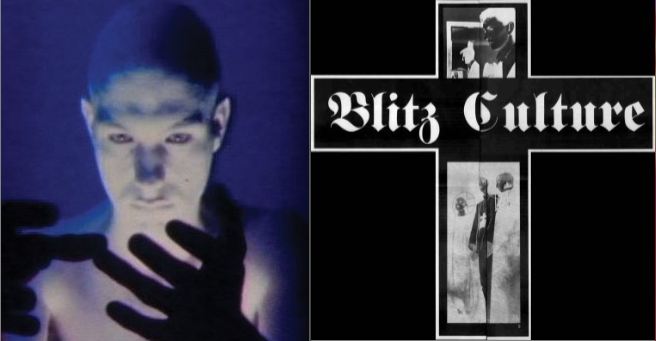
Left, film-maker John Maybury in Tortures That Laugh © John Maybury 1978, artist’s collection; right, graphic from ZG magazine, issue one, 1980

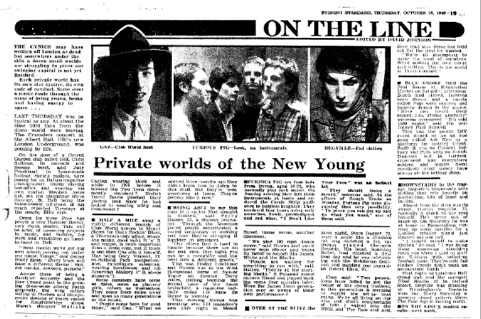
❚ THE BLITZ CLUB SCENE EVOLVED RAPIDLY during the summer of 1980 as media coverage caught up, and it became clear that the New Romantics were not the only social group making waves. In the London Evening Standard’s On The Line column I had been following the Blitz Kids all year and, unsurprisingly, my nocturnal antics raised eyebrows at the Standard by day. “Do they talk sort of funny?” colleagues would ask about my bizarre playmates, meaning did they say “Leave it aht” instead of “OK yah”? Over time the generation gap I was reporting caught the attention of the Standard’s perceptive film critic Alexander Walker, who couldn’t read enough about Britain’s self-possessed youth movement. “Not so much a generation gap,” he observed sagely. “More a genus gap!” In this respect, the parallels with the digital natives of today’s Generation Y are spooky.

A key difference was the naked ambition of the media-savvy Blitz Kids who shunned rock music as a stone-age relic. They were spreading inspiration through Britain’s clubland, even as Steve Strange’s Tuesday nights at the Blitz ended suddenly on October 14, as also did Hell, their Thursday offshoot. Key players were changing trains. That very week Spandau Ballet had signed their first record deal, while I had been darting daily from concert to club to Kensington Market surveying the many competing expressions of youthful endeavour, then trying to persuade the editor Charles Wintour that A Significant Youthquake Was About To Break.

A month earlier during London fashion week I’d only just scraped into print with my first Pose Age report showing Melissa Caplan’s unisex tabards which were being worn to shock. “You’re making this up,” raged one senior editor whose veto against publishing was over-ruled by Wintour. Now I was proposing that this sweeping survey for On The Line should make a spectacular centre spread in the paper. Yet the eye-searing kids in our pictures were a bridge too far even for the enlightened Wintour, who sent me a memo saying it was all “Rather too esoteric for us”. Under protest, he finally conceded splitting the survey between two separate pages a week apart.

By Christmas Spandau’s single became a chart hit, along with Fade to Grey by Visage, fronted by Steve Strange. We could not know then how quickly Britain’s clubbing grapevine was to hurtle yet more clubland bands into the charts, many unveiled by sharp young managers the same age as the talent. Or that 1981 would soon be spinning like a New Romantic dynamo.

Evening Standard, Oct 16, 1980

First published in the Evening Standard, Oct 16, 1980

THE CYNICS may have written off London as dead in 1980 but somewhere under the skin a dozen small worlds are struggling to prove our swinging capital is not yet finished. Each private world has its own star system and its own code of conduct. Some steer a scenic route through the maze of being young, broke and having energy to spare. . .

➢ Click to continue reading
One week in the private worlds of the new young

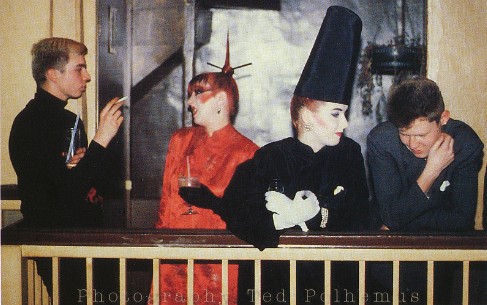
Shaping ambitions at the Blitz in 1980: Lee Sheldrick, Melissa Caplan, Kim Bowen and Bob Elms

FRONT PAGE

1980 ➤ The day Spandau signed on the line and changed the sound of British pop

Spandau Ballet, Virginia Turbett,Chrysalis,Steve Dagger, New Romantics

The way they wore: Spandau Ballet minutes before signing their record record deal in October 1980. Photographed at London’s Waldorf Hotel © by Virginia Turbett

◼ AS THE COOLEST CULT LEADERS OF 1980, Spandau Ballet’s songwriter Gary Kemp claimed: “We want the band to be at all times the most contemporary statement we could possibly make on modern London.” In the face of the post-punk new wave, it took courage to decide to play fresh sexy dance music in a corporate landscape dominated by adult-oriented rock supergroups. In the event, the five boys from the Angel, Islington, quickly assumed the role of houseband to the Blitz club and by placing the bass guitar and the bass drum at the front of the sound made it hip once more to play pop.

Spandau Ballet were being managed by their onetime schoolmate Steve Dagger, aged only 23, while three record labels competed to secure them. On this day 30 years ago they signed a deal with Chrysalis Records and walked into the future clutching an advance cheque for £85,000 — at the time, a record sum for an untried band that had played all of eight bookings and had refused to cut demo discs.

“We were strong, it was a real gang, a real team mentality. It was: We’re Spandau Ballet, who the f*** are you?” — John Keeble, Spandau drummer

By breaking all the industry rules, Spandau triggered a fashion and dance music movement that had been evolving in the nightclubs of Britain. At the very moment that the Blitz closed its doors, the press dubbed their followers the New Romantics, and a slipstream of more than 100 new image bands was born. The new sounds and new styles of this, the last of the Babyboomer generation, went on to dominate the international landscape of pop and over the next three years put more British acts in the US Billboard charts than the 1960s ever achieved.

ELSEWHERE ON SHAPERS OF THE 80s

➢ Oct 16, 1980: One week in the private worlds of the new young
➢ Birth of the New Romantics and the band who made it hip to play pop
➢ How the rhythm of the pop charts changed

Spandau Ballet, The Makers,The Cut,Roots, Dame Alice Owens

Tony Hadley fronts The Makers: Spandau as a school band playing to the fourth form at Dame Alice Owens — grabbed from video

➢ VIEW ♫ Early footage of Spandau Ballet in the Young Guns documentary from 2000
➢ New Romantics: I Was There — ex-Sounds hackette Betty Page’s recollections for Record Collector, written with the benefit of hindsight in 2004

FRONT PAGE

➤ Britain’s top hatter, Stephen Jones OBE, celebrates 30 years of Jonesmanship

On Facebook today Stephen Jones writes:

“7pm, 1st Oct 1980, 30 years ago today, I opened my first
hat salon in Covent Garden, with the fabulous Kim Bowen and the super talented Lee Sheldrick (R.I.P). Thank you all, it’s been an amazing adventure! Xs”
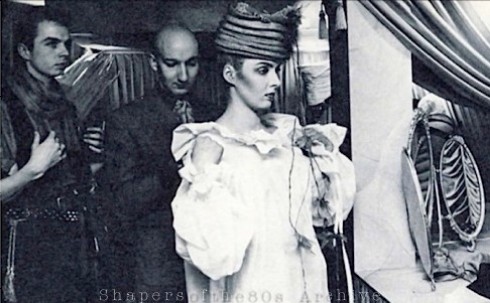
Lee Sheldrick, Kim Bowen, Stephen Jones, PX shop

The first Jones salon: star rebels from St Martin’s Lee Sheldrick assisting and Kim Bowen modelling at Stephen Jones’s boutique in PX, October 1980

❚ FROM 1978 HELEN ROBINSON HAD MADE HER SHOP PX the flagship for New Romantic ready-to-wear in James Street, Covent Garden, all velvet suits, Robin Hood jackets and hippy frills. In February, 1980, it moved a few yards round the corner to bigger premises in Endell Street. Since his graduation from St Martin’s in 1979, Stephen Jones’s uncompromising hats had made the perfect accessories for the excesses of PX so Robinson and partner Stephane Raynor made space in the basement for Jones’s own hat salon. He says: “To get the finance I sold my car, an ex-GPO mini-van, for £150, and that’s how I started the business.” Blitz club-host Steve Strange was a regular customer. Inevitably, the whole place became a social centre for fellow Blitz Kids, the clubbing fashionistas who were by then regular faces in fashion pages and gossip columns. Stephen’s wittily titled “First Collection” was previewed on October 1 and commissions came in from the New Romantic pop groups Visage and Spandau Ballet who were releasing debut records that autumn, from Grace Jones and, later, Boy George.
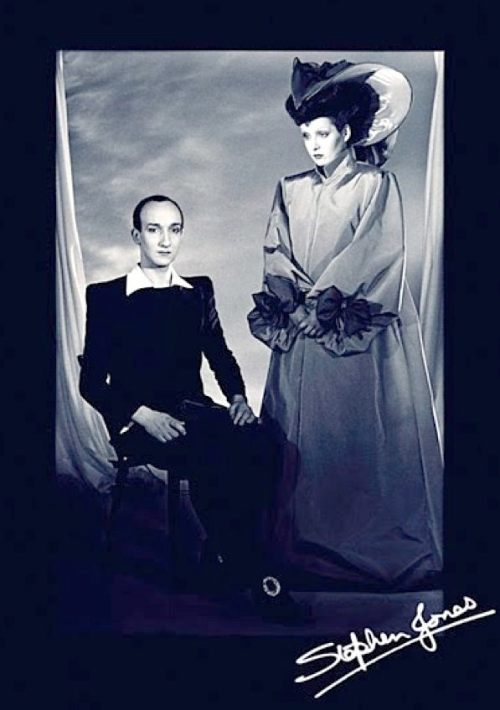
Stephen Jones ,millinery, Kim Bowen, Peter Ashworth

Stephen Jones and Kim Bowen, dressed by PX, topped out by Jones, 1979: business card for the milliner and his mannequin de vie. Photographed © by Peter Ashworth
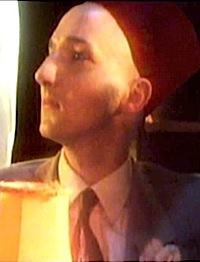
Stephen Jones, Culture Club, music video, J-P Gaultier

“Very Tangiers in Paul Bowles’s 1950s”: In Culture Club’s first video, 1982, Jones wears the fez that caught J-P Gaultier’s eye. Also a pale blue zoot-suit from Flip, and correspondent shoes in black and pale blue

With the dawn of the 1980s, Britain’s outlandish street styles drew the attention of the world’s leading fashion tastemakers who had to start taking London Fashion Week seriously, to the benefit of a new generation of designers and established names alike. The sheer wit and chutzpah of Stephen Jones millinery played brilliantly to both marketplaces and with Diana Spencer’s marriage to the Prince of Wales the Princess became an international icon for classic British elegance, and a huge fan of the quixotic Jones look. Though he says now that he never drew up a career plan, he did enjoy one lucky break after another: “I had a phone call one day from Vogue who were coordinating a wardrobe for the Princess of Wales and I made quite a few hats for her early on.”

Culture Club’s phenomenal global appeal also established Boy George as Britain’s alternative fashion icon. In another stroke of fate, Jones says that it was his red fez worn while sitting in the audience during Culture Club’s first video, Do You Really Want To Hurt Me (filmed in Soho’s Gargoyle club in 1982), that caught the attention of the French designer Jean-Paul Gaultier. Two years later Jones went to design hats in Paris for Gaultier who was building his own reputation as an enfant terrible. He says now: “Working in Paris then was slightly akin to sleeping with the enemy, and I got gyp from the British Fashion Council who didn’t approve.”
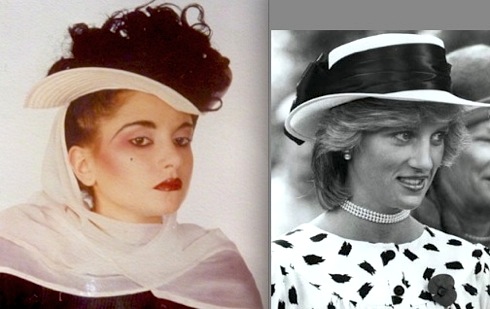
Julia Fodor, Princess Diana, Stephen Jones, hats

Early Jones creations: modelled by Julia Fodor, by appointment to Princess Di

Jones’s familiar bald dome came about after he shaved his head as a crazy gesture, only to discover that it was the same size as the average milliner’s model, which is normally a wooden block, and ever since he has played the role of his own hat mould. Jones’s favourite show was his first for another designer, Zandra Rhodes in 1981. “It was huge — extravagant production, hundreds of models, over the top make-up, vertiginous shoes, tantrums, tears. I loved it.”

His reputation soared in the early days on the coat-tails of such provocateurs as Vivienne Westwood, Claude Montana and Thierry Mugler. When in 1996, the younger St Martin’s superstar, John Galliano, crossed the Channel to design for Christian Dior, the fashion world was amazed. Within minutes, he had invited Jones to join his team and be the milliner at Dior. As Galliano’s dreams became the stuff of legend, his runway shows became ever more spectacular, while the Jones confections reached new heights of extravagance.

Stephen Jones, hats, Peter Ashworth

Jones creations from 2002, photographed © by Peter Ashworth

Jones declares: “Just as accents in language lead to the correct reading and rhythm of a text, my hats add the appropriate punctuation to a designer’s fashion statement.”

Today style-icons crave to wear Jones — think of Gwen Stefani, Beyonce Knowles, Kylie Minogue, Alison Goldfrapp — while yet more of the world’s cutting-edge designers commission his creations to enhance their collections. Today they include Rei Kawakubo, Comme des Garcons, Azzedine Alaïa, Loewe, Giles Deacon, Kinder, Issa, Donna Karan, Jason Wu, L’Wren Scott and Marc Jacobs. Back at his Georgian London boutique a few doors along from the former Blitz club, Jones also designs the Miss Jones and JonesBoy diffusion ranges in addition to his Model Millinery collection. “My British milliners are the best in the world,” he maintains. “The hat is a certain British thing that people do love wearing.”
Stephen Jones, hatmaker,Madonna, Madonna, millinery, MoMu, V&A

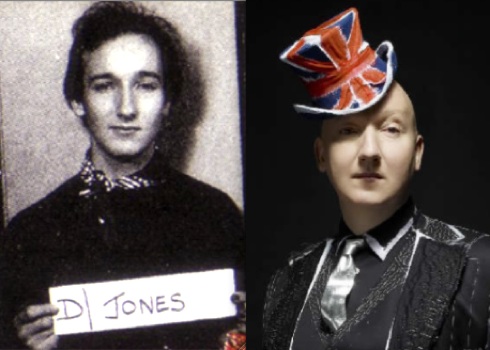
Then and now: Stephen Jones enlists as a student at St Martin’s 1976, and curates a show of landmark designs at the V&A museum 2009. Union Jack top-hat photographed © by Justine

Last year London’s Victoria & Albert Museum staged a huge exhibition entitled Hats, An Anthology by Stephen Jones, which attracted 100,000 visitors and has since set off on a world tour. This summer he has been working on Sex and the City 2, and told Vogue.com that he had been recruited by Madonna for her latest film, W.E., based on the life of King Edward VIII (played by James D’Arcy) who in 1936 gave up his throne for the American Wallis Simpson (played by Andrea Riseborough). “Madonna is directing it and she asked me to do the hats. Somehow I’ve ended up starring in it, too.”

This autumn Antwerp’s Mode Museum (MoMu) is hosting a solo exhibition of 120 hats, Stephen Jones & The Accent of Fashion (Sept 8-Feb 13, 2011), plus his work in film, music and photography. He explains the magic of the titfer: “A hat makes clothing identifiable, dramatic – and most important, Fashion … It’s the dot on the i, the exclamation mark, the fashion focus. Everyone from showgirls to dictators knows that by wearing a hat they will be the centre of attention.”

The crowning glory for 30 years of dotting the i’s came this spring when Her Maj the Queen recognised the mad hatter’s achievements by appointing him to the Order of the British Empire. Hats off to the Age of Jonesmanship!
MoMu, Fashion Museum, Antwerp, Stephen Jones, The Accent of Fashion

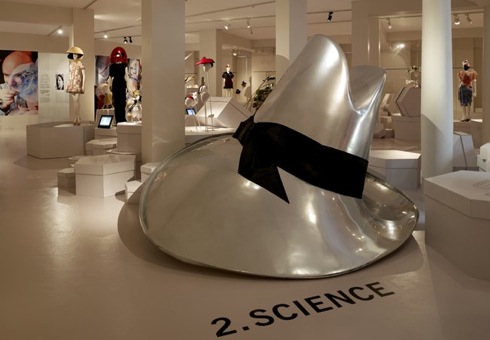
MoMu Fashion Museum Antwerp: Stephen Jones & The Accent of Fashion photographed © by Frederik Vercruysse

VIEW an i-D video at the Antwerp show in which Jones declares:

“At school science was my best subject. Millinery combines physics and art together in a weird mix — you can’t have one without the other.”

Detailed interview with Stephen Jones in Antwerp for the Independent
 Stephen Jones

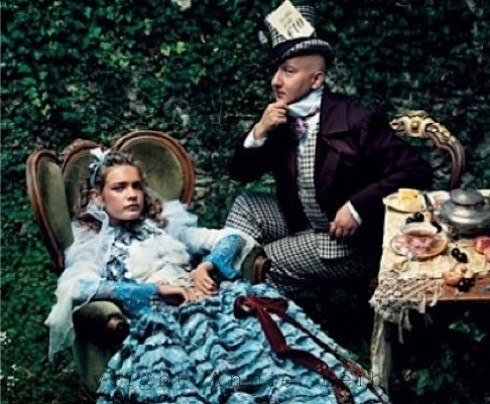
His sobriquet fulfilled by photographer Annie Leibovitz: Stephen Jones as the Mad Hatter in The Mad Tea Party (detail), one of a series of Alice in Wonderland tableaux shot for American Vogue, December 2004

Showstudio has intelligent backgrounders from Jones’s V&A anthology
Stephen Jones, interview, Showstudio, Alex Fury
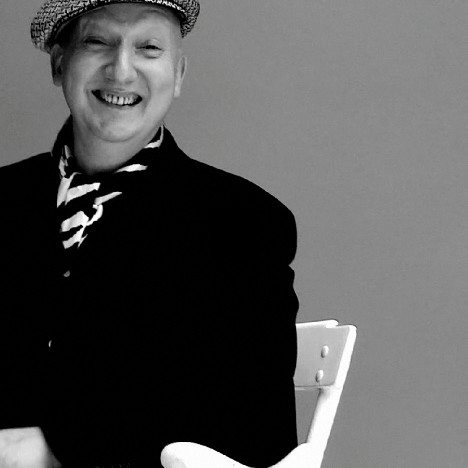
❚ UPDATE — STEPHEN JONES DISCREETLY MENTIONS A CHARMING, frank, gossipy and self-effacing interview with him which has just popped up on Showstudio (despite being dated May) and, as if by telepathy, addresses many questions begged by the brief Shapers outline above! “Steve Strange was, apart from my Mum, my first paying customer” … “I appear to have reinvented the world of millinery but I didn’t have a grand purpose like that at the beginning. I just wanted to go to a great party.” Who is this perceptive young interviewer Alex Fury? With a name like that he will go far.
➢ Video: Stephen Jones interviewed for Showstudio
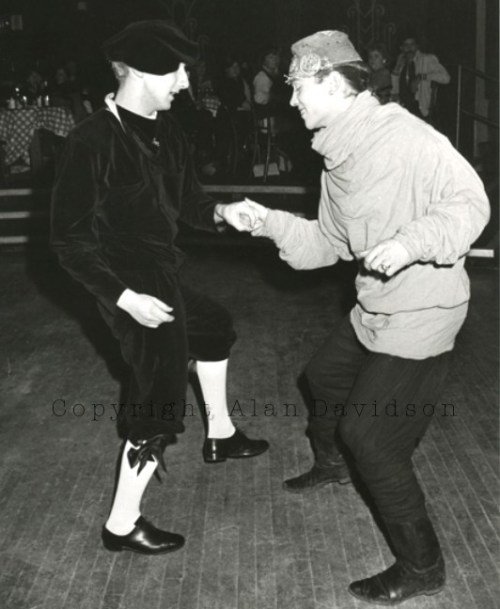
Stephen Jones, David Holah, Blitz Kids, New Romantics,

New Romantics cutting loose, 1981: Stephen Jones in PX’s definitive Little Lord Fauntleroy outfit jives with designer David Holah who went on to co-found the BodyMap empire. Photograph © by Alan Davidson

FRONT PAGE

➤ Egan on Bowie’s legacy: ‘It’s not rocket science and it is music’

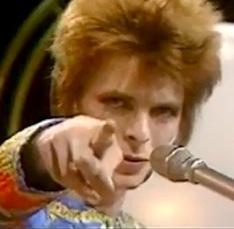
Today The Thin White Duke walks tall again — the god, the brand, the signifier — the three-in-one trinity that is David Bowie fired up one of the great transformative albums of the 70s, Station to Station. His 10th in a studio, it is now re-released in special edition 3-CD box set.

Bowie as The Man Who Fell to Earth, a 1976 film by Nicolas Roeg, based on the Walter Tevis novel about a humanoid alien who crash-lands on Earth. © Rex

This month the German journalist Finn Johannsen interviewed the club deejay and co-founder of the Blitz Club, Rusty Egan for the Nokia blog, Sounds Like Me. He discusses Bowie’s seminal role in 70s and 80s music, describes a typical night out at the Blitz, and what today’s clubbers can take from such an innovative chapter of music-making. Here’s a taster…

Rusty Egan, Blitz club

Rusty Egan at the Blitz, 1980: rare pic of him spinning the discs

FJ — David Bowie was always famous for continuously reinventing his career, but did this phase particularly appeal to you?

RE — Bowie’s Berlin years I believe were the foundation of the Blitz club playlist. Via Bowie I found Kraftwerk, and that lead to Neu!, Can, Cluster and Krautrock, as it was called. Bryan Ferry then led to the work of Brian Eno, and his ambient series … All this music lead to the basis of my collection. If you join the dots Bowie, Eno, Iggy, Kraftwerk, Mick Ronson, Lou Reed.

FJ — It is obvious that Bowie was heavily influenced by German experimental groups like Kraftwerk or Neu! How much of them can be found in Low and Heroes?

RE — Massive influences. Bowie is a SONGWRITER. Without songs you have music. The Germans made amazing music without lyrics. It was experimental because of the instruments used and the long, long tracks. Bowie took the basis of this experimental music and the growing feelings evoked by Möbius, Cluster, Can, Neu! and went into Hansa studios by the Wall and with Brian Eno created the Berlin sound. Heroes sung in German as Helden is a perfect example. Six minutes long, but what were the instruments used? Can you hear guitar, bass and drums? Nothing but a long, long tone changing and changing… It’s not rocket science and it is music.

➢ Read the full Egan interview at Sounds Like Me

FRONT PAGE

2010 ➤ Index of posts for July-Aug

Kylie Minogue, Heaven,London,live,All The Lovers

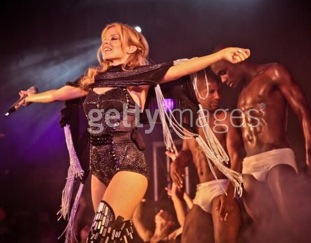
All The Lovers, live: photograph © Christie Goodwin

➢ A big wink to i-D on its 30th birthday

➢ For one year only, £75m deal reunites Take That dormice with mega-millionaire Robbie Williams

➢ Kylie dazzles London with laser-love

➢ Cheers to Peter and Chris – two nice unassuming radio listeners (among the many) who clinched the rescue of 6Music

➢ Vince Clarke on how to make the perfect pop song

Save 6Music, 6Music, BBC, demonstration, Alison Gibbs

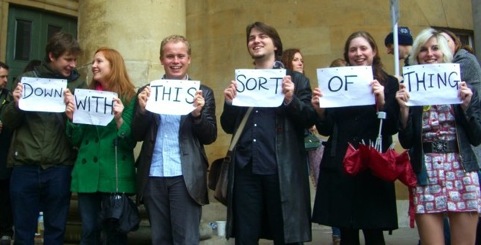
Too, too British: Save 6Music demonstrators outside Broadcasting House. Picture © Alison Gibbs

FRONT PAGE