Tag Archives: Video

➤ Robbie Vincent: 35 years as master of hot cuts and getting our “rhythm buds” going

BBC Radio London, DJ, Robbie Vincent , jazz, soul, funk, clubbing, dancing,Greg Edwards, Chris Hill,JazzFM, webcasts,

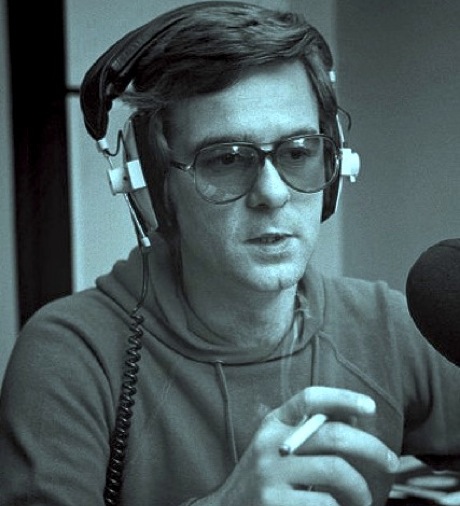
Robbie Vincent at BBC Radio London in the mid-70s: from sparring phone-in host to soul master. (Photographed by Roger G Clark)

♫ Before you read on, click here for the perfect soundtrack from Robbie’s Radio London shows three decades ago: Friends & Strangers, recorded by saxophonist Ronnie Laws for the album Mountain Dance on Blue Note, 1977

◼ TUNE IN ONLINE AT 10AM TODAY and “If it moves, funk it”. Wherever you are in the world, your internet connection will deliver one of Britain’s great musical tastemakers who 35 years ago had teenagers expressing their musical allegiances in fanatical yet playful rival groups known as soul tribes who adopted saucy names such as the Dartford Tunnel Moles, Medway Maggots, Sherwood Softshoe Shufflers, Welwyn Wobblers and scores more. More important, in an age of casual racism, this white radio and club deejay opened their ears and hearts to the rhythms of black music which they couldn’t hear anywhere else — certainly not in the pop charts and precious few places on the radio dial.
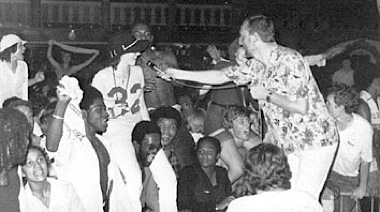
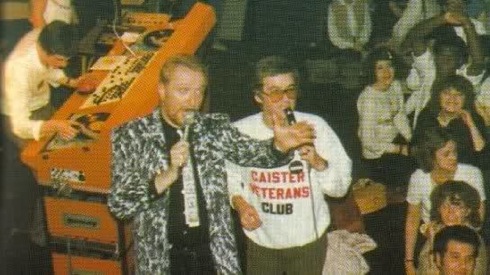
BBC Radio London, DJ, Robbie Vincent , jazz, soul, funk, clubbing, In Britain, your skin colour wasn’t necessarily reflected in your musical tastes but if you danced with your hips, your feet and your soul, black music definitely became the rallying point for frustrated dancers unable to find release in dancehalls of the Saturday-night meat market tradition. The soul tribes of Britain saw white and black kids gathering together in underground clubs discovered only through the grapevine, and often unlicensed for alcohol. Then came marathon all-day soul festivals — the first Purley all-dayer in 1978 springs to mind, with music amplified through the UK’s first serious sound system designed by soul disc jockey Froggy, and a mixing console to provide seamless cross-fades. On dancefloors across the land, the acrobatic tribes competed to improvise the wildest dance moves and to build the highest human pyramids. None of this could have been imagined in America, with its strict apartheid between black and white music, and limited chances even for Motown artists to cross over into mainstream charts and playlists.
soul music, dancing,Chris Hill, Purley, near London

1978: Chris Hill entertains dancers from across the south-east during the first all-day soul event at Tiffany’s in Purley, the London suburb

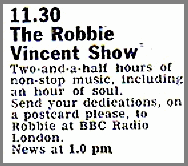
From 1976 the BBC Radio London deejay Robbie Vincent commanded a high-profile lunchtime show on Saturdays which featured imported albums and the novel vinyl format of 12-inch singles to introduce dance fans to a galaxy of consummate musicians pushing the frontiers of hard soul, up-front jazz and raw funk … Ronnie Laws, Eddie Henderson, Weather Report, The Crusaders, Lonnie Liston Smith, Johnny Guitar Watson, Bootsy Collins, George Benson, Wilton Felder, Maze, Roy Ayres, Al Jarreau, Hi Tension, The Fatback Band, Brass Construction, Funkadelic.

Vincent was one of three deejays who soon headed what became known as the Soul Mafia working in London and the south-east and bringing real pressure to bear on record companies to release quality US acts in the UK. His counterpart at the commercial Capital Radio station was black deejay Greg Edwards, Grenada-born and New York-raised. He won his own cult following with his Saturday evening Soul Spectrum and its romantic “Bathroom call”.
Chris Hill,Gold Mine club,soul,dancing, swing music,youth culture,

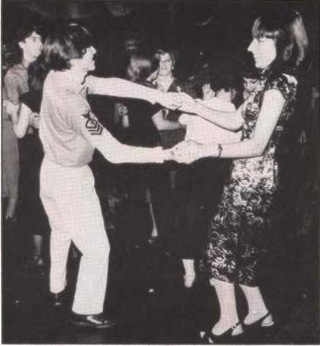
Essex’s Gold Mine in 1975: GI uniforms and swing (courtesy Brian Longman, CanveyIsland.org.uk)

At about the same time that Vincent had a residency at the spanking new Flick’s disco in Dartford, Kent (south of the Thames), Chris Hill was already a legend as resident deejay at the Gold Mine on Canvey Island (north of the Thames). If anywhere in the mid-70s, this was where novelty dressing up began, influenced by several MGM compilation musicals in the cinema (That’s Entertainment!, 1974) and blockbusters such as The Great Gatsby (1974) rekindling nostalgia for vintage Hollywood fashion. For a while, and encouraged by Hill, the Gold Mine had the monopoly on GI uniforms and scarlet-lipped jive-dolls during its Glenn Miller and swing revival.

As a club deejay Vincent was the least theatrical in his presentation. Yet, as an ex-Evening Standard journalist and “devil’s advocate” phone-in veteran, his consummate broadcast interviews with American soul giants (James Brown, Marvin Gaye, Sly Stone, Bobby Womack, Chaka Khan, Luther Vandross, Teddy Pendergrass, Herbie Hancock, Roy Ayers) not only educated a generation of teen clubbers but reinforced the credibility of the music at the very moment when a hitherto cathartic disco scene turned to dross. The destructive effect of the dire film Saturday Night Fever and its musically inane Bee Gee soundtrack cannot be overstated as its infection swept the globe in 1978.
, jazz, soul, funk, clubbing, dancing,Papillon, Brighton, toga parties

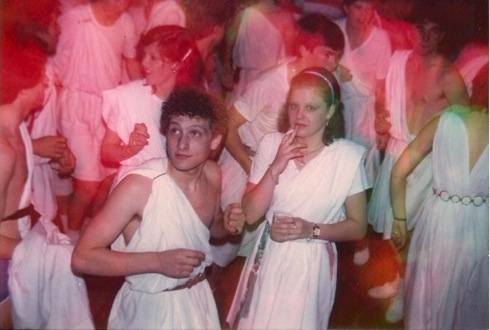
Dressing up for the dancefloor: toga parties were popular on the soul circuit, here in 1979 at Papillon club, Brighton. (Photograph by Paul Clark)

One consequence for the UK was that the emergent soul scene dived back underground and partially reemerged only in 1980 with the New Romantics, disguised in a sharp new wardrobe. There were mutations within the family, but most danced to music with soul and many new young bands had funky beats and jazz pretensions. Mainstream jazz itself came back into favour with young clubbers in the early 80s when the black Brits Courtney Pine and Sade Adu were among the first to make good. All the emergent subcults lived to dance, and dressed up to do so as the 80s matured, while the whole flavour of UK music shifted away from rock guitar to the more upfront dance beats led by the bass guitar and bass drum.

This lineage does get overlooked these days: a substantial generation of 70s music lovers acquired taste, style and feet that knew how to move. This was precisely the audience-in-waiting who demanded and created vibrant world-beating pop and fashion as Swinging London was reinvented in the 80s. Only with the so-called Second Summer of Love in 1988 and the ecstasy-fuelled hurricane of aceed house that swept in from Ibiza did UK youth almost overnight abandon a long history of dancing with its feet. The trance-inducing techno beats of rave music proved so alien to the soul heritage that kids chose instead to wave their hands in the air as if to commune mystically with the lazer light.

Ever since, only their elders can remember how to cut a dash on a sprung-maple dancefloor. Those include the cool soulboys and girls of the early 80s who favoured the funky post-Blitz London clubs such as Le Beat Route, the Wag and Dirtbox. And they express fond gratitude to Vincent, Edwards and Hill as their musical mentors.
technology, DJs, Chris Hill ,Robbie Vincent , Froggy, Matamp

New technology: Chris Hill and Robbie Vincent in front of Froggy’s Matamp console

◼ REFLECTING THIS WEEK on the heady rise of the soul movement in Britain, Robbie Vincent identified some of the reasons: “The whole thing grew because as the years went by we had more and more access to a core group of really important American black artists. In the UK, Loose Ends and Soul II Soul are fine examples of bringing not just great home-grown R&B to our ears but style and fashion too.

“Popular black music writing royalty like Kenny Gamble, co-founder of the mighty Philadelphia International Records label, says his favourite cover version of one of his tracks is Now That We Found Love by Third World. It is real credit to UK dancefloors that the track was adopted almost as an anthem. But it needed that pool of musicians like The O’Jays and jazz crossover men like Donald Byrd and Grover Washington to influence and excite those new young kids on the block.”

Robbie Vincent himself deserves credit as an enthusiast with missionary zeal. From the 1978 launch of the then Labour-leaning tabloid, the Daily Star, he wrote an influential weekly column recognising the inventive camaraderie of Britain’s soul tribes, long before other media woke up to the phenomenon. For most of the 80s Vincent’s career saw him curating soul in regular strands at Radio 1, the BBC’s nationwide flagship, then at key music stations ever since. In 1995 he was voted Independent Radio personality of the year at the annual Variety Club awards. In 1997 he contributed profiles to The Sunday Times’s partwork the 1,000 Makers of Music. Of Berry Gordy’s Motown label during the 60s he wrote: “The Sound of Young America became a way of life, especially for Britain’s Mods: if it wasn’t Motown, it wasn’t hip.”
radio,DJ, Robbie Vincent , soul, funk,JazzFM, Kenny Gamble,interview, Philly International

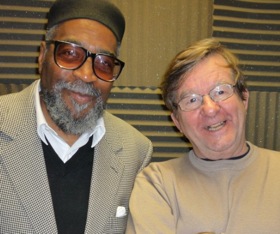
Philly’s Kenny Gamble interviewed by Robbie Vincent today and next Sunday

These days, following a spell of ill-health, Vincent is ensconced at JazzFM airing his jazz-funk credentials every Sunday from 10am in a three-hour masterclass. And Christmas Day’s coup is an extensive interview with Kenny Gamble, who founded the Philly label as one half of the independent producing and writing team Gamble and Huff with 170 gold and platinum records to their credit. On air Gamble talks of its stars such as The O’Jays [view vid], Billy Paul, Michael Jackson and Teddy Pendergrass. In the late 60s Atlantic offered G&H one massive act after another — Aretha Franklin, Wilson Pickett, Dusty Springfield, Archie Bell & the Drells. Gamble says: “We did the background singing on I Can’t Stop Dancing. There were no Drells. There was me, Huff and Karl Chambers. I’ve been a Drell, I’ve been a Stylistic, I’ve been a Blue Note and a few other things.”

As a man of taste he declares The Temptations [view vid] the best group ever and Motown the greatest record company ever. When G&H formed Philly Int in 1971, they set up MFSB as the in-house band, a pool of 30 musicians exactly as the Funk Brothers were for Berry Gordy. “Motown was the blueprint for what we did. The Motown sound was so powerful, everybody wanted it. But we wanted our own sound [view vid]”. Here in MFSB’s The Sound of Philadelphia we hear the driving bass, hi-hat rhythms and lush orchestration that defined what came to be called disco in the eternal battle between rock guitars and dancing feet. The JazzFM interview continues on New Year’s Day.

◼ AMONG VINCENT’S FANS TODAY is the young black British mixer-producer Fitzroy Facey, who describes himself as a religious listener to Robbie Vincent’s radio shows through the late 1970s and early 80s. It was 1979 when Robbie helped instigate the National Soul Weekenders at Caister holiday camp, which are still going strong (see video below). In a recent interview for his magazine The Soul Survivors (edited extract at JazzFM), Fitzroy acknowledged that Vincent has been as important as some of the artists he has interviewed because he touched so many people’s lives, to create the “one nation under a groove” [view vid].
, jazz, soul, funk, clubbing, interview, Soul Survivors ,Fitzroy Facey Robbie: My phone-in show helped here as I suffered a lot of abuse and would not tolerate racism or bigots. I’m very proud to have stood up to those views and the great uniter is music, which is a universal language.

Fitzroy: I was one of those coming from an Afro-Caribbean background who remember the racist door policies in the 70s and early 80s.

Robbie: Tell me about it; don’t forget I grew up in an era where Tamla Motown didn’t put their artist photographs on the cover sleeves because they were black and they worried they might alienate a white audience. This is an often missed point and an utter disgrace… We should hang our heads in shame.
music,Jazz-Funk ,Mastercuts, Robbie Vincent,

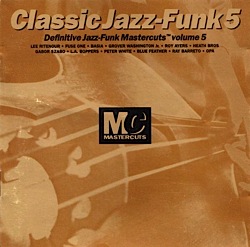
“The Robbie Vincent Edition” 1994: his Classic Jazz-Funk selection for Mastercuts ranges from Grover Washington, Roy Ayers and Gabor Szabo to Blue Feather and OPA

Fitzroy: There are huge testaments on the net to both you and Greg Edwards for opening doors to pirate stations and presenters of black music. The younger generation have no concept that back in the 70s access to black music was totalling less than 10 hours a week. Today it’s 24/7 and you couldn’t possibly imagine 30-plus years later that Kiss, Jazz, Choice FM would grow out of that.

Robbie: That’s what made the scene so exciting — it was pioneering. The people who danced and were enthusiastic about the music made me very proud to be part of it. Because people were so passionate… Remember, the young black musicians were inspired by their brothers in America. You didn’t have to become a boxer — you learned an instrument. It was so infectious, it was inevitable that the music back then would be integral to popular music today.

➢ Read the full Vincent interview at Soul Survivors (registration required)

RV OMN AIR 1982: DRAMATIC MIDDAY NEWS + ANTILLES

RV ON AIR 1982 + FUNKA-TANGA TOURISTS

RV INTERVIEWS TEDDY PENDERGRASS 1982

NEW YEAR 1982: RV AS MATCHMAKER


➢ Relive Robbie’s vintage radio broadcasts at his own website
➢ Follow deejay Greg Edwards at Facebook — playing New Year’s Eve at The Hare & Hounds, Osterley TW7 5PR
➢ Follow deejay Chris Hill at Facebook
FRONT PAGE

➤ Smith & Sullivan sign off We Can Be Heroes with a sigh

We Can Be Heroes,Unbound publishing, books,Graham Smith,Chris Sullivan,Blitz Kids, New Romantics, Boy George,nightclubbing, Swinging 80s, photography,

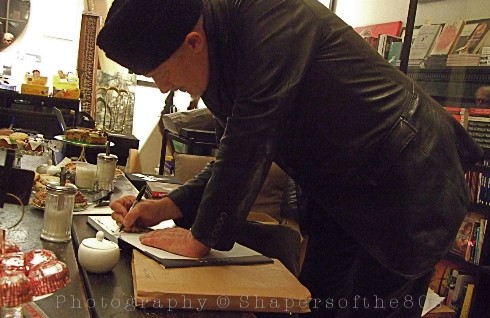
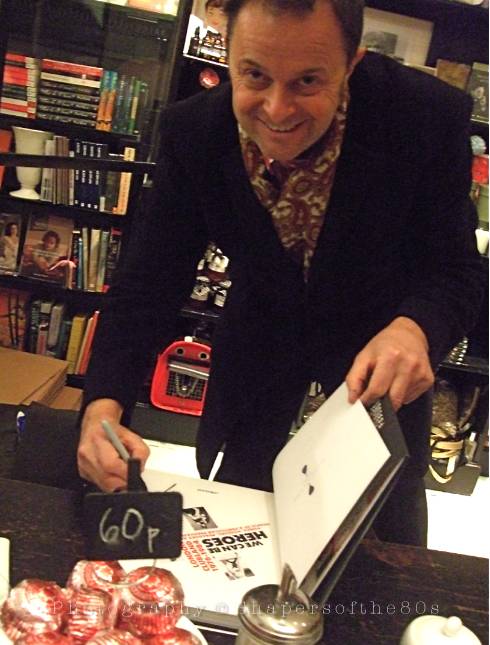
Graham Smith: signing advance copies of We Can Be Heroes between coffee and cake today at Soho’s Society Club. Photographed by Shapersofthe80s

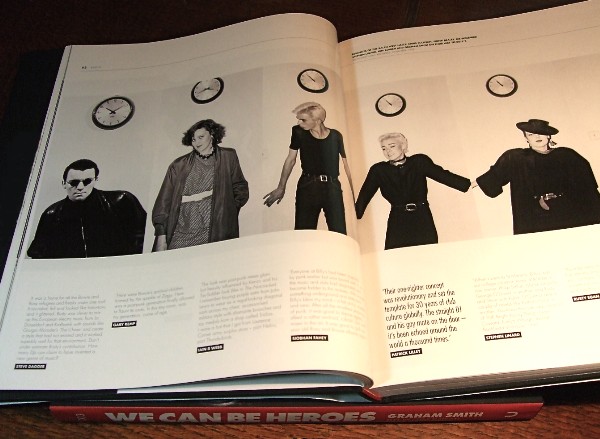
❚ THE BOOK OF THE DECADE has arrived and early buyers of the 2,000-copy first edition had it in their hands today. The photo-story of 80s clubland, We Can Be Heroes, felt reassuringly hefty to the touch and we finally discovered the page size to be generous at 235 x 280mm. The five-colour printing gives intensity especially to the black-and-white photography on the high-gloss paper and author Graham Smith’s verdict on the quality was simple: “Stunning.” Collaborator and 80s club-host Chris Sullivan breathed a sigh: “We got there in the end.”

The 320 pages of story-telling and voxpops from perhaps 100 contributors will raise plenty of smiles when the postman delivers the book during the next week. Even if you’ve read Shapersofthe80s from top to bottom, you’ll find as many more quotes and insights from the original Blitz Kids themselves. Deejay Jeffrey Hinton reminds us in the book: “People think this was a premeditated scene but it was not. It was childlike, thrown together. We didn’t do it for the money, we were innocent. It’s all so marketed today.”

We Can Be Heroes,Unbound publishing, books,Graham Smith,Chris Sullivan,Blitz Kids, New Romantics, Boy George,nightclubbing, Swinging 80s, photography,

Ringleaders who shaped the style of the 80s celebrated in We Can Be Heroes: Chris Sullivan, Fiona Dealey, Lee Sheldrick, Stephen Linard and Kim Bowen — the rebels within St Martin’s School of Art, all photographed by Graham Smith

We Can Be Heroes,Unbound publishing, books,Graham Smith,Chris Sullivan,Blitz Kids, New Romantics, Boy George,nightclubbing, Swinging 80s, photography,

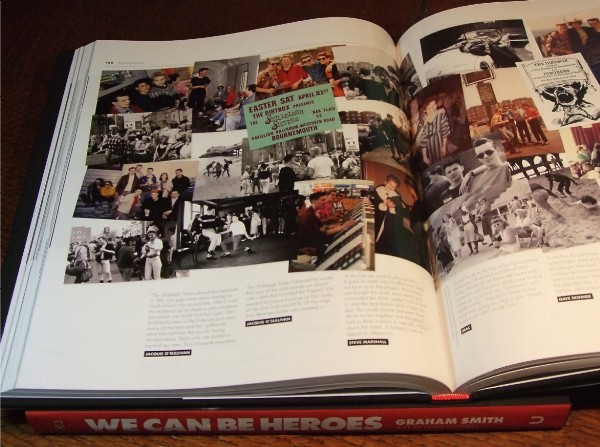
Bournemouth was the destination on bank holidays: good-natured hijinks brought London clubbers to the south-coast resort, and Smith has included many of their snaps in We Can Be Heroes

While the main images reveal just how small in number was the coterie who initiated the sounds and styles of the 80s, Smith has supplemented his own portfolio of pictures with many snaps from clubland wags themselves whose ambitions were liberated by the spirit of collaboration inspired in 1980. Nevertheless, designer Fiona Dealey makes a valid point in the book: “When anyone has written about the Blitz it has been by the same few blokes giving the same old soundbites with never a mention of what the women were up to. The Blitz was our youth club and I feel they hijacked it.”

Today John Mitchinson, the book’s publisher, said he was reasonably confident that a commercial edition of Heroes might follow in the autumn of 2012. In the meantime a limited number of copies of the first edition are still available only from Unbound Publishing.

➢ 1976–1984, Creative clubbing ended with the 80s — we profile three of the bright sparks behind We Can Be Heroes and how they shaped the decade

➢ View Shapersofthe80s video — Chris Sullivan telling his “ribald tales of excess” from the Blitz era at a launch party for We Can Be Heroes… with Graham Smith and Robert Elms on video too

We Can Be Heroes,Unbound publishing, books,Graham Smith,Chris Sullivan,Blitz Kids, New Romantics, Boy George,nightclubbing, Swinging 80s, photography,

Chris Sullivan signing today: “Now people can see the book itself we might shift a few more copies.” Photographed by Shapersofthe80s

FRONT PAGE

➤ Dalston Superstars get down with a Poundland People’s Christmas feast

Dalston Superstars, Nathan Barley,Vice dotcom,video,mockumentary,hipsters ➢ Click the pic to run video of Dalston Superstars Ep 4 at Vice.com

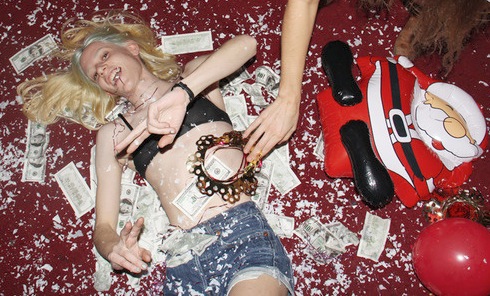
❚ EPISODE 4 OF DALSTON SUPERSTARS, Vice online’s “structured reality” series about hipness in Hackney, is a Christmas special, which means sex, drugs and sausage rolls. Will the wildest Christmas party Dalston’s ever seen solve the gang’s problems, or just add to their hangovers?

Dalston Superstars, Vicedotcom, Nathan Barley, video, hipsters✰ Stefan: “Dad found my Tumblr and freaked out and he cut me off”
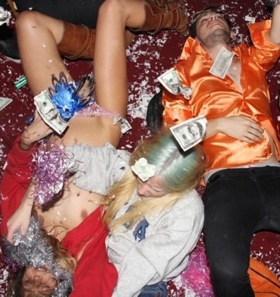
✰ Sam considers whether it’s right to throw a recession party

✰ Maeve becomes a working girl and discovers what “the Occupy Wall Street thing” is all about

✰ Anna thinks she wants to do fashion styling

✰ Stefan and Maeve transition to the working class

✰ Vital vocab: get gaddafied, satanic Mean Girls, ghetto-fabulous snacks

[No scriptwriter gets an onscreen credit but words and images above are
© 2011 Vice Media Inc]

EP 4 #COMMENTS AT VICE ONLINE…

Dalston Superstars, Vice dotcom, video, reality TV,  mockumentary, hipsters❏ Vasilisa Forbes, Photography and Multimedia “This was a really emotional one.”

❏ Charlie Mass, European Institute of Design “I’m from australiaN.”

❏ Laura O’Reardon, Senior College “Maeve, get a job you user.”

❏ Daniel Heronneau, Wallington County Grammar School for Boys “Vee looks like Kreayshawns dj Lil Debbie.”

❏ Jimmy Dallas, Preston, Lancashire “thisiswanknow”

❏ Jack Van Cooten, CEO at Banana Hill “Awesome”

❏ Huw Williams, Central Lancashire “I just envisage a coked up editor screaming at staff: It IS funny! They’ll get it eventually, you’ll see!”

❏ Robsta Hendricks, London “Brilliant. From living West travelling East to living East working West Gastro part time, I get it. Well done.”

❏ Thibaud Guerin-Williams “In Richmond VA this is real.”

❏ Pierre Chambaud, London “how can I be a part of dis gang?”

❏ Grant Armour, Sarfend High School for Dudes, Uni. Sussex, da blud behind da wkd #christmasmixtape “these outta town muthafuckas in efes think they run the game, they going to get it in the knees. we about to blow the roof off alibi in 2012 mane. smokin big damn dank.”

❏ Sean Otley, Manchester “dalston s.s = toss.”

❏ Rich ‘Catface’ Brooks, UCLAN “Chris Morris did this seven years ago, but much better, and aimed at Vice.”

AND NOW THE #christmasmixtape

❏ Update Dec 24 By popular demand, here’s a mere taster of the download featuring largely Grant Armour [see comments] available at, like, #christmasmixtape

Catch up with Dalston Superstars #PREVIOUSLY

➢ View DS Episode One — “cool parties, cool people” and a fingerboard skate park

➢ View DS Episode Two — numero uno sex vixen, Holly Wood, has got eyes for Sam — bad luck, Anna!

➢ View DS Episode Three — art collective NoiNoiNoi mount “an experiment in cosmic dissonance” in E8

➢ Feedback and coverage of Dalston Superstars at Shapersofthe80s (this series is not gonna lie down)

SEMIOLOGY CORNER

❏ Subcultural decryption: Dalston is the area of east London that UK hipsters regard as, like, paradise. Unless they live a mile away in Shoreditch, then it’s Shoreditch. (Hoxton is SO yesterday.)

❏ Subcultural analogy: Nathan Barley was a UK television series featuring hipster role models for Dalston Superstars, like, six years ago… Not to mention the even holier Mighty Boosh (2004–7).

FRONT PAGE

2011 ➤ I danced in Bowie’s Jean Genie video but have never seen it, says his friend Wendy

Wendy Kirby,David Bowie, Jean Genie, 1973, Top of the Pops,video,All the Young Dudes ,Daniella Parmar ,Freddi Burretti

Wendy Kirby aged 19: as Freddie Burretti’s flatmate, she met the Bowies at the Sombrero club’s trendy Sunday feasts in Kensington — “We were the people always round David’s house”

❚ “I WAS AT THAT TAPING,” said Wendy Kirby on Facebook earlier today. “But I never got to see the video,” she told Shapersofthe80s by phone later. She was talking about the longlost recording of David Bowie singing Jean Genie on Top of the Pops in 1973 — 38 years “Missing Believed Wiped” — and due to be screened tonight on BBC2 for the first time since.

Wendy was one of a posse of Bowie’s friends he’d asked to accompany him to BBC TV Centre because, she says, he was feeling nervous — “If you can believe that! He comes across as very confident, but he was always very shy and didn’t really want to go on Top of the Pops. Angie was the one with all the energy.”

Wendy Kirby,David Bowie, Jean Genie, 1973, Top of the Pops,video,All the Young Dudes ,Daniella Parmar ,Freddie Burretti,

Wendy Kirby this year: “Amazing to see myself on Top of the Pops after all this time!”

When we spoke today Wendy was mildly surprised at all the fuss over the video she’s never seen, but then, even as a 14-year-old schoolgirl she was a regular in the audience for Top of the Pops so had grown pretty blasé.

About five years later she’d become one of Bowie’s “piss-elegant champagne-drinking” entourage after meeting David and Angie at the Sombrero disco (strictly speaking, called Yours or Mine, beneath the restaurant El Sombrero in Kensington High Street) during the Hunky Dory period when he was wearing the Mr Fish man-dress and had long cascades of blond hair. All that was lopped and dyed red by Suzi Fussey for the Ziggy persona which made him a star. On Jan 3 1973, Wendy donned a black fishtail dress “with an exceedingly low back” plus a long blonde mermaid wig, and stepped into Studio 8 and onto the dancefloor for Top of the Pops in company with her flatmate Freddie Burretti (Bowie’s costume designer for whom Moonage Daydream was written), Angie Bowie and panda-eyed Daniella Parmar whose constantly changing hair colour had convinced Bowie “of the importance of a synthetic hair colour for Ziggy”.

David Bowie, Missing Believed Wiped, Jean Genie,1973,Top of the Pops,BBC, Mick Ronson, John Henshall, Spiders from Mars,Wendy said: “We were the ‘young dudes’ who shaved off our eyebrows just for camp, because you could paint them on higher up — that gave us a strange unearthly look which David adopted. He was always open to suggestions and went through our wardrobes like a magpie!”

Bowie name-checked his friends in the lyrics of the glam-rock anthem All the Young Dudes in 1972: Wendy’s stealing clothes/ from Marks and Sparks/ And Freddi’s got spots/ from ripping off the stars from his face/. When David told her, she replied: “You could at least have made it Harrods!”

She added: “Thing is, the fame happened seemingly overnight. People had thought of David as a one-hit wonder with Space Oddity, then suddenly in 1972 Starman was a hit and everything went from ordinary to unreal. Nothing was the same again.”

Wendy had no idea whether the cameras had caught them dancing in the Jean Genie video newly discovered and due for broadcast tonight. “Pan’s People had done their dance number and were heading out of the studio when David went onstage. They all stopped to watch his act and were mightily impressed. I remember a couple of them were wearing red fox-fur coats…”

David Bowie, Jean Genie, 1973, Top of the Pops,video,All the Young Dudes ,Daniella Parmar ,Freddie Burretti

Freddie Burretti and Daniella Parmar photographed by Mick Rock

Wendy Kirby,David Bowie, Jean Genie, 1973, Top of the Pops,video,All the Young Dudes ,Daniella Parmar ,Freddie Burretti, Angie Bowie

Here’s the proof broadcast tonight for the first time in 38 years! Wendy and Daniella Parmar dancing on Top of the Pops in 1973, just behind Mick’s guitar. (Videograb © BBC)

❏ Update at 8pm: “Yes, that’s me between David and Mick, the girl with a ton of make-up, huge eyelashes and the red flower in the hair — we piled on tons of everything then. That’s Daniella dancing next to me. Amazing to see myself on Top of the Pops after all this time! I’ve never seen this before. And I haven’t seen David perform live since… Those were great days and I was too young to appreciate them.”

Of Bowie’s Sombrero posse, today Wendy lives in West London and Daniella in Worthing. Freddie Burretti (born 1951, raised as Frederick Robert Burrett in Hackney) was also aka Rudi Valentino while fronting Bowie’s 1971 phantom band, the specially created Arnold Corns. His talents were better expressed as Freddie Burretti, making Ziggy Stardust’s outfits from the first quilted jumpsuit onward. He died while living in Paris in May 2001. The male escort Micky King recorded the Bowie song How Lucky You Are, among others, and according to Bowie was gruesomely murdered by a client some years later.

Wendy Kirby,David Bowie, Jean Genie, 1973, Top of the Pops,video,All the Young Dudes ,Daniella Parmar ,Freddie Burretti

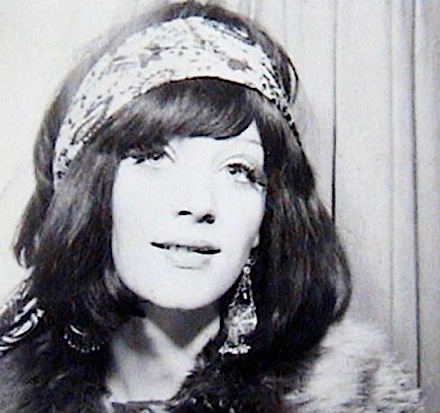
Very Swinging London, early 70s: Wendy Kirby in a black wig. Her friends among Bowie’s young dudes included Daniella Parmar, hairdresser Antonello Parqualli and Sombrero face, Micky King

➢ Where to draw a line between Glitter and Glam – naff blokes in Bacofoil versus starmen with pretensions

AND HERE IS THE ‘LOST’ BOWIE VID AT YOUTUBE

FRONT PAGE

➤ Bowie’s “lost” Jean Genie from 1973 to be aired on Top of the Pops this week

David Bowie, Jean Genie, Top of the Pops, Mick Ronson,video,John Henshall,

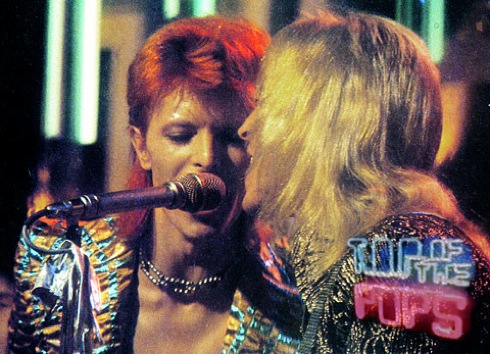
1973 revisited: Bowie and Ronson singing Jean Genie in the "lost" Top of the Pops performance. (Videograb © BBC, courtesy of John Henshall/Bowie.net)

❚ HOT NEWS OF A CHRISTMAS TREAT for Bowie fans. They have waited for almost 40 years to see his only Top of the Pops performance of The Jean Genie with The Spiders from Mars in January 1973 — shirtless, though clad in an open satin jacket. The tape was long thought to have been wiped or lost.

However a former BBC cameraman recently discovered that he possessed the only broadcast-quality copy in pristine condition, and today Bowie Wonderworld announced that entertainment boss Mark Cooper has arranged to have it included in this Wednesday’s 90-minute collection of classic Christmas hits (TOTP2, 7.30pm). The intention had been to unveil the clip in the BBC4 documentary Tales of Television Centre in the New Year, but enthusiastic fans persuaded him to bring forward its screening, even though you won’t see the track listed in the online billings.

As executive producer of Top Of The Pops 2, Cooper said: “I can’t imagine what other piece of TOTP from the early 70s would be as extraordinary a find.”

Bowie’s performance of The Jean Genie was recorded on Jan 3, 1973 and transmitted the following day for the first and only time. The “lost” recording — copy on 2-inch broadcast videotape — was screened last week at the NFT’s Missing Believed Wiped event. BowieNet’s news editor enthused: “A shirtless David looks amazing as he shakes maracas and blows on the harmonica. It’s clear David and the Spiders were at their peak when this video footage was shot, just a few days before David’s 26th birthday.”

Andy Barding, another privileged witness, added: “The first screening of the newly rediscovered clip of Bowie, Ronson, Woodmansey and Bolder performing The Jean Genie on Top of the Pops saw a packed National Film Theatre struck agog at the majesty of Ziggy in action: in pristine, full-colour TV quality. David, with deep-red hair, shaved brows and bafflingly wide trousers, looked every inch the epitome of what we recall as glam.”

➢ Read Barding’s full appreciation of the lost clip at BowieNet

David Bowie, Jean Genie, Top of the Pops, Mick Ronson,video,John Henshall

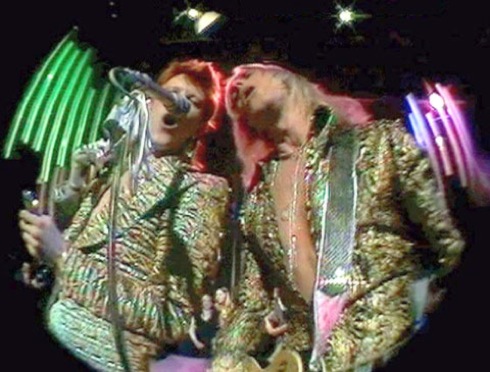
TOTP 1973: Jean Genie viewed through John Henshall’s innovative fish-eye lens. (Videograb © BBC, courtesy of John Henshall/Bowie.net)

The Jean Genie single had been released in November 1972, and the January 4 transmission on the BBC’s flagship pop show boosted it to peak at Number 2 in the UK singles chart. The track was remixed for Bowie’s sixth album Aladdin Sane in April 1973 which divided critics over his genius. The Jean Genie surfed in on the inspirational wave caused by the arrival of Ziggy Stardust and the Starman in July 1972, when Bowie’s Top of the Pops appearance years later passed into legend as the glam-rock moment that shaped the imaginations of a teen generation who were to become the popstars of the 80s.

➢ Update Dec 21: Bowie’s friend Wendy Kirby spots herself dancing in Jean Genie for the first time

➢ Glitter versus Glam and where to draw a line – naff blokes in Bacofoil versus starmen with pretensions

TV INNOVATOR WHO SAVED THE KEY RECORDING

❏ The retired cameraman John Henshall, now 69, has been speaking of how he came to own the footage of David Bowie’s Jean Genie which was thought to be lost. In the early 70s, long before the days of digital effects, Henshall ran a company called Telefex which made star filters, multi-image prisms, fish-eye lens attachments, kaleidotubes and picture rotators. Encouraged by TOTP producer Johnnie Stewart, he used the fish-eye to create the optical effects seen in the Bowie recording.

David Bowie, Jean Genie, 1973, Top of the Pops,video,John Henshall ,Mick Woodmansey

Cameraman caught on camera: John Henshall seen in Studio 8 just beyond drummer Mick Woodmansey during the Jean Genie recording. (Videograb © BBC)

Afterwards he asked Stewart for a personal copy on 2-inch tape to include in his company’s showreel.

Today he is an expert in digital imaging, who pioneered the now ubiquitous lightweight television camera mounted on a long boom arm that we see sweeping above artist and audience at concerts. He also directed photography on hundreds of early music videos for artists including Paul McCartney, Kate Bush, Blondie and Elton John.

Henshall only discovered how “rarer than rare” the clip was when he mentioned it in a radio interview. He said: “I couldn’t believe that I was the only one with it. I thought you wouldn’t be mad enough to wipe a tape like that. They’d been looking for it for years.”

➢ Listen to John Henshall telling Malcolm Boyden at BBC Radio Oxford about how he saved the Bowie tape

➢ Update Dec 21: Finally, the BBC Six o’Clock News gets round to its own report on John Henshall’s prize discovery

➢ View the Jean Genie video on the BBC iPlayer until New Year’s Eve

FRONT PAGE