Tag Archives: Rusty Egan

2010 ➤ Feast of remixes on new ‘Very Best’ of Visage album

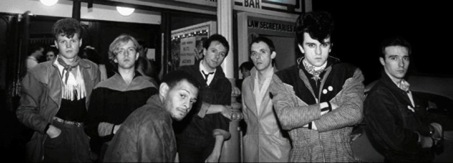
Visage 1980 outside the Blitz: Rusty Egan, John McGeoch, Barry Adamson, Dave Formula, Billy Currie, Steve Strange, Midge Ure. Picture © by Sheila Rock

❚ MARCO PIRRONI, GARY KEMP AND BROADCASTER GARY CROWLEY were among the 80s faces who turned out for last night’s launch of a new CD compilation, The Face: The Very Best of Visage which goes on sale March 8. It contains 15 Visage tracks including new 2010 remixes of classic New Romantic dance anthems. To celebrate the 30th anniversary of their first chart hit from 1980, Fade to Grey, there are no less than four versions onboard (one by Michael Gray of The Weekend and Borderline, and another by Ministry of Sound deejay Lee Mortimer), plus remixes of Mind of a Toy, The Anvil, and a 12-inch dance mix of the single Visage.

Fronting their “Evening of sublime 80s self-indulgence” club-night in Chelsea were two 80s clubbing wizards Chris Sullivan and Rusty Egan (read more) who was the drummer with Visage and the Rich Kids.

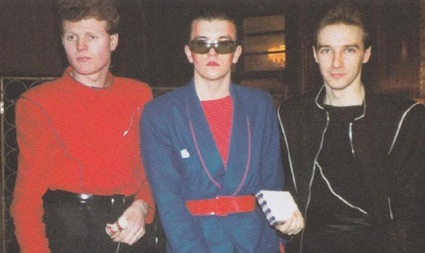
Supercool in ’78: Egan, Strange and Ure establish Visage

Egan also became a deejay because he hated those flash guys who talked incessantly over the music in discos. He wanted to pioneer a new kind of synth-driven British electro-diskow and sought inspiration in Germany from the likes of Kraftwerk and avantgarde producer Konrad “Conny” Plank. In 1979, the Blitz club-night in London became his sounding board and it went on to inspire a vast slipstream of new British bands who changed the sound of the charts during the early 80s.

Along with Egan, Visage’s founding members in 1978 were the Blitz greeter Steve Strange, and musical polymath Midge Ure, who simultaneously became the lead singer with Ultravox in April 1979. Echoes of their pioneering electropop resonate in the charts today through acts such as Lady Gaga, La Roux, Little Boots and MGMT.

➢➢ Steve Strange celebrates the launch of The Face album at London’s Green Carnation on March 19

➢➢ Read about the fashion show Steve Strange and Rusty Egan took to Paris in 1982

FRONT PAGE

2010 ➤ ‘Missing Link’ Kids roar back to life

Rich Kids, rich memories: Gary Kemp joins Glen Matlock, left, with Midge Ure and Steve New to the right. Rusty Egan on drums is masked by the bright lights. Ropy mobile picture © by Shapersofthe80s

Rich Kids, rich memories: Gary Kemp joins Glen Matlock, left, with Midge Ure and Steve New to the right. Rusty Egan on drums is masked by the bright lights. Ropy mobile pic © by Shapersofthe80s

❚ RICH KIDS ARE USUALLY WRITTEN OFF as “a short-lived, much-hyped rock band from London”, founded in 1977 by songwriter and bassist Glen Matlock, after he quit The Sex Pistols more enamoured with 60s sounds than 70s. Indeed the Kids were a one-hit wonder with only one eponymous single ever making the lower reaches of the charts, for five weeks in 1978. Yet with hindsight, they are today dubbed by the cognoscenti such as Spandau Ballet songwriter Gary Kemp and his band’s manager Steve Dagger as the “Missing Link” between punk and the New Romantics movement – an admission that was absolutely verboten in Spandau’s early days.

All of which made a one-off reunion gig at the Islington Academy last night, Jan 7, 2010, a curious footnote to history. For in the audience were some of the coolest clubbers from the 1970s scene, as enthusiastic as schoolboys, snapping away on their phonecams. Everybody, of course, was now hitting paunchy middle age, both onstage and off, and it took several numbers before the band got into its power-pop stride.

The occasion was poignant. Matlock and his mates were staging a charity benefit for fellow Kids guitarist Steve New who is fighting ill health. As in the old days, Midge Ure turned out on lead vocals with Rusty Egan on drums. Then for Ghosts of Princes in Towers, Spandau’s Kemp received a warm welcome by joining his iconic heroes wearing Romantic plaid trews and jamming on guitar. The other occasional Kids member, ex-Clash guitarist Mick Jones, supported last night’s bill in his noisy incarnation as Carbon/Silicon with fellow punk Tony James.

Rich Kids 1978

Tell-tale signs: Rich Kids began pushing pop in new directions in 1978, first with their name and their lyrics, reinforced with colourful 60s-style clothes and moptop haircuts – just look at Rusty’s barnet

So what was the missing link during the post-punk vacuum? The tell-tale signs are all over the early photos of Rich Kids and especially in their very Mod-flavoured 1978 debut on Top of the Pops that epitomised power pop, viewable in this video. The ex-Pistol Matlock favoured melody, the glam popster Ure favoured electronics while both revered the Small Faces as gods from the 1960s. In Mojo magazine last month, Ure said: “What Glen did back then by asking me to come and join the band was incredibly brave. He could have chosen any cool, punky young guitarist-singer in London – I mean, there were thousands of them. Instead he chose this teenybop, bubble-gum type guy, therefore making things incredibly difficult for himself… I suppose the Rich Kids were the Humble Pie of our day: not The Herd and Small Faces, but the Pistols and Slik – you couldn’t get anything more opposite.”

Marching Men: Rich Kids’ single, 1978

At last night’s gig, fashionista Graham K Smith, formerly of New Sounds New Styles, drew a stark contrast between the look flouted by the Kids and the black-or-black prescribed by the punk fashion police. “The Rich Kids were fops. They were absolutely going against the dour sartorial styles of the time. Their hair was long, shaggy, grown-out pudding bowls. Matlock was in velvet jackets and baggy, piratical shirts (at least two years before Vivienne’s seminal pirate collection). Midge was in pink and red towelling nursery garb, and the immaculate Steve New was pushing the boundaries in pink leopardskin-print drainpipes, with his updated take on 1974’s mohair jumper vibe. In retrospect, the Kids are the link between early 70s glam, and the full-on fop explosion of the early 80s.”

It’s the fortunes of the Kids’ shifting yet highly talented personnel and their projects which make them significant. As writer Simon Mills “from Smash Hits” (launched 1978) said last night: “Can you name all the bands Midge Ure has been in?” From Slik in 1974 onwards, this Scottish weathervane has graced more than half a dozen, see here. As a DJ Egan of course pioneered the electrosynth dance sounds that were to transform UK clubbing, splitting with the guitar-led Rich Kids to form the synth-led group Visage in 1978 with Ure and Steve Strange, who quickly established himself as the popinjay of New Romance. It was Ure’s vocals that eventually established one of the seminal sounds of the 80s with the band Ultravox, who also set a benchmark for pop videos by shooting on celluloid to achieve a cinematic effect, notably with Vienna in 1981.

Last night, after breaking a few sticks on his drumkit, Egan had the last word: “I’ll be glad to get back to deejaying.”

➢➢ Click here to watch Ghosts of Princes in Towers
➢➢ Click here to watch the concert finale
➢➢ Click here for Phil Singleton’s full review and masses of pix

Rich Kids 2010

Last bow: Rich Kids and friends at the Academy. Mobile pic © by Graham K Smith

FRONT PAGE

WELCOME ➤ TO THE SWINGING EIGHTIES

In 1980 a youth movement began reshaping Britain.
Its stars didn’t call themselves New Romantics, or the Blitz Kids – but other people did. This writer was there and these words and pictures tell the tale.

David Bowie

◼︎ As a decade, the 1970s spelt doom. British youth culture had been discredited by punk. A monumental recession followed the Labour government’s “winter of discontent”, threatening the prospect of no jobs for years ahead.

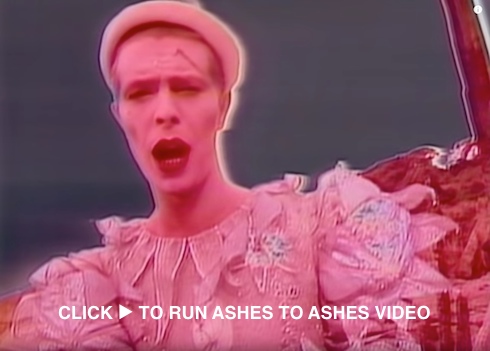
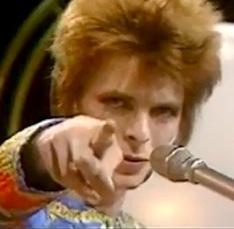
Swinging 80s, London, history, blitz club, blitz kids, theblitzkids, theblitzclub, cult with no name, billy’s, gossip’s, nightclubs, fashion, pop music, steve strange, rusty egan, boy george, stephen jones, kim bowen, stephen linard, chris sullivan, robert elms, perry haines, princess julia, judi frankland, darla-jane gilroy,fiona dealey, jayne chilkes, derek ridgers, perry haines, terry jones, peter ashworth, lee sheldrick, michele clapton, myra, willy brown, helen robinson, stephane raynor, melissa caplan,Dinny Hall, Kate Garner, rachel auburn, richard ostell, Paul Bernstock, Dencil Williams, Darla Jane Gilroy, Simon Withers, Graham Smith, Graham Ball, christos tolera, sade adu, peter marilyn robinson, gaz mayall, midge ure, gary kemp, steve dagger,Denis O’Regan, andy polaris, john maybury, cerith Wyn Evans, iain webb, jeremy healy, david holah, stevie stewart, worried about the boy,Yet from this black hole burst an optimistic movement the press dubbed the New Romantics, based on a London club called the Blitz. Its deejay Rusty Egan promoted the deliberately un-rock sounds of synthesised electro-pop with a beat created for the dancefloor, while drumming in a studio seven-piece called Visage, fronted by the ultimate poser, Steve Strange. He and other fashionista Blitz Kids were picked by Bowie to represent their movement in his 1980 video for Ashes to Ashes (above). But the live band who broke all the industry rules were five dandies with a preposterous name: Spandau Ballet.

As the last of the Baby Boomers, the Blitz Kids were concerned with much more than music. In 1980 they shook off teenage doubt to express all those talents the later Generation X would have to live up to — leadership, adaptability, negotiating skills, focus. Children of the first era of mass TV, these can-doers excelled especially in visual awareness. They were the vanguard for a self-confident new class who were ready to enjoy the personal liberty and social mobility heralded by their parents in the 60s.

For Britain, the Swinging 80s were a tumultuous period of social change when the young wrested many levers of power away from the over-40s. London became a creative powerhouse and its pop music and street fashion the toast of world capitals. All because a vast dance underground had been gagging for a very sociable revolution.

★++++++★++++++★

“From now on, this will become the official history”
– Verdict of a former Blitz Kid

➢ THE DROPDOWN MENUS ALONG THE PAGE TOP lead you to main topics. Choose “View full site” on your mobile.
➢ THE BLOG POSTS on this front page report topical updates which also link to the background pages in the menu.

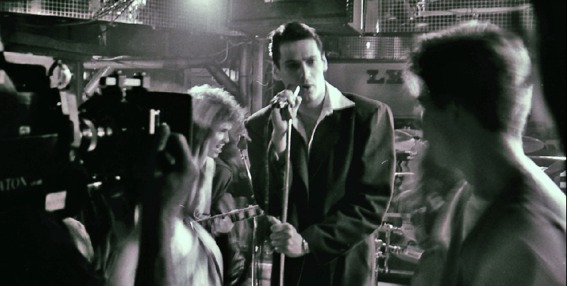
Below: View Blitz Club host Steve Strange in all his poser glory in the promo video for Fade to Grey (1982), also starring the club’s cloakroom girl, Julia Fodor, aka Princess

CLICK HERE to run the anthemic 80s video ♫ ♫ from Spandau Ballet and feel the chant:

nightlife, st moritz, club for heroes,le kilt, wag club, beat route,hacienda, cha-cha, holy city zoo, rum runner, camden palace, scala cinema, studio 21,crocs, le palace, white trash, fac51, Dirt Box, mud club, batcave, barbarella's, croc's, electro-pop, synth-pop, Chant No 1, kid creole, blue rondo, animal nightlife, visage, duran, depeche mode, ultravox, human league, gentry, ABC,soft cell, bolan,vince clarke, haysi, wham!, mclaren, heaven 17, yazoo, foxx, omd, bauhaus, phil oakey, jay strongman, Martyn Ware, martin fry ,altered images, 20th-century box, vivienne westwood, PX, axiom, body-map , foundry, sue clowes,demob, seditionaries, acme attractions, i-D, the face, new sounds new styles, Korniloff, andrew logan, kahn & bell, biddie & eve, toyah,

July 2, 1981: Shooting the video for Chant No 1 at Le Beat Route club in Soho, “down, down, pass the Talk of the Town”. Photograph © by Shapersofthe80s

❏ iPAD & TABLET & MOBILE USERS PLEASE NOTE — You are viewing only a very small selection of content, not chosen by the author. To access fuller background features and topical updates please request “PC version” and Choose “View full site” – then in the blue bar atop your mobile page, click the three horizontal lines which link to many blue themed pages of background articles.

1980 ➤ Birth of the New Romantics and the band who made it hip to play pop

The Observer Music Magazine. Pictures © by Derek Ridgers

The Observer Music Monthly, Oct 4, 2009. Pictures © by Derek Ridgers

A music and fashion movement evolved from a small club in London in 1980. It went on to dominate the international landscape of pop and put more British acts in the US Billboard charts than the 1960s ever achieved.
Today in 2009, one insider recalls how Steve Strange and Spandau Ballet revitalised UK club culture…
➢➢ Click here to read my major analysis
at the Observer Music Monthly

2009 ➤ How three wizards met at the same crossroad in time

◼ THE REACTIONS TO MY ARTICLE LINKED ABOVE have been mildly shocking since it was published in OMM, the respected music magazine of the world’s oldest Sunday newspaper, The Observer. It appeared in October, a week before Spandau Ballet, the newly-reunited house-band of the 80s Blitz Club, embarked in their UK tour and it tells the story of their genesis as one aspect of a fertile youth movement that rejuvenated all of British pop music for the 1980s.

Why am I surprised that people have been surprised to discover the concerted power wielded by the so-called Blitz Kids in 1980 and after?

“The impact of that article within the music industry has been unbelievable,” said one major mover in the business.

“I didn’t know any of that!” declared a newspaper executive I respect, who was a young music fan in the Eighties. He amazed me.

“That article is the first in any national newspaper to tell the story as it really happened,” said one former Blitz Kid.

“This will become the official history from now on,” said another.

All of which prompts two instant responses. First, that many decision-makers in and commentators on today’s music biz weren’t even born in 1980 – fair enough, fact of life. Second, apart from a handful of life stories written by the popstars involved, the rock historians who missed the boat when the New Romantics movement set sail remain in denial that anything changed in 1980. These sad old punks churn out their chronicles of rock oblivious to the fact that the new pop music of the 1980s became credible and cool and changed the UK singles chart for ever to the rhythms of dance. The point is the people who write the history books were usually looking the other way.

An ugly truth is that precious little innovation emerged from the rock scene of the 80s. After we give due recognition to newcomers such as The Clash, U2, REM and Elvis Costello, the decade’s bestselling rock albums came from stalwarts such as Springsteen, Gabriel, Reed and Mellencamp. Whereas pop being pop, it is the many new names from Prince downwards who gave the decade its myriad new sounds. Sympathy, then, to the young ex-music journalist who admits: “The 80s has been a somewhat historical black hole — most of the literature is for the 60s and 70s in all its forms.”
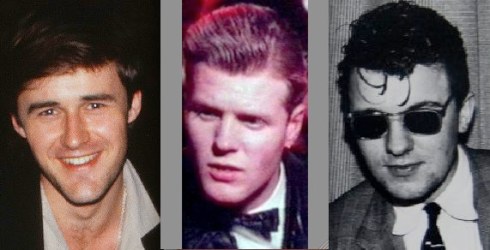
Dagger, Egan , Sullivan, Blitz Kids

Three who made a difference: Dagger, Egan and Sullivan

So the core contributions of three prime movers behind the new 80s pop — Steve Dagger, Rusty Egan and Chris Sullivan — go ignored by those historians forever in search of the next guitar hero, because this chapter was about nightclubbing and dance music, not about worshipping rock gods in a stadium.

As the youngest manager with a band in the charts, it is no exaggeration to say Dagger, at 23, initiated the overdue reform of the whole moribund record industry. As a clubland deejay, also 23, Egan looked to European electronica to refresh the music Britain danced to (distinctly different beats from the undoubtedly influential post-disco advances then emanating from New York and Chicago). And as a living beacon of inspiration, Sullivan — whose mantra “One look lasts a day” will be his epitaph — was at 20 one of those rare polymaths to whose feet you could trace the roots of many aspects of 80s youth culture, not least the pervasive influence of Soho’s Wag club which he named in his own image, and co-directed and hosted for 19 years with an emphasis on black music.

◼ WHAT’S SPOOKY IS THAT THESE THREE WIZARDS met at the same crossroad in time. What’s important to stress is that they did not act alone. Some people may feel it unfair to name them as leaders of the movement, though I have no hesitation doing so. Dagger, Egan and Sullivan were crucial agents of change — pathfinders who stuck out their necks by daring to do things differently. Without their vigour, diligence, compulsion and good musical taste, the UK’s dire pop scene in 1979 would never have started shifting. Yet they are the first to admit what everybody around them at the time knows: they could not have impacted on the zeitgeist as they did without the dazzling constellation of movers and shakers who orbited the Blitz Club in London’s Covent Garden. Nor should we understate the roles of Perry Haines and Robert Elms who in their early incarnations as cub-reporters were energetic at promoting the Now Crowd’s activities both in the new publications that sprang up as well as in mainstream media.

Andy Polaris, charismatic singer with Animal Nightlife, remarked that my Observer survey overlooked significant episodes beyond the Blitz, and the many “true style queens” who stirred the creative clubland mix, and he gave special credit to “Pinkie, Melissa, the lovely Luciana, Myra (ex-flatmate), Scarlett, Wendy, and Claire with the hair”. He was absolutely right, but he accepted later that because a music magazine had commissioned my 4,000-word slice of history, it was required to emphasise the progress of Spandau as the breakthrough clubland band.

The Observer, OMM

The Observer OMM Oct 4, 2009

Sullivan himself today deflects credit for his own waggish role in actively reshaping clubland: “If you run a club you’re only as good as the person who comes through the door. Whatever your inspiration, you always need the following. In the 80s, a lot of people made a success out of being themselves and the world would be a boring place without them.”

Shapersofthe80s will redress the balance by telling fuller aspects of the history as the weeks go by. It’s central to this website’s credo that sheer youthfulness and significant collaboration were the unprecedented hallmarks of the New Romantics juggernaut. Just as the Swinging Sixties were shaped by perhaps 30 bright sparks in Chelsea, so the Swinging Eighties were shaped by 30 or 40 energised individuals in and around the Blitz.

These post-punk hedonists represent a final cohort of Baby Boomers as the postwar birth-rate peaked in the UK, before it began to plummet for a decade and sociologists drew the demarcation line announcing Generation X (somewhat later than in the US). The cohort born between 1958 and 1964 (proponents of the Generation Jones thesis choose the bracket 1955 to 1967) shared the liberal boomer instincts for reassessing contemporary values, but as they finished their education the ravages of economic crisis during the 1970s threatened any expectations of entitlement and galvanised them to pursue self-sufficiency on their own terms.

As the Blitz Kids shook off teenage doubt, 1980 saw an outburst of all those talents that the following Generation X would have to live up to — leadership, adaptability, negotiating skills, focus. And as children of the age of mass TV, these can-doers excelled especially in visual awareness. There certainly hasn’t been anything like such a determined manifestation of youth culture since 1980, when the future looked daunting and the young had every right to demand a new deal.

◼ EVERYTHING ABOUT 1980 WAS EXCEPTIONAL. Britain was plummeting into recession in a far scarier world than today’s. Right now, Britain’s future looks dismal because the financial crash of 2007–8 will impose years of sacrifice and economic decline which no political party can prevent. That much is certain. In 1980 the future was unfathomable. A writer who is a former colleague of mine said of the Observer article that she didn’t recognise my political interpretation of the 80s. I’d say that in itself is indicative. Such was the turmoil pervading the entire political spectrum, that the nation’s fortunes looked dramatically different depending where you stood.

Despite the Conservative election landslide of 1979 that put Margaret Thatcher in power, unemployment was soaring and the political climate stank with public disillusion while Labour extremists saddled their strife-torn party with an unelectable leader to force splits within its ranks. Britain was a year away from a mighty rending of national fabric. When the Labour Party fell apart, it came as a shock to MPs from all parties to see angry moderates leave to launch a new Social Democratic Party (SDP), so named because they wanted to model it on the social democracy of the European Union. An SDP Alliance with the Liberal Party not surprisingly scored by-election successes.

The Observer, OMM

The Observer OMM Oct 4, 2009

The Cold War between the West and the Soviet Union escalated with the Soviet invasion of Afghanistan, and Iran became an unknown quantity following the fall of the Shah. British suspicion of the US was exacerbated when the UK government agreed to its establishing ground-launched Cruise missile bases within spitting distance of London, thus magnifying its potential as a target for Russia. Then, even as the IRA intensified its bombing offensive in Northern Ireland, the Conservative government went to war with Argentina.

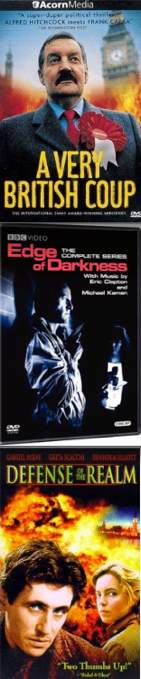
Very British Coup, Defence of the Realm, Edge of DarknessTelevision and cinema documented the paranoia of the age in a series of unnervingly intelligent “what-if” political dramas. (It’s well worth catching up with A Very British Coup, Defence of the Realm, Hidden Agenda, House of Cards and Edge of Darkness, which is widely regarded as the best British TV drama ever, currently being remade with Mel Gibson.)

At a more parish-pump level, Britain’s three-tier class war was alive and rampant, as Jilly Cooper’s book titled Class showed by becoming a runaway bestseller in 1979. Even our liberal-minded editor at the Evening Standard, Charles Wintour — a guiding hand behind the new SDP — was wont to ask when hiring staff for the Londoner’s Diary: “Which set do you move with?” Which “set” you aligned yourself with in society deeply coloured your view of the Thatcher years, which became characterised by unfeeling gentrification and the destruction of organised working-class power bases.

◼ ALLEGIANCES BURST SPECTACULARLY INTO LIFE on the Guardian newspaper’s website this year, 2009. In response to news of Spandau Ballet’s reunion on March 25, a blogger expressed his loathing of the band as the embodiment of “Thatcherism on vinyl” which promptly precipitated 345 comments. Yes, 345 !!! Can anybody recall another pop group provoking such outrage among the Guardian’s politically engaged readership?

One reader nicknamed Georges Bataille injected a note of reason among those 345 comments. He made a pertinent case for the UK’s North-South divide providing a barometer of the politics of pop… a more traditional Red Flag Old Labour legacy in the once-industrial North of England, and a softer more mainstream pinkishness from the Red Wedge bands of the South. (It still comes as news to many fans that three of the Spandau Ballet boys’ fathers were committed trade-unionists, and the band members and many in its entourage were Labour voters.)

I’d argue that in the 1980s, much more so than in today’s politically indifferent climate, where you came from both geographically and culturally made a huge difference to how the forces of lacerating social change impinged on you. The “set” you moved with tended to subscribe to a unique mindset and tensions weren’t far from the surface. Jingoism over the Falklands war split the young from the old. Republicans agitated for an end to the monarchy. For the first time in generations, Britain witnessed rioting on its streets over issues such as race, unionisation and taxation.

◼ BACK AT THE METROPOLITAN PAPER where I worked, its revered editor made the unforgivable decision to spike the first discussion of the Blitz scene I submitted for publication in 1980. His handwritten verdict on my copy was: “Rather too esoteric for us.” A few months later I tried again with a broader survey of the private worlds of young Londoners. This time the deputy editor flew off the handle. “You’re making this up!” he stormed. I protested that he lived just down the trendy King’s Road, about half a mile from the influential clothes shop, Acme Attractions, so he must have noticed these weird young fashionistas. His reply: “I’m pleased to say I haven’t walked down the King’s Road in 20 years.” Fortunately, by this stage Wintour had seen the light and he agreed to publish, albeit an abridged version of what I had written. Dagger, Egan, Sullivan and friends were well along the road to making history.
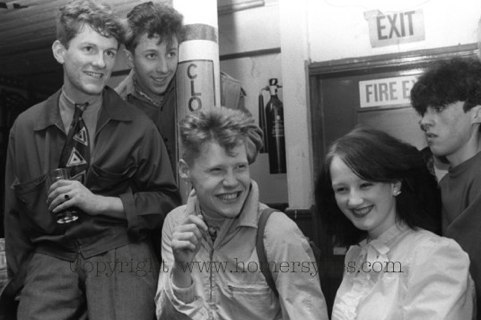
Ollie O'Donnell, Perry Haines,Robert Elms, Blitz

London’s young dynamos in waiting: seen at the Blitz in 1980, Ollie O’Donnell, Jon “Mole” Baker, Robert Elms and Jo Hargreaves. Photograph courtesy of http://www.homersykes.com

➢ Elsewhere at Shapersofthe80s: 190 acts who set the style for the new music of the 1980s

FRONT PAGE

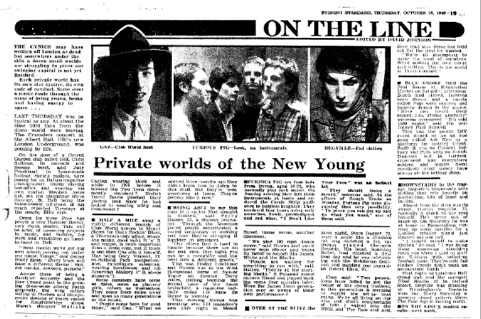
1980 ➤ One week in the private worlds of the new young

Evening Standard, Oct 16, 1980

First published in the Evening Standard, 16 October 1980

THE CYNICS may have written off London as dead in 1980 but somewhere under the skin a dozen small worlds are struggling to prove our swinging capital is not yet finished. Each private world has its own star system and its own code of conduct. Some steer a scenic route through the maze of being young, broke and having energy to spare

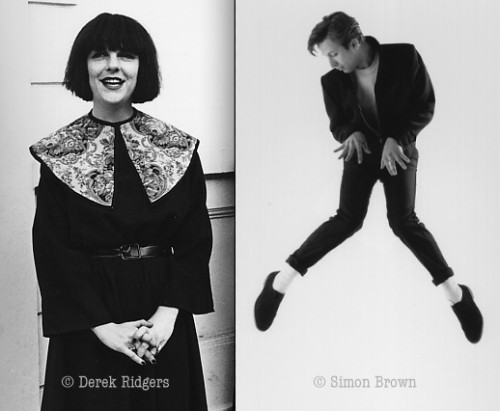
Judi Frankland in one of the clerical cassocks from her degree show summer of 1980, pictured by Derek Ridgers. Style commentator Perry Haines, by Simon Brown

◼ LAST THURSDAY was as typical as any. At about the time 5,000 fans from Disco World were leaving The Crusaders concert at the Royal Albert Hall, 1980’s new London underground was coming to life. On the door of a Covent Garden club called Hell, Chris Sullivan, in monocle and Basque beret, and Judi Frankland, in the home-made clerical cassock that she’d worn in Bowie’s video for his chart topping Ashes to Ashes, were posing for an Italian magazine photographer. Inside, playing box-office and wearing his own modish Stephen Jones hat and all too visible makeup, sat the ubiquitous Steve Strange, 21, Hell being the twice-weekly off-shoot of his much reported Tuesdays at the nearby Blitz club. For him, he said, dressing up is a way of life. “I don’t do it to get attention.” . . . / Continued on our inside page

➢ Read on inside Shapers of the 80s:
A rich slice of London life in 1980 – one week, a dozen prodigies setting the town ablaze, none of them over 22

FRONT PAGE