Tag Archives: Chris Sullivan

2018 ➤ Spooky or what? When two bands went by the name of Spandau Ballet

This slideshow requires JavaScript.

Above: Two bands who played in London as Spandau Ballet…
SBv1 originated the name and here play their final gig at the
Hope & Anchor in 1979 with singer Mark Robinson, drummer
Gordon Bowman, bass guitarist David Wardill, (guitarist Mick Austin
off-camera) . . . SBv2, here in their previous incarnation as Gentry,
playing Camden School for Girls in December 1978, with Tony Hadley
on vocals and the chart-topping single True five years in the future

DID YOU KNOW LONDON HAD TWO POP GROUPS called Spandau Ballet in 1979? The one who became famous adopted their name from the one who didn’t. That’s the claim in a jaw-dropping new history of the New Romantics scene, unauthorised and meticulously researched by David Barrat, a long-time music fan. His book is published this week titled New Romantics Who Never Were: The Untold Story of Spandau Ballet.

Barrat has gathered a mind-boggling compilation of spooky coincidences and things we never knew before in his 117,000-word paperback, self-published today on his own imprint Orsam Books. Here is no mere fan, but an obsessive one who has made himself the Mastermind champion in the two themes identified in his tongue-twisting title: Who exactly were the New Romantics of the early 1980s, who many of us believe powered one of the most transformational youth cultures of Britain’s postwar years? Barrat discusses how “New Romantics” as a two-word description came to characterise the style-leaders of British clubland when those leaders unanimously rejected it themselves.

His second theme is the true story of Spandau Ballet, the five-piece from Islington who set out with a cunning plan to weave a tapestry of fictions around their launch as electro-synth popsters in 1979. At the outset the band were coolly vague about their origins, as if they’d sprung from nowhere – or rather, from the dancefloor of the trendiest London nightspot in years, Covent Garden’s Blitz Club. You’d also have to be a fan with Barrat’s persistence to piece together spasmodic revelations about the band’s genesis as these slipped out during the succeeding decades. Spandau subsequently became global superstars in that momentous decade when image-conscious new British bands invaded the American pop charts. Then they quarrelled, as pop groups do, and arrived in the High Court in 1996 rowing over royalty payments. Individual members remained belligerent for years.

➢ Buy David Barrat’s New Romantics book
here: “gripping, original and epic”

Whether or not you care for Spandau and the 80s music scene, Barrat’s forensic approach to reassessing this creative landscape is utterly hypnotic and unlike anything you’ve read by the hacks of the creaking rock press. He has spent years in deep Holmesian research delving into official records, newspaper cuttings, TV interviews and conducting first-hand interviews. The result is gripping, original and epic. For instance: he reveals all about another band sharing exactly the same distinctive name a matter of months before Tony Hadley stepped onto the stage at the Blitz Club! Here is a well-informed juggernaut delivering into our laps mighty fact upon tiny fact, laid out for inspection and challenge. Barrat’s intent is resolute: to convince us he knows his stuff, and he has purged the popular version of events of their mutability.

David Barrat contacted me a few years back in order to check dates and events against my own detailed diaries and his aggregation of facts and assumptions is mostly hard to fault. His book now pays extraordinary and generous tribute to this website, Shapers of the 80s, and to myself as a former features editor of the Evening Standard who set out to celebrate the potency of the youthquake erupting in 1980.

SO WHO WERE THE OTHER BAND?

❑ The musicians originally called Spandau Ballet (hereafter called SBv1) were four lads who met in 1978 during their teens in Bedfordshire: guitarist Mick Austin, singer Mark Robinson, drummer Michael Harvey and punky bass guitarist David Wardill. They agonised for ages over a band name and Austin remembers a “eureka” moment while they were using the Dadaist method of juggling words on random scraps of paper. They arrived at the darkly Germanic first word (originally with an incorrect umlaut over the U, as in Spandaü) and then paired it with “the softer, romantic” word Ballet. The package was deemed “nicely decadent”, a debut gig was planned for 30 August 1978 and accordingly Robinson designed a poster for it, which we see below. Wardill declared his ambition: “We were going to go to London and become rock stars.”

So how on earth did their oddball band name transfer itself to a struggling five-piece from Islington? The reader’s mind boggles at the number of spooky coincidences that Barrat’s book uncovers. Wardill had fallen in love with journalism graduate Deanne Pearson who rented a flat at 32 Sibley Grove in East Ham, so in October 1978 he moved in and subsequently members of SBv1 often came to crash on the floor. Coincidentally . . . this flat was shared with the yet-to-become seminal Blitz Kids, Kim Bowen and Lee Sheldrick while freshers at St Martin’s School of Art, who soon joined up with a stylish posse mainly lodged in Battersea’s Ralph West halls of residence which served the population of all London’s art schools. These included graphics student Graham Smith and the social dynamo Chris Sullivan who would soon find himself running the seminal Wag club for nearly 20 years.

Click any pic below to view complete images

In her forthcoming autobiography Kim relates how, in mid-1979, she fled far-flung East Ham and, accompanied by “a trio of self-described Nelly Queens”, penetrated an empty Georgian house in Fitzrovia to establish a squat in Warren Street, a leisurely walk away from St Martin’s. It was to become notorious. “Within weeks the creme de la creme of young London was living there,” Kim writes, and her bold manuscript spares no detail about their very un-private lives. This stylish property became the hub of social life for the Blitz Kids who were meeting every Tuesday at the Covent Garden Blitz Club since Steve Strange’s Neon Nights had begun that February. As milliner Stephen Jones’s mannequin de vie, the wild and startlingly elegant Kim elevated herself to Queen of the Blitz. Many of the Kids’ high-style antics were documented by Graham Smith while he – coincidentally – became the official photographer of the second Spandau Ballet (SBv2) who announced their name for their first public concert on 5 December that year, with invitations designed by Smith. (His lavish photo-book We Can Be Heroes, with authoritative text by Chris Sullivan, was published in 2011 and remains an unbeatable record of both style and excess).

In October 1978, the Beds boys SBv1 had started working as busboys as well as rehearsing at The Venue, Virgin’s new nightclub in Victoria, where they immortalised their band’s name by spraying it in green paint on the toilet walls and on other public walls elsewhere in central London. Amid all the ancient myths about where SBv2 found their name, this band’s early propagandist and future broadcaster Bob Elms has said he first spotted the phrase “Spandau Ballet” as graffiti variously on prison walls or toilet walls in the Spandau district of Berlin during a soulboy group trip in summer 1979.

Coincidentally – however, during an interview way back in 1984 one prominent Blitz Kid told me the graffiti had been very visible on the toilet wall of The Hope, a favourite pub in Tottenham Street in London, not far from the Warren Street squat. “Some boys from north-east London were using that name in a school-type band.” Also coincidentally – along the same block as The Hope stood the trendy new Scala cinema, whose programmer then was 22-year-old Stephen Woolley (today a major player in the British film industry), who was a contemporary of SBv2 manager Steve Dagger and their stage designer Simon Withers, all of whom coincidentally attended Dame Alice Owen’s school in Islington and grew up there with the other members of SBv2 – Gary and Martin Kemp, Tony Hadley, John Keeble and Steve Norman.

Barrat’s fabulous cascade of coincidences throws up at least SIX PRIME SUSPECTS in The Ballet Great Mystery: Who really did feed the name Spandau Ballet through to the Islington band SBv2, who during 1978–79 were known as Gentry, a power-pop combo? Barrat’s new book draws its own conclusion.

PS: EVEN MORE SPOOKILY
ON MY DOORSTEP. . .
pop music,

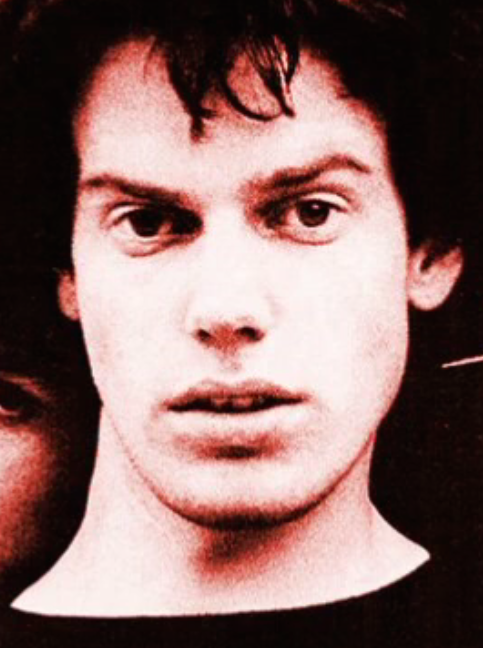
David Wardill: bass guitarist with SBv1, who joined The Passions in 1980

❑ Scroll forward a few years from the birth of SBv2. . . After my day-jobs in journalism, I taught an adult evening class in Creative Writing for 16 years in west London, after which it was traditional for the more entertaining students to continue the evening at a nearby pub. Among several who became long-standing friends was – coincidentally – the same David Wardill of SBv1 (also visible in the video below). His musical background meant we had lots to discuss when we met in 1989, including his earlier life in East Ham with Kim Bowen and Lee Sheldrick.

David and I drifted apart but had a sudden email reunion while I was building this website in 2009. He told me that soon after completing the writing class he sent a story to the BBC which turned up two years later as a film from BBC Birmingham. These days he was a father and teaching art in a secondary school.

As for SBv2, he admitted: “I never really cared much that they had borrowed our band’s name, as I didn’t see much chance of us wanting it back.” SBv1 ground to a standstill in May 1979 and David soon joined another band called The Passions who enjoyed airplay by Radio 1’s influential deejay John Peel and eventually made it to Top of The Pops in 1981 with their song on Polydor, I’m in Love with a German Film Star, which reached No 25. (CoincidentallySBv2 arrived at No 17 with Musclebound in the same edition of TOTP and we hear them being announced at the end of the clip below. Oo, er.)

David added: “The Passions reunited recently for a day at a studio in Shepherd’s Bush. That laid a lot of ghosts to rest. Our main song has been covered by the Foo Fighters and Pet Shop Boys. Strange how the past hangs around, although I find the continued interest gratifying, as well as financially useful.” Spoken like a star.

https://youtu.be/5-3JNRC2gvo

❑ And here today we still have not given away the truly spookiest coincidence among those that Barrat reveals about SBv1 & v2 when their paths almost crossed in May 1979 – it’s a goose-pimples moment that stops you in your tracks, so we’re not going to spoil it. However, other reflections on this vital addition to our bookshelves will follow here at Shapers of the 80s as we read on…

➢ Previously at Shapers of the 80s: Just don’t call us New Romantics

➢ Previously at Shapers of the 80s: Who’s Who in the Pits – Harry Cool’s Guide to the New Glitterati
FRONT PAGE

2015 ➤ Original Blitz Kids say farewell to Steve Strange, their host, pivot, style icon, friend

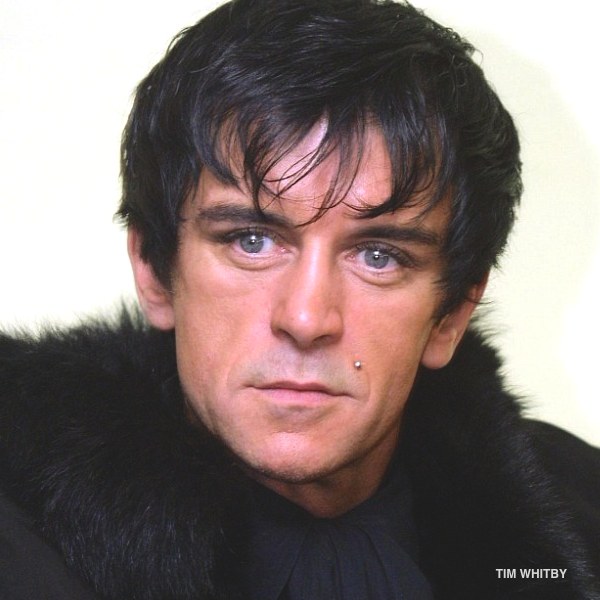
2013, Steve Strange photographed by Tim Whitby

Steve Strange in 2002 photographed by Tim Whitby

➢ Previously at Shapersofthe80s:
Nowt so Strange as Steven John Harrington,
28 May 1959–12 Feb 2015

1978, when Steve Strange teamed up with Rusty Egan (Photo © Fin Costello/Redferns)

1978, when Steve Strange met Rusty Egan. (Photo © Fin Costello/Redferns)

HOW THE RULES OF 80s NIGHTCLUBBING
WERE REWRITTEN BY STRANGE & EGAN

+++
RUSTY EGAN REMEMBERS HIS CLUBBING PARTNER
About this week’s Mi-soul radio show, Rusty said: “I’m very, very sad and down tonight because I’ve lost an old friend. We had our disagreements but we did have a decade of the best times that anybody could ever have wished for. We made some amazing music, some amazing parties, clubs and fun and friends. Underneath it all he was a good soul. Steve, I’m so sorry I didn’t get a chance to say I still love you.

Tonight we say Hello and Wave Goodbye to my friend and foe Steve Strange AKA Steve Harrington who convinced me to let him crash at my place for one night. We were flatmates for five years and never had a night in… friends for 25 years and foes for less than five years. Music says everything I could ever want to say… Bryan Ferry, David Bowie, David Ball, Midge Ure, Lou Reed, John Foxx and The Maths, Joy Division say everything I could want to say + EMT, The Magickal, Jeff Appleton, Visage, The Distant Minds. The good times outweigh the bad.

+++

Steve Strange, Chris Sullivan, Graham Smith, Steve Norman, Blitz Kids, Swinging 80s, London

Chris Sullivan’s 21st birthday, 1981: “me drunk out of my head after a bottle of tequila with the boys in my bedroom in Kentish Town” – the boys being Steve Strange, Graham Smith and Steve Norman (photo © Graham)

CHRIS SULLIVAN, WHO RAN
SOHO’S WAG CLUB

I first met Steve Strange (né Harrington) when I was 14. We were both into Northern Soul and used to meet in Blackwood, South Wales, just a mile or two from his council house home. Then it was funk, Bowie and Roxy. Subsequently, punk, bondage and notoriety. We’d travel to London, Bristol, wherever to satiate our need for nightlife. Thus, London was the only place for Steve so he moved up to work for Vivienne Westwood in 1977. He was 18. I was 17. He became a punk “face” while I finished my A-levels and then went off to San Francisco in search of the Beatnik life (but couldn’t find it) and lost touch with Steve.

Then in October 1978, I bumped into him in Oxford Circus and he invited me to his new Bowie night at Billy’s. Since then we have been inextricably linked. We ran the club Hell together, then he did Club For Heroes and me Le Kilt. He then opened the Camden Palace and me the Wag.

We were both flamboyant club-running Welsh dandies but were never rivals. Steve had too much dignity for that. We were friends and remained so for the rest of his life. And I can say that Steve, despite quite a few hard years, never lost that that spark, humour or joie de vivre, was forever stylish and was always a pleasure to see.

SHAPERS OF THE 80s
extends heartfelt thanks to these key Blitz Kids (as were) for taking the time to contribute these wonderful appreciations of Steve Strange who died yesterday aged 55. We are all in varying degrees of shock, yet it is remarkable how their tributes readily identify the distinct qualities that made Steve a beacon for others to rally round. We hope these words will stand as both epitaph and historic record

I will miss reminiscing about us getting caught shoplifting together, our ferry to Calais as that got stuck in a hurricane going back and forth unable to dock for 13 hours; then hanging out with Grace Jones, Iman and Gaultier and getting spat at by a Parisian old lady who thought we were Nazis (we both had coincidentally brought our leather German trench coats); doing LSD at the Notting Hill Carnival, ecstasy in Ibiza in 1983 and getting lost in New York’s gang infested Alphabet City York at 5am after a night out in 1985 and walking in complete circles till it was light. Adventure after misadventure after misdemeanour. Two working-class Welsh chaps who could not believe their luck sucking the lemon dry.

I spoke to him a lot over his last few years and realised that he, coming from nothing, just threw down the gauntlet and created this being, “Steve Strange”, who was his “art” and, rather like Quentin Crisp and Leigh Bowery, was famous for purely being himself – a rather unique individual, one of a kind and a true maverick who never once towed the party line and always kept you guessing from Telly Tubbies Toys to TV shows. Indeed, our lives ran in tandem for decades and, I can honestly say, that I am proud to have been a friend and associate for 40 years of this great British character. I doubt we will see the likes of him again. Today my melancholia was lifted by one thought. He would have also loved this massive media attention regarding his demise. He would have said “See, I told you I was making a comeback!”

The world is a smaller place without Steve.

Princess Julia, PX, New Romantics

Julia before she was a princess: outside PX in 1980

PRINCESS JULIA, WRITER AND DEEJAY
We piled into his clubs from the late 70s onwards and made things happen. Steve Strange’s notoriety filtered into the mainstream making him a household name, much to his delight. Getting dressed up, going out and getting noticed… Steve was head of a subculture the likes of which perhaps we will never see again. He rode the decades, suffered ups and downs but always retained a vision of creativity, his own and those around him. Encouraging people to follow their dreams, the Blitz was a melting pot of creativity, its ethos a cornerstone to generation after generation who aspired and are aspiring to cast their nets wider.

When I met Steve his style was fearless. He became an entrepreneur in clubland perhaps unwittingly and genuinely enjoyed the ritual of clubbing. On other fronts Visage, initially a studio project, rapidly gained cult status, and he never abandoned performing right up to the present. He had a wicked sense of humour and was ready to tackle challenges even though his decadent years had taken their toll on his health… The stories I could tell you, perhaps I’ll leave that to your imagination!

Kim Bowen

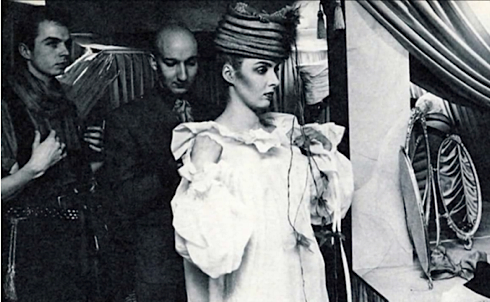
1979, Kim Bowen models for milliner Stephen Jones, assisted by Lee Sheldrick in the Jones boutique

STEPHEN JONES, MILLINER
Steve Strange was a live wire. He made things happen, joined the dots between people. And he was my first customer. I went to his Bowie nights at Billy’s club and then the Blitz as a student at St Martin’s and he asked me to make him a hat out of gold braid. It took me about three weeks and he paid £75, a fortune in those days. Then, he was working at a fashion store called PX in Covent Garden. They had an empty basement, and he asked me if I wanted to set up store in there. So that was my first shop. I owe my start to Steve.

There was a vacuum after punk had gone. Suddenly there were all these kids dressing up in these eclectic, historical, top-to-toe looks we made ourselves from thrift stores. With Steve, it had to be a total look, whether he was wearing a dress, or a slick Antony Price suit. And every look needed a hat.

KIM BOWEN, STYLIST,
ONETIME QUEEN OF THE BLITZ

The hustle, the bustle, the make-up, the clothes, “Julia and I think you should put pencil on that mole of yours, it looks like a spot otherwise” to “I like your hat, do you think Stephen Jones will make one for me?” Rushing enthusiasm, involving everyone, creating insane parties going round and round on the Circle Line. Some truly bad outfits (his not mine.) Shockingly, “Kim, will you be my official girlfriend?” My boyfriend Jeremy Healy was rather outraged at that, sensing a great and grievous social impropriety.

“I know some weird private club in Wandsworth, Lord Longleat will be there, he’s fun, let’s go” . . . “God, look at Mick Jagger, he looks like an axolotl, doesn’t he? – Still, let’s go talk to him” . . . Cramming into the flat on King’s Road that he and Rusty and Julia shared, the height of sophistication as we polished off bottles of Blue Nun.

“ You were the epicentre of a most
particular time and place,
and you did create the stage
on which we all appeared ”
– Kim Bowen, Queen of the Blitz Club

“Will you run a nightclub with me?” became screaming up the stairs at Club For Heroes: “Why are you letting those horrible people in?!” Parties here, parties there, a club here, there and everywhere, places to sit bored and rude, blame him and his shit club, hate the music, be a little bitch, stick your nose up in the air Kim Bowen, and to always, always be asked, to be introduced to David Bailey who photographed me for Ritz magazine, to be implored to be in Bowie’s Ashes video and to refuse, to always be asked to anything fun, anything interesting, daring, mad, silly, stylish by this kind, generous, privately soft and rather vulnerable, funny Welsh guy, who always laughed, until he didn’t and things went dark.

And then they got better again. And then this abrupt goodbye. What a shock. You were the epicentre of a most particular time and place, and you did create the stage on which we all appeared, flourishing our lace cuffs and sharpening our profiles to the footlights. Thank you for that. Because we just came to your clubs, you created them Steve, you and Rusty.

rel="nofollow"

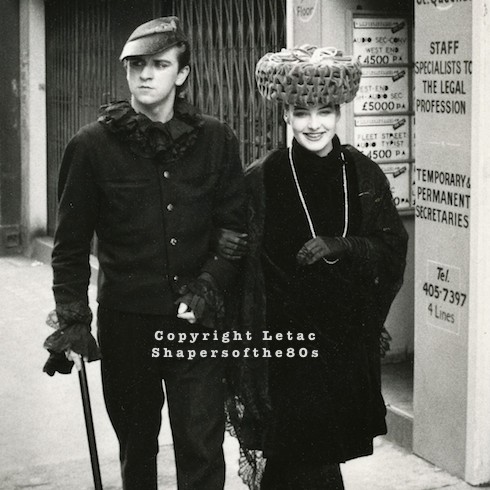
Above: King and queen of the Blitz: Steve Strange wearing PX and Kim Bowen crowned by Stephen Jones titfer in 1980. Photograph © by Letac / Shapersofthe80s archive

CONTINUED INSIDE
SHAPERS OF THE 80S

➢ Click through to read more of this week’s Blitz Kid
tributes to Steve from:

Peter Ashworth, Ninotchka Bee Bee, Helen Carey, Eve Ferret, Judith Frankland, Boy George, Francesca Von Habsburg Thyssen, Billy Idol, Gary Kemp, Martin Kemp, Simon Le Bon, Stephen Linard, ‪Franceska Luther King‪, Glen Matlock, Mark Moore, Christos Tolera, John Maybury, Steve Norman, Milly Parkinson, Andy Polaris, Stephane Raynor, Graham Smith, Graham K Smith, Midge Ure, Iain R Webb and Mike Leigh, Steve’s agent

➢ Previously at Shapersofthe80s: At Strange & Egan’s Camden Palace a silly hat and a calculated look might be the best career move you’ve ever made

FRONT PAGE

➤ Steve Strange RIP: the great provocateur who led from the front and inspired a generation

Visage ,Blitz Club,Steve Strange ,Blitz Kids, New Romantics, nightclubbing, tributes

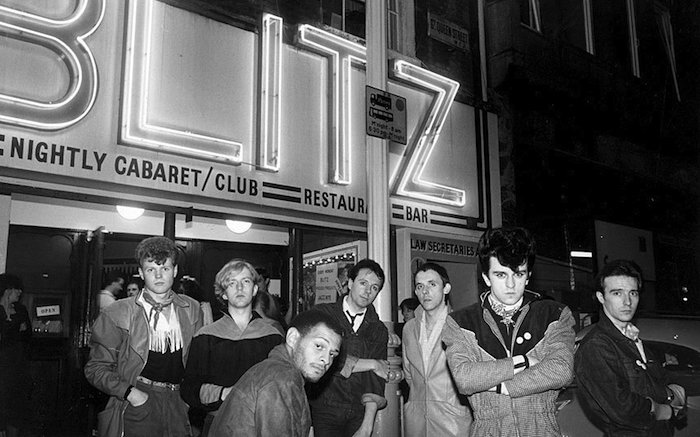
The early Visage outside the Blitz Club in 1979: Steve Strange (second right) and from the left, Rusty Egan, John McGeoch, Barry Adamson, Billy Currie, Dave Formula and Midge Ure. (Picture © Sheila Rock)

SO FAR ONLY A FEW SERIOUS COMMENTATORS HAVE glimpsed STEVE’S WIZARDY…

➢ Tom Ewing in today’s Guardian:

The reruns of 1980s Top of the Pops on BBC4 will provide an opportunity to see the change Strange and his friends wrought – a pop scene becoming funnier, more dramatic, and more delightful to look at with each week. By 1981, and Strange’s move to a new venue, Club For Heroes, pop music looked and sounded quite different than when he’d arrived, and he’d played a huge part in the change. Nobody in pop is trusted less than the fashionable. But a generation of small viewers learned more about glamour, improvisation and style from the pop music of Steve Strange’s generation than from anything else on TV, or in real life.

Strange kept making music and running clubs, but the records he left behind – fantastic as they often were – are still only half the story. Steve Strange was important not just as a pop star from a particularly colourful scene, but as one of pop’s secret architects. . . / Continued at Guardian online

Steve Strange, Steven Harrington, Blitz Kids, New Romantics,

Leather-clad Steve Strange photographed in 1982 by Helmut Newton

➢ Neil McCormick in today’s Daily Telegraph:

Strange was a significant figure . . . his influence behind the scenes proving crucial to the newfound confidence and flamboyance of post-punk British pop in the Eighties. . . Dance music became cool again, synths reigned supreme, with Strange amongst the chief instigators of a fresh colourfulness and extravagance that brought fun and glamour back into pop, giving impetus to a flashy, eccentric scene that ultimately inspired the second British musical invasion of America.

His death from a heart attack at 55 may only leave a tiny mark on pop music but Strange himself had already made a much bigger mark. To those who knew, Strange was a genuine pioneer, an inspiration to a generation. . . / Continued at Telegraph online

➢ LISTEN to broadcaster Robert Elms – one of the original Blitz Kids – paying tribute today on BBC London 94.9:

This working-class kid orchestrated London for a couple of years. He was a worker of people, a creator of ideas, a cultural agent provocateur. . . down-to-earth, funny, scurrilous. . . And he made things happen. He played London like a musical instrument

➢ More memories of the man behind the make-up
– by ‘Betty Page’:

I interviewed Steve just before Visage’s first album was released, fully expecting to meet an arrogant 20th-century version of Beau Brummell. He was modelling the Little Lord Fauntleroy look – porcelain face make-up, tumbling curls and two finely drawn black dots placed on the tip of his nose completed the look. I told him that I wished I had the patience to apply such an immaculate maquillage.

“I’ll get up as early as it takes to get my face right,” he replied. “No matter how big the hangover.”

Now there’s dedication. That’s what it takes to be A Creation. I no longer feared that the room was too big for the three of us – Steve, his reputation and me. He was just a sweet working-class boy from Wales who liked to dress up and party. . . / Continued at Berverleyglick.com

18 FEB UPDATE: SULLIVAN’S SOHO RADIO SHOW

I had the immense pleasure of dedicating my radio show today to my old partner in crime and friend since early teens Steve Strange and rounded up some of his best friends to tell us some great Strangie stories including Princess Julia, Jennie Matthias of the Belle Stars, Glen Matlock of the Sex Pistols, Jeanette Calliva who ran Double Bass and The Bank with him. A real honour to do as it was a privilege to be his good friend for 40 years. He was a complete and utter maverick. He had balls the size of basketballs. He didn’t know when to stop and he never knew when the night had ended. Steve’s greatest achievement was that he sussed out he could become notorious being himself in every way and he made a living out of it.

➢ Previously at Shapersofthe80s:
Nowt so Strange as Steven John Harrington, 1959–2015

FRONT PAGE

How James Brown revolutionised music and became the voice for Black America

James Brown, Chris Sullivan, funk, biopic

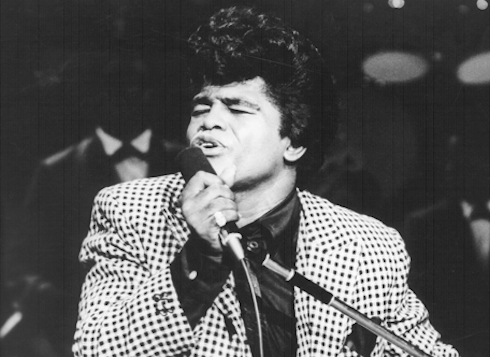
James Brown live at the Apollo, 1962: “When I said ‘Die on your feet don’t live on your knees’, I became Soul Brother Number One”


➢ British deejay and commentator Chris Sullivan describes how the Godfather of Funk became the most successful African-American musician of the 20th century – at Alpha, the men’s lifestyle magazine:

Almost every owner of a TV or radio in the world has danced to James Brown’s inimitable grooves at some point in the last half century, even if they don’t know it. Recently, producer-songwriter Pharrell Williams sampled Brown’s hit My Thang on Kanye West and Jay-Z’s 2011 single Gotta Have It, while his 1970 hit Funky Drummer has been sampled a record 929 times. Altogether Brown’s tunes have been sampled 4,500 times by everyone from Eric B and Rakim to Public Enemy. Accordingly, I’d contest that he is the most influential single recording artist of all time.

“James Brown is magic,” declared an awe-struck Michael Jackson. “I’ve never dared speak to him, but I consider James Brown my greatest teacher.” Meanwhile Mick Jagger, who spent hours watching him as a youngster, admitted to “trying to steal everything I could,” from the master. . . / Continued at Alpha Magazine

➢ The whitewashing of James Brown: Why were all the producers, writers and the director white on the new movie Get On Up? – At the Huffington Post

FRONT PAGE

1983 ➤ Video gem unearthed from the Blue Rondo vaults

http://youtu.be/-EwAszPCZvk

◼ AIRED TODAY AT YOUTUBE: A long-lost live performance by London’s Latin jazz-soul band Blue Rondo à la Turk on German TV in 1983 complete with classic dance breaks from Moses and Sullivan in Aubrey Beardsley hair-do. The line-up dates from about 1982–3: Chris Sullivan and Christos Tolera (vocals), Moses Mount Bassie (sax), Art Collins (sax), Peter Tsegona (trumpet), Geraldo Darbilly (percussion), Greg Parker (guitar), Robin Jones (congas/percussion), Kito Poncioni (bass) and Daniel White (keyboards).

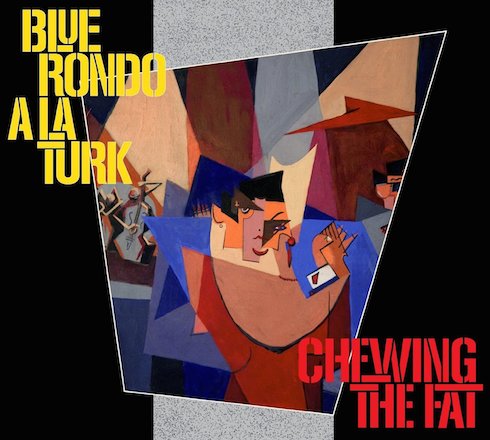
At this time Sullivan says: “Mark Reilly had left to form Matt Bianco. Kito carried on for a few months as he needed the money.” Then he and Daniel White left to join Matt Bianco which enjoyed several UK hits. By the time Blue Rondo released its second album album, Bees Knees and Chicken Elbows in 1984, the band had sadly disintegrated. Their first album Chewing the Fat was easily the best new album of 1981 in terms of musicality and attitude. Sullivan of course went on to run Soho’s Wag Club for 19 years and make it a legendary showbiz rendezvous.

24 NOV UPDATE FROM THE VAULT ♫ CHANGE ♫

➢ Previously at Shapersofthe80s: How Blue Rondo à la Turk created a buzz in clubland

Blue Rondo à la Turk ,Chris Sullivan ,Chewing the Fat ,jazz,soul,double-CD ,Cherry Red Records,Swinging 80s,Christos Tolera ,
➢ In June 2014 a double-CD entitled Chewing the Fat was issued by Cherry Red Records (CDBRED621) – They include 29 tracks, which are all of the group’s recordings on the original album, and various bonus tracks, 7in and 12in specials, plus remixes.

FRONT PAGE