Tag Archives: Chris Sullivan

1981 ➤ Hot days, cool nights, as Blue Rondo join the new Brits changing the pop charts

Blue Rondo à la Turk , pop music, 1981

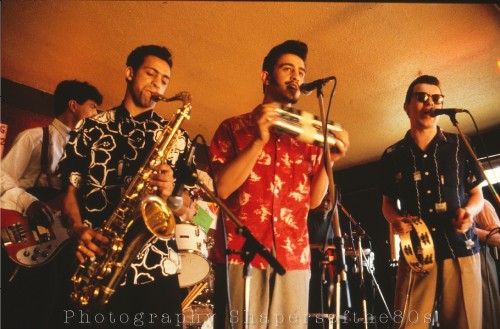
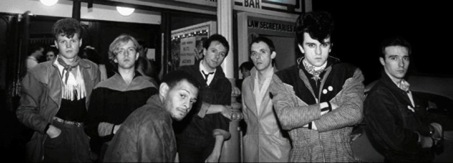
Blue Rondo’s official debut in Chelmsford, June 1981: Moses Mount Bassie, Christos Tolera and Chris Sullivan front the seven-piece. Photograph © Shapersofthe80s

◼ “GET IN THE BACK OF THE VAN,” I was told on this day 30 years ago. “You’re coming for a ride.” Graham Ball was a club host empowered to open the trendiest of doors in Soho, so “No thanks” was not an option. “I’ve got a new band to show you. And you’re not quite going to believe what you’ll hear and see.” He was, apparently, now also a manager. We arrived in blisteringly hot sunshine at a characterless modern pub in Chelmsford, Essex, well away from Soho clubland, and there of course were the rest of The Firm — the handful of sharp young dudes at least half the age of the grunters who dominated the pop industry, all being groomed by Spandau’s 23-year-old Steve Dagger to inherit the mysteries of management for a new generation of bands.

Assembling an assortment of instruments onstage were five, six, no, seven of the most variegated musicians you felt might belong in a special institution for their own safety. I had been invited to write the first piece about the craziest combo  inspired by London’s Blitz Club, which had closed the previous autumn, and by this summer they were but one among the slipstream of bands erupting on London’s burgeoning nightlife scene. From their opening vocals — “Oo-oo, aa-aa, mm-mm ah!” — Blue Rondo à la Turk were sensational, and my review appeared in the second issue of New Sounds New Styles. It took only three months before Rondo signed a deal and charted in November.

➢ Read that first review of Blue Rondo as they create a buzz with their new Latin sounds — from NSNS August 1981

This was the summer
of New Romance

Spandau Ballet, Ultravox, Duran Duran, 1981

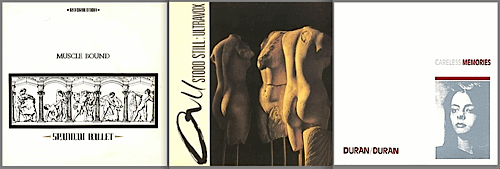
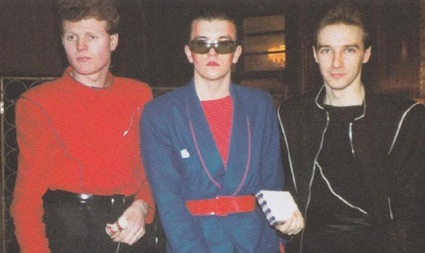
Leaders of the Romantics in 1981: Spandau Ballet, Ultravox, Duran Duran

ON THIS DAY in 1981 the UK charts were bursting with the new generation of image-conscious British groups who whose linking of soul and electro-pop were to change the style and the rhythm of pop charts for ever. . .

Ultravox were enjoying their fifth hit single All Stood Still.
Linx were enjoying their third hit Throw Away the Key.
Spandau Ballet were enjoying their double-sided third hit single, Muscle Bound/Glow. At Easter they had also signalled their new funky direction by introducing Chant No 1, which would become London’s clubbing anthem and reach No 2 later this summer.
Duran Duran were enjoying their second hit Careless Memories.
Orchestral Manoeuvres in the Dark were enjoying their second hit Messages.
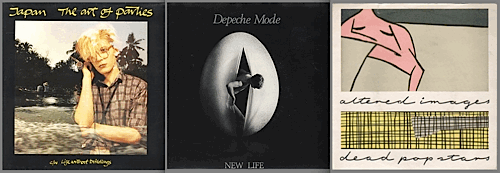
Japan were charting with The Art of Parties.
Landscape were charting with Norman Bates.
Shalamar (with honorary Brit and body-popping pioneer Jeffrey Daniel) were charting with A Night to Remember.

➢ Elsewhere at Shapers of the 80s: 100+ acts who set the style for the new music of the 1980s

Light of the World were charting with I’m So Happy.
Imagination were charting with their debut Body Talk.
The Human League entered the charts on this day with Empire State Human.
Depeche Mode’s second single New Life was soaring towards No 11.
Visage’s second hit single had just fallen out of the chart.
❏ Likewise Heaven 17’s debut Fascist Groove Thang.
❏ Likewise Altered Images’ debut Dead Pop Stars.
❏ Likewise Level 42 with their second hit, Love Games.
❏ And the honorary Brit, Kid Creole, was heading into the charts with his Coconuts and their debut single, Me No Pop I — a compulsively danceable new sound on Antilles introduced to London last year by i-D co-editor Perry Haines.

New Romantics, bands, Swinging 80s,Japan the band, pop music, Depeche Mode, Altered Images

Going Romantic in 1981: Japan the band, Depeche Mode, Altered Images

Oh, and two nights earlier at Le Beat Route I’d snapped the new boy in George O’Dowd’s life enjoying their first date. Nobody dreamt that George and Jon Moss would one day be putting together their own band.

♫ VIEW fine Northern Soul footwork from Rondo mentalists in this performance of Me and Mr Sanchez shot at the Venue in London:
+++

FRONT PAGE

1980 ➤ As Spandau play in Heaven, all around we can hear the new sounds of 1981

Spreading the New Romantic message, including clothes by PX: Spandau Ballet play Heaven, Dec 29, 1980. Photographed © by Shapersofthe80s

❚ SIX WEEKS IN THE CHARTS with their debut single, To Cut a Long Story Short, on this day in 1980 Spandau Ballet play at Heaven, the biggest disco in London, and probably in Europe. Their average age is 20. A year after their unveiling at the Blitz club, this is still only the band’s tenth public date, and only their second concert since signing to Chrysalis in October. Their policy is to maintain an air of exclusivity, to thwart the backward rock press by playing admission-by-invitation dates in nightclubs rather than conventional rock venues, and to rely on stylish videos to stress the message that here was a new generation of new sounds and, equally important, new styles. Take it on trust that for the whole of 1980 Spandau Ballet had been the most achingly fashionable pop group on the planet, dressed by the designers of the moment. Significantly, as the first club band to win a record deal, they had been the only New Romantics to appear on Christmas Day’s year-ending edition of Top of The Pops, the BBC’s flagship music show. (Yes, Adam and the Ants also appeared, but he was “glam-punk”, important distinction, as Marco Pirroni confirms.)

On Dec 20, Visage, the Blitz club’s seven-piece studio line-up had entered the singles chart with Fade to Grey. The same week saw Le Kilt’s Christmas party, the new New Romantic club that had opened almost as soon as Steve Strange’s clubnights at the Blitz had ceased. Le Kilt’s co-host Chris Sullivan had murmured something about putting together a band he called Blue Rondo à La Turk. Not to be outdone, i-D’s cub editor Perry Haines had mentioned not only a band he was managing, Alix Sharkey’s Stimulin, but tonight in Heaven he now talks of his involvement with Duran Duran, the Rum Runner house band we’d all run into at Spandau’s November show in Birmingham.

Depeche Mode, Daniel Miller, Dreaming of Me, synthpop

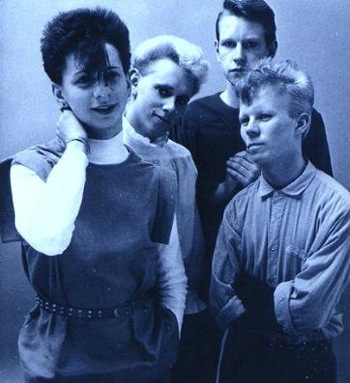
Basildon’s finest: Depeche Mode recorded their first single, Dreaming of Me, in December 1980, after a verbal contract with Daniel Miller’s synth-driven label Mute

Here too is Daniel Miller, an anarchic electronic musician with his own label called Mute and a recording studio in an old church where he had set up all his synthesisers. Only last night he’d been watching Depeche Mode, an unsigned teenage band from Essex, playing the Bridge House pub in east London where they were regulars — he’d heard them play their technopop tune Dreaming of Me, helped them record it and they’d all agreed it would make a great first single.

All round us in UK clubland platoons of amazingly young bands making dance music were lining up to storm the charts in the New Year. By the spring, Spandau Ballet was staging the first Blitz invasion of America with a live concert plus fashion show by a gang of Blitz Kids whose average age was 21. During 1981 the group decided against a tour as being “too rocky”, and played only 10 live dates in the whole year — OK, plus a fortnight at the Ku club in Ibiza that summer, which counted as one booking. While the movement took root, staying cool seemed to suit the style of the times.

FRONT PAGE

1980 ➤ 2010, the stage magic that inspires Romantics ancient and Neo

An exceptional cabaret performer called Taylor Mac
hit London this week in 2010. He subverted not only
theatrical conventions but several classic Bowie songs
to glorious effect. His shimmering presence sent out
echoes of how we defined itzy-Blitzy when 1980 dawned…
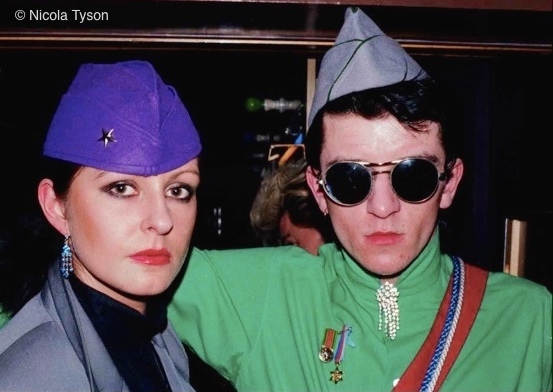
Billy’s club,Helen Robinson, nightlife, London ,Steve Strange, PX

Billy’s club 1978: Strange as Ruritanian Space Cadet alongside PX designer Helen Robinson. (Photograph by © Nicola Tyson)

❚ LET’S RECALL WHAT MADE THE BLITZ KIDS unique in 1980. Singer Andy Polaris said soon after: “Anyone who thought it was all a pantomime got the wrong end of the Pan Stik. Blitz people had to be larger than life. It was a compulsion. If it doesn’t possess you, you can’t acquire it.”

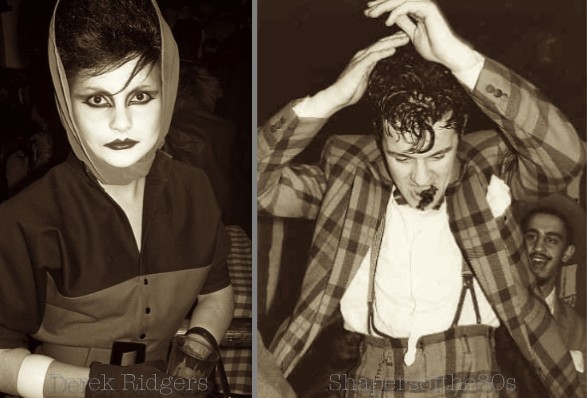
An evening within the orbit of London’s Blitz club superstars – and we’re talking about 50 people here – was more than entertaining. You were zapped with a very tangible electric shock – what we’d call today “sensory overload” – as if these exquisite, compulsive posers had revitalised Gilbert & George’s notion from 1969 of processing through the world as living sculptures. The Blitz Kids generated their own crackling versions of hyper-reality that defined the space around them. They included Kim, Julia, Judi, Melissa, Fiona, Jayne, Theresa, Myra, Scarlett, Clare, Michele, Darla, Sade, Kate, Stevie, Naomi, Mandy, Helen, Jo, Perri, Christine and Franceska . . . the Stephens Linard and Jones, Lee, John, Cerith, Simon, Iain, Andy, George, Marilyn, Wilf, Greg, Jeffrey, Christos, Graham, Neil, Dencil, Robert, the Holah brothers, the Richards Ostell and Sharah. A fair few other Blitz Kids, like Strange, Egan, Elms, Sullivan, Dagger, Haines, Ure, O’Donnell, Mole, Ball and Lewis, had the motormouth skills of energetic talkers and schemers who were, as we say today, “good in the room”. Above all, the best among them “made things happen” wherever they set foot. That’s why spending time with them was the best kind of fun – stimulating, argumentative and constructive, whether idling at a bar or bounding around the beach on Bournemouth bank holidays.

Kim Bowen, Stephen Linard, Blitz Kids, London

Doyennes among the Blitz Kids, 1980: Kim Bowen and Stephen Linard stamp themselves on that week’s zombie leitmotif. Photographed © by Derek Ridgers

Even so, what marked out the fashionistas especially was that, not only in the club, but in shop, café and bus, the style stars were constantly emitting auras of the force you imagined once surrounded Dietrich or Garland or Bogart or Caine. There’s nothing accidental about style. It is by definition a considered stance. In the presence of the Blitz superstars you could hold up your hands and almost feel the crumpet-toasting tingle. Even jaded Londoners turned their heads when Kim walked the half mile from Warren Street to St Martin’s school of art swathed only in surgical bandages. Or when George paraded past Buckingham Palace as a helmeted and toga’d Britannia at the annual royal ceremony of trooping the colour.
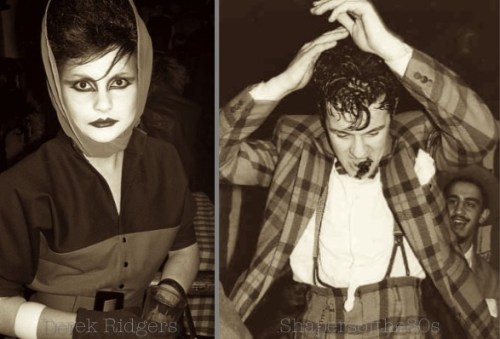
Princess Julia, Chris Sullivan, deejays, Vintage 2011,Southbank Centre, clubbing

Vintage deejays: original Blitz Kids such as Princess Julia and Chris Sullivan have continued spinning the vinyl that recreated legendary 80s club soundtracks from the Blitz to the Wag

Wherever there was a party, premiere, exhibition or club opening you’d see a dozen more such creatures who lived hyper-reality 24 hours a day… Lee perhaps as Nosferatu, Julia as Bride of Frankenstein, Fiona saying “Non!” to couture by wearing a grosgrain coat back-to-front, Sullivan as 1920s cad, blue-lipped Linard as 1920s flapper, Marilyn as, well, Monroe, Stewart as geisha boy, Theresa as Little Bo Peep, a part she played at work in the Fleet Street offices where our paths often crossed.

Aplomb came naturally to Kim Bowen as the queen of the Blitz Kids. One night when some friends came back to mine after celebrating my birthday, Kim walked into the kitchen and said: “I’m not going to let you live with this wallpaper one more day.” She picked at the edge of a stiff vinyl-coated strip, printed with very 1960s pepperpots and pans. Then she ripped it off the wall in one heave. The kitchen walls were bare within 20 minutes. Kim declared: “Minimalism, David, that’s you need.”
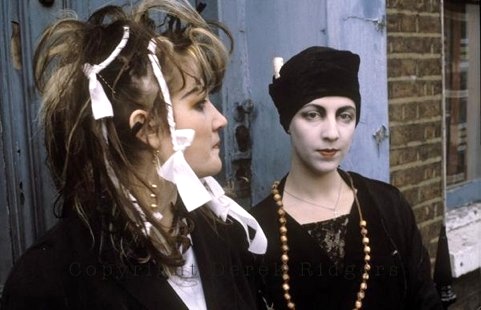
Clare Thom, Michele Clapton, Blitz Kids

Blitz Kid style: Outside the Carburton Street squat, Clare-with-the-Hair and Michele Clapton displaying awesome repose. Photographed © by Derek Ridgers

As time would reveal, the lead Blitz Kids outflanked not only their peers, but most of the copyists who followed their Bowie-inspired passion for change. You’d find the second-league clubbers at Studio 21 in Oxford Street, or in a back barrel at Birmingham’s Rum Runner – those were the self-proclaimed New Romantics you see dancing in the YouTube videos, and being photographed wearing too much of everything, from Boots No 7 to lacy frills. A couple of years after the Blitz caravanserai had passed, designer Fiona Dealey said candidly: “You look at these little Bat-people with it dribbling down their necks and you feel like saying, ‘Sorry darling, not enough loose powder’. The difference was that our make-up was stage slap, Leichner not Factor. The clothes came from a costumier, Charles Fox, not Flip. Dressing for the Blitz was real theatre. It wasn’t just another uniform. You felt glamorous.”
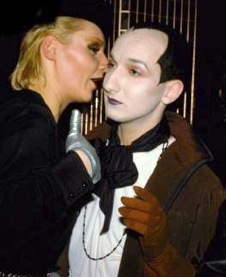
Stephen Jones, Blitz Kids

Immaculate: Hatter Stephen Jones

Aha, real theatre! This is the realm Shakespeare championed as “an improbable fiction” and John Updike blasted as the “unreality of painted people”. A flesh-and-blood craft where the basic requirement is for a living audience to be watching living actors. The Blitz Kids fully understood what Shakespeare’s Player has to explain to Rosencrantz and Guildenstern in Tom Stoppard’s spoof version of Hamlet: “We’re actors. We’re the opposite of people.” Actors pledge themselves to the belief that somebody will be watching. Nothing to do with vanity. Entirely a means of confirming their identity. Ditto the Blitz Kids.

The digital natives (and the self-styled Neo Romantics) of Generation Z who today are being raised on computer shoot-em-ups and quaking cinema enjoy precious little exposure to live theatre, to the “magic” that emanates from the contract eagerly agreed between actor and audience – for the one to perform at the same time as the other watches. Only when, as one towering example, Sir Michael Gambon allows a Pinteresque pause to elapse onstage can auras crackle “in the moment” with sufficient intensity to be felt physically, and thrillingly, by a theatre audience. Gambon’s aura crackled like a fire god’s last Christmas in No Man’s Land, before a wrapt audience the day after its author Harold Pinter had died.
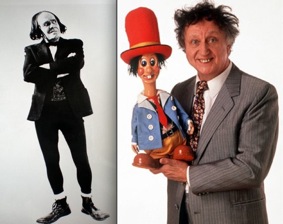
Max Wall, Ken Dodd

Masters of the comedian’s art: Max Wall and Ken Dodd

Comedy is where the theatrical contract of give-and-take fights for life most ostentatiously. As you laugh helplessly at the veteran comic Ken Dodd’s rapid-fire patter, you needn’t know that he has subjected his live stand-up routine to a lifelong time-and-motion study that concluded he must hurl eight gags per minute at his audiences to ensure everybody laughs at least once every minute he’s onstage.
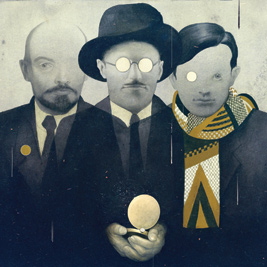
Travesties, Tom Stoppard, theatre

Travesties: what a coincidence that in 1917 the revolutionary Lenin, the novelist James Joyce and the Dadaist poet Tristan Tzara all happened to live in Zurich

In London in 1982 it was no less a pleasure to witness the top-of-the-bill variety legend Max Wall give wondrous live masterclasses entitled An Evening with Max Wall in which, aged 74, he laid bare how comedic timing works from one second to the next, how facial expression and vocal cadence, as well as silly walks can turn laughter instantly on and also off. Demonstrating with us as guinea-pigs how performer’s and viewer’s mutual responses keep each other on their toes.

The playwright Tom Stoppard has spent his career writing pyrotechnic scripts that read wittily enough sitting on the page, but are transformed several hundredfold the moment they are enacted on the stage, by for example exploiting the improbability of time-warps where the actors and the action are rewound and rerun in “unreal time” – actors reverse back through doors to leave the stage and re-enter immediately giving a subtly adjusted performance – as in Travesties, his hilarious comedy of coincidence. His plays are overtly “about” theatricality, yet shrouded by the mischievous apologia that, as one of his characters ultimately insists, “It’s a mystery”.

☐++++++☐++++++☐

GETTING BACK TO Taylor Mac,
his little bit of itzy-Blitzy glitz gives
shape to all of the above
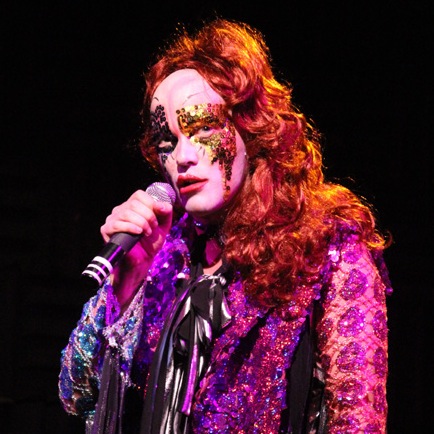
Taylor Mac, Glasgow, London, Bowie, Comparison is Violence,cabaret

Taylor Mac 2010: sequinned, painted and bewigged as Bowie-cum-Tiny Tim. Photographed © by Tim Hailand

SO WHERE MAY TODAY’S young Neo Romantic seek inspiration if he or she wishes to aim beyond the slap and the zhoosh to summon up solar-powered charisma of Blitz Kid proportions? The answer is in the UK right now (Soho Theatre London this week, The Arches in Glasgow next) and he is an incandescent and witty Californian called Taylor Mac.
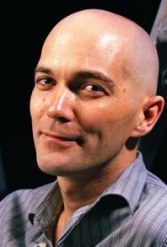
TAYLOR MAC

Mac as himself

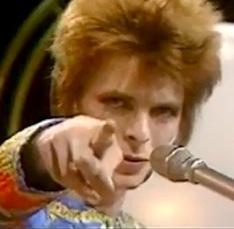
Clad in more sequins than a sultan’s harem could shake at you, he gives a full-throttle musical cabaret that is unexpectedly poignant, invigorating and original. You also laugh more than you ever did at Eddie Izzard’s last side-splitting tour. Mac’s audacious dissection of the essence of theatre, vaudeville and other performing arts evokes Merman and Garland, Wainwright and Brel while asserting his own unique brio. He reinvents pop classics by David Bowie and Tiny Tim (yes, you do remember his hits Tiptoe Through the Tulips and I’ve Never Seen a Straight Banana) by delivering them with an earnestness that moistens the tear-ducts. The evening’s ironic sub-title is The Ziggy Stardust Meets Tiny Tim Songbook, because these are the comparisons reviewers draw about Mac, yet they seldom remark on how he turns Starman and Heroes, those holy invocations of the 80s Bowie fan, into altogether heart-rendingly new songs.

His themes are love and longing and role-play and tolerance for what society calls a gender-bending misfit who sprang fully formed from the egg, craving the glue that fixes eyelashes. What results is the most stupendous spectacle, charged with insights as mere as how to signal the end of a song, one way being a sustained high note, another to deliver a wide-eyed “Cha-cha-cha!” through smiling teeth, but the coup de grace is a solemn downward arm gesture LIKE SO! For 90 minutes Mac fills the Soho Theatre many times over with a sustained rush of theatre magic. And yes of course he’s on YouTube, but that entirely defeats the point the past 1,700 words have been making.

➢➢ Read Donald Hutera’s London review of Mac
in The Times, June 3, 2010

➢➢ Read Charles Isherwood on Mac’s 2009 play
The Lily’s Revenge in the New York Times

FRONT PAGE

JUNE ➤ 30 or so years ago today

ON THIS DAY IN 1978…

Human League, Being BoiledJune 17 — Fast Product releases the darkly mystical Being Boiled by Sheffield’s original Human League, and Bowie declares it “the future of music”. John Peel also champions the single on radio and it becomes a cult among the Billy’s and Blitz clubbing circle in London, though it does not chart until January 1982 on its second release. In the present day this is considered to be the first massively influential British electronic pop track.
VIEW ♫ Being Boiled live in 1978 on Granada TV, though the audio is dire!

+++

June 21 — Tim Rice and Andrew Lloyd Webber’s musical Evita opens at London’s Prince Edward Theatre to run for 2,900 performances. A novel ploy has been to release a double album two years earlier — some songs are already chart hits
June 29The Swinging 80s start here as David Bowie plays Earl’s Court, London. Sundry misfits recognise kindred spirits in the audience and gather afterwards at Billy’s club in Soho, long before the phrase New Romantics has been invented.

ON THIS DAY IN 1979…

June 9 — Music weekly Sounds publishes Mods Without Parkas by Garry Bushell
June 14 — The 70s “dressing up” imperative sees Flick’s in Dartford throw a VE Night deejayed by Radio London’s Robbie Vincent

ON THIS DAY IN 1980…

June 14 — George O’Dowd parades past Buckingham Palace as a helmeted and toga’d Britannia at the annual royal ceremony of trooping the colour

ON THIS DAY IN 1981…

June — The mainstream deejay’s bible Disco International publishes a plain man’s guide by yours truly, titled Who are the New Romantics and how do they dance?
June — John Boorman’s epic Arthurian movie Excalibur opens in London starring Nigel Terry and Helen Mirren
June 4 — Steve Strange and Rusty Egan open Club for Heroes in Baker Street
June 21 — Arty Latin popsters Blue Rondo à la Turk are unveiled in Chelmsford after weeks of secret tease dates. Yours truly is there to introduce the band to readers of New Sounds New Styles under the headline He thinks he is Geronimo but Chris Sullivan is turning fantasy into fact

ON THIS DAY IN 1982…

Blitz Kids, Kate Garner, Jeremy Healy ,Haysi Fantayzee ,Paul Caplin, John Wayne Big Leggy

Haysi Fantayzee 1982: ex-Blitz Kids Kate Garner, Jeremy Healy and manager Paul Caplin

June 9 — Kasper de Graaf, editor of New Romantic magazine New Sounds New Styles, tells the Rebel Writers the title is to close and they are out of jobs. We retire to the Red Lion to seek consolation!
June 14 — The Falklands War ends with the Argentine surrender. Its occupation of the Falkland Islands in the South Atlantic had provoked a war that lasted 74 days and results in the deaths of 260 Britons and 649 Argentinians
June 21 — At the V&A the Middlesex fashion degree show is stolen by Stevie Stewart and David Holah. Their Matelots and Milkmaids collection establishes Bodymap as the label for the young and daring
June 25 — As Haysi Fantayzee, Blitz Kids Kate Garner and Jeremy Healy release their debut single John Wayne is Big-leggy

ON THIS DAY IN 1983…

June 14 — Capital Radio’s Gary Crowley starts deejaying at Bogart’s club, Harrow

FRONT PAGE

2010 ➤ Feast of remixes on new ‘Very Best’ of Visage album

Visage 1980 outside the Blitz: Rusty Egan, John McGeoch, Barry Adamson, Dave Formula, Billy Currie, Steve Strange, Midge Ure. Picture © by Sheila Rock

❚ MARCO PIRRONI, GARY KEMP AND BROADCASTER GARY CROWLEY were among the 80s faces who turned out for last night’s launch of a new CD compilation, The Face: The Very Best of Visage which goes on sale March 8. It contains 15 Visage tracks including new 2010 remixes of classic New Romantic dance anthems. To celebrate the 30th anniversary of their first chart hit from 1980, Fade to Grey, there are no less than four versions onboard (one by Michael Gray of The Weekend and Borderline, and another by Ministry of Sound deejay Lee Mortimer), plus remixes of Mind of a Toy, The Anvil, and a 12-inch dance mix of the single Visage.

Fronting their “Evening of sublime 80s self-indulgence” club-night in Chelsea were two 80s clubbing wizards Chris Sullivan and Rusty Egan (read more) who was the drummer with Visage and the Rich Kids.

Supercool in ’78: Egan, Strange and Ure establish Visage

Egan also became a deejay because he hated those flash guys who talked incessantly over the music in discos. He wanted to pioneer a new kind of synth-driven British electro-diskow and sought inspiration in Germany from the likes of Kraftwerk and avantgarde producer Konrad “Conny” Plank. In 1979, the Blitz club-night in London became his sounding board and it went on to inspire a vast slipstream of new British bands who changed the sound of the charts during the early 80s.

Along with Egan, Visage’s founding members in 1978 were the Blitz greeter Steve Strange, and musical polymath Midge Ure, who simultaneously became the lead singer with Ultravox in April 1979. Echoes of their pioneering electropop resonate in the charts today through acts such as Lady Gaga, La Roux, Little Boots and MGMT.

➢➢ Steve Strange celebrates the launch of The Face album at London’s Green Carnation on March 19

➢➢ Read about the fashion show Steve Strange and Rusty Egan took to Paris in 1982

FRONT PAGE