Category Archives: Tipping points

2025 ➤ The New Romantics history book currently turning heads

Photography, fashion, clubbing, exhibitions, Social trends, Swinging 80s, Youth culture, newbook, New Romantics, Blitz Club, Blitz Kids,

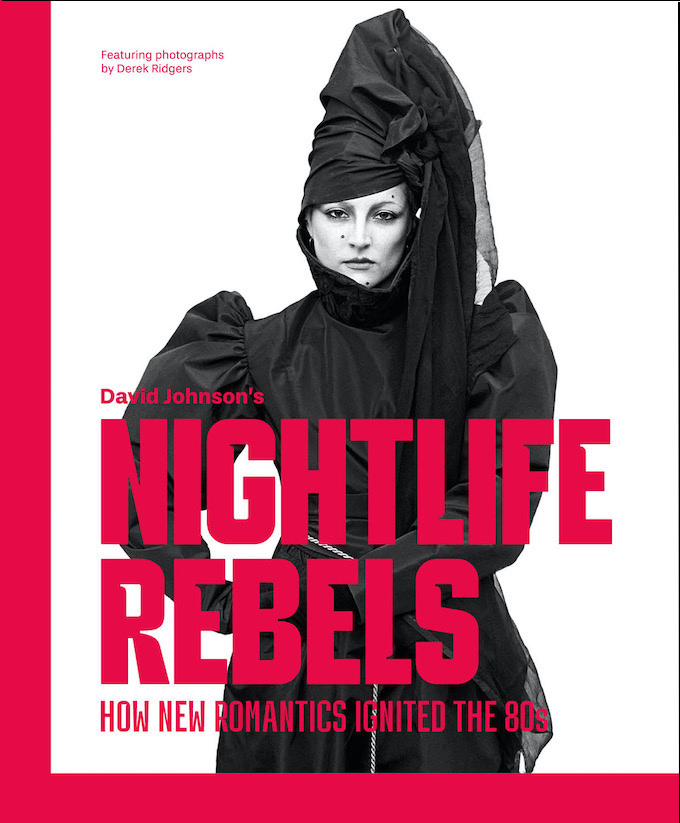
Nightlife Rebels: my new book published September 2025

❚ DURING THE SWINGING 80S two seasoned eye-witnesses watched Britain’s young ignite a glittering New Romantics revolution… As a Fleet Street journalist I explored their intriguing carnival of style-setting cults across Britain, Paris and New York, while straight-up photographer Derek Ridgers captured the libertines in their dark dens.

Our new illustrated hardback NIGHTLIFE REBELS reveals the candid history of the Blitz Club’s hedonists who insisted “One look lasts a day”. It has gone on sale in the shop outside the Blitz Club exhibition at London’s Design Museum. Alas, it is not available online, only in this shop. We hope to broaden availability soon. Contact us at Nightlife.Rebels@shapersofthe80s.com

FRONT PAGE

➤ Six magazines that changed the course of postwar British journalism

journalism, Picture Post, influencers, magazines pre-war

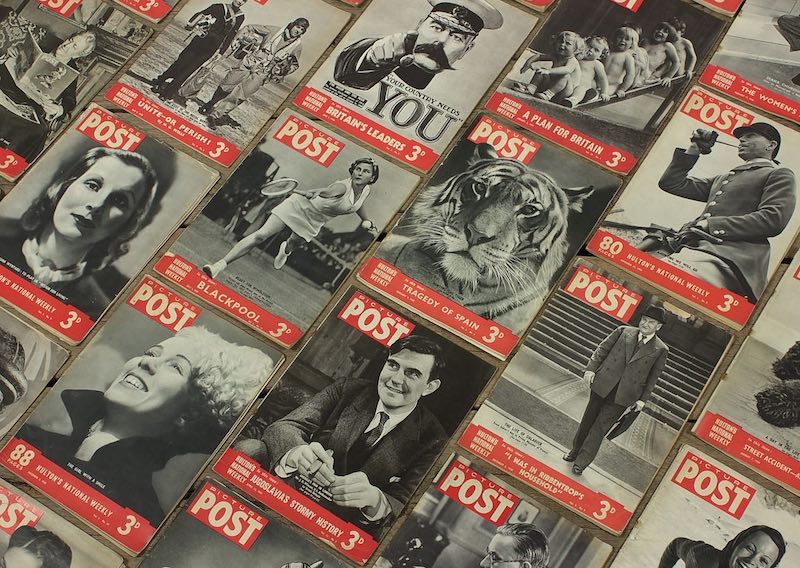
Picture Post covers from 1938 onwards

[This post was among the first to be published at
Shapersofthe80s in March 2009]

PICTURE POST 1938-57

The pioneer of photo-reportage. At the height of its powers during the Second World War this was the most widely read periodical in the country, selling 1,950,000 copies a week. Its inspirational editor from 1940 Tom Hopkinson recruited the photographers Bill Brandt, Bert Hardy, Kurt Hutton, Felix Man, Francis Reiss, Thurston Hopkins, John Chillingworth, Grace Robertson, Leonard McCombe. Staff writers included MacDonald Hastings, Lorna Hay, Sydney Jacobson, J. B. Priestley, Lionel Birch, James Cameron, Fyfe Robertson, Anne Scott-James, Robert Kee and Bert Lloyd; freelance contributors included George Bernard Shaw, Dorothy Parker and William Saroyan.

SUNDAY TIMES MAGAZINE 1962-today

The first colour supplement to be published as a weekly addition to a UK newspaper. The first editor was Mark Boxer. From the outset, “photographer first” was the benchmark and required serious investment in photo-reportage from the world’s trouble spots. Michael Rand, its art director for 30 years from 1962, said the credo was “grit plus glamour – fashion juxtaposed with war photography and pop art”. He went on to champion the work of such photographers as Terry O’Neill, Brian Duffy, Richard Avedon, Eugene Richards, Diane Arbus, Mary Ellen Mark. The magazine featured images from the Vietnam war by the photographer Don McCullin, a photo-essay on the Vatican by Eve Arnold, many portraits and photo-essays by Lord Snowdon, and Bert Stern’s final photoshoot with Marilyn Monroe, among many other photographic collections.

NEW SOCIETY 1962-1988

A weekly magazine of social inquiry and cultural comment, it drew on the disciplines of sociology, anthropology, psychology, human geography, social history and social policy, and it published wide-ranging social reportage. The cultural commentator Robert Hewison wrote that New Society became “a forum for the new intelligentsia” created by the expansion of higher education in Britain from the early 1960s. The editor Paul Barker (1968–86) was described by the labour historian Eric Hobsbawm as the “most original of editors”.

NOVA 1965-75

Launched under the slogan A new kind of magazine for the new kind of woman, Nova created its own unique niche in the British consumer magazine market under gifted editor Dennis Hackett, together with visionary art director Harri Peccinotti. They swiftly established their magazine as an influential must-read for the movers and shakers of Swinging London, among men as well as the original target audience of women becoming devotees of its heady mixture of social issues and cutting-edge fashion and modern lifestyle features. Nova’s agenda of journalistically taboo subjects included contraception, abortion, cancer, race, homosexuality, divorce and royal affairs, invariably boosted by stylish and provocative cover images, making it a rarity among magazines. Ultimately Nova had more male readers than female.
[Nova incidentally is where my own career began – DJ, creator of Shapersofthe80s]

RADIO TIMES 1968-88

Programme listings magazine transformed with provocative feature articles under editor Geoffrey Cannon and art director David Driver to create Britain’s biggest weekly magazine sale which rocketed as TV itself became the mass medium, from 8 million to 11.2 million for the Christmas edition of 1988.

THE FACE 1980-2004

In 1980, Nick Logan, a respected ex-editor of NME, staked his house on launching a new magazine that was to make style the focus of youth culture, as much as music. The Face was quickly dubbed Britain’s “style bible”. Even with a top monthly sale of only 120,000, it had an impact not only on the pop press, but the mainstream media too which spawned style pages in newspapers and magazines and “yoof” TV shows across the enlarged landscape of broadcasting. His influential art director Neville Brody single-handedly revolutionised the way magazines were conceived while contributing many new fonts to the canon.

FRONT PAGE

2023 ➤ Fans vote for Bowie’s Top 26 best videos

Favourite Bowie Videos, David Bowie, Ashes to Ashes, David Mallet, Tony Visconti, pop music, jazz

❚ THE OFFICIAL DAVID BOWIE WEBSITE has polled his fans to elect their five favourite videos by the musical genius whose career transformed pop music over 50 years. No surprise perhaps that Ashes to Ashes came out top, capturing a crucial turning point in Bowie’s own progress in 1980 and becoming his second No 1 UK single and an international hit. It was an arty track from his 14th studio album, Scary Monsters, with a funky bassline, refined lyrics reaching back to his debut single Space Oddity and its astronaut Major Tom, while its dreamy solarised visual effects also reflected Bowie’s own experiences with drugs. Several critics declare Ashes to be among Bowie’s best songs musically and for inventiveness, and the video itself stands at number 44 in Rolling Stone’s 100 best.

For both its sleeve and video, Bowie commissioned a Pierrot pantomime costume. Significantly, the video starred four overdressed figureheads (including Steve Strange) from London’s nightlife scene, which was exploding into a gloriously colourful new subculture as a reaction to the bleakness of punk. Let’s not forget that Ashes was the most expensive music video made to date, costing £35,000 (about £140,000 in today’s money) and MTV had yet to be launched. [Read the full background story behind recruiting and filming the Blitz Kids for Ashes here at Shapersofthe80s.]

The team at DBHQ doff their hats to video director David Mallet for achieving nine entries in their video top 20, more than a third.

BEST VIDEOS HIS FANS VOTED FOR

#01 – Ashes to Ashes 1980 – David Bowie and David Mallet
#02 – Life on Mars? 1973 – Mick Rock
#03 – Boys Keep Swinging 1979 – David Mallet
#04 – Jump They Say 1993 – Mark Romanek
#05 – I’m Afraid of Americans 1997 – Dom and Nic
#06 – ★ Blackstar – 2016 – Bo Johan Renck
#07 – DJ 1979 – David Mallet
#08 – The Hearts Filthy Lesson 1995 – Samuel Bayer
#09 – Lazarus 2016 – Bo Johan Renck
#10 – The Stars (are out Tonight) 2013 – Floria Sigismondi
#11 – The Next Day 2013 – Floria Sigismondi
#12 – Let’s Dance 1983 – David Mallet
#13 – Look Back in Anger 1979 – David Mallet
#14 – Strangers when We Meet 1995 – Samuel Bayer
#15 – China Girl 1983 – David Mallet
#16 – Loving the Alien 1985 – David Bowie and David Mallet
#17 – Little Wonder 1997 – Floria Sigismondi
#18 – Blue Jean / Jazzin’ for Blue Jean 1984 – Julien Temple
#19 – Fashion 1980 – David Mallet
#20 – Wild is the Wind 1981– David Mallet
#21 – Thursday’s Child 1999 – Walter Stern
#22 – Where are We Now? 2013 – Tony Oursler
#23 – Absolute Beginners 1986 – Julien Temple
#24 – Space Oddity 1972 – Mick Rock
#25 – The Jean Genie 1972 – Mick Rock
#26 – Be my Wife 1977 – Stanley Dorfman

AMONG THE COMMENTS AT FACEBOOK:

Adam Paramore: Great list, interesting that there’s nothing from Ziggy Stardust (IIRC, some concert clips were used as music videos), no Labyrinth tracks, no Modern Love, and no Dancing in the Street with Bowie & Jagger.
Anthony LeBaron: One notably absent video from the list I would add is No Plan. Released a year after his passing, it captures the enormous loss and despair I still felt at losing him.
Rudy Fuentez: Ashes to Ashes is probably his best video, but to me his best song is too hard to decide. Cat People (Putting out the Fire), Always Crashing in the Same Car, Young Americans, Absolute Beginners, This is not America… too many songs. Might as well ask what do you think is the brightest star in the heavens.
Andrew Seear: I agree. Always Crashing in the Same Car I think is an astonishing piece, even by Bowie’s standards. I’ve never heard despair expressed so elegantly.
Stacey Rich: Coolest thing was cycling to Pett Level [where Ashes was filmed] – totally unchanged on the day, a little overcast, the beach empty. Grew up in America & never realised it was an actual place but had shown my partner the video and he recognised the beach immediately. Actually teared up.
Stephen Oldfield: The lyrics and music on this track [Ashes] are stunning. The closing synthesiser must be the greatest on any song ever.

PLUS TWO VERY SPECIAL
PERFORMANCES ON VIDEO

rel="nofollow"

In December 1979 Saturday Night Live aired the most immaculate performance of TMWSTW by Bowie, Klaus Nomi, Joey Arias, Stacey Hayden on guitar and Jimmy Destri on keyboards, which some say was the night “he transformed live television”. This nine-minute clip also includes brilliant versions of TVC 15 with Bowie in skirt and heels, plus a hilarious performance of Boys Keep Swinging where he sports a life-sized nude puppet costume. Click on the picture to view, though don’t be surprised if you cannot reach the video. For rights reasons, this unrivalled video keeps being removed from the web by its broadcaster, so we stay on our toes scouting for alternative postings!

❏ I TOTALLY AGREE with the first three videos topping this DB poll, and draw special attention to Mick Rock’s remarkable promo for Life on Mars. Another that haunts my imagination is 2014’s Where are We Now? Moving on, I’d urge those who haven’t seen two other very special performances by Bowie to seek them out. One is an exquisite interpretation of his enigmatic song The Man who Sold the World which some claim “transformed live television” [pictured above]. Admittedly this is not a promotional video and yet it was uniquely choreographed and costumed for live performance on American TV’s Saturday Night Live in 1979 before its audience of millions. Idiosyncratic backing singers Klaus Nomi and Joey Arias provide immaculate support, while carrying Bowie forward as a kind of giant pierrot, clad in an oversized black plastic dinner jacket over a tapered tubular body – all inspired by artist Sonia Delaunay’s designs for a subversive Dadaist play from 1923. When written in 1970, the lyrics and the singer were evidently sharing an identity crisis and since his death Rolling Stone has regarded this number as “essential”.

❏ HERE’S A SECOND profoundly affecting video that’s often ignored yet it reveals the extraordinary range of Bowie’s singing voice. Possibly the purest experimental jazz number of his career, the nerve-tingling Sue (or in a Season of Crime) was created in 2014 during a session with 17 jazz soloists including saxophonist Donny McCaslin, all improvising under Maria Schneider’s guidance and running beyond seven minutes. The role of jazz in Bowie’s musical temperament seldom gets discussed, though his producer Tony Visconti says the jazz influence had always been there in the music but beneath the surface. The haunting four-minute video was directed in monochrome by Tom Hingston to promote Bowie’s “best-of” collection, Nothing Has Changed.

All taking place as Bowie was being diagnosed (discreetly) with liver cancer, Sue evokes a discomfiting tale of infidelity inspired by the poet Robert Browning, in which the narrator murders his wife and the last verse begins with the phrase “Sue, I never dreamed”, the title of the first song he recorded in 1963. Such a weepie. (An edgier, punchier, superior re-recording of Sue followed on Bowie’s final album Blackstar, released two days before his death.)

➢ Previously at Shapersofthe80s:
12 January 2016, David Bowie is dead

FRONT PAGE

2022 ➤ Spandau seek your help to create a major new showcase

Spandau, New Romantics, pop music, New York City, 1981

Spandau in New York City 1981: were you there and do you have any memorabilia?

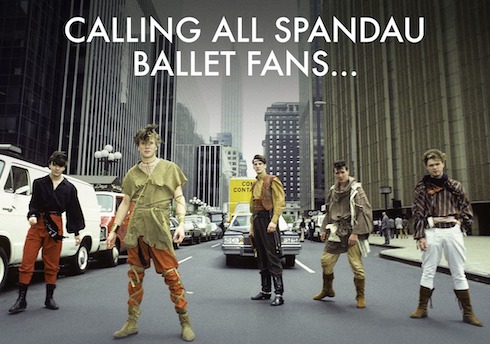
■ THE FIRST NEW BAND out of Eighties clubland to score a chart hit are planning a celebration of those early formative years when the world called them the leaders of the New Romantics.

Today Spandau Ballet – all now in their sixties – announced “a major career-defining project” and appealed to fans for help. The band invites everyone who attended any of their performances between 1979 and 1981 to send in memorabilia such as flyers, posters, tickets, video or film footage of Spandau Ballet, onstage and off. For example, these would include their appearances at London’s Blitz Club, Mayhem Studios, Scala Cinema, HMS Belfast, their first Top of the Pops, Birmingham’s Botanical Gardens, Tiger Bay Cardiff, Heaven and the Sundown in London, Exeter Bowl Bournemouth, Le Palace in Paris, the Underground Club in New York, the Ku Club in Ibiza or the Much More in Rome.

Likewise, send them your memories of the pace-setting dance-led clubs during those years, such as Billy’s, the Blitz, Rum Runner, Le Beat Route, Le Kilt, Club for Heroes, Danceteria, the Voodoo Club, or from 1982 the Camden Palace and the Wag club. Again, memorabilia that captures the fashions and the atmosphere is welcomed.

➢ Click to visit Spandau’s special website for
submissions and more information

➢ Previously at Shapers of the 80s:
1980, Steve Strange’s call to join the party

FRONT PAGE

1982 ➤ When fans first screamed for Spandau and two climbed up to their window

Spandau Ballet, Blitz Kids, New Romantics, Liverpool Empire, 1982, Diamond Tour, fans,

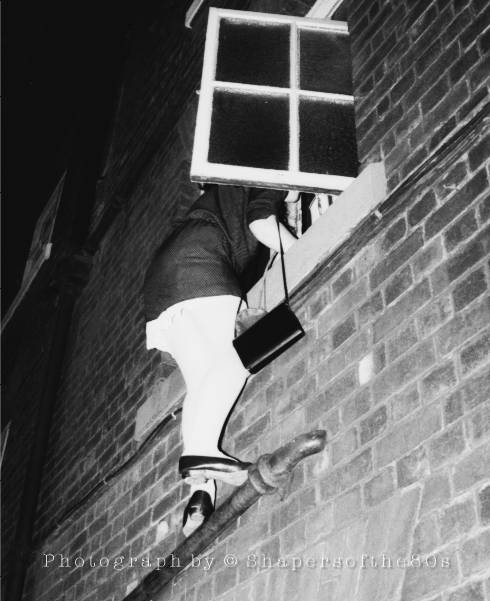
8 May, 1982: Now identified! A teenage fan shins the drainpipe at the Liverpool Empire giving access to Spandau Ballet’s dressing room on their first nationwide tour with the Diamond album. Snapped by © Shapersofthe80s

40
YEARS
ON

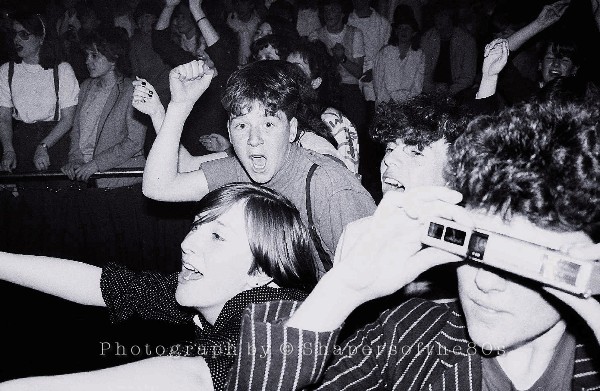
■ THE YEAR WAS 1982. Spandau’s seventh single Instinction had put them on Top of the Pops during Easter week and sales were rocketing. The night of May 8, towards the end of Spandau’s first nationwide tour, with stand-up comedian Peter Capaldi in support, has become known as The Return of the Scream. The moment the house lights dimmed, a mighty roar lifted the roof off the Empire, the city’s legendary music venue. It didn’t stop for 75 minutes. The band hadn’t heard anything so intense and were visibly shaken when they came offstage. Guitarist Gary Kemp said in disbelief: “I had to stop playing. I couldn’t hear my own monitor.”
➢ Click through to read all about 8 May 1982 – the return of The Scream to British pop

Yes says Jan: that’s me shinning up
the drainpipe in 1982

■ A 30 YEAR-OLD MYSTERY HAS BEEN SOLVED. At the climax to Spandau Ballet’s first national tour in 1982 fan mania broke out on a level comparable to the 1960s. When their single Instinction crashed into the UK charts with freshly injected energy from producer Trevor Horn, three extra tour dates were added in May. After the show in Liverpool, the creative birthplace of British pop music, a crowd of about 500 fans mobbed the stage door at the fabled Empire theatre. A shadow had only to fall across the band’s dressing room window for screams to erupt in the street. Two girls then decided to shin the drainpipe and beat the window with their handbags until they were let in…

➢ Click through for more about the girls who entered Spandau’s dressing room via the window

Spandau Ballet, Blitz Kids, New Romantics, Liverpool Empire, 1982, Diamond Tour, Martin Kemp, fans, Gary Kemp,Steve Norman, Tony Hadley, Peter Capaldi

Inside the Liverpool Empire, May 8, 1982: fans shocked security staff with the roar that greeted Spandau Ballet. Photograph by © Shapersofthe80s

➢ 1982, How Spandau put Peter Capaldi on the road
to play the new Doctor Who

FRONT PAGE