Tony Hadley today: flanked by two of ITV’s Loose Women, Ruth Langsford and Janet Street-Porter who shot the first TV doc about Spandau Ballet in 1980
❚ MORE COLD WATER HAS BEEN POURED on any future reunion for Spandau Ballet. The leaders of the 80s New Romantics movement haven’t worked together since their Reformation reunion tour ended in 2010. Today on ITV’s Loose Women chat show, Janet Street-Porter asked 51-year-old singer Tony Hadley whether he would ever tour again with Spandau. He replied straight away: “Very doubtful.” His life is busy and full of hoovering these days, he says. Big Tone is now the father of five children — baby Genevieve Elizabeth was born in February.
➢ Hadley’s own plans include Rewind The 80s Festival returning for a fifth successive year Aug 18–19 at Henley-on-Thames with Kool & The Gang, OMD, Grandmaster Flash, Rick Astley, Soul II Soul, Five Star, Starship, Jimmy Somerville, Sinitta, Marc Almond, Midge Ure, Adam Ant and more, plus festival fun
+++ ◼ AS WITH ANY ARTICLE AT THE GRAUNIAD about New Romantic cheerleaders Spandau Ballet, the resulting comments published online are always riotously entertaining. This is the one band that really winds up Guardianistas to a pitch of fury. When the 80s band announced their reunion tour in 2009, Michael Hann declared how much he’s always loathed them in a Graudina music blog which then provoked 342 comments — 342! — most of them apoplectic. How many other bands can claim such a following?
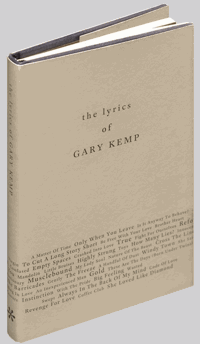
As it happens the Spandau songwriter has recently published an 88-page coffee-table book, titled The Lyrics of Gary Kemp from Lyric Book Company
Today for no apparent reason, the Guranaid runs an item about how Gary Kemp and Steve Norman made Spandau’s 1983 No1 hit True, in which lyricist Kemp admits: “I’m still berated for the line Take your seaside arms, but it’s straight out of Lolita by Vladimir Nabokov.”
Readers of Shapersofthe80s already know that the song was inspired by Kemp’s unrequited pash for poppette Clare Grogan — he was 22, she was 18 — who fronted an 80s band of Scottish cuties called Altered Images. On the same page, Steve Norman deconstructs his self-taught sax solo which has a key change in reply to Grover Washington’s Just The Two of Us.
All of which strangely prompts tearful blubbing at the Graun, rather than the usual explosion of acerbic outrage. Specimen comments follow after this gratuitous excuse to run a video…
VIDEO OF DARLING CLARE IN HER HEYDAY,
NOT TO MENTION SWIVEL-HIPS TICH
❏ Nepthsolem moans: “It always sounds to me like See side arms, as though referring to the service revolver I imagine was issued to all New Romantics, but sadly never used on TOTP.”
❏ DeeSawdeley says: “I always thought it was seaside aunt, which (for those of us with a seaside aunt, anyway) makes much more sense. Bet he wishes he’d written that now!”
❏ Stolencar comments: “Note also he says she gave him a copy of Lolita not that she had read it.”
❏ To which Vastariner responds: “There’s a picture of her reading it on the front of the Best Of Altered Images compilation released in 1991. Some might call me obsessed for knowing that, or because I have a username taken from one of her lyrics… etc etc.”
❏ From another planet, Golgafrinchan sobs: “I had unrequited love for Clare Grogan, still do to be fair. If you’re reading this Clare, get in touch, there’s still time.”
❏ DameHedwig adds:“I’ve often told my son that if things had worked out for me, Ms Grogan would be his Mum.”
❏ And Mccaugh:“As for the sublime Miss Grogan, well, just how many times did we go and see Gregory’s Girl? Helped, of course, by the fact that it ran at the Dominion Cinema in Edinburgh for three years non-stop.”
❏ Finally Bloodydoorsofftells a despicable and blatant untruth about darling Clare, so you’ll just have to go to Grunadia Online to see it. And plenty more.
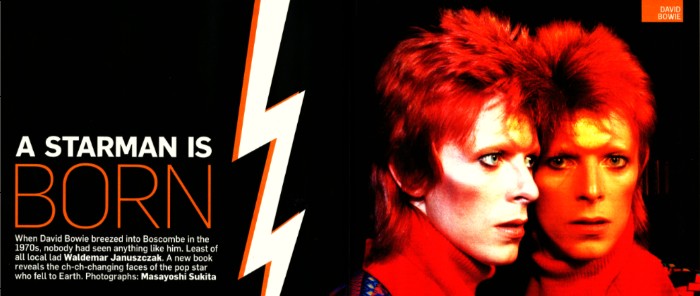
❚ HERE WE SEE CLASSIC PIX of the early glam incarnations that broke the rules of rock and roll and put the gender-bending David Bowie into the headlines. Since 1972 Japanese photographer Masayoshi Sukita has gone on capturing the prolific flow of creations from the ever-inventive Bowie. This week in London his long-awaited book Speed of Life documenting their 40-year collaboration is launched by Genesis Publications in its 2,000-copy limited edition. Signed by both Bowie and Sukita, it is priced at £360 ($581) for 300 pages which they caption with their own recollections and memories. Bowie says: “It’s very hard for me to accept that Sukita-san has been snapping away at me since 1972 but that really is the case… May he click into eternity.”
Meanwhile in today’s Sunday Times Magazine art critic Waldemar Januszczak recalls his teenage outing in 5-inch platforms when he paid 90p on the door of Starkers in Boscombe, Dorset, to discover the eye-popping mystique of Ziggy Stardust in August 1972 — minutes after Sukita the photographer arrived in Britain and caught Bowie’s shock show at London’s Royal Festival Hall. He described it as “like an astronomer finding a new planet”.
Januszczak writes: “It was Andy Warhol who invented the immensely attractive cultural idea that anyone could be whoever they wanted to be. It became Bowie’s big idea as well. And the tour he set out on in 1972 featured his most determined efforts yet to become lots of people at once: Ziggy Stardust, Aladdin Sane, Major Tom, The Man Who Saved the World. That was just the beginning. The bewildering multi-identitied career photographed for us so sympathtically by Sukita-san in Speed of Life features enough different David Bowies to constitute a football crowd…”
Britain’s infamous “winter of discontent” that brought down the Labour government in 1979: as public service workers went on strike, rubbish piled-up even in London’s Leicester Square
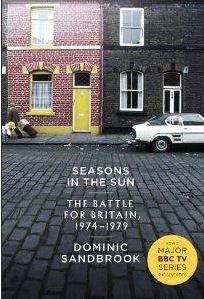
❚ AN “INVALUABLE WEBSITE” — this is the verdict on Shapersofthe80s by historian Dominic Sandbrook, author of the rich new cultural analysis, Seasons in the Sun: The Battle for Britain, 1974–1979. It’s a doorstep of a book, yet highly readable, which reveals numerous upbeat aspects to the chaotic decade many write off as worthless.
Chapter 31 is especially inspirational! Sandbrook gives generous credit to key characters who Shapersofthe80s has long maintained deserve recognition as movers and shapers pivotal to the energy of the 80s. And, having quoted chunks from our own texts, the historian gives due acknowledgement in his extensive bibliography. Indeed, the scope of his research is more impressive than for much other contemporary history, as Sandbrook not only cites political and economic mandarins, but also sifts fine detail from popular culture and eye-witness reportage across the whole social spectrum.
Sandbrook writes: “Behind the lurid news stories, the late 1970s were the decisive point in our recent history. Across the country, a profound argument about the future of the nation was being played out, not just in families and schools but in everything from episodes of Doctor Who to singles by the Clash. These years marked the peak of trade union power and the apogee of an old working-class Britain – but they also saw the birth of home computers, the rise of the ready meal and the triumph of a Grantham grocer’s daughter who would change our history for ever”
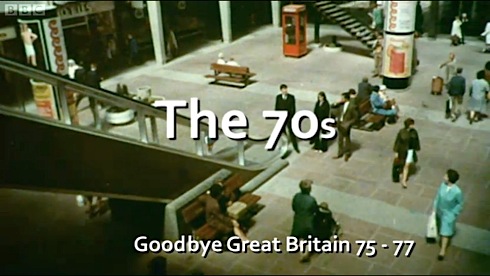
Seasons in the Sun is the fourth title in Sandbrook’s survey of postwar Britain. His unstuffy combination of high and low life is behind the BBC2 series The Seventies currently viewable live and on iPlayer.
Sandbrook’s Seasons in the Sun forms the basis of the current BBC2 TV series The Seventies
REVIEWS OF SEASONS IN THE SUN
❏ “The first three volumesof Dominic Sandbrook’s epic history of Britain between 1956 and 1979 were exceptionally good. The fourth, Seasons in the Sun, is magnificent … marked by its pace, style, wit, narrative and characterisation as by its exhaustive research.” — Roger Hutchinson, Scotsman
❏ “Sandbrook has createda specific style of narrative history, blending high politics, social change and popular culture … his books are always readable and assured, and Seasons in the Sun is no exception … Anyone who genuinely believes we have never been so badly governed should read this splendid book.” — Stephen Robinson, Sunday Times
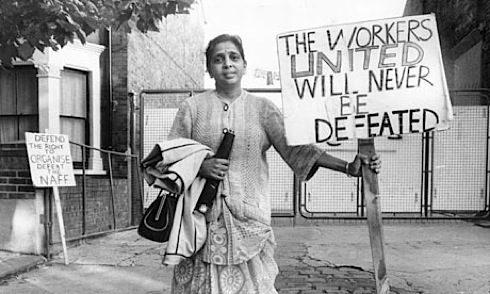
August 1977: Jayaben Desai, treasurer of the strike committee at the Grunwick photo-processing plant, had been picketing for a year, supported by white, male trade unionists while postmen blocked the company’s mail. (Photograph by Graham Wood/Getty)
EVEN WIDER PERSPECTIVE FROM LEADING PLAYWRIGHT
➢ Playwright David Edgar draws together the Sandbrook quartet in The Guardian, May 9, 2012:“ The 1970s was the moment when our century arrived… As Sandbrook insists, the women’s liberation movement was as much about Hull’s fishermen’s wives and female machinists at Ford Dagenham as feminist activists disrupting Miss World. In 1971, workers campaigning against the closure of Upper Clyde Shipbuilders borrowed the student tactic of the sit-in. As 1970s chronicler Andy Beckett argues, the gay groups who stood shoulder to shoulder with trade unionists outside Grunwick prefigured an alliance which “would become commonplace in the decade to come”. The identity politics that were to become such a satirised feature of the left of the 1970s arose not just out of campus and culture but class war… ” / continued at Guardian online
❚ NO REALLY POPTASTIC SURPRISES in the annual Sunday Times Rich List for the UK and Ireland, published today. Adele, inevitably, tops the Richest Young Musicians after the past year’s runaway success that more than tripled her estimated wealth from £6m to £20m ($33m). There are only five newcomers each worth £5m ($8m) in the top 20 millionaires aged 30 and under. One is Jessie J, 24, the former Brit School student who has sold close to 1m copies of her album Who You Are and is currently mentoring on the television show The Voice UK. The others are all four members of JLS (short for Jack the Lad Swing), the UK’s coolest boy band, who came to fame on The X Factor and released their third album, Jukebox, last November.
The under-30s millionaire list is nowhere in the same stratosphere as the main Sunday Times Music Millionaires Top 50. These are the grandees from the headier days of British rock who have had a lifetime in which to amass royalties — ex-Beatles, Stones and assorted moguls. Among pop performers, the 70s are still represented by David Bowie (today valued at £100m, $163m); the Swinging 80s only by George Michael (up this year to £100m); the 90s by Robbie Williams (£100m), as a new entry the joint husband-and-wife wealth of Coldplay’s Chris Martin and actress Gwyneth Paltrow (£72m), plus Take That’s Gary Barlow (£50m).
+++
The same trio as last year head the Young Entertainers Rich List, led by Daniel Radcliffe, aged 22, who starred in eight Harry Potter films and has increased his wealth by £6m in a year to £54m ($88m), helped by the success of his latest movie, the gothic thriller The Woman in Black. At No 2, Twilight star Robert Pattinson has added £8m in a year to his fortune and is now worth £40m. Keira Knightley is the third top-earning movie star, still worth £30m.
Daniel Ek: Swedish entrepreneur who launched Spotify’s streaming service in 2008
➢ Britain’s top ten richest people in the world of social media are worth a combined £15.8bn — The Daily Telegraph reports that, sprinting fast behind the billionaires, is the 29-year-old co-founder of Spotify, the legal online music streaming service. London-based Arsenal supporter Daniel Ek is the highest new entry on the Music Millionaires Rich List as well as No 8 in the…
top ten Social Media Millionaires
1 Alisher Usmanov, Facebook: £12.3bn 2 Michael Moritz, LinkedIn: £1.08bn 3 Niklas Zennstrom, Skype: £600m 4 U2 (Bono), Facebook, Yelp: £514m 5 Andrey Andreev, Badoo: £500m 6 Michael and Xochi Birch, Bebo, TweetDeck: £270m 7 Vikrant Bhargava, SocialGO: £230m 8 Daniel Ek, Spotify: £190m 9 Tihan Presbie, Miniclip: £155m 10 Joanna Shields, Bebo, Facebook: £50m
➢ Choose “View full site” – then in the blue bar atop your mobile page, click the three horizontal lines linking to many blue themed pages with background article
MORE INTERESTING THAN MOST PEOPLE’S FANTASIES — THE SWINGING EIGHTIES 1978-1984
They didn’t call themselves New Romantics, or the Blitz Kids – but other people did.
“I’d find people at the Blitz who were possible only in my imagination. But they were real” — Stephen Jones, hatmaker, 1983. (Illustration courtesy Iain R Webb, 1983)
“The truth about those Blitz club people was more interesting than most people’s fantasies” — Steve Dagger, pop group manager, 1983
PRAISE INDEED!
“See David Johnson’s fabulously detailed website Shapers of the 80s to which I am hugely indebted” – Political historian Dominic Sandbrook, in his book Who Dares Wins, 2019
“The (velvet) goldmine that is Shapers of the 80s” – Verdict of Chris O’Leary, respected author and blogger who analyses Bowie song by song at Pushing Ahead of the Dame
“The rather brilliant Shapers of the 80s website” – Dylan Jones in his Sweet Dreams paperback, 2021
A UNIQUE HISTORY
➢ WELCOME to the Swinging 80s ➢ THE BLOG POSTS on this front page report topical updates ➢ ROLL OVER THE MENU at page top to go deeper into the past ➢ FOR NEWS & MONTH BY MONTH SEARCH scroll down this sidebar
❏ Header artwork by Kat Starchild shows Blitz Kids Darla Jane Gilroy, Elise Brazier, Judi Frankland and Steve Strange, with David Bowie at centre in his 1980 video for Ashes to Ashes
VINCENT ON AIR 2026
✱ Deejay legend Robbie Vincent has returned to JazzFM on Sundays 1-3pm… Catch up on Robbie’s JazzFM August Bank Holiday 2020 session thanks to AhhhhhSoul with four hours of “nothing but essential rhythms of soul, jazz and funk”.
TOLD FOR THE FIRST TIME
◆ Who was who in Spandau’s break-out year of 1980? The Invisible Hand of Shapersofthe80s draws a selective timeline for The unprecedented rise and rise of Spandau Ballet –– Turn to our inside page
SEARCH our 925 posts or ZOOM DOWN TO THE ARCHIVE INDEX
UNTOLD BLITZ STORIES
✱ If you thought there was no more to know about the birth of Blitz culture in 1980 then get your hands on a sensational book by an obsessive music fan called David Barrat. It is gripping, original and epic – a spooky tale of coincidence and parallel lives as mind-tingling as a Sherlock Holmes yarn. Titled both New Romantics Who Never Were and The Untold Story of Spandau Ballet! Sample this initial taster here at Shapers of the 80s
CHEWING THE FAT
✱ Jawing at Soho Radio on the 80s clubland revolution (from 32 mins) and on art (@55 mins) is probably the most influential shaper of the 80s, former Wag-club director Chris Sullivan (pictured) with editor of this website David Johnson
LANDMARK FAREWELLS. . . HIT THE INDEX TAB UP TOP FOR EVERYTHING ELSE