Category Archives: Clubbing

➤ Webb lays bare the subversive story of British fashion in the 80s

Scarlett Cannon ,Iain R Webb, books,As Seen In Blitz, Fashion, 1980s,Style,Blitz Kids

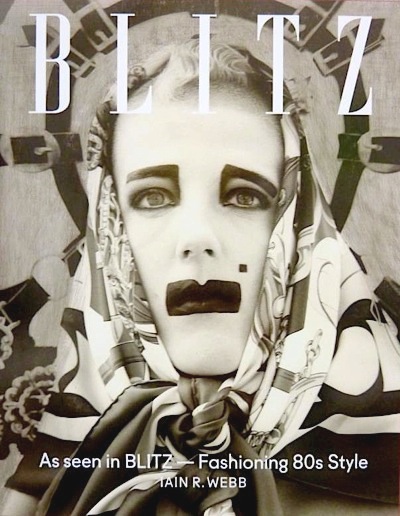
80s club host Scarlett Cannon wears Hermes on the cover of Iain R Webb’s new book: “One of the things I love most about this photograph is that David just drew around Scarlett and darkened the background with a pencil to make her stand out more.” (Photograph by David Hiscock. Make-up, William Faulkner)

❚ FINALLY A BOOK ABOUT THE 80s without George O’Dowd’s face on the cover! Here comes the other version of the Swinging London of 30 years ago, created by the fashionistas, rather than the music entrepreneurs, and the face of Cha-Cha club host Scarlett on the cover defines another version of events exactly. It comes just in time to chime with the V&A’s second landmark exhibition this year. From July 10, following the Bowie extravaganza, comes Club to Catwalk: London Fashion in the 1980s, which includes a display of denim jackets commissioned in 1986 by Blitz magazine from key London-based designers. Who better to sort the Who’s from the Who Nots than one of the seminal clubland Blitz Kids, Iain R Webb.

During those fertile years in the re-energising of the capital’s youth culture through nightlife, when he shared a flat with fellow St Martin’s design students Fiona Dealey and Stephen Jones, Webb says his peers were “cultured clubbers – our aim was to push the parameters and explore the ideals of glamour, imagery, sexuality and taste. We were determined to challenge the status quo and maybe even change the world, even if ‘just for one day’.”

Iain R Webb,Blitz Kid, fashion, journalism

Webb: from Blitz Club to The Times

Having studied fashion at St Martin’s, Webb says he “fell into writing” and went on to become fashion editor of Blitz magazine, the Evening Standard, Harpers & Queen, The Times and Elle.

This week his new book, As Seen In Blitz: Fashioning 80s Style, went off to the printers, to be published in April by ACC (272 pages, £27.30 pre-order price). With previously-unseen archive content and much oral history from key designers, it chronicles the fashion pages Webb created for Blitz magazine 1982–87, after the New Romantics fad had died the death. Webb’s subversive images gave free rein to the imagination and involved a global cast of designers including Comme Des Garcons, Jasper Conran, John Galliano, Jean Paul Gaultier, Katharine Hamnett, Hermes, Pam Hogg, Marc Jacobs.

Blitz magazine,fashion,style,1980s, London, pop music

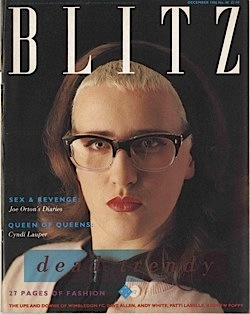
Blitz December 1986: Dead Trendy fashion special. Martine Houghton photographed by Gill Campbell. Make-up, Gregory Davis. Hair, Rick Haylor

Webb says: “The book has over 100 contributors – designers and photographers from the Bodymappers to Nick Knight, and loads of models, make-up and hair peoploids in between.”

At its launch in 1980, Blitz magazine posed little threat to the fondly remembered Face magazine, which majored on music and style. Blitz wandered a disparate social world of its own well to the west of the Soho trendsetters – but eventually, under the influence of Webb, photographer Knight and other cool arbiters of taste, it gradually clicked into the Swinging London groove that saw the UK capital become a crucial stopover for the world’s media and buyers during the biannual round of international fashion shows.

Webb himself went on to win the Fashion Journalist of The Year Award in 1995 and 1996. Today he consults for the Fashion Museum in Bath and is a visiting professor at Central Saint Martins, LCF and the RCA.

FRONT PAGE

➤ Riddle of the train Bowie could not have taken in Where Are We Now?

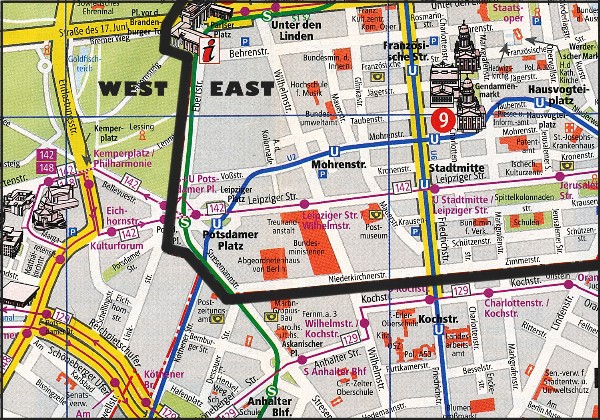
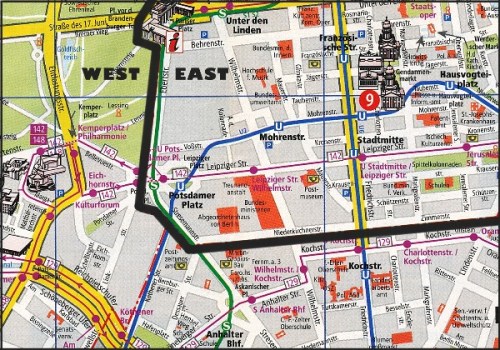
Divided Berlin: the wall shown in black places the U-Bahn station (blue) at Potsdamer Platz inside the Soviet sector, along with the S-Bahn station (green)

Divided Berlin: the wall shown in black places the U-Bahn station (blue) at Potsdamer Platz inside the Soviet sector, along with the S-Bahn station (green)

❚ THE NEW MUSIC VIDEO for Where Are We Now? raises challenges during David Bowie’s nostalgic Berlin city tour that his fans expect to decipher. Lesser mysteries were quickly cracked this week:
1 – The woman’s face on the cuddly toy is the video director’s wife Jacqueline Humphries.
2 – The T-shirt slogan “m/s Song of Norway” refers to both a retired and renamed cruise ship (Royal Caribbean has used Iggy Pop’s Lust for Life in its commercials), and an operetta that was made into a film starring Bowie’s onetime girlfriend Hermione Farthingale who inspired a song.
3 – The closing shots of the Siegessäule (Victory Column) resonate also as the title of Berlin’s gay community magazine.
4 – The lyric’s curious non-idiomatic phrase “walking the dead” coincidentally references the title of an American drama about a transgendered person.

But the real Poirot Puzzler raised by the opening line of the song is this: *How* did Bowie “get the train from Potsdamer Platz” (incidentally, or deliberately, misspelt on screen) to reach his Berlin haunts in the 70s? Today any of us can easily take the U2 towards Nürnberger Strasse, the lyric’s next destination, where once, he sings, he would sit in the cool Dschungel nightclub frequented by assorted popstars (his favourite seat was on a balcony overlooking the bar). We can also take the S1 line south from PP to the trendy Schöneberg district where Bowie used to share rooms with Iggy Pop.

But not when Bowie lived in Berlin, during the years now identified with his Berlin Trilogy of albums, 1976-79. Why not? Because of the 12-ft high Wall, fortified with minefields, anti-tank defences and ruthlessly guarded, the symbol of communism which had divided the city since 1961. As we see from the map (above) both the stations for the S-Bahn surface train line and the U-Bahn underground line lay on the East side of the wall within the Soviet sector.

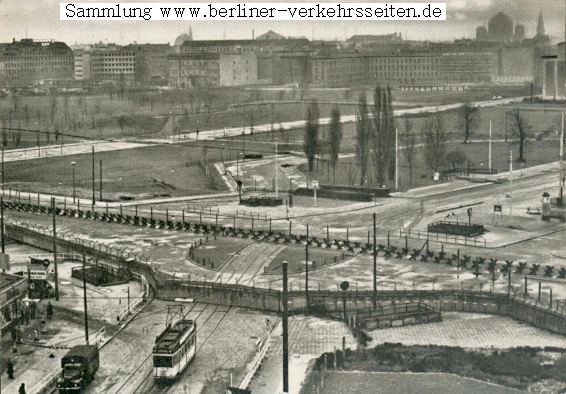
In the late 70s the site of Potsdamer Platz was a wide-open wasteland on the East of the Wall, a No Man’s Land chillingly known as the Kill Zone, where guards could gun down the continuing stream of desperate East Berliners courageous enough to make a dash for the West.
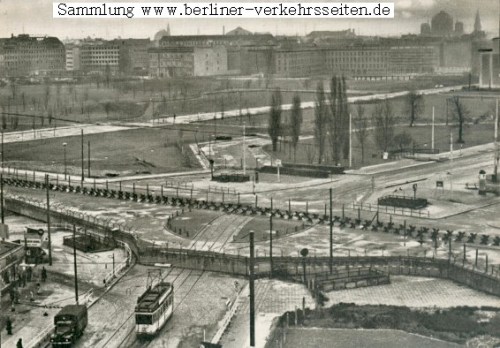
Potsdamer Platz in 1961: the postwar wasteland is divided by the Wall and was to become known as the Kill Zone

Potsdamer Platz in 1961: the postwar wasteland is divided by the first low-rise Wall and was to become known as the Kill Zone

Bowie’s workplace, the Hansa Studios where he recorded Low and Heroes, actually overlooked the Wall from the American sector, in Köthener Strasse a few yards south of Potsdamer Platz. Catching sight of two lovers near the Wall inspired the theme for the number, Heroes, in 1977, one of his most creative song-writing periods.

But Bowie could not have taken his train from either of those stations because they had been closed and barricaded when the Wall was built. Western trains continued to cross East Berlin along lines which emerged in the West but they passed through without stopping at many such stations which became known as Geisterbahnhöfe (ghost stations). Concrete collars at tunnel entrances scraped the sides of the trains to deter escapees from clinging to them. Half a lifetime later, on March 3, 1992, the S1 stop in Potsdamer Platz was the last ghost station to reopen after the reunification of Germany.

➢ Elsewhere at Shapersofthe80s:
Shock and awe verdicts on
Bowie’s born-again masterpiece

Perhaps Bowie departed from some other station? What about the 19th-century regional railway terminus called Potsdamer Bahnhof, you say? It fed ritziness into the heart of the metropolis and Potsdamer Platz became one of Berlin’s busiest traffic intersections where famously Europe’s first traffic lights were installed in 1924. The whole area was, however, laid waste during World War Two and the last trains you could have taken from this station ran in 1945.

Ah, yes but what about the innovative M-Bahn, the Magnetic Levitation line which powered south from the Philharmonie, skirting the Wall by Potsdamer Platz as it headed down to the river? Sorry, this didn’t open until 1989.

So how on earth did David Bowie take his train from Potsdamer Platz?

Is our hero indulging some romantic fantasy on behalf of an East Berliner during the 70s, making a wistful trip to the freewheeling delights of Schöneberg and the KaDeWe department store that became an attainable dream only after the fall of the Wall – as he sings, by crossing the Bösebrücke on November 9, 1989?

And why the first word of the song? Why *had* he to get this train at all? He was well-known for cycling everywhere in Berlin, such was the personal freedom he enjoyed there. And why from Potsdamer Platz?
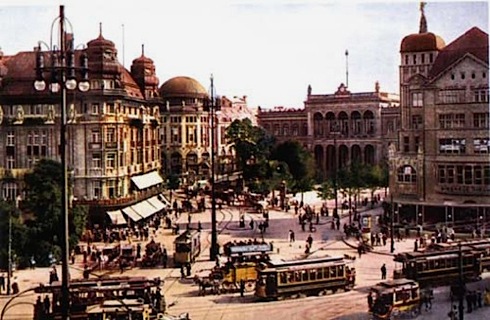
Potsdamer Platz in 1910: looking south towards the Potsdamer Bahnhof

Potsdamer Platz in 1910: looking south towards the Potsdamer Bahnhof

JAN 16 INSIGHT FROM THE NME

❏ Bowie producer Tony Visconti says of Where Are We Now?: “To me, it’s not about the three-years he spent in Berlin in the 70s. It feels like just one day he had an epiphany walking in the street.” So there we have it. A walk in the street. Puts our post above out with the trash. Still, it painted a picture of an era that is probably unimaginable for anybody who hadn’t visited the divided city between 1961 and 1989.

When Bonn became the capital of West Germany in 1949, the war-ravaged city of Berlin grew ever more desolate, despite the handful of nightclubs where hedonism was very much defined as the antidote to the privations of daily life. The Western sectors felt like a minor provincial city with a population of 2 million, mostly consisting of the elderly, because everybody else had left to make new lives elsewhere. Just turning 30, Bowie and Iggy were among the city’s youngest inhabitants and their work as musicians was one of the few productive industries in an enfeebled economy.
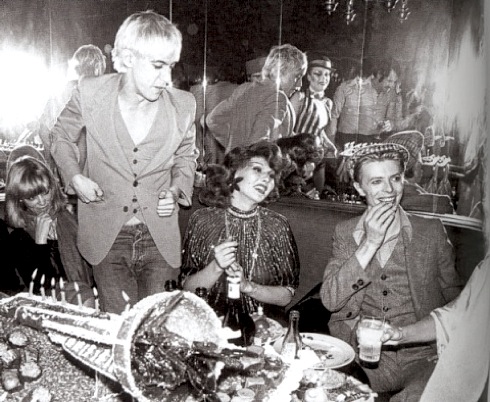
Iggy Pop, David Bowie, Berlin

Nightclubbing 1977: Bowie and Iggy enjoy the Berlin nightlife

The Soviet sector, which we Westerners were privileged to visit, unlike its citizens wishing to make the opposite journey, felt tragic: rundown beyond the point of dilapidation, with high-rise Tower blocks in the brutalist Soviet style built to ease the pressure on a crowded population and signal the “modernity” of the East. As with visits to the Soviet Union, tourists were usually conscious of being followed or at least monitored by East German security personnel, and woe betide any local who behaved in an inappropriately friendly manner toward visitors! With the Stasi (state security service) relying on family members to inform on each other, the East became a society of subterfuge, with a black economy built less on cash than barter and influence at all levels of daily life.

➢ Take The Guardian’s complete tour of Bowie’s Berlin

➢ Jan 13 update: The Observer recounts his “unrepeatable time of Sturm und Drang in the shadow of the Wall”

FRONT PAGE

2012 ➤ Soho’s nightowls revisit the club that sifted the Artex monkeys from Bowie’s Heroes

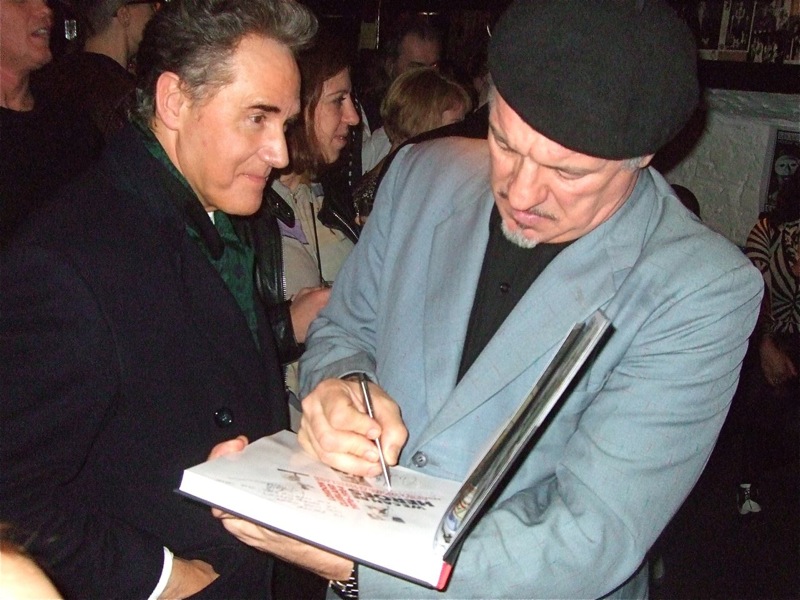
Cultural observer Peter York: eager for the Sullivan autograph on the new edition

❚ THE 80s BLITZ KIDS turned out in force last night. As Kitten Kouturist Franceska Luther King remarks today: “an elegant crowd, older, but still the same spirit.” Those clubbing compulsives who defined the sounds and styles of Soho 30 years ago, swarmed into the tiny steaming Artex-lined cellars of the St Moritz restaurant, the fit all the tighter thanks to a fair few middle-aged paunches. For three months in 1980 this was the site of their milestone one-nighter which signalled the first faction to break away from the futurists at Steve Strange and Rusty Egan’s pioneering electro-diskow, The Blitz. In host Chris Sullivan’s words, this was “the more alert end of the Blitz crowd” – in other words, the hardcore fashionistas.

Initially St Moritz’s music evoked interwar Berlin cabaret but the effect of Charles Fox, the theatrical costumiers, staging its closing-down sale in Covent Garden injected a huge Hollywood movie wardrobe. Sullivan notes:  “You could be a gangster, a geisha, or Geronimo.” The New Romantics had been born – just like that!

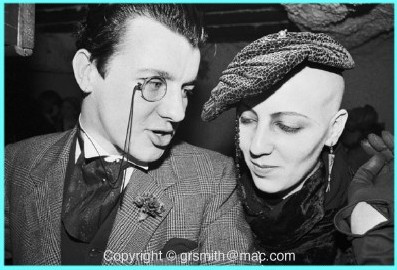
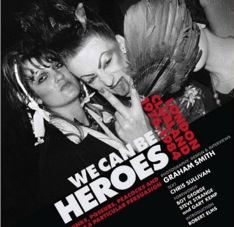
“No single shop sale ever had such an influence on street fashion before or since,” Sullivan writes in the fabulous photo-book, We Can Be Heroes. This ribald account of the dawn of UK clubbing in the 80s, led by the eye-popping photographs of Graham Smith, was the reason for last night’s beano. Soul-music diehards Smith and Sullivan graduated from The Blitz to become two of the St Moritz deejays (along with Robert Elms and Steve Mahoney) and half a lifetime on they were hosting yet another launch party. The book’s revised and amended second edition of 2,500 copies is released this week through regular retail outlets. Copies of last year’s limited edition are still available from the fund-it-yourself publisher Unbound.

St Moritz 1980: Chris Sullivan and Michele Clapton – from Smith’s book We Can Be Heroes

Back in the day, the St Moritz posse distinguished themselves from The Blitz by playing retro lounge-lizard tunes from Lotte Lenya or Nat King Cole. In today’s arts pages of The Times Sullivan recaps how, in their efforts to avoid the present, he and his cohort helped create the future: “We decided to oppose Blitz futurism and turn the clock back with music from Marlene Dietrich, Monroe, Sinatra and soundtracks from A Clockwork Orange, Last Tango in Paris and Cabaret. It was an alarming success.”

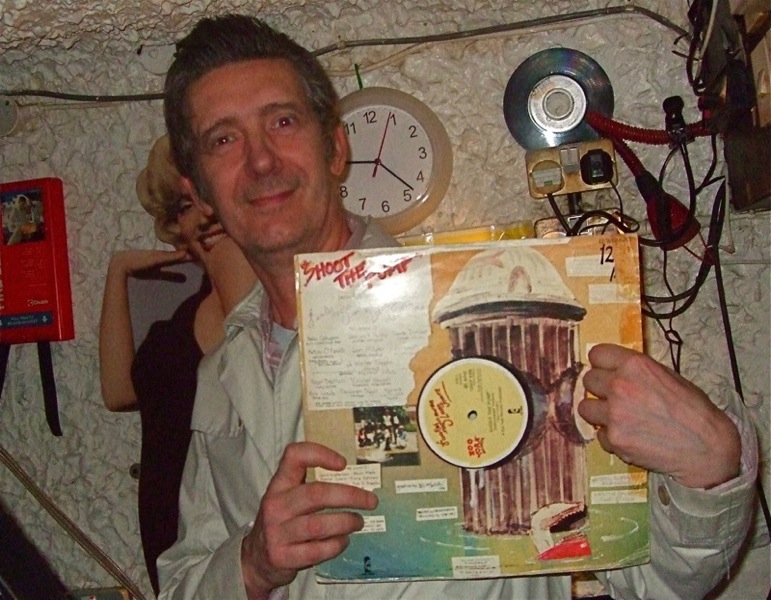
Rob Milton: Shooting the Pump in the deejay booth

♫ Click to hear Shoot the Pump in a new window

Fashions in music moved apace. Within a year successive London club-nights at Hell, Le Kilt and Le Beat Route were stirring into the club mix not only familiar 70s soul but the edgy new urban sounds of North America.

Choosing the soundtrack last night at St Moritz were the were the astute ears of David Hawkes, Christos Tolera and Sullivan himself, plus Dirt Box co-founder Rob Milton, who raked the dancefloor early in the evening with the crazed beats of Shoot the Pump. This intoxicating debut single from 1981 was a state-of-the-art fusion of emergent street sounds – rap, hip-hop and funk with a hint of mutant disco – from the “playin’ brown rapper” and graffiti artist J Walter Negro & the Loose Jointz (on Zoo York Records via Island). J Walter is urging his crew of Zoo Yorkers to spray docile citizens with the water from a fire hydrant: “You make like a monkey with monkey wrench, cos you feel a little funky, got a thirst to quench.” In 1980–81, something similar was pumping the adrenalin in London.

CLICK ANY PIC TO LAUNCH CAROUSEL:

FRONT PAGE

➤ Another knees-up while Amazon discounts We Can Be Heroes second edition

The reviewers said: “A gorgeous history of 80s London clubland” (Alex Petredis, Guardian) … “fascinating and definitive” (Robert Spellman, Sunday Express)

Graham Smith,Chris Sullivan, books,photography, youth culture, We Can Be Heroes , Swinging 80s, clubbing❚ TOMORROW SEES ANOTHER launch party, this time at 1980’s breakaway New Romantics nightspot St Moritz in Soho to celebrate publication of the second (unlimited) edition of the 320-page coffee-table photobook that chronicles the creation of 80s clubbing through Graham Smith’s eye-witness photography, and racy commentary from Wag club host Chris Sullivan. Read the full background to the characters behind the book We Can Be Heroes at Shapersofthe80s. On sale for £35 from its publisher Unbound, or discounted to £25.50 at Amazon (an even cheaper pre-publication offer has finished).

➢ View Shapersofthe80s’ videos of Chris Sullivan telling his “Ribald tales of excess” from the Blitz era

➢ More 80s yarns on video from Robert Elms

➢ Catch-up list of links to all last year’s publicity shenanigans

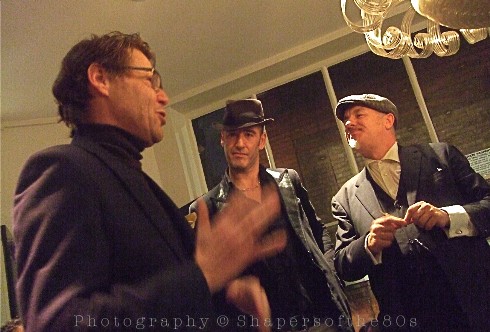
Making up the rules of 80s clubbing: Robert Elms, Phil Dirtbox and Chris Sullivan at last year’s exhibition of Graham Smith’s nightlife pictures. Photograph by Shapersofthe80s

FRONT PAGE

2012 ➤ Shapersofthe80s clocks up half a million page views

❚ YESTERDAY THIS BLITZ KIDS WEBSITE hit a total of 500,537 page views since we launched in autumn 2009. Last year visitor numbers doubled. See what were the hottest topics at Shapersofthe80s during 2011.
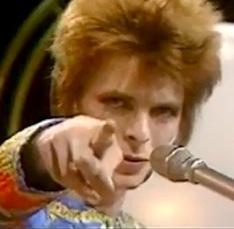
HOW THE MUSIC CHANGED

❏ In 1980 Spandau Ballet were the houseband of the Blitz Kids, whose New Romantic manifesto insisted that style was as important as their new synthesised brand of dance music. When London’s Blitz club hosts Steve Strange and Rusty Egan invented the notion of the once-a-week clubnight, they changed British nightlife habits for ever. Spandau’s music made no less a dramatic gear-change by placing the bass guitar and the bass drum at the front of the sound, as a driving rhythm for dancefloor movers. Within a year of their first hit, To Cut a Long Story Short, the rhythm of the UK pop charts shifted from the lead guitar to the 4:4 dance beat of the bass drum.

New Romantics, Blitz Kids,Spandau Ballet, John Keeble, 1980

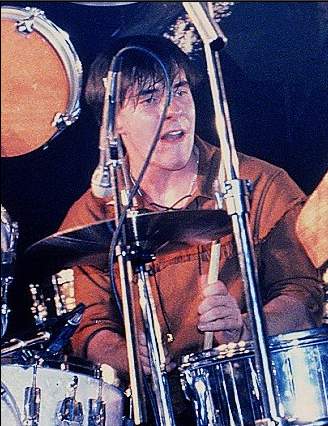
Spandau at Heaven 1980: Keeble on drums. Pictured by © Shapersofthe80s

Spandau songwriter Gary Kemp claimed at the time: “RnB was the backbone of pop music from 1962 to 1980. And since then, funk. Dance rhythms are the musical basis for all rock bands now. Really, you can’t say ‘rock band’ any more because the music isn’t rhythm-and-blues.”

John Keeble (left): “It’s the difference between listening to funk instead of the RnB they all played in the Sixties.”+++ +++

➢ Keeble: what changed the rhythm of the pop charts

FRONT PAGE