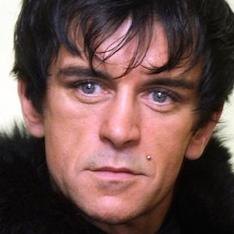
The reviewers said: “A gorgeous history of 80s London clubland” (Alex Petredis, Guardian) … “fascinating and definitive” (Robert Spellman, Sunday Express)
❚ TOMORROW SEES ANOTHER launch party, this time at 1980’s breakaway New Romantics nightspot St Moritz in Soho to celebrate publication of the second (unlimited) edition of the 320-page coffee-table photobook that chronicles the creation of 80s clubbing through Graham Smith’s eye-witness photography, and racy commentary from Wag club host Chris Sullivan. Read the full background to the characters behind the book We Can Be Heroes at Shapersofthe80s. On sale for £35 from its publisher Unbound, or discounted to £25.50 at Amazon (an even cheaper pre-publication offer has finished).
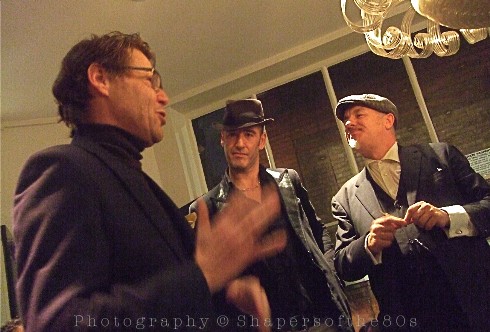
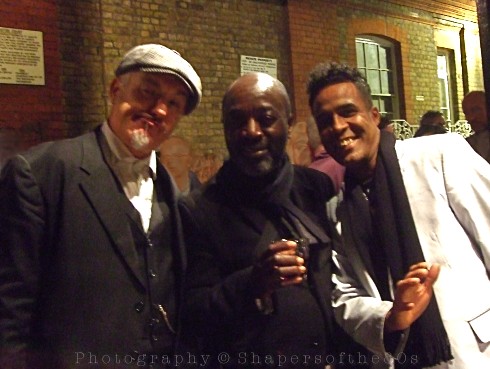
Making up the rules of 80s clubbing: Robert Elms, Phil Dirtbox and Chris Sullivan at last year’s exhibition of Graham Smith’s nightlife pictures. Photograph by Shapersofthe80s
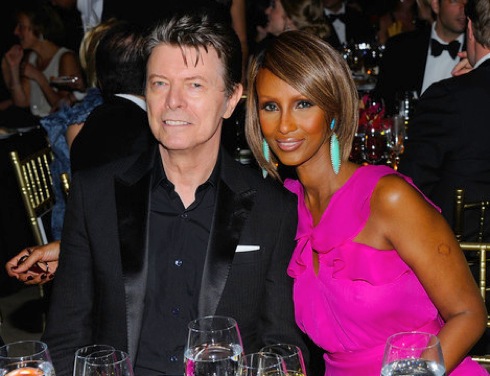
What, me, pensioner? David Bowie and his wife the supermodel Iman attend the DKMS Annual Gala in New York City last April. (Photo by Andrew H. Walker/Getty)
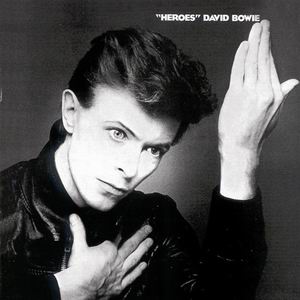
❚ HAPPY BIRTHDAY MR BOWIE. And thanks for the boggling, inspirational, poptastic ride so far —140 million albums sold and the rules of rock rewritten. You will be the genie waiting at the end of time. Boy George has this to say in his foreword to Graham Smith’s new book on 80s clubland, named after David Bowie’s song We Can Be Heroes: “Of the New Romantic moment I have always said, It was all Bowie’s fault.” What he refers to is the Bowie bequest to the teen generations he entertains. As a cultural lightning rod he has bequeathed insights into the realm of the imagination. As a performer he has delivered a repertoire of life-skills through a cast of mythical personalities invented for himself as a popstar, from the self-destructive Ziggy Stardust and the amoral Thin White Duke, to his romanticised “Heroes” (his own quote marks added to emphasise self-awareness). Through their formative years, Bowie invited his acolytes:
✰ to explore identity, androgyny, the primacy of the visual.
✰ to adopt stances: individualism, alienation, decadence, transgression.
✰ to follow his principles for living amusing lives: disposable identities, portable events, looks not uniforms, tastelessness “on purpose”.
His signature tune, “Heroes”, still echoes today as a heart-stirring anthem because he was passionate and optimistic and musically this number is brimming with awe. He sang about intimacy and love triumphing over the horrors of the outside world. Finding joy in simple pleasures could make heroes of us all, “just for one day”. As a creed to live by, it has underpinned his own life. “I’m an instant star,” he said. “Just add water and stir.”
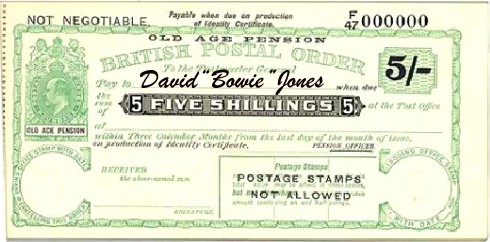
Were he still living in the UK, today’s birthday would designate him, in the idiom, “an old-age pensioner”, and the state would pay him slightly more than the five shillings a week handed over when the scheme began 100 years ago. He can’t be 65, you’re saying as you inspect the picture of him and his wife Iman [above] at a leukemia charity gala in New York last year. He looks too good for 65. “Waddayamean?” he’d be bound to snap, flinging back the old feminist line, “This is how 65 looks in the 21st century.”
True, if you start young, break the rules and push yourself to the max, as all geniuses do. While in short trousers, the little suburban Londoner David Jones was nothing if not prolific. At 11 he was playing a skiffle bass, buying and collecting the NME for future reference, learning the sax at 13 and soon moving up through a succession of bands: Konrads, Hookers, King Bees, Manish Boys, Lower Third, Buzz, and Riot Squad.
At school he fell under the spell of an art teacher, Owen Frampton, whose own son Peter went on to musical fame. Bowie has said: “I went to one of the first art-oriented high schools in England, where one could take an art course from the age of 12. Three-fourths of our class actually did go on to art school.”
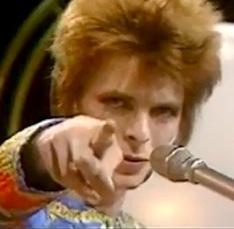
Everybody knows how this liberal education shaped his outsider stance, how he redefined glam-rock, and how his incarnation as Ziggy Stardust made him an international star and one of the most iconoclastic forces in 70s music. How much more fun though to celebrate a grand milestone by looking back to the earliest expressions of that genius and to wonder aloud how else might the talents of the young David Jones have developed? Today, we find whole chapters of his formative experiments on video online, from mime artist and music-hall hoofer, to actor and fin-de-siècle soothsayer. In all the springboard moments pictured in the slideshow above, Bowie is no older than 24. At any moment the fickle finger of fate could as easily have pointed in any number of directions…
In 1969 Bowie’s manager Kenneth Pitt proposed to showcase his talents by producing a half-hour film called Love You Till Tuesday. The compilation showcased tracks from his 1967 debut album, plus a spanking new song, Space Oddity, which introduced Major Tom and became his first hit. Cleverly anticipating the first Nasa Moonwalk in 1969, the filming for this number pastiches Stanley Kubrick’s cine-epic premiered the previous year. It effectively proposed what today we call the promo video which, as Kevin Cann reveals in his exhaustive 2010 Bowie biographyAny Day Now, remained substantially unseen by the public until its release as a clip in 1984. The whole half-hour showreel went online for the first time only yesterday…
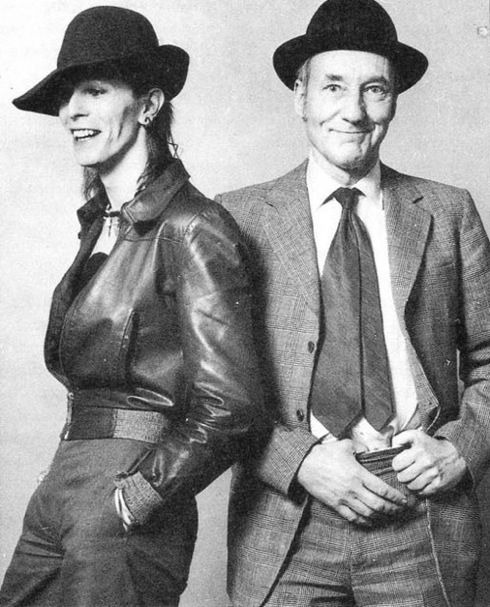
THEN HE MET WILLIAM BURROUGHS
1973: Bowie is interviewed for Rolling Stone with novelist Wiliam Burroughs and photographed by Terry O’Neill
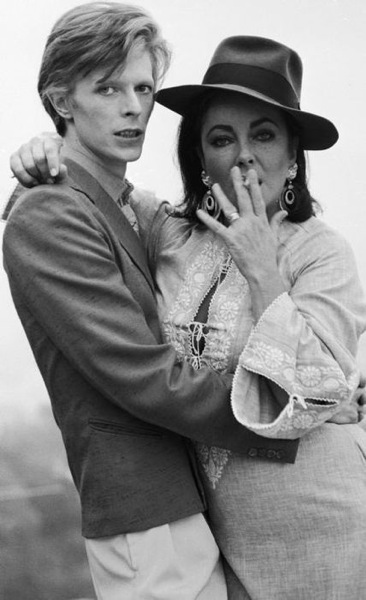
THEN HE MET LIZ TAYLOR
1975: Bowie meets Hollywood legend Liz Taylor. Photographed by Terry O’Neill
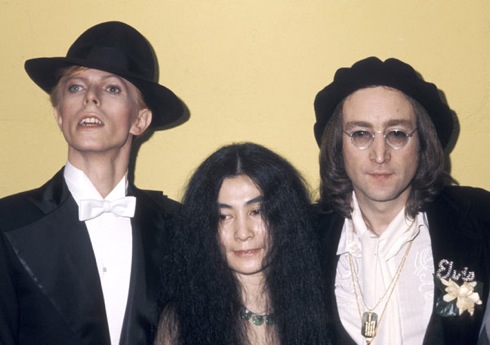
THEN HE WROTE A SONG WITH JOHN LENNON
1975: At the Grammys, Bowie upstages Yoko Ono and John Lennon — one day he gets jamming with David in a studio and turns a lick into the song Fame
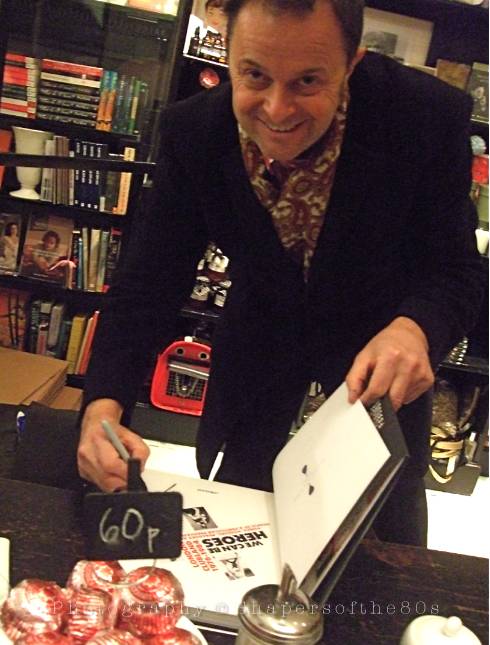
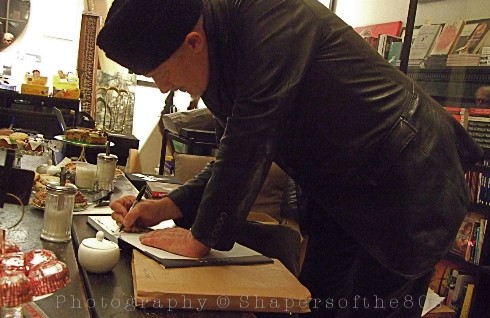
Graham Smith: signing advance copies of We Can Be Heroes between coffee and cake today at Soho’s Society Club. Photographed by Shapersofthe80s
❚ THE BOOK OF THE DECADE has arrived and early buyers of the 2,000-copy first edition had it in their hands today. The photo-story of 80s clubland, We Can Be Heroes, felt reassuringly hefty to the touch and we finally discovered the page size to be generous at 235 x 280mm. The five-colour printing gives intensity especially to the black-and-white photography on the high-gloss paper and author Graham Smith’s verdict on the quality was simple: “Stunning.” Collaborator and 80s club-host Chris Sullivan breathed a sigh: “We got there in the end.”
The 320 pages of story-telling and voxpops from perhaps 100 contributors will raise plenty of smiles when the postman delivers the book during the next week. Even if you’ve read Shapersofthe80s from top to bottom, you’ll find as many more quotes and insights from the original Blitz Kids themselves. Deejay Jeffrey Hinton reminds us in the book: “People think this was a premeditated scene but it was not. It was childlike, thrown together. We didn’t do it for the money, we were innocent. It’s all so marketed today.”
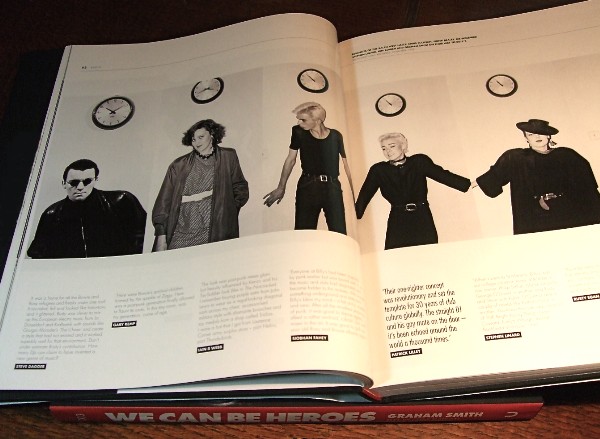
Ringleaders who shaped the style of the 80s celebrated in We Can Be Heroes: Chris Sullivan, Fiona Dealey, Lee Sheldrick, Stephen Linard and Kim Bowen — the rebels within St Martin’s School of Art, all photographed by Graham Smith
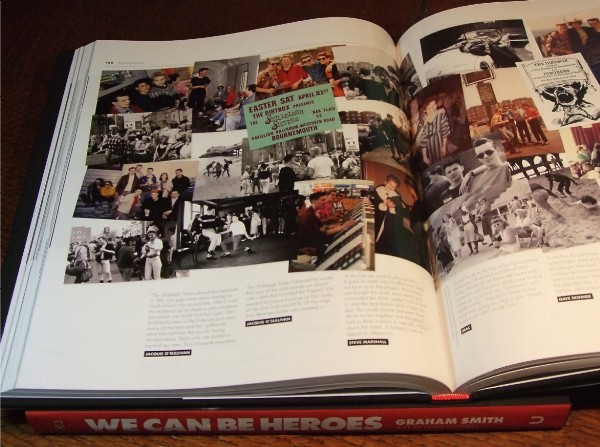
Bournemouth was the destination on bank holidays: good-natured hijinks brought London clubbers to the south-coast resort, and Smith has included many of their snaps in We Can Be Heroes
While the main images reveal just how small in number was the coterie who initiated the sounds and styles of the 80s, Smith has supplemented his own portfolio of pictures with many snaps from clubland wags themselves whose ambitions were liberated by the spirit of collaboration inspired in 1980. Nevertheless, designer Fiona Dealey makes a valid point in the book: “When anyone has written about the Blitz it has been by the same few blokes giving the same old soundbites with never a mention of what the women were up to. The Blitz was our youth club and I feel they hijacked it.”
Today John Mitchinson, the book’s publisher, said he was reasonably confident that a commercial edition of Heroes might follow in the autumn of 2012. In the meantime a limited number of copies of the first edition are still available only from Unbound Publishing.
➢ View Shapersofthe80s video — Chris Sullivan telling his “ribald tales of excess” from the Blitz era at a launch party for We Can Be Heroes… with Graham Smith and Robert Elms on video too
Chris Sullivan signing today: “Now people can see the book itself we might shift a few more copies.” Photographed by Shapersofthe80s
Le Beat Route recreated for one night only: One of our heroes, MC Sullivan, sharing the best sounds in London last night
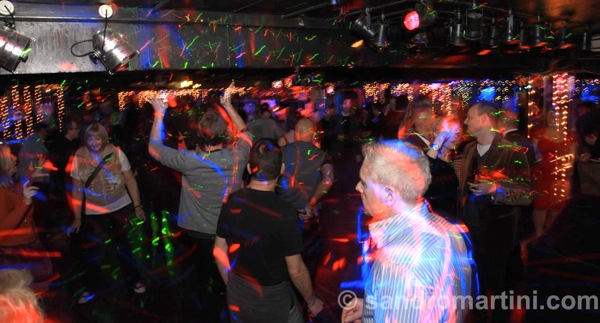
2011 and it’s Thursday night Beat Route! The same underground club emanating a spookily familiar spirit of place
❚ WITHOUT DOUBT the party of the year filled the former Beat Route, Soho, last night as photographer Graham Smith and writer Chris Sullivan launched their photobook We Can Be Heroes, which is winging its way from printers to the lucky buyers who invested in the first edition. Smith and Sullivan became crucial to leading and documenting the explosion of Eighties club culture in London. Le Beat Route, founded in November 1980 by crimper Ollie O’Donnell and stylist Steve Mahoney with Fidel Castro fan Steve Lewis as its deejay, became the cool Friday-nighter that served the post-Blitz crowd for the next three years while the scene moved gradually overground.
More exclusive pix are coming on Shapersofthe80s.com once I can wade through the many brilliant soundbites offered by everybody out last night to celebrate the Swinging 80s…
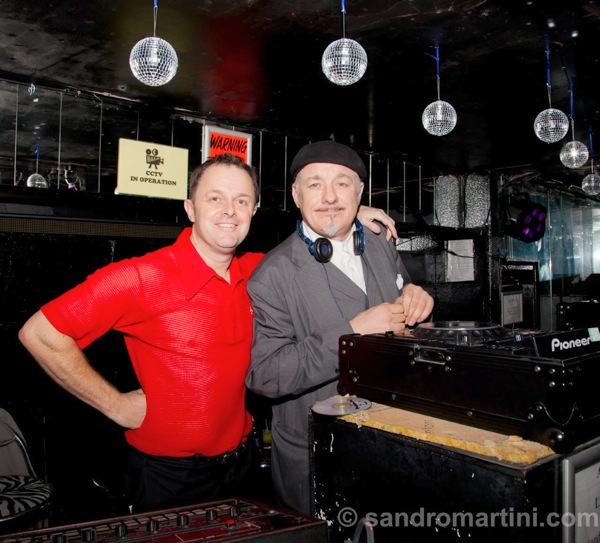
Thursday night Beat Route! Hosts, authors and 80s deejays Graham Smith and Chris Sullivan
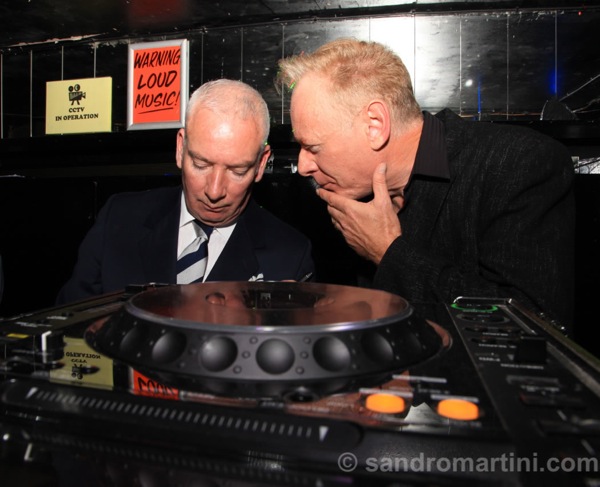
Thursday night Beat Route! Seminal club deejays of the 80s Steve Lewis and Jay Strongman
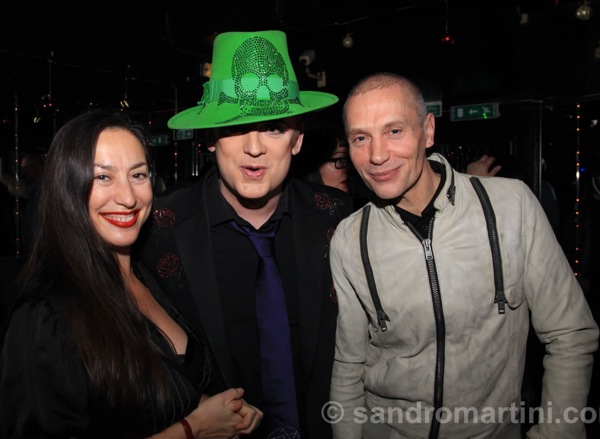
Thursday night Beat Route! Lesley Chilkes, Boy George, David Holah
[ Exclusive party pix courtesy of sandromartini.com ]
TNBR! Last night’s other chief hero hosting the party of the photobook of the 80s — snapper Graham Smith and his lovely wife Lorraine (Northern Soul veterans, both)
+++ ❚ FRIDAY NIGHT WAS AN EXCUSE for the wags to tell their tall tales of clubbing in the 80s. This was the first reunion in recent memory of the bright sparks the media once called Blitz Kids and New Romantics. We’re talking about the straighter faction tonight — the make-up brigade had their day at Boy George’s 50th birthday party in June. All of them, whatever their persuasion, were diehard nightowls, the spiritual offspring of the mighty innovator who shaped the 1970s pop scene almost singlehandedly, David Bowie. He taught them to adopt stances: individualism, transgression. He bequeathed them principles for living amusing lives: disposable identities, looks not uniforms. In turn, they then shaped the sounds and styles of the Swinging 80s set in motion by 1976 and the birth of punk, along with a passion for black dance music, on through the decadent glamour of the Blitz Club years, to the watershed of Band Aid in 1984.
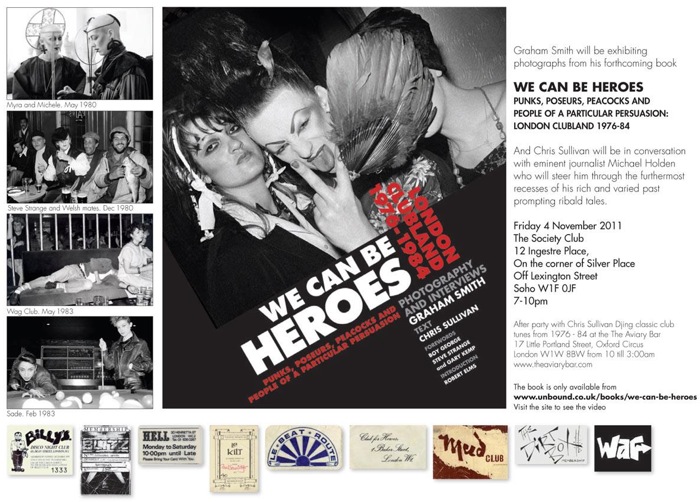
On Friday, photographer Graham Smith took over Soho’s newest rendezvous, the Society Club, for a gallery show of his 80s photographs, which capture the panache and derring-do of style leaders such as PX, Stephen Jones, Kim Bowen Melissa Caplan, Stephen Linard, Fiona Dealey, John Maybury and such nascent popstars as Spandau Ballet, Visage, Animal Nightlife, Sade, Blue Rondo à la Turk and others.
Our two videos capture the essence of Smith’s collaborators, Robert Elms and Chris Sullivan, powering through their often unprintable anecdotes, edited on video down to bite-sized chunks and garnished with Graham’s images. The highspot was meant to be Sullivan as guest speaker, but when he was reportedly “still on his way”, in stepped writer and broadcaster Elms to recall the early one-night clubs he also helped to run. He sounded genuinely shocked by the precociousness of his peers — “We were kids!” — who persuaded West End nightclubs to hand over door control to them as teenagers. Eventually, Sullivan arrived in the guise of Vladimir Ilyich Lenin, and of course excelled at spinning his “ribald tale of excess” about the mayhem he helped cause in clubland, en route to running Soho’s Wag club for 19 years.
+++
The photos form a dossier creative endeavour, as we’ll soon see in We Can Be Heroes, a 320-page coffee-table book containing 500 mostly unseen images and 100 voxpop interviews by Graham Smith. Warts-and-all main text is penned by the mellifluous Welshman Sullivan, with other contributions from Robert Elms, Boy George, Steve Strange and Gary Kemp.
Smith & Sullivan’s invitation to a party
➢ Visit the publisher Unbound.co.uk to place your order for We Can Be Heroes and secure your name in the limited first edition. This month the authors aim to hit an advance sales target by this new “crowd-funding” technique in order to guarantee publication.
➢ Visit The Society Club, London W1F 0JF where Graham Smith’s photographs are on sale until Christmas. Subjects include Boy George, Sade, Steve Strange, Spandau Ballet, Iggy Pop, Siouxsie Sioux, the Sex Pistols and many more.
➢ Choose “View full site” – then in the blue bar atop your mobile page, click the three horizontal lines linking to many blue themed pages with background article
MORE INTERESTING THAN MOST PEOPLE’S FANTASIES — THE SWINGING EIGHTIES 1978-1984
They didn’t call themselves New Romantics, or the Blitz Kids – but other people did.
“I’d find people at the Blitz who were possible only in my imagination. But they were real” — Stephen Jones, hatmaker, 1983. (Illustration courtesy Iain R Webb, 1983)
“The truth about those Blitz club people was more interesting than most people’s fantasies” — Steve Dagger, pop group manager, 1983
PRAISE INDEED!
“See David Johnson’s fabulously detailed website Shapers of the 80s to which I am hugely indebted” – Political historian Dominic Sandbrook, in his book Who Dares Wins, 2019
“The (velvet) goldmine that is Shapers of the 80s” – Verdict of Chris O’Leary, respected author and blogger who analyses Bowie song by song at Pushing Ahead of the Dame
“The rather brilliant Shapers of the 80s website” – Dylan Jones in his Sweet Dreams paperback, 2021
A UNIQUE HISTORY
➢ WELCOME to the Swinging 80s ➢ THE BLOG POSTS on this front page report topical updates ➢ ROLL OVER THE MENU at page top to go deeper into the past ➢ FOR NEWS & MONTH BY MONTH SEARCH scroll down this sidebar
❏ Header artwork by Kat Starchild shows Blitz Kids Darla Jane Gilroy, Elise Brazier, Judi Frankland and Steve Strange, with David Bowie at centre in his 1980 video for Ashes to Ashes
VINCENT ON AIR 2026
✱ Deejay legend Robbie Vincent has returned to JazzFM on Sundays 1-3pm… Catch up on Robbie’s JazzFM August Bank Holiday 2020 session thanks to AhhhhhSoul with four hours of “nothing but essential rhythms of soul, jazz and funk”.
TOLD FOR THE FIRST TIME
◆ Who was who in Spandau’s break-out year of 1980? The Invisible Hand of Shapersofthe80s draws a selective timeline for The unprecedented rise and rise of Spandau Ballet –– Turn to our inside page
SEARCH our 925 posts or ZOOM DOWN TO THE ARCHIVE INDEX
UNTOLD BLITZ STORIES
✱ If you thought there was no more to know about the birth of Blitz culture in 1980 then get your hands on a sensational book by an obsessive music fan called David Barrat. It is gripping, original and epic – a spooky tale of coincidence and parallel lives as mind-tingling as a Sherlock Holmes yarn. Titled both New Romantics Who Never Were and The Untold Story of Spandau Ballet! Sample this initial taster here at Shapers of the 80s
CHEWING THE FAT
✱ Jawing at Soho Radio on the 80s clubland revolution (from 32 mins) and on art (@55 mins) is probably the most influential shaper of the 80s, former Wag-club director Chris Sullivan (pictured) with editor of this website David Johnson
LANDMARK FAREWELLS. . . HIT THE INDEX TAB UP TOP FOR EVERYTHING ELSE

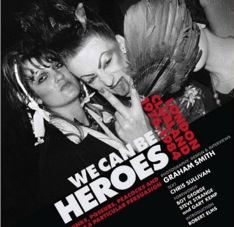 ❚ TOMORROW SEES ANOTHER launch party, this time at 1980’s breakaway New Romantics nightspot St Moritz in Soho to celebrate publication of the second (unlimited) edition of the 320-page coffee-table photobook that chronicles the creation of 80s clubbing through Graham Smith’s eye-witness photography, and racy commentary from Wag club host Chris Sullivan. Read the full background to the characters behind the book We Can Be Heroes at Shapersofthe80s. On sale for £35 from its publisher Unbound, or discounted to £25.50 at Amazon (an even cheaper pre-publication offer has finished).