➤ London Design Museum’s new home is a wow!

 Design Museum, Deyan Sudjic, Kensington, John Pawson, Architecture, London

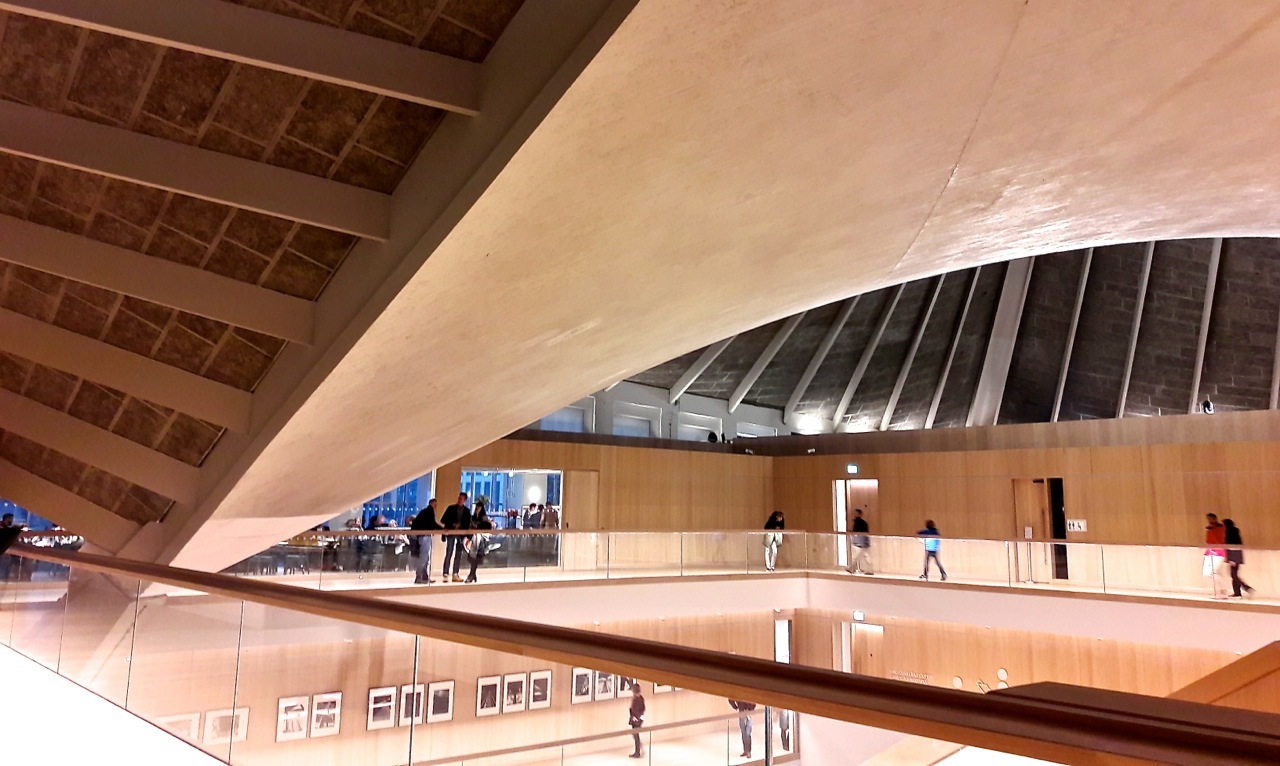
New home for the Design Museum: The former Commonwealth Institute’s hyperbolic paraboloid roof brings elegance and light to the museum. (Photographed by Shapersofthe80s)

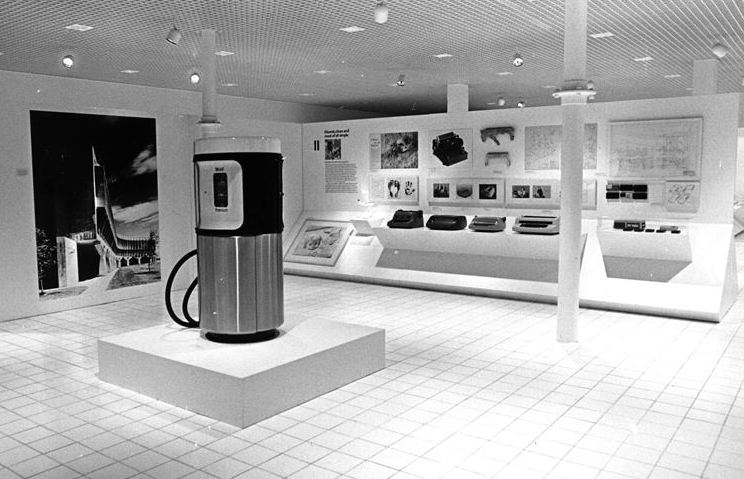
TODAY THE UK’S WORLD-CLASS DESIGN MUSEUM under director Deyan Sudjic opened its doors at an inspirational new home in Kensington. Founded in 1989, the museum has spent 26 years at Shad Thames, near Tower Bridge, though the collection began in the pioneering Boilerhouse Project, located at the V&A museum as the brainwave of Britain’s giant influence on all things designed, Sir Terence Conran. There, the project mounted 20 exhibitions during its life from 1982 to 86 with the aim of helping to explain what design is to a non-specialist audience.

That ethos continues to deliver its visually stunning message in the former Commonwealth Institute, a listed 1962 building designed by modernist champion Robert Matthew, the elegance of which speaks for itself. John Pawson, a perfectionist and minimalist British architectural designer, led the £80-million remodelling of the redundant Kensington building and has worked miracles beneath the controversial hyperbolic paraboloid copper roof which dominates the sparse interior void. Here newly won access to daylight creates vistas that constantly reward the eye as you move from one balcony to another. The museum enjoys three times more space than its previous home.

Click any pic below to launch slideshow:


Signage is minimal so you have to hunt for further rewards: permanent collections on top floor (Designer Maker User) and in the basement; also upstairs, restaurant and members’ bar. Temporary exhibition space is on the ground floor and future themes will reflect contemporary design in every form from architecture and fashion to graphics, product and industrial design, digital media and transport.

The museum’s collection is an important record of the key designs that have shaped the modern world. It tells the history of mass production, from the manufacturing innovations of the 19th century up to the digital and making revolution of recent years.

This week’s opening exhibition, aptly titled Fear and Love: Reactions to a Complex World, presents an eclectic selection of baffling displays – “networked sexuality, sentient robots, slow fashion and settled nomads” – which require hard-working captions to explain some of their seemingly tenuous connections to design. Disgracefully, the museum has over-charged for admission, as if sponsors could not have shouldered the £14-per-head ticket price. Yes, £14! Major own goal for an opener.
Boilerhouse Project, Terence Conran, V&A , Design Museum,Kensington, Architecture, London

First Boilerhouse Project exhibition, Art and Industry, at the V&A: The origins of the Design Museum lie with the collection begun in 1982, which included this Mobil petrol pump designed by Eliot Noyes in 1968

➢ Fear and Love runs at the Design Museum until 23 April 2017. Tickets £14. Otherwise free 10–18h daily

➢ The story of designing London’s Design Museum
CONSTRUCTION DURING 2015:

FRONT PAGE

➤ Escape to the Nightlifers’ Shangri-la just in time for Christmas

Animal Nightlife, Andy Polaris, soul music, jazz, pop group,London, Andy Polaris,nightclubbing,Shangri-la, CD

Cool-hunters 1985: the Animal Nightlife lineup who charted with their album Shangri-la. . . Billy Chapman, Paul Waller, Andy Polaris, Leonardo Chignoli and Steve Brown

REMEMBER SNAKE-HIPPED ANDY POLARIS, frontman for Animal Nightlife, the soul/jazz/pop socialist collective who emerged from London’s cool clubbing scene and charted with Native Boy in 1983? This week their debut album Shangri-la is re-issued in a deluxe two-CD edition, having charted in summer 1985 only on vinyl.

Andy says: “It comes with a bonus disc of remixes and a great booklet with retro photos of the band in its two phases. Just in time for Christmas. The vinyl album has long been deleted and since then a very poor compilation of songs was released. The re-issue’s  tracks consist of the album in its original form and a second CD containing other singles and extended remixes that were only available on 12-inch before.” Lois Wilson supplies some nicely informed sleeve notes identifying Animal Nightlife’s role as innovators when the UK’s thriving underground changed the face of nightclubbing.

“Just listen to the Pink Panther style
saxophone of instrumental Basic Ingredients
and try not to lose yourself momentarily
in another world, a better world even”
First review (7/10) by Loz Etheridge

Managed by Steve Lewis, London’s coolest club deejay in the Beat Route’s heyday, Nightlife’s swing sound with an electronic twist enjoyed its moment as the hippest trend in music while Polaris penned his own brand of torch song and the band wore head-to-foot styles from Bolshevik bolshieness to Johnson’s jazz-age retro. Rabid clubbers must remember how Nightlife’s crazy animalettes and animalads went through about 35 line-up changes during their eight years on the scene, sadly scoring only four chart singles. For some band members, good times tended to take precedence over naked ambition in those highly competitive years when British acts were storming international pop charts.

“The must have re-issue CD of 2016.
A perfect Xmas stocking filler”
– deejay Mark Moore

By 1985 the band had slimmed down to the five-piece pictured on the CD cover. They consisted of Andy Polaris (vocals), Leonardo Chignoli (bass), Paul Waller (drums), Steve Brown (guitar) and Billy Chapman (playing a thrilling saxophone). After switching from the finger-snappy Innervision label to supercool Island Records, they were all packed off to Philadelphia where the first album was recorded at the legendary home of Philly World Records.

“The label wanted a bit more discipline from us,” Andy says, “and they sent us to America to get us out of our element and into the hands of those seasoned veterans who’d created the fabled Philly sound. We five working-class boys from London were wide-eyed and just did everything they told us. It paid off, because after our sojourn at Philly World our urban jazzy feel translated into a more sophisticated British club sound.”

❑ Standout track on the second Shangri-la CD of lost mixes is reggae producer Dennis Bovell’s version of Native Boy. Whoever’s on vibes – “mm, nice”.

➢ Shangri-la is cheaper direct from Cherry Red records (plus quick delivery)

➢ Andy Polaris recalls his impressions of recording with the Philadelphia greats

➢ Definitive yet unofficial Animal Nightlife band history created online by Mike Albiston, a fan who remembers their last gig. Last updated 2010 and viewable since then thanks to the Wayback Machine

➢ Catch Andy Polaris’s reminiscences in the recent BBC doc Boy George’s 1970s: Save Me From Suburbia

➢ Previously at Shapersofthe80s: Animal Nightlife as part of the UK’s second wave of 80s image bands

FRONT PAGE

➤ Sotheby’s first David Bowie art auction raises twice the expected total sales figure

Frank Auerbach, Sotheby’s, Bowie/Collector, auction

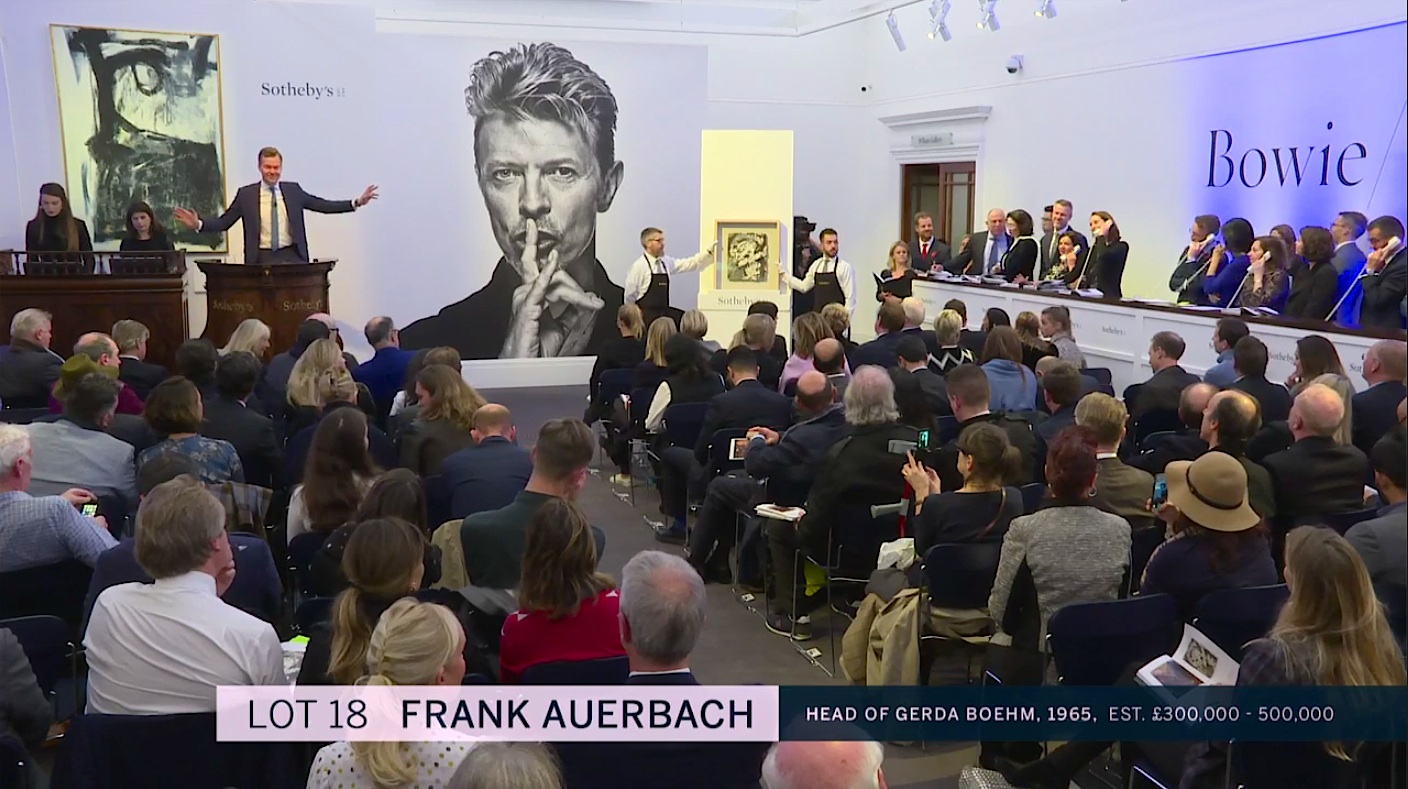
At Sotheby’s Bowie/Collector auction tonight: the pop star’s favourite painting, Frank Auerbach’s portrait Head of Gerda Boehm, eventually went for went for £3.35m. (Screengrab from Sotheby’s live webcast)

PART 1 OF THE BOWIE/COLLECTOR SALE saw its 47 modern and contemporary artworks raise £24m tonight – just over twice the total of top prices estimated by Sotheby’s the auctioneer in advance. So the “Bowie premium” added to market prices for the privilege of owning a memento of the pop icon’s personal collection averaged 105% (with wild extremes either side).

Bowie/Collector, Sothebys, Frank Auerbach

Bowie’s inspiration: Auerbach’s Head of Gerda Boehm (Sotheby)

Most suspenseful bidding came for Bowie’s favourite painting, the Frank Auerbach portrait that the pop star said set his mood every day when he rose: Head of Gerda Boehm was estimated at best to sell for £500k but eventually went for £3.35m when a new bidder popped up at the £2m mark and staged a fight to the end.

As might have been expected, two Jean-Michel Basquiat works went for roughly two-thirds more than best estimates – £2m for an Untitled collage and £6.2m for his large acrylic Air Power. The final lot, a Damien Hirst spin painting on which Bowie collaborated, sold for £625k (top estimate £350k). Hirst’s other work, Untitled Fish For David, 1995, sold for £150k (top estimate £60,000).

Sadly the handful of works that didn’t even reach their low estimates included an exquisite Wyndham Lewis collage, a Paolozzi bronze, a rich Picabia portrait in oil, and a Bomberg townscape in oil. Among many moments of high-speed amusement that enlivened the event was the auctioneer’s unique pronunciation of Lytton Strachey’s name, which suggested this was the first time he’d come across it.

➢ Two more sales of 300 artworks owned by Bowie continue at Sotheby’s London through Friday, live online

➢ Previously at Shapersofthe80s: Bowie’s passionate eye for art proves to be not bad at all

➢ Previously at Shapersofthe80s: Bowie’s taste in art: respectable, with bargains to be had at Sotheby’s auction

FRONT PAGE

➤ Bowie’s taste in art: respectable, with bargains to be had at Sotheby’s auction

Damien Hirst, David Bowie, Sotheby's, auction, contemporary art,

Damien Hirst, Untitled Fish For David, 1995, est £40,000–60,000 – From the Young British Artist who preserved an adult tiger shark in a giant tank, this gift from Damien Hirst to David Bowie contains a tiny 2-inch fish in formaldehyde, as “a profound inquiry into human existence”. Here displayed at Sotheby’s London, reflecting and refracting other art in the saleroom. (Photography © Shapersofthe80s)

BEFORE THE AUCTION OF DAVID BOWIE’S ART at Sotheby’s, treat yourself to the free exhibition of 350 works owned by the pop star who died this year. His eclectic taste embraces pop art, Damien Hirst, German expressionism, Tintoretto, Surrealism, Contemporary African, a chess set by Man Ray, a couple of Duchamps, and much primary coloured contemporary furniture from Italy’s Memphis Group (which occupies much of Part 3 of the sale, dedicated to Design). The auction represents about half of Bowie’s entire art collection which he admitted to buying obsessively over 30 years. The evidence is that he had a sharp eye.

What’s surprising is the number of eminently collectable smaller items being offered at affordable prices which are bound to attract first-timers to next week’s three sales – all offering online bidding. Painted tabletop sculptures in aluminium by Ivor Abrahams are priced at a few hundred pounds, his bronze sculptures at perhaps £1,500. Ceramic plates decorated by Picasso and Cocteau are priced at just over a thousand and there’s even Sir Stanley Spencer’s artist’s palette for £2,000. Having toured the Bowie exhibition highlights to New York, Los Angeles and Hong Kong, Sotheby’s is geared up for long-distance bidding.

Click any pic below to enlarge and launch slideshow


The full set now on display makes an engaging and mischievous show, crammed with paintings and sculpture that may not be masterpieces, as the BBC’s arts editor Will Gompertz has noted [video below], but by and large represent good examples from highly regarded artists. In light of which, many of Sotheby’s estimated starting prices seem temptingly low.

Frances Christie, head of its Modern & Post-War British Art Department, explained why they have to apply prevailing market prices: “It’s hard to quantify what the ‘Bowie effect’ might be. We have to take into account market precedents, so for example, the world record for Peter Lanyon’s work is £370k. The Lanyon painting Trevalgan in the sale is not as well known so we have priced it at about £250k, which I think is fair. The range of our estimates can only be a guide.”

“David was like a child, childish and childlike
when he came to see me in the studio and we made
a giant spin painting together” – Damien Hirst

Frances is pleased that as a collector Bowie favoured 20th-century British modernists and, with some prices starting in the low thousands, this sale might help spread the word abroad for names such as Gill, Wadsworth, Bomberg, Minton, Nevinson, Wyndham Lewis, Hitchens, Tunnard, Armitage, Chadwick, Kossoff, not forgetting Moore, Sutherland, Auerbach and Scott.

Gompertz remarked: “Bowie’s taste appears to have been fairly conservative but very specific. He liked the art that came from the same place as him: mid-20th-century UK. It is art that you could argue shared his philosophy, a philosophy that went on to shape his aesthetic. It is art that questioned, that was preoccupied with the surface, that had many sides; that never quite settled. Art that performed.”

Just totting up the top estimates for the 47 Modern and Contemporary works in Part 1 of Sotheby’s sale – which stars Francis Picabia, Damien Hirst, Patrick Caulfield and Jean-Michel Basquiat – could yield £11.6million. How the “Bowie premium” might inflate these auctioneer’s estimated prices is what promises to keep us on our toes throughout Thursday and Friday.

painting, David Bowie, Sotheby's, auction, contemporary art, Memphis Group, Paul Feiler

Bowie/Collector in a nutshell: Paul Feiler, Horizontal Blue + Sienna, 1960, oil on board, est £30,000–50,000. Right, painting by Ian McKever (est £3k), plus bronzes by Denis Mitchell (est from £5k), Memphis table by Sottsass (est £3k)

➢ The Bowie/Collector exhibition is free, unticketed and open to all at Sotheby’s, Bond Street, until noon on Thursday 10 Nov, 2016

➢ Potential buyers must register in advance for the three auctions. All offer ticketed admission to the saleroom, online bidding (BIDnow), absentee bidding or telephone bidding. Incidentally, the web catalogue contains much extra information about selected works, as well as condition reports for all.

➢ BBC arts editor Will Gompertz appraises David Bowie’s taste in art

➢ On video – Working with Bowie: an insight into an incredible mind, by his curators

FRONT PAGE

2016 ➤ Britain’s first robot Eric comes back to life

science, robotics, Eric-the-robot, Science Museum, exhibitions,demonstrations, London,

Eric the robot, then and now: Emerging from the workshop in 1928, left, and today on gleaming display in London’s Science Museum. His former tight-lipped expression has been enlivened with spiky teeth by his builder Giles Walker

MEET ERIC, BRITAIN’S FIRST ROBOT, built in 1928 and reincarnated as this full-size working replica by London’s Science Museum in a preview of next year’s blockbuster exhibition on 500 years of robotics. Within a decade of the word robot being coined in Karel Čapek’s 1920 play R.U.R. (Rossum’s Universal Robots), the 6ft-tall Eric toured the world as superstar but four years later he suddenly vanished. More than 800 backers of the museum’s Kickstarter campaign funded an Eric lookalike to be recreated by artist and robot builder Giles Walker. The new Eric has now joined the permanent collection and you can see him on static display until 30 November, though he’s giving three animated demos daily as a sparky mechanical person. Free.

The world’s first robots: inrobots, Karel Čapek, RUR , theatre

The world’s first robots: in Čapek’s play R.U.R. of 1921

Originally built by Captain W.H. Richards & A.H. Reffell to stand in for the Duke of York and open a model engineers exhibition, Eric was everything we now imagine a robot to be: humanoid, metallic and able to talk, though he moved only in limited ways, standing and sitting and moving his limbs. Giles Walker’s reincarnation maintains Eric’s primitive charm but has added some sleek touches, such as flexible elbows. The original had 35,000 volts sparking through his lips as he spoke. Today Giles has given Eric LEDs flashing across some spiky teeth instead, which is “a lot safer”.

Of the insides, he adds: “I’ve converted what was originally a load of pulleys and electromagnets into a digital system.” This makes Eric a very modern old robot, despite the verdict of TV star John Barrowman when Eric appeared on BBC TV’s One Show last week. He thought Eric looked like “an older-type cyberman”. Actually, John, the truth is probably the exact opposite: that Doctor Who’s cybermen were inspired by the Eric of the 1920s.

➢ Visit Eric on display in London

➢ At the Science Museum curator Ben Russell reveals more about the building of Eric

FRONT PAGE