Category Archives: zeitgeist

WELCOME ➤ TO THE SWINGING EIGHTIES

In 1980 a youth movement began reshaping Britain.
Its stars didn’t call themselves New Romantics, or the Blitz Kids – but other people did. This writer was there and these words and pictures tell the tale.
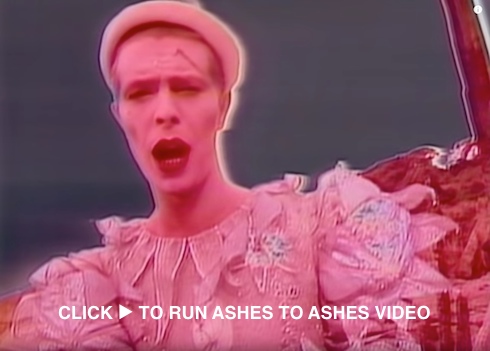
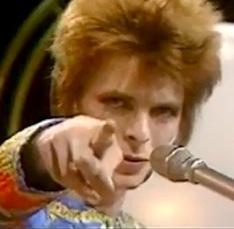
David Bowie

◼︎ As a decade, the 1970s spelt doom. British youth culture had been discredited by punk. A monumental recession followed the Labour government’s “winter of discontent”, threatening the prospect of no jobs for years ahead.

Swinging 80s, London, history, blitz club, blitz kids, theblitzkids, theblitzclub, cult with no name, billy’s, gossip’s, nightclubs, fashion, pop music, steve strange, rusty egan, boy george, stephen jones, kim bowen, stephen linard, chris sullivan, robert elms, perry haines, princess julia, judi frankland, darla-jane gilroy,fiona dealey, jayne chilkes, derek ridgers, perry haines, terry jones, peter ashworth, lee sheldrick, michele clapton, myra, willy brown, helen robinson, stephane raynor, melissa caplan,Dinny Hall, Kate Garner, rachel auburn, richard ostell, Paul Bernstock, Dencil Williams, Darla Jane Gilroy, Simon Withers, Graham Smith, Graham Ball, christos tolera, sade adu, peter marilyn robinson, gaz mayall, midge ure, gary kemp, steve dagger,Denis O’Regan, andy polaris, john maybury, cerith Wyn Evans, iain webb, jeremy healy, david holah, stevie stewart, worried about the boy,Yet from this black hole burst an optimistic movement the press dubbed the New Romantics, based on a London club called the Blitz. Its deejay Rusty Egan promoted the deliberately un-rock sounds of synthesised electro-pop with a beat created for the dancefloor, while drumming in a studio seven-piece called Visage, fronted by the ultimate poser, Steve Strange. He and other fashionista Blitz Kids were picked by Bowie to represent their movement in his 1980 video for Ashes to Ashes (above). But the live band who broke all the industry rules were five dandies with a preposterous name: Spandau Ballet.

As the last of the Baby Boomers, the Blitz Kids were concerned with much more than music. In 1980 they shook off teenage doubt to express all those talents the later Generation X would have to live up to — leadership, adaptability, negotiating skills, focus. Children of the first era of mass TV, these can-doers excelled especially in visual awareness. They were the vanguard for a self-confident new class who were ready to enjoy the personal liberty and social mobility heralded by their parents in the 60s.

For Britain, the Swinging 80s were a tumultuous period of social change when the young wrested many levers of power away from the over-40s. London became a creative powerhouse and its pop music and street fashion the toast of world capitals. All because a vast dance underground had been gagging for a very sociable revolution.

★++++++★++++++★

“From now on, this will become the official history”
– Verdict of a former Blitz Kid

➢ THE DROPDOWN MENUS ALONG THE PAGE TOP lead you to main topics. Choose “View full site” on your mobile.
➢ THE BLOG POSTS on this front page report topical updates which also link to the background pages in the menu.

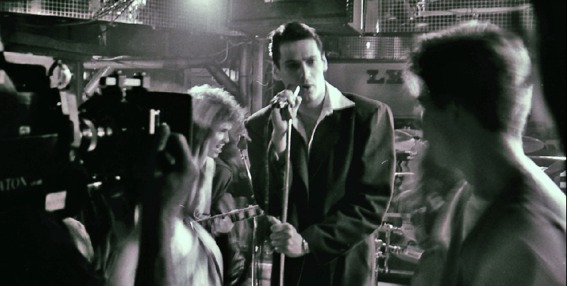
Below: View Blitz Club host Steve Strange in all his poser glory in the promo video for Fade to Grey (1982), also starring the club’s cloakroom girl, Julia Fodor, aka Princess

CLICK HERE to run the anthemic 80s video ♫ ♫ from Spandau Ballet and feel the chant:
nightlife, st moritz, club for heroes,le kilt, wag club, beat route,hacienda, cha-cha, holy city zoo, rum runner, camden palace, scala cinema, studio 21,crocs, le palace, white trash, fac51, Dirt Box, mud club, batcave, barbarella's, croc's, electro-pop, synth-pop, Chant No 1, kid creole, blue rondo, animal nightlife, visage, duran, depeche mode, ultravox, human league, gentry, ABC,soft cell, bolan,vince clarke, haysi, wham!, mclaren, heaven 17, yazoo, foxx, omd, bauhaus, phil oakey, jay strongman, Martyn Ware, martin fry ,altered images, 20th-century box, vivienne westwood, PX, axiom, body-map , foundry, sue clowes,demob, seditionaries, acme attractions, i-D, the face, new sounds new styles, Korniloff, andrew logan, kahn & bell, biddie & eve, toyah,

July 2, 1981: Shooting the video for Chant No 1 at Le Beat Route club in Soho, “down, down, pass the Talk of the Town”. Photograph © by Shapersofthe80s

❏ iPAD & TABLET & MOBILE USERS PLEASE NOTE — You are viewing only a very small selection of content, not chosen by the author. To access fuller background features and topical updates please request “PC version” and Choose “View full site” – then in the blue bar atop your mobile page, click the three horizontal lines which link to many blue themed pages of background articles.
1980 ➤ One week in the private worlds of the new young

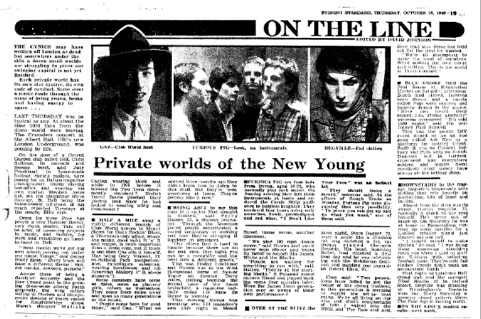
Evening Standard, Oct 16, 1980

First published in the Evening Standard, 16 October 1980

THE CYNICS may have written off London as dead in 1980 but somewhere under the skin a dozen small worlds are struggling to prove our swinging capital is not yet finished. Each private world has its own star system and its own code of conduct. Some steer a scenic route through the maze of being young, broke and having energy to spare

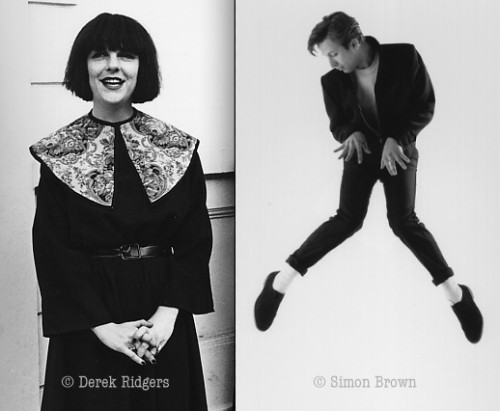
Judi Frankland in one of the clerical cassocks from her degree show summer of 1980, pictured by Derek Ridgers. Style commentator Perry Haines, by Simon Brown

◼ LAST THURSDAY was as typical as any. At about the time 5,000 fans from Disco World were leaving The Crusaders concert at the Royal Albert Hall, 1980’s new London underground was coming to life. On the door of a Covent Garden club called Hell, Chris Sullivan, in monocle and Basque beret, and Judi Frankland, in the home-made clerical cassock that she’d worn in Bowie’s video for his chart topping Ashes to Ashes, were posing for an Italian magazine photographer. Inside, playing box-office and wearing his own modish Stephen Jones hat and all too visible makeup, sat the ubiquitous Steve Strange, 21, Hell being the twice-weekly off-shoot of his much reported Tuesdays at the nearby Blitz club. For him, he said, dressing up is a way of life. “I don’t do it to get attention.” . . . / Continued on our inside page

➢ Read on inside Shapers of the 80s:
A rich slice of London life in 1980 – one week, a dozen prodigies setting the town ablaze, none of them over 22

FRONT PAGE

➤Six magazines that changed the course of postwar British journalism

journalism, Picture Post, influencers, magazines pre-war

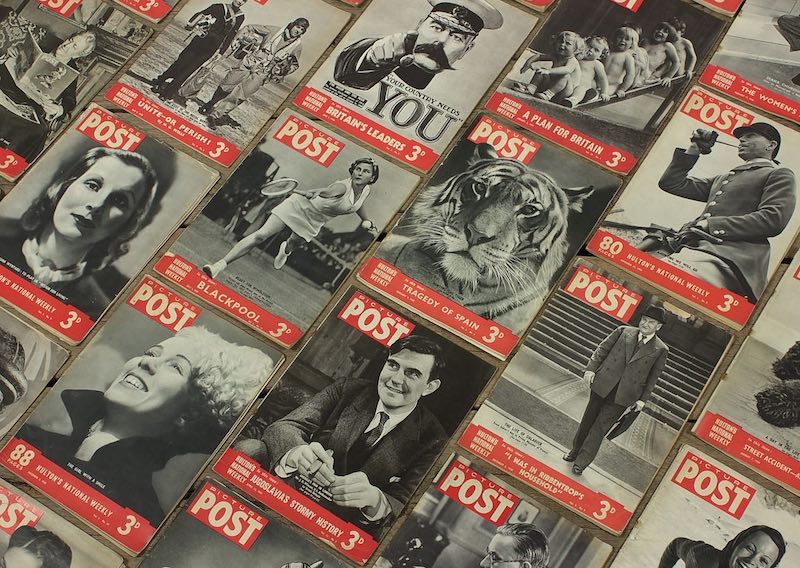
Picture Post covers from 1938 onwards

[This post was first published at Shapers in March 2009]

PICTURE POST 1938-57

The pioneer of photo-reportage. At the height of its powers during the Second World War this was the most widely read periodical in the country, selling 1,950,000 copies a week. Its inspirational editor from 1940 Tom Hopkinson recruited the photographers Bill Brandt, Bert Hardy, Kurt Hutton, Felix Man, Francis Reiss, Thurston Hopkins, John Chillingworth, Grace Robertson, Leonard McCombe. Staff writers included MacDonald Hastings, Lorna Hay, Sydney Jacobson, J. B. Priestley, Lionel Birch, James Cameron, Fyfe Robertson, Anne Scott-James, Robert Kee and Bert Lloyd; freelance contributors included George Bernard Shaw, Dorothy Parker and William Saroyan.

SUNDAY TIMES MAGAZINE 1962-today

The first colour supplement to be published as a weekly addition to a UK newspaper. The first editor was Mark Boxer. From the outset, “photographer first” was the benchmark and required serious investment in photo-reportage from the world’s trouble spots. Michael Rand, its art director for 30 years from 1962, said the credo was “grit plus glamour – fashion juxtaposed with war photography and pop art”. He went on to champion the work of such photographers as Terry O’Neill, Brian Duffy, Richard Avedon, Eugene Richards, Diane Arbus, Mary Ellen Mark. The magazine featured images from the Vietnam war by the photographer Don McCullin, a photo-essay on the Vatican by Eve Arnold, many portraits and photo-essays by Lord Snowdon, and Bert Stern’s final photoshoot with Marilyn Monroe, among many other photographic collections.

NEW SOCIETY 1962-1988

A weekly magazine of social inquiry and cultural comment, it drew on the disciplines of sociology, anthropology, psychology, human geography, social history and social policy, and it published wide-ranging social reportage. The cultural commentator Robert Hewison wrote that New Society became “a forum for the new intelligentsia” created by the expansion of higher education in Britain from the early 1960s. The editor Paul Barker (1968–86) was described by the labour historian Eric Hobsbawm as the “most original of editors”.

NOVA 1965-75

Launched under the slogan A new kind of magazine for the new kind of woman, Nova created its own unique niche in the British consumer magazine market under gifted editor Dennis Hackett, together with visionary art director Harri Peccinotti. They swiftly established their magazine as an influential must-read for the movers and shakers of Swinging London, among men as well as the original target audience of women becoming devotees of its heady mixture of social issues and cutting-edge fashion and modern lifestyle features. Nova’s agenda of journalistically taboo subjects included contraception, abortion, cancer, race, homosexuality, divorce and royal affairs, invariably boosted by stylish and provocative cover images, making it a rarity among magazines. Ultimately Nova had more male readers than female.
[Nova incidentally is where my own career began – DJ, creator of Shapersofthe80s]

RADIO TIMES 1968-88

Programme listings magazine transformed with provocative feature articles under editor Geoffrey Cannon and art director David Driver to create Britain’s biggest weekly magazine sale which rocketed as TV itself became the mass medium, from 8 million to 11.2 million for the Christmas edition of 1988.

THE FACE 1980-2004

In 1980, Nick Logan, a respected ex-editor of NME, staked his house on launching a new magazine that was to make style the focus of youth culture, as much as music. The Face was quickly dubbed Britain’s “style bible”. Even with a top monthly sale of only 120,000, it had an impact not only on the pop press, but the mainstream media too which spawned style pages in newspapers and magazines and “yoof” TV shows across the enlarged landscape of broadcasting. His influential art director Neville Brody single-handedly revolutionised the way magazines were conceived while contributing many new fonts to the canon.

FRONT PAGE