THIS OPINION PIECE IN TODAY’S GUARDIAN may be weighted with legalistic argument, but it reveals the chaos that digital media — downloads and ringtones, for example — have brought upon the music industry. It also confirms the pitiful rates musicians and performers have been paid for their work in the past…
“At the centre of [recent lawsuits involving Eminem and the late Rick James] is the question of whether a download is a licence or a sale. A normal record deal today would usually give an artist 12–20% of revenue from sales depending on how successful they are at the point of signing (only the bigger artists get anything close to 20%). But if a song is licensed to be played in, say, a TV show or a film, they receive 50% of revenue. Buying a download on iTunes may make you feel like you own it, but the fact is that you’ve just bought the rights to play it. And so the court agreed that the Eminem downloads counted as licences.
“Universal argues that it was simply the wording of Eminem’s specific contract that resulted in them losing the case, and it’s true that standard contracts have changed since the advent of iTunes and now clearly state that download sales count as sales. But thousands of artists signed their deals way before iTunes. If they did so before 1980, chances are they’re on a sales royalty rate that is lower than 10% — some artists from the 60s and 70s were on 4%, minus packaging deductions — which means they can up their digital royalty rate more than tenfold.”
❚ A NEAT OUTCOME RESULTED from last week’s Radio 4 interview with Morrissey, former singer with The Smiths, the UK’s leading indie band of the 80s, who broke up in 1987. After the reluctant interviewee said that he was “very very surprised to be making music today” he added that, had his music career failed, “I would have become a novelist”. He then revealed that he had written his memoirs and was in the progess of redrafting his 660-page manuscript. He dared to suggest: “I’d like it to go to Penguin, but only if they published it as a classic. I can’t see why not — a contemporary Penguin Classic — within the next year or so.”
By Good Friday Penguin Books, creators of the modern paperback, were trying to head off a bidding war between rival publishers by announcing that it is indeed willing to publish his autobiography. A spokeswoman told The Independent: “There is a natural fit between Morrissey’s sensibility, his artistic achievements and Penguin Classics. A book could be published as a Penguin Classic because it is a classic in the making. It’s something we would like to discuss with Morrissey.”
There is no minimum time limit before a book can be considered a Penguin Classic, but the list embraces people or works that have “caused scandal and political change, broken down barriers, social and sexual”. However, a leading article in the same day’s paper pours cold water on the mighty ego of the singer they call Bigmouth: “Sadly for Morrissey, it’s the accumulated judgement of posterity, rather than authors, which determines what literature survives and what gets pulped.”
Nevertheless, according to The Independent report: “Morrissey is not short of suitors. The publishing director of Faber and Faber sent the singer an open letter begging him to join the ‘house of Eliot’, a reference to T S Eliot, the giant of 20th-century poetry. Lee Brackstone wrote: ‘We feel very strongly that you belong in this company. You deserve Faber and the love we can give you. History demands it; destiny commands it’.”
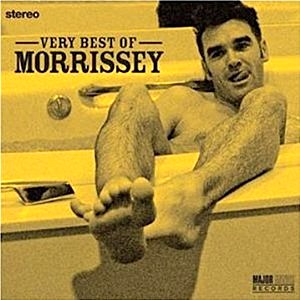
These events coincide with today’s UK release of a new album, Very Best of Morrissey, a 20-track download and CD of remastered solo classics (also as 18 tracks on vinyl, EMI/Major Minor). A bonus DVD, which includes eleven remastered videos (three of which are previously unavailable on DVD) including Boxers, Sunny, and The More You Ignore Me The Closer I Get, plus I’ve Changed My Plea To Guilty taken from the Jonathan Ross TV show in December 1990.
As from tomorrow the 12-minute interview with R4’s Front Row is available on iPlayer. Morrissey deals briskly with pressing issues such as ageing (“many of the early songs were like mating calls and I have to think seriously about singing them now”), the problem of having the prime minister as a fan (“no I’ve never met him”) and, inevitably, a Smiths reunion (this is not the place for spoilers). And yes, Johnny Marr gets a mention.
Update: Listen to favourably selected highlights from a frankly tiresome interview between a cranky Morrissey and a very patient Dermot O’Leary (BBC R2 on April 30, 2011) as the evasive singer winds him up while discussing their Irish roots and musical idols, a UK and Scandinavian tour, an album of new material and the “mutants” of Coronation Street. We hear two clips from his Very Best Of CD, Girl Least Likely To, and Interlude: The next day Moz told True To You why he had been so cantankerous: “I’m sorry I made the O’Leary radio interview so difficult but I was in a foul mood, having spent a full week surrounded by the royal dreading. England may very well be a Windsor dictatorship, but, PR weddings aside, it is usually quite bearable.” He also complains about his familiar views on the British monarchy being cut from the earlier R4 interview.
SUMMER TOUR DATES
➢ Listed at True-to-you.net — Morrissey’s nine-date UK summer tour runs from Perth June 15–Plymouth June 30, plus Glastonbury Festival on June 24, and Hop Farm Music Festival July 2.
Three faces engraved by a life in rock: Depeche Mode’s Andy Fletcher, Dave Gahan and Martin Gore have between them survived depression, addiction, mental instability, attempted suicide, divorce and fatherhood
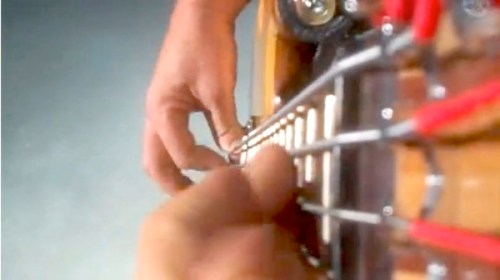
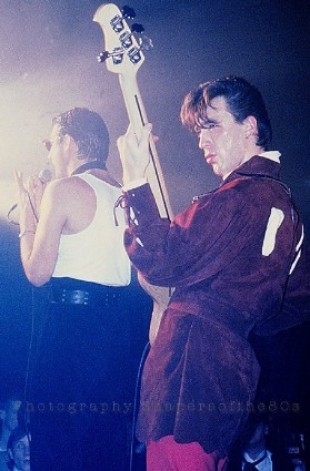
❚ SHOT ON TOUR somewhere in Europe last year for Jonny Kline’s video tour diary. Spandau Ballet’s bass player Martin Kemp clamped a camera to his guitar to grab this down-the-neck lesson in fingerwork… ➢ VIEW ♫ Kemp’s nine-minute clip recently posted at Vimeo
Somewhere in the background Tony Hadley’s unmistakable voice is giving us Fight For Ourselves. In the opening shots Steve Norman introduces the band members — and yes, that’s his saxophone trying to steal the limelight later.
Kemp’s instrument of choice is a British Wal bass and it’s surprising to recall that right from the start he maintained: “I learnt to play bass in order to get into the group, not because I liked music.” These days, as he grooves away onstage Martin steers his bass fondly like an old jalopy, nicely improvising and developing themes of his own, where many bassists think all they have to do is underline a thumping beat.
Back in the early 80s he said: “I hate bass players — most of them just blend in and don’t add anything. I’m a showman. Some bass lines I’ve written are really catchy: I’m proud of Lifeline because you hear people humming it, not the hookline! The essence of the Spandau sound is melody, Tony’s voice obviously, Steve’s sax lines, Gary’s top line, my bass lines. We all think in terms of melodies.”
Three faces engraved by a life in rock: Depeche Mode’s Andy Fletcher, Dave Gahan and Martin Gore have between them survived depression, addiction, mental instability, attempted suicide, divorce and fatherhood
❚ ESSEX BOYS DEPECHE MODE TODAY offer an audio stream exclusively at Facebook as a taster for the release of their newest compilation album titled Remixes 2: 81–11, through Mute Records on June 6. Both of the early members of the band have contributed tracks to the album which covers three decades of music. Songwriter and synth pioneer Vince Clarke, who established DM’s identity in 1981 as the first techno-pop clubbers to break the UK charts, has remixed Behind The Wheel; and Alan Wilder has remixed In Chains. He took Vince’s place in the lineup from 1982, but in 1995 regretfully departed to pursue production and his solo project Recoil.
The mainstays of today’s band remain Dave Gahan (vocalist, who not long ago told Interview magazine “Depeche Mode music somehow appeals to the oddball”), Martin Gore (keyboards, here telling BBC 6Music about the places in the world that were crucial to Depeche Mode’s history — and the problem with the UK), plus Andrew Fletcher (keyboards and on-off manager). Depeche Mode are without doubt one of the greatest of British alternative bands, whose sound and image have grown darker and more provocative with the years. They boast 48 UK hit singles and international album sales said to total 100 million, among which 12 titles were studio recordings and four live.
The new release (left) comes in various formats: a three-disc version holds 37 remixed tracks, while a one-disc version has 13, spanning the decades from the 1981 debut Speak and Spell, through to 2009’s Sounds Of The Universe. Purists will welcome the 6 x 12-inch vinyl LP box set.
❏ Today at Facebook all 3,456,660 fans of the band’s page must have been attempting hear the free stream simultaneously because for a long while it became impossible to join up and listen to the Alex Metric Remix of Martin Gore’s 1989 song Personal Jesus. To ease the pain for DM fans who don’t belong to Facebook, here’s a quick clip: ❏ Update April 4 — Since last Monday 56,290 people have sampled the Alex Metric Remix just mentioned. Today, another track is being streamed free at Facebook from DM’s upcoming album, with more to follow on future Mondays. Here’s a taste of Martin Gore’s 1987 number Never Let Me Down Again in its Eric Prydz Remix: ❏ On May 14 Martin Gore and Andrew Fletcher will be playing DJ sets at Short Circuit which is a two-day celebration at London’s Roundhouse of Mute’s influence as a label, featuring performances, workshops, screenings and installations by its artists who include Erasure and Alison Moyet on the Saturday. Friday May 13 has Mute founder Daniel Miller deejaying as well as Moby, plus Richie Hawtin, Recoil, Nitzer Ebb and other acts.
Dave Gahan wearing Roberto Cavalli jacket, $4,615, and pants, $2,285, styled by Bill Mullen, photographed by Mikael Jansson for The New York Times T Magazine in 2011
➢ Choose “View full site” – then in the blue bar atop your mobile page, click the three horizontal lines linking to many blue themed pages with background article
MORE INTERESTING THAN MOST PEOPLE’S FANTASIES — THE SWINGING EIGHTIES 1978-1984
They didn’t call themselves New Romantics, or the Blitz Kids – but other people did.
“I’d find people at the Blitz who were possible only in my imagination. But they were real” — Stephen Jones, hatmaker, 1983. (Illustration courtesy Iain R Webb, 1983)
“The truth about those Blitz club people was more interesting than most people’s fantasies” — Steve Dagger, pop group manager, 1983
PRAISE INDEED!
“See David Johnson’s fabulously detailed website Shapers of the 80s to which I am hugely indebted” – Political historian Dominic Sandbrook, in his book Who Dares Wins, 2019
“The (velvet) goldmine that is Shapers of the 80s” – Verdict of Chris O’Leary, respected author and blogger who analyses Bowie song by song at Pushing Ahead of the Dame
“The rather brilliant Shapers of the 80s website” – Dylan Jones in his Sweet Dreams paperback, 2021
A UNIQUE HISTORY
➢ WELCOME to the Swinging 80s ➢ THE BLOG POSTS on this front page report topical updates ➢ ROLL OVER THE MENU at page top to go deeper into the past ➢ FOR NEWS & MONTH BY MONTH SEARCH scroll down this sidebar
❏ Header artwork by Kat Starchild shows Blitz Kids Darla Jane Gilroy, Elise Brazier, Judi Frankland and Steve Strange, with David Bowie at centre in his 1980 video for Ashes to Ashes
VINCENT ON AIR 2026
✱ Deejay legend Robbie Vincent has returned to JazzFM on Sundays 1-3pm… Catch up on Robbie’s JazzFM August Bank Holiday 2020 session thanks to AhhhhhSoul with four hours of “nothing but essential rhythms of soul, jazz and funk”.
TOLD FOR THE FIRST TIME
◆ Who was who in Spandau’s break-out year of 1980? The Invisible Hand of Shapersofthe80s draws a selective timeline for The unprecedented rise and rise of Spandau Ballet –– Turn to our inside page
SEARCH our 925 posts or ZOOM DOWN TO THE ARCHIVE INDEX
UNTOLD BLITZ STORIES
✱ If you thought there was no more to know about the birth of Blitz culture in 1980 then get your hands on a sensational book by an obsessive music fan called David Barrat. It is gripping, original and epic – a spooky tale of coincidence and parallel lives as mind-tingling as a Sherlock Holmes yarn. Titled both New Romantics Who Never Were and The Untold Story of Spandau Ballet! Sample this initial taster here at Shapers of the 80s
CHEWING THE FAT
✱ Jawing at Soho Radio on the 80s clubland revolution (from 32 mins) and on art (@55 mins) is probably the most influential shaper of the 80s, former Wag-club director Chris Sullivan (pictured) with editor of this website David Johnson
LANDMARK FAREWELLS. . . HIT THE INDEX TAB UP TOP FOR EVERYTHING ELSE

 By Good Friday Penguin Books, creators of the modern paperback, were trying to head off a bidding war between rival publishers by announcing that it is indeed willing to publish his autobiography. A spokeswoman told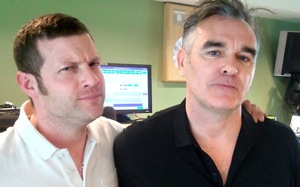



 The new release (left) comes in various formats: a three-disc version holds 37 remixed tracks, while a one-disc version has 13, spanning the decades from the 1981 debut Speak and Spell, through to 2009’s Sounds Of The Universe. Purists will welcome the 6 x 12-inch vinyl LP box set.





 ➢➢ Shapers of the 80s ➣➣