Category Archives: Pop music

2025 ➤ Here’s an extravaganza of a show to confirm the Blitz Kids’ place in history

Blitz Kids, Clubbing, exhibitions, Fashion, influencers, London, New Romantics, Swinging 80s, Youth culture, Blitz Kids, Design Museum,

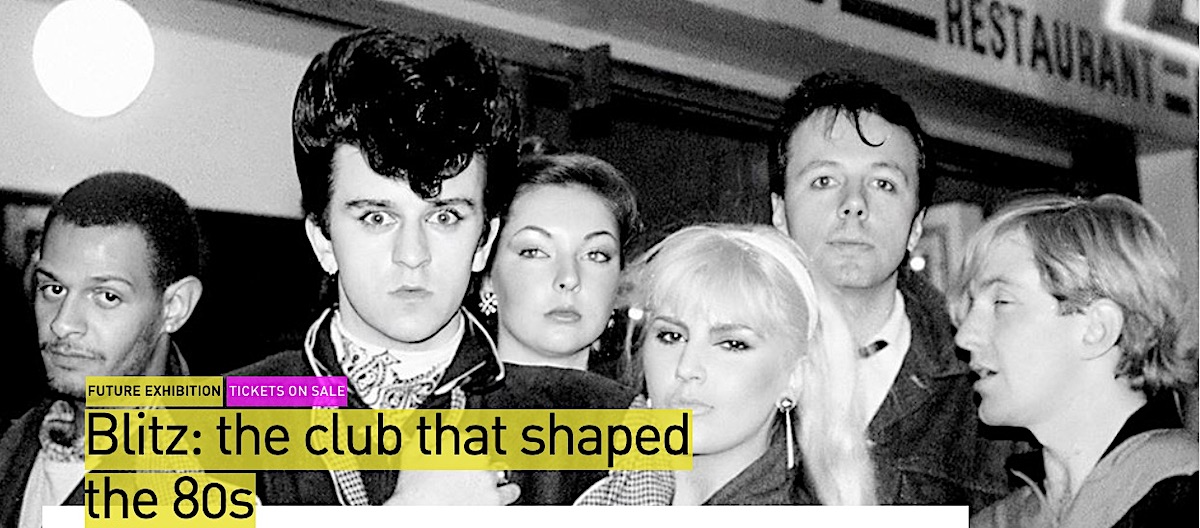
Blitz Club host Steve Strange: Posing outside his club with Visage and friends in 1979 – today promoting an exhibition. (Detail from photo by Sheila Rock)

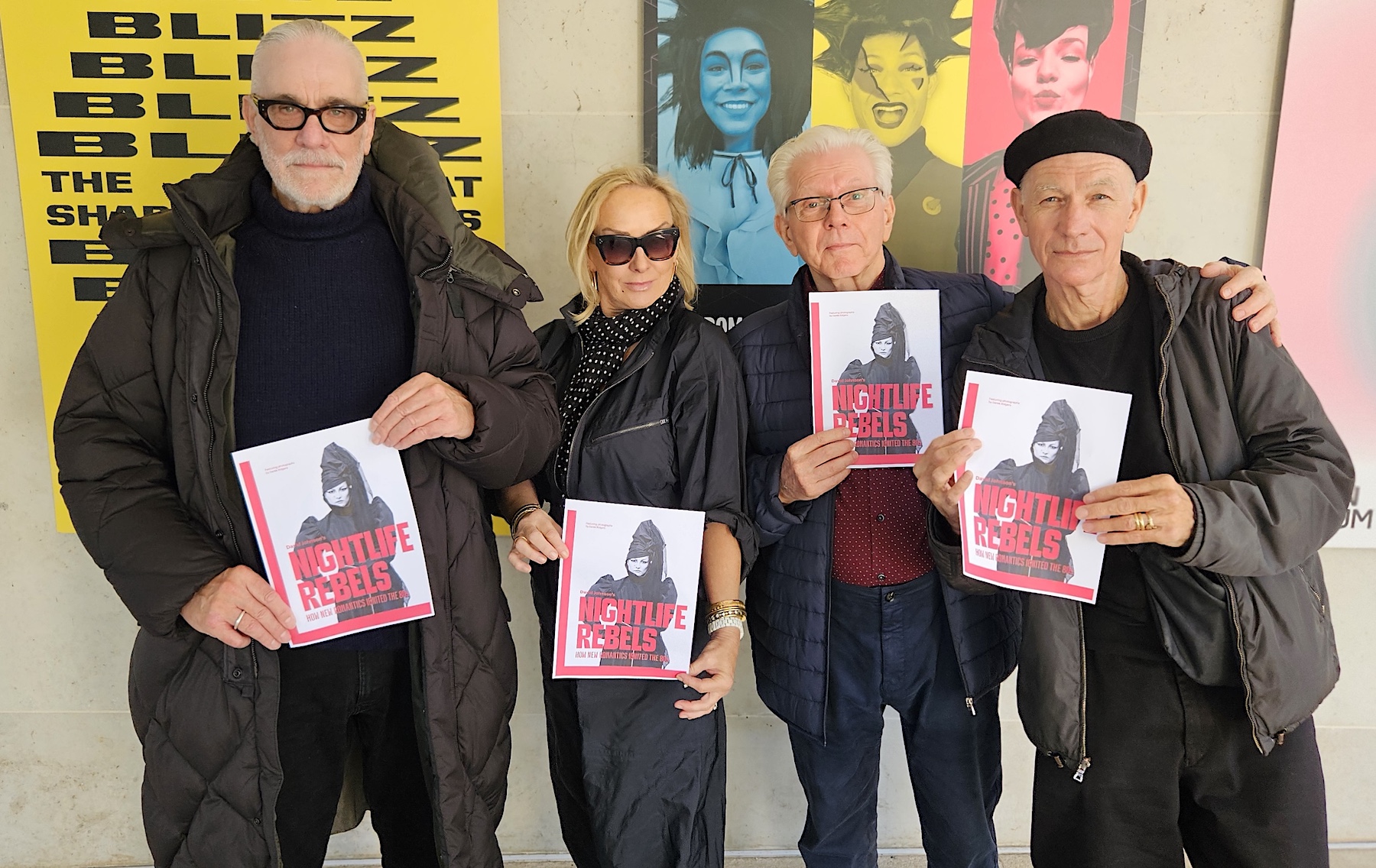
❚ A HANDFUL OF EVER-STYLISH CLUBLAND POSERS stepped forward this week to help London’s Design Museum to announce its autumn exhibition titled Blitz: the club that shaped the 80s. It has been developed in close collaboration with the leading Blitz Kid and later costume designer Fiona Dealey, plus broadcaster Robert Elms, Spandau Ballet’s manager Steve Dagger and music executive Graham Ball, formerly one of Dagger’s firm – three clubland contemporaries who were the least like die-hard Blitz Kids! The trendy Tuesday clubnight which opened in Covent Garden’s Blitz wine bar in 1979 is best known as home to the New Romantics movement which revolutionised Eighties youth culture across fashion, music, media, film, art, design and retail.

The chapter some of us dubbed the Pose Age launched the careers of many talents, from hosts Steve Strange (who died in 2015) and deejay Rusty Egan to popstars Spandau Ballet, Visage, Boy George, Sade, Andy Polaris, and Marilyn, as well as key influencers Perry Haines, Chris Sullivan, Midge Ure, Iain Webb, and stylist Kim Bowen, couture milliner Stephen Jones and Game of Thrones costume designer Michele Clapton, deejay Princess Julia, Darla Jane Gilroy, Stephen Linard, Melissa Caplan, Judith Frankland, Dinny Hall, John Maybury, Cerith Wyn Evans, Simon Withers, Ollie O’Donnell, Richard Ostell, Paul Sturridge, Franceska King, Milly Dwit, Vivienne Lynn, Theresa Thurmer, Lesley Chilkes, David Holah and a hundred more.

Blitz Kids, Clubbing, exhibitions, Fashion, influencers, London, New Romantics, Swinging 80s, Youth culture, Blitz Kids, Design Museum,

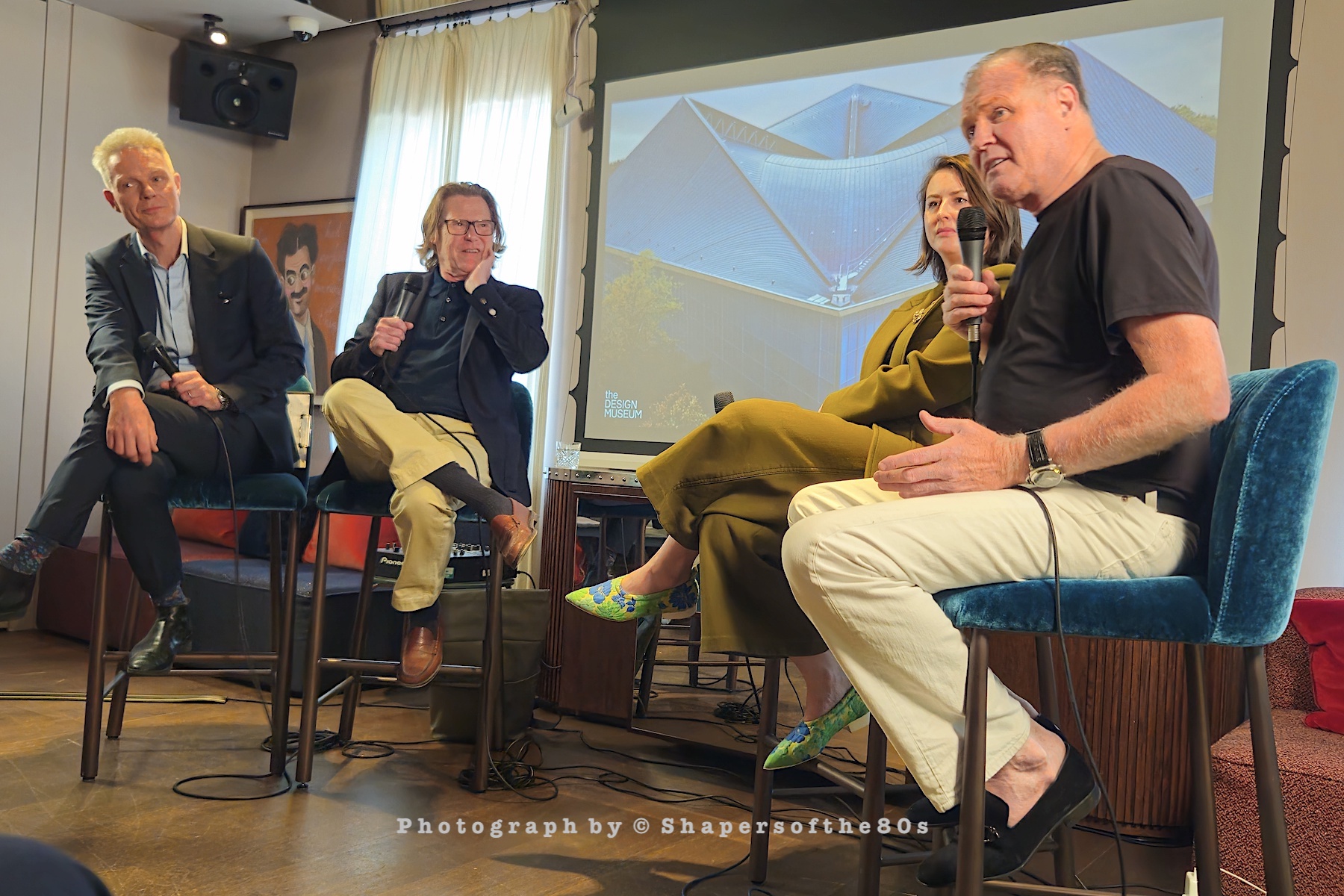
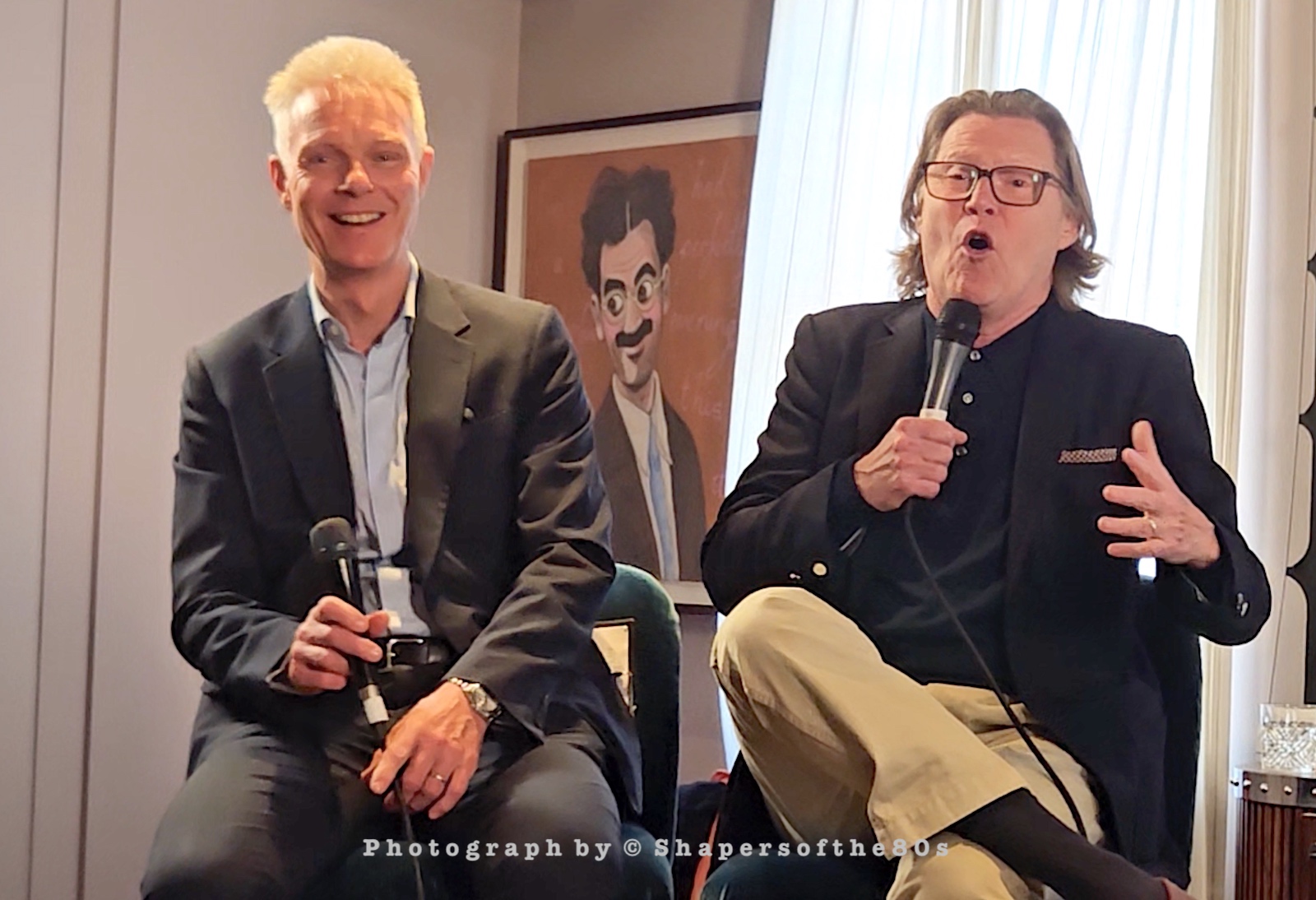
Press call: Tim Marlow, Robert Elms, Danielle Thom and Rusty Egan

The exhibition will feature over 250 items, many unseen by the public, ranging from clothing and accessories, design sketches, musical instruments, flyers, magazines, furniture, artworks, photography, vinyl records and rare film footage.

Yesterday’s press launch at the Groucho club proved one of the liveliest in a long while with spontaneous banter between the Museum director Tim Marlow, Robert Elms, Rusty Egan and curator Danielle Thom. They promised a sensory extravaganza which will surprise us when we walk into the exhibition.

Among other things, Elms reminded us how young his pals all were: “We were called Blitz Kids because we were kids, almost no one over the age of 21 – some of us 16/17… Most of us were really young and creative but also really mischievous. One of the things about the Blitz is that it’s sometimes portrayed as a bit po-faced, all these people posing – we were certainly doing that but it was anything but po-faced. It was scurrilous, dangerous, naughty, it was sexy, all those things.

Blitz Kids, Clubbing, exhibitions, Fashion, influencers, London, New Romantics, Swinging 80s, Youth culture, Blitz Kids, Design Museum,

The Last Word: Robert Elms entertains museum director Tim Marlow (not to mention Groucho Marx, at rear)

“Rusty provided this wonderful backdrop. He never played too loud, so people could dance but at the front end you could still talk. I could get Steve Dagger in my ear saying ‘We’re going to take over the world!’ It wasn’t a disco but a club in the best sense of the word, of like-minded individuals.”

Egan proved as sentimental as ever, reminding us of the legacy of the 1970s: “A hundred kids were coming in on a Tuesday night in the Winter of Discontent. It was a very miserable time, it was also really miserable to be not sure if you’re a boy or a girl but ‘Hey man, Let’s go out into the night’ – and as a DJ I played songs which said ‘He was a she and then, Hey babe, take a walk on the wild side’ … Lyrics were very important as they were for the Rolling Stones in 1977 when disco was get up, stand up, boogie oogie. We wanted lyrics.”

Elms had the last word on the Blitz as the event came to an end: “My mates were quite cool. There were a couple of hundred Herberts and urchins, over-dressed, undervalued, who actually went on to define the decade. This is our place in history and this exhibition is overdue. It’s a recognition that this wasn’t just a load of silly kids with high hair.”

➢ Blitz: the club that shaped the 80s runs from
20 Sept 2025 until 29 March 2026 at the Design Museum
in Kensington. Tickets on sale now.

FRONT PAGE

2025 ➤ Here’s to those Faces who created a new breed of journalism for the 1980s

Swinging 80s, Club Culture, Nick Logan, Steve Dagger, photography, exhibitions, London, National Portrait Gallery, Face Magazine,

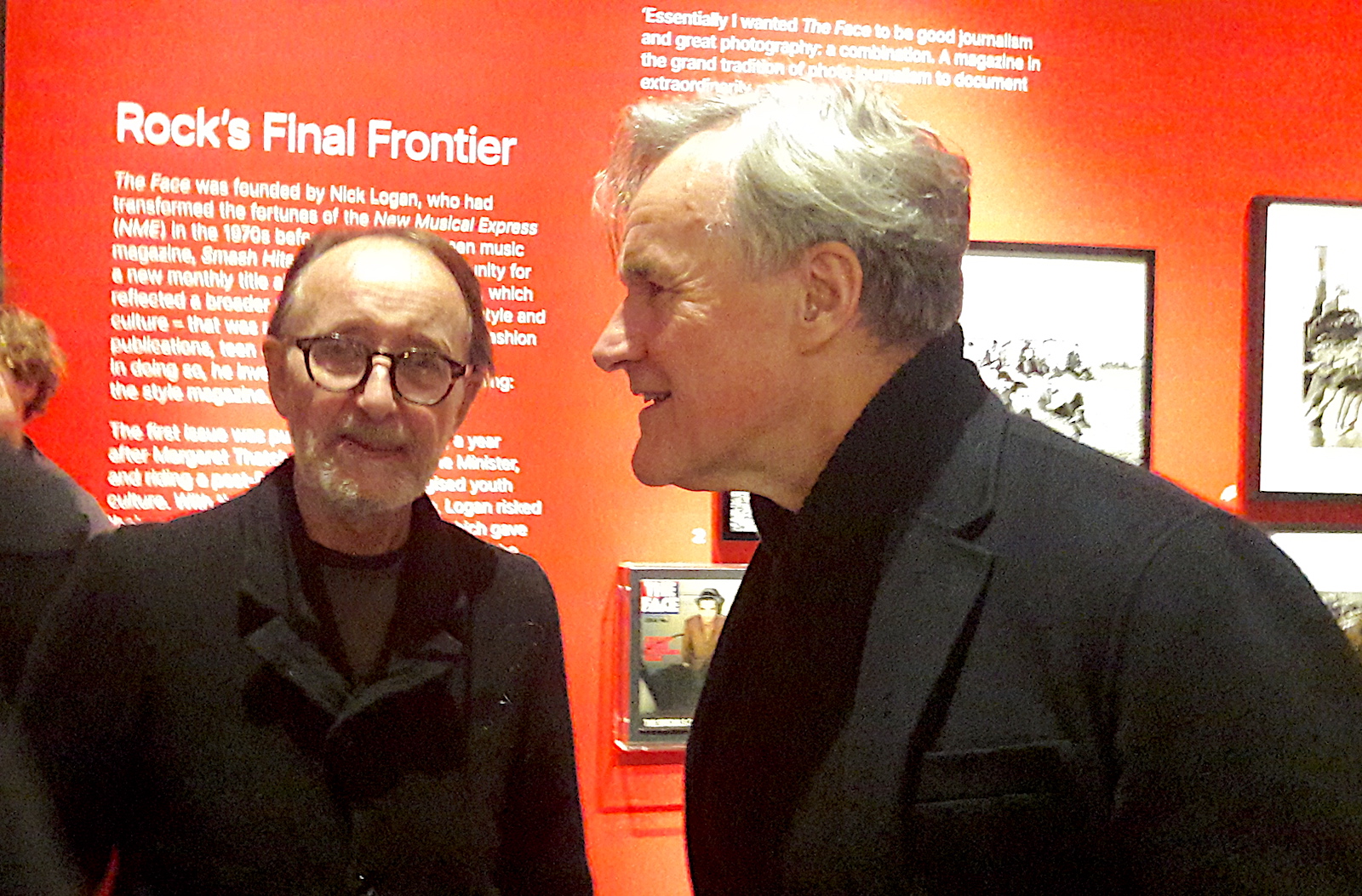
Kings among influencers: Nick Logan and Steve Dagger, at the NPG private view. (Photo © Shapersofthe80s)

❚ AN EXCEPTIONAL CHAMPAGNE PARTY last night launched a compelling exhibition celebrating The Face magazine’s role as Britain’s “style bible” (*see below) for just over 20 years. A thorough display of photos and glass-boxed showcases of the magazine itself confirmed what a revolution in fashion and design took place between 1980 and 2004. And London’s National Portrait Gallery invited several generations of survivors to revisit their contributions, chief among them Nick Logan, founding owner and editor of The Face, as sociable yet bashful as he’s ever been, along with his partner Mia.

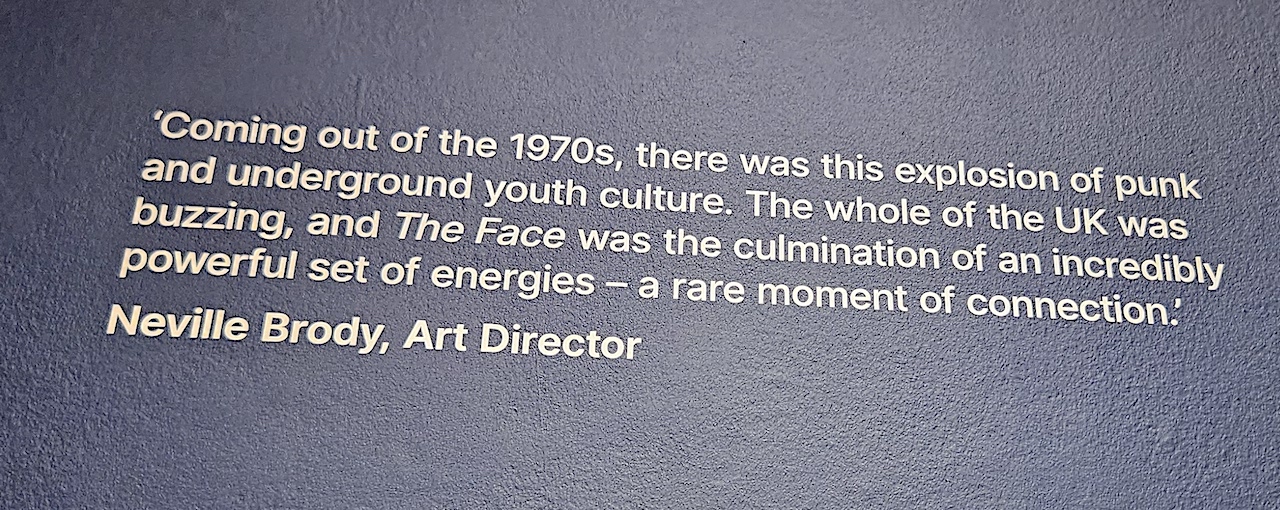
His gift, apart from investing £3,500 of his savings, was to put cool design and quality writing to the fore, at a time when Britain’s four weekly rock newspapers were a very narrowly acquired taste. Logan’s brief also went way beyond music into all aspects of culture and anthropology. That’s the main reason that both he and his radical designer Neville Brody – *who in five years established an inspired new visual language in print – both reject the description “style bible”, just as none of the New Romantics has ever owned up to that name dumped on them by the media.

Click any pic to enlarge in a slideshow:

No less a king influencer was Steve Dagger whose band Spandau Ballet changed the dreary noise of 70s pop into a new kind of dance music for the 80s. Two more such kings who helped shape the Swinging 80s were the St Martin’s graduate milliner Stephen Jones whose hats graced the heads of the first Blitz Kids then went on adding bazzazz to designer collections across the globe… And Peter Ashworth whose super-lit photographs have captured musical and fashionable excess just as far across the globe ever since.

Other vintage faces included Lesley White (the first front-desk copytaster at The Face’s various offices), St Martin’s star fashionista Fiona Dealey, clubland deejay Jeremy Healey, film-maker and musician Jamie Morgan, pioneering music journalist Paul Simper, and Derek Ridgers the straight-up photographer whose pictures illustrated many of my own nightlife reports in The Face’s early years.

Swinging 80s, Club Culture, photography, exhibitions, London, National Portrait Gallery, Face Magazine, Nick Logan, Neville Brody, Kathryn Flett

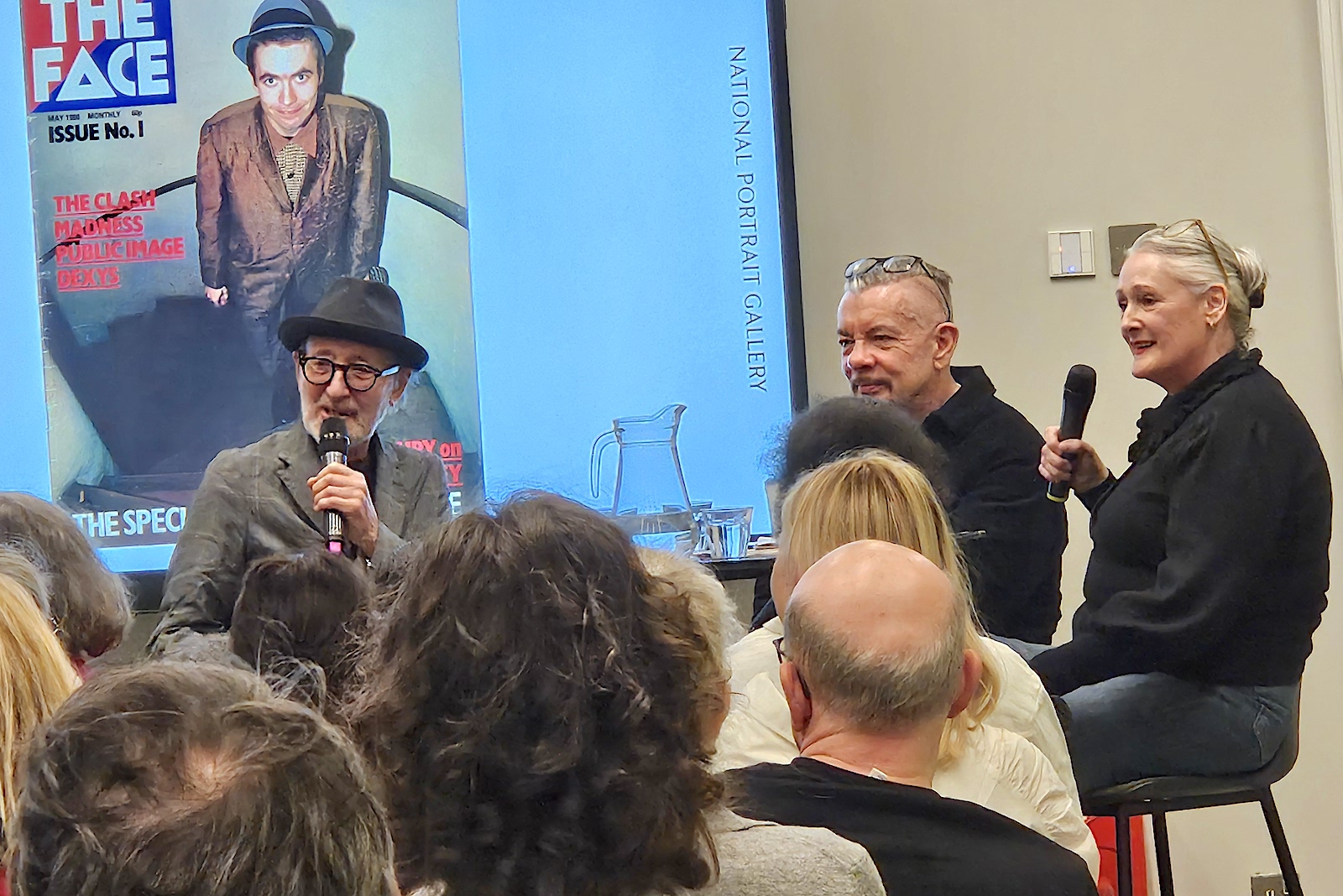
NPG talk about the Face exhibition: editor Nick Logan, art director Neville Brody and from 1987 the mag’s first fashion editor Kathryn Flett. (Photo © Shapersofthe80s)

Swinging 80s, Club Culture, photography, exhibitions, London, National Portrait Gallery, Face Magazine, Chris Sullivan, Ollie O'Donnell

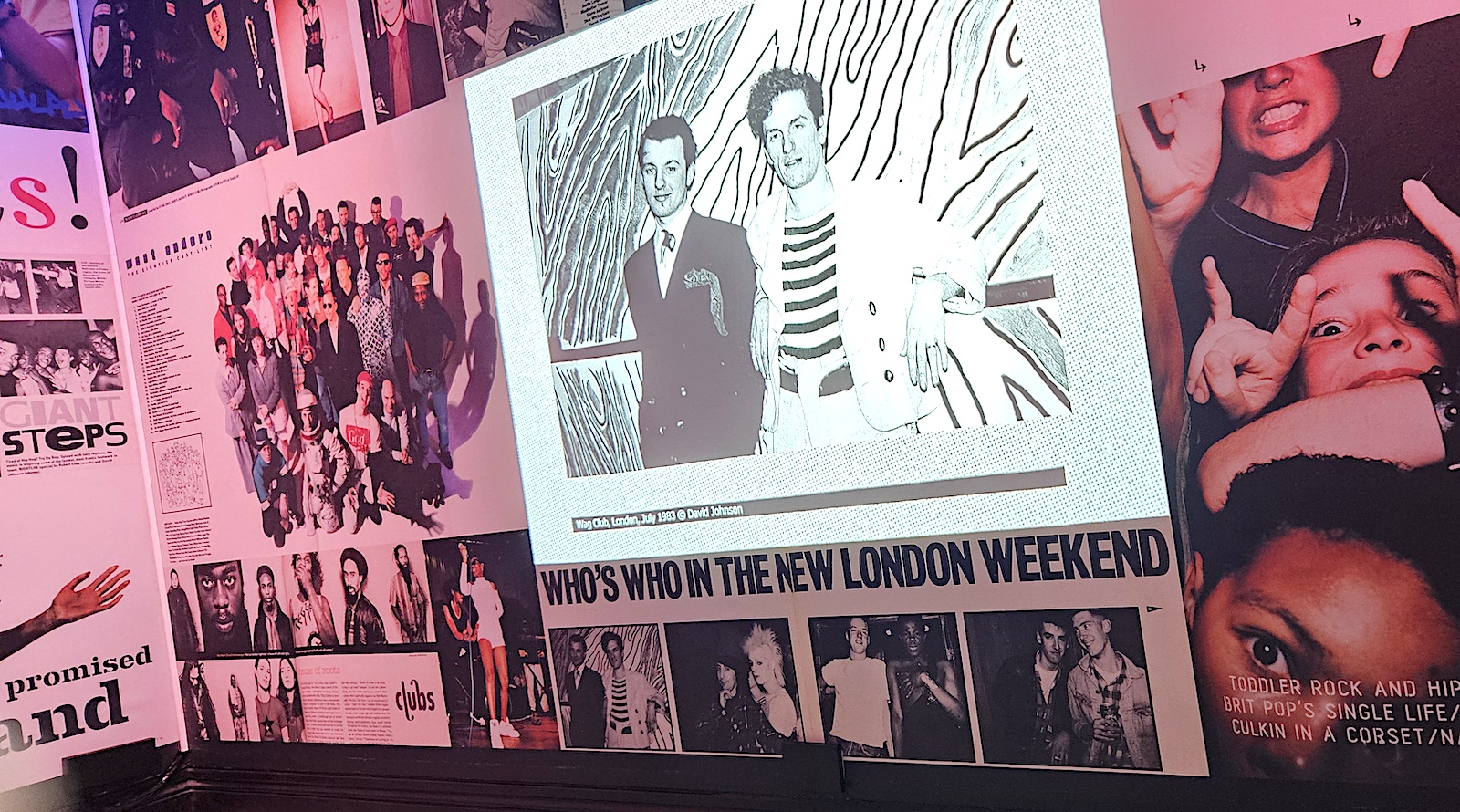
Face exhibition video display: Who’s Who in clubland reportage by Yours Truly, featuring Chris Sullivan and Ollie O’Donnell. (Photo © Shapersofthe80s)

➢ The Face Magazine: Culture Shift exhibition
(20 February–18 May 2025 at the National Portrait Gallery) brings together the work of 80 photographers, featuring 200 photographs as a unique opportunity to see many of these images away from the magazine page.

Swinging 80s, Club Culture, photography, exhibitions, London, National Portrait Gallery, Face Magazine, Neville Brody,

Wise words from the man who subverted graphic design. (Photo © Shapersofthe80s)

➢ Previously at Shapersofthe80s:
1980, Power brokers of the fourth estate

➢ Also at Shapersofthe80s: 1980, How three wizards
met at the same crossroad in time

FRONT PAGE

2015 ➤ Steve Strange’s anniversary: deciphering the pen portraits of the man of masks

Steve Strange, Stephen Harrington, Blitz Kids, New Romantics, nightclubbing, Swinging 80s, London, fashion, pop music, Visage, tributes, youth culture, obituaries

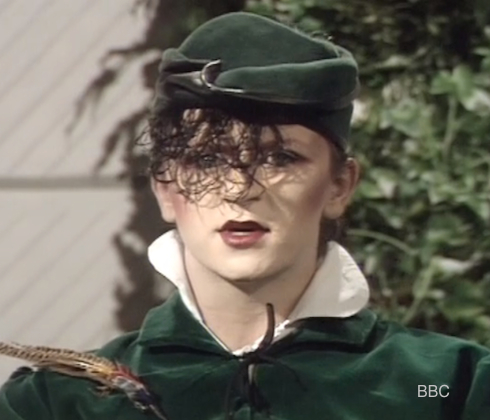
Steve Strange in 1981: here in Robin Hood guise (BBC)

FIRST PUBLISHED 13 FEBRUARY 2015

◼ ONE OF STEVE STRANGE’S TALENTS was persuading the press to believe in his latest wheeze, however fantastic. He had a way of convincing himself that a story was already written and a mission achieved before he had pressed the accelerator and set off. This irritated as many journalists as it amused and many were consequently very sceptical of his next big announcement – like saying he’d booked a big American star to do her first live promotional performance in Britain at his crowning glory, the Camden Palace, capacity 1,410. But in fact he had and she did, and in June 1983 the unknown Madonna was launched in the UK singing to backing tapes for half an hour.

The myths surrounding Steve were always the stuff of self-promotion. Dressing up was part of the same story-telling ritual. Today, he would say, I am Robin Hood, tomorrow Ruritanian Space Cadet, the next day Marionette with the mind of a toy. A compulsive man of masks presents a tricky subject for the scribblers obliged to capture that life once it is spent, so we must tiptoe through the obituaries like a minefield, and beware of tripping over Steve’s much-spun versions of history that were pure fantasy. Even national newspapers seemed to fall for many of the dreams he spouted, as well as the exceedingly vague memories committed to his 2002 book, Blitzed. As the mainstream obituary writers lead you through those New Romantic years, see if you can spot the porkies. . .

➢ The Times obituary:
As the head boy of the “new romantics”, Steve Strange was the flamboyant scene-maker of a colourful subculture that dominated early 1980s British pop music as a showily garish counter-reaction to the stylistic austerity of punk. If punks were the roundheads in pop’s civil war, the “new romantics” were the cavaliers, ushering in a restoration of glitz and glamour, with a delectably decadent flourish… / Continued online

➢ Adam Sweeting, Guardian:
In 1978, Strange and Rusty Egan (then drummer with the Rich Kids) began holding David Bowie nights on Tuesdays at Billy’s club in Soho, a squalid bunker situated beneath a brothel. “We played Bowie, Roxy Music and electro,” said Strange. “It was where our friends could be themselves.” Billy’s could hold only 250 people [not quite!] but swiftly developed an outsize reputation, numbering among its garishly clad clientele such stars-to-be as George O’Dowd (the future Boy George), Siobhan Fahey, later of Bananarama, and Marilyn. . . / Continued online

Billy’s club,Helen Robinson, nightlife, London ,Steve Strange, PX

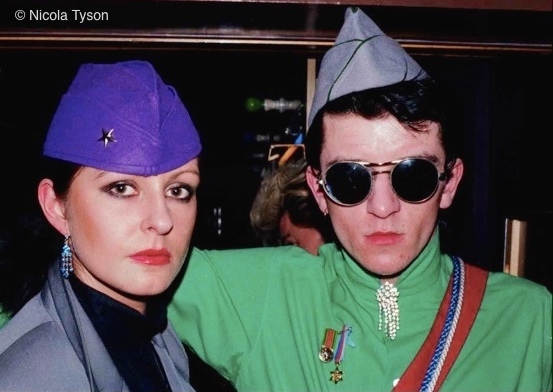
Billy’s club 1978: Strange as Ruritanian Space Cadet alongside PX designer Helen Robinson. (Photograph by © Nicola Tyson)

➢ Daily Telegraph obituary:
Strange fronted sleek operations, such as Club For Heroes in Baker Street and the Camden Palace in north London, where Madonna performed her first British live concert. But Visage split amid acrimony over the division of royalty payments, and his nightspots fell out of vogue in the mid-1980s with the rise of rap, hip-hop and dance music. By this time Strange had a reputation for high-handedness. Years later, Boy George lampooned Strange as the preposterous club host character “Nobby Normal” in his biographical musical Taboo. Strange was not amused. “I don’t think I have that strong a Welsh accent,” he complained. . . / Continued online

➢ The Scotsman obituary:
Although his career as a pop star afforded him only one real hit as frontman of the band Visage, 1980’s austere synthesiser anthem Fade to Grey, Steve Strange’s distinctive image and party-loving persona saw him help invent London’s New Romantic scene. . . Visage’s time in the sun flared all too briefly; with Strange being courted to repeat the clubbing success of places like the Blitz in various US cities, he dived wholeheartedly into the life of the international rock star, with all the pitfalls that entailed. Put off by Strange’s drug use, spending sprees and debauched behaviour, Midge Ure left to concentrate on Ultravox and Visage’s 1984 third album Beat Boy was a critical and commercial failure. The band split the following year, the same year that Strange first took heroin. . . / Continued online

➢ Pierre Perrone in The Independent:
A flamboyant figure with a self-destructive streak . . . By the late 90s he was back in Wales and, by his own admission, acting “very bizarrely”. He spent six weeks in a psychiatric hospital, was arrested for shoplifting and given a suspended sentence. “I don’t know whether it was cry for help,” he told The Independent in 2000, blaming an over-reliance on Prozac, though he seemed comfortable with his avowed bisexuality. . . / Continued online

FRONT PAGE

2024 ➤ Welcome to much unseen photography by Duran’s first lensman

Birmingham, books , photography, Rum Runner, Paul Edmond, Duran Duran, Maggie K de Monde, APS Books
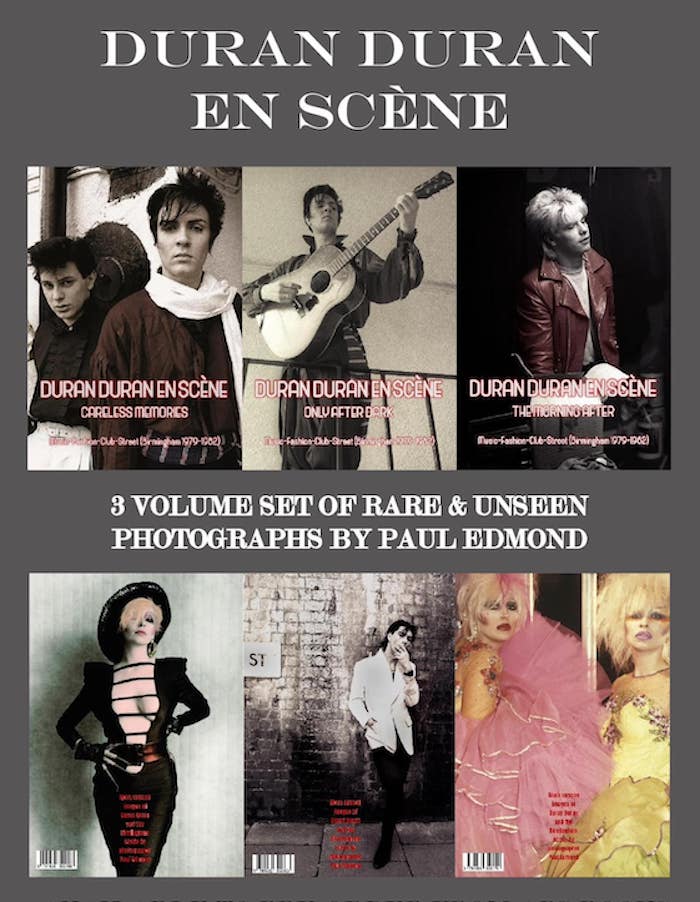
❚ ANY FAN OF DURAN DURAN remembers the very first photographs of the band in 1980 as they finalised their line-up which was to win a recording contract by year’s end and secure their first chart hit with Planet Earth. The five musicians were young and handsome and while they emerged as lucky leaders of the New Romantic music and fashion movement based on Birmingham’s Rum Runner nightclub, so local teenager Paul Edmond learned the skills of photography by capturing their frilly shirts. These Pose Age outfits took inspiration from Jane Kahn and Patti Bell’s futurist boutique, but in those DIY days before stylists had been invented, it fell to Paul to inject a sense of cool nonchalance into his images of the budding pop stars as they too practised how best to look a camera in the eye.

➢ Order your set of Duran Duran En Scène,
three volumes of Paul Edmond’s photographs,
direct from APS Books

Four decades later, after selling 100 million records, winning umpteen music awards, and being welcomed into the Rock & Roll Hall of Fame, Duran themselves revel in releasing new material and reworking the old, their latest album being Danse Macabre. How appropriate then that the photographic archive of Paul Edmond – which embraces a wider world of youth culture than only that of Duran – is being published this spring. A trio of books filling 200 A4 pages has been initiated by his sister Maggie K de Monde, herself an all-round song-writer and performer. Nick Rhodes makes a contribution. Advance orders for the £90 package are being invited by APS Books of Yorkshire, with delivery expected in June.

Tragically, Paul himself cannot share this poignant moment because he was killed in a road accident in 2015. He and I became great friends working on the monthly magazine New Sounds New Styles in 1981, for which he took an arresting cover picture of Jane Farrimond and the flamboyant Martin Degville, a pair of Brummie style leaders who both ended up in the band Sigue Sigue Sputnik.

➢ Previously at Shapersofthe80s: 1980, Out of the blue,
Duran’s first gig pictured at the Rum Runner

➢ Previously at Shapersofthe80s:
1981, Birth of Duran’s Planet Earth

➢ Previously at Shapersofthe80s: 1981,
New Sounds New Styles: Will it all be over by next week?

➢ Previously at Shapersofthe80s: 2023, Celebrating
Kahn and Bell’s role at the centre of Brummie fashion

FRONT PAGE</

2024 ➤ Ahaaaah! 25-year-old stage musical Mamma Mia! confirms ABBA’s genius

❚ WHETHER YOU LIKE ABBA’s SONGS or not, the scale of the West-End musical MAMMA MIA!’s success is staggering. Over 25 years it has been seen by 70 million people in 450 cities across the world, in 16 different languages. At the box office, the show has made £4.5 billion. Yes, billion !!!

So not to have seen this award-winning show is quite a feat, I am ashamed to admit. Yet on the 25th anniversary performance of MAMMA MIA! this weekend at London’s Novello Theatre I was blown away by the sheer energy and quality of this showbiz landmark, with its 34-strong cast of athletic dancers and powerful singers (especially Mazz Murray playing free-love mother Donna) plus an astonishing live orchestra. Here was the essence of full-on theatre.

What was rare for a stage musical was that the audience already knew almost every one of the show’s 22 numbers, written during the decade after ABBA won the Eurovision song contest in 1974 with Waterloo. Yet the lyrics repeatedly proved to be eye-openers during MAMMA MIA!, acting as dialogue to provide a dramatic family plot around a young girl’s marriage on a sunny Greek island.

Mamma Mia!, ABBA, 25th anniversary, Novello Theatre, London, Mazz Murray,

MAMMA MIA! at 25: A ton of tinsel pours down onto the audience during the many encores ending the London show. (Photo © Shapersofthe80s.com)

Mamma Mia!, ABBA, 25th anniversary, Novello Theatre, London, Judy Craymer, Catherine Johnson, Mazz Murray,

MAMMA MIA! at 25: During the encores to the London show’s creator Judy Craymer introduces Catherine Johnson who wrote the book for the musical. (Photo © Shapersofthe80s.com)

Crucially many songs were injected with a comic twist, as with Take a Chance on Me and indeed Honey Honey which, the programme tells us, had Björn Ulvaeus – its co-author along with Benny Andersson – falling off his chair laughing and insisting “I didn’t write this as funny!” On an emotional level there were several truly tear-jerking moments as the family saga unfolded, prompted by songs such as Knowing Me, Knowing You and The Winner Takes it All.

Given that today the four members of ABBA are multi-millionaires, it’s ironic that I profiled them as the first entry in an A-to-Z Sunday Times partwork titled
1000 Makers of Music in 1997 by noting that as Swedish journeyman songsmiths in the Seventies their sing-along melodies epitomised Europe’s dreaded folkloric tradition – in contrast to Anglo-American guitar heroes who mouthed youthful dissent. Nevertheless during their breakthrough decade before disbanding ABBA scored eight consecutive No 1 albums in Britain and 25 Top 40 singles, so catchy that everybody could hum one. A decade further along, the quartet had acquired cult status as exponents of what we had grown to appreciate as “pure pop”.

Mamma Mia!, ABBA, 25th anniversary, Novello Theatre, London, Björn Ulvaeus, Mazz Murray,

MAMMA MIA! at 25: After the encores to the London show one of its lyricists, the modest Björn Ulvaeus, gives thanks for its success and accepts a bow from one of the cast. (Photo © Shapersofthe80s.com)


In 2023 ABBA were awarded the BRIT Billion Award which celebrates musicians who have achieved one billion UK streams in their career. Today they stand tall among the best-selling artists in music history. Last month, all four members of ABBA were appointed Commander, First Class, of the Royal Order of Vasa by His Majesty King Carl XVI Gustaf of Sweden. This is the first time in almost 50 years that the Swedish Royal Orders of Knighthood have been bestowed.

➢ Info about MAMMA MIA! at London’s Novello Theatre

FRONT PAGE