Category Archives: History

2023 ➤ The Blitz Kid poser who reshaped Eighties fashion

An exhibition of fashion legend Stephen Linard’s archive of drawings, photographs and garments runs for a month from 8 September and provides eye-opening insights into his startling influence on the other Blitz Kids and on the fashion jetset…
rel=nofollow

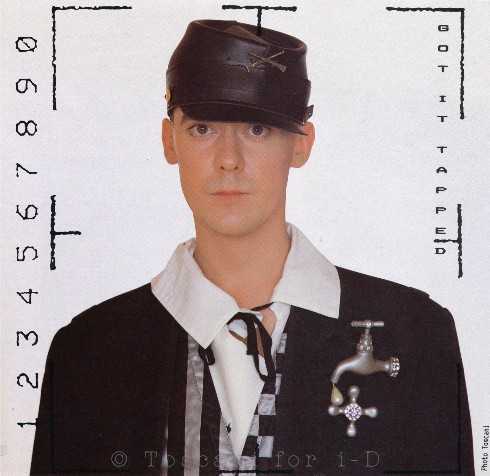
Ex-St Martin’s fashion designer Stephen Linard at the height of his commercial success in 1984, when he worked for three years for Jun Co in Japan. Here pictured by Toscani for i-D magazine’s issue No 15 in “An illustrated guide to detail”. He sports a leather Confederate Army cap $15 bought in transit through Anchorage airport in Alaska. The jacket £250 over giant-collared shirt £120, and trousers £200 are all by Yohji Yamamoto. Waistcoat £180 by Gianni Versace. Artfully placed on his left lapel is a silvered bathroom tap £60 and faucet brooch £40, both from a jewellery collection for Chloe, Paris. He said: “It was worth it for the stir it caused at the Paris collections.”

❚ THE PRESS CALLED THEM the New Romantics and the Blitz Kids, declaring the Eighties the Age of the Pose. Art-school tutor Rosetta Brooks compared their self-consciously styled poses to “street theatre ultimately extended into continuous performance as a post-punk embodiment of Gilbert and George in one person (the individualist).” Each poser, she believed, is a ready-made. Step forward fashion student Stephen Linard for ticking all the above boxes – a flamboyant Canvey Island boy from Southend School of Art (1975-78) who yearned to make a statement in every street or room he graced.

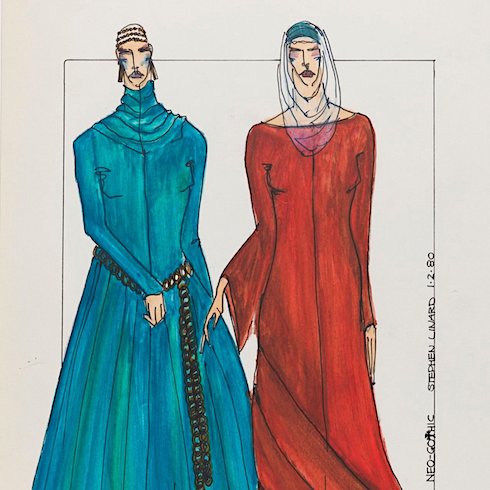
Arriving at St Martin’s School of Art in London (1978-81), Linard pushed the boundaries of excess. Annually, second-year students organised an Alternative Fashion Show but in May 1980 the college’s resoundingly prim middle-class students were out-gunned when Linard sent out his sensational Neon Gothic collection – a stark collision of Space 1999 meets liturgical Gothic meets the masonic livery which was displayed in shops serving the Freemasons’ Hall just along the street from the Blitz Club, the capital’s coolest nightspot.

The audience erupted in cheers. Strutting the runway to the Human League came the then-unknown George O’Dowd sporting a soaraway post-punk mullet atop sharp grosgrain suit with dog collar, Michele Clapton and Myra Falconer wearing risen-from-the-dead pallor beneath shaven heads, along with Fiona Dealey and Julia Fodor (today a Princess). Their vestments were accessorised with religious motifs while emanating a curiously spare chic. Finally, all in white as a “space-age pope”, came gifted Lee Sheldrick, modelling a white silk grosgrain suit with his head shaved bald to become the embodiment of Nosferatu the Vampyre. Resonances abounded for the show’s title to be adopted by the nascent Goth movement.

Stephen Linard, Total Fashion Victim, St Leonards on Sea, East Sussex, Graham Smith, Rogue Gallery, September 2023, exhibition, fashion illustrations, art for sale,

A stark collision of Space 1999 meets liturgical Gothic: Two robes from Stephen Linard’s sensational Neon Gothic collection in his second year at St Martin’s

One year later Linard was determined to submit menswear for his degree collection, despite the efforts of the head of the fashion department to insist on women’s wear. She actually threatened to eject Linard from the college until strong internal protests backing Linard’s pursuit of menswear ultimately prevailed. Modelled by six of his hunky clubland pals, his collection titled Reluctant Emigrés featured swishy draped cashmere greatcoats, patched pinstripe trousers and city shirts that all evinced an Edwardian air of immaculate tailoring punctuated with edgy details.

Linard’s street-savvy lads made a gasp-out-loud impact, as Fleet Street’s Suzy Menkes noted in print. Historians Alan J. Flux and Daryl F. Mallett have also written: “The clothes were instantly covetable, thoroughly masculine in an entirely new way, and electrifying as only the truly innovative can be.” Linard won his first-class Honours degree.

The fashion press feted him upon graduation. His outrageous fashion details flagged direction for the two dozen sharpest Blitz Kids who shaped the New Romantics silhouette from the Blitz onwards. Most significantly, Linard changed his own appearance daily from his foppish Fauntleroy dandy, to the Endangered Species outfit made from animal skins, to the cowboy gilded from hat to toe. Linard has admitted: “The competition pushed you on, especially Lee Sheldrick. At the Warren Street squat [where they lived] you might change what you were going to wear eight times on a Tuesday to try to outdo everyone else at the Blitz.”

Inspiration was all around. In 2020 Linard said: “The Blitz was an art students’ club. The place was choc-a-bloc with artists: Brian Clarke, Zandra Rhodes, Molly Parkin, Antony Price, Duggie Fields, Kevin Whitney and us because it was halfway between Central School and St Martin’s. People who said ‘Oh you Blitz Kids don’t DO anything’ were talking rubbish, because WE all did. We were the ones with our work in the glossy magazines long before the rest.”
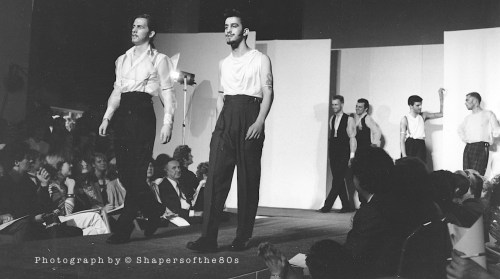
Stephen Linard, Total Fashion Victim, St Martins School, degree show, Reluctant Emigres, menswear

Smiles from the press at Linard’s degree show: The Reluctant Emigrés wore pinstripe trousers in Savile Row fabrics and city shirts in feminine couture fabrics evoking Edwardiana. (Photo by Shapersofthe80s)

Linard’s styles had always been sought after by pop-star contemporaries from Spandau Ballet, Boy George, Frankie Goes to Hollywood, Haysi Fantayzee and The Slits, to U2, the Bee Gees, Womack & Womack, even Cliff Richard and Johnny Mathis, and ultimately to the great god David Bowie himself.

In 1982 the Railway Children collection of stripey Edwardian coats and frocks for school-girls became the first of Linard’s two womenswear collections. He was one of six budding British designers taken to Paris by Blitz Club host Steve Strange to help launch his Anvil album, but also to show that the English could be as stylish as the French – staged at Europe’s coolest nightclub, Le Palace.

Meanwhile Linard’s reputation went on growing among the international fashion set. 1983 brought his collection Angels with Dirty Faces, inspired by the Bogart-Cagney gangster movie set in the Thirties depression. It was both pretty and poignant and it sold worldwide. That year, the snappiest magazine of the day, New York, headlined a special fashion section “The British Are Here”, and selected as the UK’s five leading lights Jean Muir, Zandra Rhodes, Katharine Hamnett, Vivienne Westwood — and Stephen Linard, “one of the most creative of the young designers”.

As recently as 2018, Laird Borrelli-Persson was writing in Vogue online: “Stephen Linard deserves credit for many innovations in fashion and its presentation that we take for granted… One of the Blitz Kids whose dandyish ways had an outsize impact on 1980s style, his early work was distinguished not only by irreverence, but also by a strong sense of narrative… Linard insists his aim was not to cause outrage. ‘I was into doing couture stuff and I was ‘just making clothes,’ really, as Sonia Rykiel used to say’.”

PS: Since you ask, Total Fashion Victim was the name of the one-nighter Linard hosted at the Wag Club during the Eighties.

➢ The Total Fashion Victim exhibition is hosted by Ray Gange at the Rogue Gallery, 65 Norman Road, St Leonard’s On Sea TN38 0EG

rel="nofollow"

St Martin’s Alternative Fashion Show 1980: Linard’s Neon Gothic collection modelled by his most stylish Blitz Kid friends – from the left, Michele Clapton, George O’Dowd, Lee Sheldrick in white as a space-age pope, and Myra Falconer

➢ Previously at Shapersofthe80s: 1980, The year the Blitz Kids took their first steps into the headlines

POSTSCRIPT FROM i-D’s FIFTH ANNIVERSARY
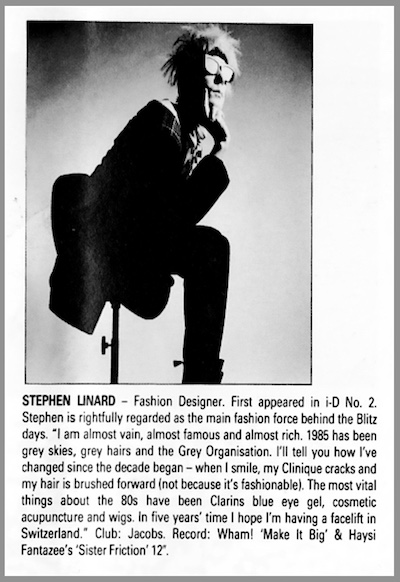
Stephen Linard, Total Fashion Victim, i-D magazine, Nick Knight, photography, fashion,

Stephen Linard seen in i-D magazine’s fifth birthday issue, No 30 in 1985, as one of their gallery of creative protagonists they titled 99 People of the 80s, all photographed by Nick Knight.

FRONT PAGE

2023 ➤ Celebrating Kahn and Bell’s role at the centre of Brummie fashion

Birmingham, fashion, nightlife, exhibition, Swinging 80s, Kahn&Bell, Paul Edmond,

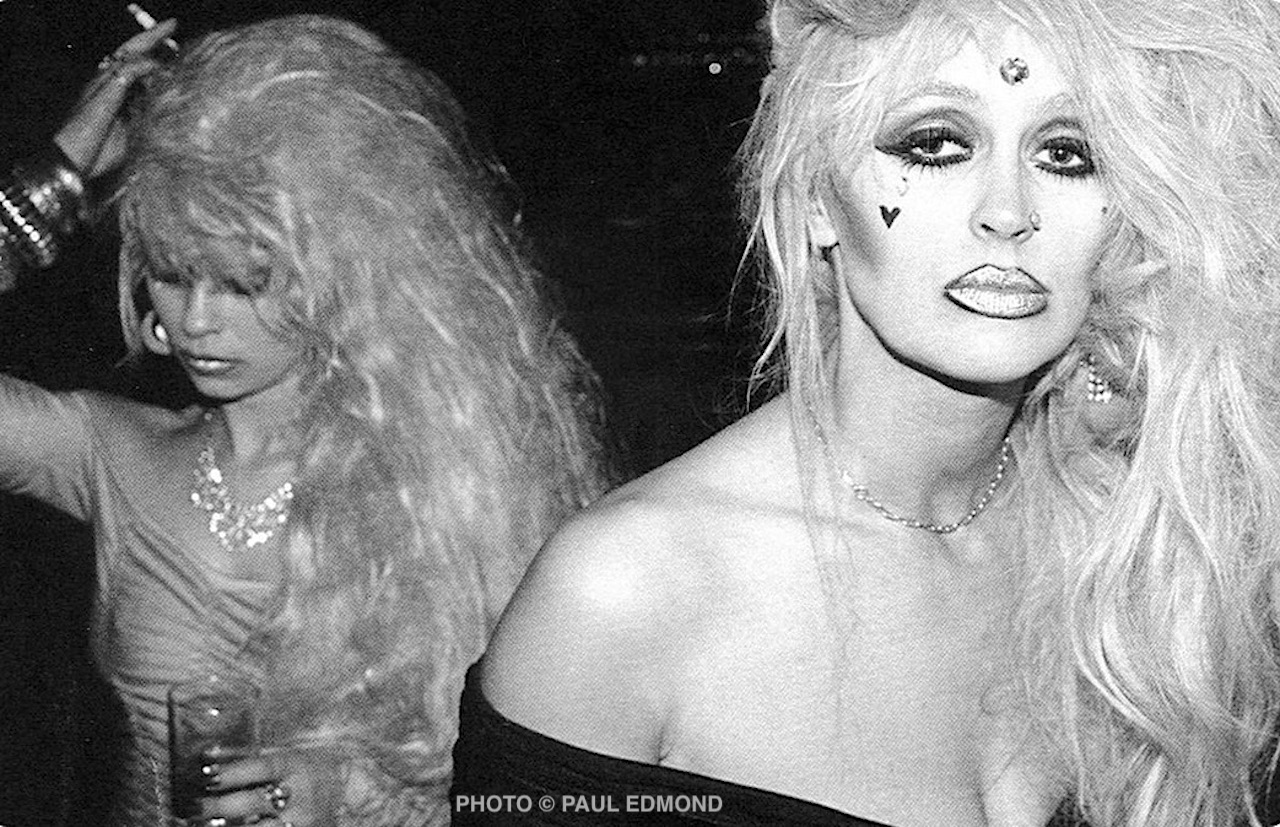
Kahn & Bell in their heyday, photographed by Paul Edmond

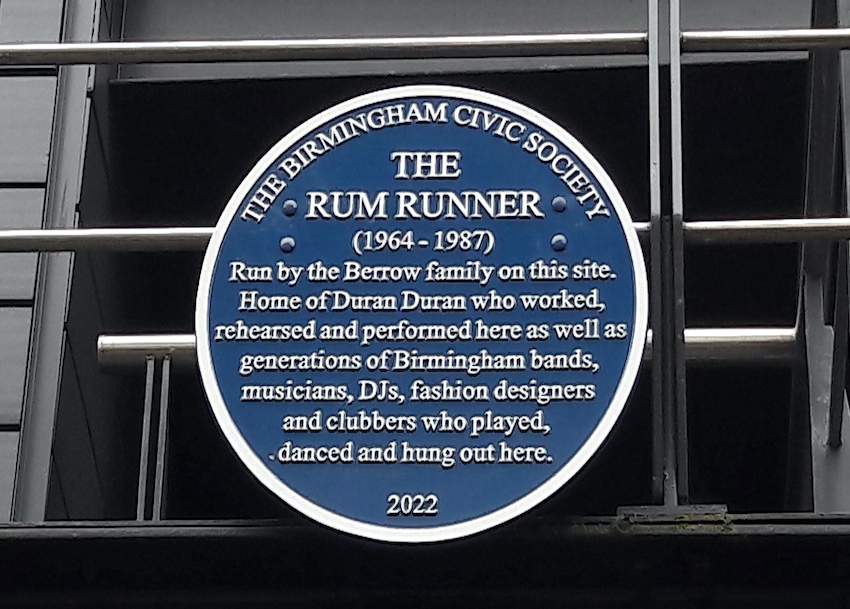
❚ IT’S GOOD TO SEE how trendsetters in Birmingham have been reminding the world of the city’s reputation for creativity. Only last December people with long memories succeeded at finally getting a blue plaque erected on the site of the legendary nightspot, the Rum Runner, birthplace of the international supergroup Duran Duran during the Swinging 80s, and a vital platform for Annie Lennox, Fine Young Cannibals, Dexys, Fashion and Sigue Sigue Sputnik.

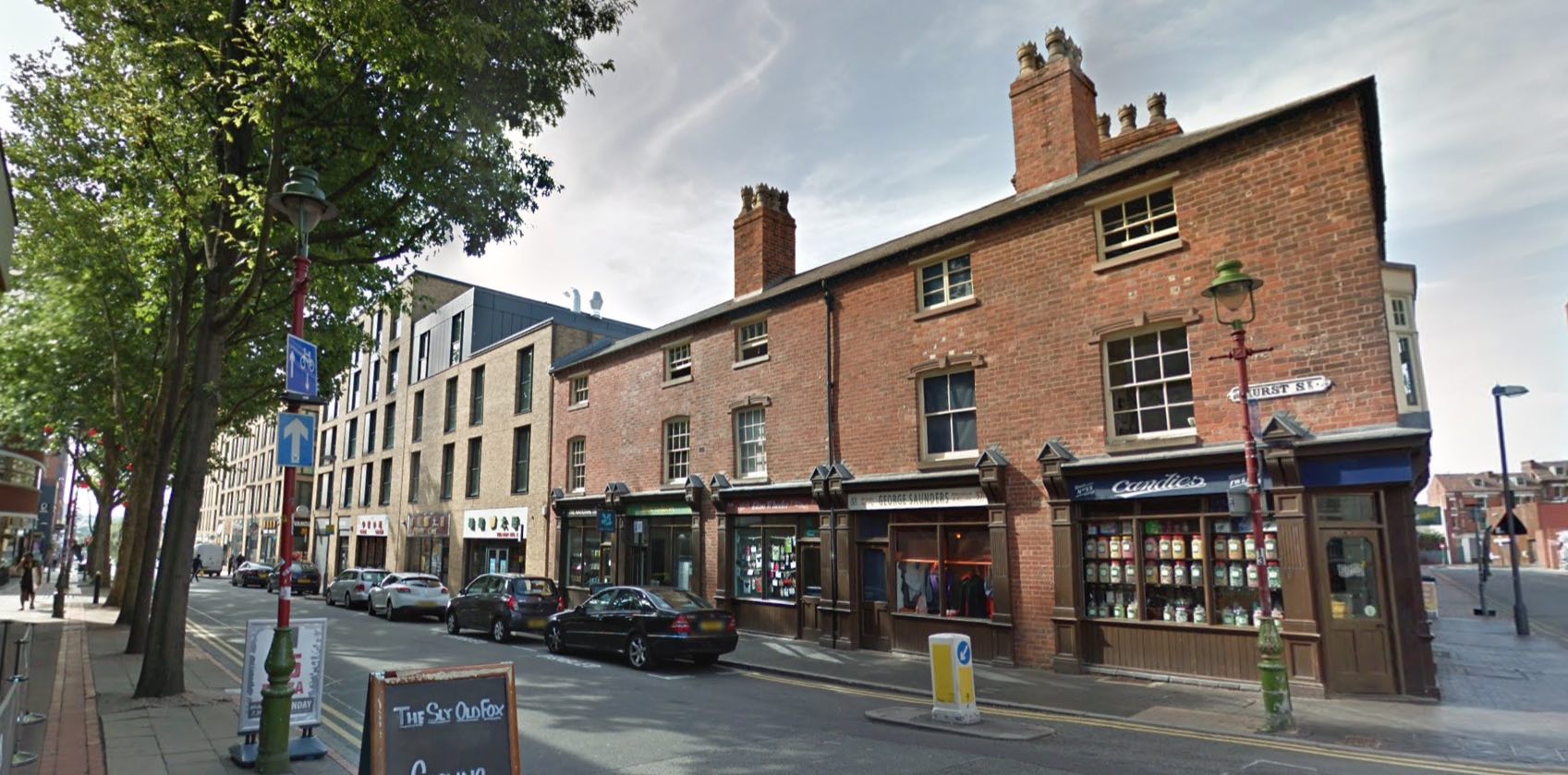
No less famous than the Rum Runner were Jane Kahn and Patti Bell, the fashion duo with their boutique at 72 Hurst Street from 1976 to 1986, which became an epicentre for the alternative music and fashion scene. Their penchant for fantasy and theatricality found them designing hand-made clothing for Duran Duran, the dance group Shock and even Eurovision winners Bucks Fizz. One of their models who worked in the shop as a teenager was the local drag legend Twiggy.

K&B have been described as Birmingham’s equivalent to Vivienne Westwood and the New Romantic magazine New Sounds New Styles observed in 1981: “When similarities to London designers were seen in their collections it was considered that Birmingham had copied London.” This was by no means the case. Duran’s photographer Paul Edmond preferred to describe Patti and Jane as “the queen and princess of the Birmingham New Romantic scene… Patti was the Vivienne Westwood, with Jane as Zandra Rhodes. Jane was perhaps slightly more refined in her fashion design and Patti was the more outrageous one, the most outgoing”.

Even so, in 2006, Duran’s Nick Rhodes created the compilation album Only After Dark to celebrate the music played at the Rum Runner, and lamented with hindsight: “Allegedly this was the UK’s second city, but you couldn’t help but wonder at the gaping disparity with the capital. If this was the second city, what might life be like in the thirteenth?”

Click any pic to enlarge as a slideshow:

In tribute to the iconic designers, an exhibition titled “It’s Not Unusual: a photographic homage to Kahn & Bell” has being curated by the National Trust with input from local photographer Gary Lindsay-Moore, at a quaint terrace of restored shops known as the Back to Backs Museum in Hurst Street. It opens on 9 June though visiting hours are very confusing on the B2B’s complex website so better ring for specific information, as booking seems necessary.

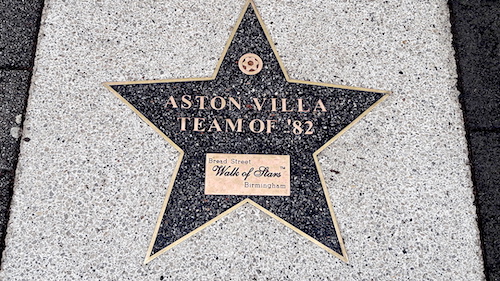
Today no less than in the Eighties, Brum remains Britain’s “second city”, as a focus for a population of more 4 million people in the wider West Midlands, the largest metropolitan county outside the capital. Its fashionable Digbeth scene has been compared to London’s Shoreditch. Likewise Brindleyplace, the Hurst Street village and Broad Street, where a Brummie version of Hollywood’s Walk of Fame once saw large brass stars set into the pavements on both sides honouring local showbiz heroes and institutions. Sadly, this year I counted only a handful remaining. The whole of Broad Street was resurfaced in the recent extension of the metro tram route westwards and most of the brass plates in the Walk of Stars were ripped out.

If we feel rightly sentimental about our past so that a gilded statue of those industrial pioneers Boulton, Murdoch and Watt stands prominently on Broad Street only yards away from the Black Sabbath Bridge – recently renamed after the local rock band – why are David Bintley, Jeff Lynne, the Birmingham Royal Ballet and the Aston Villa Team of ’82 among the only star names to remain embedded in the pavements? To have lost the Walk of Stars as mementoes of the city’s history is a crying shame.

Birmingham, fashion, nightlife, exhibition, Swinging 80s, Walk of Stars, Aston Villa Team of 82,

One of the few surviving brass stars still visible in Broad Street’s Walk of Stars, this one a tribute to Aston Villa FC

➢ It’s Not Unusual exhibition runs 9 June-17 Dec, at B2B Museum at 61 Hurst Street, Birmingham, B5 4TE

Birmingham, fashion, nightlife, exhibition, Swinging 80s, Rum Runner,

The blue plaque finally awarded to the site of the Rum Runner nightclub in Birmingham

Updated 23 July 2023… NEW SOUNDS, NEW STYLES is a live panel discussion just announced for Friday 25 August at 6.30pm in the Birmingham Back to Backs at £5 per ticket. Linking with the museum’s exhibition on Kahn and Bell, this event will explore the culture of the punk and New Romantic scenes in Birmingham in the late 1970s and 80s. The discussion will be chaired by Jez Collins of Birmingham Music Archive and panel guests will include Carl Phillips, Dylan Gibbons and Carol Maye.

➢ Buy NSNS tickets from Birmingham Back to Backs

Birmingham, fashion, nightlife, exhibition, Swinging 80s, Kahn&Bell, Back-to-Backs Museum, National Trust,

Hurst Street’s terrace of vintage shops now home to the National Trust’s Back to Backs Museum in Birmingham

FRONT PAGE
2023 ➤ Join me recalling the heady days of Fleet Street’s newspaper industry

journalism history newspapers, press, library, Evening Standard, Shoe Lane, hot metal,

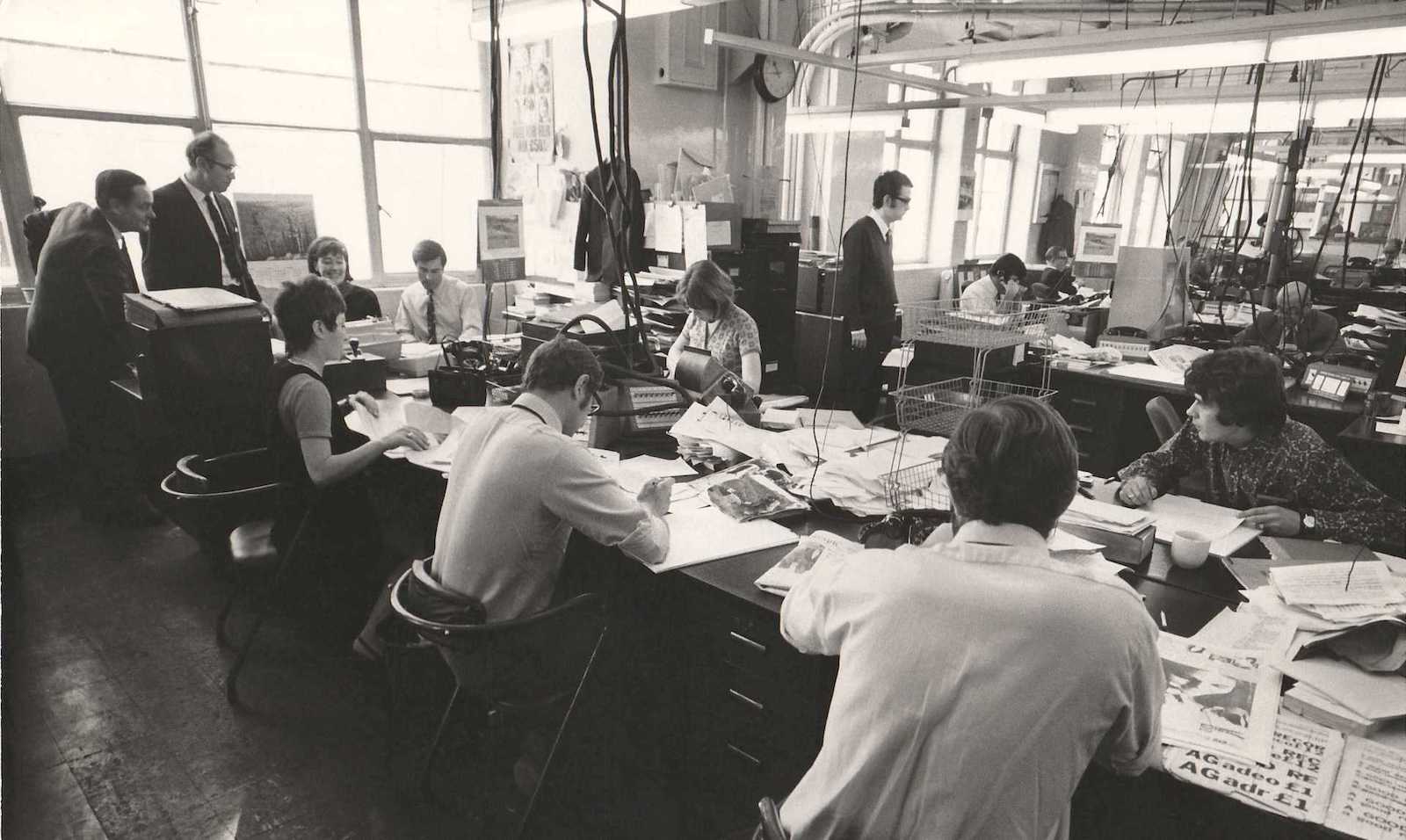
The Evening Standard newsroom in 1969: viewed from the features desk where Yrs Truly worked… Editor Charles Wintour is just visible on the back bench before the far windows at about two-o’clock [© Shoe Lane archive]

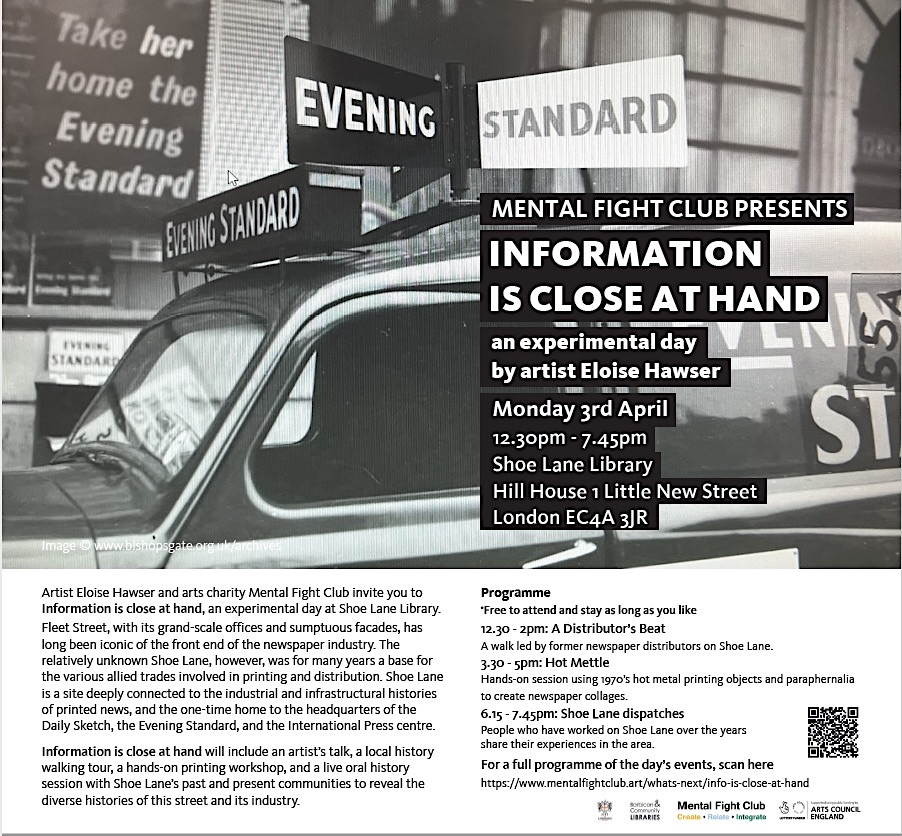
❚ I’LL BE ONE OF FOUR PEOPLE discussing the heyday of Fleet Street newspapers when I worked at the Evening Standard in the 1970s and 80s – on Monday 6:15-7:45pm in the Shoe Lane Library, behind the former Daily Express building on Fleet Street. Remember my trendy column titled On The Line? All free, so do join us.

The day titled Information is Close at Hand is organised by artist Eloise Hawser and it starts 12:30pm with a local walk informed by the working lives of newspaper distributors on Shoe Lane.

From 3:30-5pm there’s Hot Mettle, a hands-on session in the library using 1970s hot-metal printing objects and paraphernalia to create newspaper collages.

Shoe Lane is a back-street deeply connected to the industries producing printed news, the one-time home to the headquarters of the Daily Sketch, the Evening Standard, and the International Press centre. It was also a base for the various allied trades involved in printing and distribution.

Shoe Lane Library is at 1 Little New Street, London, EC4A 3JR. Nearest stations Blackfriars, Chancery Lane and City Thameslink

Journalism, Evening Standard, Shoe Lane, hot metal, library talk, Eloise Hawser, Vic Wilson, David Johnson

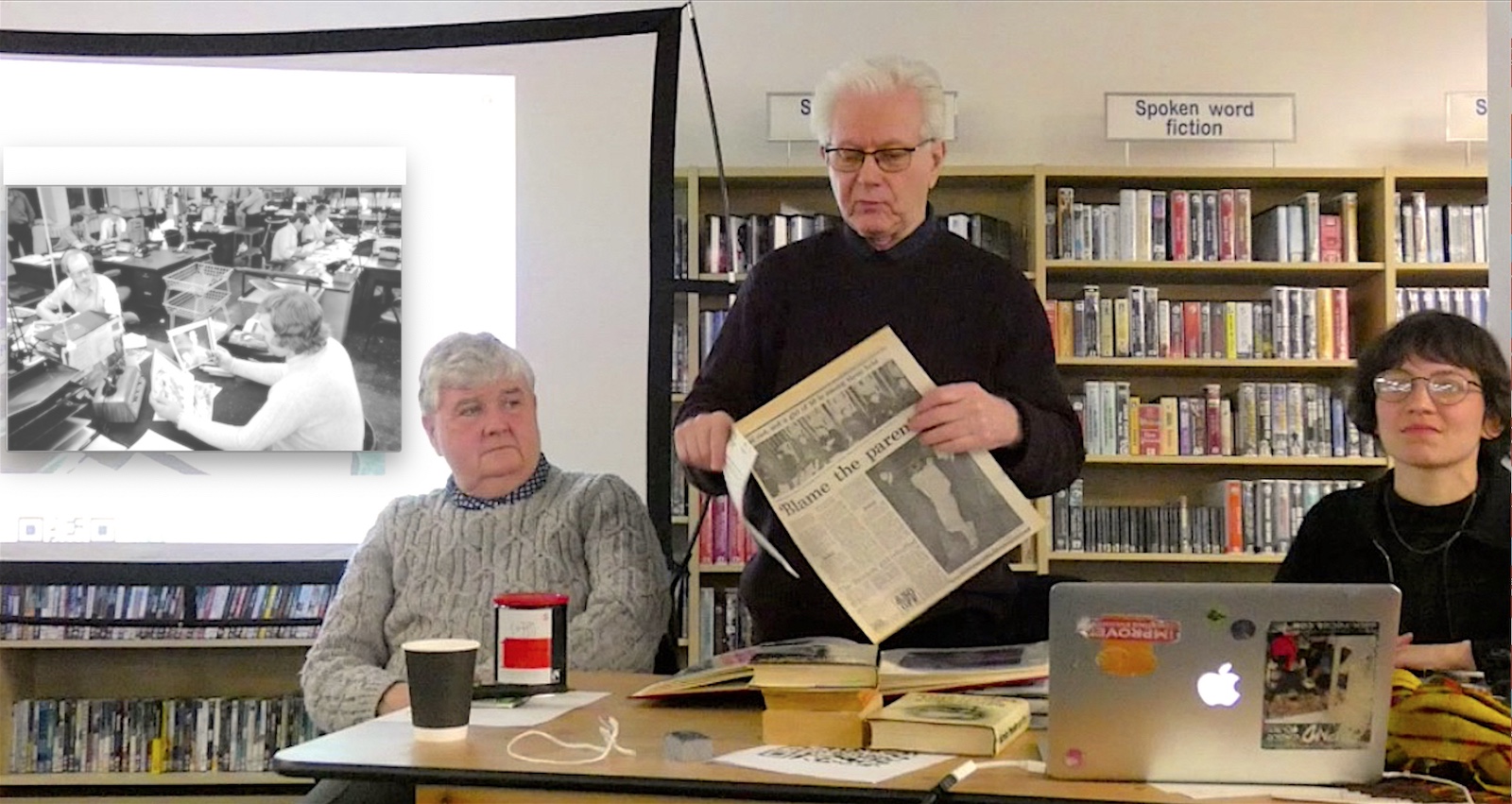
Update – Shoe Lane Library talk, L-R: Vic Wilson (Standard distribution veteran), journalist David Johnson and event organiser Eloise Hawser, with the Standard newsroom onscreen

➢ All about the event Information is Close at Hand

Information is Close at Hand, event, Evening Standard, Shoe Lane, hot metal, Eloise Hawser, Mental Fight Club, history newspapers, press, library,

FRONT PAGE
➤ Captured in 1983: the Westwood-McLaren showdown

Over two weeks I watched fashion gurus Westwood
and McLaren go their separate ways. Daggers-drawn,
they both talked exclusively to the Evening Standard…
Mine were the final pix of them together

Paris fashion, 1983, Vivienne Westwood, Malcolm McLaren, Worlds End, post-punk

Their last dance, Paris 1983… Westwood says: “Malcolm has one more chance to be good.” McLaren says: “I’m not incapable of designing the next collection myself.” Photographed © by Shapersofthe80s

➢ Click here to read my enhanced version about the day
the King and Queen of Outrage realised
the end was nigh, in 1983

First published in the Evening Standard, 4 Nov 1983

➢ Obituary for Dame Vivienne Westwood 1941-2022 at The Guardian

➢ BBC’s in-depth tribute to Vivienne – the godmother of punk

FRONT PAGE

2022 ➤ Finally, a blue heritage plaque to honour the Rum Runner

heritage plaque, Richard Whittingham, DJDick, Birmingham, nightlife, Swinging 80s, Rum Runner,

At the unveiling: Richard Whittingham beside the new plaque. (Photo by Adam Regan)

❚ NOT ONLY WAS A PLAQUE unveiled this month before the Lord Mayor of Birmingham to underline the importance of its key nightclub during the Swinging 80s, namely the Rum Runner. . . But the star of the occasion was clearly its deejay, judging from the immediate stream of affection from fans and friends that is appearing online alongside his bearded photo at the event, now aged 62. They said he’d flown in from Lapland especially.

At the age of 19 Richard Whittingham – aka, DJDick – was one of Britain’s most savvy club deejays, reading the tastes of Britain’s second largest city and trying to broaden them to embrace the new dance music like Duran Duran’s which was rapidly filling the post-punk vacuum. For my Nightlife column in the magazine New Sounds New Styles, Dick told me back then: “I’ve been trying to break the funk here for ages but nobody’s into it. The customers aren’t into it and the owners aren’t into anyone taking over their own night. I’m just buying the funk for the day when I have more freedom.”

Click any pic to enlarge:

He found all the glamorous dressing up led by Birmingham’s Kahn & Bell boutique crazily entertaining,  but he admitted what so many clubbers in the Eighties also did about not feeling safe on the streets. When the BBC’s One Show asked in 2011 what he would have worn at the Rum Runner, he replied: “Zoot suits, the odd frilly shirt, winklepickers of course – I had to hide them, to take them out of the house in a bag, and then put them on, because my mother thought they were trouble shoes.” [See interview in video clip below.] Today Dick describes himself as a carpenter and joiner, though he still deejays for occasional events.

Also at the plaque’s preview for the Lord Mayor of Birmingham, Councillor Maureen Cornish, and members of the sponsoring charity the Birmingham Civic Society, we see many local characters pictured at Facebook’s website The Rum Runner – Birmingham, which curiously fails to identify anybody by name! We’ve already guessed that the bearded one is DJDick. Another in the green coat caught wielding a mic and parting the curtains has to be Paul Berrow, one of the brothers who owned the Rum Runner, formerly of Wandering Star Pictures and Tritec Music in the Eighties.

The new plaque is attached to a modern building called Rum Runner Works, set back off Broad Street where the entrance once stood, today located between the  Solomon Cutler pub and the Walkabout sports bar. In the Eighties the council planned to turn Birmingham into a major conference city with developments including the ICC and Symphony Hall. The Rum Runner was demolished in 1987 to make way for the Hyatt Regency Hotel, which opened in summer 1990.

Click any pic to enlarge:

➢ Visit The Rum Runner – Birmingham website at Facebook

Photos displayed here were taken by Neil Drakeford, Debra Warren and Adam Regan who said: “Lovely to see this legendary Brummie club getting a much-deserved blue plaque. The club launched so many careers but none more relevant to me than this great man” [DJdick].

LISTEN TO DJDICK LIVE AT THE RUM RUNNER:

DJDick, 1983, RumRunner, live music,
At Dick Whittingham’s website we can listen to two recordings of him deejaying at the Rum Runner in 1983. These were donated on his 40-something birthday by Mark “Mack” McDonald, an old friend from way back.

VIEW THE BBC ONE SHOW FROM 2011:

➢ Previously at Shapersofthe80s:
1981, Birth of Duran’s Planet Earth

FRONT PAGE