“ You never think it will happen to you. It was just a Friday night at a rock show. The atmosphere was so happy and everyone was dancing and smiling. And then when the men came through the front entrance and began the shooting, we naively believed it was all part of the show.
It wasn’t just a terrorist attack, it was a massacre. Dozens of people were shot right in front of me. Pools of blood filled the floor. Cries of grown men who held their girlfriends’ dead bodies pierced the small music venue. Futures demolished, families heartbroken, in an instant.
Shocked and alone, I pretended to be dead for over an hour, lying among people who could see their loved ones motionless. Holding my breath, trying to not move, not cry – not giving those men the fear they longed to see. I was incredibly lucky to survive. But so many didn’t. The people who had been there for the exact same reasons as I – to have a fun Friday night – were innocent.
This world is cruel. And acts like this are suppose to highlight the depravity of humans and the images of those men circling us like vultures will haunt me for the rest of my life. The way they meticulously aimed and shot people around the standing area I was in the centre of without any consideration for human life. It didn’t feel real. I expected any moment for someone to say it was just a nightmare.
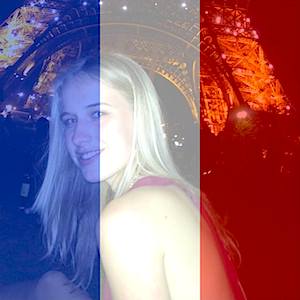
Isobel Bowdery: survivor of the terrorist shootings at last night’s Bataclan concert in Paris
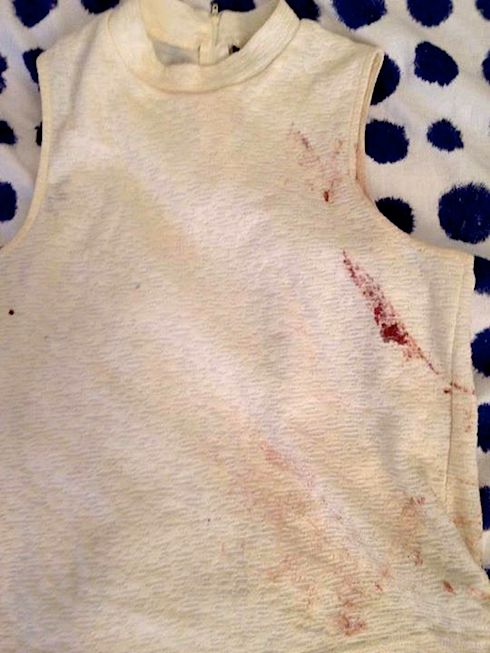
But being a survivor of this horror lets me shed light on the heroes. To the man who reassured me and put his life on line to try and cover my brain whilst I whimpered, to the couple whose last words of love kept me believing the good in the world, to the police who succeded in rescuing hundreds of people, to the complete strangers who picked me up from the road and consoled me during the 45 minutes I truly believed the boy I loved was dead, to the injured man who I had mistaken for him and then on my recognition that he was not Amaury, held me and told me everything was going to be fine despite being all alone and scared himself, to the woman who opened her doors to the survivors, to the friend who offered me shelter and went out to buy new clothes so I wouldn’t have to wear this blood stained top, to all of you who have sent caring messages of support – you make me believe this world has the potential to be better. To never let this happen again.
But most of this is to the 80 people who were murdered inside that venue, who weren’t as lucky, who didn’t get to wake up today and to all the pain that their friends and families are going through. I am so sorry. There’s nothing that will fix the pain. I feel privileged to be there for their last breaths. And truly believing that I would join them, I promise that their last thoughts were not on the animals who caused all this. It was thinking of the people they loved. As I lay down in the blood of strangers and waiting for my bullet to end my mere 22 years, I envisioned every face that I have ever loved and whispered I love you, over and over again, reflecting on the highlights of my life. Wishing that those I love knew just how much, wishing that they knew that no matter what happened to me, to keep believing in the good in people. To not let those men win.
Last night, the lives of many were for ever changed and it is up to us to be better people. To live lives that the innocent victims of this tragedy dreamt about but sadly will now never be able to fulfil. RIP angels. You will never be forgotten. ”
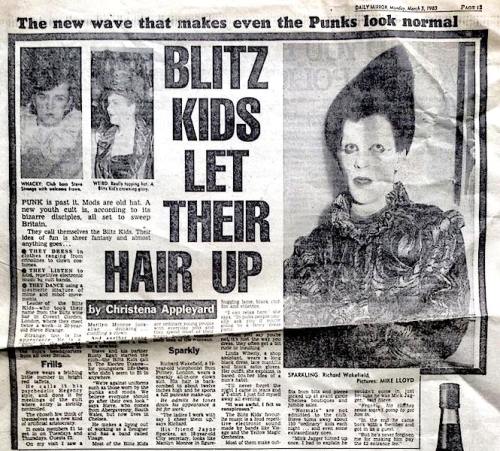
◼ IT WAS MARCH 1980 WHEN the term Blitz Kids was first used to describe the “weird” and “whacky” young people making waves with their in-flight haircuts at the Tuesday club-night in London’s Blitz wine bar. The cutting here from the Daily Mirror says it all: in those days the left-wing tabloid sold 3.6million copies daily and was still taken seriously for its news coverage, while the Sun was just overtaking those sales figures with a distinctly down-market approach. Newspapers were a mass medium back then.
Using the lively wide-eyed language of the red-tops, Mirror feature writer Christena Appleyard put her finger on exactly those elements of individualism and waywardness that would later the same year see the Blitz Kids renamed the New Romantics. What she completely omits to mention is that four days later the house band of the Blitz, Spandau Ballet, were playing only their fourth live gig in London, at the trendy Scala cinema. In fact, she doesn’t even mention the band alongside Visage and Yellow Magic Orchestra as part of the club’s “electro diskow” synthesised soundtrack.
Appleyard was a savvy writer hearing only one part of a genesis story, yet her headline put the Blitz Kids on the media map and Boom! – this was lift-off for the careers and reputations of about 50 cool clubbers
in the short term, and a whole new look and sound for UK pop culture generally.
Julia Fodor is part of the founding mythology of the Blitz Kids, and tonight in London she was giving an illustrated “audience” to a select crowd in Hoxton. At The Glory pub she was reliving her teen years as mannequin de vie for PX, the New Romantic clothes shop, and as Blitz Club cloakroom girl, who later became a cultural commentator and international club deejay who at her height was being helicoptered into Paris to play at the posey Queen nightclub on the Champs Elysées.
And Julia’s rise was the norm for those key Blitz Kids with ambition and attitude in 1980. Before that March you could count the media mentions of Steve Strange’s club night: three in the Evening Standard; a page in Tatler; a feature in New Society, the sociology weekly; and a feature about “chiconomy” in the March issue of 19, the teen magazine.
Then Boom! The Blitz Kids headline triggered a small rash of media outbreaks as two perceptive photographers visited the club to take pictures – Homer Sykes and Derek Ridgers – while student journalist Perry Haines featured his Blitz pals in the Evening Standard fashion pages. What put Spandau Ballet on the map, however, were reports in the Standard, the Daily Star and Record Mirror of their electrifying concert, complete with ornamental Blitz Kids dancing in the aisles to a whole new style of music-making – theatrical, romantic, fashion-conscious and danceable – that resulted in a second Scala concert being scheduled for May.
Reading about the Blitz phenomenon had intrigued a young researcher on Janet Street-Porter’s yoof documentary slot, 20th Century Box, at London Weekend Television which then commissioned the May replay for their cameras. In the meantime one alert talent scout at Chrysalis Records also wanted to hear the band’s music. The next few months saw the Blitz Kids start to gobble up column inches and enliven the odd TV strand, while the two coolest magazines of the decade, The Face and i-D, were launched specifically to report this burgeoning youth culture based on street style.
Spandau landed the first contract for a New Romantic band in October, while Visage released its first album in November after signing to Polydor, and the Romantic band-wagon was under way. By Christmas 1981 the sound of the UK pop charts had been transformed completely from rock guitars to bass and drum.
❏ Tonight and for two more Mondays, An Audience with Princess Julia celebrates London’s glorious counter-culture with extracts from her own memoirs supported by visuals by her friend, deejay and face about the club scene Jeffrey Hinton. Tonight Professor Iain Webb also participates, with bespoke accessoriser Judy Blame on Nov 16 and milliner Stephen Jones OBE on Nov 23 – all at The Glory, London E2 8AS. ➢ Tickets available only in advance via Ticketweb
JULIA RAMBLING DOWN MEMORY LANE TONIGHT
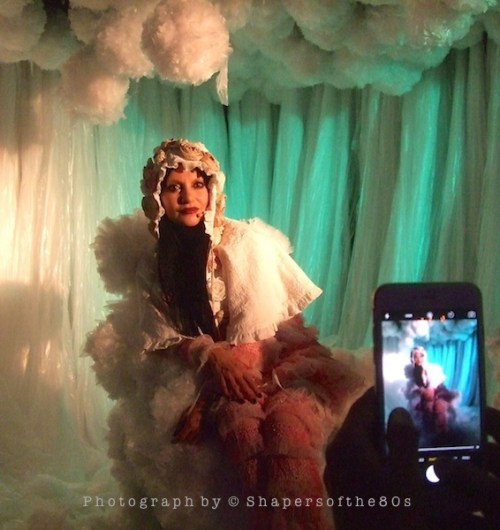
Julia talks: adorned in a kind of Baby Jane pink ruffled nightie by Ryan Lo, from his SS16 collection, with cap of roses (inset, being snapped by Louie Banks)
Click any pic below to launch slideshow
Princess Julia opens her talk: a 3D printed crown signifies her role as a leader of London’s nightlife aristocracy, while she sports red and back dip-dyed denim over-jacket with bell sleeves, black net gown and tie-front knickerbockers, all by Ed Marler from his SS16 collection
Ex-Blitz Kid, now professor of fashion, Iain Webb injected an intellectual moment by interviewing Julia at the bar
Julia shifts to a romantic Baby Jane pink ruffled nightie by Ryan Lo for the second half of her talk
Ex-Blitz Kid Jeffrey Hinton plays deejay and prompter
◼ A BUZZING REUNION OF OLD ROMANTICS partied hard last night in memory of the inspirational host of the 80s Blitz Club Steve Strange, who died suddenly last February. He would have been proud of the gathering at London’s Club Café Royal last night, organised by his close friends Rosemary Turner, Amanda Lloyd and Steve Mahoney. Along with Amanda, Steve’s mother Gill and sister Tanya Harrington have created a charity called the Steve Strange Collective to sustain his legacy as style icon, popstar and one of the key shapers of the 80s. This celebration of Britain’s New Romantic heyday was the first of their projects.
The most impressive turnout last night came from the St Martin’s Massive ’78-84, a galaxy of original Blitz Club regulars whose attitude and talent ignited a new pop culture that became the Swinging 80s. Significant absentees included those living abroad or currently on the road with their still-active acts, such as Rusty Egan, Culture Club and Spandau Ballet.
The champagne party warmed up with a series of Steve’s admirers providing intermittent entertainment, opening with poet Celine Hispache. As Two Blondes and a Harp, former Shock dancer Lowri-Ann Richards in leather jacket and her accompanist Glenda Clwyd gave us a Berlinesque rendering of Visage’s Pleasure Boys. Cabaret chantoose Eve Ferret shimmied in a full-length black peignoir before the Harrington family, first setting fashionistas Stephen Jones and Fiona Dealey a-boogeying before animating her number All Ze French I Know by scattering mangetouts o’er the guests. Eve reminded us how Steve became the nucleus around whom a generation of like-minded spirits came to express themselves. For her the night became more special when she was reunited with her onetime partner James Biddlecombe of their act Biddie and Eve which was a backbone of the Blitz wine bar’s cabaret programme.
Milliner Stephen Jones with Amanda Lloyd and X Factor finalist from 2009, Lloyd Daniels
Connor, Tanya and Gill Harrington with Neena Richies
Peter York meets Steve’s mother Gill
New-generation Visage musicians Steve Jones and Logan Sky
The Harringtons brace themselves for Eve Ferret’s cabaret
Eve Ferret shares her mangetouts with guests
Later Romance vocalist Jamie Lovatt reminded us of his near triumph on The Voice TV talent show, and electro-swing deejay Lee Being gave us Love Croaks. Finally came the loyal friends who joined with Steve in recent years to revive the 80s clubbing spirit with their Face club-nights, Camden Palace doyenne Rosemary Turner and new-generation deejay Alejandro Gocast. He hushed the guests gently and reminded us with intense poignancy of Steve’s giant influence on possibly every single person in the room tonight.
Another giant figure quietly circulating the party was style guru Peter York, who in this context we could dub the Anna Wintour of subcultural commentators, having documented all manner of British tribes from Sloane Rangers to his unique discovery, Them, in his landmark book Style Wars. Back in the day, York claimed that Steve’s Blitz club created “a powerful mix of magpie retro, fastidious taste and market exploitation, tailor-made for what they were calling the art form of the 80s”. Last night, he was charm itself, evidently wowed to meet the Harrington family.
The evening’s music was absolutely on fleek. While David Holah resurrected the fabulous Blitz Jive amid some hefty dancing to good old Romo tunes from Roxy and Japan and Bowie, spinning the platters was a sequence of deejays from Lee Being, Dennis Da Silva, Alejandro Gocast, Steven John Proctor to Little Andy.
Lifelong friend of Steve and bright spark of the Welsh contingent Kim Smith reported today: “Steve, we celebrated your life last night and it was fabulous to meet people that you have told me about.”
Click any pic below to launch the second slideshow
One-time Blitz Kids Stephen Jones, Judi Frankland and Franceska Luther King
Hirsute James “Biddie” Biddlecombe and Kiki (17 years at St Martin’s!)
Peter York, Judi Frankland and Pam Hogg
Onetime Blitz Kids Stephen Jones and Fiona Dealey boogeying on down to Eve’s hot funk
Romance vocalist Jamie Lovatt takes the stage
Blitz cabaret duo Biddie and Eve reunited
Onetime Blitz Kids Mick Hurd and David Holah with Ajay Kenth
Steve Strange’s partners in revival club-nights, Rosemary Turner and Alejandro Gocast
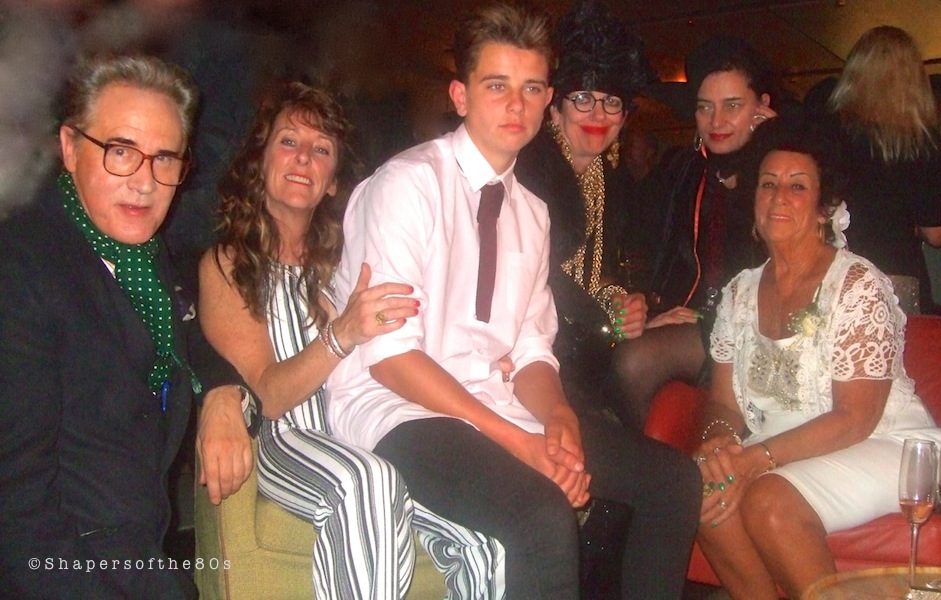
Café Royal guests having a fab night out
Paul “Scoop” Simper, with Steve Mahoney
WHO WAS WHO AT THE CLUB CAFÉ ROYAL
In no particular order here are few of the guests we recognised at the Club Café Royal celebration, with apologies to many more whose names we hope to add once they become known. . .
Gill, Tanya and Connor Harrington, Kim Smith, Mark Fuller, Mark Paul Jones, Lorraine Fitzgerald, Amanda and Shannon Lloyd, Lloyd Daniels, Trevor Byron Jones, Richard Lewis, Peter York, Princess Julia, Fiona Dealey, Stephen Jones, Greg Davis, Judith Frankland, Duggie Fields, Darla Jane Gilroy, David Holah, Steve Mahoney, Jennie Belle Star Matthias, Dennis Da Silva, Alejandro Gocast, Steven Proctor, Little Andy, Leo Baker, Paul Simper, Mark Wardel, Pam Hogg, Daniel Lismore, Franceska Luther King, Anne Pigalle, Mick Hurd, Peter Ashworth, Kiki, Gabriella Palmano, Paul Lonergan, Gemma O’Brian, Bob Biewald, Louise Prey, Ajay Kenth, Kenny Campbell, Nelson Santos, Robert Gordon Eddie, Tamara Adair, Lowri-Ann Richards, Janice Long, Tommy Mack, Mark Tabard, Laura D’Alessio, Steven Jones, Logan Sky, John Harlow, Kevin Buck, Marc Albert, Pinkietessa Pinkie, Caroline Fox, Terry Challingsworth, Soraya Wilkinson-Wyke, Sandra Fox, Angelina Emma Whelan, Bart Barton, Francesca Shashkova, Crimson Skye, Philip Anthony Gable, Nigel Marlow, Tony Vickers, Mark Allen, James Leigh, Ffio Welford, Fifi Russell, Peter Barney, Jurgita Kareivaite-Hamblin, Alejandro Dante, Neena Richies, Dave Baby, Glenda Clwyd, Matthew Mullane, Lee Being, Issidora Mua Rose, Heather Crimson, Andy Adamson, Jamie Karl, Alex Gerry, Sasha De Suinn, Stephanie Henie, Dane Goulding, Michelle Deyna-Hayward, Kevin Bennett…
◼ SHAPERS OF THE 80S TELLS THE DEFINITIVE STORY of a subcultural revolution in British music and style 30 years ago. Its detonator was a youthful blast of impossible trendiness and its stars didn’t call themselves New Romantics, or the Blitz Kids – but other people did. This site gathers together the eye-witness journalism and photography of one observer who knew a good time when he saw one and was published in the coolest titles of the day.
Now in its fifth year, this site has attracted a total of 722,500 views since its launch, according to year-ending WordPress stats. The figures also identify the 20 most widely read items out of more than 600 posted here. Most of these pieces were first published back in the day, but seven of the Top 20 items reflect the continuing interest expressed through the recent 80s revival. In many ways, London is again displaying all the symptoms of being the world’s most swinging city, as it was in the 60s and the 80s, when there were a galaxy of reasons to hit the town every single night of the week.
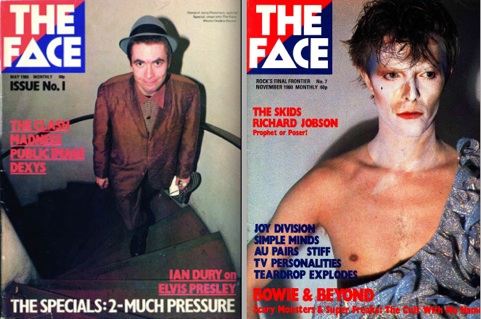
The difference seven months made: In May 1980 The Face launched with Jerry Dammers of the Specials on its cover. By November the new direction was Bowie plus a feature on The Cult With No Name, as the New Romantics were first known
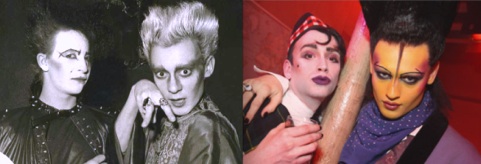
Left, real Blitz Kids – right, the TV version… George’s boyfriend Wilf and fashion student Stephen Linard in 1979 (picture, Andy Rosen)… Daniel Wallace as a Linard lookalike and Douglas Booth as Boy George in Worried About the Boy, 2010 (BBC)
Seminal spread in i-D issue one: the straight-up style of photography is established with, at left, one then unknown New Romantic and, right, one punkette. Photographed on the King’s Road by Steve Johnston
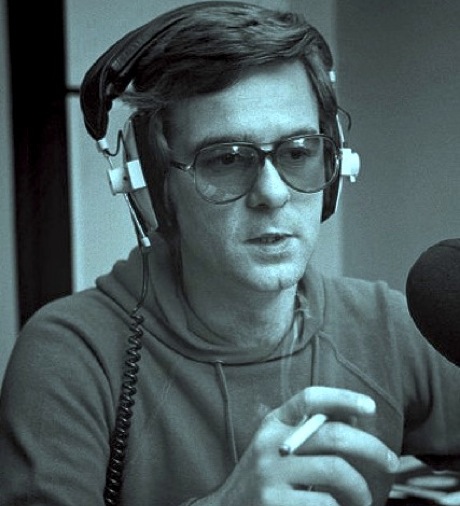
Robbie Vincent at BBC Radio London in the mid-70s: from sparring phone-in host to soul master. (Photographed by Roger G Clark)
♫ Before you read on, click herefor the perfect soundtrack from Robbie’s Radio London shows three decades ago: Friends & Strangers, recorded by saxophonist Ronnie Laws for the album Mountain Dance on Blue Note, 1977
◼ TUNE IN ONLINE AT 10AM TODAY and “If it moves, funk it”. Wherever you are in the world, your internet connection will deliver one of Britain’s great musical tastemakers who 35 years ago had teenagers expressing their musical allegiances in fanatical yet playful rival groups known as soul tribes who adopted saucy names such as the Dartford Tunnel Moles, Medway Maggots, Sherwood Softshoe Shufflers, Welwyn Wobblers and scores more. More important, in an age of casual racism, this white radio and club deejay opened their ears and hearts to the rhythms of black music which they couldn’t hear anywhere else — certainly not in the pop charts and precious few places on the radio dial.
In Britain, your skin colour wasn’t necessarily reflected in your musical tastes but if you danced with your hips, your feet and your soul, black music definitely became the rallying point for frustrated dancers unable to find release in dancehalls of the Saturday-night meat market tradition. The soul tribes of Britain saw white and black kids gathering together in underground clubs discovered only through the grapevine, and often unlicensed for alcohol. Then came marathon all-day soul festivals — the first Purley all-dayer in 1978 springs to mind, with music amplified through the UK’s first serious sound system designed by soul disc jockey Froggy, and a mixing console to provide seamless cross-fades. On dancefloors across the land, the acrobatic tribes competed to improvise the wildest dance moves and to build the highest human pyramids. None of this could have been imagined in America, with its strict apartheid between black and white music, and limited chances even for Motown artists to cross over into mainstream charts and playlists.
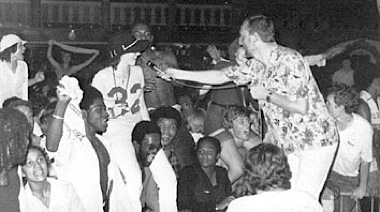
1978: Chris Hill entertains dancers from across the south-east during the first all-day soul event at Tiffany’s in Purley, the London suburb
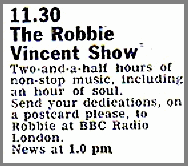
From 1976 the BBC Radio London deejay Robbie Vincent commanded a high-profile lunchtime show on Saturdays which featured imported albums and the novel vinyl format of 12-inch singles to introduce dance fans to a galaxy of consummate musicians pushing the frontiers of hard soul, up-front jazz and raw funk … Ronnie Laws, Eddie Henderson, Weather Report, The Crusaders, Lonnie Liston Smith, Johnny Guitar Watson, Bootsy Collins, George Benson, Wilton Felder, Maze, Roy Ayres, Al Jarreau, Hi Tension, The Fatback Band, Brass Construction, Funkadelic.
Vincent was one of three deejays who soon headed what became known as the Soul Mafia working in London and the south-east and bringing real pressure to bear on record companies to release quality US acts in the UK. His counterpart at the commercial Capital Radio station was black deejay Greg Edwards, Grenada-born and New York-raised. He won his own cult following with his Saturday evening Soul Spectrum and its romantic “Bathroom call”.
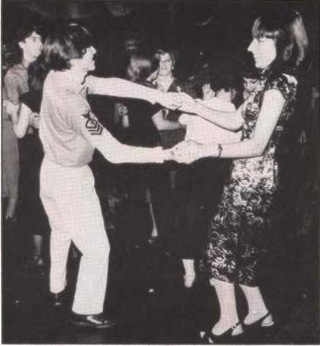
Essex’s Gold Mine in 1975: GI uniforms and swing (courtesy Brian Longman, CanveyIsland.org.uk)
At about the same time that Vincent had a residency at the spanking new Flick’s disco in Dartford, Kent (south of the Thames), Chris Hill was already a legend as resident deejay at the Gold Mine on Canvey Island (north of the Thames). If anywhere in the mid-70s, this was where novelty dressing up began, influenced by several MGM compilation musicals in the cinema (That’s Entertainment!, 1974) and blockbusters such as The Great Gatsby (1974) rekindling nostalgia for vintage Hollywood fashion. For a while, and encouraged by Hill, the Gold Mine had the monopoly on GI uniforms and scarlet-lipped jive-dolls during its Glenn Miller and swing revival.
As a club deejay Vincent was the least theatrical in his presentation. Yet, as an ex-Evening Standard journalist and “devil’s advocate” phone-in veteran, his consummate broadcast interviews with American soul giants (James Brown, Marvin Gaye, Sly Stone, Bobby Womack, Chaka Khan, Luther Vandross, Teddy Pendergrass, Herbie Hancock, Roy Ayers) not only educated a generation of teen clubbers but reinforced the credibility of the music at the very moment when a hitherto cathartic disco scene turned to dross. The destructive effect of the dire film Saturday Night Fever and its musically inane Bee Gee soundtrack cannot be overstated as its infection swept the globe in 1978.
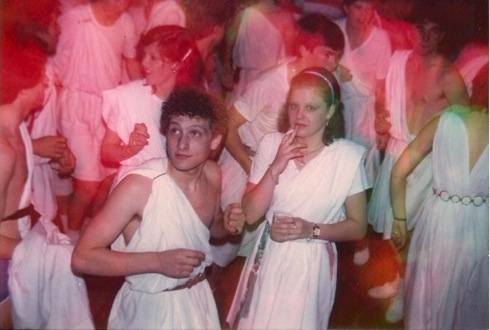
Dressing up for the dancefloor: toga parties were popular on the soul circuit, here in 1979 at Papillon club, Brighton. (Photograph by Paul Clark)
One consequence for the UK was that the emergent soul scene dived back underground and partially reemerged only in 1980 with the New Romantics, disguised in a sharp new wardrobe. There were mutations within the family, but most danced to music with soul and many new young bands had funky beats and jazz pretensions. Mainstream jazz itself came back into favour with young clubbers in the early 80s when the black Brits Courtney Pine and Sade Adu were among the first to make good. All the emergent subcults lived to dance, and dressed up to do so as the 80s matured, while the whole flavour of UK music shifted away from rock guitar to the more upfront dance beats led by the bass guitar and bass drum.
This lineage does get overlooked these days: a substantial generation of 70s music lovers acquired taste, style and feet that knew how to move. This was precisely the audience-in-waiting who demanded and created vibrant world-beating pop and fashion as Swinging London was reinvented in the 80s. Only with the so-called Second Summer of Love in 1988 and the ecstasy-fuelled hurricane of aceed house that swept in from Ibiza did UK youth almost overnight abandon a long history of dancing with its feet. The trance-inducing techno beats of rave music proved so alien to the soul heritage that kids chose instead to wave their hands in the air as if to commune mystically with the lazer light.
Ever since, only their elders can remember how to cut a dash on a sprung-maple dancefloor. Those include the cool soulboys and girls of the early 80s who favoured the funky post-Blitz London clubs such as Le Beat Route, the Wag and Dirtbox. And they express fond gratitude to Vincent, Edwards and Hill as their musical mentors.
New technology: Chris Hill and Robbie Vincent in front of Froggy’s Matamp console
◼ REFLECTING THIS WEEK on the heady rise of the soul movement in Britain, Robbie Vincent identified some of the reasons: “The whole thing grew because as the years went by we had more and more access to a core group of really important American black artists. In the UK, Loose Ends and Soul II Soul are fine examples of bringing not just great home-grown R&B to our ears but style and fashion too.
“Popular black music writing royalty like Kenny Gamble, co-founder of the mighty Philadelphia International Records label, says his favourite cover version of one of his tracks is Now That We Found Love by Third World. It is real credit to UK dancefloors that the track was adopted almost as an anthem. But it needed that pool of musicians like The O’Jays and jazz crossover men like Donald Byrd and Grover Washington to influence and excite those new young kids on the block.”
Robbie Vincent himself deserves credit as an enthusiast with missionary zeal. From the 1978 launch of the then Labour-leaning tabloid, the Daily Star, he wrote an influential weekly column recognising the inventive camaraderie of Britain’s soul tribes, long before other media woke up to the phenomenon. For most of the 80s Vincent’s career saw him curating soul in regular strands at Radio 1, the BBC’s nationwide flagship, then at key music stations ever since. In 1995 he was voted Independent Radio personality of the year at the annual Variety Club awards. In 1997 he contributed profiles to The Sunday Times’s partwork the 1,000 Makers of Music. Of Berry Gordy’s Motown label during the 60s he wrote: “The Sound of Young America became a way of life, especially for Britain’s Mods: if it wasn’t Motown, it wasn’t hip.”
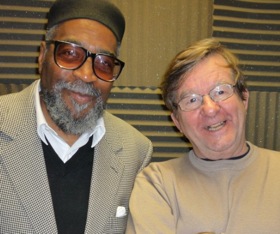
Philly’s Kenny Gamble interviewed by Robbie Vincent today and next Sunday
These days, following a spell of ill-health, Vincent is ensconced at JazzFM airing his jazz-funk credentials every Sunday from 10am in a three-hour masterclass. And Christmas Day’s coup is an extensive interview with Kenny Gamble, who founded the Philly label as one half of the independent producing and writing team Gamble and Huff with 170 gold and platinum records to their credit. On air Gamble talks of its stars such as The O’Jays [view vid], Billy Paul, Michael Jackson and Teddy Pendergrass. In the late 60s Atlantic offered G&H one massive act after another — Aretha Franklin, Wilson Pickett, Dusty Springfield, Archie Bell & the Drells. Gamble says: “We did the background singing on I Can’t Stop Dancing. There were no Drells. There was me, Huff and Karl Chambers. I’ve been a Drell, I’ve been a Stylistic, I’ve been a Blue Note and a few other things.”
As a man of taste he declares The Temptations [view vid] the best group ever and Motown the greatest record company ever. When G&H formed Philly Int in 1971, they set up MFSB as the in-house band, a pool of 30 musicians exactly as the Funk Brothers were for Berry Gordy. “Motown was the blueprint for what we did. The Motown sound was so powerful, everybody wanted it. But we wanted our own sound [view vid]”. Here in MFSB’s The Sound of Philadelphia we hear the driving bass, hi-hat rhythms and lush orchestration that defined what came to be called disco in the eternal battle between rock guitars and dancing feet. The JazzFM interview continues on New Year’s Day.
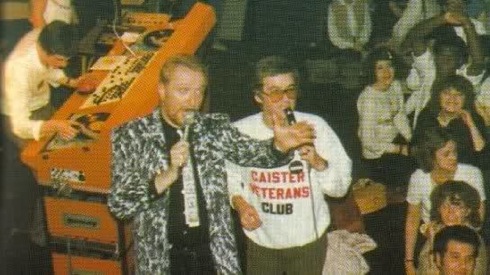
◼ AMONG VINCENT’S FANS TODAY is the young black British mixer-producer Fitzroy Facey, who describes himself as a religious listener to Robbie Vincent’s radio shows through the late 1970s and early 80s. It was 1979 when Robbie helped instigate the National Soul Weekenders at Caister holiday camp, which are still going strong (see video below). In a recent interview for his magazine The Soul Survivors (edited extract at JazzFM), Fitzroy acknowledged that Vincent has been as important as some of the artists he has interviewed because he touched so many people’s lives, to create the “one nation under a groove” [view vid].
Robbie: My phone-in show helped here as I suffered a lot of abuse and would not tolerate racism or bigots. I’m very proud to have stood up to those views and the great uniter is music, which is a universal language.
Fitzroy: I was one of those coming from an Afro-Caribbean background who remember the racist door policies in the 70s and early 80s.
Robbie: Tell me about it; don’t forget I grew up in an era where Tamla Motown didn’t put their artist photographs on the cover sleeves because they were black and they worried they might alienate a white audience. This is an often missed point and an utter disgrace… We should hang our heads in shame.
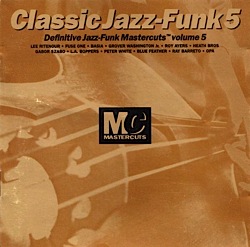
“The Robbie Vincent Edition” 1994: his Classic Jazz-Funk selection for Mastercuts ranges from Grover Washington, Roy Ayers and Gabor Szabo to Blue Feather and OPA
Fitzroy: There are huge testaments on the net to both you and Greg Edwards for opening doors to pirate stations and presenters of black music. The younger generation have no concept that back in the 70s access to black music was totalling less than 10 hours a week. Today it’s 24/7 and you couldn’t possibly imagine 30-plus years later that Kiss, Jazz, Choice FM would grow out of that.
Robbie: That’s what made the scene so exciting — it was pioneering. The people who danced and were enthusiastic about the music made me very proud to be part of it. Because people were so passionate… Remember, the young black musicians were inspired by their brothers in America. You didn’t have to become a boxer — you learned an instrument. It was so infectious, it was inevitable that the music back then would be integral to popular music today.
➢ Choose “View full site” – then in the blue bar atop your mobile page, click the three horizontal lines linking to many blue themed pages with background article
MORE INTERESTING THAN MOST PEOPLE’S FANTASIES — THE SWINGING EIGHTIES 1978-1984
They didn’t call themselves New Romantics, or the Blitz Kids – but other people did.
“I’d find people at the Blitz who were possible only in my imagination. But they were real” — Stephen Jones, hatmaker, 1983. (Illustration courtesy Iain R Webb, 1983)
“The truth about those Blitz club people was more interesting than most people’s fantasies” — Steve Dagger, pop group manager, 1983
PRAISE INDEED!
“See David Johnson’s fabulously detailed website Shapers of the 80s to which I am hugely indebted” – Political historian Dominic Sandbrook, in his book Who Dares Wins, 2019
“The (velvet) goldmine that is Shapers of the 80s” – Verdict of Chris O’Leary, respected author and blogger who analyses Bowie song by song at Pushing Ahead of the Dame
“The rather brilliant Shapers of the 80s website” – Dylan Jones in his Sweet Dreams paperback, 2021
A UNIQUE HISTORY
➢ WELCOME to the Swinging 80s ➢ THE BLOG POSTS on this front page report topical updates ➢ ROLL OVER THE MENU at page top to go deeper into the past ➢ FOR NEWS & MONTH BY MONTH SEARCH scroll down this sidebar
❏ Header artwork by Kat Starchild shows Blitz Kids Darla Jane Gilroy, Elise Brazier, Judi Frankland and Steve Strange, with David Bowie at centre in his 1980 video for Ashes to Ashes
VINCENT ON AIR 2026
✱ Deejay legend Robbie Vincent has returned to JazzFM on Sundays 1-3pm… Catch up on Robbie’s JazzFM August Bank Holiday 2020 session thanks to AhhhhhSoul with four hours of “nothing but essential rhythms of soul, jazz and funk”.
TOLD FOR THE FIRST TIME
◆ Who was who in Spandau’s break-out year of 1980? The Invisible Hand of Shapersofthe80s draws a selective timeline for The unprecedented rise and rise of Spandau Ballet –– Turn to our inside page
SEARCH our 925 posts or ZOOM DOWN TO THE ARCHIVE INDEX
UNTOLD BLITZ STORIES
✱ If you thought there was no more to know about the birth of Blitz culture in 1980 then get your hands on a sensational book by an obsessive music fan called David Barrat. It is gripping, original and epic – a spooky tale of coincidence and parallel lives as mind-tingling as a Sherlock Holmes yarn. Titled both New Romantics Who Never Were and The Untold Story of Spandau Ballet! Sample this initial taster here at Shapers of the 80s
CHEWING THE FAT
✱ Jawing at Soho Radio on the 80s clubland revolution (from 32 mins) and on art (@55 mins) is probably the most influential shaper of the 80s, former Wag-club director Chris Sullivan (pictured) with editor of this website David Johnson
LANDMARK FAREWELLS. . . HIT THE INDEX TAB UP TOP FOR EVERYTHING ELSE











 ➢➢ Shapers of the 80s ➣➣