Category Archives: Culture

➤ Discover Ubu while Christopher Walken takes flight to Fatboy Slim

➢ IF YOU’VE NEVER VISITED UBU.COM,
CLICK HERE NOW FOR THIS
♫ ♫ NEW YEAR BON BOUCHE

Weapon of Choice,Spike Jonze,  Fatboy Slim, Christopher Walken

Weapon of Choice: director Spike Jonze, music Fatboy Slim, image © Panopticon

❚ WEAPON OF CHOICE is a short video clip of a Fatboy Slim track directed by Spike Jonze. Yes, that is Christopher Walken performing a swing-from-the-rafters dance solo as a weary businessman who unexpectedly launches himself into the hotel lobby. And, yes again, Walken has a long history as a dancer, and you’ll be even more impressed with his tap-and-strip routine in the 1981 film musical Pennies From Heaven, below, which derived, clunk-click, from Dennis Potter’s Bafta award-winning BBC television drama in 1978, clunk-click-whirr, which made a star of Bob Hoskins.

But Shapersofthe80s is sending you first to UbuWeb to view Weapon of Choice because if you’ve travelled this far into the 21st century without discovering the mightiest single website for the 20th-century’s outsider avantgarde, this is your electric moment. Weapon of Choice (2001) is among the UbuWeb Top Ten videos for January 2011 selected by Paula Scher, an American graphic designer who turned out her fair share of album sleeves en route to Pentagram.

FRONT PAGE

➤ 80s shapers win 2010 New Year Honours for fashion, music and walking in space

Katharine Hamnett, Fashion Aid

Fashion Aid 1985: Katharine Hamnett’s dazzling style, plus slogans

❚ IN THE FASHION WORLD, protest T-shirt designer Katharine Hamnett, 63, and Raymond Kelvin, 55 (founder of Ted Baker), are appointed CBEs, an order of chivalry granted twice a year by the British monarch for exceptional public service. Hamnett graduated from Saint Martin’s School of Art in 1969. Ten years on, she launched the Katharine Hamnett label and her first protest T-shirts bearing slogans such as Choose life, Worldwide nuclear ban now, Preserve the rainforests, Save the world. The British Fashion Council declared her designer of the year in 1984, when her designs became popular with pop stars including Wham! and Madonna. That year she famously met the then-prime minister Margaret Thatcher at a Downing Street party wearing a T-shirt proclaiming “58% don’t want Pershing” (the US ballistic missile). The meeting made news across the world and Vogue called it one of the most iconic moments in fashion. Hamnett remembers: “She didn’t notice it at first, but then she looked down and made a noise like a chicken. Then quick as a fishwife she said: ‘Oh well we haven’t got Pershing here, so maybe you are at the wrong party’, which I thought was rather rude as she had invited me.”

➢ New Year Honours reported by the BBC

Sandy Powell, Gwyneth Paltrow, Shakespeare in Love, OBE, Oscars

Gwyneth Paltrow sports her blue number from Shakespeare in Love: Sandy Powell’s costumes drew on half a century of Elizabethan design

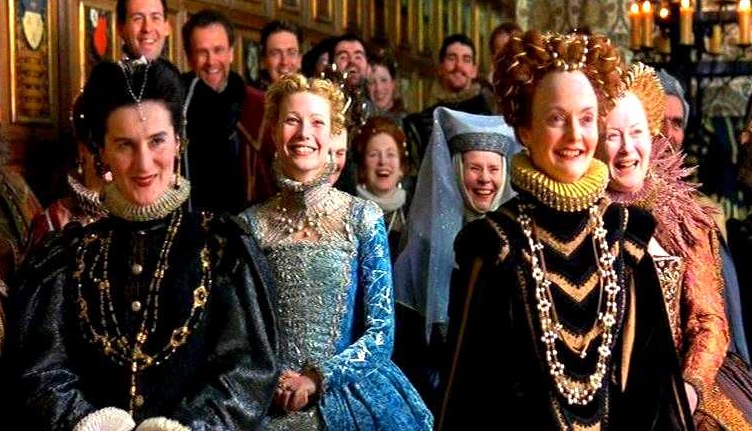
❚ OSCAR-WINNING COSTUME DESIGNER SANDY POWELL, 50, receives an OBE for services to the film industry. She studied theatre design at Saint Martin’s and won her third Oscar earlier this year for The Young Victoria. Her previous wins were for Shakespeare In Love, in 1999 and The Aviator, in 2005. Of her job, she once said: “A costume designer’s contribution is to help make some believable characters, that’s all.”

Annie Lennox, Eurythmics, Rolling Stone

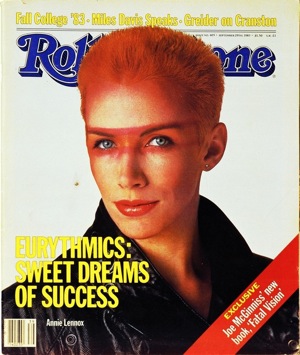
Annie Lennox: Cover girl in 1983. Photographed by C J Camp © Time Inc

❚ ABERDEEN-BORN SINGER ANNIE LENNOX, 56, is appointed an OBE for work fighting Aids and poverty in Africa. As one half of the Eurythmics, she brought her own unique voice and style to the music scene in 1981 with the hit Sweet Dreams, and later Thorn in My Side and Walking on Broken Glass. Today she is an Oxfam ambassador and, inspired by Nelson Mandela, founded her SING campaign to raise awareness of Aids in Africa. She said of her OBE: “It either means I’ve done something terribly right — or they’ve done something terribly wrong.”

➢ Entertainment honours reported by the BBC

Buggles, Video Killed the Radio star, Trevor Horn

Trevor Horn, left, as one half of Buggles, 1979

❚ RECORD PRODUCER TREVOR HORN, 61, who dominated orchestral pop in the 80s, receives a CBE, as does Howard Goodall, 52, National Ambassador for Singing, who created theme tunes for TV shows that included Blackadder. During Horn’s influential career his epic treatment made ABC’s The Lexicon of Love one of the masterpieces of 1980s pop, and enhanced hits by Frankie Goes to Hollywood on his own ZTT label, the Pet Shop Boys, Robbie Williams, Tina Turner, Simple Minds and Grace Jones’s mesmerising Slave To The Rhythm. He was named best producer at the Brit awards in 1983, 1985 and 1992, and won a Grammy in 1995 when Seal’s Kiss from a Rose was named record of the year.

❚ TALKING OF BLACKADDER, its producer John Lloyd, 59, also becomes a CBE — he also oversaw the landmark 80s comedy series Not The Nine O’Clock News and Spitting Image.

BRITISH ASTRONAUT RECALLS
THE SMELL OF SPACE

Atlantis, Nasa, Piers Sellers,shuttle, STS-112 crew portrait

Atlantis shuttle crew, summer 2002: Sandra Magnus, David Wolf, Pamela Melroy, Jeff Ashby, Piers Sellers, and the Russian cosmonaut Fyodor Yurchikhin © Nasa

❚ HE WAS NEVER A NEW ROMANTIC, but astronaut Piers Sellers, 55, from Crowborough, East Sussex, is from the same generation. He is one of the nine Brits who have flown in space and he receives an OBE for services to science. Dr Sellers had to become an American citizen to be considered by Nasa, and then flew three missions aboard the shuttles Atlantis and Discovery in 2002, 2006 and again this year. He has carried out six spacewalks to continue the assembly and maintenance of the International Space Station. With the shuttle programme coming to an end, Dr Sellers — who took a degree in ecology and a PhD in climate simulation — is set to return to Nasa Goddard to resume his science pursuits.

Nasa, patch,space shuttle,Atlantis, STS112

Nasa patch for Atlantis mission STS112

When I met him and the Atlantis crew at the US embassy in London, touring the world in 2004 to talk up the Nasa programme following the Columbia shuttle disaster, the most startling thing he said was that space had a unique smell of its own: “Like burning steel.” The most shocking aspect of this observation is how the smell is transmitted. Smells comprise minute particles of material, which stimulate the sensory receptors in the nose. They could be as small as molecules, or ions, but to notice them at all space-walking astronauts must inevitably have brought them inside the shuttle from the exterior working environment of space. You hesitate to mention the word “alien”, but surely these particles have the potential to infect us earthlings with, er, whatever?

Each of the crew seemed to have been handpicked for their social skills, so during the party I questioned them all on the nature of this smell. Unprompted, every astronaut provided roughly similar descriptions of the smell of space — a mixture of sharp, smoky, acrid, burned metallic odours that permeate their Orlan space suits.

Michael Fossum,Piers Sellers, spacewalk,Nasa, space shuttle, Discovery, mission STS121

British astronaut Piers Sellers during the third spacewalk from the shuttle Discovery, July 2006: photographed by Michael Fossum, whose reflection is visible in the visor

When I asked mission commander Jeffrey Ashby about the risks of contamination, he said that in the early days of space flight, astronauts were always quarantined on returning to Earth and kept under observation for many days. With the passing of the years, and a marked absence of spiny creatures bursting out of people’s chests, quarantine was simply abandoned. The reasoning is that the extreme temperatures in the vacuum of space (+270 degrees C to –270 degrees C) would have exterminated any viral threats — especially the searing heat that had created the smell of space by burning the shuttle’s steel exterior, similar to that from an arc-welding torch used to repair heavy equipment. Yes, but, I hear you say: What about the cockroach?

➢ More from Nasa on the smell of space

FRONT PAGE

What larks! Festive fun and games and British ways to make merry

Bobbin’ about to the Fiddle ,Charles Williams, 1817,Thos Tegg,caricature, Almack’s,quadrille,dancing,Lady Jersey,

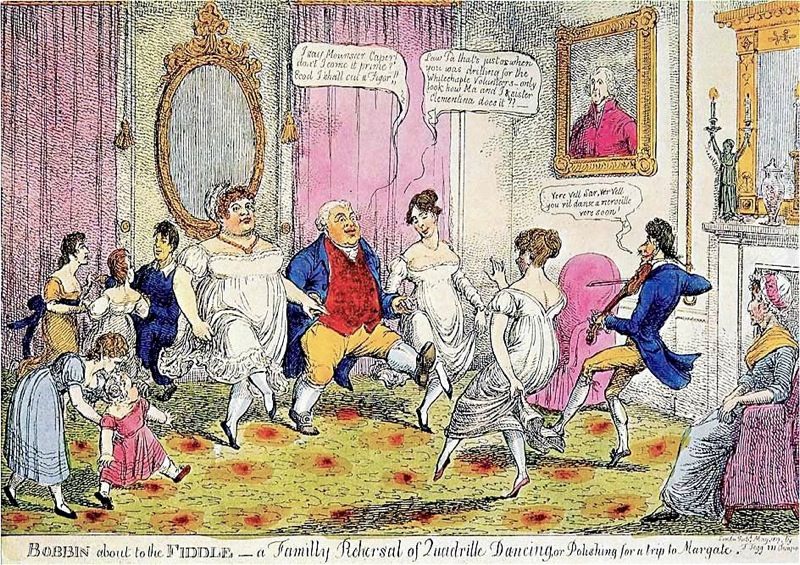
Bobbin’ about to the Fiddle — a Familly Rehersal of Quadrille Dancing, by Charles Williams, May 1817: published by Thos. Tegg No 111 Cheapside

❚ UNLIKE 21st-CENTURY DANCING, when the quadrille was introduced at Almack’s Assembly Rooms in 1815, its steps were notoriously difficult to perform correctly. This luxurious salon in King Street, St James’s — where the ballroom was partitioned off by crimson ropes — was governed by a committee of despotic lady patronesses who ruled over a “magic list” of those who may or may not be admitted to their weekly balls. Studio 54 had nothing on the power of these women: they effectively decided who belonged to “society”… “All on that magic list depends/ Fame, fortune, fashion, lovers, friends…/ Banished thence on Wednesday night/ By Jove you can do nothing right.

Yet even at Almack’s after Lady Jersey, wife of the 5th earl, brought the quadrille over from Paris as an energetic French precursor to traditional square dancing, wallflowers would sit sniggering as they watched the beau monde’s finest stumbling through the intricacies of its steps and twirls and changes of partner. The quadrille nevertheless soon became all the rage, so required determined practice.

Breeding counted for more than money at Almack’s and the prime role of the magic list was to exclude “cits”, precisely the kind of nouveau riche city-dwellers depicted above by caricaturist Charles Williams, in May 1817. This bourgeois family are preparing for their seaside vacation in Margate by practising their dancesteps at home.

The father is saying to the French dancing master: “I say, Mounseer Caper! Don’t I come it prime? Ecod, I shall cut a Figor!!” [ie, figure], and one of the daughters says “Law, Pa, that’s just as when you was drilling for the Whitechaple Volunteers — only look how Ma and I & sister Clementina does it!!” while the dancing master says “Vere vell, Sar, ver vell, you vil danse a merveille vere soon!” Nobody was spared from the satirist’s pen.

Tom Jerry and Logic, Making the Most of an Evening in Vauxhall,Vauxhall Gardens,George Cruikshank, Jonathan Tyers,Roger de Coverley ,Pierce Egan, Life in London,1821

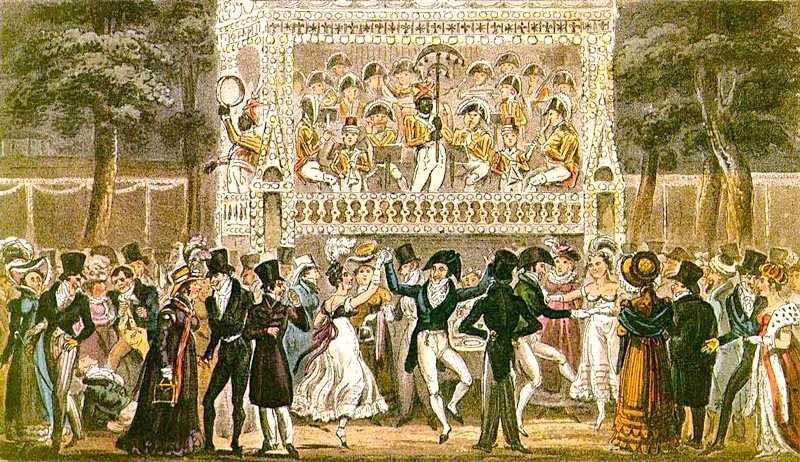
Tom, Jerry, and Logic Making the Most of an Evening in Vauxhall: by Robert and George Cruikshank, from Pierce Egan’s Life in London (1821)

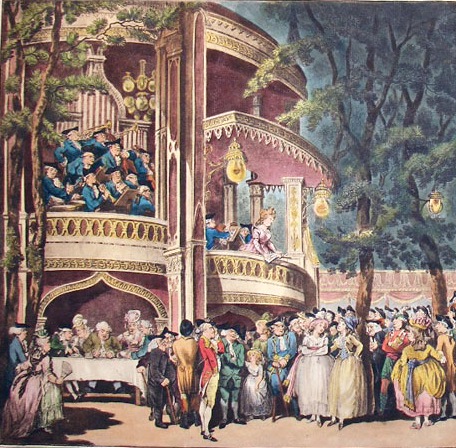
❚ FOR 200 YEARS THE VAUXHALL GARDENS were the most notorious and important of London’s many pleasure gardens, immortalised in Fielding’s novel Tom Jones by the description “where people come to undo others, and others come to be undone”. Vauxhall lay on the south bank of the Thames, up-river in a rural setting beyond London’s city limits, where the gardens opened before the Restoration of 1660 and closed finally with a fireworks display in 1859. Today all that remains is a small park bearing the name of the original Spring Gardens, while nearby streets do likewise for the enterprising proprietor, Jonathan Tyers, who from 1728 invested in enhancing the grounds so that in their heyday he could charge a guinea admission. (That would be £173 or $267 in today’s money!) He commissioned Roubiliac to make the great statue of the composer Handel for the gardens and added an orchestra pavilion, fountains and temples. Frederick Prince of Wales was his most prestigious patron.

Over several acres Tyers introduced formal plantings which offered attractive paved walks lit by thousands of glass lanterns in the arbours by night, and shrubberies for the making of mischief. Fireworks, hot-air balloon rides and circus performers provided entertainment along with music such as Handel’s from the bandstand.

Vauxhall Gardens, 1732,James Boswell, Dr Samuel Johnson,Rowlandson

Vauxhall, 1732, engraving after a watercolour by Thomas Rowlandson, published by Richard Powell: In the lower box is a supper party of James Boswell, Dr Samuel Johnson, Mrs Thrale and Oliver Goldsmith. Mrs Weichsel sings from the front balcony while Mr Barthelemon leads the orchestra (Princeton University Library)

Elegant painted booths afforded privacy while dining and the ornate Rotunda and other rococo pavilions became famous London attractions. An audience of 12,000 attended Handel’s Fireworks music at Vauxhall which brought together “persons of all ranks and conditions”. The 19th-century history of London Old and New observes “the English assert that such entertainments as these can never subsist in France, on account of the levity of the people”.

By 1712 Sir Roger de Coverley is supposed to have said that he’d have been a better customer to the gardens “if there were more Nightingales and fewer Strumpets.” So it was inevitable a century later that the rakish Tom and Jerry would pay their guinea for admission to Vauxhall. Their rip-roaring “sprees through the Metropolis” would one day give their names to Hollywood cinema’s cartoon cat and mouse, and in their own day they were no less famous.

“Jerry Hawthorn Esq, and his elegant friend, Corinthian Tom, accompanied by Bob Logic, the Oxonian” were young London clubmen created in 1821 by the sports-writer Pierce Egan in his monthly journal, Life in London, which became a runaway success. It was illustrated by the leading satirist of urban life George Cruikshank and its trio of hellraisers became contemporary pinups much copied by other engravers.

The topmost Cruikshank print is not among the best to record the showy splendour of Vauxhall Gardens but it is one of the few to locate Tom and Jerry, their journalist creator and the graphic satirist at London’s hedonist destination — five Regency legends in one image.

Twelfth Night,Isaac Cruikshank, Thomas Tegg,etching,parlour games

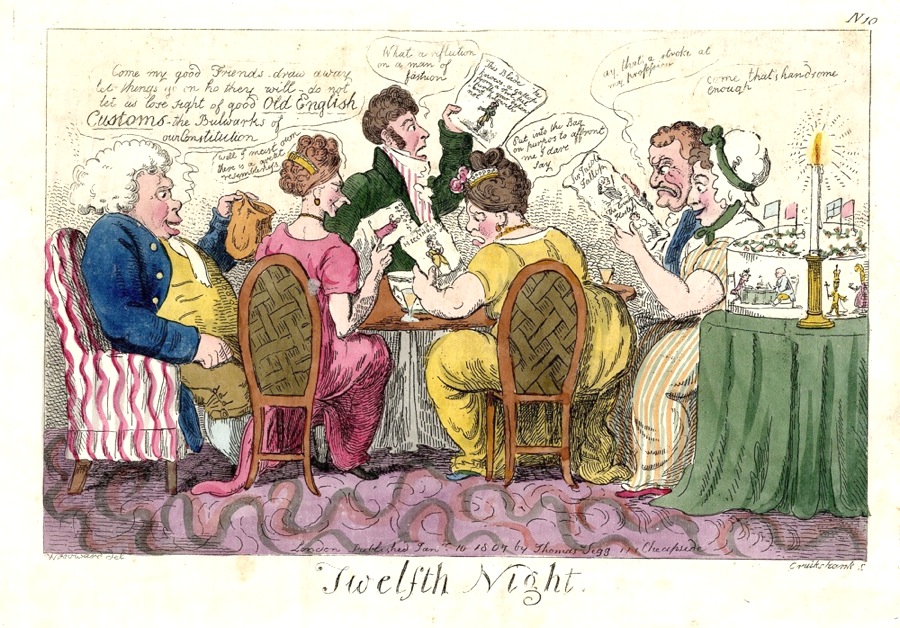
Twelfth Night by Isaac Cruikshank: published Jan 10 1807, by Thomas Tegg, Cheapside

❚ BEFORE TV RULED OUR LIVES, playing parlour games was how families amused themselves at the annual Christmastide gathering and Twelfth Night was the traditional day for games, merriment and feasting. The punch called wassail was the drink of choice, and in the Regency era a grand masqued ball often heralded an end to the solemnity of religious observance. Twelfth Night concludes the 12 days of Christmas and precedes the feast of the Epiphany on January 6 (though these dates vary under different sects of Christianity). It was not until the Victorians, influenced by the monarch’s Germanic roots, that we shifted celebrations to Christmas Day itself, which had previously been only a religious holiday.

Cruikshank’s hand-coloured etching from 1807 (above) shows three couples playing the traditional Twelfth Night game of acting out the character depicted on the tickets they have drawn from a bag held by a fat squire seated at left who sings the praises of “good old English customs”. Each ticket is inscribed with a portrait and description. Only two players are happy with their choice: on the left The Queen of Love has been drawn by a self-satisfied lady with a long nose, and on the right The Lovely Hostess by a jolly lady who smiles. The others have drawn unflattering or sarcastic tickets and regard them with expressions of dismay: the dandy in green is affronted by being perceived as a “man of fashion” while the fat woman in yellow has drawn “Miss Higginbottom” and remarks “Put in the bag on purpos to affront me I dare say”. We see a decorated Twelfth Night cake and candle on the side table.

Isaac Cruikshank is one of the four celebrated British illustrators (along with his son George, Thomas Rowlandson and James Gillray) who established satirical caricature as a powerful medium of social comment at the dawn of the 19th century. The Private Eyes of yesteryear.

The Plumb-pudding in danger, James Gillray,  Humphrey, Library of Congress

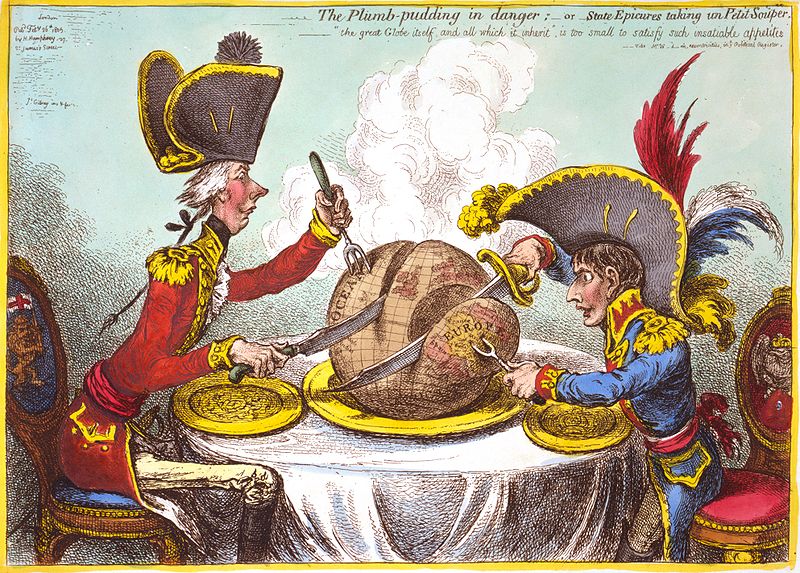
The Plumb-pudding in danger: by James Gillray, published London H. Humphrey, 1805 Feby 26 (Library of Congress)

❚ PLUM PUDDING IS THE ESSENTIAL CONCLUSION to a traditional Christmas feast. It is made not from plums but dried fruit and for good luck every member of the family should have a hand in stirring the mix before it is steamed or boiled. Since medieval times, the pud has become as symbolic of Britishness as Britannia and John Bull. This political cartoon was drawn by James Gillray in 1805 as a response to one of the most traumatic periods in Britain’s history.

It is titled The Plumb-pudding in Danger and shows William Pitt, Britain’s youngest prime minister, wearing a regimental uniform and sharing a table with the French emperor, Napoleon. A plum pudding represents the world as a globe and each leader is carving himself a slice. Pitt takes possession of the seas with a slice considerably larger than Napoleon’s, who carves off Europe where the French are the dominant military power. The previous year war had been renewed between Britain and the First French Empire that had followed the Revolution of 1789 and a period of continual warfare. With Napoleon intent on invading Britain, Gillray produced many prints in which he imagined the horrors of a successful invasion. By 1805 a British naval blockade on France was successfully frustrating French sea-trade and naval retaliation, so that January the emperor sought a reconciliation with England. Presciently this cartoon was published only months before the decisive British naval victory in the Battle of Trafalgar.

W Belch,January,engraving, ice-skating,1810,Henry Raeburn,Coleridge,Georgian England

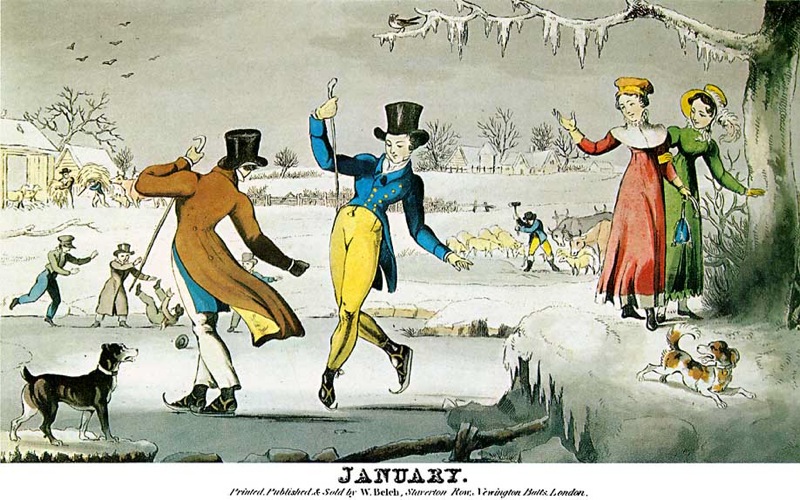
January, one of a series of prints depicting the months, c1810: printed, published & sold by W. Belch, Staverton Row, Newington Butts, London

❚ THESE YOUNG BUCKS ARE FLOUTING THE RULES of ice-skating in the Regency period. Among outdoors activities in Georgian England, skating was so hugely popular that the poet Samuel Taylor Coleridge waxed exceeding florid in a prose essay about the pastime for The Friend magazine, where he noted “the melancholy undulating sound from the skate”. Inevitably society proposed “a proper attitude for genteel rolling”, the posture illustrated most famously in Sir Henry Raeburn’s painting of the Reverend Robert Walker, who as a member of the Edinburgh Skating Society is seen serenely gliding with arms crossed over his chest. Evidently, the two January bucks above were only too keen to flaunt their own style to catch the attention of their female admirers on the riverbank.

➢ The Republic of Pemberley and all things Austen
➢ 500 articles in an online magazine dedicated to Jane Austen’s Regency world

FRONT PAGE

1980 ➤ The Lennon we knew: unfulfilled talent with a genius for making friends the world over

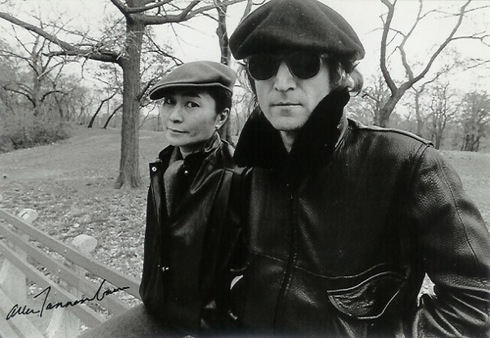
John Lennon, Yoko Ono, New York City, 1980,Allan Tannenbaum

The last pictures: Allan Tannenbaum photographed John Lennon and Yoko Ono throughout November 1980, the month before the murder. The couple were emerging from a self-imposed five-year seclusion to prepare for the release of Double Fantasy, Lennon’s final album

❚ ON THIS DAY IN 1980, ex-Beatle John Lennon, one the few gods in the international pantheon of pop, was shot dead in a New York City street, aged 40. Today it’s impossible to describe convincingly the impact of The Beatles throughout the exhilarating decade we call the Swinging 60s, when their songs themselves became barometers of change.
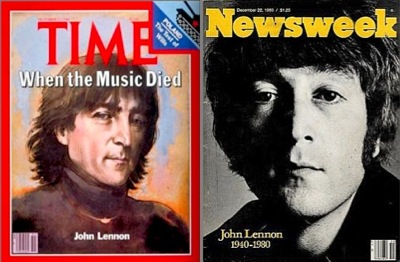
John Lennon death,Time magazine, Newsweek, 30th anniversary
Here is how music journalist and Beatles expert Paul Du Noyer encapsulated the contribution of the Lennon & McCartney partnership (1957-1970) in a mighty partwork published by The Sunday Times in 1997 titled 1000 Makers of Music:

“Whether measured in statistics or simply the love of the common people, the Beatles’ achievement looks unbeatable. And the engine of it all was the songwriting team of John Lennon and Paul McCartney. Before them, nobody dreamt that rock and roll would spawn enduring songs or that English rock could rule the world. Musically illiterate, the two Liverpool teenagers began by aping their American heroes and grew into writers of prolific originality. From the sunny simplicities of She Loves You, or A Hard Day’s Night, to the artful ingenuity of Penny Lane and Strawberry Fields Forever, they dazzled at every turn. Each was rocker and balladeer, lyricist and composer. They were a marriage of truth and beauty: Lennon soul-baring and verbally acrobatic (Norwegian Wood, I Am the Walrus); McCartney having the greater gift for melody (Yesterday, Hey Jude). Mostly they wrote alone, but raised one another’s game. Neither displayed the same consistency after the split [in 1970]. They lacked anyone with the nerve to say ‘Why don’t you change that bit?’ Their key work was A Day In the Life, 1967.”

➢ An index to Paul Du Noyer’s
published work on The Beatles

Today The Beatles hold the records for selling more albums in the United States than anybody else, and they head Billboard’s all-time top-selling Hot 100 list of singles artists, compiled in 2008. At home The Beatles have enjoyed more number one albums in the UK charts than anyone.

In the 60s, the mass media we know had scarcely left the starting line. This was a simpler era when any globally successful pop group was a novelty. When Beatlemania burst, it was a bombshell. The Fab Four, as the band were dubbed, found themselves writing many new rules in the celebrity game which fan worship then transmuted into the cultural phenomenon called Beatlemania — hordes of girls who stalked, pounced and screamed in frenzy — all accurately parodied in Dick Lester’s effervescent films, Help! and A Hard Day’s Night, based on the Beatles’ sudden worldwide fame. It also resulted in a deranged fan shooting his hero Lennon dead.

Beatlemania 1965, LHR

Typical Beatlemania: the band fly out from Heathrow bound for Austria and public vantage points are abrim with fans. Picture from Getty

Such sway did The Beatles hold, that their Merseyside cheek inspired provincial British pop groups not only to dare take on the unimaginative impresarios of the London entertainment mafia for whom blandness was the key to an act’s success, but then to take on the world showbiz mafia dominated by America, where within corporate frameworks artistic spontaneity might actively be indulged. The Beatles’ music — like the self-expressiveness of rock and roll — had a passion that chimed with the forces of grassroots social change, of liberation, emancipation, the debunking of authority figures, and the reform of cobwebbed institutions such as government, church and unions, all of which had been under attack by the stormtroopers of the satire movement since its dawn in 1960 with Beyond the Fringe.

The early Beatles hits captured the essential “sunny simplicities” of pop, though these acquired darker overtones as the decade matured and the increasingly “affluent society” of the West drew criticism from the New Left. By 1968, the daftness of the hippy dream saw The Beatles setting up Apple Corps. In 25-year-old Paul McCartney’s words this was to be “a business with a social and cultural environment where everyone gets a decent share of the profits. I suppose it’ll be like a sort of Western Communism”. Whateva.
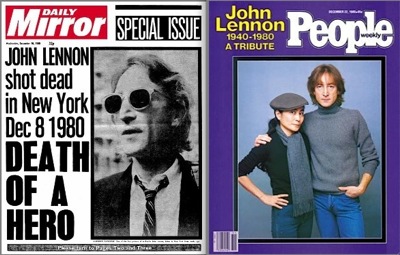
John Lennon death, Daily Mirror, people magazine, 30th anniversary
One secret to The Beatles becoming fab was being born in the port city of Liverpool, which had long bred its own resilient sense of humour. The band empathised with the working-class values of their community in ways the few young bloods in London’s middle-aged mainstream media found refreshing. Their heritage also included Liverpool’s role as the “New York of Europe” and home to Britain’s oldest Black African community. Little Richard and Berry Gordy’s Motown were in their blood, and The Beatles maintained the noble trade between Britain and North America which has seen each enhance and export the other’s music in a continuing chain of call-and-response since World War 2.

The songwriting partnership of Lennon & McCartney was unique, as also was their distinct vocal style absorbed from heroes such as Ben E King, and they transformed popular music utterly, never to be equalled. In his most infamous article, The Times’s music critic William Mann concluded in 1963: “They have brought a distinctive and exhilarating flavour into a genre of music that was in danger of ceasing to be music at all.” [See more, below]

Lennon’s own undoubted greatness was co-dependent on McCartney. Moreover, it becomes impossible to estimate the loss to music caused by his early death, when many people feel that, despite his wit and intelligence, his shortcomings hindered him from fully realising his true potential. This was the unsentimental verdict of journalist Maureen Cleave — who had known The Beatles since writing the first significant piece about them — as expressed in her frank and moving obituary for The Observer magazine in December 1980.

Beatles, life magazine, tribute
My other Evening Standard colleague who knew Lennon well during the Beatles’ later years is Ray Connolly, Liverpudlian author of many illuminating articles on Lennon. Connolly was due to meet him the day after he was shot. (“The last phone call I made before going to bed was to the Lennons’ apartment in New York to tell them that I would be in New York at lunchtime the following day.”) He agrees the Beatle was no saint, but he was “someone who wrote and played rock and roll music better than virtually anyone else”. In addition: “When he died millions of people mourned the loss of a friend. His real genius was in his ability to communicate. He was to perfection a creature of his times.”

In his instant paperback published by Fontana within two months of Lennon’s shooting, Connolly writes:
“[The American composer] Aaron Copland once said that when future generations wanted to capture the spirit of the 60s all they would have to do was to play Beatle records. That’s true, but I would go further. Future historians will find that understanding of the 60s and the 70s widened immeasurably by focusing on the life of John Lennon. From Liverpool war baby to killer’s victim just across the road from Central Park, Lennon’s every interest told a story of the times. The widespread grief at his death was compared with the mourning which followed the assassination of President Kennedy [in 1963]. No one should have been surprised, though many were.”

One of the reasons was that “Lennon chose the role of anti-hero for much of his life, casting off the trappings of glamour, throwing aside the shell of lovable immortality. John Lennon would never have made a politician. Political heroes are pragmatists. That is their job. John Lennon had no time for pragmatism. He was outspoken about everything and everybody, and then bore the consequences for his outrageousness.”
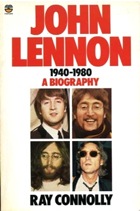
Ray Connolly, John Lennon biography, Fontana— Extracted from John Lennon 1940-1980, a biography by Ray Connolly (Fontana 1981). For many more interviews with all the Beatles, visit Connolly’s website and archive that includes Lennon: The Lost Interviews in which the journalist claims that “arguably one of Lennon’s most inspired acts was his deliberate destruction of The Beatles in 1969”. Connolly’s latest novel The Sandman arose from his years writing about rock music, not least about John Lennon and the Beatles, and is now available on Kindle

HARMONIC ORIGINALITY AND RICHNESS
UNKNOWN TODAY

In 1000 Makers of Music critic Ian MacDonald summarised the contribution of the Beatles as a band:
“As expressive of England in the 1960s as the music of Benjamin Britten in the 1950s, The Beatles made some of the world’s best music during their decade (1960-1970)… from the infectious melodies of their early beat-group years, through the LSD adventure of their central period (Revolver, 1966, and their key work Sgt Pepper’s Lonely Hearts Club Band, 1967). Each member of this Liverpool foursome made a vital contribution to a sound that blended boldness of melody and rhythm with a harmonic originality and richness of detail unknown in today’s pop… The Beatles redefined pop, revolutionised studio recording and completely dominated the culture of the 1960s. Their influence remains omnipresent.”
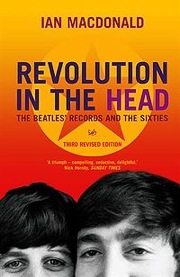
Ian MacDonald, Revolution in the Head, Lennon death, 30th anniversary— Ian MacDonald was the author of the monumental song-by-song analysis, Revolution in the Head: The Beatles Records and the Sixties (Pimlico).

His real name was Ian MacCormick and the book is worth consulting also for his essay Fabled Foursome, Disappearing Decade, on the social effects of the 1960s.

FOOTNOTES TO HISTORY

Richard Williams’s obituary for Ian MacDonald (1948-2003) in the Guardian noted: “Probably no other critic — not even the late William Mann of The Times, with his famous mention of pandiatonic clusters — contributed more to an enlightened enjoyment of the work of The Beatles than Ian MacDonald, who has died aged 54. In his book Revolution In The Head, first published in 1994, MacDonald carefully anatomised every record The Beatles made, drawing attention to broad themes, particular examples of inspiration and moments of human frailty alike. What could have been a dry task instead produced a volume so engagingly readable, so fresh in its perceptions and so enjoyable to argue with that, in an already overcrowded field, it became an immediate hit.”

Sample William Mann’s legendary and hilarious critique of Beatles technique from 1963:
“… One gets the impression that they think simultaneously of harmony and melody, so firmly are the major tonic sevenths and ninths built into their tunes, and the flat submediant key switches, so natural is the Aeolian cadence at the end of Not A Second Time (the chord progression which ends Mahler’s Song of the Earth) … Those submediant switches from C major into A flat major, and to a lesser extent mediant ones (eg, the octave ascent in the famous I Want To Hold Your Hand) are a trademark of Lennon-McCartney songs … The other trademark of their compositions is a firm and purposeful bass line with a musical life of its own; how Lennon and McCartney divide their creative responsibilites I have yet to discover, but it is perhaps significant that Paul is the bass guitarist of the group.”

➢ Extracted from What Songs The Beatles Sang
by William Mann, music critic of The Times

➢ William Mann’s monumental review of the Sgt Pepper album in 1967: The Beatles revive hopes of progress in pop music

FRESH INSIGHTS INTO BOY AND MAN

Over the past year Lennon’s life has twice been intelligently dramatised. In Nowhere Boy, visual artist Sam Taylor-Wood made her film debut directing several exceptional acting perfomances in an emotionally convincing evocation of Lennon’s adolescence during the austere 1950s, based on a novel by Lennon’s sister. For BBC television, Edmund Coulthard directed Lennon Naked, an unsentimentally credible account of Lennon’s confronting the desperate emotional crossroad that caused him to destroy the Beatles and abandon his wife and son for Yoko Ono.

DISILLUSIONED LENNON ON SELLING OUT

“When we played straight rock, there was nobody to touch us in Britain. As soon as we made it [as The Beatles], the edges were knocked off us, and Brian put us in suits. But we sold out. The music was dead before we even went on the theatre tour of Britain [Feb-June 1963, supporting other acts such as Roy Orbison]. We had to reduce an hour or two of playing to 20 minutes and go on and repeat the same 20 minutes every night. The Beatles’ music died there. As musicians we killed ourselves then.”

➢ John Lennon speaking in The New York Years
— this week’s BBC Radio 2 documentary by Susan Sarandon

Lennon’s Aunt Mimi Smith on his music
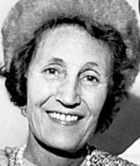
Aunt Mimi Smith, John Lennon“He used to drive me mad with his guitar playing, and I’ll always remember telling him, ‘The guitar’s all right for a hobby, John, but it won’t earn you any money’.”
➢ View the complete 1981 video interview
with Aunt Mimi

➢ 20 most underrated John Lennon tracks in NME Dec 14, 2010
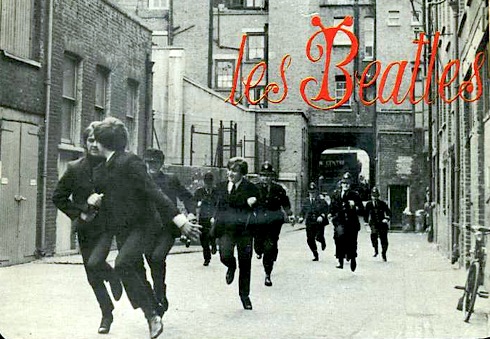
Beatlemania, Hard Day's Night,

Beatlemania: the band on the run from fans and police in Dick Lester’s 1964 film A Hard Day’s Night

FRONT PAGE

➤ Live online now, mad hatter Stephen Jones

hatter ,Stephen Jones ,SHOWstudio ,exhibition, Florist

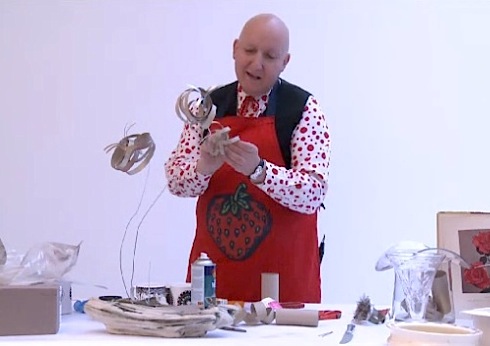
The hatmaker’s Blue Peter moment: Stephen Jones conducts a masterclass online today at ShowStudio.com

❚ HERE IS BRITAIN’S LEADING MILLINER, captured within his first hour online creating a unique piece for the ShowStudio shop’s latest exhibition, Florist. The live stream for two hours today amounted to a millinery masterclass by following Stephen Jones’s creative process through to conclusion. The finished hat will be exhibited and available for sale.

Wielding a wooden poupée head, he reveals: “The main thing about millinery is that you’re trying to make a 2D fabric 3D. So you’re moulding it over a form like a wooden block… and stretching it and it’s staying in that shape. Hat blocks are the same thing as shoe lasts and you can get them from lots of different places.”

On his theme of Glamour on a Budget, Jones has been offering handy hints and taking questions through the Livestudio web page where he informed us that the patron saint of millinery is St Catherine (martyred c AD305 on the notorious breaking wheel, known since as the Catherine wheel, from which of course we derive the firework of that name). Next stop: Blue Peter?

Princess Julia was in the studio and playing: ♫ Doing the Lambeth Walk, oi!

hatter ,Stephen Jones ,SHOWstudio,exhibition, Florist

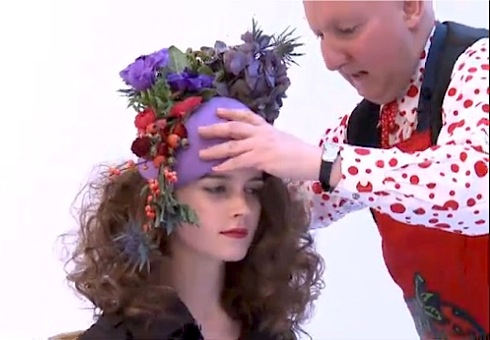
The result: Jones with the first of today’s hats on his theme of Glamour on a Budget at ShowStudio.com

hatter ,Stephen Jones ,SHOWstudio,exhibition, Florist

Second Jones creation today: a beret festooned with fresh flowers, thistles and seasonal fruit. Video captured from ShowStudio.com

FRONT PAGE