Category Archives: Chronology

WELCOME ➤ TO THE SWINGING EIGHTIES

In 1980 a youth movement began reshaping Britain.
Its stars didn’t call themselves New Romantics, or the Blitz Kids – but other people did. This writer was there and these words and pictures tell the tale.
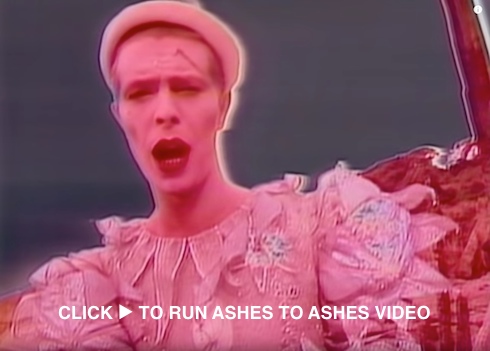
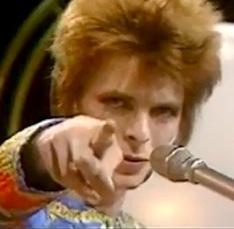
David Bowie

◼︎ As a decade, the 1970s spelt doom. British youth culture had been discredited by punk. A monumental recession followed the Labour government’s “winter of discontent”, threatening the prospect of no jobs for years ahead.

Swinging 80s, London, history, blitz club, blitz kids, theblitzkids, theblitzclub, cult with no name, billy’s, gossip’s, nightclubs, fashion, pop music, steve strange, rusty egan, boy george, stephen jones, kim bowen, stephen linard, chris sullivan, robert elms, perry haines, princess julia, judi frankland, darla-jane gilroy,fiona dealey, jayne chilkes, derek ridgers, perry haines, terry jones, peter ashworth, lee sheldrick, michele clapton, myra, willy brown, helen robinson, stephane raynor, melissa caplan,Dinny Hall, Kate Garner, rachel auburn, richard ostell, Paul Bernstock, Dencil Williams, Darla Jane Gilroy, Simon Withers, Graham Smith, Graham Ball, christos tolera, sade adu, peter marilyn robinson, gaz mayall, midge ure, gary kemp, steve dagger,Denis O’Regan, andy polaris, john maybury, cerith Wyn Evans, iain webb, jeremy healy, david holah, stevie stewart, worried about the boy,Yet from this black hole burst an optimistic movement the press dubbed the New Romantics, based on a London club called the Blitz. Its deejay Rusty Egan promoted the deliberately un-rock sounds of synthesised electro-pop with a beat created for the dancefloor, while drumming in a studio seven-piece called Visage, fronted by the ultimate poser, Steve Strange. He and other fashionista Blitz Kids were picked by Bowie to represent their movement in his 1980 video for Ashes to Ashes (above). But the live band who broke all the industry rules were five dandies with a preposterous name: Spandau Ballet.

As the last of the Baby Boomers, the Blitz Kids were concerned with much more than music. In 1980 they shook off teenage doubt to express all those talents the later Generation X would have to live up to — leadership, adaptability, negotiating skills, focus. Children of the first era of mass TV, these can-doers excelled especially in visual awareness. They were the vanguard for a self-confident new class who were ready to enjoy the personal liberty and social mobility heralded by their parents in the 60s.

For Britain, the Swinging 80s were a tumultuous period of social change when the young wrested many levers of power away from the over-40s. London became a creative powerhouse and its pop music and street fashion the toast of world capitals. All because a vast dance underground had been gagging for a very sociable revolution.

★++++++★++++++★

“From now on, this will become the official history”
– Verdict of a former Blitz Kid

➢ THE DROPDOWN MENUS ALONG THE PAGE TOP lead you to main topics. Choose “View full site” on your mobile.
➢ THE BLOG POSTS on this front page report topical updates which also link to the background pages in the menu.

Below: View Blitz Club host Steve Strange in all his poser glory in the promo video for Fade to Grey (1982), also starring the club’s cloakroom girl, Julia Fodor, aka Princess

CLICK HERE to run the anthemic 80s video ♫ ♫ from Spandau Ballet and feel the chant:
nightlife, st moritz, club for heroes,le kilt, wag club, beat route,hacienda, cha-cha, holy city zoo, rum runner, camden palace, scala cinema, studio 21,crocs, le palace, white trash, fac51, Dirt Box, mud club, batcave, barbarella's, croc's, electro-pop, synth-pop, Chant No 1, kid creole, blue rondo, animal nightlife, visage, duran, depeche mode, ultravox, human league, gentry, ABC,soft cell, bolan,vince clarke, haysi, wham!, mclaren, heaven 17, yazoo, foxx, omd, bauhaus, phil oakey, jay strongman, Martyn Ware, martin fry ,altered images, 20th-century box, vivienne westwood, PX, axiom, body-map , foundry, sue clowes,demob, seditionaries, acme attractions, i-D, the face, new sounds new styles, Korniloff, andrew logan, kahn & bell, biddie & eve, toyah,

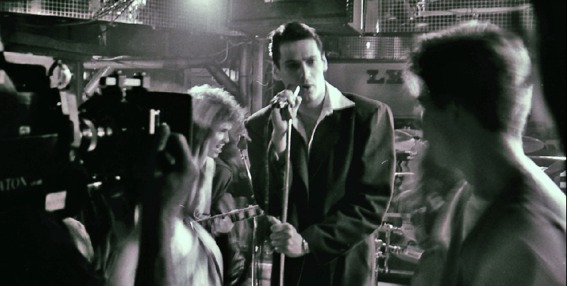
July 2, 1981: Shooting the video for Chant No 1 at Le Beat Route club in Soho, “down, down, pass the Talk of the Town”. Photograph © by Shapersofthe80s

❏ iPAD & TABLET & MOBILE USERS PLEASE NOTE — You are viewing only a very small selection of content, not chosen by the author. To access fuller background features and topical updates please request “PC version” and Choose “View full site” – then in the blue bar atop your mobile page, click the three horizontal lines which link to many blue themed pages of background articles.
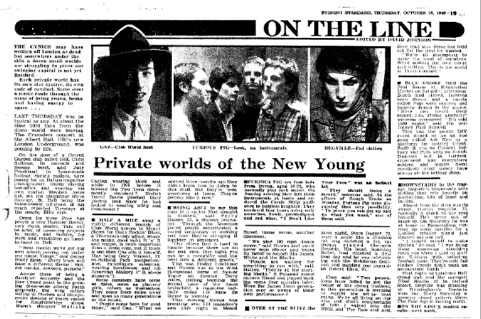
1980 ➤ One week in the private worlds of the new young

Evening Standard, Oct 16, 1980

First published in the Evening Standard, 16 October 1980

THE CYNICS may have written off London as dead in 1980 but somewhere under the skin a dozen small worlds are struggling to prove our swinging capital is not yet finished. Each private world has its own star system and its own code of conduct. Some steer a scenic route through the maze of being young, broke and having energy to spare

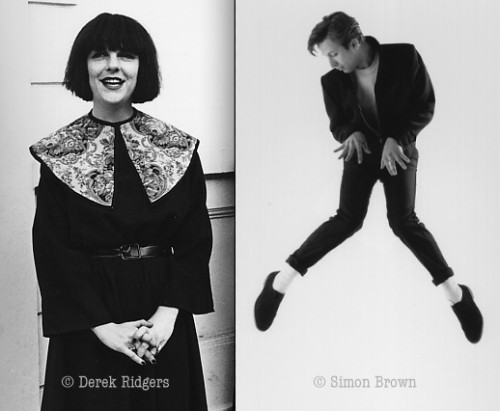
Judi Frankland in one of the clerical cassocks from her degree show summer of 1980, pictured by Derek Ridgers. Style commentator Perry Haines, by Simon Brown

◼ LAST THURSDAY was as typical as any. At about the time 5,000 fans from Disco World were leaving The Crusaders concert at the Royal Albert Hall, 1980’s new London underground was coming to life. On the door of a Covent Garden club called Hell, Chris Sullivan, in monocle and Basque beret, and Judi Frankland, in the home-made clerical cassock that she’d worn in Bowie’s video for his chart topping Ashes to Ashes, were posing for an Italian magazine photographer. Inside, playing box-office and wearing his own modish Stephen Jones hat and all too visible makeup, sat the ubiquitous Steve Strange, 21, Hell being the twice-weekly off-shoot of his much reported Tuesdays at the nearby Blitz club. For him, he said, dressing up is a way of life. “I don’t do it to get attention.” . . . / Continued on our inside page

➢ Read on inside Shapers of the 80s:
A rich slice of London life in 1980 – one week, a dozen prodigies setting the town ablaze, none of them over 22

FRONT PAGE

1980 ➤ How the rhythm of the pop charts changed

❚ SPANDAU BALLET’S MUSIC made a dramatic gear-change in 1980 by placing the bass guitar and the bass drum at the front of the sound, as a driving rhythm for movers. Within a year of their first hit, To Cut a Long Story Short, the rhythm of the UK charts shifted from the lead guitar to the 4:4 dance beat of the bass drum, due entirely to the number of the new “image bands” charting in 1981. Gary Kemp claimed at the time: “RnB was the backbone of pop music from 1962 to 1980. And since then, funk. Dance rhythms are the musical basis for all rock bands now. Really, you can’t say ‘rock band’ any more because the music isn’t rhythm-and-blues.”

SB80C-HvnJK-dj40

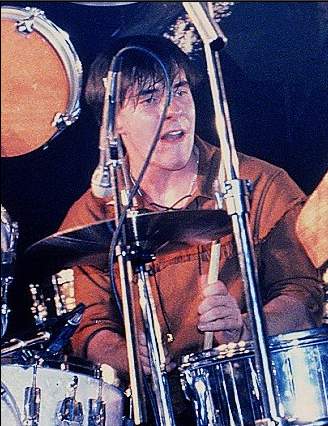
Heaven 1980: Keeble on drums, pictured by © Shapersofthe80s

Drummer John Keeble said then: “Spandau definitely altered the sound of British music. Not till the Journeys to Glory album came out in 1981 did anyone else push the bass drum so far upfront, except black disco. Our sound has a white feel because of our own rocky beginnings, but buying our first synth in 1979 made us re organise the sound in a more danceable way. A song called Eyes was the first number where I ever played a straight 4:4 beat on the bass drum like in disco. I’d be saying to the guys, ‘Don’t play rock, don’t play punk, just go boom-ka, boom-ka’, it’s dance music.

“It’s the difference between listening to funk instead of the RnB they all played in the Sixties – the kind that influenced the Stones and the Who. The drum track was almost inconsequential. Listen to old Stones tracks and you can hardly hear the drums.”

FRONT PAGE

1983 ➤ 69 Dean Street and the making of UK club culture

69 Dean Street, Soho, nightlife,one-nighters,club culture, Bowie Night, Batcave, Gargoyle club, Gossip's club,The Face magazine, Billy's club, David Tennant, Gaz Mayall,

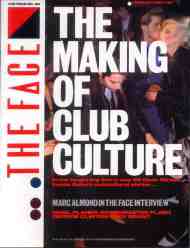
FACE-clubcult69 Dean Street is an address implanted somewhere in the folk memory of every Face reader. During the four years when the launchpad for musical experiment shifted from traditional rock gigs to the dancefloor, one Soho building became a factory farm that has fattened each passing cult en route to today’s richly flavoured mainstream…

➢➢ Click here to read The making of club culture, published in The Face, February 1983

FRONT PAGE