Category Archives: art

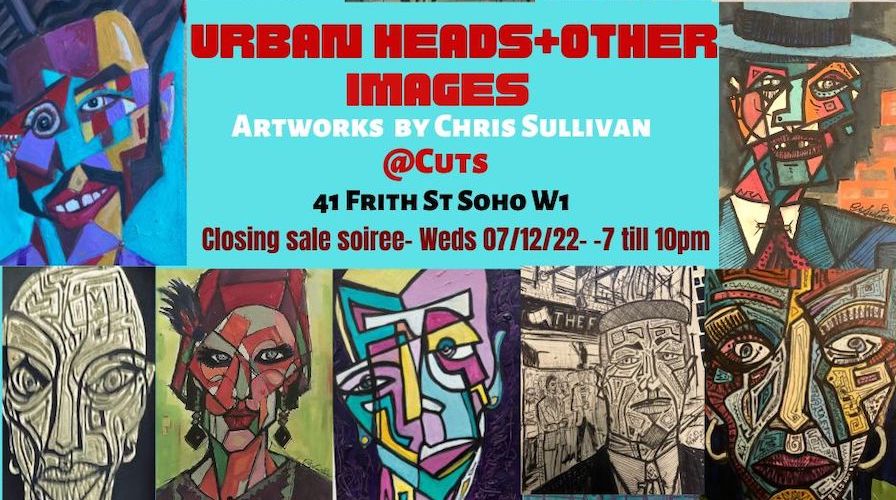
2022 ➤ Snatch your own Rondo moment at Sullivan’s solo show

Chris Sullivan, Cuts Soho, exhibition, portraits, painting,
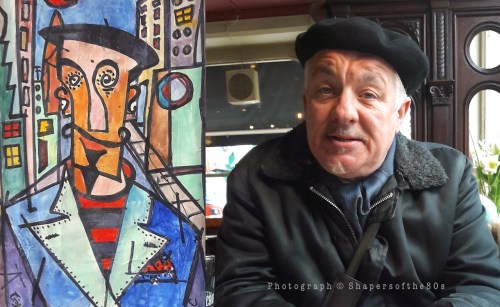
❚ HOW CAN ANYONE RESIST Chris Sullivan’s quirky, cheeky take on Vorticism in his personal caricatures and portraits? “I’ve always been a big fan of George Grosz,” says the legendary Wag club host who first showed his painterly skills on the record-sleeves for his band Blue Rondo a la Turk back in the Eighties and more recently has returned to producing fine art (never forget he set out at St Martin’s School). This week he has a lively solo exhibition showing in Soho, at Cuts in Frith Street, on top of which he’s hosting a vodka & gin sponsored soiree tomorrow Wednesday 7th to shift his catalogue – and all are welcome.

I must of course declare an interest. A few years back Chris was fundraising for his book Rebel Rebel and first prize for the top donation was to have your portrait painted by Chris so I jumped at that. The result, after a lo-o-o-o-ng gestation period, proved compelling. More the rebel Bomberg than Grosz and utterly F.A.B. Never look for flattery in a good portrait, though many friends have said “He’s caught the eyes very well” and who am I to disagree?

➢ Urban Heads & Other Images by Chris Sullivan,
at Cuts 41 Frith Street, W1

➢ Previously at Shapersofthe80s: 2019, My own Rondo moment immortalised by Sullivan, the grand Wag of Soho

FRONT PAGE

2020 ➤ Hockney’s drawings lay bare the artist’s soul in the shifting sands of time

David Hockney, Drawing from Life, National Portrait Gallery, Reviews,

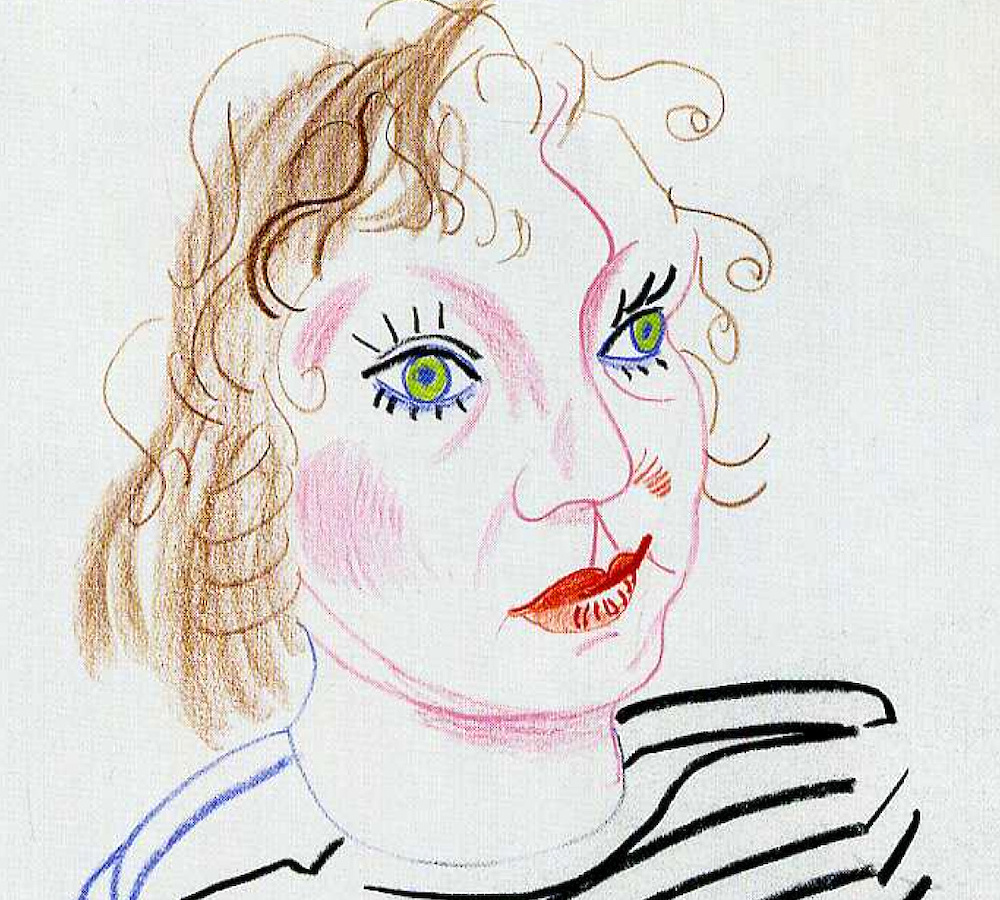
Fashion designer Celia Birtwell: drawn in crayon by Hockney in Hollywood, 1984 (detail)

◼ TWO OF OUR LEADING newspaper art critics have blown hot and cold over the new exhibition of David Hockney’s portraits titled Drawing From Life at the National Portrait Gallery in London. The Guardian’s Jonathan Jones awarded it five stars, raving in the most civilised way about the artist’s skill as a “graphic master” in this “the most dazzling display of his art I have ever seen”. Some praise!

However, the Times headlined its two-star review “Hockney gets hackneyed” while critic Rachel Campbell-Johnston complained that the show is repetitive: “less a fresh look at an innovative talent than a restricted rehash of what was just a small part of other previous shows”.

After two hours examining the 150 portraits large and small, many of them familiar images spanning six decades, I confess to having a foot in both camps. From the outset as a schoolboy Hockney’s eye for a spare line portraying fine detail was breathtakingly meticulous and, if you accept that capturing the eyes is the secret to any portrait, you will be thrilled to your imaginative roots by studying these 150 pairs of eyes up close! It’s a time-worn truism to say that you must visit an art gallery in the flesh because viewing reproductions in print or online can never do justice to an original painting or drawing. Here up close to Hockney’s strokes, in pencil, pastel, charcoal or etching, they are so evidently masterly, whether hair-fine or gesturally bold. The length of some lines is prodigious and intriguing to follow.

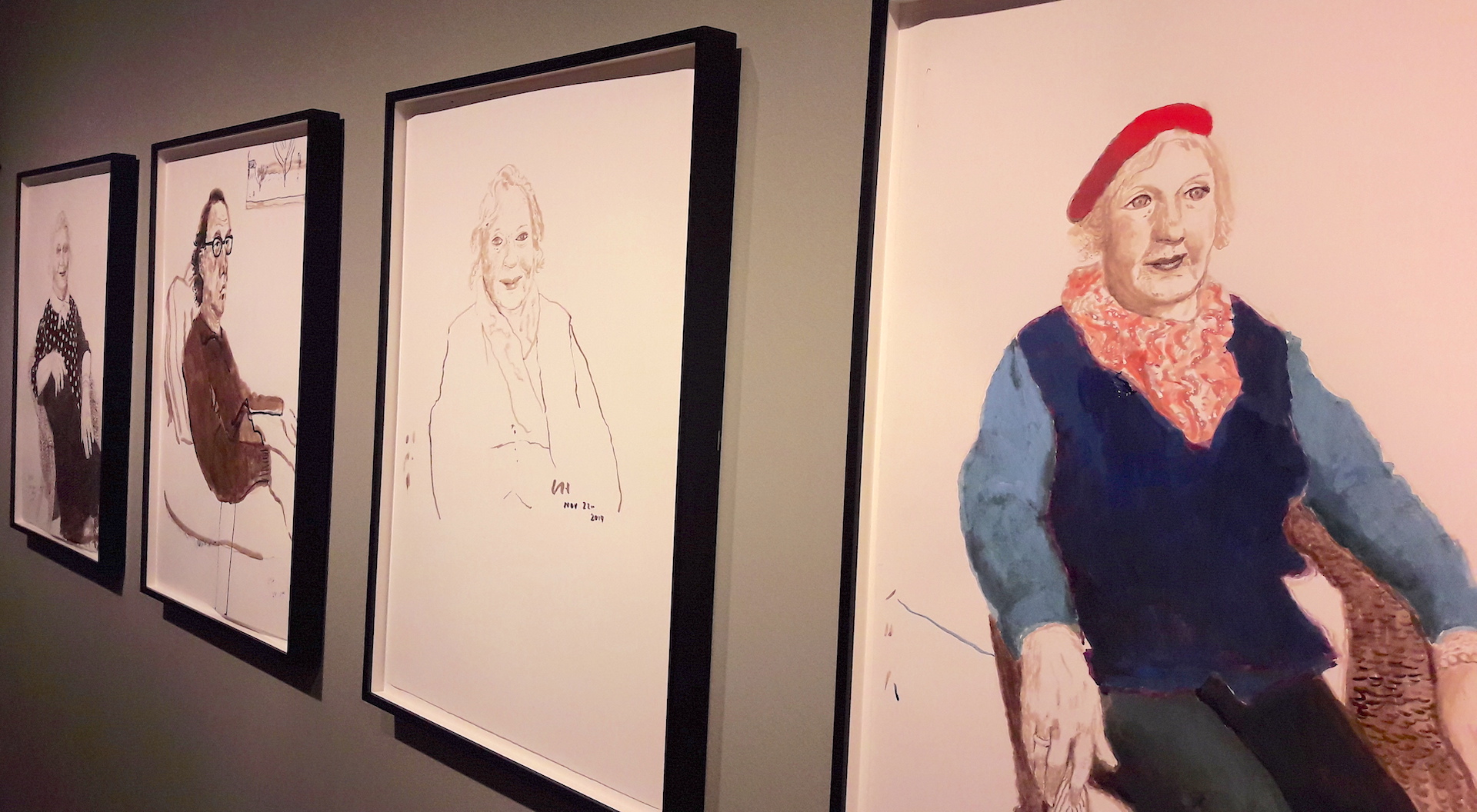
But yes, by the time I reached the final two rooms I’d already had enough, a mood that was visibly expressed there on the faces of the three friends who’d modelled for the great man for ever and again: onetime boyfriend Gregory Evans, designer Celia Birtwell and printer Maurice Payne. Hockney’s most recent frank portrayals of this visibly timeworn trio were not remotely flattering and they leave you wondering to what extent those forbearing friendships have been tested! Celia even told the Guardian her new chubby portrayal was “horrible” though conceding, “That’s life: One gets old”.

Click any pic below to enlarge all in a slideshow

David Hockney, Drawing from Life, National Portrait Gallery, Reviews,

The final gallery in Drawing From Life: the most recent and frank portraits of Celia, Maurice & Co.

In her Times review, Rachel C-J was essentially dumping on the predictable curation of this NPG show and especially the “lacklustre finale” that had required Hockney to redraw each of his subjects during 2019. She readily acknowledges his master draughtsmanship and his preoccupation with eroding distance “so that we can all come closer together”. Intimacy and mood are the keynotes to portraying his friends and RCJ happily recognises the portraits of his mother too as “magically intimate, subtle and tender”.

Much of this goes for his expressive self-portraits, some of which we view on vertical video screens which animate their progress as iPad drawings and always prove mesmerising. Many of the self-portraits are intense, starting with a precocious clutch executed in his late teens. Jonathan Jones makes much of Hockney’s learning curve: “What makes this exhibition so staggering is the picture it builds of a man who has never stopped learning”, ever since Picasso’s work imparted to him the essence of simplicity. And of staying alive to the world around us. Do go. There’s always pleasure to be had from the detail in a Hockney.

David Hockney, Drawing from Life, National Portrait Gallery, Reviews,

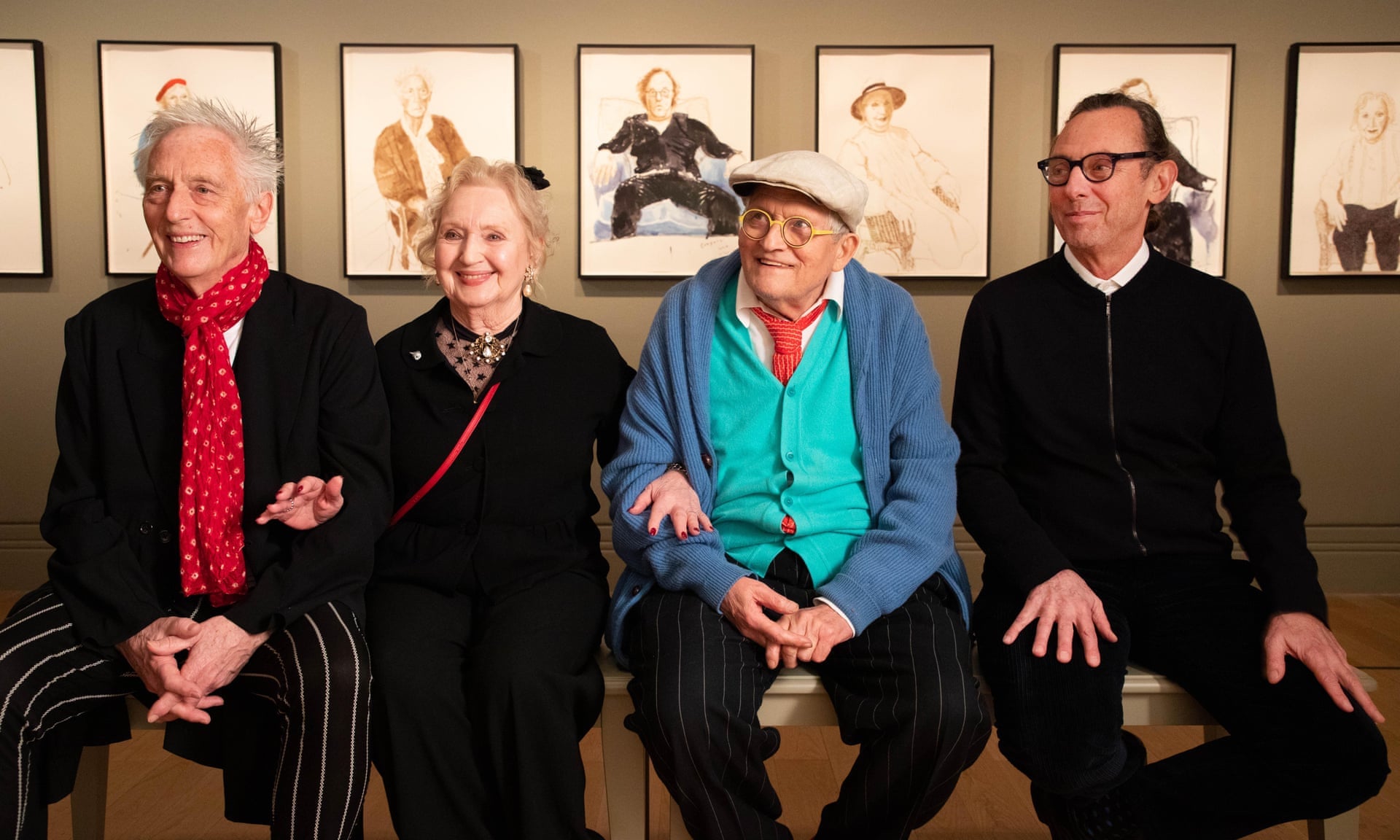
Old friends reunited at the National Portrait Gallery last week: Maurice Payne, Celia Birtwell, David Hockney and Gregory Evans. (Photo: David Parry)

➢ Hockney: Drawing From Life runs 27 February to 28 June 2020 at the National Portrait Gallery, before it closes for refurbishment

➢ The David Hockney Foundation archive

➢ Elsewhere at Shapers of the 80s:
1983, Britain’s favourite painter discovers a truer
way of seeing, with help from Proust

FRONT PAGE

2019 ➤ Scott Walker: a singular figure in art and ideas

Scott Walker,originality ,obituary, singer, Jake Walters

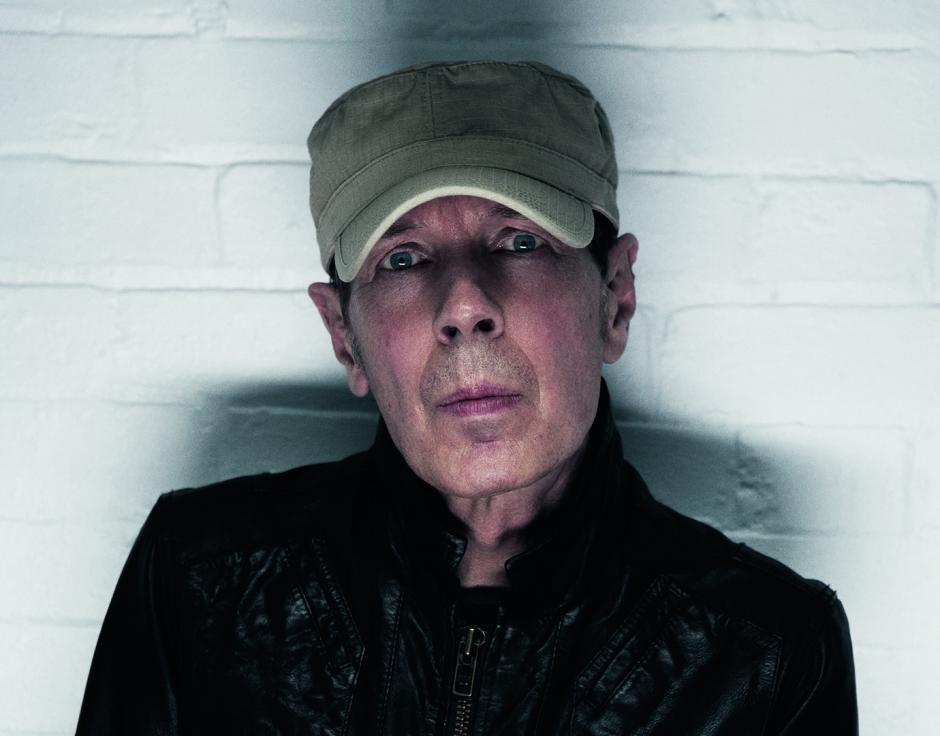
Scott Walker photographed in October 2012 by Jake Walters

A REVEALING APPRECIATION of Scott Walker appears in today’s Observer obituaries of the decade … Co-director of Artangel Michael Morris recalls the great experimental musician as a witty and charming man who freed himself from the trappings of fame:

He’s a completely singular figure in late 20th-century, early 21st-century art and ideas. Scott’s work doesn’t fit into a cultural compartment: he was interested in all forms of human expression. . . Scott was held in such high regard by so many other artists. David Bowie often acknowledged his influence, as does Brian Eno. I think they also revered his ability to cast off the mantle of celebrity and focus simply on the work.

He was not in any way caught up in the myth of Scott Walker. You just felt that you were working with a very precise, open mind, someone who was completely uninterested in the trappings of image or fame. Bike or the bus were his preferred modes of travel. I think he’d found a way to live and work outside of the public gaze that was much more liberating and creative. . .   / Continued online

➢ Previously at Shapers of the 80s:
I interviewed Scott Walker in 1967 at the very moment he was transitioning from teen idol into a more serious solo icon

FRONT PAGE

➤ The makings of Scarlett, a perfect muse for the Eighties

DuoVision , Scarlett Woman, Photography, painting, sculpture, exhibition, Swinging Eighties, The Gallery Liverpool,

Scarlett Cannon at her preview: flanked by DuoVision curators James Lawler and Martin Green. (Photo © Melanie Smith)

WHICH ICON OF THE EIGHTIES catapulted herself to fame using a single name, sculpted hair and red lips? The clue is in the exhibition title just opened in Liverpool: Scarlett Woman. The Gallery in Stanhope Street is crammed with dozens of instantly recognisable images of her in all media – posters, prints, drawings, photos, videos, holograms, mosaics, sculpture and even painting. Fortunately the savviest interpreter of 80s style is at hand to make sense of the life and times of Scarlett Cannon, since she began fronting a club-night called Cha-Cha in 1981. In a guide to the exhibition, the lynchpin fashion editor Iain R Webb outlines how he promoted her career as model and muse.

He writes with intense concision: “It was a time of transformation and transgression, self-expression and collective empowerment. I was immediately taken by Scarlett’s uniqueness, an individual look being our club-kid rallying cry. With her startling peroxide blond haircut and a profile almost as flat as her reflection in the mirror she was magnificent!”

Scarlett says: “I wanted to look like a black and white photograph.” And Webb was happy to oblige, styling her in fashion spreads for BLITZ magazine. “She was an ideal made real, the perfect muse. We shared a common aim: to present our version of the world that celebrated difference and redefined beauty.” Scarlett, he reports, emerged from London’s demi-monde “artfully constructed from captured moments from yesteryear movies and imagined narratives. We made it up as we went along. . . Scarlett has always lived on the outskirts.” She adds: “It was extreme, we were really not afraid and we lived in a different world then.”

DuoVision , Scarlett Woman, The Gallery Liverpool,

Scarlett with Maude, alongside David Hiscock’s 1985 photograph, scarfed by Hermès. (Liverpool photo by Marc Albert)

Never before has there been such a perfect summary of the ingredients that made the Swinging Eighties unique, though Webb’s consummate book As Seen in Blitz: Fashioning ’80s Style came close in 2013. Coincidentally that was the year that Scarlett was visible across London as the poster girl for the V&A’s brave exhibition Club to Catwalk, a sharp retrospective nailing London fashion in the Eighties.

What’s impressive about the Liverpool retrospective mounted by the DuoVision team James Lawler and Martin Green is the number of artists whose work it embraces. . . Andrew Logan, Derek Jarman, Nick Knight, Robyn Beeche, Monica Curtin, Mark Lebon, Thomas Degen, Donald Urquhart, David Hiscock, Julian Kalinoswki, Sadie Lee, Judy Blame and others – most intriguingly the Polish expressionist painter Feliks Topolski, whose huge Punk Triptych makes a rare outing.

VIDEO TOUR BY MARK JORDAN

➢ Scarlett Woman runs until 15 September at The Gallery Liverpool, 41 Stanhope St, Liverpool, L8 5RE

➢ Gender-bending 1980s muse paints the town Scarlett – review in the Art Newspaper

➢ Previously at Shapers of the 80s: Scarlett from i-D cover girl to glamorous gardening mode

➢ Previously at Shapers of the 80s:
2013, Webb’s flipside of the 80s fashion revolution

DuoVision , Scarlett Woman, Photography, painting, sculpture, exhibition, Swinging Eighties, The Gallery Liverpool,

Scarlett Cannon with a slice of history: Feliks Topolski’s enormous Punk Triptych en route to Liverpool

REMEMBERING TOPOLSKI

➢ Feliks Topolski’s reputation reaches back to King George V’s silver jubilee while his monumental postwar mural of people and events called Topolski Century was unveiled by the Duke of Edinburgh and housed in the artist’s studio in the Hungerford Bridge arches beside the Festival Hall, where his legacy at Bar Topolski today is well worth a visit. His caricatures adorned the opening credits of John Freeman’s landmark series of TV interviews, Face to Face.

FRONT PAGE

➤ Sullivan’s manifesto for the Rebel Rebel life

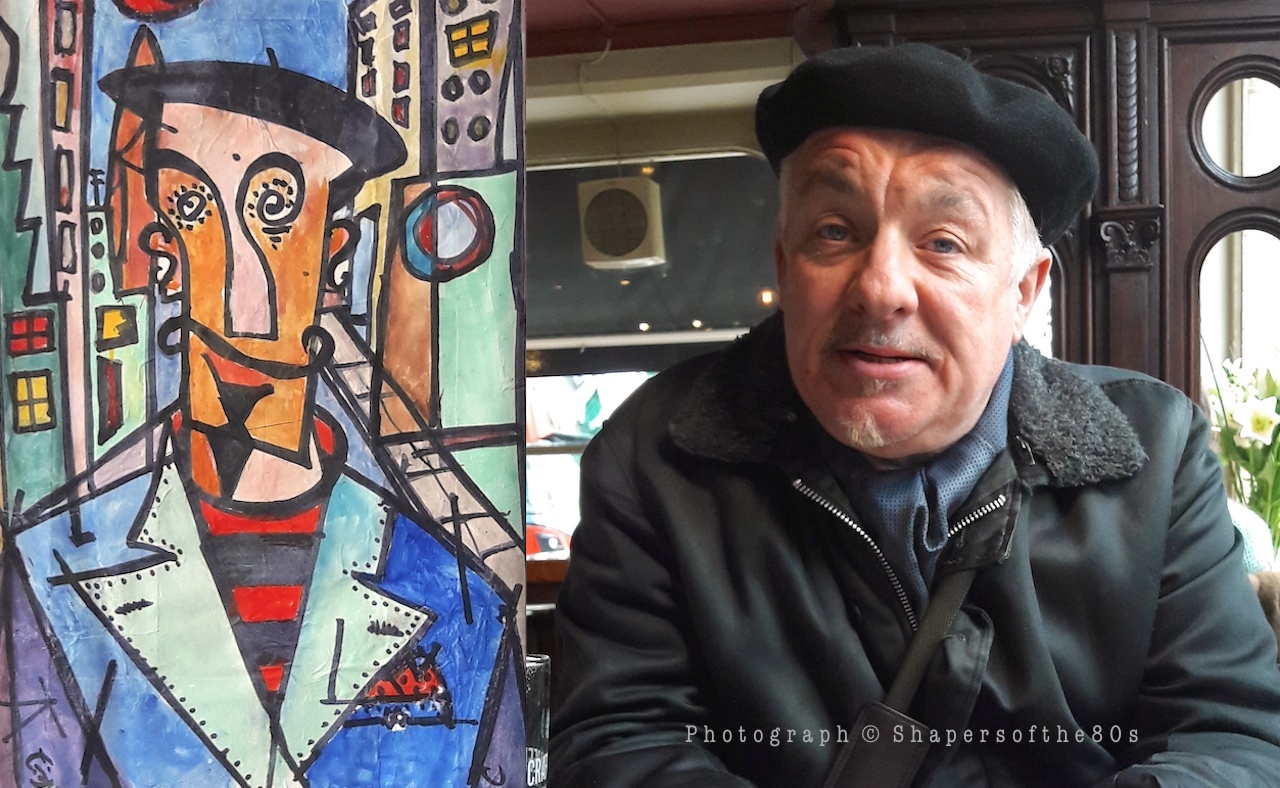
Club-host and artist Chris Sullivan: as he renders himself sporting Dennis-the-Menace T-shirt in NYC 1981 and as he is today in Portobello Road

NOT MANY PEOPLE KNOW that Chris Sullivan – mischievous Welsh frontman of Soho’s Wag Club which he founded in 1982 – switched from the fashion course at St Martin’s to pursue painting instead. Despite his instinctive sense of style, he says today: “I was great at the design and fashion drawings, but not very good at actually making things, stuff like sewing and pattern cutting. So I moved over to fine art. At the time I kept on being in the newspapers, and the college didn’t care what I did, just happy another St Martin’s student was getting press. It was good for their PR.”

It also positioned him as a pivotal influence on the whole British youthquake that transformed London nightlife, music and fashion in the Eighties, while his own mantra of “One look lasts a day” has propelled him through such guises as flaneur, deejay, journalist, nightclub host, pop star, northern soul dancer, style commentator, entrepreneur and fashion designer. A terrific route-map to the Sullivan cosmos occupies 12 pages of the April issue of GQ magazine, blessed with a photo-portrait by David Bailey.

Click any pic below to enlarge all in a slideshow

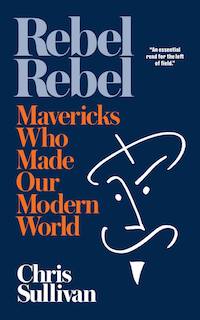
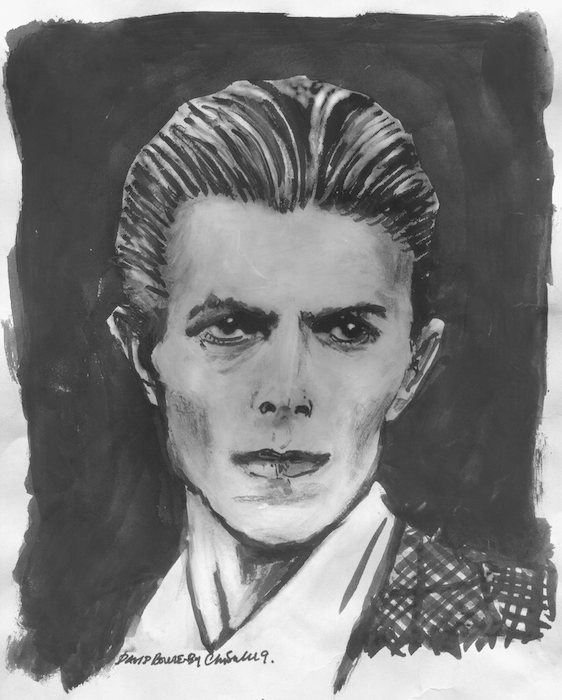
This month Sullivan publishes his third book, an anthology of “people and things that broke the mould” titled Rebel Rebel: How Mavericks Made the Modern World. What he dubs a “paperback manifesto” is an excuse to celebrate his own outsider approach to life: never having a proper job and always staying one step ahead of the pack. The book was launched in 2015 as a crowd-funded project through Unbound Books and for reasons unknown it seemed to take four years either to raise the cash or finish the writing, at which point Sullivan says there was still no money set aside for photographs of the 34 subjects he was profiling (some new essays, some vintage). “So I said I’ll paint or draw them, all these people like Rod Steiger, Fela Kuti, Louise Brooks, Orson Welles, Anita Pallenberg, David Bowie. . .”

In the mix are criminals (Brilliant Chang), musicians (Lemmy), actors (Robert Mitchum), artists (Egon Schiele, Jackson Pollock), directors (Martin Scorsese), photographers (Robert Capa), as well as iconic topics such as film noir, Berlin in the Twenties, Levis, the pork pie hat, the Zoot Suit and the white T-Shirt.

“Because I was so worried as the deadline loomed,” Sullivan says, “I did 35 illustrations for the book, really quickly b-b-boom! Then a friend Barnsley saw one of a zoot suit I wasn’t using for a chapter on outsider clothing, and he snapped it up. Before I knew it someone else was asking could they have one, then I did another one as a commission and stuck that up online and since then I’ve had more than 10 commissions to do these paintings.” Some of the results are here for all to see, inspired by time spent in New York back in the day.

As for the book’s other 400-odd pages, they read like Sullivan in his element. Vigorous prose and serious research substantiate his invitation to “an exceptional party” of cultural giants. Take Capa for instance, who “captured a world and it was Capa’s world”, according to John Steinbeck. Sullivan empathises: “He seems like a chap with whom you’d want to hang out, chew that fat and then go on a humongous bender – a man who was charismatic, brave, egalitarian and funny.” It’s intense stuff that exonerates malcontents and free-thinkers. Ultimately, wag as a tag is not the last word.
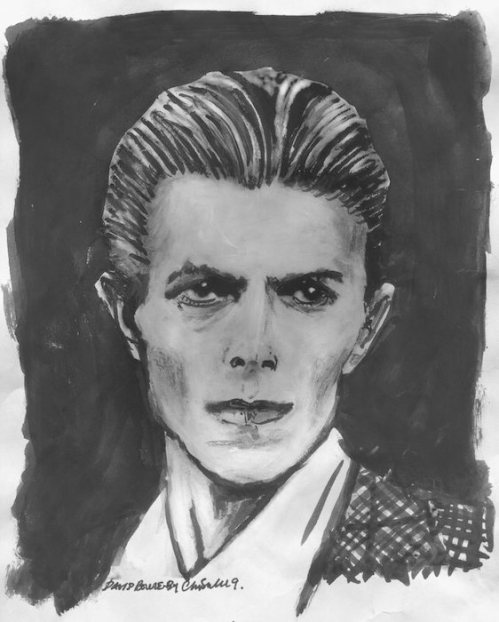
David Bowie, books, Unbound, Chris Sullivan, illustration

David Bowie: Sullivan’s illustration of the Thin White Duke for his Rebel book

➢ Read the odd taster from Sullivan’s book Rebel Rebel at Unbound

FRONT PAGE