Tag Archives: Graham Smith

➤ Index of posts for January

Boy George, John Themis, Bishop Porfyrios , icon,

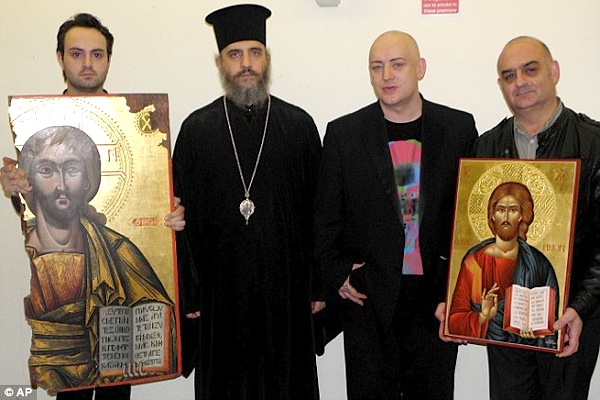
Two-way exchange: Bishop Porfyrios reclaims his church’s 300-year-old icon of Christ in London, while as a thankyou, Boy George receives a modern version of Christ Pantokrator (right) from composer John Themis. Photo © AP

➢ George Michael celebrates his golden years of Faith

➢ Reliving the Blitz: two pocket fanzines and a request from Rusty Egan

➢ “Too posh for pop” — Grandpa Waterman condemns two decades of musicmakers

➢ 1981, Why naked heroes from antiquity stood in for Spandau on their first record sleeves

➢ Ferry backed by three bass players, Roxy back on the road — how cool is that?

Japan pop group, Mick Karn, Hammersmith Odeon , 1982, Sounds ,Chris Dorley-Brown

Karn onstage at Hammersmith Odeon, November 17, 1982: Japan’s final UK tour. Photographed for Sounds © by Chris Dorley-Brown

➢ 1981, The day they sold The Times, both Timeses

➢ George makes saintly gesture over stolen icon

➢ 1981, How Adam stomped his way across the charts to thwart the nascent New Romantics

➢ Life? Tough? At the Blitz reunion, Rusty delivers a message to today’s 20-year-olds (TV news video)

➢ The unknown Mr Big behind London’s landmark nightspot makes his return to the Blitz

➢ Va-va-vooom! goes the world’s smallest portable record player

➢ F-A-B! Thunderbirds stamps are go!

➢ Julia and Gaz share their secrets for ageing disgracefully

Return To The Blitz , Steve Strange, Rusty Egan, Red Rooms, Blitz Kids, New Romantics

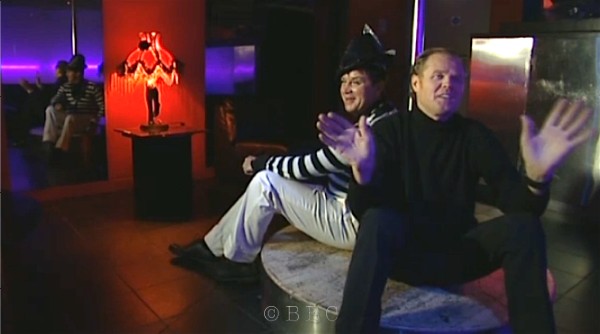
Motormouths back in action: Strange and Egan interviewed on BBC London news in the club where they once reigned. Such were members’ powers of self-promotion at the Blitz, Egan said, that it was the 80s equivalent of Facebook Live!

➢ 2011, Strange and Egan return to the Blitz to kick off the 20-tweens

➢ 200 new acts tipped for the new year in music

➢ Most popular bits of Shapersofthe80s during 2010

➢ Farewell Mick Karn, master of the bass and harbinger for the New Romantics

➢ Prescott says Postlethwaite’s Brassed Off speech inspired New Labour in 1997

➢ Discover Ubu while Christopher Walken takes flight to Fatboy Slim

➢ Happy New Year from Frosty The Snowman and The Ronettes — and hear the smash that changed the sound of 60s pop

➢ List of posts for December 2010

The Ronettes, Phil Spector, Frosty the Snowman, Be My Baby, Wall of Sound, 1963

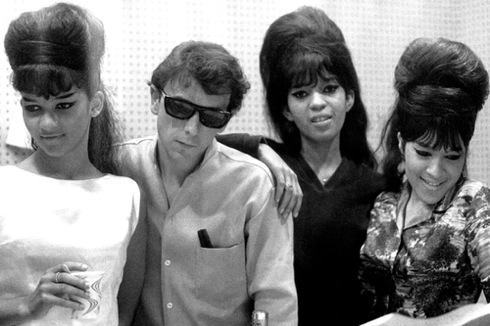
The Ronettes in 1963: beehive hair-dos and producer Phil Spector

FRONT PAGE

2011 ➤ Reliving the Blitz: two pocket fanzines and a request from Rusty Egan

Shock dance troupe, Angel Face, RBRB,rare vinyl ,

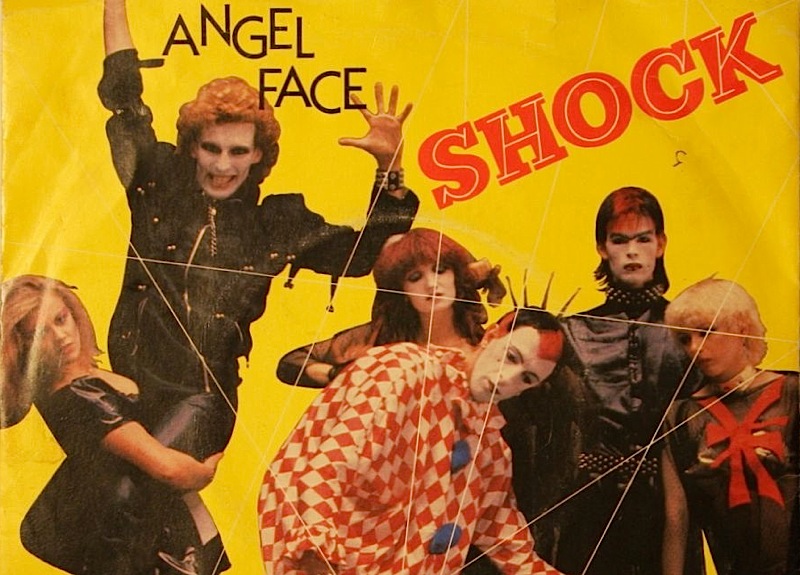
Shock’s 1980 12-incher, Angel Face b/w R.E.R.B. — rare vinyl costing £58.21 from Black Rhythm Records in the Netherlands

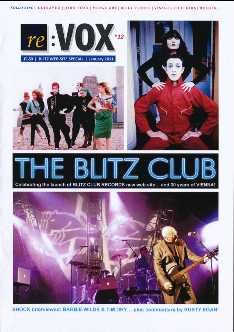
reVox, magazine, theblitzclub, Blitz Club Records, Rusty Egan, Ultravox, Shock, Tik & Tok❚ re:VOX #12 IS A FAT special issue of Rob Kirby’s pocket magazine dedicated to 80s electronica, which celebrates the 30th anniversary earlier in January of the release of Ultravox’s hit single Vienna. This 40-page issue tracks the origins of Vienna as a monster hit that set a benchmark for pop’s new wave, both musically and with its innovative, cinematic video.

There is a lengthy interview with Barbie Wilde of Shock, the mime/dance troupe whose single Angel Face was produced by Rusty Egan of Visage and Richard Burgess of Landscape who also produced Spandau Ballet’s first records (today a director for Smithsonian Folkways, the nonprofit record label of the Smithsonian Institution in Washington). The Shock B-side R.E.R.B. is the first re-release by the new label Blitz Club Records — here’s a 30-second clip of the 2011 extended version:

In re:VOX Barbie describes the emergent mime scene inspired by visiting Paris in the late 1970s, and being involved at the age of 19 with Tim Dry in the formation of Shock in 1979, along with Robert Pereno, Lowri-Ann Richards, Karen Sparks and Sean Crawford (later Tok of Tik & Tok) and how all paths crossed at the Blitz, resulting in Shock becoming dance figureheads for the New Romantics. In October 1980 Barbie didn’t have much fun dodging explosions as she ran around Beckton Gas Works with Tok when they added romance to Ultravox’s video for Passing Strangers, one of the first pop promos directed by Russell Mulcahy, in which moustachioed Midge Ure thinks he’s Clark Gable.

Midge Ure, Sean Crawford, Barbie Wilde, Ultravox, video, Passing Strangers

Midge, Sean and Barbie: Ultravox’s video for Passing Strangers, 1980, which would later be runner-up for the Best Video award in the British Rock and Pop Awards

Tik & Tok,Tim Dry, Sean Crawford

Robo-mimes Tik & Tok: Sean Crawford and Tim Dry

Tim Dry, another ex-Shock performer, continues the saga of how in 1980 he span off to form the white-faced robo-mime duo Tik & Tok with Sean Crawford who was already familiar on London’s fashionable streets as a robot character called Plastic Joe. Dry had been completely unaware of the Blitz as a “secret underworld the rest of London was oblivious to” (along with the indolent record industry to whom the scene came as a monumental surprise once it exploded).

He gives full credit to Robert Pereno as the social networker who was key to both acts getting bookings on the clubbing circuit, and persuaded Tik & Tok to ditch disco in favour of cutting edge Euro-synth music. The duo made £30 from their first street performance outside San Lorenzo, the smart Beauchamp Place restaurant. From that pavement debut, television, fame and fortune beckoned…

Steve Strange, Rusty Egan, Return to the Blitz, clubbing, theblitzclub

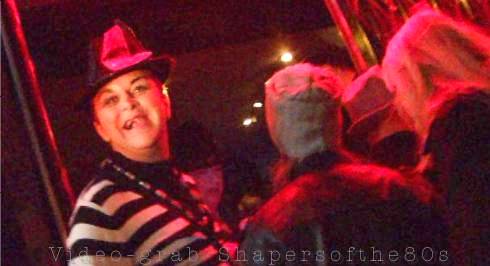
Steve Strange: reliving his former glory on the door for the Return to the Blitz party, Jan 15. Captured from video by Shapersofthe80s

Kirby has also produced a separate 16-page issue, re:VOX #13, to report the Blitz Club Reunion party itself, held at the site of the original 1980 club on Jan 15 jointly to launch the book Remembering Eden by Jus Forrest and Helen Waterman, as well as Egan & Strange’s website for their label Blitz Club Records. Rob gives his first-person account of the party, confessing that he was too young to be one of the original Blitz Kids and reminds us that he’d fallen in with Rusty quite recently as an obsessive archivist who can trace every track Rusty had ever played as the Blitz club’s deejay. They have already shared their playlists with Graham Smith, the designer of Spandau Ballet’s graphics whose anthology of 80s photographs, We Can be Heroes, is published in September by DJhistory.com

Each issue of re:VOX costs £1.50 from Rob Kirby, 2 Bramshott Close, London Road, Hitchin, Herts SG4 9EP

WHICH TRACKS WOULD YOU LIKE ON
A BLITZ CLUB COMPILATION?

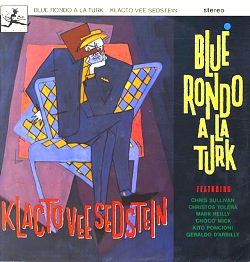
Klactoveesedstein , Blue Rondo a la Turk , latin, funkEgan plans to produce a Blitz Club album, not of the usual suspects who are wheeled out on 80s compilations, but artists as cutting-edge as those Rusty was so eagle-eared at finding on his travels through Europe in the late 70s. “Not 12-inch disco remixes,” he says. “Our clubs played great weird music like Can, Neu and Magazine.”

He is inviting lovers of Billy’s, Blitz and Club for Heroes music from 1978 to 1981 to propose the key tracks they think made London’s clubbing scene so inspirational. He names as examples the German version of Bowie’s “Helden” (1977) that he played relentlessly at Billy’s, RAF by Snatch featuring Brian Eno (1983) and Eno’s own King’s Lead Hat (1978), Television’s Little Johnny Jewel (1975) which he says has “great drums” from Billy Ficca, Klactoveesedstein by Blue Rondo a la Turk (1982), and the French model Ronny’s If You Want Me To Stay (1981).

Send your track suggestions to Rusty Egan through the contact page at
theblitzclub,Blitz Club Records, Rusty Egan

FRONT PAGE

1981 ➤ Why naked heroes from antiquity stood in for Spandau on their first record sleeves

➢ CLICK TO VIEW ♫ THE VIDEO FOR SPANDAU BALLET’S SECOND SINGLE, THE FREEZE …

Spandau Ballet, The Freeze, John Keeble, video, New Romantics
♫ BLUE SING LA LUNE, SING LAGOON… ♫ No, nobody has ever known what the lyrics to The Freeze were going on about, but that wasn’t the point 30 years ago today when it entered the UK singles chart at No 24. It wasn’t an obvious choice for Spandau Ballet’s second single, after their first, To Cut a Long Story Short, had peaked at No 5. The Freeze was not chosen for singability but for its New Romantic clubbing credibility. In 1981 the pathfinding band were consolidating the new approach they had styled White European Dance Music — led on The Freeze by Gary Kemp’s two-fingered synth arpeggios, plus enough percussive kick-drum snaps underpinned with bassline rhythms to fill dancefloors even in Birmingham, where Duran Duran had yet to release their debut single.

The Freeze was a subtle rallying call to soulboys and girls up and down the land, as distinct from the new wave’s “electric” factions who were inventing alien soundscapes haunted by multi-layered synthesisers. Spandau were to release one more double-sided single and an album in similar style before throwing New Romantic rivals into confusion by changing their sound utterly — and fashionably — to funk by mid-summer. Spandau moved ever onward by translating the New Romantic mantra that “One look lasts a day” into its musical equivalent.

Likewise, the new video dispensed with their earlier tartans to reveal a mix of a medieval doublet from PX, masculine string vests, a pair of dark-glasses to transform Tony Hadley into Donald “The Forger” Pleasence [♫ The art is pretending it’s art ♫], and a grey pleated Melissa Caplan “gymslip” [above] for drummer John Keeble (not known in the years since for cross-dressing — although, no, hang on, there is one as-yet unpublished pic of him as Carmen Miranda on tour in the US).
Spandau Ballet, record sleeves,

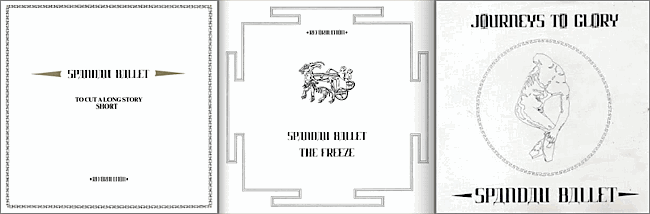
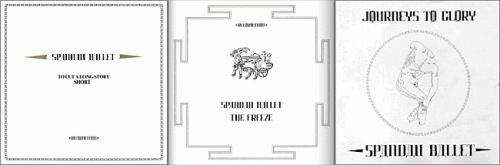
Graham Smith’s minimalist livery for Spandau Ballet’s white record sleeves: To Cut..., The Freeze, Journeys to Glory

While ex-Middlesex art-school fashion-designer Simon Withers set the style for Spandau’s staging and clothing, a complete livery for their suite of vinyl record sleeves was masterminded by Graham Smith while still studying graphics at Camberwell (all of which counted towards his coursework and earned him a first-class degree in 1981 and, fortuitously, an entire window display in HMV’s Oxford Street record store). The early singles — To Cut…, The Freeze, Musclebound and Glow — were taken from Spandau’s first album Journeys to Glory, which reached No 5 in March, and were styled in black-on-white with minimal distraction beyond a few classical motifs, like those decorating the set in The Freeze video. Most daringly, there wasn’t even a photograph of the band on the debut single.

Graham says now: “I wanted to create an overall corporate visual package for Spandau that was cutting edge and reflected their aspirations. It had to have style. Style was the buzzword at the time. Even magazines were being named with Style in the title. It’s overused today, but it wasn’t then.”

Spandau Ballet, New Romantics, record sleeves

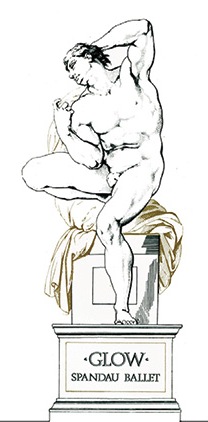
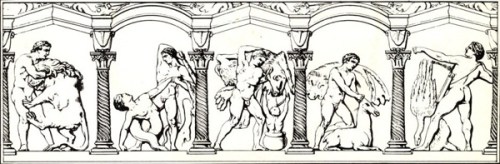
Sleeve for Spandau Ballet’s Glow: Another hero, by Smith after Flaxman

His minimalist vision was pretty prescient for 1980, though he wasn’t alone. Up North, former classmates at Manchester Polytechnic Peter Saville and Malcolm Garrett had been transforming graphic design in the record business for a couple of years, Saville for Joy Division and OMD among others while establishing a bold house style at Factory Records (where one post-punk sleeve was made of sandpaper as a Situationist joke), and Garrett for the new-wavers Buzzcocks and Magazine. Both were inspired by the pioneers of 20th-century typography to let stock fonts alone evoke mood and character, just as Penguin Books had done. The Mancunians, too, had often abandoned band portraits to underscore musical integrity.

Even so, it was quite a feat for Graham Smith to convince Spandau’s manager Steve Dagger and his five ostentantiously dandy band members with trendsetter ambitions that they remain invisible on their first set of singles.

Graham says: “This was obviously seen as a perverse and uncommercial move by Chrysalis [the record company], but that was the whole point. I felt by doing so we gave mystique to this new and very visual band. It added a strength to Spandau as they were clearly stating they were not packaged by the record company, but doing things on their terms. This move would still be considered questionable in marketing terms today.”
Spandau Ballet, Musclebound, record sleeves

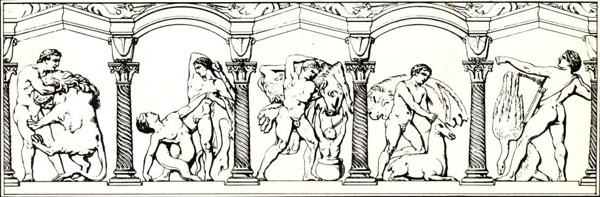
More Flaxmanesque heroes: Spandau Ballet sleeve imagery for Musclebound

A few tasteful nudes from classical antiquity stood in for the band, resonating with the New Romantics’ lifeline back to Bowie’s “Heroes”. Graham says: “The iconic imagery for the album was based on Greek sculptor Myron’s The Discus Thrower. Glow was based on 18th-century etchings by the neoclassical sculptor John Flaxman. The Freeze image I sourced from a reference book on Egyptian icons — the chariot simply worked with the Journeys to Glory theme. The white spartan package was pure and reflected some of Gary’s lyrics and statements at the time, such as I am beautiful and clean.”

“There were claims at the time that some of the imagery had Aryan overtones which mirrored the band’s earlier fashion choices. I somewhat misguidedly thought this was perfect at the time – think of Bowie saluting at Victoria Station in an open limousine several years earlier!”
Spandau Ballet, St Tropez, Simon Withers, Graham Smith, Robert Elms,New Romantics

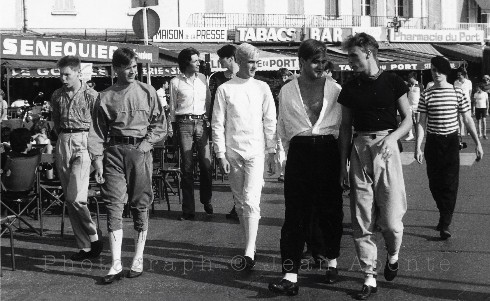
Graphic designer Graham Smith (right): The Spandau Ballet entourage in St Tropez in 1980 also includes writer Robert Elms (left) and stage/fashion designer Simon Withers (centre in white). Photograph © by Jean Aponte

FRONT PAGE