Tag Archives: Chris Sullivan

➤ “Yes this is a Wag rerun” — Sullivan on his Sussex alternative to London’s carnival

Chris Sullivan, Wag club, Jon Baker, nightclubbing, Swinging 80s,West Dean Festival,

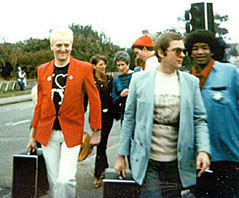
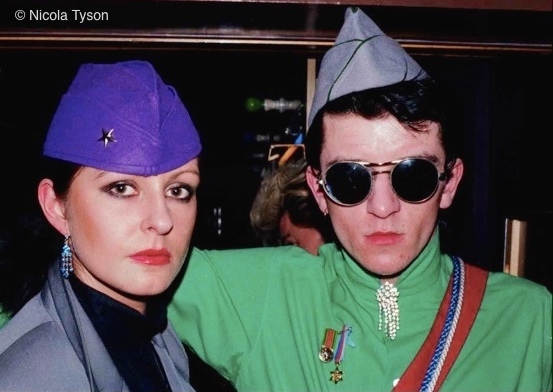
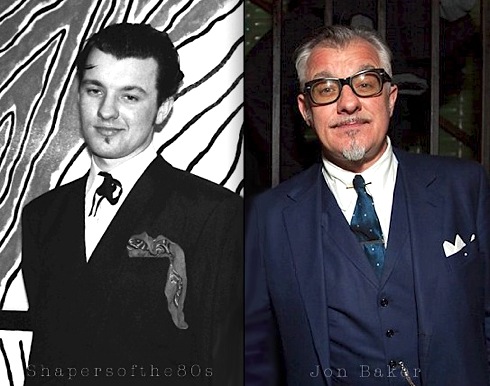
Sullivan then and now: the Wag club host in his painted pavilion in 1983 and, right, deejaying for Jon Baker’s Jolly Boys concert in New York this spring

❚ NOT ONLY IS ADAM ANT TOPPING THE BILL on Saturday but half-price tickets were still available today to followers of Chris Sullivan, joint host for 19 years of Soho’s legendary Wag club which he founded in 1982. This bank-holiday weekend Aug 26–28 he plays deejay and music programmer at the three-day West Dean Festival near Chichester in rural West Sussex. The knees-up 90 minutes from London will be a “nice alternative” to the annual Notting Hill Carnival, he says. In fact, “a Wag rerun… for parents”!

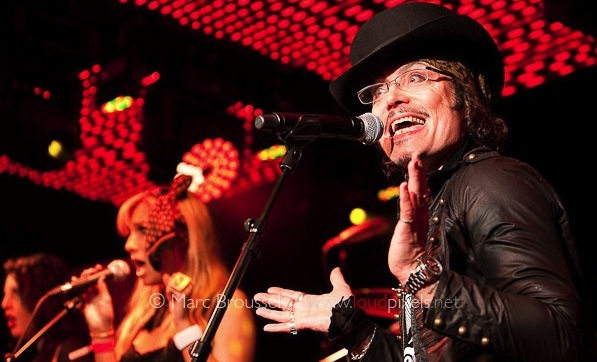
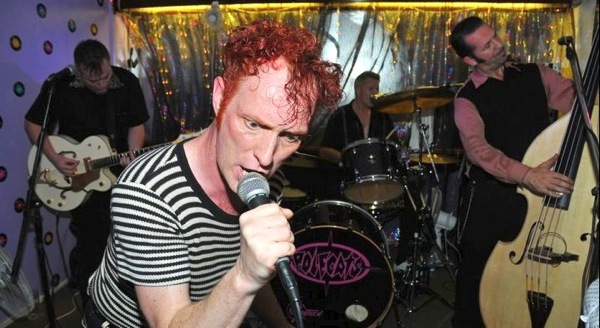
As undoubtedly the most influential club host of the 80s, as well as vocalist in the crazy Latin band Blue Rondo à la Turk, Sullivan commands one of the fattest contacts books in clubland. So while this weekend’s festival across two stages and late-night café bar aims to celebrate all aspects of the arts, it’s no surprise that the day-long live music is designed to attract the aficionado. Friday headliners are Natty Bo and The Top Cats, plus The Third Degree … Saturday boasts the reborn Adam Ant and his band The Good The Mad & The Lovely Posse, plus Polecats, Dulwich Ukulele Club, and 80s warehouse deejay Phil Dirtbox … Soul singer James Hunter headlines on Sunday.
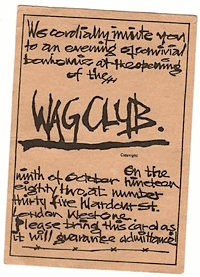
When I reminded 51-year-old Sullivan that the locals are billing it as “A magical escape for all the family” he was keen to promise this would not put a damper on the fun. “Kids go to bed at 9-10ish and when there’s a few of them they look after each other with the supervision of one adult maybe. Meanwhile we let rip in the knowledge that they are near and we save money on babysitters and have a right old beano.”

That’s the Wag spirit! In fact, beano was the very word he used in 1983 when my report in The Face rounded up the four hottest nightposts in the swinging New London Weekend. The Wag had been open less than a year and his pitch was: “We’d like people to come in with a sense of beano and to leave with hangovers and blisters on the feet.”
Chris Sullivan,Christos Tolera, Blue Rondo à la Turk, pop group, nightclubbing, Swinging 80s,

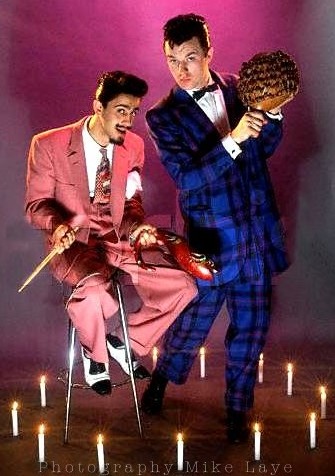
Sullivan and Christos Tolera in 1981: vocalists with Blue Rondo à la Turk, photographed for The Face by Mike Laye

Despite his origins in the Welsh Valleys and being built like a rugby player – “I’m six foot two and sixteen stone” — Sullivan’s unswerving sense of personal style got him into two London art schools while his exuberant warehouse parties during 1978-9 established him as a pivotal tastemaker in the post-punk vacuum. It goes without saying that his two passions were music and clothes. And that his wit was as quick as silver.

By 1980 he was the highly articulate pathfinder for the non-gay men’s team putting the Blitz Kids in the headlines. The ultimate soundbite “One look lasts a day” was Sullivan’s. Here was a New Romantic dandy whose ever-changing attire referenced every movie matinee idol from zoot-suited gangster to straw-hatted playboy to Basque bereted separatist. Here was an MC who along with his deejay contemporaries displaced electronics in favour of funk — drawn initially from his own collection of 7-inch singles — at a string of creative weekly club-nights, St Moritz, Hell, Le Kilt and then the Wag in the huge premises that had been known as the Whisky-A-Go-Go since the Swinging 60s.

During three helter-skelter years British music trended from punk, Bowie, electro-pop and mutant disco back to James Brown and funk. “Things moved so fast then, that the 80s heralded a completely new era,” Sullivan said. The claim he will not make is about his own enormous circle of influence. Back in the dark age before mobile phones the defining measure of his social clout came from Steve Dagger, manager of Spandau Ballet. He gave me the priceless paradigm: “You could put Sullivan outside a public lavatory, announce a party and within two hours you’d have a queue of 500 people paying £3 to get in.”

Few other individuals on the London scene of the early 80s had a greater impact than Chris Sullivan on shaping the intimate relationship between sound and style in the private worlds of the new young.
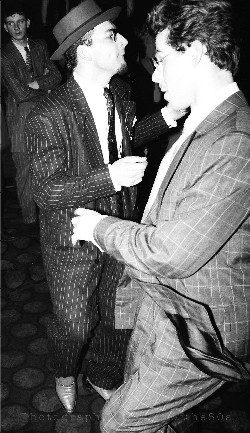
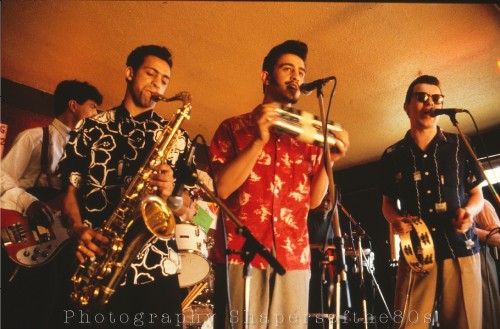
Blue Rondo gig 1982: zoot-suited fans mashing up a dancefloor in Bournemouth. Photography by Shapersofthe80s

Under his partnership with Ollie O’Donnell, who himself had already made a clubland institution of Le Beat Route, the Wag eventually ran seven nights a week to become Soho’s coolest hangout for artful posers and musical movers and shakers. In Sullivan’s own words, the place “basically predicted the future of music for the next 15 years” which gratifies him no end.

The club’s unique appeal was a reflection of his sub-cultural instincts, which were refined as a teenage graduate of the Northern Soul scene during the 70s. The Wag also proved a mighty kick in the teeth for the smug ruling elite in the rock press — those “white middle-class punks who couldn’t dance and hated black music” and whose vitriolic attacks on Blue Rondo undermined industry faith in his stylish seven-piece band and their jazzy Latinised funk.

Blue Rondo à la Turk was a dream project inspired after Sullivan made “one of those mad trips” to the black clubs of New York in 1980: “I wanted to start a band that would play the music I could dance to — a mix of Tom Waits meets Tito Puente meets James Brown, and all a bit off-kilter.”

Rondo were a bizarre multi-racial troupe of live musicians who also boasted wild dancing feet and tapped into like-minded audiences who’d misspent their youth on Britain’s underground soul circuit, a mighty fanbase either unknown to or utterly scorned by the rock press. His band were born entertainers and their first album, Chewing the Fat, was easily the most inventive of 1982. Not long ago Sullivan vented his spleen to me: “Those middle-class twits in the music press hated us because we had the effrontery to play dance music and we weren’t black, but also because we dressed up onstage — which basically became the remit for the next two decades. The press were all-powerful in those days and some took it upon themselves to make us their whipping boys.”

Well, the magnificent seven in Blue Rondo were precursors of the wags Sullivan named a nightclub for: “The wag from the 20s was a bit of a cad, wore monocle and spats, was a mean dancer and very much the ladies’ man.” Musically, his Soho nightspot was the most progressive venue of the 80s. Nowhere else came close. “I knew from day one we were selling a Saturday night nobody else was doing — a really hip club which played all manner of black dance music.” Only last month before deejaying at the Southbank’s Vintage festival, Sullivan wrote: “The Wag is important because it opened funk and black music to a huge, new crowd of people which still prevails. We were one of the first to do it and it’s still going on.”

➢ Mention Sullivan’s name at the gate for 50% discount on the West Dean Festival tickets or mail chris [@] sullivan60.co.uk
Adam Ant ,The Good The Mad & The Lovely,pop group,West Dean Festival,

80s hero Adam Ant: on the road this year with The Good The Mad & The Lovely Posse, pictured by Marc Broussely
West Dean Festival, Polecats, rockabilly ,rock group,

80s rockabilly band The Polecats: scheduled to play West Dean Festival, photographed last year by Steve Wadlan

FRONT PAGE

2011 ➤ Open your wallet for a Vintage sting on London’s Southbank

Princess Julia, Chris Sullivan, deejays, Vintage 2011,Southbank Centre, clubbing

Vintage deejays at Vintage 2011: original Blitz Kids such as Princess Julia and Chris Sullivan will be spinning the vinyl to recreate legendary 80s club soundtracks from the Blitz to the Wag

+++
❚ VINTAGE 2011 IS A MUSIC AND DRESS-UP festival indoors at London’s Southbank Centre (so without the mud), curated by Wayne and Gerardine Hemingway. This three-day party from Friday July 29 celebrates seven decades of British cool from the 1920s to the 80s. Taking its lead from the Festival of Britain (1951), the blurb says there is no single creative focus, just hours of music, fashion, film, art, design and dance each day.

Vintage 2011 , SBC, RFH,Wayne Hemingway,London, Southbank Centre , music, fashion, festivalAll levels of the Royal Festival Hall are transformed into a multi-venue playground, with ten vintage nightclubs such as The Soul Casino, Let it Rock, The Torch Club and The Leisure Lounge. New this year are The Studio, Prohibition Room, The Bunker Club and the North South Divide. In total there’ll be 70 live performances, 150 deejays, exclusive catwalk shows with Jo Wood and Pearl and Daisy Lowe; decade specific make-overs; vintage food and cocktails and 250 sellers at the vintage marketplace. Each day sees a major Revue in the main auitorium: Heaven 17, Alan Wilder and Thomas Dolby, for example, in Friday’s Electronic Revue… Percy Sledge in Saturday’s Soul Revue… David McAlmont, Sandie Shaw and more in Sunday’s Hit Parade.

Sue Tilley, Leigh Bowery, biographer

Sue Tilley: catwalk show celebrating 80s nightlife

Now take a deep breath. On the Friday at 6pm Cavalcade of the 80s is a catwalk fashion show presented by Sue Tilley, Leigh Bowery’s biographer and Lucian Freud model. Sue says: “Bodymap are showing about six outfits with models including Barry Kamen and Les Child… There is going to be an Antony Price dress… Kim Jones is lending some Leigh Bowery originals… Rachel Auburn is recreating one of her outfits. And there’s the second performance this year after 28 years of the 80s club sensations The Trindys.” The models will include friends from the 80s plus new club kids Daniel Lismore and Felicity Hayward. [“My idea of the 80s” — Sue Tilley interviewed at Dazed Digital]

On Saturday the RFH Penthouse venue goes “back to the futurists” and the New Romantic Blitz Club era with 80s three genuine Blitz Kid super-deejays Princess Julia, Jeffrey Hinton and Mark Moore.

At her blog The World of Princess Julia, the doyenne of clubland deejays gives a quick rundown on how she graduated from the Blitz Club cloakroom to the wheels of steel and says of Vintage: “I think I’ll play a mixture of music that has played a part in my deejay career. It will range from post-punk electronica, disco, retro pop, dance and anything else I find at the bottom of my handbag.”

➢ View slideshow of previously unseen 80s pix by Shapersofthe80s at ClashMusic

Classic Album Sundays and Bowers & Wilkins present the Best British Albums at Vintage in four two-hour listening sessions each day in the St Paul’s Pavilion. At 7.30 on Saturday Mark Moore will be introducing Joy Division’s Closer album and the record will be played in its entirety (from vinyl of course) over fab B&W audio kit.

Chris Hill, Robbie Vincent, clubbing,funk, soul DJs, dance music,

Funk royalty: Chris Hill (left) plays the Vintage festival, but what about Robbie Vincent?

For Sunday night in the Penthouse Chris Sullivan — the original Wag Club host for 19 years and Uber-Shaper of the 80s — recreates the funkier, post-Romantic spirit of Le Beat Route (1980–83, zoot suits) and the Wag (1982+ ripped jeans and Celebrity Squares) along with other gods among dance deejays Paul Murphy and Jay Strongman (who also plays Warehouse on Friday and Let It Rock, Saturday).

Over in the Soul Casino the funk legend that is Chris Hill joins the legends who are Norman Jay and Colin Curtis. Tsssss! Have the Hemingways got any inkling of exactly how many galaxies of star quality they have booked?

In all likelihood, Sullivan says: “There might well be a bit of dancing.” When asked what he’s going to play first to get feet kicking, he responded: “Might well be one of THE great recordings, Eddie Kendricks – Keep on Truckin. Lyrically it’s just there. What a Bobby dazzler!”

Ticket prices are frankly a sting, starting at £60 (wince!), since you are the star turn at this DIY event, but dedicated followers of fashion not yet squeezed by the recession aren’t likely to complain.

➢ Ticket without evening show £60, with Vintage Revue from £75 upwards, Fri–Sun July 29–31, full details at the Southbank Centre

➢ July 22 update: We should celebrate Britain’s role in clubbing — Wayne Hemingway in the Independent, sadly getting his London club memories muddled

FRONT PAGE

1981 ➤ Hot days, cool nights, as Blue Rondo join the new Brits changing the pop charts

Blue Rondo à la Turk , pop music, 1981

Blue Rondo’s official debut in Chelmsford, June 1981: Moses Mount Bassie, Christos Tolera and Chris Sullivan front the seven-piece. Photograph © Shapersofthe80s

◼ “GET IN THE BACK OF THE VAN,” I was told on this day 30 years ago. “You’re coming for a ride.” Graham Ball was a club host empowered to open the trendiest of doors in Soho, so “No thanks” was not an option. “I’ve got a new band to show you. And you’re not quite going to believe what you’ll hear and see.” He was, apparently, now also a manager. We arrived in blisteringly hot sunshine at a characterless modern pub in Chelmsford, Essex, well away from Soho clubland, and there of course were the rest of The Firm — the handful of sharp young dudes at least half the age of the grunters who dominated the pop industry, all being groomed by Spandau’s 23-year-old Steve Dagger to inherit the mysteries of management for a new generation of bands.

Assembling an assortment of instruments onstage were five, six, no, seven of the most variegated musicians you felt might belong in a special institution for their own safety. I had been invited to write the first piece about the craziest combo  inspired by London’s Blitz Club, which had closed the previous autumn, and by this summer they were but one among the slipstream of bands erupting on London’s burgeoning nightlife scene. From their opening vocals — “Oo-oo, aa-aa, mm-mm ah!” — Blue Rondo à la Turk were sensational, and my review appeared in the second issue of New Sounds New Styles. It took only three months before Rondo signed a deal and charted in November.

➢ Read that first review of Blue Rondo as they create a buzz with their new Latin sounds — from NSNS August 1981

This was the summer
of New Romance

Spandau Ballet, Ultravox, Duran Duran, 1981

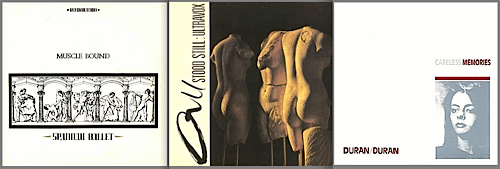
Leaders of the Romantics in 1981: Spandau Ballet, Ultravox, Duran Duran

ON THIS DAY in 1981 the UK charts were bursting with the new generation of image-conscious British groups who whose linking of soul and electro-pop were to change the style and the rhythm of pop charts for ever. . .

Ultravox were enjoying their fifth hit single All Stood Still.
Linx were enjoying their third hit Throw Away the Key.
Spandau Ballet were enjoying their double-sided third hit single, Muscle Bound/Glow. At Easter they had also signalled their new funky direction by introducing Chant No 1, which would become London’s clubbing anthem and reach No 2 later this summer.
Duran Duran were enjoying their second hit Careless Memories.
Orchestral Manoeuvres in the Dark were enjoying their second hit Messages.
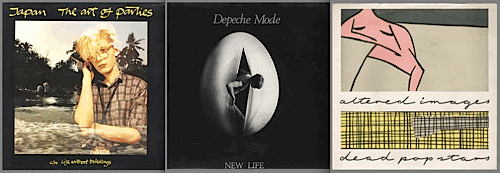
Japan were charting with The Art of Parties.
Landscape were charting with Norman Bates.
Shalamar (with honorary Brit and body-popping pioneer Jeffrey Daniel) were charting with A Night to Remember.

➢ Elsewhere at Shapers of the 80s: 100+ acts who set the style for the new music of the 1980s

Light of the World were charting with I’m So Happy.
Imagination were charting with their debut Body Talk.
The Human League entered the charts on this day with Empire State Human.
Depeche Mode’s second single New Life was soaring towards No 11.
Visage’s second hit single had just fallen out of the chart.
❏ Likewise Heaven 17’s debut Fascist Groove Thang.
❏ Likewise Altered Images’ debut Dead Pop Stars.
❏ Likewise Level 42 with their second hit, Love Games.
❏ And the honorary Brit, Kid Creole, was heading into the charts with his Coconuts and their debut single, Me No Pop I — a compulsively danceable new sound on Antilles introduced to London last year by i-D co-editor Perry Haines.

New Romantics, bands, Swinging 80s,Japan the band, pop music, Depeche Mode, Altered Images

Going Romantic in 1981: Japan the band, Depeche Mode, Altered Images

Oh, and two nights earlier at Le Beat Route I’d snapped the new boy in George O’Dowd’s life enjoying their first date. Nobody dreamt that George and Jon Moss would one day be putting together their own band.

♫ VIEW fine Northern Soul footwork from Rondo mentalists in this performance of Me and Mr Sanchez shot at the Venue in London:
+++

FRONT PAGE

1980 ➤ As Spandau play in Heaven, all around we can hear the new sounds of 1981

Spreading the New Romantic message, including clothes by PX: Spandau Ballet play Heaven, Dec 29, 1980. Photographed © by Shapersofthe80s

❚ SIX WEEKS IN THE CHARTS with their debut single, To Cut a Long Story Short, on this day in 1980 Spandau Ballet play at Heaven, the biggest disco in London, and probably in Europe. Their average age is 20. A year after their unveiling at the Blitz club, this is still only the band’s tenth public date, and only their second concert since signing to Chrysalis in October. Their policy is to maintain an air of exclusivity, to thwart the backward rock press by playing admission-by-invitation dates in nightclubs rather than conventional rock venues, and to rely on stylish videos to stress the message that here was a new generation of new sounds and, equally important, new styles. Take it on trust that for the whole of 1980 Spandau Ballet had been the most achingly fashionable pop group on the planet, dressed by the designers of the moment. Significantly, as the first club band to win a record deal, they had been the only New Romantics to appear on Christmas Day’s year-ending edition of Top of The Pops, the BBC’s flagship music show. (Yes, Adam and the Ants also appeared, but he was “glam-punk”, important distinction, as Marco Pirroni confirms.)

On Dec 20, Visage, the Blitz club’s seven-piece studio line-up had entered the singles chart with Fade to Grey. The same week saw Le Kilt’s Christmas party, the new New Romantic club that had opened almost as soon as Steve Strange’s clubnights at the Blitz had ceased. Le Kilt’s co-host Chris Sullivan had murmured something about putting together a band he called Blue Rondo à La Turk. Not to be outdone, i-D’s cub editor Perry Haines had mentioned not only a band he was managing, Alix Sharkey’s Stimulin, but tonight in Heaven he now talks of his involvement with Duran Duran, the Rum Runner house band we’d all run into at Spandau’s November show in Birmingham.

Depeche Mode, Daniel Miller, Dreaming of Me, synthpop

Basildon’s finest: Depeche Mode recorded their first single, Dreaming of Me, in December 1980, after a verbal contract with Daniel Miller’s synth-driven label Mute

Here too is Daniel Miller, an anarchic electronic musician with his own label called Mute and a recording studio in an old church where he had set up all his synthesisers. Only last night he’d been watching Depeche Mode, an unsigned teenage band from Essex, playing the Bridge House pub in east London where they were regulars — he’d heard them play their technopop tune Dreaming of Me, helped them record it and they’d all agreed it would make a great first single.

All round us in UK clubland platoons of amazingly young bands making dance music were lining up to storm the charts in the New Year. By the spring, Spandau Ballet was staging the first Blitz invasion of America with a live concert plus fashion show by a gang of Blitz Kids whose average age was 21. During 1981 the group decided against a tour as being “too rocky”, and played only 10 live dates in the whole year — OK, plus a fortnight at the Ku club in Ibiza that summer, which counted as one booking. While the movement took root, staying cool seemed to suit the style of the times.

FRONT PAGE

1980 ➤ 2010, the stage magic that inspires Romantics ancient and Neo

An exceptional cabaret performer called Taylor Mac
hit London this week in 2010. He subverted not only
theatrical conventions but several classic Bowie songs
to glorious effect. His shimmering presence sent out
echoes of how we defined itzy-Blitzy when 1980 dawned…

Billy’s club,Helen Robinson, nightlife, London ,Steve Strange, PX

Billy’s club 1978: Strange as Ruritanian Space Cadet alongside PX designer Helen Robinson. (Photograph by © Nicola Tyson)

❚ LET’S RECALL WHAT MADE THE BLITZ KIDS unique in 1980. Singer Andy Polaris said soon after: “Anyone who thought it was all a pantomime got the wrong end of the Pan Stik. Blitz people had to be larger than life. It was a compulsion. If it doesn’t possess you, you can’t acquire it.”

An evening within the orbit of London’s Blitz club superstars – and we’re talking about 50 people here – was more than entertaining. You were zapped with a very tangible electric shock – what we’d call today “sensory overload” – as if these exquisite, compulsive posers had revitalised Gilbert & George’s notion from 1969 of processing through the world as living sculptures. The Blitz Kids generated their own crackling versions of hyper-reality that defined the space around them. They included Kim, Julia, Judi, Melissa, Fiona, Jayne, Theresa, Myra, Scarlett, Clare, Michele, Darla, Sade, Kate, Stevie, Naomi, Mandy, Helen, Jo, Perri, Christine and Franceska . . . the Stephens Linard and Jones, Lee, John, Cerith, Simon, Iain, Andy, George, Marilyn, Wilf, Greg, Jeffrey, Christos, Graham, Neil, Dencil, Robert, the Holah brothers, the Richards Ostell and Sharah. A fair few other Blitz Kids, like Strange, Egan, Elms, Sullivan, Dagger, Haines, Ure, O’Donnell, Mole, Ball and Lewis, had the motormouth skills of energetic talkers and schemers who were, as we say today, “good in the room”. Above all, the best among them “made things happen” wherever they set foot. That’s why spending time with them was the best kind of fun – stimulating, argumentative and constructive, whether idling at a bar or bounding around the beach on Bournemouth bank holidays.

Kim Bowen, Stephen Linard, Blitz Kids, London

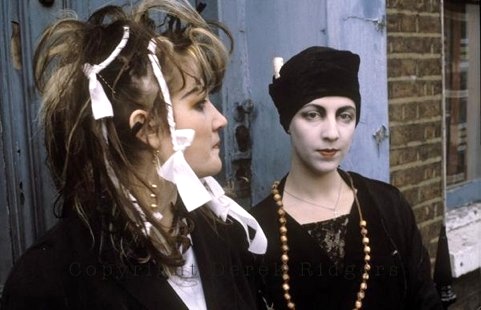
Doyennes among the Blitz Kids, 1980: Kim Bowen and Stephen Linard stamp themselves on that week’s zombie leitmotif. Photographed © by Derek Ridgers

Even so, what marked out the fashionistas especially was that, not only in the club, but in shop, café and bus, the style stars were constantly emitting auras of the force you imagined once surrounded Dietrich or Garland or Bogart or Caine. There’s nothing accidental about style. It is by definition a considered stance. In the presence of the Blitz superstars you could hold up your hands and almost feel the crumpet-toasting tingle. Even jaded Londoners turned their heads when Kim walked the half mile from Warren Street to St Martin’s school of art swathed only in surgical bandages. Or when George paraded past Buckingham Palace as a helmeted and toga’d Britannia at the annual royal ceremony of trooping the colour.

Princess Julia, Chris Sullivan, deejays, Vintage 2011,Southbank Centre, clubbing

Vintage deejays: original Blitz Kids such as Princess Julia and Chris Sullivan have continued spinning the vinyl that recreated legendary 80s club soundtracks from the Blitz to the Wag

Wherever there was a party, premiere, exhibition or club opening you’d see a dozen more such creatures who lived hyper-reality 24 hours a day… Lee perhaps as Nosferatu, Julia as Bride of Frankenstein, Fiona saying “Non!” to couture by wearing a grosgrain coat back-to-front, Sullivan as 1920s cad, blue-lipped Linard as 1920s flapper, Marilyn as, well, Monroe, Stewart as geisha boy, Theresa as Little Bo Peep, a part she played at work in the Fleet Street offices where our paths often crossed.

Aplomb came naturally to Kim Bowen as the queen of the Blitz Kids. One night when some friends came back to mine after celebrating my birthday, Kim walked into the kitchen and said: “I’m not going to let you live with this wallpaper one more day.” She picked at the edge of a stiff vinyl-coated strip, printed with very 1960s pepperpots and pans. Then she ripped it off the wall in one heave. The kitchen walls were bare within 20 minutes. Kim declared: “Minimalism, David, that’s you need.”

Clare Thom, Michele Clapton, Blitz Kids

Blitz Kid style: Outside the Carburton Street squat, Clare-with-the-Hair and Michele Clapton displaying awesome repose. Photographed © by Derek Ridgers

As time would reveal, the lead Blitz Kids outflanked not only their peers, but most of the copyists who followed their Bowie-inspired passion for change. You’d find the second-league clubbers at Studio 21 in Oxford Street, or in a back barrel at Birmingham’s Rum Runner – those were the self-proclaimed New Romantics you see dancing in the YouTube videos, and being photographed wearing too much of everything, from Boots No 7 to lacy frills. A couple of years after the Blitz caravanserai had passed, designer Fiona Dealey said candidly: “You look at these little Bat-people with it dribbling down their necks and you feel like saying, ‘Sorry darling, not enough loose powder’. The difference was that our make-up was stage slap, Leichner not Factor. The clothes came from a costumier, Charles Fox, not Flip. Dressing for the Blitz was real theatre. It wasn’t just another uniform. You felt glamorous.”

Stephen Jones, Blitz Kids

Immaculate: Hatter Stephen Jones

Aha, real theatre! This is the realm Shakespeare championed as “an improbable fiction” and John Updike blasted as the “unreality of painted people”. A flesh-and-blood craft where the basic requirement is for a living audience to be watching living actors. The Blitz Kids fully understood what Shakespeare’s Player has to explain to Rosencrantz and Guildenstern in Tom Stoppard’s spoof version of Hamlet: “We’re actors. We’re the opposite of people.” Actors pledge themselves to the belief that somebody will be watching. Nothing to do with vanity. Entirely a means of confirming their identity. Ditto the Blitz Kids.

The digital natives (and the self-styled Neo Romantics) of Generation Z who today are being raised on computer shoot-em-ups and quaking cinema enjoy precious little exposure to live theatre, to the “magic” that emanates from the contract eagerly agreed between actor and audience – for the one to perform at the same time as the other watches. Only when, as one towering example, Sir Michael Gambon allows a Pinteresque pause to elapse onstage can auras crackle “in the moment” with sufficient intensity to be felt physically, and thrillingly, by a theatre audience. Gambon’s aura crackled like a fire god’s last Christmas in No Man’s Land, before a wrapt audience the day after its author Harold Pinter had died.

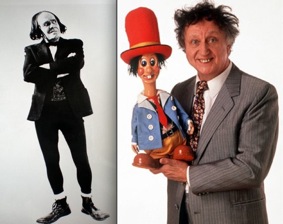
Max Wall, Ken Dodd

Masters of the comedian’s art: Max Wall and Ken Dodd

Comedy is where the theatrical contract of give-and-take fights for life most ostentatiously. As you laugh helplessly at the veteran comic Ken Dodd’s rapid-fire patter, you needn’t know that he has subjected his live stand-up routine to a lifelong time-and-motion study that concluded he must hurl eight gags per minute at his audiences to ensure everybody laughs at least once every minute he’s onstage.

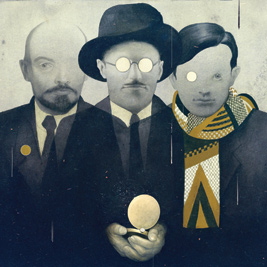
Travesties, Tom Stoppard, theatre

Travesties: what a coincidence that in 1917 the revolutionary Lenin, the novelist James Joyce and the Dadaist poet Tristan Tzara all happened to live in Zurich

In London in 1982 it was no less a pleasure to witness the top-of-the-bill variety legend Max Wall give wondrous live masterclasses entitled An Evening with Max Wall in which, aged 74, he laid bare how comedic timing works from one second to the next, how facial expression and vocal cadence, as well as silly walks can turn laughter instantly on and also off. Demonstrating with us as guinea-pigs how performer’s and viewer’s mutual responses keep each other on their toes.

The playwright Tom Stoppard has spent his career writing pyrotechnic scripts that read wittily enough sitting on the page, but are transformed several hundredfold the moment they are enacted on the stage, by for example exploiting the improbability of time-warps where the actors and the action are rewound and rerun in “unreal time” – actors reverse back through doors to leave the stage and re-enter immediately giving a subtly adjusted performance – as in Travesties, his hilarious comedy of coincidence. His plays are overtly “about” theatricality, yet shrouded by the mischievous apologia that, as one of his characters ultimately insists, “It’s a mystery”.

☐++++++☐++++++☐

GETTING BACK TO Taylor Mac,
his little bit of itzy-Blitzy glitz gives
shape to all of the above

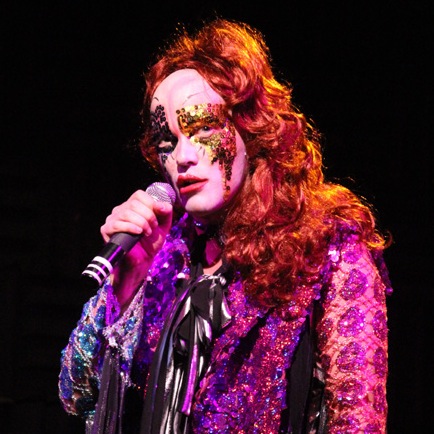
Taylor Mac, Glasgow, London, Bowie, Comparison is Violence,cabaret

Taylor Mac 2010: sequinned, painted and bewigged as Bowie-cum-Tiny Tim. Photographed © by Tim Hailand

SO WHERE MAY TODAY’S young Neo Romantic seek inspiration if he or she wishes to aim beyond the slap and the zhoosh to summon up solar-powered charisma of Blitz Kid proportions? The answer is in the UK right now (Soho Theatre London this week, The Arches in Glasgow next) and he is an incandescent and witty Californian called Taylor Mac.

TAYLOR MAC

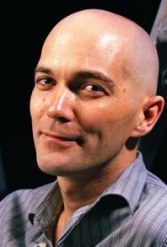
Mac as himself

Clad in more sequins than a sultan’s harem could shake at you, he gives a full-throttle musical cabaret that is unexpectedly poignant, invigorating and original. You also laugh more than you ever did at Eddie Izzard’s last side-splitting tour. Mac’s audacious dissection of the essence of theatre, vaudeville and other performing arts evokes Merman and Garland, Wainwright and Brel while asserting his own unique brio. He reinvents pop classics by David Bowie and Tiny Tim (yes, you do remember his hits Tiptoe Through the Tulips and I’ve Never Seen a Straight Banana) by delivering them with an earnestness that moistens the tear-ducts. The evening’s ironic sub-title is The Ziggy Stardust Meets Tiny Tim Songbook, because these are the comparisons reviewers draw about Mac, yet they seldom remark on how he turns Starman and Heroes, those holy invocations of the 80s Bowie fan, into altogether heart-rendingly new songs.

His themes are love and longing and role-play and tolerance for what society calls a gender-bending misfit who sprang fully formed from the egg, craving the glue that fixes eyelashes. What results is the most stupendous spectacle, charged with insights as mere as how to signal the end of a song, one way being a sustained high note, another to deliver a wide-eyed “Cha-cha-cha!” through smiling teeth, but the coup de grace is a solemn downward arm gesture LIKE SO! For 90 minutes Mac fills the Soho Theatre many times over with a sustained rush of theatre magic. And yes of course he’s on YouTube, but that entirely defeats the point the past 1,700 words have been making.

➢➢ Read Donald Hutera’s London review of Mac
in The Times, June 3, 2010

➢➢ Read Charles Isherwood on Mac’s 2009 play
The Lily’s Revenge in the New York Times

FRONT PAGE