Tag Archives: Chris Sullivan

➤ Warhol chronicler Leee Childers brings his slice of 70s New York to London

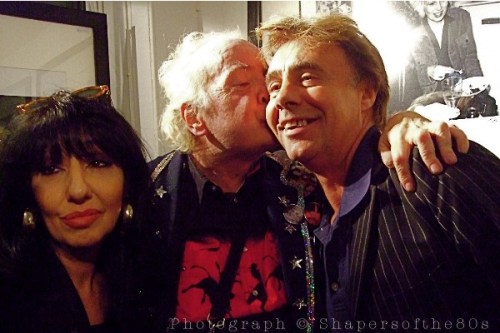
New York photographer Leee Black Childers seen at last night’s preview of his London exhibition. At left, 
Patti Palladin of the 70s punk duo Snatch, at right the original Sex Pistols bassist Glen Matlock who went on to form the “missing-link” band, Rich Kids — over his shoulder, Childers’ picture of McLaren and Westwood. Photographed by Shapersofthe80s

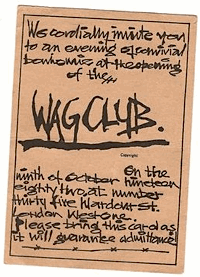
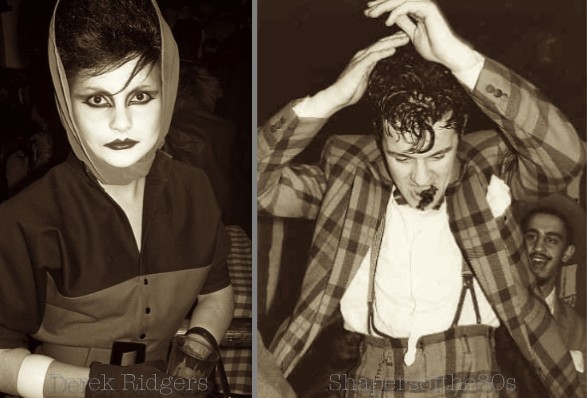
❚ MORE LIKE A “WHO WASN’T THERE” EVENT, than a “who was”, wrote one Facebooker today. At the ripe age of 66, American photographer Leee Black Childers was in London last night to share his memories of Andy Warhol’s Factory acolytes in a selling exhibition of his work at The Outside World Gallery in Shoreditch. Titled Drag Queens, Rent Boys, Pickpockets, Junkies, Rockstars and Punks, the show has been organised by the two British co-authors of Cassell’s 2001 book Punk, Stephen Colegrave and Chris Sullivan. Colegrave rose from playing in various punk bands, famously The Lurkers, to become today the European marketing director of Saatchi & Saatchi. Sullivan’s journey as a clubland party promoter was propelled by the punk explosion of 1976, and most notably inspired the long-running Wag club in Soho.

Leee Childers travelled the length of the US as Bowie and Iggy tour manager between 1972 and 74. He also managed Johnny Thunders and The Heartbreakers when they accompanied the Sex Pistols on the 1976 Anarchy tour. On sale in London are his candid shots of Bowie, Iggy, Debbie Harry, Patti Smith, Johnny Thunders, the Rockats, Sid Vicious, Jayne County, The Star Spangles.

Leee says he loves rock fans who respect eccentric behaviour. In particular he’d like to meet “The new set of crazy, aimless, useless, doomed people like Paris Hilton, Lindsay Lohan and Pete Doherty. I love time wasters. There also numerous dead people I would like to meet, but unless considerable advances are made in science (as opposed to TV) I am doomed to frustration, which fortunately I am very comfortable with.”

This slideshow requires JavaScript.

London did its best last night to serve up some punk-ripened partygoers, and afterwards at the nearby George & Dragon Princess Julia was joined by Chris Sullivan spinning suitably retro sounds such as Was Not Was from 1981.

❏ At Facebook Tracy Jenkins reported: “Tonight was a scene for all the old scenesters! It was the old CBGBs / Max’s Kansas City crowd. Galaxies collided in a fabulous mix of friendly familiar faces, from the worlds of art, fashion and Soho, at Leee Childers’ private view… Pam Hogg, Ray Gange, Bruno Aleph Wizard, Stuart Leslie Goddard, Bobby Gillespie, Glen Matlock, Gail Sparkle Moore, Olanski Solanke, Johnny Vercoutre, Vivien Of Holloway, Jenny O’Drag, Mark Powell, Spizz Energi… what an amazing night. Oh, and Steven Severin, I did indeed give Leee Childers a big kiss from you!! (And he of course, gave me one back, which I am to deliver back to you.)”

❏ Andy Polaris enjoyed “A walk on the wild side with Leee Black Childers’ exhibition in Shoreditch tonight. Great photos of Patti, Iggy, Bowie, Divine, Lou Reed etc. A blast to see some familiar faces especially Adam Ant (looking great) and Patti Palladin of 70s punk duo Snatch. Along with familiar faces from Blitz and Beat Route — Karen O’Connor, Fiona Dealey, DJ David Hawkes, Ali King, Suzie Cooke, Barnzley Armitage and original Banshees guitarist John McKay. I come home and switch on TV and some political show is playing Walk On the Wild Side in the background.”

❏ Rhiannon Ifans reports today: “Was a good nite. Me, Jeff Phobics and Gaye Advert went to local bar for a sitdown afterwards. Have already hung up my Siouxsie, Severin and Thunders photo.”

❏ Drag Queens etc runs for a week at The Outside World Gallery, 44 Redchurch Street, E2 7DP. On Friday Oct 21 Leee Childers is in conversation with Chris Sullivan at The Society Club, 12 Ingestre Place, W1F 0JF (tel 020 7734 1433) while his photographs go on show and on sale there till Oct 28.

FRONT PAGE

➤ A taste of the 80s Blitz Kids — this photo book captures their unseen glory

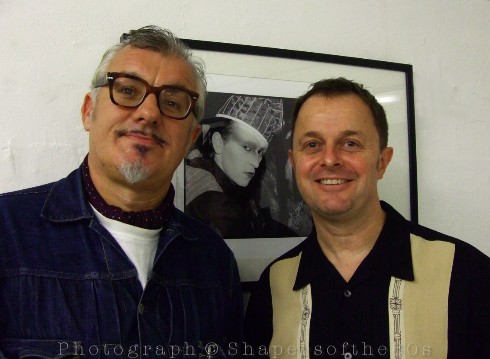
Sullivan and Smith at last night's exhibition: man in the middle is king of the posers and Blitz Club host, Steve Strange. Photography by Shapersofthe80s

❚ THE HEROES SHOW IS ON THE ROAD. As of last night the Smith/Sullivan definitive history of 80s clubbing We Can Be Heroes had raised 36% of its “crowd-funding” target required to ensure publication goes ahead. Hence last night’s selling exhibition of Graham Smith’s photography from 30 years ago, most of which has never been seen. His family and friends joined the slebs at the party (video below) hosted by Inside Events in Notting Hill.

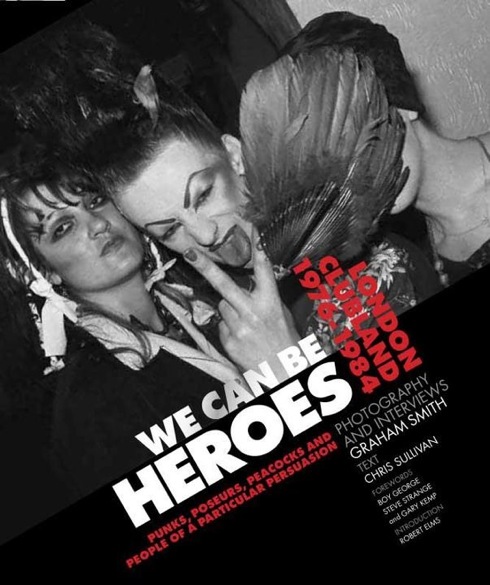
Smith said his favourite image on sale last night was on the cover of the book: showing Blitz Kids Clare Thom and a scene-stealing George O’Dowd claiming centre stage by gesturing with both hands and competely masking the face of the second girl beside him, designer Michele Clapton. (Prints are priced from £150 to £450 according to size — inquire by mailing to grsmith [@] mac.com)

+++
Smith was in the thick of the New Romantic underground taking photos as London nightclubbing revolutionised British pop music and made stars out of Boy George, Sade, Spandau Ballet and scores more new bands. Sullivan was a key player as stylist, host of Soho’s infamous Wag club for 19 years and leader of Blue Rondo à la Turk who had a 1982 chart hit with the soundtrack to our video, Klacto Vee Sed Stein. Broadcaster Robert Elms has written an intro, and there are forewords by Boy George, Steve Strange and Gary Kemp.

The 21st-century way to publish high-quality, short-run numbered editions is to secure sales in advance of publication. So visit Unbound Publishing to place your order which will secure your name in the first edition — and other perks.

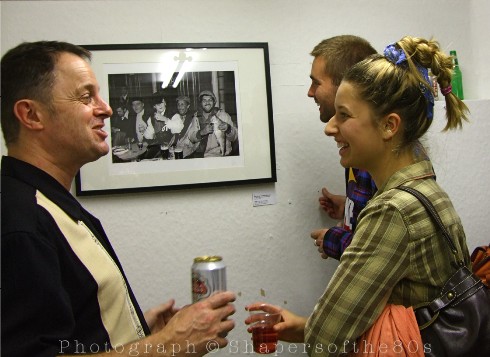
Graham Smith in selling mode: can he persuade 22-year-old Bill de Melowood to buy his print of Steve Strange drinking with a bunch of Cardiff dockers? Photography by Shapersofthe80s

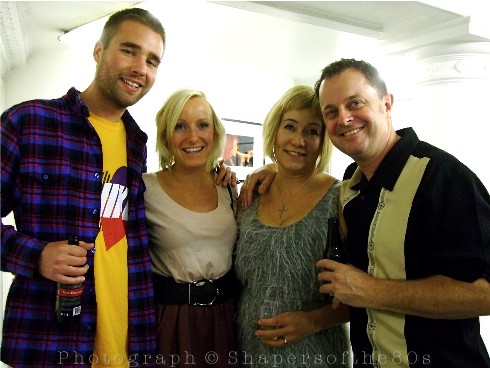
Partying family: Graham Smith and wife Lorraine at right, with their daughter Carla and boyfie John. Photography by Shapersofthe80s

❏ iPAD, TABLET & MOBILE USERS PLEASE NOTE — You may see only a tiny selection of items from this wide-ranging website about the 1980s, not chosen by the author. To access fuller background features and site index either click on “Standard view” or visit Shapersofthe80s.com on a desktop computer. ➢ Click here to visit a different random item every time you click

FRONT PAGE

1976–1984 ➤ Creative clubbing ended with the 80s and Smithy’s book needs your help to tell the tale

Michele Clapton, Graham Smith, Le Beat Route, Chant No 1, video, We Can Be Heroes, photography, youth culture, Unbound,books,

Graham Smith gets Spandau Ballet in his sights during the filming for their Chant No 1 video at Le Beat Route in July 1981: his then girlfriend fashion designer Michele Clapton sizes up the Shapersofthe80s camera technique, and it’s true that Smithy did walk away with more pix in focus than we managed

❚ THREE FROM A SELECT PLATOON of musketeers who hustled and toughed their way through the vile swamp of the 1970s, then through the gilded portals of the 80s, met up in a BBC radio studio today to reminisce about their larks as teenagers in London. They were plugging a new book titled We Can Be Heroes, the most inspirational of David Bowie’s songlines, so we’re already talking outsiders, groomed by 1976’s punk ethos of do-it-yourself whose fashion statement had been expressed through the medium of trousers.

➢ Hear today’s discussion about
We Can Be Heroes with Elms, Smith and Sullivan
at BBC London 94.9 (starts at 30 mins in)

Their coffee-table book looks set to be the definitive account of 80s clubbing, told through previously unseen photographs and anecdotes from fellow musketeers who propelled the Blitz Club bandwagon and transformed British music, fashion, nightlife and much of the media. They are the very pioneering spirits Shapersofthe80s has tried to document and honour on this website, but where your reporter was always the observer looking in, the 100 or more boys and girls contributing to this new book were themselves the workers of the miracles in 1980. They are more entitled to tell the tale than the pompous writers of pop-cultural history who were never there as witnesses (one “author” plagiarised my own coverage of the 80s ruthlessly, reportage and analysis, without giving one word of credit). As a breed, they have chronicled the dawn of the 80s dismally. What they always miss is the ribald fun of staying up all night. We Can Be Heroes might just get this chapter of British history right, for once.

After the post-punk wave of electronic, industrial and synth-pop had redefined the scope of a new soundtrack for UK youth through Billy’s, The Blitz and select clubs up North, Chris Sullivan, Graham Smith and Robert Elms determined to nudge musical tastes in a more hummable direction. They created a fork in the branch of clubbing’s evolutionary tree by developing the then novel notion of one-nighters with three successive ventures during 1980, at St Moritz, Hell and Le Kilt. (Remember, long before Time Out had nightlife listings pages, London offered only one hip club-night per week.) At these three the dance rhythms were drawn from prewar musicals, rockabilly, Latin and funk, and sartorial styles shifted swiftly and dramatically from futurist to Hollywood romance. Bobbing in the wake of art-school theories about deconstruction, their clubnights were in themselves a fightback against the top-down dictates of middle-aged moguls in fashion, music and media. Just like Alexei Sayle and the “alternative” comedians making their reputations live at The Comic Strip in 1980, fury was addressed to the marketing of trendiness itself.
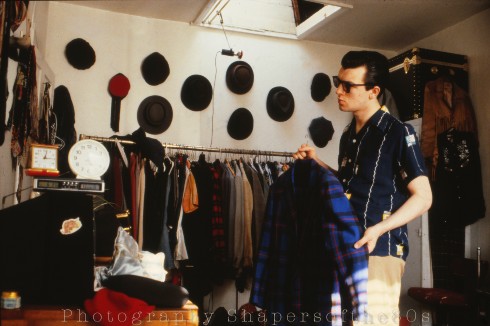
Chris Sullivan, club-host, deejay, Wag club, Blue Rondo, pop music,We Can Be Heroes, youth culture,

At home in Kentish Town Chris Sullivan chooses the right zootsuit for today’s mood: his wardrobe is legendary, his taste impeccable, and his influence immeasurable. Shapersofthe80s shot this for his first Evening Standard interview in June 1981

❚ I ALWAYS SAID THEY’D DO WELL, especially that Chris Sullivan, oh yes. I said it when this imposing and pointedly stylish Welshman first shook my hand in Rumours, Covent Garden’s trendiest bar in 1980, and made some tart remark about the lowlifers who produced the newspaper sticking out of my pocket, the Evening Standard, until I mentioned I was one of them, when he very kindly decided to discount me personally because I’d been sharp enough to find my way into the same bar as him, so, welcome, and he’d have a Carlsberg thanks very much (all lagers being equally bland and boring then, not having yet matured into status drinks).

It was all a wind-up. He’d been told exactly what I did for a living, and I thought, he’ll go far. And waddayaknow? One day he’d be a cossack, then he’d be Maurice Chevalier, then he was reinventing the zootsuit while doing fashion at St Martin’s. Next day he was singing and dancing into the pop charts in Blue Rondo à la Turk — the daftest seven-piece “bunch of nutters” (his words) Britain had seen since Edmundo Ros. Suddenly, and for the next two decades, he was hosting the Wag as the hippest club in the land that played the hippest black music. As he said on the radio today: “Since when would somebody put a 22-year-old working-class bloke like me in charge of one of the biggest West End nightclubs? We were all kids. We went out and had a go. Empowerment is what’s important about this story.” In the past he has expressed great satisfaction at denying entry to the Wag for the smugger elements in the rock press — those “white middle-class punks who couldn’t dance and hated black music” and destroyed the prospects for his band Blue Rondo.

Ultimately Sullivan became a journalist, much in demand across all sectors of the press, while remaining a leading club deejay. It’s an understatement to call him a character. Elms today acknowledged that, as much as anyone in the country, Sullivan “was at the forefront of all of this”. Frankly, I’m happy to acknowledge him as the Number One shaper of the subcultural 80s in the UK, principally for his energy, his impeccable taste and a million-and-one nuanced responses to the society around him — plus one of the longest and most influential of contact books. Best of all: he also laughs a lot.

❚ THAT BOB ELMS WAS ANOTHER ONE you didn’t want to shut up. It wasn’t a criticism to call him a motormouth because most of what he said was hugely entertaining as we stood at one of the rare bars with a 1am drinks licence in those days, usually accompanied by a couple of other movers and shapers evaluating the ever-evolving hairstyles and footwear in a club (“No, it’s not just a white sock. It’s a sock with a Mod legacy.”) Britain’s subcultural heritage and all associated musical soundtracks were the adrenaline that drove him to trace roots, analyse trends and formulate preposterous ideas about The Next Big Thing, just like a journalist, or indeed the LSE politics graduate he became.
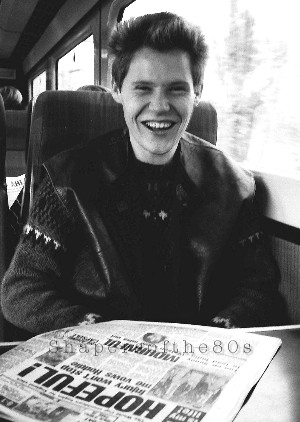
Robert Elms, We Can Be Heroes, youth culture, books,Unbound,

Robert Elms on the train to Glasgow and his future: We were heading for Blue Rondo’s Scottish gigs on the day their first single Me and Mr Sanchez was released, Nov 6, 1981. He’s sporting the haircut that won him the audition to front TV yoof shows. © Shapersofthe80s

He’ll go far, I thought, he’ll be the next Benny Green (look him up!). And you know what? Two minutes later he was all over the coolest magazine ever, The Face, chronicling the exceedingly noisy and high-visibility youth movement known as the New Romantics, whilst adjusting his own natty garb to suit and, yes, throwing out a catchy name for a pop group, Spandau Ballet, which legend says the pals had conjured from graffiti glimpsed on their journey of discovery to Berlin in 1979.

It was definitely his wacky brushcut that got him in front of TV cameras as one of the first cockney-sparra presenters on the street-cred yoof shows that 80s media churned out in response to the revolution that came surging up from the dance underground. As somebody never short of an opinion, he too was always up there among the top shapers of his age, so it was an effortless morph from style arbiter to author and travel writer Robert Elms, who landed the plummest job in local radio 20 long years ago at the BBC’s London station, and only yesterday was also being one of Radio 4’s “own correspondents” reporting the last bullfight in Barcelona.

As predicted, Elms has inevitably grown into a dead ringer for man-of-the- people, the late lamented Benny Green, jazz-lover, raconteur for his dandy tribe, talking head on Stop the Week/Loose Ends and all-round good egg.
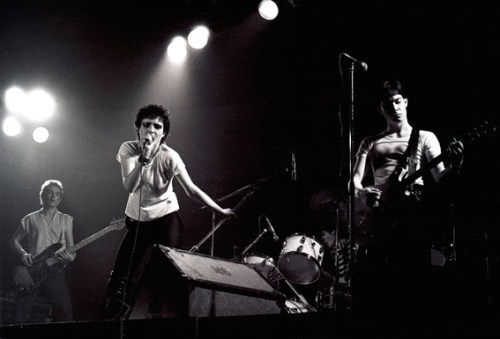
siouxsie sioux,punk rock, Graham Smith, We Can Be Heroes, youth culture, books, Unbound

Siouxsie and the Banshees, photographed in 1977 by Graham Smith, from his book We Can Be Heroes. Souxsie was an original member of the Bromley Contingent that led Graham and his mates into the clubs of Soho

❚ THEN THERE’S THE QUIET ONE with the cheery smile. That Graham Smith, nice lad (before the third pint). (Only kidding, Graham. Still nice even after the 16th.) Always carried a camera. Funnily enough he carried the same state-of-the-art Olympus OM2 SLR as me, and we were both trying to get the hang of Ilford’s HP5, a superduper fast new B&W film that was so sensitive it meant you could shoot in nightclubs without a flash, well, in theory. You did tend to end up with a lot of blurry images, but the trouble was if you used a flash you just got a frame full of bright ghouls for faces and it was years before I dared ask the paparazzo Richard Young for the secret of shooting nightclubbers with flash from about 3 feet without bleaching them into ghosts. (Answer: stop right down to f22 and push the film in the developer — crucial advice in 1980 and totally without meaning to today’s digital snapper.) One of the reasons most of our pix are in B&W was because there was no colour film in 1980 that didn’t require equatorial amounts of sunlight, so shooting nightlife was a black art.

When I met him Smithy was already designing the publicity and taking the artful first band snaps of Spandau Ballet, so when his minimalist record sleeves counted as coursework and won him a first-class degree from Camberwell, I thought, he’ll go far. He then did the same for our clubbing friend Sade, the fashion designer who became a global icon as a singer, and in time he won awards as a magazine art director.

He and his lovely wife Lorraine met on a dancefloor and still have the hots for the arcane dance moves of Northern Soul. So it’s more than apt that today he’s the prime mover behind this coffee-table book packed with 500 of the immaculate, usually in-focus pix from his youth, most of which have lain in a dusty old box unseen by anybody since they were shot. What he’s bravely done over the past two years is interrogate dozens of the other clubbing musketeers, mentalists and Blitz Kids for their first-hand versions of how the 80s shaped their lives, and turned dozens of them into popstars and household names with their hands on the levers of power.
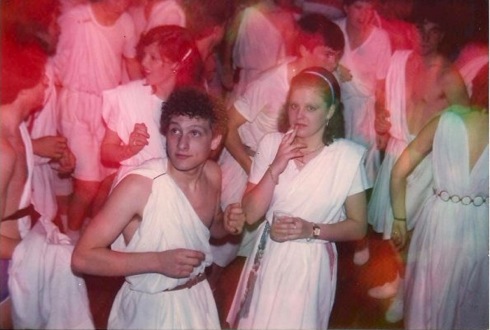
Brighton, Papillon, toga party, soul boys, soul girls, soul music,dancing,nightclubbing

1979 toga party at the Papillon, Brighton: these were the soul boys and soul girls who made the British dance scene spin. Photograph by Paul Clark at Facebook

❚ ELMS HAS KNOWN SMITH since he was 11 and Sullivan since 16. All are now family men and feeling 50, hence the need to spill the beans before they forget. Despite my own efforts (sob!) writing a nightlife column in The Face, and later with Shapersofthe80s online, Smithy doesn’t think his generation’s teenage achievements have been adequately reported as a slice of social history. He’s thinking of that fabulous book on the 60s Mods. In all honesty, he’s right. In late 1980 I walked into both Omnibus and Proteus with a proposal for a tome about the nightlife revolution titled “Heroes For the 80s”, evidently too ahead of the curve for them to take a risk with this newcomer, who was then rightly miffed only months later to see The Book With No Name emerge from one of their in-house teams! Ouch. Since then, I have told the 80s creation myth in outline many times — most fully though even so with necessary shortcuts in The birth of the New Romantics for the Observer Music Monthly — and we have had a handful of individual biographies, the most gripping being by Midge Ure and Gary Kemp (and the most horrific by Boy George). But the saga of 80s clubland really belongs to the teenage dance fiends and soul fans who had amassed in the 70s and set sprung maple floors a-bouncing across the nation.
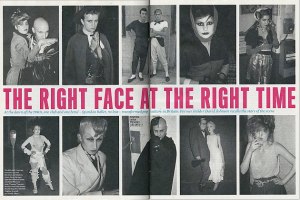
Birth of the New Romantics — The Observer Music Monthly, Oct 4, 2009. Pictures © by Derek Ridgers

Historians and rock journalists from middle-class backgrounds by and large don’t have a clue why social mobility is an impossible dream among what’s traditionally called the working class. In today’s interview Sullivan reminded us that the trio behind We Can Be Heroes all came from working-class homes (except that Smith’s dad had a fish-n-chip shop, thus strictly speaking he was in trade and already upwardly mobile). Essentially, he said, self-empowerment (yonks before the word had become a politically correct buzzword) was a liberating force in an era when expressing yourself and being creative was actively discouraged by your elders as being “above your station”. For each pal in this trio, punk had rattled the cage guarding that convention. That’s why Smith’s starting point in his book is 1976, the year punk stamped its Doc Martened foot and kick-started his photographic reflexes.

In one of our first conversations way back when, Elms’s interpretation was that, against the black cloud of recession and unemployment rising to 3 million, his generation were shrewdly turning what were once regarded as hobbies into livelihoods. My own analogy has always been that their nightclubs were effectively well-organised factory floors and job centres. Everyone who came to dance could, if they had the wit, shimmy out into the daylight with the promise of work on a “Variety Of Projects”. It was the Blitz Kids who invented the phrase and its acronym as a verb, to VOP, and vopping is what made the 80s belong to the young — and especially to the “Common People” immortalised by Jarvis Cocker. They staged a social and industrial revolution the elders and the mainstream decision-makers could not ignore in the opening years of the decade, no doubt about it. The last-minute shift in the remit of Channel 4 when it launched in 1982 was clear proof.

We Can Be Heroes gives the voppers their turn to be heard. Their fruity language and their rough-house antics are going to appall the unsuspecting middle-class reader, ha-ha-ha.

❏ Shapersofthe80s will be following through with more of their clubland adventures soon…

THEY’D LIKE YOUR CASH NOW

❏ The digital age means that short-run, quality books such as We Can Be Heroes can be published to high production standards if enough funds are raised in advance. So when you visit Graham Smith’s publisher Unbound.co.uk, you will be invited to pay now for a book that will not be printed at all unless a break-even target is reached. It’s an innovative sales pitch, it’s very 21st century, and as of today they need another 988 pledges upfront, within the next 42 days if the book is to be out for Christmas. For a basic £30 you will receive a beautifully cloth-bound 325-page hard-back printed on substantial paper — plus your name listed as a Supporter in the first edition. You can pay more for further treats. The company Unbound was founded this year by three dynamic young men with considerable experience of traditional publishing, QI writers John Mitchinson and John Pollard, and Crap Towns author Dan Kieran. Their own track records have encouraged Britain’s leading publishing house of Faber & Faber to offer support by running on titles which prove successful through Unbound first editions.

❏ Three popstars created by the Blitz Club scene have endorsed the book by writing their own forewords in it: Boy George, Steve Strange and Gary Kemp of Spandau Ballet. Robert Elms has written an intro, while the main text is by Chris Sullivan. Graham has sweated blood to secure the voxpops.

➢ November catch-up: links to media coverage of We Can Be Heroes

➢ Videos of Robert Elms and Chris Sullivan telling their “Ribald tales of excess”
We Can Be Heroes, photography, youth culture, nightclubbing,books,Unbound,Graham Smith, Chris Sullivan,

Latest cover for Graham Smith’s history of clubland featuring Clare with the Hair and George O’Dowd before he became Boy

FRONT PAGE

➤ “Yes this is a Wag rerun” — Sullivan on his Sussex alternative to London’s carnival

Chris Sullivan, Wag club, Jon Baker, nightclubbing, Swinging 80s,West Dean Festival,

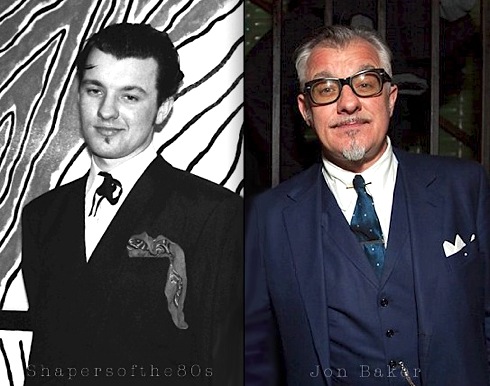
Sullivan then and now: the Wag club host in his painted pavilion in 1983 and, right, deejaying for Jon Baker’s Jolly Boys concert in New York this spring

❚ NOT ONLY IS ADAM ANT TOPPING THE BILL on Saturday but half-price tickets were still available today to followers of Chris Sullivan, joint host for 19 years of Soho’s legendary Wag club which he founded in 1982. This bank-holiday weekend Aug 26–28 he plays deejay and music programmer at the three-day West Dean Festival near Chichester in rural West Sussex. The knees-up 90 minutes from London will be a “nice alternative” to the annual Notting Hill Carnival, he says. In fact, “a Wag rerun… for parents”!

As undoubtedly the most influential club host of the 80s, as well as vocalist in the crazy Latin band Blue Rondo à la Turk, Sullivan commands one of the fattest contacts books in clubland. So while this weekend’s festival across two stages and late-night café bar aims to celebrate all aspects of the arts, it’s no surprise that the day-long live music is designed to attract the aficionado. Friday headliners are Natty Bo and The Top Cats, plus The Third Degree … Saturday boasts the reborn Adam Ant and his band The Good The Mad & The Lovely Posse, plus Polecats, Dulwich Ukulele Club, and 80s warehouse deejay Phil Dirtbox … Soul singer James Hunter headlines on Sunday.

When I reminded 51-year-old Sullivan that the locals are billing it as “A magical escape for all the family” he was keen to promise this would not put a damper on the fun. “Kids go to bed at 9-10ish and when there’s a few of them they look after each other with the supervision of one adult maybe. Meanwhile we let rip in the knowledge that they are near and we save money on babysitters and have a right old beano.”

That’s the Wag spirit! In fact, beano was the very word he used in 1983 when my report in The Face rounded up the four hottest nightposts in the swinging New London Weekend. The Wag had been open less than a year and his pitch was: “We’d like people to come in with a sense of beano and to leave with hangovers and blisters on the feet.”

Chris Sullivan,Christos Tolera, Blue Rondo à la Turk, pop group, nightclubbing, Swinging 80s,

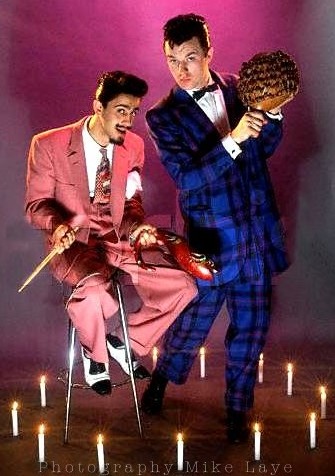
Sullivan and Christos Tolera in 1981: vocalists with Blue Rondo à la Turk, photographed for The Face by Mike Laye

Despite his origins in the Welsh Valleys and being built like a rugby player – “I’m six foot two and sixteen stone” — Sullivan’s unswerving sense of personal style got him into two London art schools while his exuberant warehouse parties during 1978-9 established him as a pivotal tastemaker in the post-punk vacuum. It goes without saying that his two passions were music and clothes. And that his wit was as quick as silver.

By 1980 he was the highly articulate pathfinder for the non-gay men’s team putting the Blitz Kids in the headlines. The ultimate soundbite “One look lasts a day” was Sullivan’s. Here was a New Romantic dandy whose ever-changing attire referenced every movie matinee idol from zoot-suited gangster to straw-hatted playboy to Basque bereted separatist. Here was an MC who along with his deejay contemporaries displaced electronics in favour of funk — drawn initially from his own collection of 7-inch singles — at a string of creative weekly club-nights, St Moritz, Hell, Le Kilt and then the Wag in the huge premises that had been known as the Whisky-A-Go-Go since the Swinging 60s.

During three helter-skelter years British music trended from punk, Bowie, electro-pop and mutant disco back to James Brown and funk. “Things moved so fast then, that the 80s heralded a completely new era,” Sullivan said. The claim he will not make is about his own enormous circle of influence. Back in the dark age before mobile phones the defining measure of his social clout came from Steve Dagger, manager of Spandau Ballet. He gave me the priceless paradigm: “You could put Sullivan outside a public lavatory, announce a party and within two hours you’d have a queue of 500 people paying £3 to get in.”

Few other individuals on the London scene of the early 80s had a greater impact than Chris Sullivan on shaping the intimate relationship between sound and style in the private worlds of the new young.

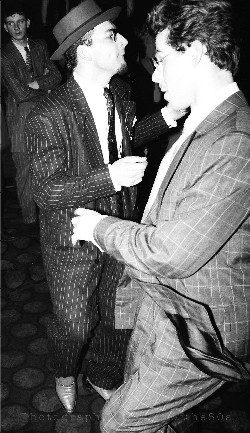
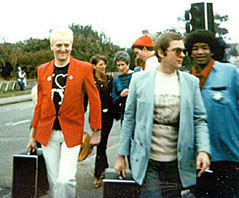
Blue Rondo gig 1982: zoot-suited fans mashing up a dancefloor in Bournemouth. Photography by Shapersofthe80s

Under his partnership with Ollie O’Donnell, who himself had already made a clubland institution of Le Beat Route, the Wag eventually ran seven nights a week to become Soho’s coolest hangout for artful posers and musical movers and shakers. In Sullivan’s own words, the place “basically predicted the future of music for the next 15 years” which gratifies him no end.

The club’s unique appeal was a reflection of his sub-cultural instincts, which were refined as a teenage graduate of the Northern Soul scene during the 70s. The Wag also proved a mighty kick in the teeth for the smug ruling elite in the rock press — those “white middle-class punks who couldn’t dance and hated black music” and whose vitriolic attacks on Blue Rondo undermined industry faith in his stylish seven-piece band and their jazzy Latinised funk.

Blue Rondo à la Turk was a dream project inspired after Sullivan made “one of those mad trips” to the black clubs of New York in 1980: “I wanted to start a band that would play the music I could dance to — a mix of Tom Waits meets Tito Puente meets James Brown, and all a bit off-kilter.”

Rondo were a bizarre multi-racial troupe of live musicians who also boasted wild dancing feet and tapped into like-minded audiences who’d misspent their youth on Britain’s underground soul circuit, a mighty fanbase either unknown to or utterly scorned by the rock press. His band were born entertainers and their first album, Chewing the Fat, was easily the most inventive of 1982. Not long ago Sullivan vented his spleen to me: “Those middle-class twits in the music press hated us because we had the effrontery to play dance music and we weren’t black, but also because we dressed up onstage — which basically became the remit for the next two decades. The press were all-powerful in those days and some took it upon themselves to make us their whipping boys.”

Well, the magnificent seven in Blue Rondo were precursors of the wags Sullivan named a nightclub for: “The wag from the 20s was a bit of a cad, wore monocle and spats, was a mean dancer and very much the ladies’ man.” Musically, his Soho nightspot was the most progressive venue of the 80s. Nowhere else came close. “I knew from day one we were selling a Saturday night nobody else was doing — a really hip club which played all manner of black dance music.” Only last month before deejaying at the Southbank’s Vintage festival, Sullivan wrote: “The Wag is important because it opened funk and black music to a huge, new crowd of people which still prevails. We were one of the first to do it and it’s still going on.”

➢ Mention Sullivan’s name at the gate for 50% discount on the West Dean Festival tickets or mail chris [@] sullivan60.co.uk

Adam Ant ,The Good The Mad & The Lovely,pop group,West Dean Festival,

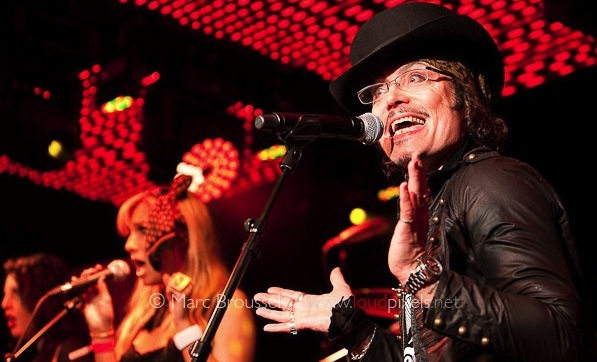
80s hero Adam Ant: on the road this year with The Good The Mad & The Lovely Posse, pictured by Marc Broussely

West Dean Festival, Polecats, rockabilly ,rock group,

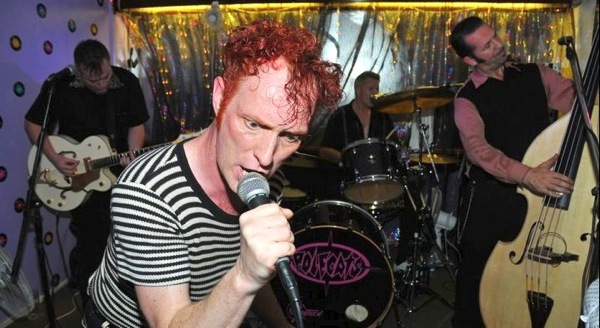
80s rockabilly band The Polecats: scheduled to play West Dean Festival, photographed last year by Steve Wadlan

FRONT PAGE

2011 ➤ Open your wallet for a Vintage sting on London’s Southbank

Princess Julia, Chris Sullivan, deejays, Vintage 2011,Southbank Centre, clubbing

Vintage deejays at Vintage 2011: original Blitz Kids such as Princess Julia and Chris Sullivan will be spinning the vinyl to recreate legendary 80s club soundtracks from the Blitz to the Wag

+++
❚ VINTAGE 2011 IS A MUSIC AND DRESS-UP festival indoors at London’s Southbank Centre (so without the mud), curated by Wayne and Gerardine Hemingway. This three-day party from Friday July 29 celebrates seven decades of British cool from the 1920s to the 80s. Taking its lead from the Festival of Britain (1951), the blurb says there is no single creative focus, just hours of music, fashion, film, art, design and dance each day.

Vintage 2011 , SBC, RFH,Wayne Hemingway,London, Southbank Centre , music, fashion, festivalAll levels of the Royal Festival Hall are transformed into a multi-venue playground, with ten vintage nightclubs such as The Soul Casino, Let it Rock, The Torch Club and The Leisure Lounge. New this year are The Studio, Prohibition Room, The Bunker Club and the North South Divide. In total there’ll be 70 live performances, 150 deejays, exclusive catwalk shows with Jo Wood and Pearl and Daisy Lowe; decade specific make-overs; vintage food and cocktails and 250 sellers at the vintage marketplace. Each day sees a major Revue in the main auitorium: Heaven 17, Alan Wilder and Thomas Dolby, for example, in Friday’s Electronic Revue… Percy Sledge in Saturday’s Soul Revue… David McAlmont, Sandie Shaw and more in Sunday’s Hit Parade.

Sue Tilley, Leigh Bowery, biographer

Sue Tilley: catwalk show celebrating 80s nightlife

Now take a deep breath. On the Friday at 6pm Cavalcade of the 80s is a catwalk fashion show presented by Sue Tilley, Leigh Bowery’s biographer and Lucian Freud model. Sue says: “Bodymap are showing about six outfits with models including Barry Kamen and Les Child… There is going to be an Antony Price dress… Kim Jones is lending some Leigh Bowery originals… Rachel Auburn is recreating one of her outfits. And there’s the second performance this year after 28 years of the 80s club sensations The Trindys.” The models will include friends from the 80s plus new club kids Daniel Lismore and Felicity Hayward. [“My idea of the 80s” — Sue Tilley interviewed at Dazed Digital]

On Saturday the RFH Penthouse venue goes “back to the futurists” and the New Romantic Blitz Club era with 80s three genuine Blitz Kid super-deejays Princess Julia, Jeffrey Hinton and Mark Moore.

At her blog The World of Princess Julia, the doyenne of clubland deejays gives a quick rundown on how she graduated from the Blitz Club cloakroom to the wheels of steel and says of Vintage: “I think I’ll play a mixture of music that has played a part in my deejay career. It will range from post-punk electronica, disco, retro pop, dance and anything else I find at the bottom of my handbag.”

➢ View slideshow of previously unseen 80s pix by Shapersofthe80s at ClashMusic

Classic Album Sundays and Bowers & Wilkins present the Best British Albums at Vintage in four two-hour listening sessions each day in the St Paul’s Pavilion. At 7.30 on Saturday Mark Moore will be introducing Joy Division’s Closer album and the record will be played in its entirety (from vinyl of course) over fab B&W audio kit.

Chris Hill, Robbie Vincent, clubbing,funk, soul DJs, dance music,

Funk royalty: Chris Hill (left) plays the Vintage festival, but what about Robbie Vincent?

For Sunday night in the Penthouse Chris Sullivan — the original Wag Club host for 19 years and Uber-Shaper of the 80s — recreates the funkier, post-Romantic spirit of Le Beat Route (1980–83, zoot suits) and the Wag (1982+ ripped jeans and Celebrity Squares) along with other gods among dance deejays Paul Murphy and Jay Strongman (who also plays Warehouse on Friday and Let It Rock, Saturday).

Over in the Soul Casino the funk legend that is Chris Hill joins the legends who are Norman Jay and Colin Curtis. Tsssss! Have the Hemingways got any inkling of exactly how many galaxies of star quality they have booked?

In all likelihood, Sullivan says: “There might well be a bit of dancing.” When asked what he’s going to play first to get feet kicking, he responded: “Might well be one of THE great recordings, Eddie Kendricks – Keep on Truckin. Lyrically it’s just there. What a Bobby dazzler!”

Ticket prices are frankly a sting, starting at £60 (wince!), since you are the star turn at this DIY event, but dedicated followers of fashion not yet squeezed by the recession aren’t likely to complain.

➢ Ticket without evening show £60, with Vintage Revue from £75 upwards, Fri–Sun July 29–31, full details at the Southbank Centre

➢ July 22 update: We should celebrate Britain’s role in clubbing — Wayne Hemingway in the Independent, sadly getting his London club memories muddled

FRONT PAGE