Tag Archives: Books

➤ Shapersofthe80s is declared an “invaluable website” by British historian

“winter of discontent” ,  Leicester Square, strikes,

Britain’s infamous “winter of discontent” that brought down the Labour government in 1979: as public service workers went on strike, rubbish piled-up even in London’s Leicester Square
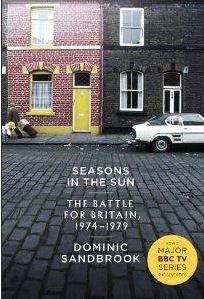
Seasons in the Sun,Battle for Britain, Dominic Sandbrook, books, history, Allen Lane,❚ AN “INVALUABLE WEBSITE” — this is the verdict on Shapersofthe80s by historian Dominic Sandbrook, author of the rich new cultural analysis, Seasons in the Sun: The Battle for Britain, 1974–1979. It’s a doorstep of a book, yet highly readable, which reveals numerous upbeat aspects to the chaotic decade many write off as worthless.

Chapter 31 is especially inspirational! Sandbrook gives generous credit to key characters who Shapersofthe80s has long maintained deserve recognition as movers and shapers pivotal to the energy of the 80s. And, having quoted chunks from our own texts, the historian gives due acknowledgement in his extensive bibliography. Indeed, the scope of his research is more impressive than for much other contemporary history, as Sandbrook not only cites political and economic mandarins, but also sifts fine detail from popular culture and eye-witness reportage across the whole social spectrum.

Sandbrook writes: “Behind the lurid news stories, the late 1970s were the decisive point in our recent history. Across the country, a profound argument about the future of the nation was being played out, not just in families and schools but in everything from episodes of Doctor Who to singles by the Clash. These years marked the peak of trade union power and the apogee of an old working-class Britain – but they also saw the birth of home computers, the rise of the ready meal and the triumph of a Grantham grocer’s daughter who would change our history for ever”

Seasons in the Sun is the fourth title in Sandbrook’s survey of postwar Britain. His unstuffy combination of high and low life is behind the BBC2 series The Seventies currently viewable live and on iPlayer.
BBC2 series The Seventies,Seasons in the Sun ,Dominic Sandbrook

Sandbrook’s Seasons in the Sun forms the basis of the current BBC2 TV series The Seventies

REVIEWS OF SEASONS IN THE SUN

❏ “The first three volumes of Dominic Sandbrook’s epic history of Britain between 1956 and 1979 were exceptionally good. The fourth, Seasons in the Sun, is magnificent … marked by its pace, style, wit, narrative and characterisation as by its exhaustive research.” — Roger Hutchinson, Scotsman

❏ “Sandbrook has created a specific style of narrative history, blending high politics, social change and popular culture … his books are always readable and assured, and Seasons in the Sun is no exception … Anyone who genuinely believes we have never been so badly governed should read this splendid book.” — Stephen Robinson, Sunday Times
1977, Jayaben Desai, Grunwick, strike, picket

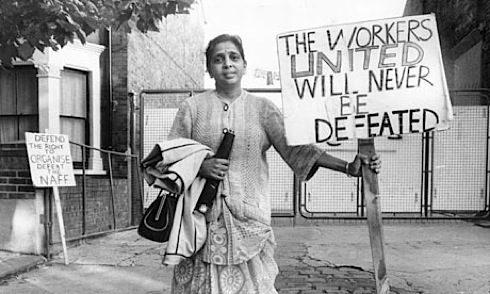
August 1977: Jayaben Desai, treasurer of the strike committee at the Grunwick photo-processing plant, had been picketing for a year, supported by white, male trade unionists while postmen blocked the company’s mail. (Photograph by Graham Wood/Getty)

EVEN WIDER PERSPECTIVE FROM LEADING PLAYWRIGHT

➢ Playwright David Edgar draws together the Sandbrook quartet in The Guardian, May 9, 2012: The 1970s was the moment when our century arrived… As Sandbrook insists, the women’s liberation movement was as much about Hull’s fishermen’s wives and female machinists at Ford Dagenham as feminist activists disrupting Miss World. In 1971, workers campaigning against the closure of Upper Clyde Shipbuilders borrowed the student tactic of the sit-in. As 1970s chronicler Andy Beckett argues, the gay groups who stood shoulder to shoulder with trade unionists outside Grunwick prefigured an alliance which “would become commonplace in the decade to come”. The identity politics that were to become such a satirised feature of the left of the 1970s arose not just out of campus and culture but class war… / continued at Guardian online
FRONT PAGE

1972 ➤ Berger’s Ways of Seeing revolutionised the way we view art and is still an eye-opener today

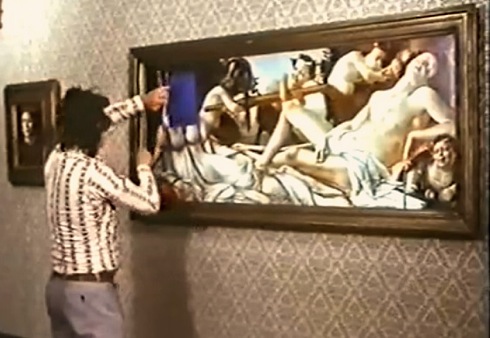
Ways of Seeing, 1972: John Berger takes a knife to Botticelli’s Venus and Mars

➢ CLICK ON THE PIC to run the video of Ways of Seeing, part one

❚ 40 YEARS AGO AN ART CRITIC TOOK A STANLEY KNIFE to a Botticelli masterpiece in the National Gallery, and cut the head of Venus out from the canvas. (No, not the real painting, but a reproduction, obviously.) And what he held in his hand was the typical picture postcard by which many of us know this beautiful and all-conquering goddess. The critic and iconoclast John Berger was making a point that it is through reproductions that most of us view the world’s great art. He argued that paintings had been stripped of their context to raise money through sales of reproductions.

“With the invention of the camera, everything changed,” he said, meaning the ways our perceptions shifted. “The days of pilgrimage are over. It is the image of the painting which travels now. The meaning no longer resides in its unique painted surface which it’s only possible to see in one place and at one time. Its meaning has become transmittable. It comes to you, like the news of an event.”

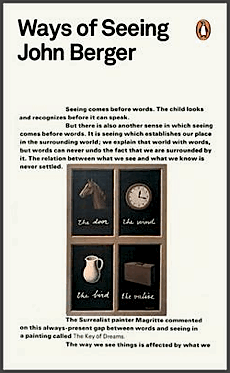
This is how Berger launched Ways of Seeing on Jan 8, 1972 — four pioneering TV films which themselves were extended into a Penguin Modern Classic (set entirely in a heavy Univers font for a reason the author explains), and itself in turn is considered a seminal university-level text for current studies of visual culture and art history.

John Berger, Ways of Seeing , Penguin, books, TV seriesYesterday’s BBC radio strand Archive on 4 made exciting listening of judicious extracts. Titled The Politics of Art, it teased out Berger’s then revolutionary way of discussing paintings as commodities, under the themes of society and context, the nude, the power of money and advertising.

The historian Tim Marlow, currently director of exhibitions at White Cube, shows how Ways of Seeing was provocative and up-to-date in seeking out the opinions specifically of women and children. He believes the politics still matter. Berger challenged 600-year-old notions of ownership. “Previously art celebrated wealth and power: gods, princes and dynasties were worshipped… But the European oil painting served a different kind of wealth. It glorified not a static order of things, but the ability to buy, to furnish and to own.” In the late 20th century Berger subjects art to a Marxist critique that reminds us of the role of the makers. Being naked, he argues, is to be oneself. But a woman posing nude “is to be seen as an object”.

John Berger, Ways of Seeing, art, TV series

Berger’s phwoarr factor: charisma and intellect

Marlow asks how far the message of this series is pertinent again today. As a powerful corrective to glibness in much contemporary culture, The Politics of Art is well worth catching on the radio iPlayer, for Berger’s own bluff opinions, and those of several pundits, including the British novelist Marina Warner who is hooked on his phwoarr factor as well as his intellect: “Physically he was a powerful, beautiful man. And then his Mick Jagger-like charisma: he’s a thrilling performer. It’s a shame this kind of sexual magnetism is rarely seen now on TV — because it’s not permissible”!

There’s also a priceless sequence where the patrician connoisseur Lord Clark (of Civilisation, the earlier landmark TV survey of Western art) confesses to incomprehension before Picasso’s gigantic anti-war painting, Guernica, which invokes the aerial bombing of a Basque town during the Spanish civil war in 1937. Then Berger the passionate ideologue gives an assured deconstruction of the images of slaughter, its screaming civilians and symbols of freedom.

Now aged 85, Berger said recently of his TV series: “The programmes seem as urgent now as then. That’s because what’s happening in the world hasn’t changed very much — it’s only got more extreme. This political approach was prophetic about the world today.”

➢ John Berger video interview with Michael Silverblatt
in October 2002

FRONT PAGE

2011 ➤ Other picky people’s year-ending Best Ofs in music of all styles

BEST ALBUMS OF 2011 AT ALLMEDIANY

+++
AllMediaNY.com offers the next step in the evolution of modern journalism — “free media” — an outlet where journalists and readers together decide on what is newsworthy and what is not. Editor-in-Chief Drew Kolar says it was “a great year for real music”, sadly marred by the death of Amy Winehouse.

50 SEVENS THAT REALLY STRUCK ME AT DIS

+++
❏ At Drowned in Sound Wendy Roby whittles her year’s reviewing down to a top 50 “that really struck me”, starting at Africa Hitech’s Do U Really Wanna Fight, via Metronomy’s The Look and ending on Jamie Woon’s Lady Luck.

POPJUSTICE READER POLL’S BEST SINGLE

Rihanna — We Found Love feat. Calvin Harris.

RUSTY EGAN: WHAT’S ON MY IPOD MIX

❏ An hour’s-worth of vintage sounds mixed by former Blitz Club deejay Rusty Egan: “Some lost classics here plus some bands born in the 80s that sound like they wrote and recorded the songs in the 80s.”

CHRIS SULLIVAN’S TEN BEST MUSIC
DOCUMENTARIES EVER

Great Day In Harlem,photography,Art Kane, Esquire ,jazz,Count Basie,documentary
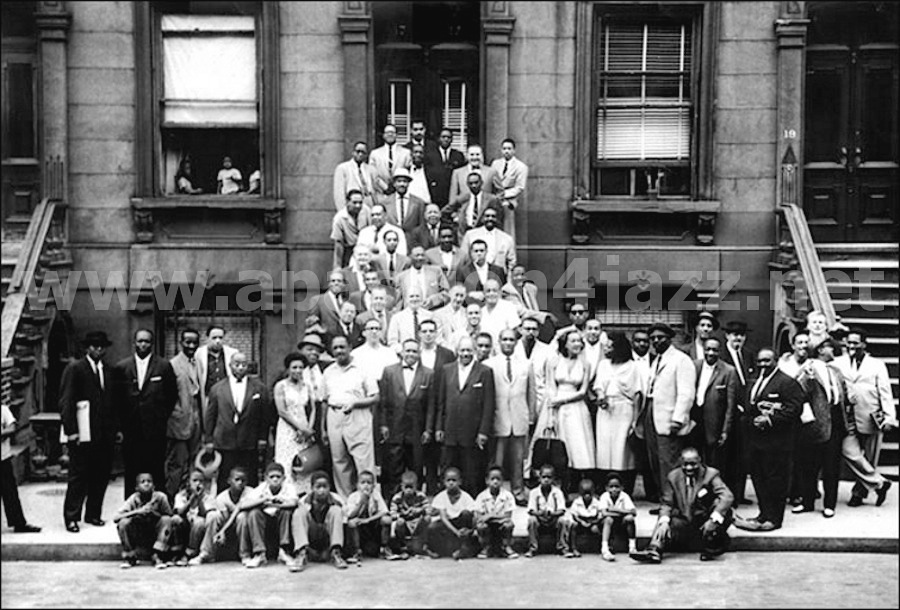
A Great Day In Harlem (1995) — “A must for any serious black music aficionado,” writes Zeitgeist-Meister Sullivan at RedBull.com. This documentary by Jean Bach tells the story of one summer’s day in 1958 when 57 musicians from jazz history met at 126th Street in Harlem to have their picture taken by Art Kane for Esquire magazine. Keen eyes will spot such greats as Horace Silver, Charles Mingus, Coleman Hawkins, Thelonious Monk, English-born Marian McPartland OBE, Sonny Rollins, Lester Young, Gerry Mulligan, Roy Eldridge, Dizzy Gillespie and Count Basie. Kane called it “the greatest picture of that era of musicians ever taken”.

KATY PERRY’S FIREWORK SHOCKER

❏ The video for Firework not only outraged British TV stations into censoring the gay kiss, but it then won Video of the Year at the MTV Video Music Awards. Result: the single remained in the UK charts for 58 weeks, way longer than in Billboard’s.

J J WHEELER’S JAZZ PICK

❏ A refreshing selection of five CDs and five gigs from 2011 offered at The Jazz Breakfast by a much-lauded British drummer/percussionist currently studying at the Royal Academy of Music after graduating from Birmingham Conservatoire. Listen to clips from his own quintet’s imminent album Unconventional at Soundcloud.

MUSIC BOOKS ROUND-UP

Nile Rodgers, books,Le Freak, Upside Down Story, disco, autobiography
❏ A broad survey of the year’s music books by the Evening Standard’s David Smyth reveals that in his collected lyrics Jarvis Cocker says “seeing a lyric in print is like watching the TV with the sound turned down: you’re only getting half the story”… Le Freak: An Upside Down Story of Family, Disco and Destiny gives us a tour of the fascinating life story of Nile Rodgers [pictured] — conceived when his mother was 13, raised by beatniks who’d have Thelonious Monk over, he joined the Black Panthers and jammed with Jimi Hendrix, all before he wrote a vast collection of mega-hits, virtually lived in Studio 54’s bathroom and produced Madonna and David Bowie.

LADY GAGA: GOOD THING, BAD THING?

PopJustice’s 2011 In Review asks singer Will Young: As a notorious homosexual, did you feel empowered by Born This Way by Lady Gaga?
Will replies: “When it came on the radio I thought ‘She’s basically written this song for me’. Amazing. I actually think I shed a tear as I was driving up to Wales. I stopped at a petrol station and I thought ‘You know what, I don’t care what they think’ and I brought some pink bon bons. Normally I would just go for a Wispa.”

STEVE NORMAN’S HOTTEST DANCE VIDEO

+++
Tightrope by Janelle Monáe feat. Big Boi — “Amazing. Here’s to a year to remember, like 1981 only better!” says Spandau’s sax player Steve Norman.

➢ Don’t miss: Other picky people’s year-ending
Best Ofs from fashion, TV, web and film

FRONT PAGE

➤ Smith & Sullivan sign off We Can Be Heroes with a sigh

We Can Be Heroes,Unbound publishing, books,Graham Smith,Chris Sullivan,Blitz Kids, New Romantics, Boy George,nightclubbing, Swinging 80s, photography,

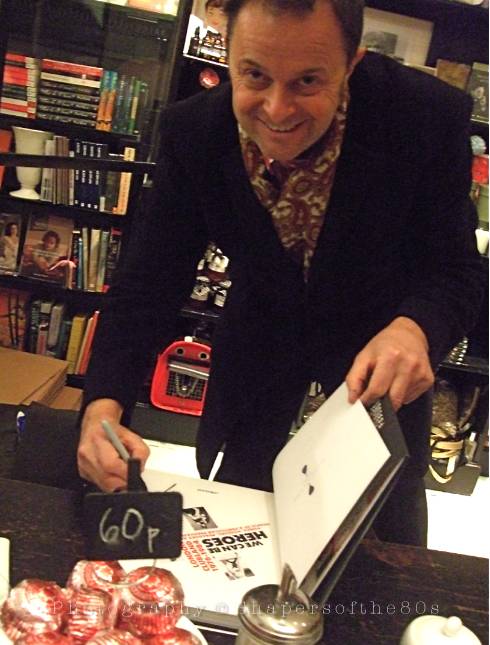
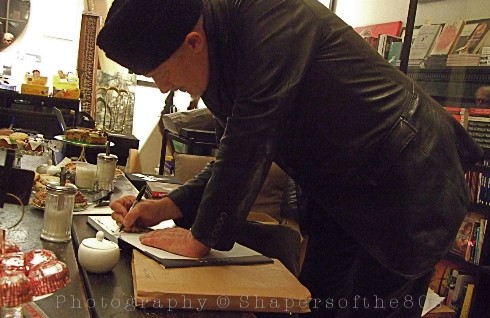
Graham Smith: signing advance copies of We Can Be Heroes between coffee and cake today at Soho’s Society Club. Photographed by Shapersofthe80s

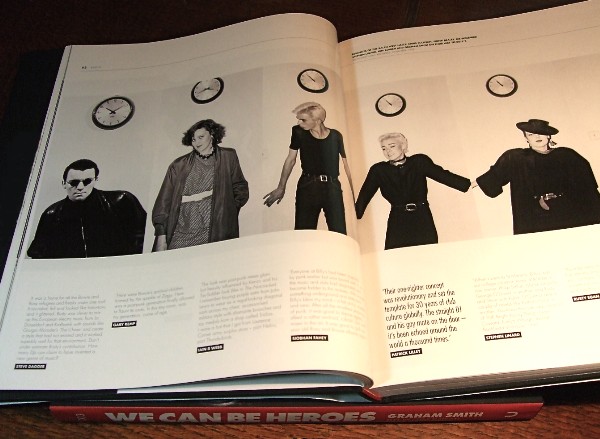
❚ THE BOOK OF THE DECADE has arrived and early buyers of the 2,000-copy first edition had it in their hands today. The photo-story of 80s clubland, We Can Be Heroes, felt reassuringly hefty to the touch and we finally discovered the page size to be generous at 235 x 280mm. The five-colour printing gives intensity especially to the black-and-white photography on the high-gloss paper and author Graham Smith’s verdict on the quality was simple: “Stunning.” Collaborator and 80s club-host Chris Sullivan breathed a sigh: “We got there in the end.”

The 320 pages of story-telling and voxpops from perhaps 100 contributors will raise plenty of smiles when the postman delivers the book during the next week. Even if you’ve read Shapersofthe80s from top to bottom, you’ll find as many more quotes and insights from the original Blitz Kids themselves. Deejay Jeffrey Hinton reminds us in the book: “People think this was a premeditated scene but it was not. It was childlike, thrown together. We didn’t do it for the money, we were innocent. It’s all so marketed today.”

We Can Be Heroes,Unbound publishing, books,Graham Smith,Chris Sullivan,Blitz Kids, New Romantics, Boy George,nightclubbing, Swinging 80s, photography,

Ringleaders who shaped the style of the 80s celebrated in We Can Be Heroes: Chris Sullivan, Fiona Dealey, Lee Sheldrick, Stephen Linard and Kim Bowen — the rebels within St Martin’s School of Art, all photographed by Graham Smith

We Can Be Heroes,Unbound publishing, books,Graham Smith,Chris Sullivan,Blitz Kids, New Romantics, Boy George,nightclubbing, Swinging 80s, photography,

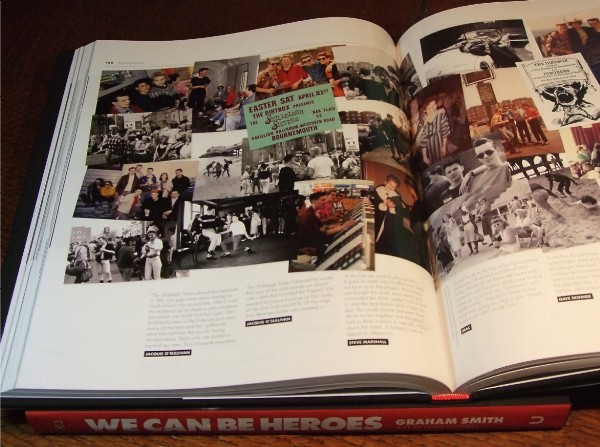
Bournemouth was the destination on bank holidays: good-natured hijinks brought London clubbers to the south-coast resort, and Smith has included many of their snaps in We Can Be Heroes

While the main images reveal just how small in number was the coterie who initiated the sounds and styles of the 80s, Smith has supplemented his own portfolio of pictures with many snaps from clubland wags themselves whose ambitions were liberated by the spirit of collaboration inspired in 1980. Nevertheless, designer Fiona Dealey makes a valid point in the book: “When anyone has written about the Blitz it has been by the same few blokes giving the same old soundbites with never a mention of what the women were up to. The Blitz was our youth club and I feel they hijacked it.”

Today John Mitchinson, the book’s publisher, said he was reasonably confident that a commercial edition of Heroes might follow in the autumn of 2012. In the meantime a limited number of copies of the first edition are still available only from Unbound Publishing.

➢ 1976–1984, Creative clubbing ended with the 80s — we profile three of the bright sparks behind We Can Be Heroes and how they shaped the decade

➢ View Shapersofthe80s video — Chris Sullivan telling his “ribald tales of excess” from the Blitz era at a launch party for We Can Be Heroes… with Graham Smith and Robert Elms on video too

We Can Be Heroes,Unbound publishing, books,Graham Smith,Chris Sullivan,Blitz Kids, New Romantics, Boy George,nightclubbing, Swinging 80s, photography,

Chris Sullivan signing today: “Now people can see the book itself we might shift a few more copies.” Photographed by Shapersofthe80s

FRONT PAGE

2011 ➤ Party of the year recreates the Swinging 80s at the legendary Beat Route (down, down past the Talk of the Town)

+++

Graham Smith,Chris Sullivan, photography, books,youth culture, We Can Be Heroes , Swinging 80s,Beat Route, clubbing

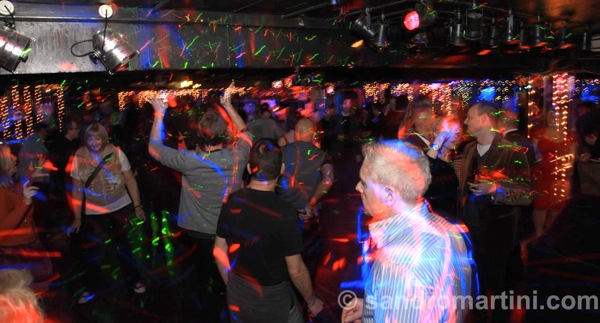
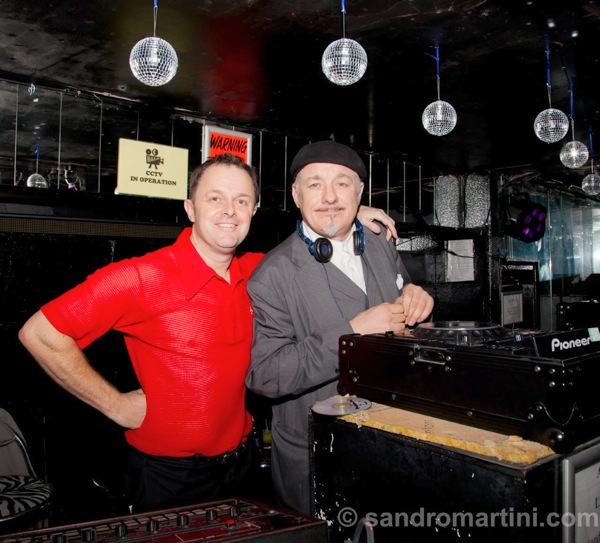
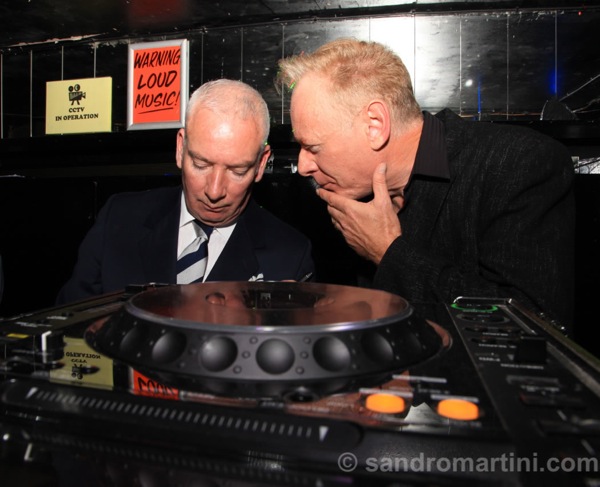
Le Beat Route recreated for one night only: One of our heroes, MC Sullivan, sharing the best sounds in London last night

Beat Route, nightclubbing,We Can Be Heroes, books

2011 and it’s Thursday night Beat Route! The same underground club emanating a spookily familiar spirit of place

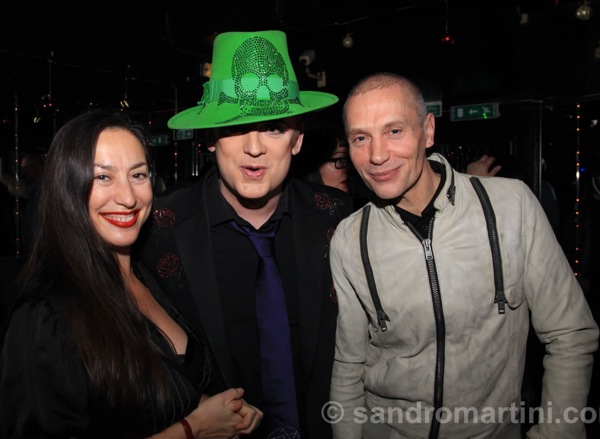
❚ WITHOUT DOUBT the party of the year filled the former Beat Route, Soho, last night as photographer Graham Smith and writer Chris Sullivan launched their photobook We Can Be Heroes, which is winging its way from printers to the lucky buyers who invested in the first edition. Smith and Sullivan became crucial to leading and documenting the explosion of Eighties club culture in London. Le Beat Route, founded in November 1980 by crimper Ollie O’Donnell and stylist Steve Mahoney with Fidel Castro fan Steve Lewis as its deejay, became the cool Friday-nighter that served the post-Blitz crowd for the next three years while the scene moved gradually overground.

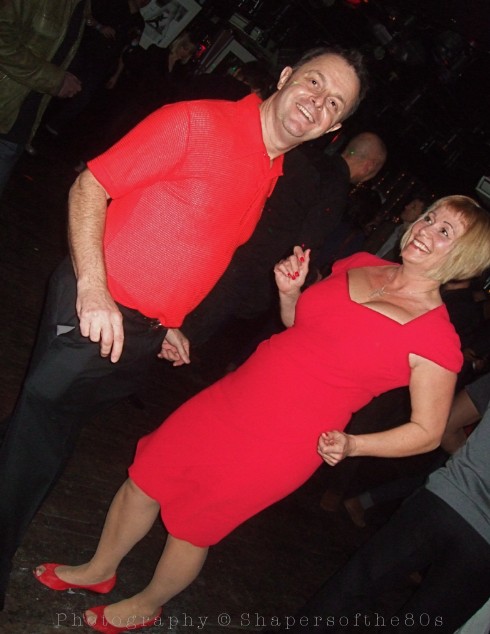
More exclusive pix are coming on Shapersofthe80s.com once I can wade through the many brilliant soundbites offered by everybody out last night to celebrate the Swinging 80s…

➢ Although the first edition of We Can Be Heroes
has sold out, a special clothbound edition is now on sale
for £35, plus a Deluxe edition for £350, at the
Unbound Publishing website

Beat Route, nightclubbing,Graham Smith, Chris Sullivan,We Can Be Heroes

Thursday night Beat Route! Hosts, authors and 80s deejays Graham Smith and Chris Sullivan

Beat Route, nightclubbing,We Can Be Heroes,1980s, Steve Lewis, Jay Strongman

Thursday night Beat Route! Seminal club deejays of the 80s Steve Lewis and Jay Strongman

Beat Route, nightclubbing,Lesley Chilkes, Boy George, David Holah,We Can Be Heroes

Thursday night Beat Route! Lesley Chilkes, Boy George, David Holah

[ Exclusive party pix courtesy of sandromartini.com ]

Graham Smith,Chris Sullivan, photography, books,youth culture, We Can Be Heroes , Swinging 80s,Beat Route, clubbing

TNBR! Last night’s other chief hero hosting the party of the photobook of the 80s — snapper Graham Smith and his lovely wife Lorraine (Northern Soul veterans, both)

FRONT PAGE