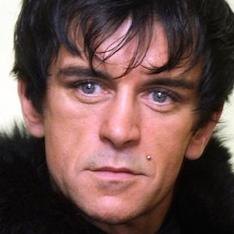
Tag Archives: Books

2012 ➤ How Duran’s Nigel John Taylor could have been happy in a shoegazer band

Duran Duran, John Taylor,books, autobiography,interviews ,Janet Street-Porter,

JT with Janet Street-Porter on ITV’s Loose Women: “It’s amazing what you can remember from the 80s, Janet, don’t you find?” What CAN John have meant? (Click pic to view video)

❚ A SHY ONLY CHILD, NIGEL JOHN TAYLOR wasn’t an obvious candidate for pop stardom and frenzied girl panic. But when he ditched his first name and picked up a bass guitar, everything changed. In the summer of 1978 John formed Duran Duran with his friend Nick Rhodes. One international rock-star life later, he is in Britain this week promoting his autobiography In the Pleasure Groove: Love, Death & Duran Duran which is published here by Sphere.

Duran Duran, John Taylor,books, autobiography,interviews

John Taylor’s London book reading

Take your pick between the two top interviews … Catch up on JT talking to Hardeep Singh Kohli on Radio 4 Midweek about being born a Nigel so shy he’d “have been happy in a shoegazer band”, on the loneliness of touring, on getting caught up in the hype though “I don’t ever want it to end” … on class A drugs, and on daring to ask producer Cubby Broccoli if he could write a Bond movie theme.

Alternatively you can witness the sexual chemistry when John Taylor visits ITV’s Loose Women, Carol Vorderman, Lisa Maxwell, Janet Street-Porter, Sally Lindsay. Right from the start Vorderman kicks off with sex, and we learn the significance of the number printed each day in Duran’s US tour booklet, about the road to recovery from drug addiction… plus more on JT’s mum being a “catholoholic”.

➢ In NYC on Oct 13 there’s a lunchtime book signing at Barnes & Noble Booksellers, E 54th St (US publication by Dutton Adult on Oct 16)

FRONT PAGE

➤ Dylan’s journey from A Tribe Called Quest to the last word on Zappa

+++
➢ According to i-D online . . .
“ Former editor at i-D and now editor-in-chief of British GQ, Dylan Jones is an arbiter of taste, instigator of style and in possession of an encyclopaedic knowledge of popular music. Uninspired by the lack of subjectivity many music biographies take, Dylan Jones began working on his own dictionary of popular music 30 years ago. Scribbling down scattered thoughts on paper, Dylan collated mountains of unorganised text which have since evolved to fill the 838 pages of his latest book, The Biographical Dictionary of Popular Music… / continued at i-D online, plus video interview above

➢ The Biographical Dictionary of Popular Music by Dylan Jones (download to iPhone, iPad or iPod, iTunes, £6.49)

➢ The Biographical Dictionary of Popular Music (paperback 908 pages, £22.67)

WHAT REVIEWERS HAVE SAID

➢ Helen Brown at The Telegraph:

Dylan Jones, Kindle, Biographical Dictionary of Popular Music ,books,Bedford Square Books, Amiably opinionated, funny and revealing, this is a knowingly subjective A-Z of the artists Jones fancies writing about from Abba (Mamma Mia transported him to “a pink fluffy place called Abbaville. I loved it”) to Frank Zappa (the early Mothers of Invention albums sound “like Tom Lehrer made them on acid”). He explores the emotional appeal of artists he loves and is bothered when others admired by his friends leave him cold. Some subjects get a line, others an essay. Jones’s tastes tend towards old-school cool jazz, easy listening and lounge music. No surprise to learn that the men’s magazine editor has been in thrall to the slickly suited, high-rolling rat pack since hearing them on his mum’s turntable as a kid.

➢ Amazon’s jsquared on the Kindle edition:

As someone quite new to many of these bands, I loved this. Dylan Jones’ writing is funny and pleasantly surprising, helped along by his personal recollections of interviews with a variety of band members and famous folk which brings the stories to light rather than feeling self-involved. It’s a perfect gift for a brother with more records than friends! If my boyfriend hadn’t lent me his Kindle, I wouldn’t have read it. I recommend the Blues Music section, that’s what got me hooked.

FRONT PAGE

➤ Fresh pix from the “14 months” of punk and the last word on what it all meant

Punk’s Dead , Derek Dunbar ,, Jordan,

Jordan the queen of punk: pantone matched first samples fresh from the printers on Derek Dunbar’s Facebook page today

❚ HOW MUCH MORE IS THERE TO KNOW ABOUT PUNK? Not much, you might think. Yet today Derek Dunbar — the King’s Road fixer, model, singer, Jarmanite and McLaren acolyte, now styling himself as project manager — announced on Facebook that he is producing some T-shirts emblazoned with Jordan’s image (Jordan the queen of punk, immortalised in Derek Jarman’s movie Jubilee). “These are the first samples we will produce once Six has finished at his exhibition in London so I hope to start in 3 weeks or 4 weeks.”

Exhibition? Six? Who? Those in the know know that Six is aka Simon and Simon was the quiet one in among Susan Dallion (later Siouxsie Sioux), Steve Severin, Debbie Juvenile and Soo Catwoman in those seminal 1976 snaps of the Bromley Contingent — first followers of the Sex Pistols and the Chelsea retail outlets of Malcolm McLaren and Vivienne Westwood. Some of the Contingent became headliners in the punk explosion, Simon playing his part by appearing with the Pistols on the infamous teatime TV show that lost television journalist Bill Grundy his job. More discreetly, as a resident of the St James’s Hotel in Westminster, Simon provided a refuge for punk’s suburban protagonists.

Punk’s Dead , books,photography, Simon Barker , Jordan

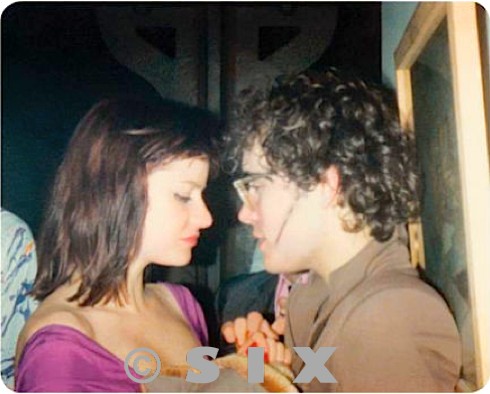
1976: Jordan and Simon Barker aka Six (from Derek Dunbar’s Facebook album)

Under his pseudonym Six, he now reveals: “In 1976, I bought myself one of the cheapest pocket cameras available. Fully automatic, with no controls or settings… Subconsciously I concentrated on the women and artists at the heart of what would later be known as punk in London. The photos you see were spur-of-the-moment shots taken by myself for myself and, up until now, I used to think they weren’t good enough to show people.”

Far from it. A quick google reveals these early snapshots to be “a rare and intimate account of punk’s ability to mint newness” and they evince “the cool stillness of seeming to live beyond the end of history.” Ohhhhh!!! Orgasmic! And you’re asking, Who said THAT?

Michael Bracewell,books,England is Mine, Pop LifeGoogle, please tell. The verdict comes from Michael Bracewell (author of England is Mine: Pop Life in Albion from Wilde to Goldie, 2009), one of those writers whose cultural observations you know are worth the effort to read, wrapped though they are in ripely purple prose. And in a recent article about Six, he announces what these days is the official line, that “Punk lasted in the UK for little more than 14 months, between 1976 and the Jubilee summer of 1977.” Anything later was accounted an offshoot of punk, or dubbed simply New Wave!!!

You raise an eyebrow, salivating for more. And more is delivered in his Independent piece from last March…

➢ Beneath the headline Anarchy in the UK, Bracewell declares
these FIVE PRINCIPLES OF PUNK:

  • 1 To some, punk was primarily political in its energy, carrying class war or a reclamation of the Situationist desire to ‘wreck culture’ to the brutalist Britain of the pre-Thatcher 1970s.
  • 2 To others, it was an avant-garde fashion parade: a damply British reclamation of the Zurich Dada or the Ballets Russes.
  • 3 And to yet others it was the gleeful desecration of rock music’s Church of Authenticity, in which had been worshipped the sanctity of the Blues.
  • 4 Speaking with Malcolm McLaren – arguably punk’s architect – shortly before his death in 2010, the case was put more simply: if punk could lay any claim on historic status, he said, it would best be remembered as ‘like doing the Twist in a ruin’.

Sensational, whichever way you take your pick! But he’s warming to his own conclusion:

  • 5 Punk … appeared to confront the stagnation of cultural consumerism – by describing, in a language of self-parody, the notion of modernity itself reaching critical mass and unsurprisingly imploding. Hence, perhaps, the slogan above the door of the SEX boutique at 430 King’s Road in Chelsea: ‘Modernity Killed Every Night’.

Divine! We can go to our graves sure about the meaning of punk, once and for all. Or rather, five times and for all.
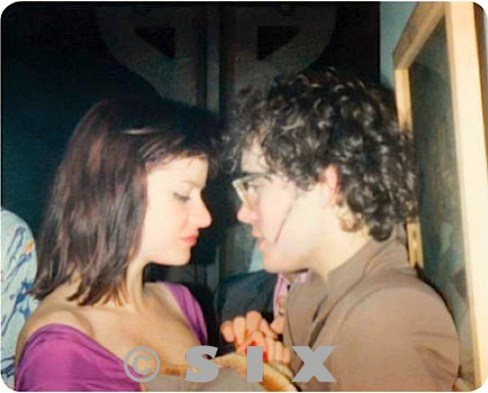
Punk’s Dead , books,photography, Simon Barker,Little Nell, Adam Ant

1977: Little Nell with Adam Ant at a Butler’s Wharf party. Photographed by Six
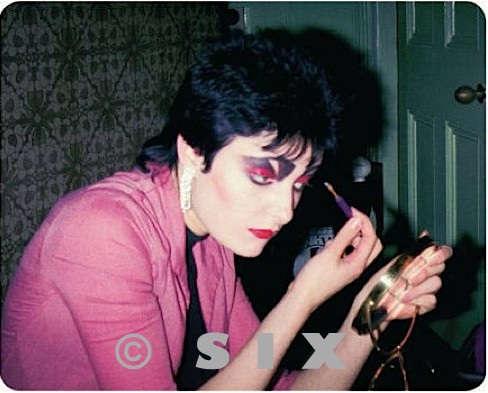
Punk’s Dead , books,photography, Simon Barker , Siouxsie Sioux

1977: Siouxsie Sioux at the St James hotel. Photographed by Six

➢ Punk’s Dead by Simon Barker is an exhibition of his intimate punk photographs, open for a month from June 7, at Divus Temporary Gallery, 4 Wilkes Street, London E1 6QF.

➢ Punk’s Dead the book by Simon Barker is published by Divus
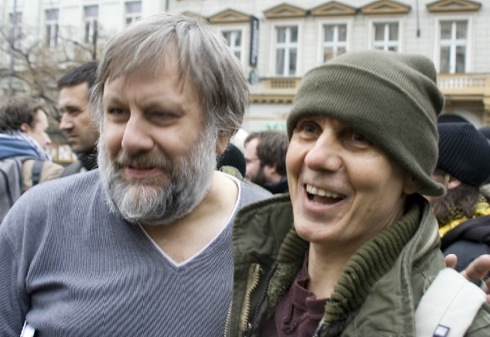
Punk’s Dead , books,photography, Simon Barker

Six in Prague: Barker demonstrating with Slovenian philosopher Slavoj Žižek who has become the zeitgeist interpreter of social phenomena in the 20-tweens

The Year Of Punk 19/12/77

Six, Simon Barker, Punk 1977, LWT, Janet Street-Porter, video

“You don’t have to be a fantastic musician”: Six explains the magic at 7:15 in Janet Street-Porter’s LWT documentary, The Year of Punk, 1977 … Click pic to view video at YouTube

FRONT PAGE

➤ The day Gary Kemp reduced hard-nosed Guardianistas to tears

+++
◼ AS WITH ANY ARTICLE AT THE GRAUNIAD about New Romantic cheerleaders Spandau Ballet, the resulting comments published online are always riotously entertaining. This is the one band that really winds up Guardianistas to a pitch of fury. When the 80s band announced their reunion tour in 2009, Michael Hann declared how much he’s always loathed them in a Graudina music blog which then provoked 342 comments — 342! — most of them apoplectic. How many other bands can claim such a following?

books, Lyrics of Gary Kemp,Lyric Book Company,

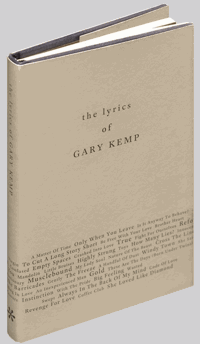
As it happens the Spandau songwriter has recently published an 88-page coffee-table book, titled The Lyrics of Gary Kemp from Lyric Book Company

Today for no apparent reason, the Guranaid runs an item about how Gary Kemp and Steve Norman made Spandau’s 1983 No1 hit True, in which lyricist Kemp admits: “I’m still berated for the line Take your seaside arms, but it’s straight out of Lolita by Vladimir Nabokov.”

Readers of Shapersofthe80s already know that the song was inspired by Kemp’s unrequited pash for poppette Clare Grogan — he was 22, she was 18 — who fronted an 80s band of Scottish cuties called Altered Images. On the same page, Steve Norman deconstructs his self-taught sax solo which has a key change in reply to Grover Washington’s Just The Two of Us.

All of which strangely prompts tearful blubbing at the Graun, rather than the usual explosion of acerbic outrage. Specimen comments follow after this gratuitous excuse to run a video…

VIDEO OF DARLING CLARE IN HER HEYDAY,
NOT TO MENTION SWIVEL-HIPS TICH

+++
➢ Meanwhile back to today’s Grauniad Online:
❏ Nietzsche39 (who else?) notes: “You don’t bastardise Nabokov. Seaside arms is absurd. Seaside limbs is genius.”

❏ Nepthsolem moans: “It always sounds to me like See side arms, as though referring to the service revolver I imagine was issued to all New Romantics, but sadly never used on TOTP.”

❏ DeeSawdeley says: “I always thought it was seaside aunt, which (for those of us with a seaside aunt, anyway) makes much more sense. Bet he wishes he’d written that now!”

❏ Stolencar comments: “Note also he says she gave him a copy of Lolita not that she had read it.”

❏ To which Vastariner responds: “There’s a picture of her reading it on the front of the Best Of Altered Images compilation released in 1991. Some might call me obsessed for knowing that, or because I have a username taken from one of her lyrics… etc etc.”

❏ From another planet, Golgafrinchan sobs: “I had unrequited love for Clare Grogan, still do to be fair. If you’re reading this Clare, get in touch, there’s still time.”

❏ DameHedwig adds: “I’ve often told my son that if things had worked out for me, Ms Grogan would be his Mum.”

❏ And Mccaugh: “As for the sublime Miss Grogan, well, just how many times did we go and see Gregory’s Girl? Helped, of course, by the fact that it ran at the Dominion Cinema in Edinburgh for three years non-stop.”

❏ Finally Bloodydoorsoff tells a despicable and blatant untruth about darling Clare, so you’ll just have to go to Grunadia Online to see it. And plenty more.

John Gordon Sinclair, Scott Neil), Clare Grogan, Glasgow Film Festival ,Gregory’s Girl

Glasgow Film Festival 2010: Darling Clare seen with Gregory’s Girl sidekick John Gordon Sinclair. In 1994 — sorry, lads — she married bandmate Stephen Lironi in Glasgow and today the couple live in Haringey, London, with their adopted daughter. (Photography by © Scott Neil)

FRONT PAGE

➤ Sukita-san’s eye view of the weird world according to Bowie

David Bowie, Masayoshi Sukita,Speed of Life, Genesis Publications,

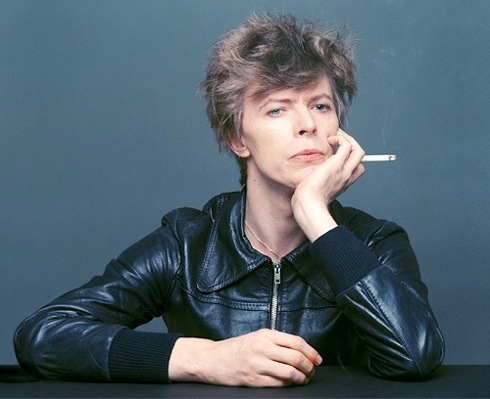
Heroes-era Bowie in 1977 © by Masayoshi Sukita

David Bowie,Yamamoto Sukita, Kansai Yamamoto ,Speed of Life, Genesis Publications

Bowie as Ziggy in 1973 costumed by Kansai Yamamoto and photographed © by Masayoshi Sukita

❚ HERE WE SEE CLASSIC PIX of the early glam incarnations that broke the rules of rock and roll and put the gender-bending David Bowie into the headlines. Since 1972 Japanese photographer Masayoshi Sukita has gone on capturing the prolific flow of creations from the ever-inventive Bowie. This week in London his long-awaited book Speed of Life documenting their 40-year collaboration is launched by Genesis Publications in its 2,000-copy limited edition. Signed by both Bowie and Sukita, it is priced at £360 ($581) for 300 pages which they caption with their own recollections and memories. Bowie says: “It’s very hard for me to accept that Sukita-san has been snapping away at me since 1972 but that really is the case… May he click into eternity.”

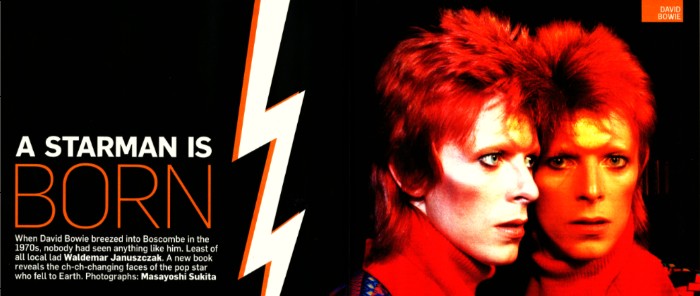
Meanwhile in today’s Sunday Times Magazine art critic Waldemar Januszczak recalls his teenage outing in 5-inch platforms when he paid 90p on the door of Starkers in Boscombe, Dorset, to discover the eye-popping mystique of Ziggy Stardust in August 1972 — minutes after Sukita the photographer arrived in Britain and caught Bowie’s shock show at London’s Royal Festival Hall. He described it as “like an astronomer finding a new planet”.

David Bowie, Masayoshi Sukita,Speed of Life, Genesis Publications,

Today’s Sunday Times Magazine: Bowie in 1972 © by Masayoshi Sukita

Januszczak writes: “It was Andy Warhol who invented the immensely attractive cultural idea that anyone could be whoever they wanted to be. It became Bowie’s big idea as well. And the tour he set out on in 1972 featured his most determined efforts yet to become lots of people at once: Ziggy Stardust, Aladdin Sane, Major Tom, The Man Who Saved the World. That was just the beginning. The bewildering multi-identitied career photographed for us so sympathtically by Sukita-san in Speed of Life features enough different David Bowies to constitute a football crowd…”

David Bowie, Masayoshi Sukita,Speed of Life, Genesis Publications,

Bowie in 1989 © by Masayoshi Sukita

Above images copyright Masayoshi Sukita, courtesy Genesis Publications

David Bowie, Masayoshi Sukita,Speed of Life, Genesis Publications,

Sukita then and now: left, with Bowie in the 70s

MAY 8: INVETERATE LIGGERS AT THE LONDON
BOOK LAUNCH PARTY

Paul Simper, Steve Norman, Bowie, Sukita, books, Speed of Life,Genesis Publications,Dover Street Arts Club,

Lads insane: The Spand sax-man also known as Spiny Norman ingratiates himself with Ballet biographer Paul “Scoop” Simper at tonight’s Speed of Life book launch. Spandau’s own official photo-book is promised for 2013 from Genesis Publications. Photograph by © Shapersofthe80s

➢ Condé Nast president Nick Coleridge tells book-launch party of his teen obsession with Bowie and his encounter with Angie — Evening Standard Diary, May 9

FRONT PAGE